
Masters Degree Programs In Geographic Information Systems Chris
- Slides: 18
Master's Degree Programs In Geographic Information Systems Chris Lukinbeal Jan Monk
Introduction • The fastest growing and largest part of graduate education in the U. S. is the Master’s degree • The Master’s in GIS is a new phenomenon in graduate education in geography
Introduction • The Association of American Geographers Guide to Graduate Programs lists 25 M GIS programs • Our research has documented 40 programs • Growth of M GIS programs is a recent phenomenon • Focus: similarities and differences • Focus: professional and academic pedagogy
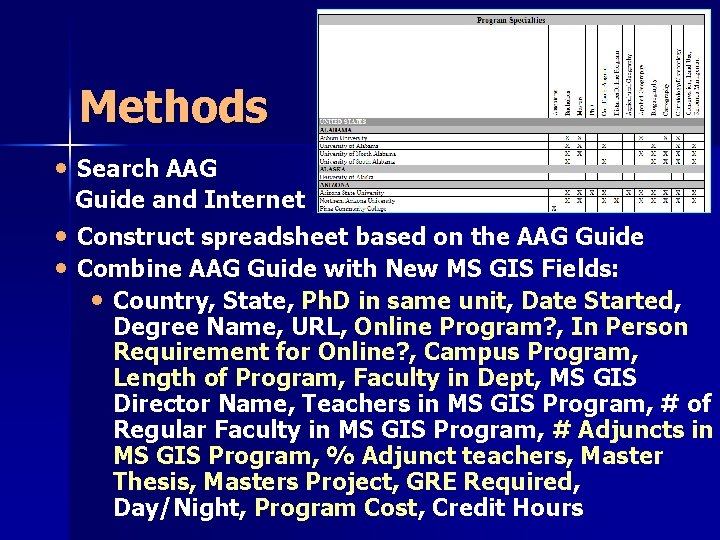
Methods • Search AAG Guide and Internet • Construct spreadsheet based on the AAG Guide • Combine AAG Guide with New MS GIS Fields: • Country, State, Ph. D in same unit, Date Started, Degree Name, URL, Online Program? , In Person Requirement for Online? , Campus Program, Length of Program, Faculty in Dept, MS GIS Director Name, Teachers in MS GIS Program, # of Regular Faculty in MS GIS Program, # Adjuncts in MS GIS Program, % Adjunct teachers, Master Thesis, Masters Project, GRE Required, Day/Night, Program Cost, Credit Hours
Methods • Interview 13 M GIS Program Directors • In person & phone interviews conducted • Interview selection process: • Reflect geographic distribution across the • • • U. S. Representation of different types of departmental units offering the program (Ph. D granting unit or a terminal Master’s unit) Format of delivery (online or in person) Public / Private • IRB through University of Colorado, Boulder
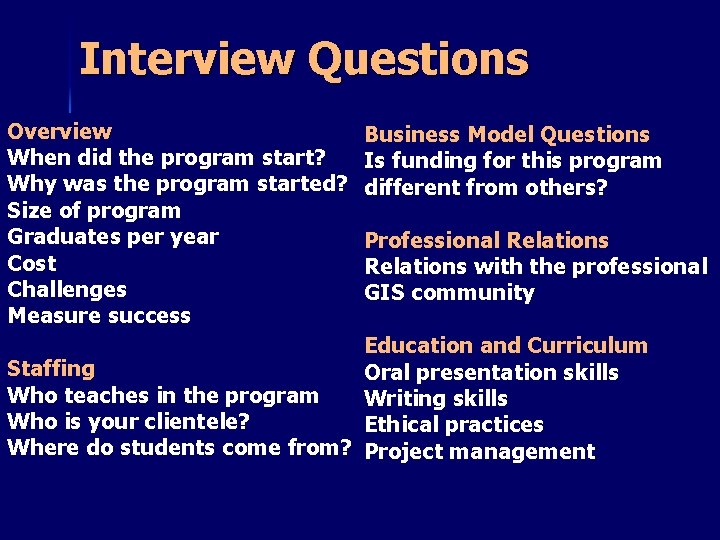
Interview Questions Overview When did the program start? Why was the program started? Size of program Graduates per year Cost Challenges Measure success Staffing Who teaches in the program Who is your clientele? Where do students come from? Business Model Questions Is funding for this program different from others? Professional Relations with the professional GIS community Education and Curriculum Oral presentation skills Writing skills Ethical practices Project management
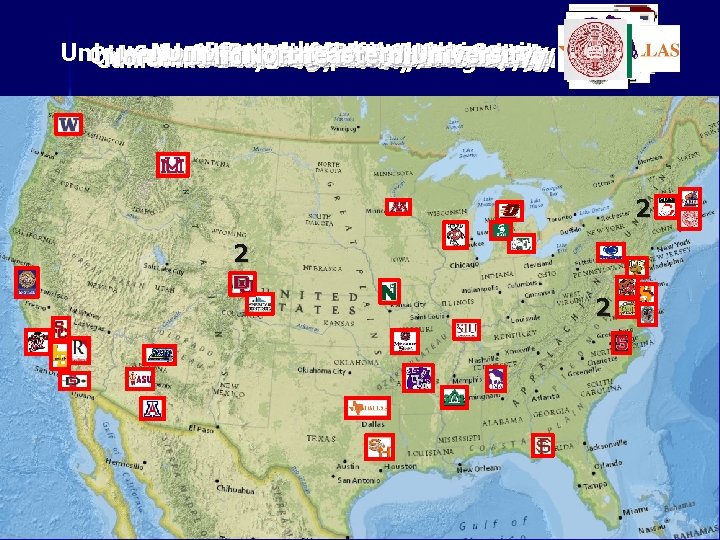
Central Michigan University of Maryland, Baltimore County North Carolina State University of Arizona University of Central Arkansas American Sentinel University Northeastern University of Maryland, College Park Florida State University of Washington University of Minnesota Michigan State University Pennsylvania State University of Denver San Francisco State University of Texas at Dallas California State University, Northridge Southern Illinois University of Southern California Eastern Michigan University of Montana George Mason University Delta State University Sam Houston State University Northern Arizona University of Redlands Northwest Missouri State University Arizona State University Salem State University John Hopkins University Missouri State University San Diego State University Clark University of North Alabama Salisbury University of Wisconsin-Madison California State University Long Beach 2 2 2
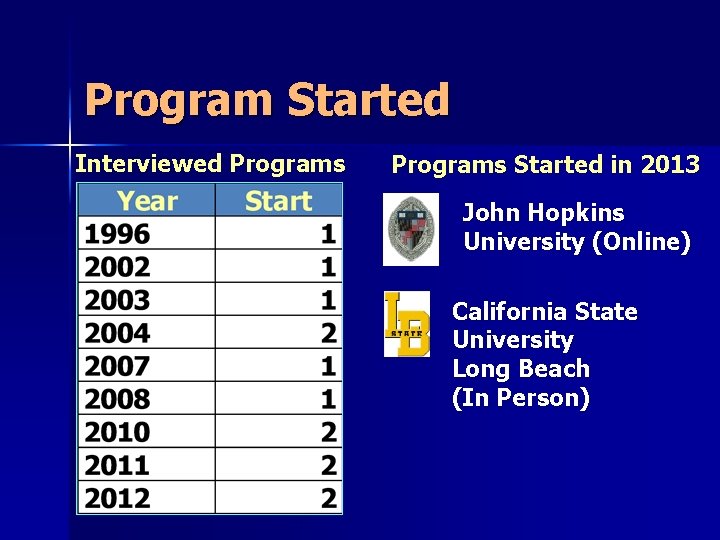
Program Started Interviewed Programs Started in 2013 John Hopkins University (Online) California State University Long Beach (In Person)
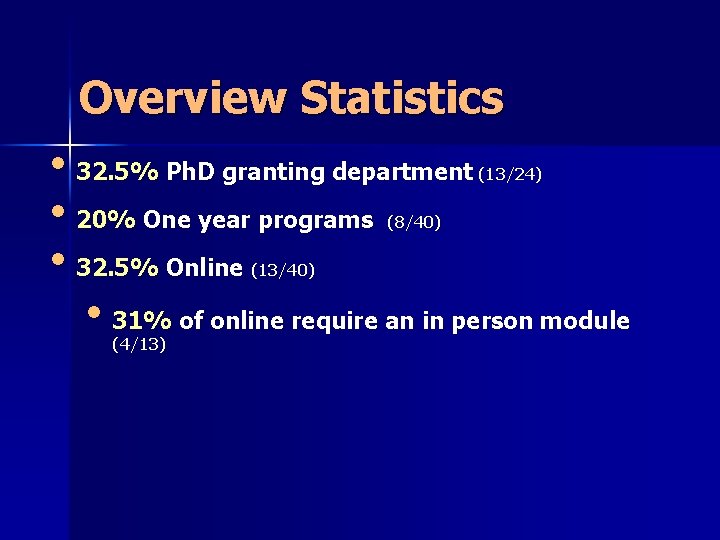
Overview Statistics • 32. 5% Ph. D granting department • 20% One year programs • 32. 5% Online • 31% of online require an in person module (13/24) (8/40) (13/40) (4/13)
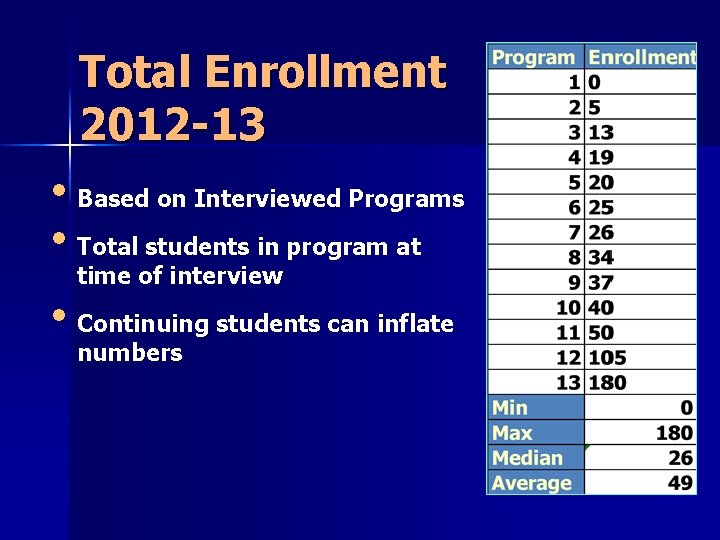
Total Enrollment 2012 -13 • Based on Interviewed Programs • Total students in program at time of interview • Continuing students can inflate numbers
Masters in Geography/ GIS Conferred 2010 50% have MS GIS
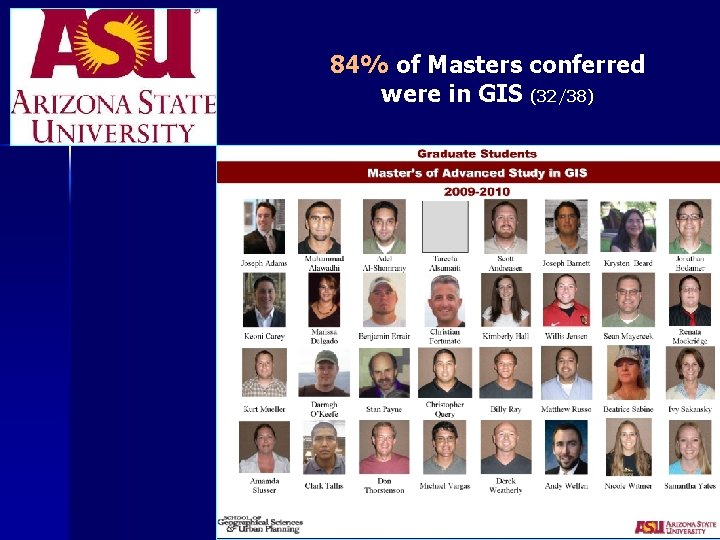
84% of Masters conferred were in GIS (32/38)
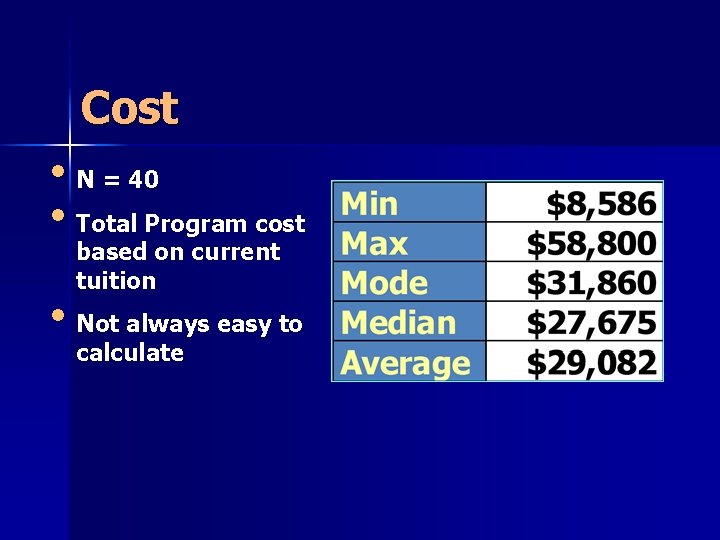
Cost • N = 40 • Total Program cost based on current tuition • Not always easy to calculate
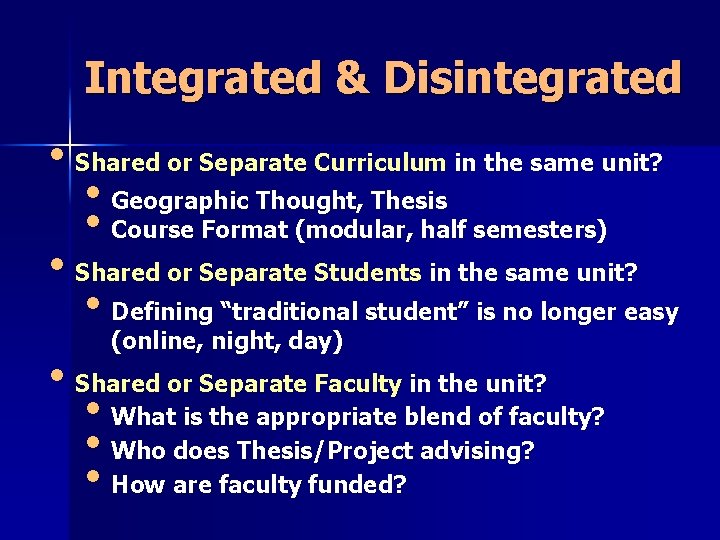
Integrated & Disintegrated • Shared or Separate Curriculum in the same unit? • Geographic Thought, Thesis • Course Format (modular, half semesters) • Shared or Separate Students in the same unit? • Defining “traditional student” is no longer easy (online, night, day) • Shared or Separate Faculty in the unit? • What is the appropriate blend of faculty? • Who does Thesis/Project advising? • How are faculty funded?
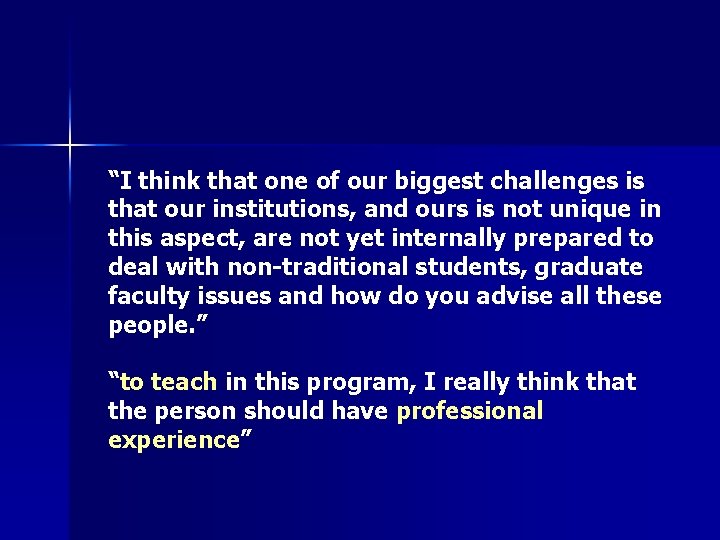
“I think that one of our biggest challenges is that our institutions, and ours is not unique in this aspect, are not yet internally prepared to deal with non-traditional students, graduate faculty issues and how do you advise all these people. ” “to teach in this program, I really think that the person should have professional experience”
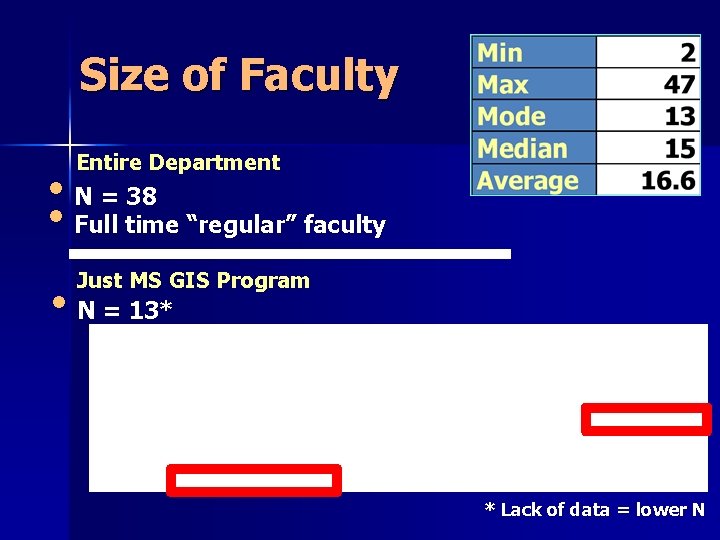
Size of Faculty Entire Department • N = 38 • Full time “regular” faculty Just MS GIS Program • N = 13* * Lack of data = lower N
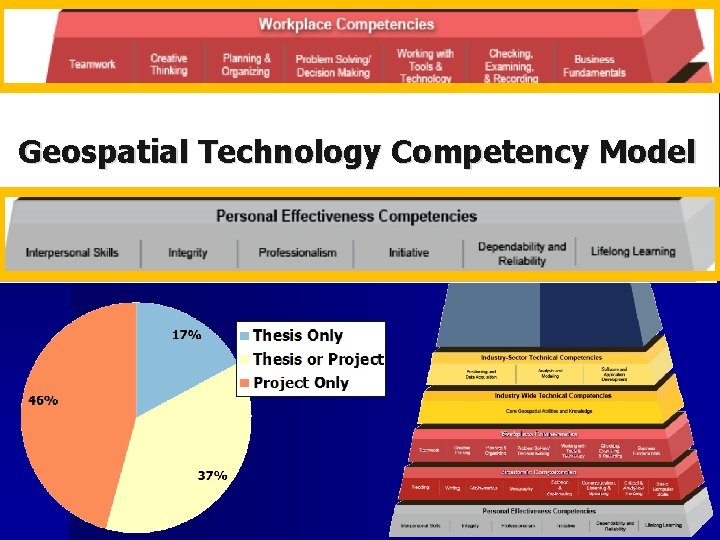
Academic & Professional Pedagogy • Not a binary Geospatial Technology Competency Model • Many interviewed stated: “Professional Program” • Student outcomes focused on business, government, and nonprofit (BGN) • Professional Pedagogy
Conclusions • Purpose of study is to document an exciting new trend in geography graduate education • MS GIS highlights the importance of professional education, needed skills for employment with BGN • Information is useful to those • seeking to establish a program • to administrators needing to understand the diversity of programs • for students to better understand their choice in graduate education • MS GIS challenges geography to think differently about the future of graduate education.