
Masterclass 2011 Biology of the radiation Particle Therapy
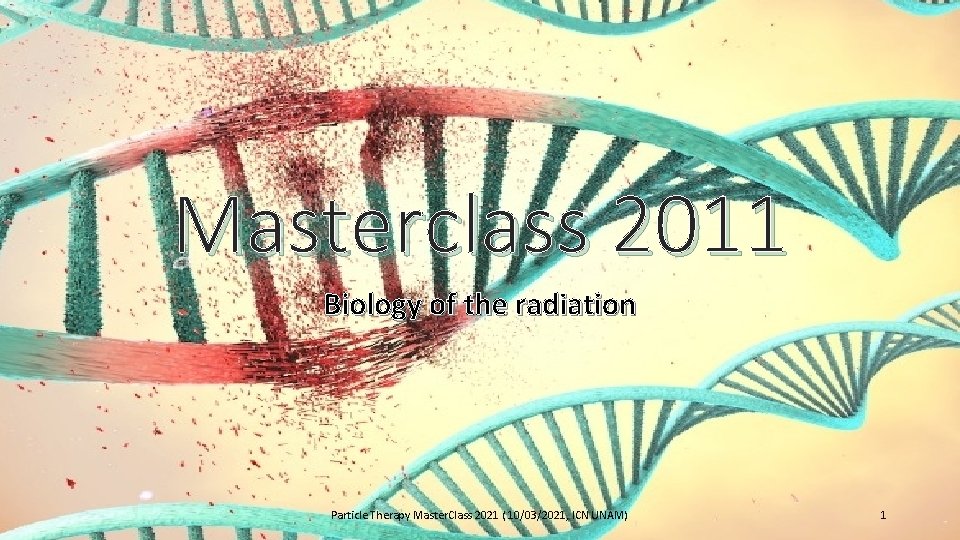
Masterclass 2011 Biology of the radiation Particle Therapy Master. Class 2021 ( 10/03/2021, ICN UNAM) 1
THE NUCLEAR PHYSICS HELPS THE FIGHT AGAINST CANCER Particle Therapy Master. Class 2021 ( 10/03/2021, ICN UNAM) 2
The main points • Differences between different radiations • Effects of radiation in biologic material • The uses of the destructive qualities of radiation in tissues to fight cancer Particle Therapy Master. Class 2021 ( 10/03/2021, ICN UNAM) 3
A short recollection of the ways radiation is absorbed Particle Therapy Master. Class 2021 ( 10/03/2021, ICN UNAM) 4
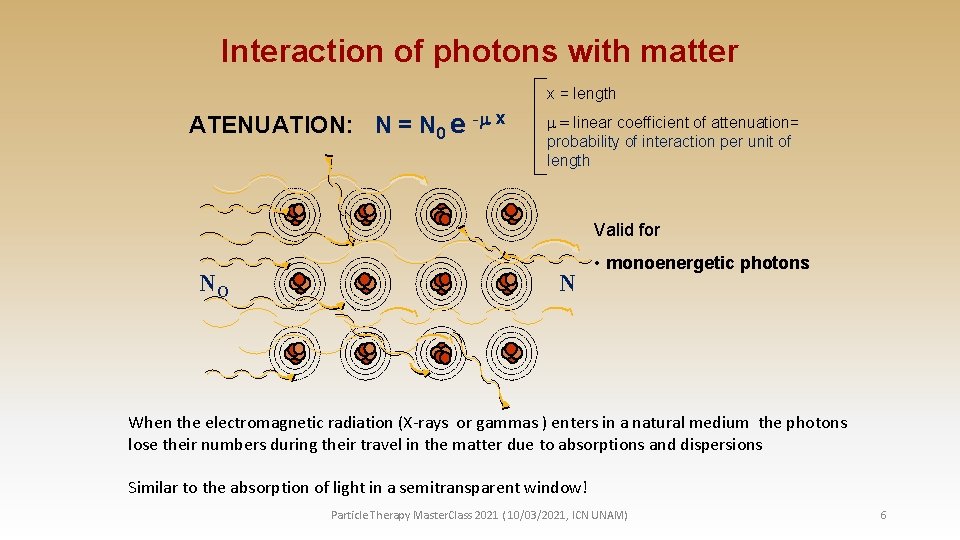
Interaction of photons with matter x = length ATENUATION: N = N 0 e -m x m = linear coefficient of attenuation= probability of interaction per unit of length Valid for NO N • monoenergetic photons When the electromagnetic radiation (X-rays or gammas ) enters in a natural medium the photons lose their numbers during their travel in the matter due to absorptions and dispersions Similar to the absorption of light in a semitransparent window! Particle Therapy Master. Class 2021 ( 10/03/2021, ICN UNAM) 6
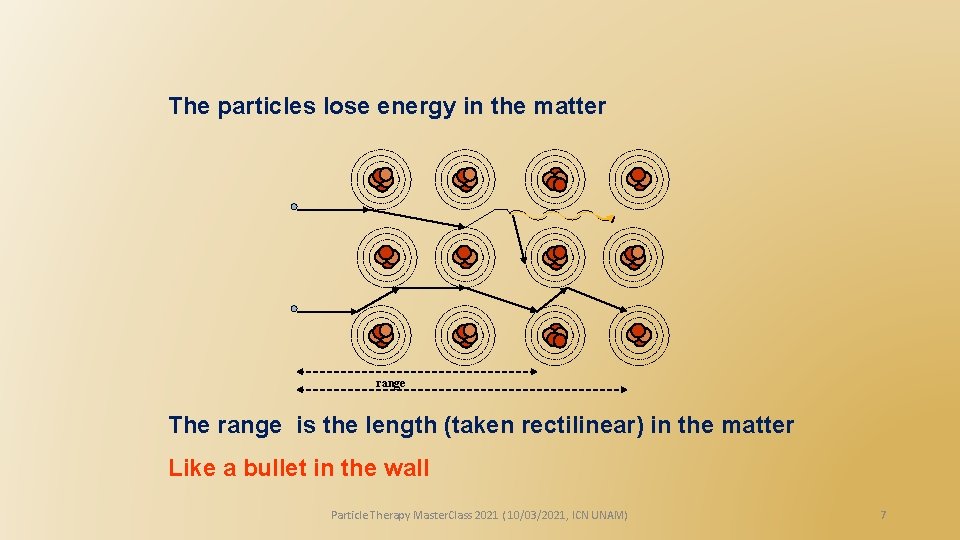
The particles lose energy in the matter range The range is the length (taken rectilinear) in the matter Like a bullet in the wall Particle Therapy Master. Class 2021 ( 10/03/2021, ICN UNAM) 7
• In contrast to conventional photon radiations where the dose distribution in the patient is primarily characterized by an exponential decline in dose with depth, charged particles demonstrate a phenomenon known as the Bragg peak. Particles at high energy deposit relatively little energy as they enter an absorbing material but tend to deposit extremely large amounts of energy in a very narrow peak, the Bragg peak, as they reach the end of their range (Fig. 1. 2). The depth and magnitude of this Bragg peak is determined by the mass and charge, as well as the initial energy of the particle [ Particle Therapy Master. Class 2021 ( 10/03/2021, ICN UNAM) 8
• The Photons are losing energy in a stochastic way – that is every photon has a probability to survive after a given thickness of absorber. Important to understand • Like if I have 100 dices and I decide to remove all the sixes after a throw. I will stay with a given number of dices in play after the first throw. I throw again, and again if I have many dices you can imagine that after many throws (analogous to the thickness of material I will still have dices on the table. This is called the logarithmic absorption • For charged particles the situation is different : every particle is losing energy continuously like a car without engine on a flat road: after a given path it will stop…. It means for each particle we can calculate the Range it will have in a given piece of material due to its energy, mass and charge. Particle Therapy Master. Class 2021 ( 10/03/2021, ICN UNAM) 9
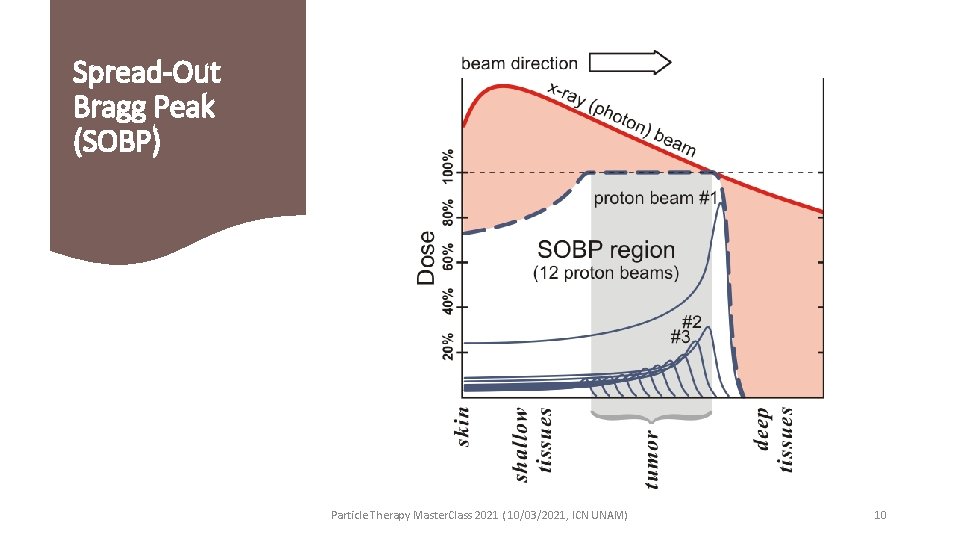
Spread-Out Bragg Peak (SOBP) Particle Therapy Master. Class 2021 ( 10/03/2021, ICN UNAM) 10
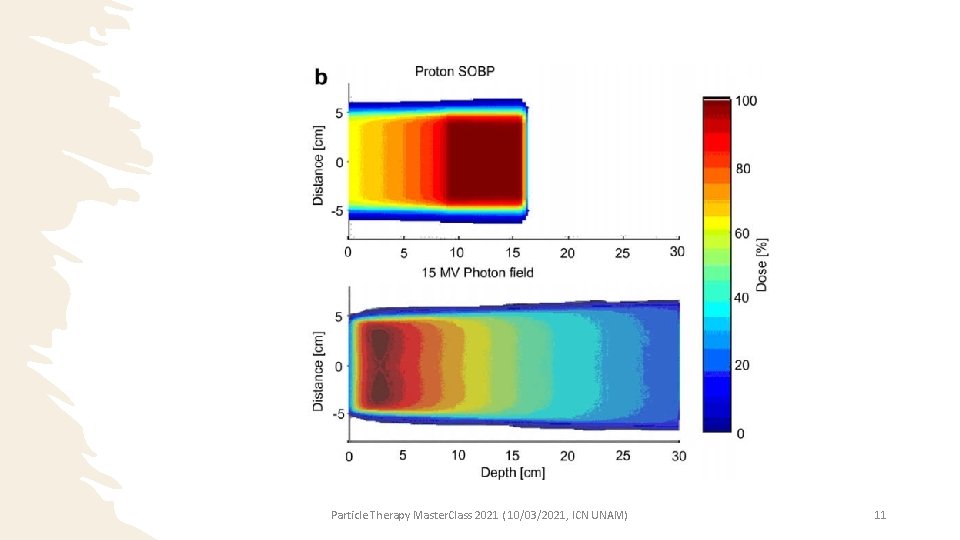
Particle Therapy Master. Class 2021 ( 10/03/2021, ICN UNAM) 11
Key parameters of the radiotherapy Particle Therapy Master. Class 2021 ( 10/03/2021, ICN UNAM) 12
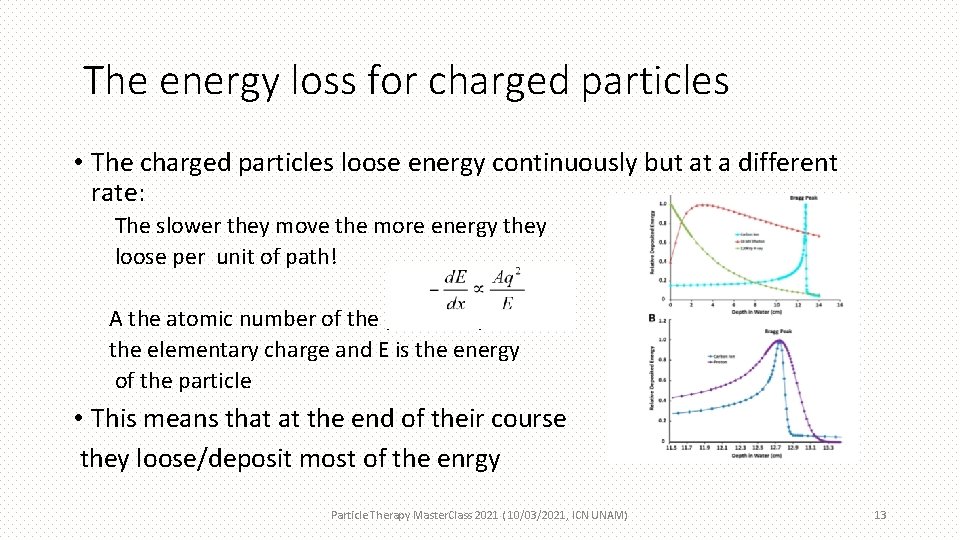
The energy loss for charged particles • The charged particles loose energy continuously but at a different rate: The slower they move the more energy they loose per unit of path! A the atomic number of the particle , q the elementary charge and E is the energy of the particle • This means that at the end of their course they loose/deposit most of the enrgy Particle Therapy Master. Class 2021 ( 10/03/2021, ICN UNAM) 13

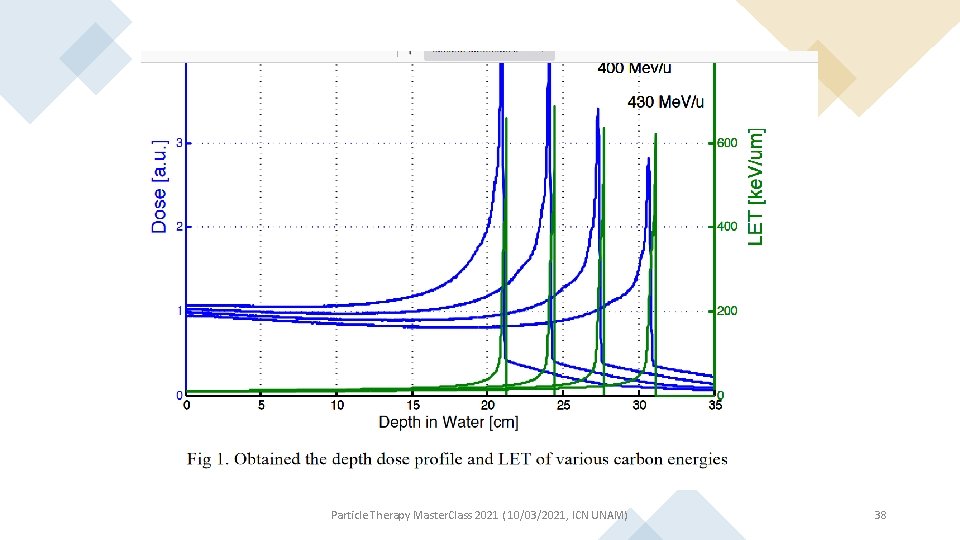
Linear energy transfer LET describes the rate at which the energy is transferred per unit length of track (ke. V/μm). Particle Therapy Master. Class 2021 ( 10/03/2021, ICN UNAM) 14
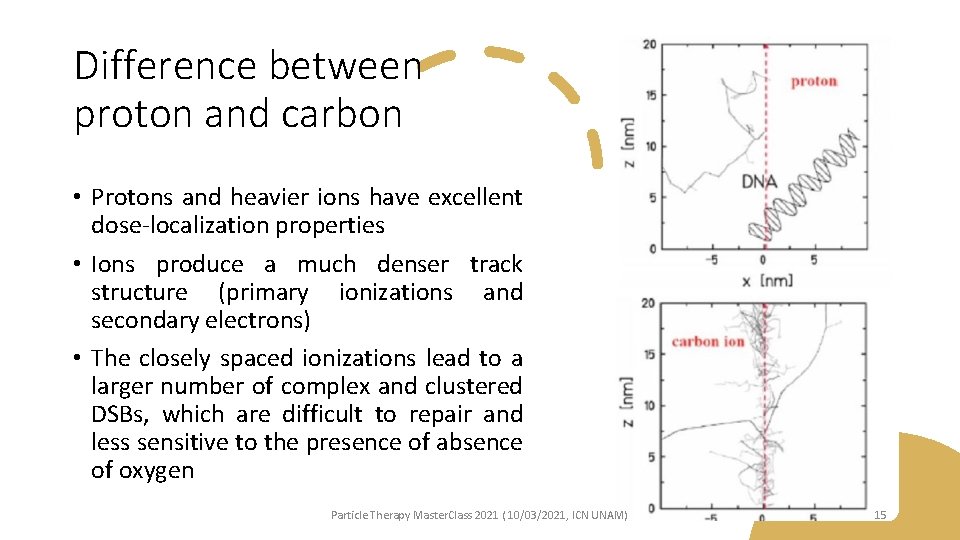
Difference between proton and carbon • Protons and heavier ions have excellent dose-localization properties • Ions produce a much denser track structure (primary ionizations and secondary electrons) • The closely spaced ionizations lead to a larger number of complex and clustered DSBs, which are difficult to repair and less sensitive to the presence of absence of oxygen Particle Therapy Master. Class 2021 ( 10/03/2021, ICN UNAM) 15
Absorbed dose • Absorbed dose is the quantity of the energy deposited in matter by ionizing radiation per unit mass. Absorbed dose is used in the calculation of dose uptake in living tissue in both radiation protection (reduction of harmful effects), and radiology (potential beneficial effects for example in cancer treatment) • The SI unit of measure is the gray (Gy), which is defined as one Joule of energy absorbed per kilogram of matter. [ • The older, non-SI CGS unit rad, is sometimes also used, predominantly in the USA • The absorbed dose is a poor indicator of the biological effect of radiation, • the biological effect can depend on many other factors, including the type of radiation, energy, and type of tissue. The relative biological effectiveness can help give a better measure of the biological effect of radiation. The relative biological effectiveness for radiation of type R on a tissue is defined as the ratio Particle Therapy Master. Class 2021 ( 10/03/2021, ICN UNAM) 16
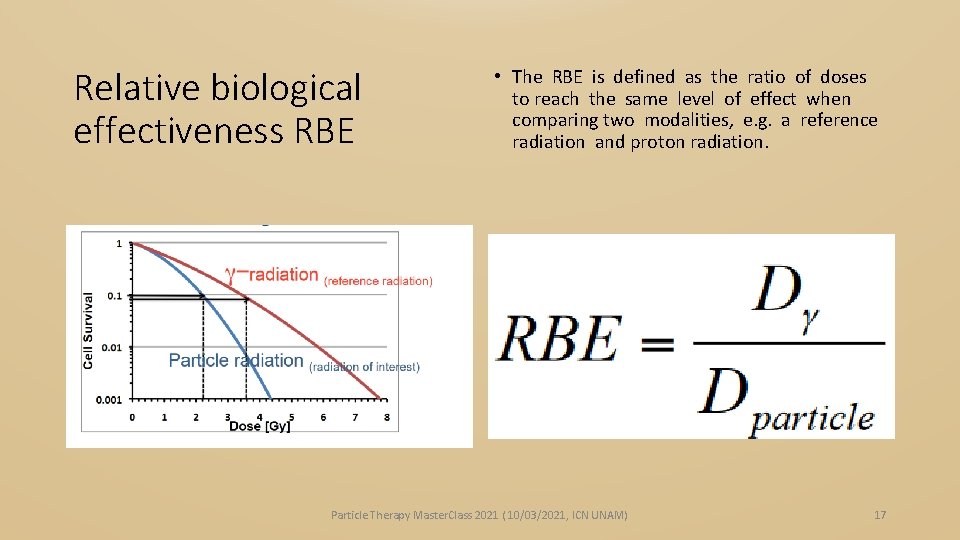
Relative biological effectiveness RBE • The RBE is defined as the ratio of doses to reach the same level of effect when comparing two modalities, e. g. a reference radiation and proton radiation. Particle Therapy Master. Class 2021 ( 10/03/2021, ICN UNAM) 17
Origin of the necessity for defining RBE • The reason for the altered biological effectiveness of carbon ions as compared to photons is the different way they transfer their energy on a microscopic scale. • The high-energetic photons transfer a large fraction of their energy to secondary electrons, • ions release a large number of secondary electrons with very low energies, mostly in the ke. V range. • The secondary electrons released by photons spread their energy over large distances from the primary interaction point while the secondary electrons originating from ions deposit their energy essentially within a small radius around the primary ion track (Krämer and Kraft 1994 a, 1994 b). This maximum radius decreases from 156 μm to 3 μm and 0. 06 μm for carbon ion energies of 100, 10, and 1 Me. V u− 1, respectively (Elsässer et al 2008). As the maximum track radius decreases and the LET increases with decreasing energy, the local dose around the carbon ion. Particle Therapy Master. Class 2021 ( 10/03/2021, ICN UNAM) 18
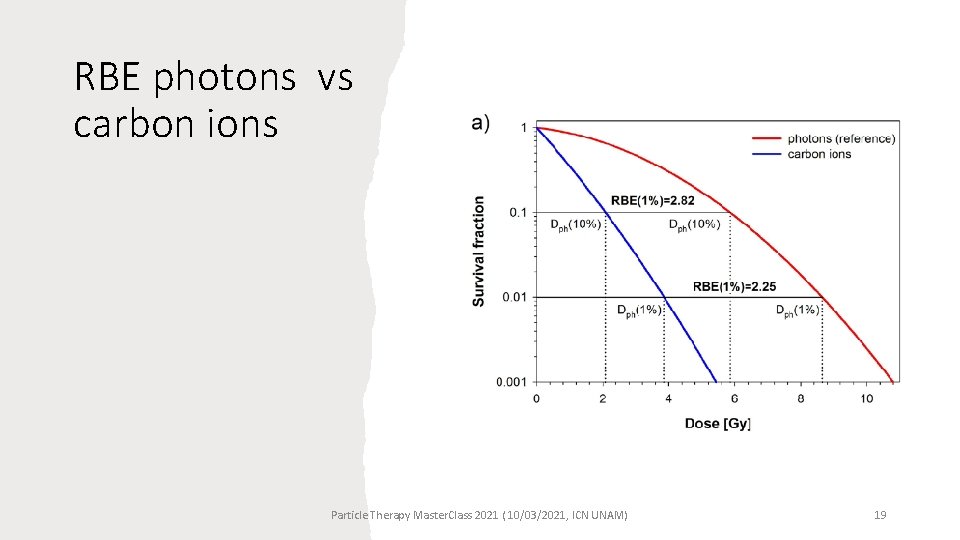
RBE photons vs carbon ions Particle Therapy Master. Class 2021 ( 10/03/2021, ICN UNAM) 19
Particle Therapy Master. Class 2021 ( 10/03/2021, ICN UNAM) 20
Lets turn to the living organisms Particle Therapy Master. Class 2021 ( 10/03/2021, ICN UNAM) 21
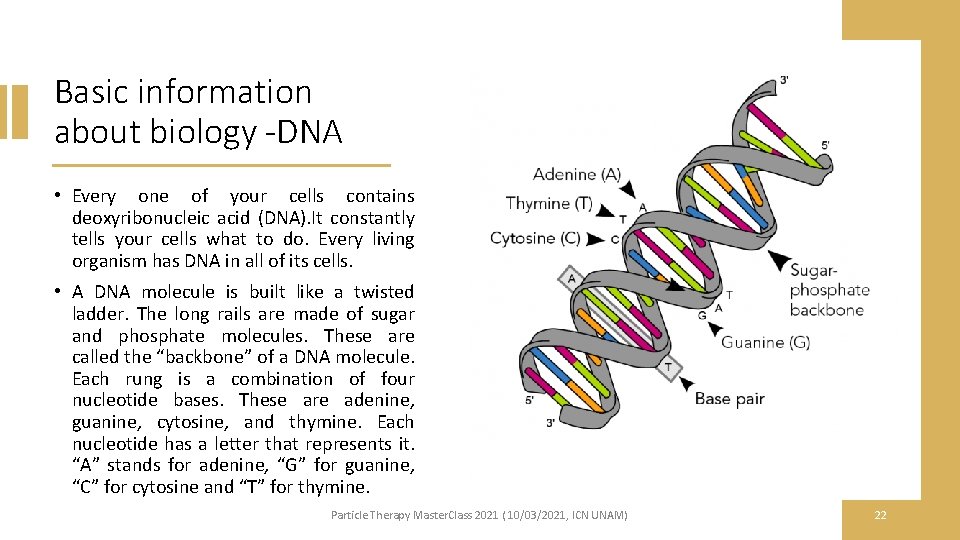
Basic information about biology -DNA • Every one of your cells contains deoxyribonucleic acid (DNA). It constantly tells your cells what to do. Every living organism has DNA in all of its cells. • A DNA molecule is built like a twisted ladder. The long rails are made of sugar and phosphate molecules. These are called the “backbone” of a DNA molecule. Each rung is a combination of four nucleotide bases. These are adenine, guanine, cytosine, and thymine. Each nucleotide has a letter that represents it. “A” stands for adenine, “G” for guanine, “C” for cytosine and “T” for thymine. Particle Therapy Master. Class 2021 ( 10/03/2021, ICN UNAM) 22
The biological effects ofradiation The biological effects can be of two natures 1) A direct atack to the key element of the cells – the DNA 2) An indirect poisoning of vital elements Particle Therapy Master. Class 2021 ( 10/03/2021, ICN UNAM) 23
• Direct action can lead to either DNA damage or DNA mutations. Keep in mind that these are two different things. Direct action • DNA lesions involve physical damage. This includes changes to the chemical structure of the DNA molecule (numbers 2 and 3 in the list and diagram). • DNA mutations involve changes to the sequence of base pairs (number 1 on the list and diagram). If DNA damage is not repaired, it can lead to mutations. Mutations can prevent genes from making correct proteins. This can be very harmful to an organism. Particle Therapy Master. Class 2021 ( 10/03/2021, ICN UNAM) 24
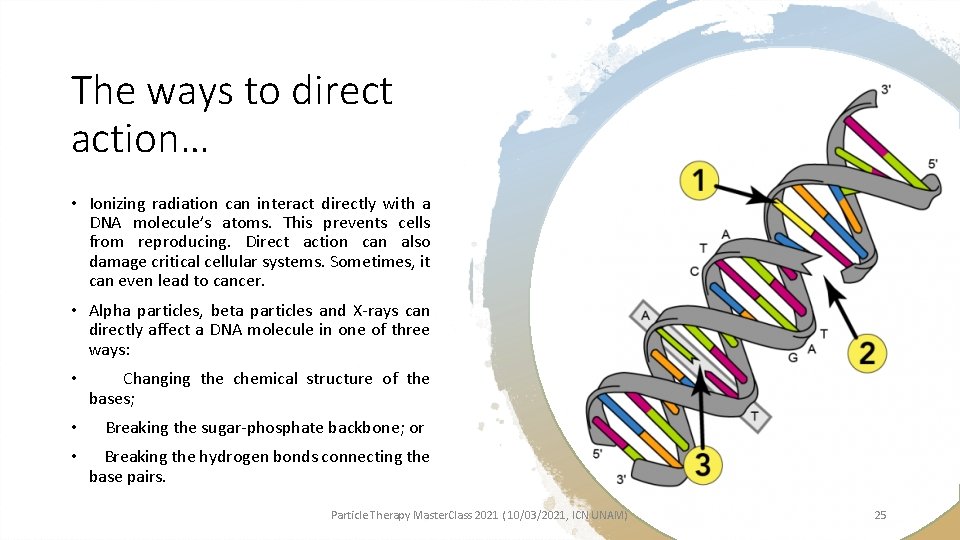
The ways to direct action… • Ionizing radiation can interact directly with a DNA molecule’s atoms. This prevents cells from reproducing. Direct action can also damage critical cellular systems. Sometimes, it can even lead to cancer. • Alpha particles, beta particles and X-rays can directly affect a DNA molecule in one of three ways: • Changing the chemical structure of the bases; • Breaking the sugar-phosphate backbone; or • Breaking the hydrogen bonds connecting the base pairs. Particle Therapy Master. Class 2021 ( 10/03/2021, ICN UNAM) 25
Indirect action • Ionizing radiation can also affect important molecules other than DNA. For example, it can break the bonds holding water molecules together. This creates hydrogen (H+) and hydroxyls (OH-) ions. These are called free radicals. • Free radicals are highly reactive. This means that they easily combine with other ions inside cells. For example, hydroxyl ions (OH-) can react with hydrogen atoms inside a DNA molecule to form hydrogen peroxide (H 2 O 2). This can cause the types of DNA damage we talked about earlier. Over time, damage from free radicals can build up. Scientists think that free radical damage contributes to aging and diseases like cancer, Alzheimer’s and Parkinson’s. Particle Therapy Master. Class 2021 ( 10/03/2021, ICN UNAM) 26
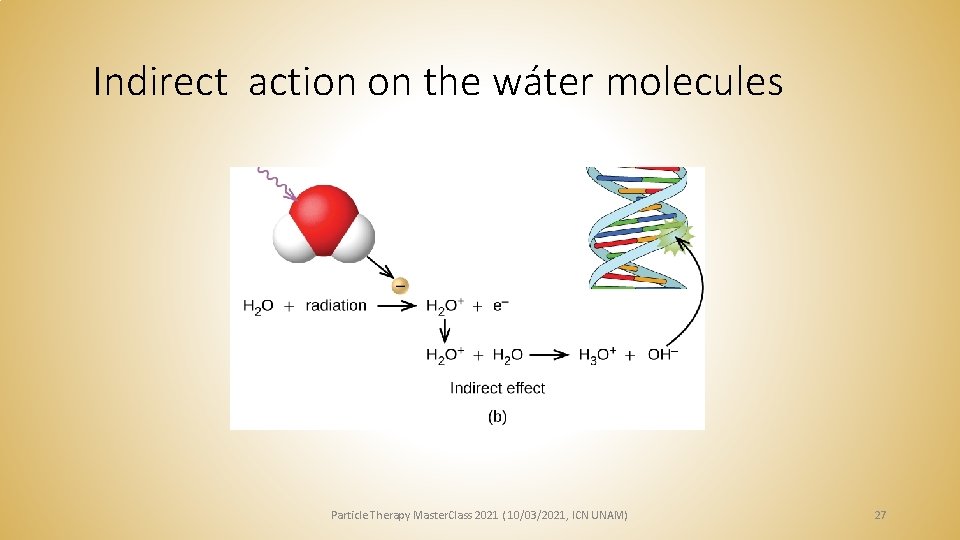
Indirect action on the wáter molecules Particle Therapy Master. Class 2021 ( 10/03/2021, ICN UNAM) 27
The sensitivity of different cells • Some cells, like blood and reproductive cells, divide more often than others. These types of cells are much more sensitive to radiation. For example, embryos contain a lot of rapidly dividing cells. As a result, they are very sensitive to radiation. That is why pregnant women should limit their exposure to radiation. Fast-growing tumour cells are also very sensitive to radiation. That is why cancer therapy uses radiation to kill cancer cells. • You are surrounded by ionizing radiation. It can affect cells through direct and indirect action, causing DNA damage as well as mutations. This can be especially harmful to cells that divide very quickly. But sometimes this can be a good thing, like when doctors use radiation to fight cancer. Particle Therapy Master. Class 2021 ( 10/03/2021, ICN UNAM) 28
How the radiation affects the tissues • DNA serves two important cellular functions: It is the genetic material passed from parent to offspring and it serves as the information to direct and regulate the construction of the proteins necessary for the cell to perform all of its functions. • The damages of radiation can be dangerous and profitable: • We can kill cancerous cells! Particle Therapy Master. Class 2021 ( 10/03/2021, ICN UNAM) 29
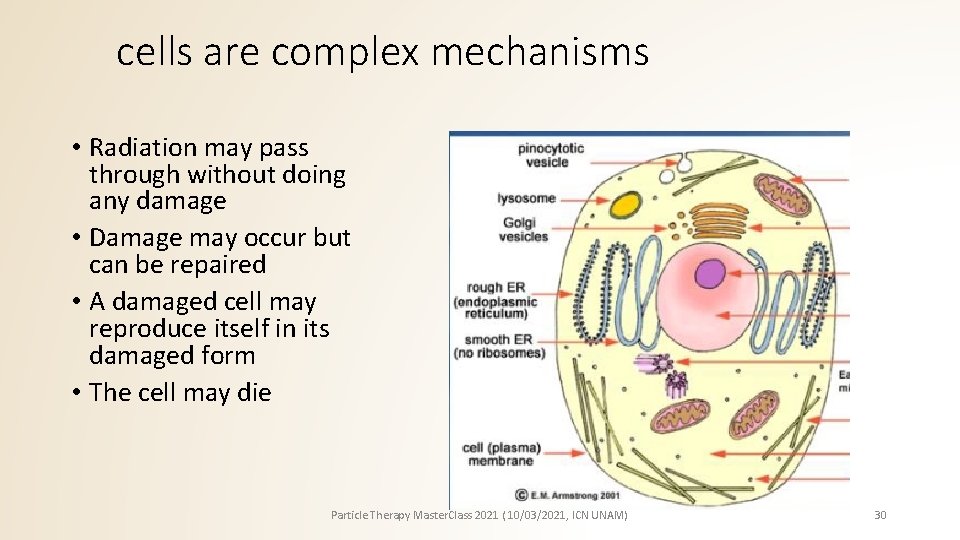
cells are complex mechanisms • Radiation may pass through without doing any damage • Damage may occur but can be repaired • A damaged cell may reproduce itself in its damaged form • The cell may die Particle Therapy Master. Class 2021 ( 10/03/2021, ICN UNAM) 30
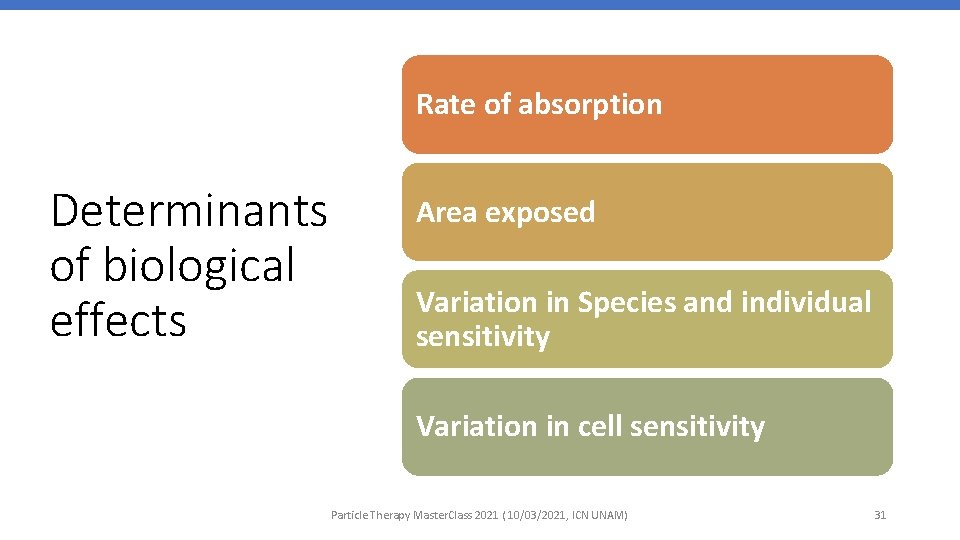
Rate of absorption Determinants of biological effects Area exposed Variation in Species and individual sensitivity Variation in cell sensitivity Particle Therapy Master. Class 2021 ( 10/03/2021, ICN UNAM) 31
Damage and recovery • Single strand breaks • Most DNA damage is repaired with no long term effects • Double-strand breaks • – potential for long term damage Comparatively rare ( 1 double strand break for 25 single strand breaks) Particle Therapy Master. Class 2021 ( 10/03/2021, ICN UNAM) 32
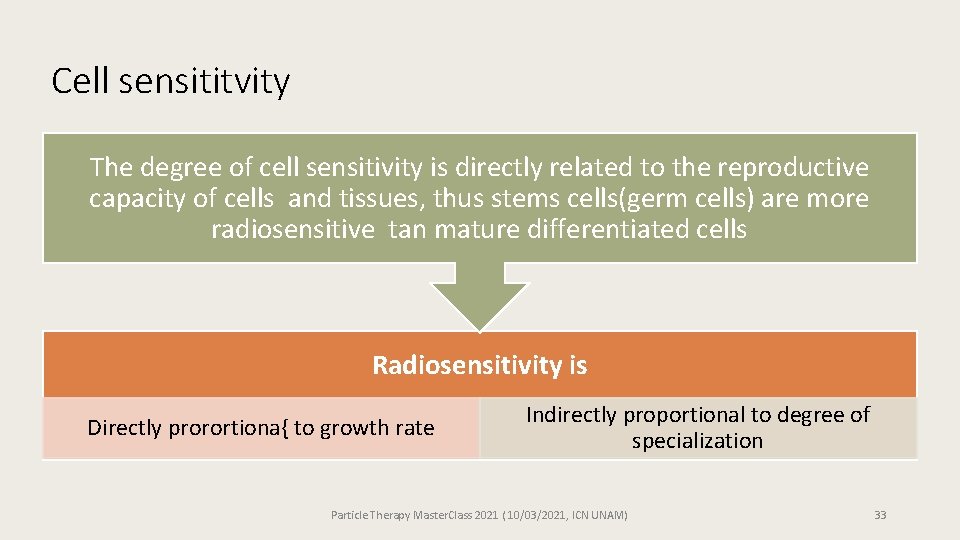
Cell sensititvity The degree of cell sensitivity is directly related to the reproductive capacity of cells and tissues, thus stems cells(germ cells) are more radiosensitive tan mature differentiated cells Radiosensitivity is Directly prorortiona{ to growth rate Indirectly proportional to degree of specialization Particle Therapy Master. Class 2021 ( 10/03/2021, ICN UNAM) 33
Cell sensitivity • Most sensitive: • Hemapoietic cells White blood cells Red blood cells Epithelial cells (Intestinal tract, skin, muscle cells • Least sensitive: • Nerve cells Particle Therapy Master. Class 2021 ( 10/03/2021, ICN UNAM) 34
The question • How to deliver the radiation where we want it to Kill malignant cells and spare sane ones Particle Therapy Master. Class 2021 ( 10/03/2021, ICN UNAM) 35
The problems with photon radiotherapy • The photons deposit the majority of their energy (and damage) before reaching a deep seated tumor • One therefore needs to make irradiations from different direction to spare the sane tissues Particle Therapy Master. Class 2021 ( 10/03/2021, ICN UNAM) 36
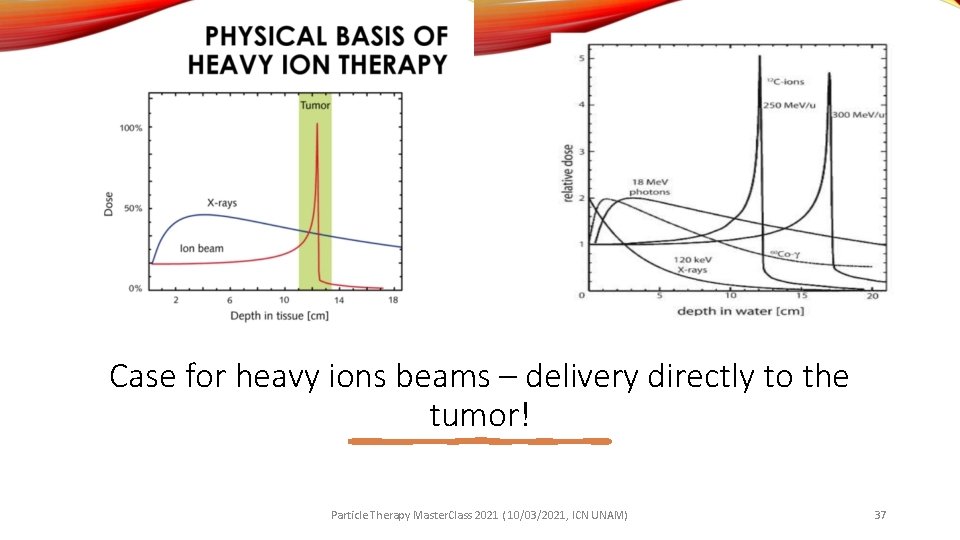
Case for heavy ions beams – delivery directly to the tumor! Particle Therapy Master. Class 2021 ( 10/03/2021, ICN UNAM) 37
Particle Therapy Master. Class 2021 ( 10/03/2021, ICN UNAM) 38
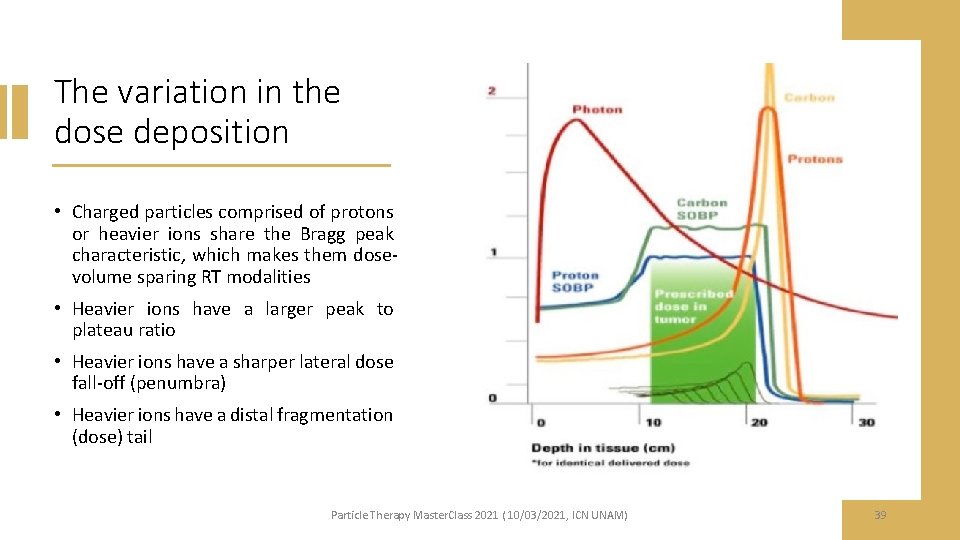
The variation in the dose deposition • Charged particles comprised of protons or heavier ions share the Bragg peak characteristic, which makes them dosevolume sparing RT modalities • Heavier ions have a larger peak to plateau ratio • Heavier ions have a sharper lateral dose fall-off (penumbra) • Heavier ions have a distal fragmentation (dose) tail Particle Therapy Master. Class 2021 ( 10/03/2021, ICN UNAM) 39
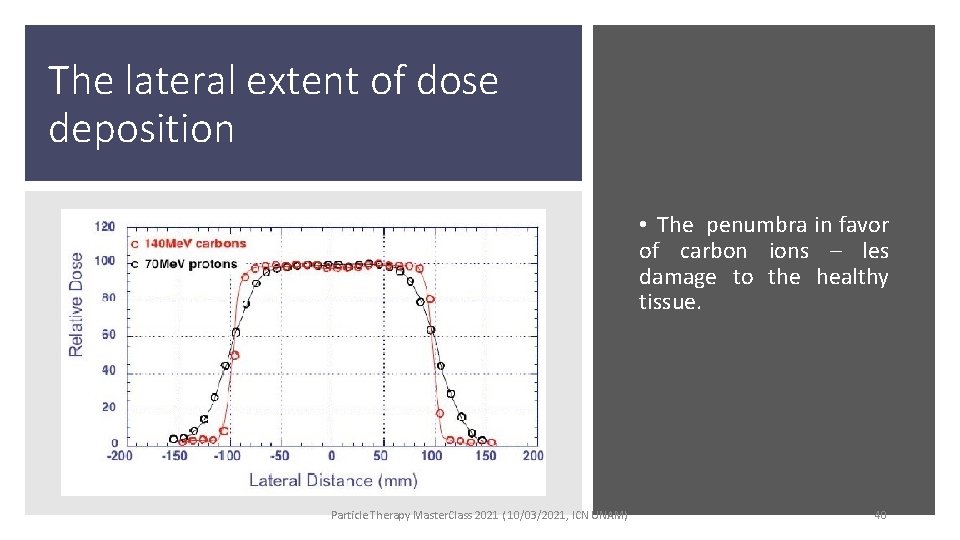
The lateral extent of dose deposition • The penumbra in favor of carbon ions – les damage to the healthy tissue. Particle Therapy Master. Class 2021 ( 10/03/2021, ICN UNAM) 40
Carbon ions win! • The carbon beams show more advantages on the biological properties compared with proton beams in radiation therapy. The carbon beam shows highlinear energy transfer (LET) to medium and it increases the relative biological effectiveness (RBE). • The accelerators for carbon ions everyday are gaining more spce in the tools to treat cancers. Particle Therapy Master. Class 2021 ( 10/03/2021, ICN UNAM) 41
- Slides: 40