
Master of Instructional Techonology Faculty of Education Department
- Slides: 22
Master of Instructional Techonology Faculty of Education Department of Curriculum & Instructional Technology UNIVERSITY MALAYA Social Family of Model Lecturer: Dr. Norlidah Alias Prepared by: Te Choon Kiong (PGC 090011) Lim Hooi Leng (PGC 090012) Guek Yee Hui (PGC 090019) PXGT 6106 INSTRUCTIONAL MODELS & STRATEGIES
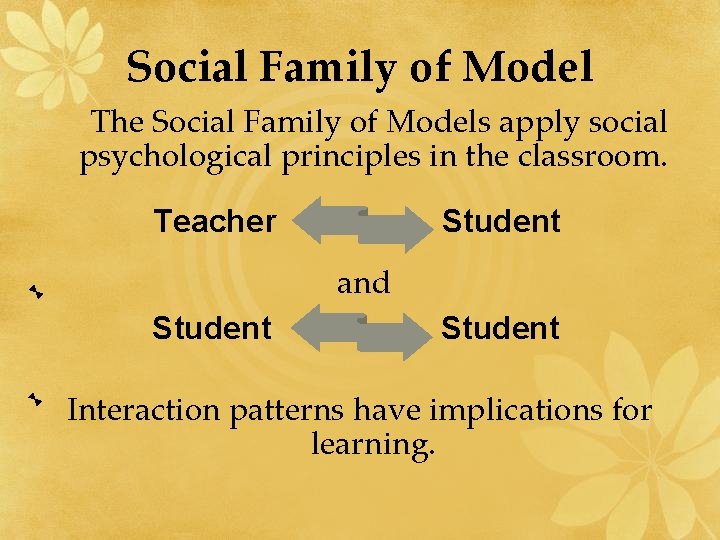
Social Family of Model The Social Family of Models apply social psychological principles in the classroom. Teacher Student and Student Interaction patterns have implications for learning.
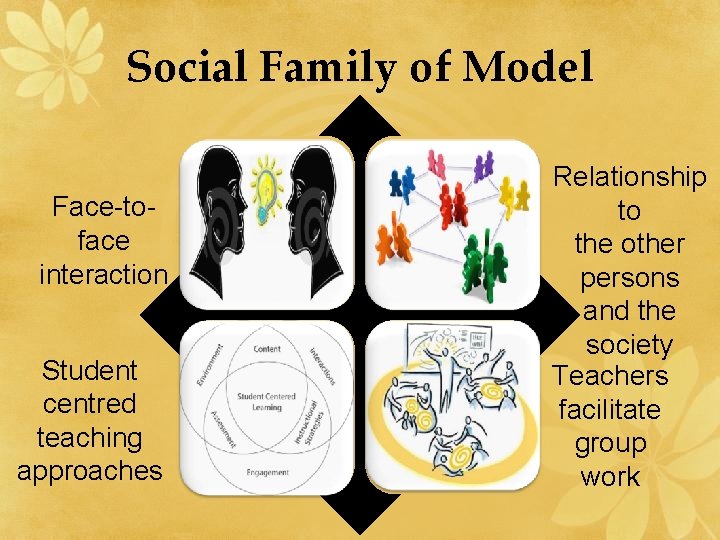
Social Family of Model Face-toface interaction Student centred teaching approaches Relationship to the other persons and the society Teachers facilitate group work
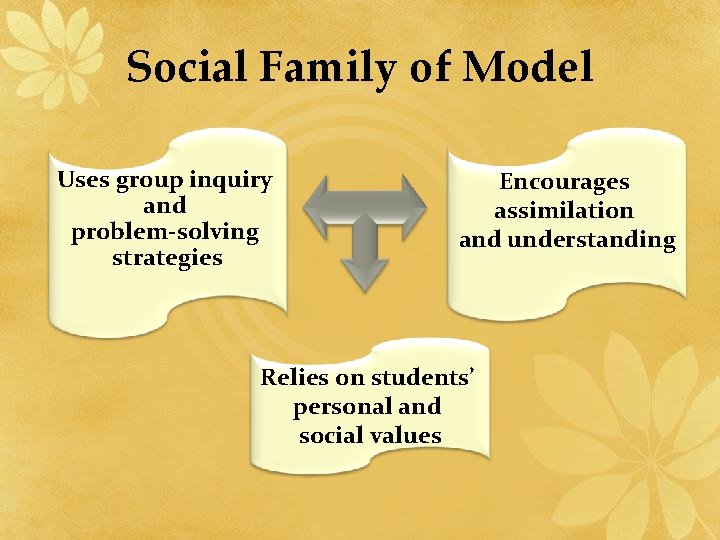
Social Family of Model Uses group inquiry and problem-solving strategies Encourages assimilation and understanding Relies on students’ personal and social values
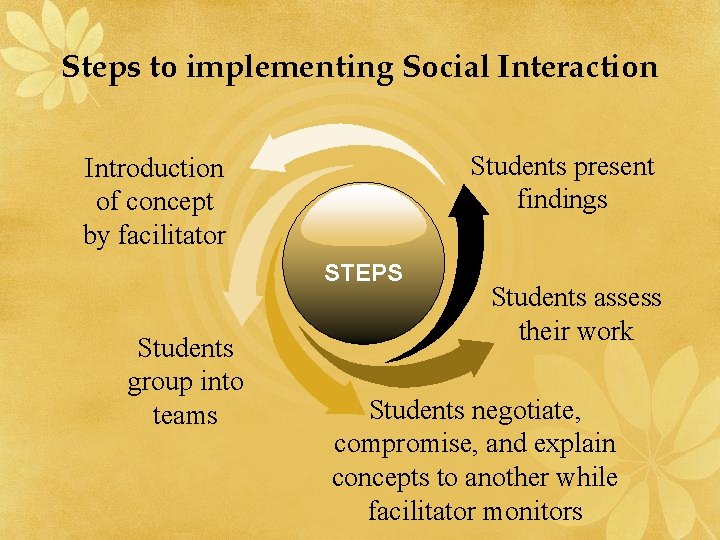
Steps to implementing Social Interaction Students present findings Introduction of concept by facilitator STEPS Students group into teams Students assess their work Students negotiate, compromise, and explain concepts to another while facilitator monitors
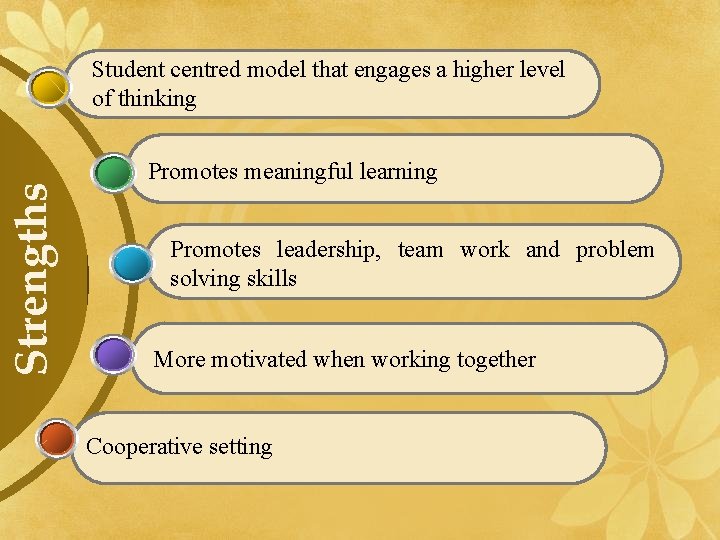
Strengths Student centred model that engages a higher level of thinking Promotes meaningful learning Promotes leadership, team work and problem solving skills More motivated when working together Cooperative setting
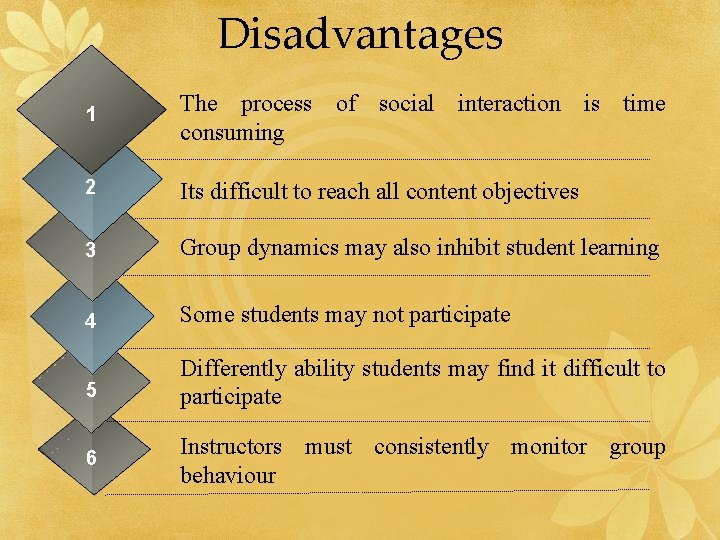
Disadvantages 1 The process of social interaction is time consuming 2 Its difficult to reach all content objectives 3 Group dynamics may also inhibit student learning 4 Some students may not participate 5 Differently ability students may find it difficult to participate 6 Instructors must consistently monitor group behaviour
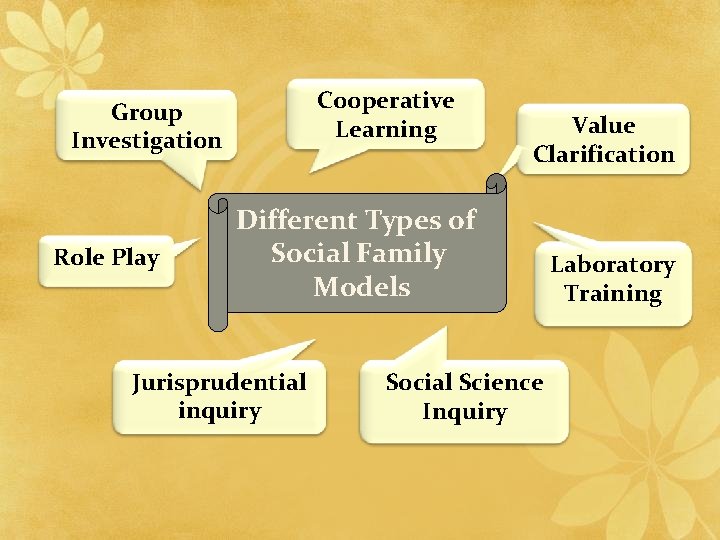
Cooperative Learning Group Investigation Role Play Value Clarification Different Types of Social Family Models Jurisprudential inquiry Social Science Inquiry Laboratory Training
Cooperative learning • It is a successful teaching strategy in which small teams, each with students of different levels of ability, use a variety of learning activities to improve their understanding of a subject. • Each member of a team is responsible not only for learning what is taught but also for helping team mates learn, thus creating an atmosphere of achievement. • Academic engagement through social interaction • Activities structured so that students need each other to accomplish tasks • “We Instead Of Me”
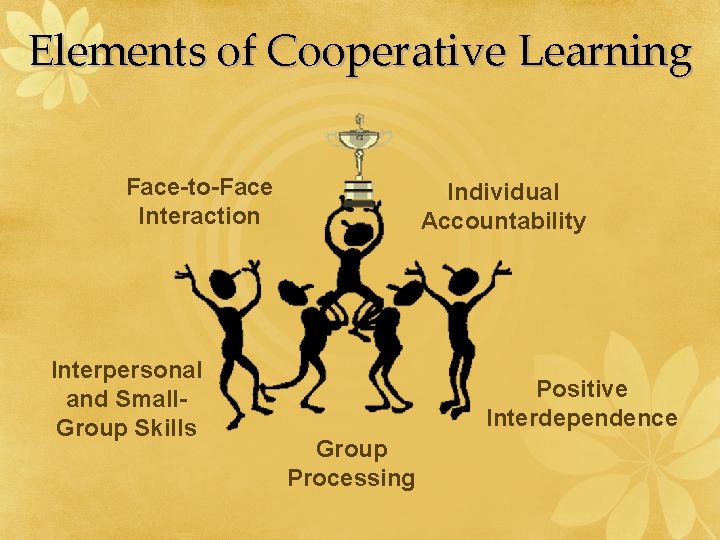
Elements of Cooperative Learning Face-to-Face Interaction Interpersonal and Small. Group Skills Individual Accountability Positive Interdependence Group Processing
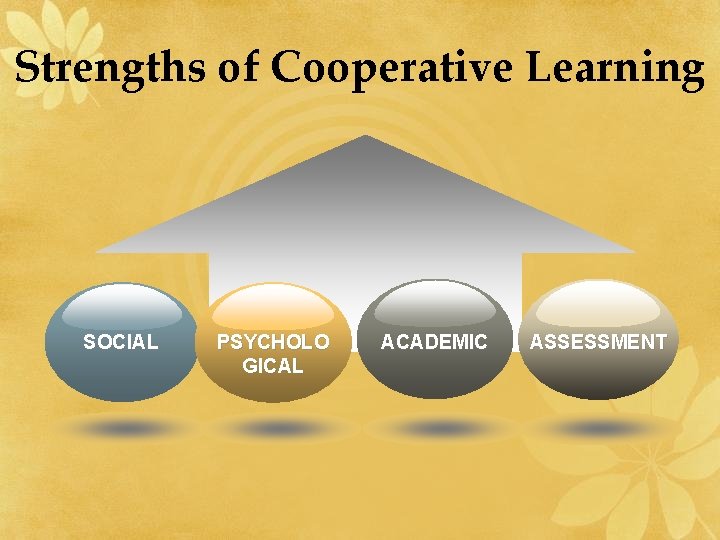
Strengths of Cooperative Learning SOCIAL PSYCHOLO GICAL ACADEMIC ASSESSMENT
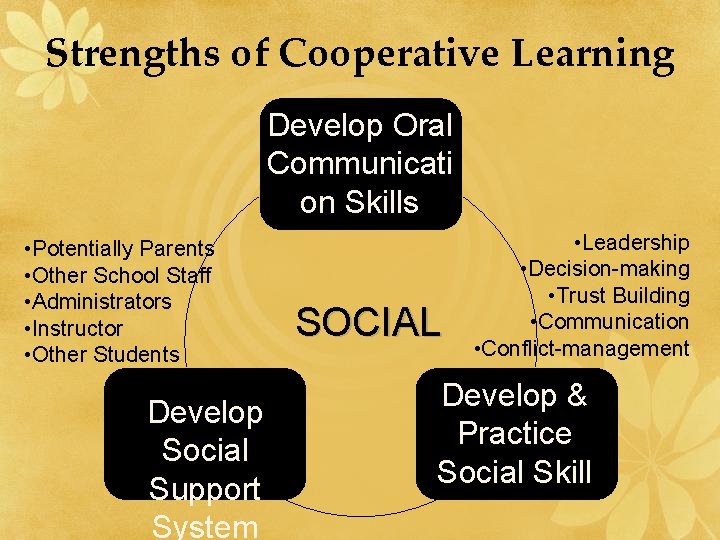
Strengths of Cooperative Learning Develop Oral Communicati on Skills • Potentially Parents • Other School Staff • Administrators • Instructor • Other Students Develop Social Support System SOCIAL • Leadership • Decision-making • Trust Building • Communication • Conflict-management Develop & Practice Social Skill
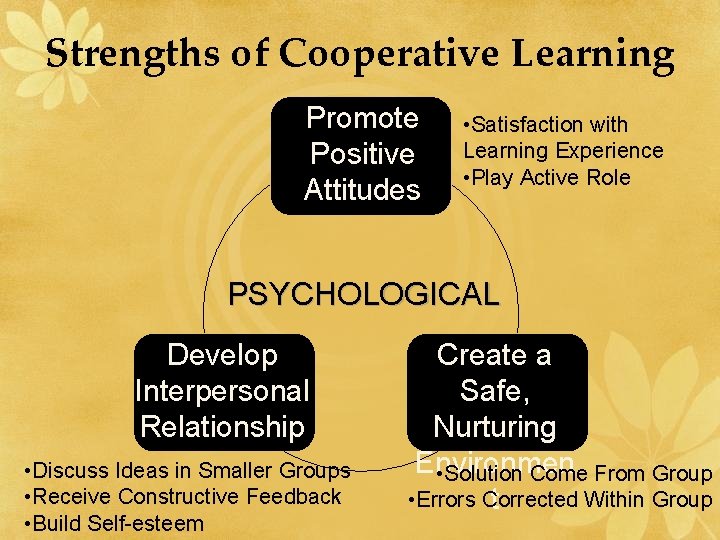
Strengths of Cooperative Learning Promote Positive Attitudes • Satisfaction with Learning Experience • Play Active Role PSYCHOLOGICAL Develop Interpersonal Relationship • Discuss Ideas in Smaller Groups • Receive Constructive Feedback • Build Self-esteem Create a Safe, Nurturing Environmen • Solution Come From Group • Errors Corrected Within Group t
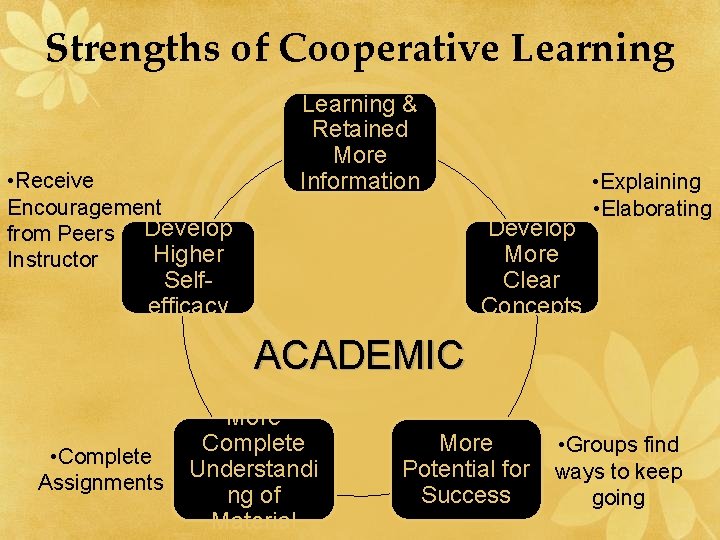
Strengths of Cooperative Learning • Receive Encouragement from Peers & Develop Higher Instructor Learning & Retained More Information Develop More Clear Concepts Selfefficacy • Explaining • Elaborating ACADEMIC • Complete Assignments More Complete Understandi ng of Material More Potential for Success • Groups find ways to keep going
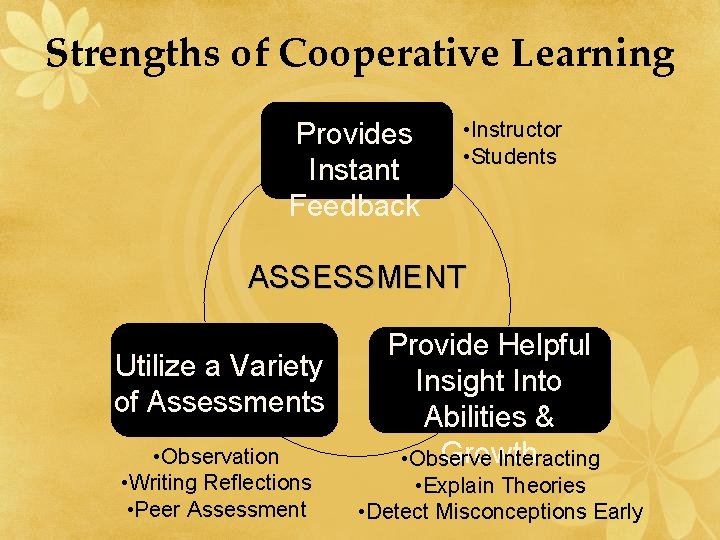
Strengths of Cooperative Learning Provides Instant Feedback • Instructor • Students ASSESSMENT Utilize a Variety of Assessments • Observation • Writing Reflections • Peer Assessment Provide Helpful Insight Into Abilities & Growth • Observe Interacting • Explain Theories • Detect Misconceptions Early
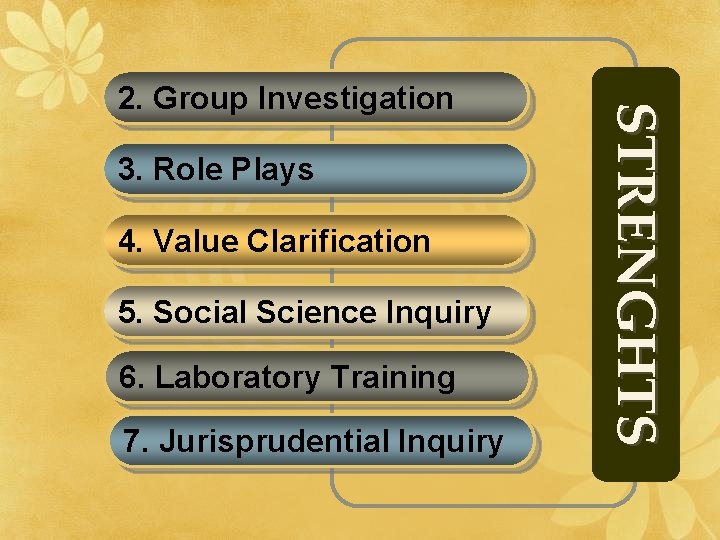
3. Role Plays 4. Value Clarification 5. Social Science Inquiry 6. Laboratory Training 7. Jurisprudential Inquiry S T R E NGHT S 2. Group Investigation
2. Group Investigation More open ended and permits a more in-depth study of complex problems and issues.
3. Role Plays • Role-playing exercises motivate students, augment traditional curricula, and teach real-world skill. • Help students develop “voice” and learn interpersonal skills
4. Value Clarification Study of values helps students identify and clarify their values, and consider if they are living by their identified values.
5. Social Science Inquiry 6. Laboratory Training Adapted from the world of work these strategies develop self awareness and responsibility to others in terms of mutual respect and commitment to the team effort.
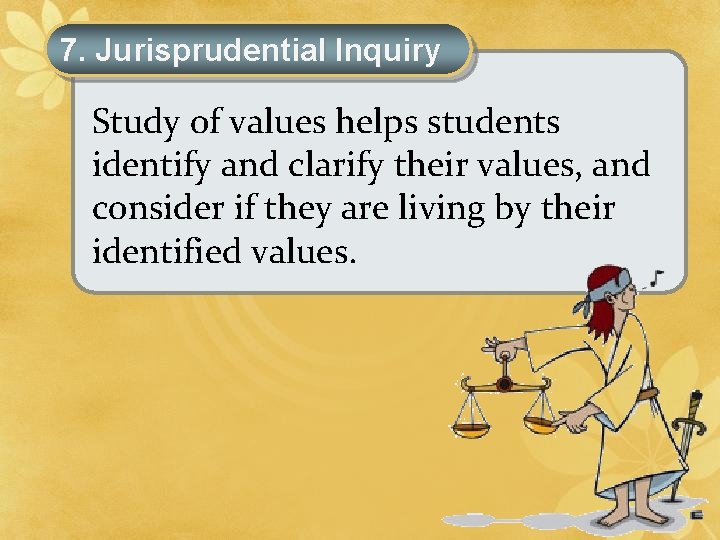
7. Jurisprudential Inquiry Study of values helps students identify and clarify their values, and consider if they are living by their identified values.
Conclusion This social interaction model provides us with a general model to study human centered complex activities.