
Master Gardener PESTICIDE SAFETY By ALAN BRUHIN UNIVERSITY
Master Gardener PESTICIDE SAFETY By ALAN BRUHIN UNIVERSITY OF TENNESSEE EXTENSION
What Is A Pesticide § The Term Pesticide Refers To A Chemical Substance That Kills Pest § Humans Label “Pest” As Any Plant Or Animal That Endangers Our Food, Health Or Comfort § Pesticides Are Used As A Tool To Manage Pest At An Acceptable Tolerance Level
Pest Identification Is Key! § Accurate Pest Identification Is The Most Important Step To An Effective Management Program § The More You Know About The Pest, The Easier, More Cost Effective And Safer Your Pest Control Will Be
Is Pest Control Necessary? § Control A Pest Only When It Is Causing Or Is Expected To Cause More Harm Than Is Reasonable To Expect § Use A Control Strategy That Will Reduce Pest Numbers To An Acceptable Level § Cause As Little Harm As Possible To Everything Except The Pest
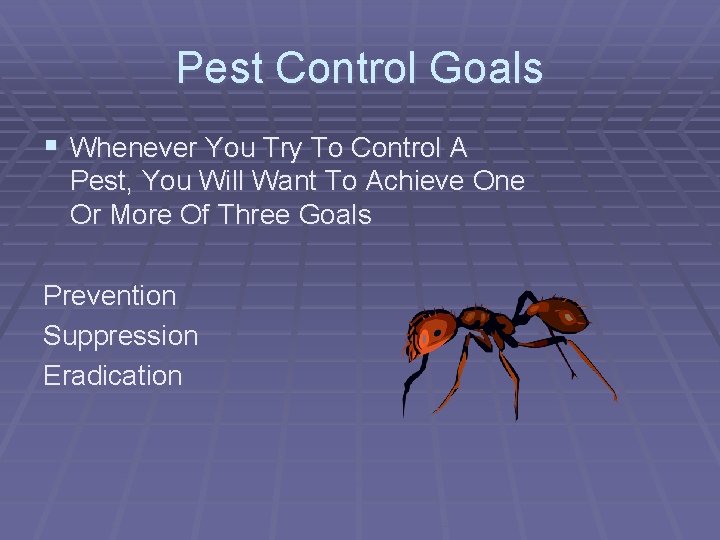
Pest Control Goals § Whenever You Try To Control A Pest, You Will Want To Achieve One Or More Of Three Goals Prevention Suppression Eradication
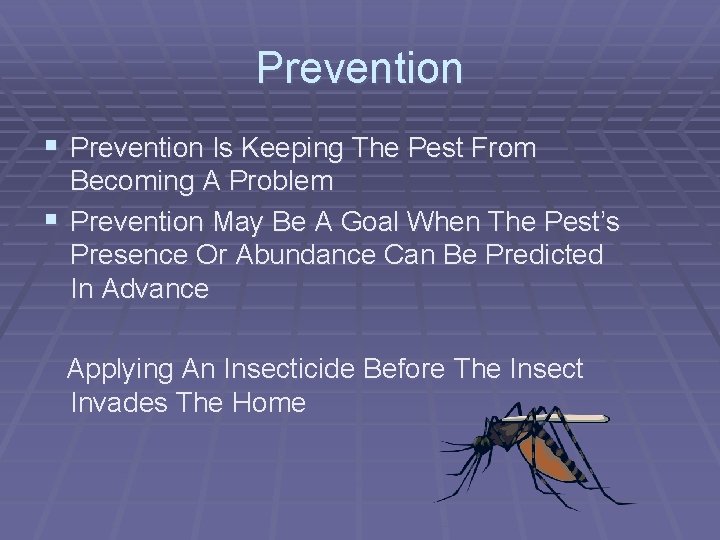
Prevention § Prevention Is Keeping The Pest From Becoming A Problem § Prevention May Be A Goal When The Pest’s Presence Or Abundance Can Be Predicted In Advance Applying An Insecticide Before The Insect Invades The Home
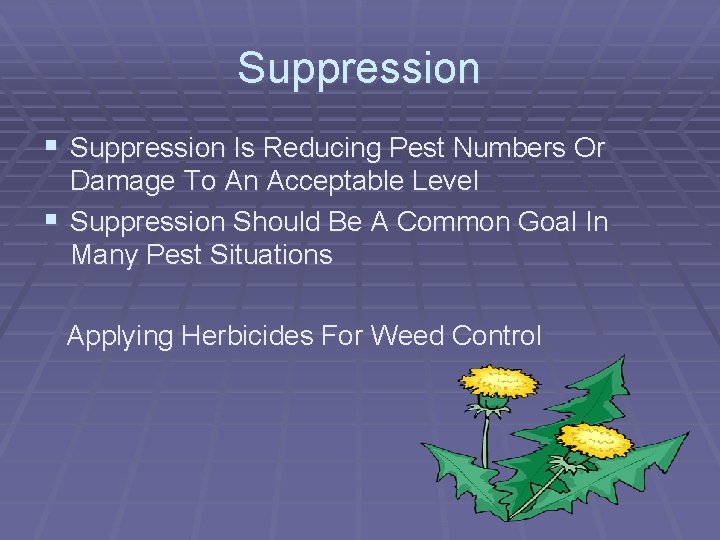
Suppression § Suppression Is Reducing Pest Numbers Or Damage To An Acceptable Level § Suppression Should Be A Common Goal In Many Pest Situations Applying Herbicides For Weed Control
Eradication § Eradication Is Destroying An Entire Pest Population § Eradication Should Be A Rare Goal In Outdoor Pest Problems § Eradication Is Hard To Achieve § Eradication Is More Of A Goal For Indoor Areas Health Care, Food Processing, Etc.
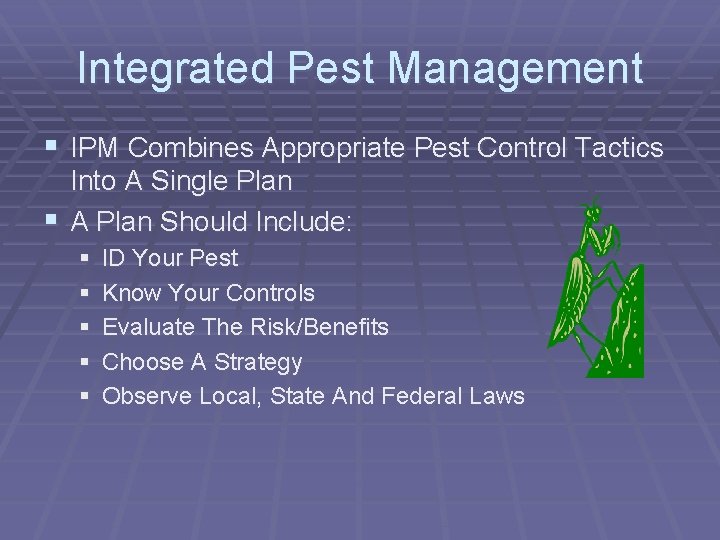
Integrated Pest Management § IPM Combines Appropriate Pest Control Tactics Into A Single Plan § A Plan Should Include: § § § ID Your Pest Know Your Controls Evaluate The Risk/Benefits Choose A Strategy Observe Local, State And Federal Laws
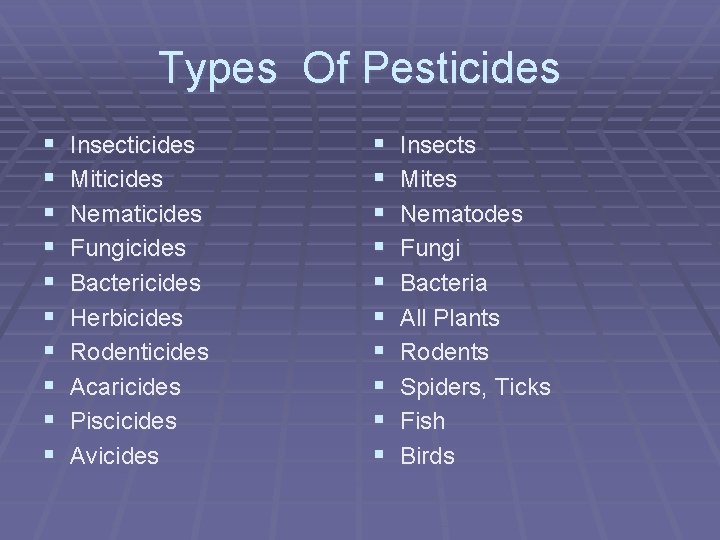
Types Of Pesticides § § § § § Insecticides Miticides Nematicides Fungicides Bactericides Herbicides Rodenticides Acaricides Piscicides Avicides § § § § § Insects Mites Nematodes Fungi Bacteria All Plants Rodents Spiders, Ticks Fish Birds
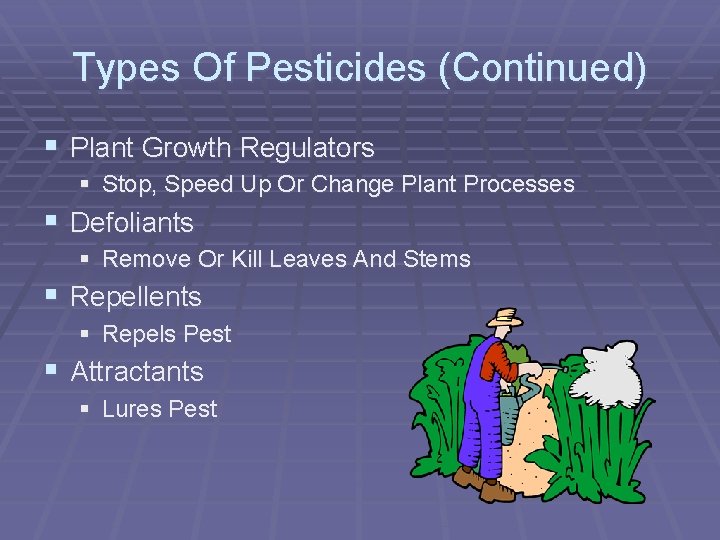
Types Of Pesticides (Continued) § Plant Growth Regulators § Stop, Speed Up Or Change Plant Processes § Defoliants § Remove Or Kill Leaves And Stems § Repellents § Repels Pest § Attractants § Lures Pest
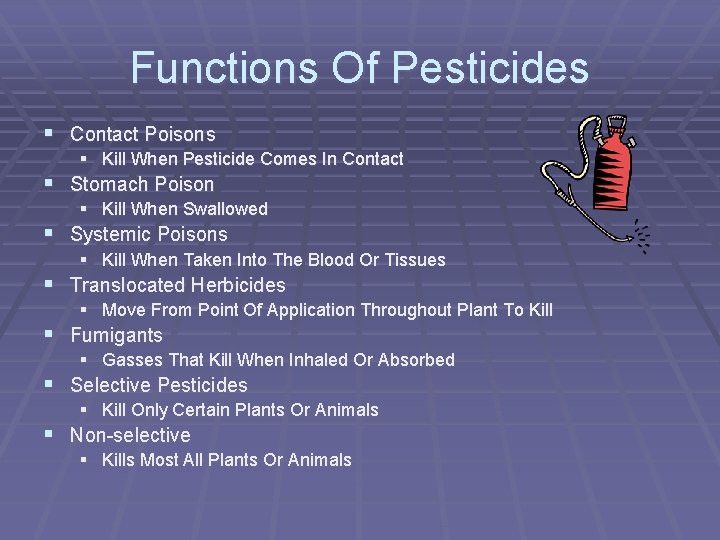
Functions Of Pesticides § Contact Poisons § Kill When Pesticide Comes In Contact § Stomach Poison § Kill When Swallowed § Systemic Poisons § Kill When Taken Into The Blood Or Tissues § Translocated Herbicides § Move From Point Of Application Throughout Plant To Kill § Fumigants § Gasses That Kill When Inhaled Or Absorbed § Selective Pesticides § Kill Only Certain Plants Or Animals § Non-selective § Kills Most All Plants Or Animals
How Pesticides Are Applied § Broadcast § Uniform Application To An Area By Scattering A Pesticide § Crack And Crevice § Small Amounts Of Pesticides Into Areas Which Insects Hide Or Might Enter A Building § Directed § Pesticide Aimed At A Portion Of Plant , Animal Or Building § Drench § Saturating The Soil With A Pesticide
How Pesticides Are Applied (Continued) § Foliar § Applied To Leaves Of Plants § In-furrow § Application In Furrow At Planting § Sidedress § Application Along Crop In The Row § Spot Treatment § Application To A Small Section Or Area Of Crop
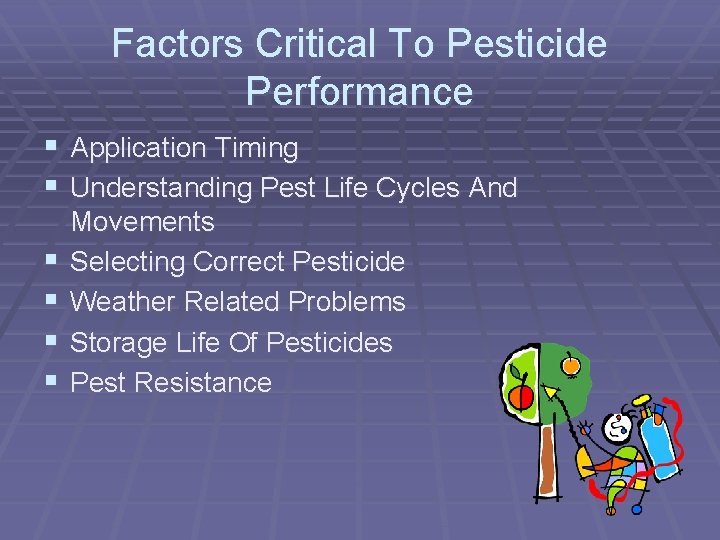
Factors Critical To Pesticide Performance § Application Timing § Understanding Pest Life Cycles And § § Movements Selecting Correct Pesticide Weather Related Problems Storage Life Of Pesticides Pest Resistance
Pesticide Formulations § Emulsifiable Concentrates EC or E § Active Ingredient Is Mixed With Oil Based Carrier Forming An Emulsion § Solutions S § Pre-mixed And Ready To Use § Flowables F or L § A Liquid Mixed With Water To Form Suspension in Spray Tank § Aerosols A § Low Concentrate Solutions Applied As A Fine Spray Or Mist § Dust D § Active Ingredient Added To A Fine Powder Or Talc
Pesticide Formulations (continued) § Granules G § Active Ingredient Added To Coarse Particles § Wettable Powders WP § Formulation Made Into A Powder Made To Mix With Water § Soluable Powders SP § Formulation Made Into A powder To Form A Suspension In Water § Baits B § Active Ingredient Added To An Edible Substance
Adjuvants § An Adjuvant Is A Chemical That Is Added To A Pesticide Formulation Or Tank Mix To Increase Its Effectiveness Or Safety § Most All Pesticide Formulations Contain A Small Percentage Of Adjuvants
Surfactants § A Surfactant Is Used To Reduce The Surface Tension Between Two Unlike Materials, Such As Spray Film And A Solid Surface. § They Are Most Useful When Spraying Hard To Wet Foliage Such As Azalea, Roses, Yews, And Iris § The Pesticide Label Will Tell You If A Surfactant Is Needed
The Pesticide Label § All Printed Information About A Pesticide Product, Including The Product Label, Brochures And Flyers From The Company Or Its Agent, Is Called Labeling. The Label Is Printed On Or Attached To A Container Of Pesticide And It Tells How To Correctly Use The Product And What Safety Measures Need To Be Taken
Parts Of A Label § Everything You Need To Know About A Pesticide Is On The Label § You Should Always Read And Follow Label Directions § Safety Should Be Of Most Importance
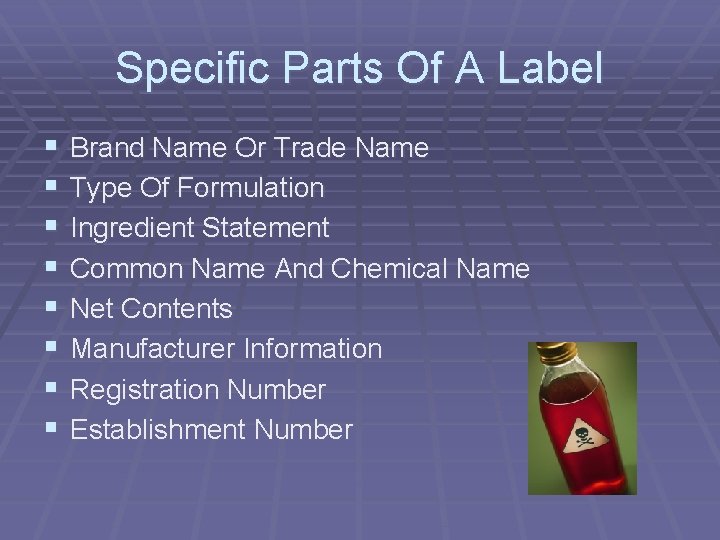
Specific Parts Of A Label § § § § Brand Name Or Trade Name Type Of Formulation Ingredient Statement Common Name And Chemical Name Net Contents Manufacturer Information Registration Number Establishment Number
Specific Parts Of A Label (Continued) § Precautionary Statements § Uses Of The Pesticide § Directions For Use § Environmental Hazards § Physical And Chemical Hazards § Restricted-use Pesticides § First Aid Information
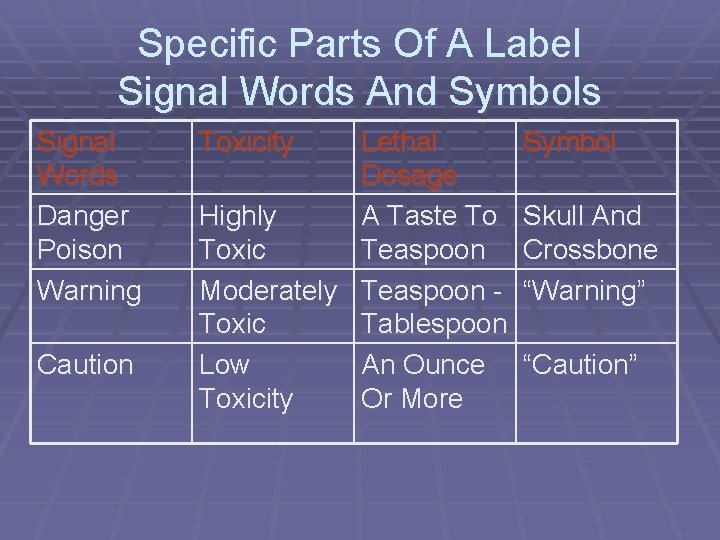
Specific Parts Of A Label Signal Words And Symbols Signal Words Danger Poison Warning Caution Toxicity Lethal Dosage Highly A Taste To Toxic Teaspoon Moderately Teaspoon Toxic Tablespoon Low An Ounce Toxicity Or More Symbol Skull And Crossbone “Warning” “Caution”
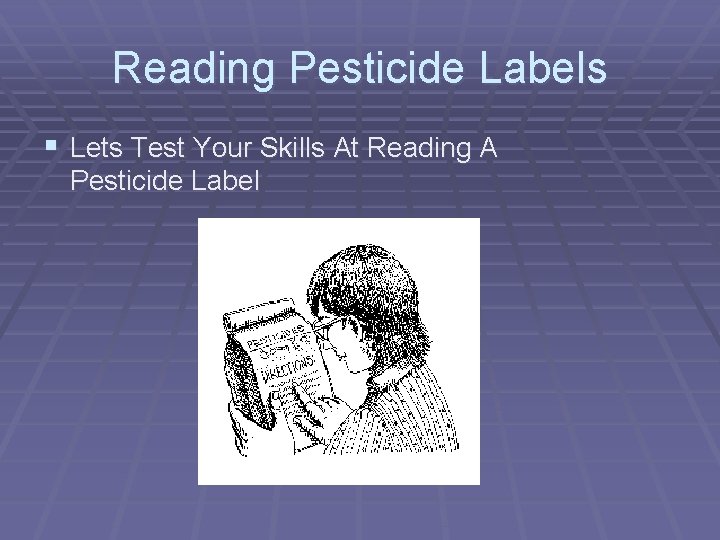
Reading Pesticide Labels § Lets Test Your Skills At Reading A Pesticide Label
What Is The Trade Name Of This Product? § What Is The Function Of This Pesticide? § What Is The Signal Word For This Pesticide? § What Is A Environmental Hazard Of This Product? § When Applying This Product What PPE Should You Wear? § What Is The Restricted Entry Interval (REI) For This Chemical?
§ How Much Chemical Should Be Applied To A 5000 Sq. Ft. Lawn? § How Much Water Should Be Used? § Can You Apply It To A Newly Seeded Lawn? § Is This A Pre Or Post-emergence Chemical? § How Long Should You Wait Before Seeding Grass In The Treated Area? § Do You Need To Add A Surfactant When Applying This Pesticide?
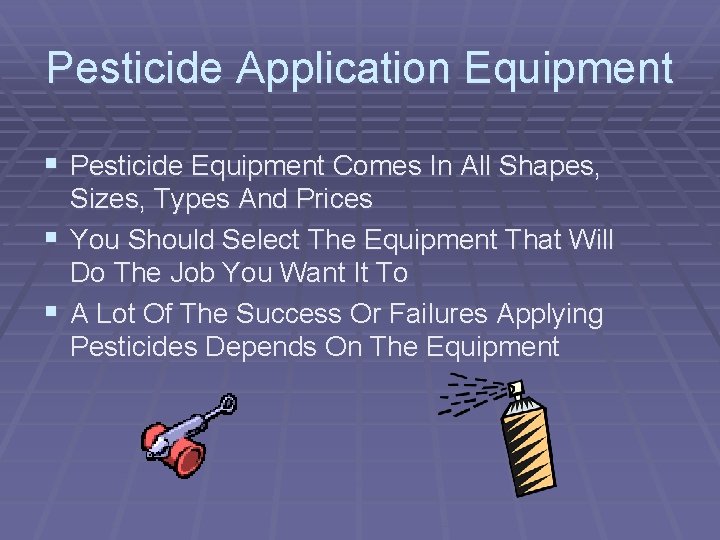
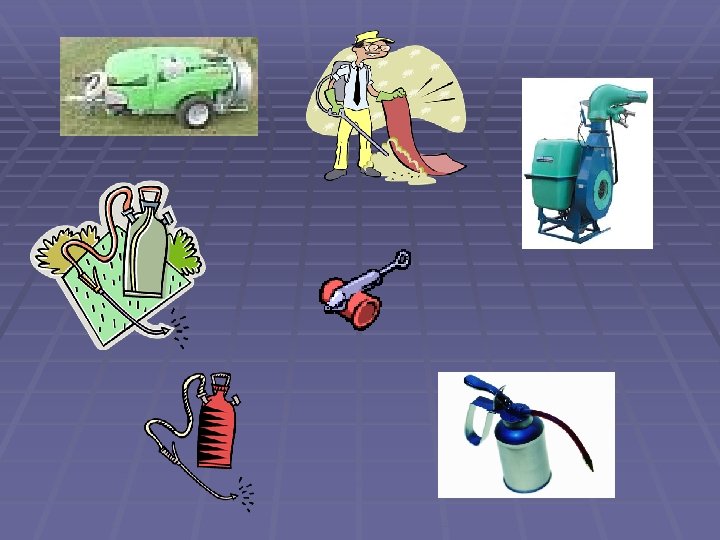
Pesticide Application Equipment § Pesticide Equipment Comes In All Shapes, Sizes, Types And Prices § You Should Select The Equipment That Will Do The Job You Want It To § A Lot Of The Success Or Failures Applying Pesticides Depends On The Equipment
Buying Application Equipment § Before Buying Any Spray Equipment, Keep In Mind…. § § § The Size Of Job Kinds Of Chemicals To Be Applied Amount Of Water Needed Per Spraying Size Of Plants To Be Treated Amount Of Money You Have To Spend
Calibrating A Sprayer § Calibration Involves Adjusting You Sprayer To Apply The Desired rate Of Pesticide § To Much Pesticide Is Dangerous, To Little Will Not Do The Job. § Only By Calibrating Correctly Can You Ensure The Best Results With Your Chemicals
How To Calibrate § Fill Sprayer With Water And Fully Pressurize § Spray Water Into A Pint Jar For 30 Seconds § Measure Amount Of Water Collected In Ounces § Spray An Area While Walking At Normal Speed For 30 Seconds. Measure The Area Sprayed In Square Feet
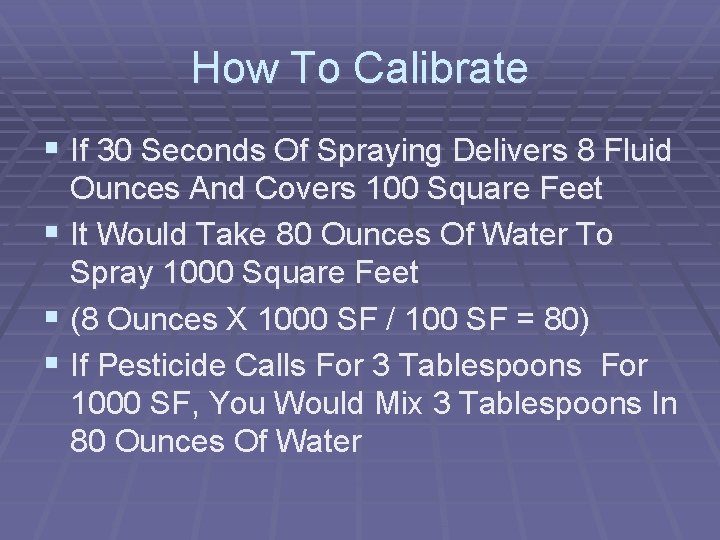
How To Calibrate § If 30 Seconds Of Spraying Delivers 8 Fluid Ounces And Covers 100 Square Feet § It Would Take 80 Ounces Of Water To Spray 1000 Square Feet § (8 Ounces X 1000 SF / 100 SF = 80) § If Pesticide Calls For 3 Tablespoons For 1000 SF, You Would Mix 3 Tablespoons In 80 Ounces Of Water
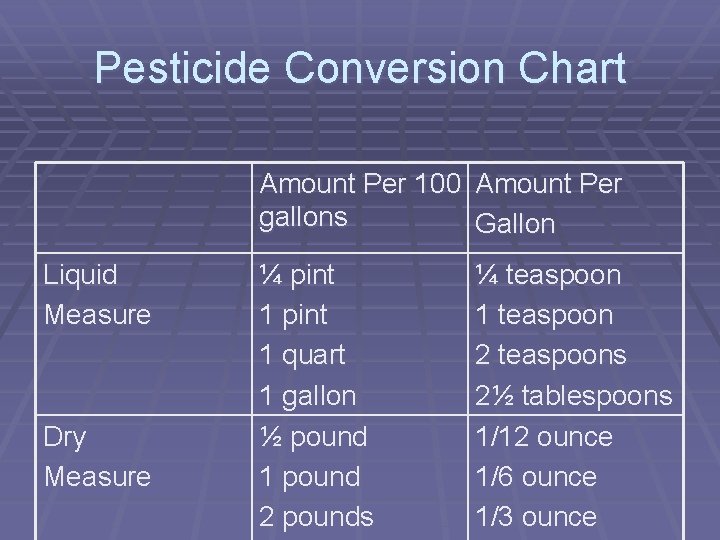
Pesticide Conversion Chart Amount Per 100 Amount Per gallons Gallon Liquid Measure Dry Measure ¼ pint 1 quart 1 gallon ½ pound 1 pound 2 pounds ¼ teaspoon 1 teaspoon 2 teaspoons 2½ tablespoons 1/12 ounce 1/6 ounce 1/3 ounce
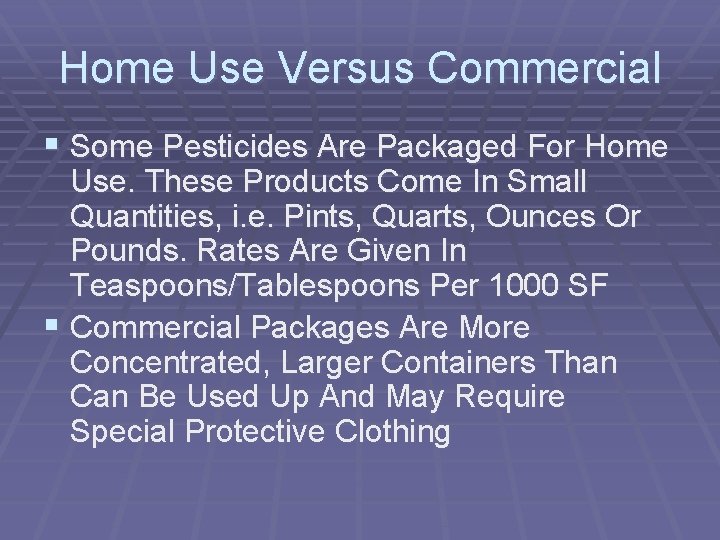
Home Use Versus Commercial § Some Pesticides Are Packaged For Home Use. These Products Come In Small Quantities, i. e. Pints, Quarts, Ounces Or Pounds. Rates Are Given In Teaspoons/Tablespoons Per 1000 SF § Commercial Packages Are More Concentrated, Larger Containers Than Can Be Used Up And May Require Special Protective Clothing
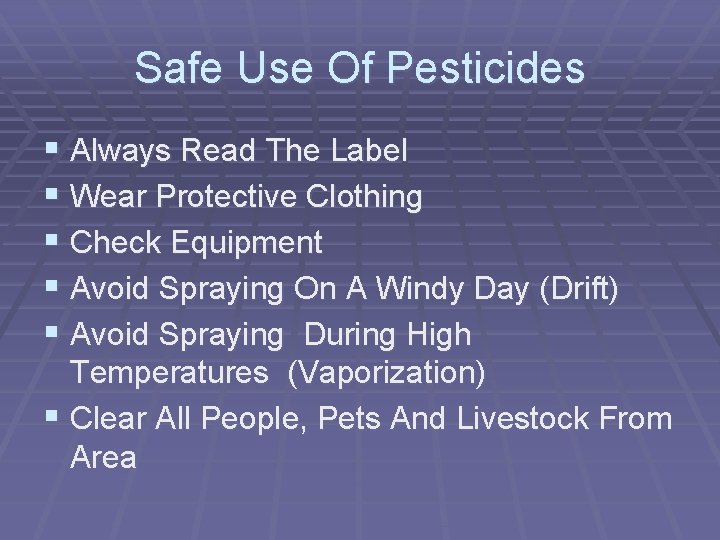
Safe Use Of Pesticides § Always Read The Label § Wear Protective Clothing § Check Equipment § Avoid Spraying On A Windy Day (Drift) § Avoid Spraying During High Temperatures (Vaporization) § Clear All People, Pets And Livestock From Area
Cleaning Equipment § Clean All Spray Equipment Inside And Out With Clean Water After Each Use § Always Flush The Hoses And Nozzles With Clean Water § Do Not Dump Rinse Water In A Place Where It Can Become A Pollutant § Never Rinse Pesticides Down A Drain
Pesticide Storage § Always Store In Original Containers § Keep In Locked Cabinet, Room Or Building § Protect From Temperature Extremes § Do Not Store Close To Wells, Water Sources And Sinkholes § Do Not Keep With Food, Drinks, Medical, Veterinary Supplies Or Pet Foods
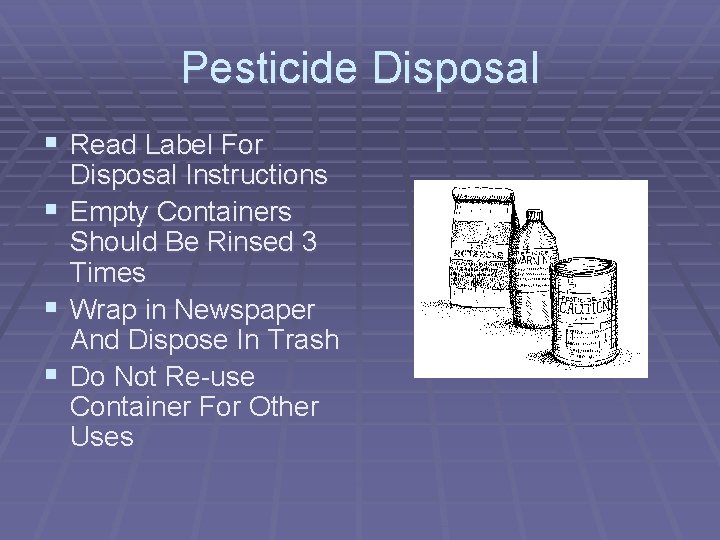
Pesticide Disposal § Read Label For Disposal Instructions § Empty Containers Should Be Rinsed 3 Times § Wrap in Newspaper And Dispose In Trash § Do Not Re-use Container For Other Uses
Symptoms Of Poisoning § It Is Important To Know The Early Symptoms And Signs Of Pesticide Poisoning § Each Chemical Family Attacks The Human Body In Different Ways § There Are 3 Levels Of Poisoning § Mild § Moderate § Severe Or Acute
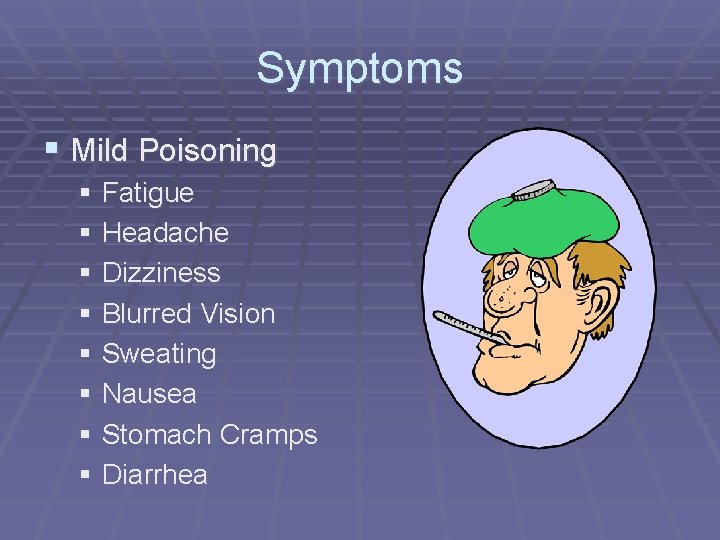
Symptoms § Mild Poisoning § Fatigue § Headache § Dizziness § Blurred Vision § Sweating § Nausea § Stomach Cramps § Diarrhea
Symptoms § Moderate Poisoning § Inability To Walk § Weakness § Chest Discomfort § Muscle Twitches § Constriction Of Eye Pupil § Earlier Symptoms Become More Severe
Symptoms § Severe Or Acute Poisoning § Unconsciousness § Severe Constriction Of The Eye Pupils § Muscle Twitches § Convulsions § Difficulty Breathing § Illness May Occur A Few Hours After Exposure And May Lead To Death If Not Treated
First Aid Procedures § “Statement Of Practical Treatment” Found On The Pesticide Label § If Pesticide Is On The Skin § Remove Pesticide As Quickly As Possible § Remove Contaminated Clothing § Prompt Washing With A Detergent § Clean Hair And Fingernails
First Aid Procedures § If Pesticide is Inhaled § Get To Fresh Air Quickly § Loosen Tight-fitting Clothing § Give Artificial Respiration If Needed § Take To Physician As Soon As Possible § Do Not Administer Anything To A Poison Victim Unless Your Trained In First Aid
Pesticides And The Environment § Pesticides Become A Problem When They Move Off Target § Misapplication Of Pesticides Carries Serious Consequences § Bees And Other Pollinators § Drift To Nearby Crops Or Landscapes § Aquatic Life § Always Choose Least Hazardous Chemical If More Than One Pesticide Will Work
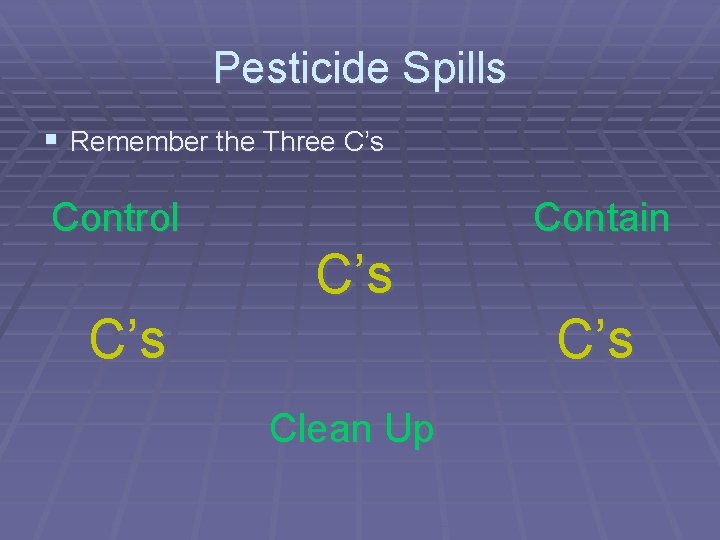
Pesticide Spills § Remember the Three C’s Control Contain C’s C’s Clean Up
Control § Protect Yourself § Stop The Source § Protect Others § Stay At The Site
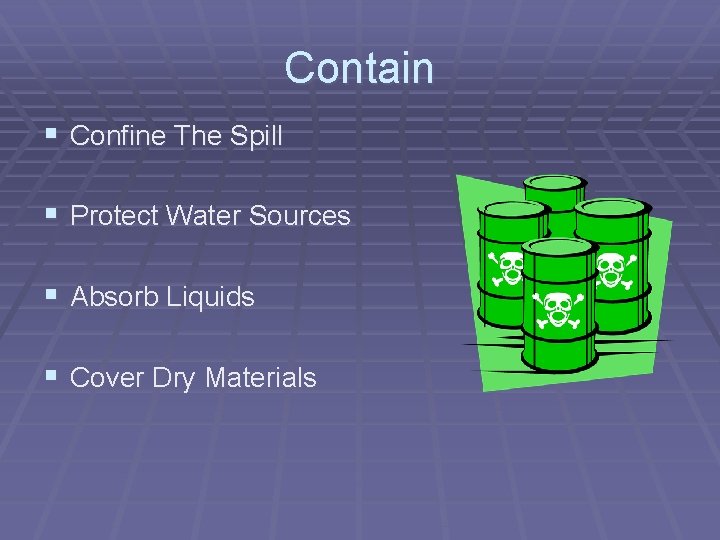
Contain § Confine The Spill § Protect Water Sources § Absorb Liquids § Cover Dry Materials
Clean Up § Decontaminate The Spill Site § For Liquid Spill Use Absorbent Material § Sweep Up And Place In Plastic Bag § Dry Spill Can Be Swept Up For Reuse § Do Not Hose Down The Site § Neutralize The Spill Site § Label Will Have Information On How To Neutralize
Pesticide And The Law § Under The Federal Insecticide, Fungicide And Rodenticide Act Of 1972 It Is Illegal To Use A Pesticide On A Plant Unless That Plant Is Listed On The Label § You May Not Exceed The Given Rate On The Label § Under Federal Law, You Are Liable For Misuse Of Pesticides Including Drift, Leaching Or Direct Treatment Of Plants
Pesticides And The Law § Pesticides Are Divided Into Two Groups § General Use § Primarily For Homeowner Use § Restricted use § Mostly For Farmers And Commercial Use § Must Be Certified To Buy Restricted Use
Reminders § You Can prevent Harm From Pesticides If You Follow Safety Precautions And Common Sense § Minimum Precautions Include: § Before Buying A Pesticide, Identify The Pest To Be Controlled § Find Out What Pesticide Will Control The Pest § Select The Least Toxic Pesticide § Always Read The Label
Questions? ? ? Thanks Alan Bruhin County Director Sevier County 865 -453 -3695 Edward E. Burgess Elizabeth A. Long Entomology & Plant Pathology University Of Tennessee Extension
- Slides: 54