
Mast Cell Biology By Prof Dr Essam Bakr
Mast Cell Biology By Prof. Dr. Essam Bakr Prof. of Dermatology, Venereology& Andrology Al-Azhar university
Distribution Mast cells are widely distributed throughout the body. In the skin, they are present in the vicinity of BVs
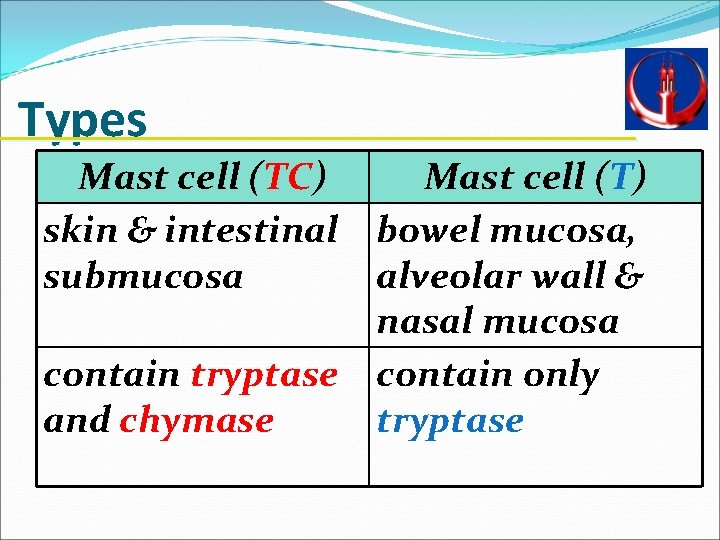
Types Mast cell (TC) Mast cell (T) skin & intestinal bowel mucosa, submucosa alveolar wall & nasal mucosa contain tryptase contain only and chymase tryptase
Degranulating stimuli Degranulation: a chain of calcium- and energydependent steps leading to fusion of storage granules with the cell membrane and externalization of their contents. There are 2 types of degranulating stimuli: Immunological stimuli: Non-immunological stimuli:
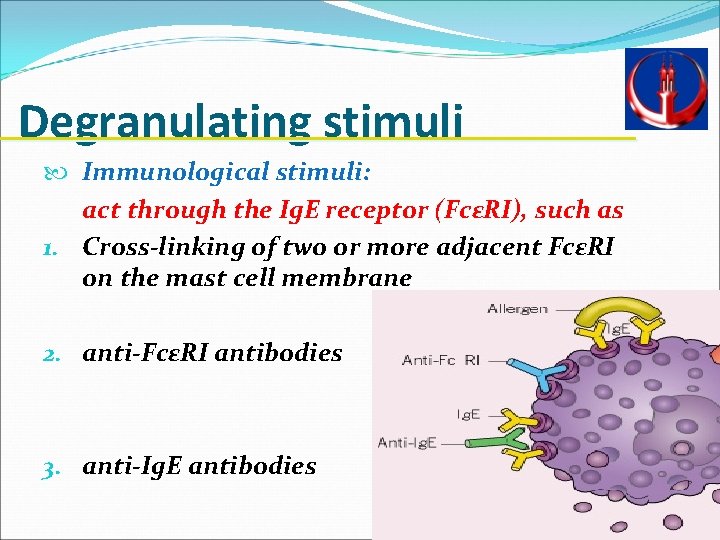
Degranulating stimuli Immunological stimuli: act through the Ig. E receptor (FcεRI), such as 1. Cross-linking of two or more adjacent FcεRI on the mast cell membrane 2. anti-FcεRI antibodies 3. anti-Ig. E antibodies
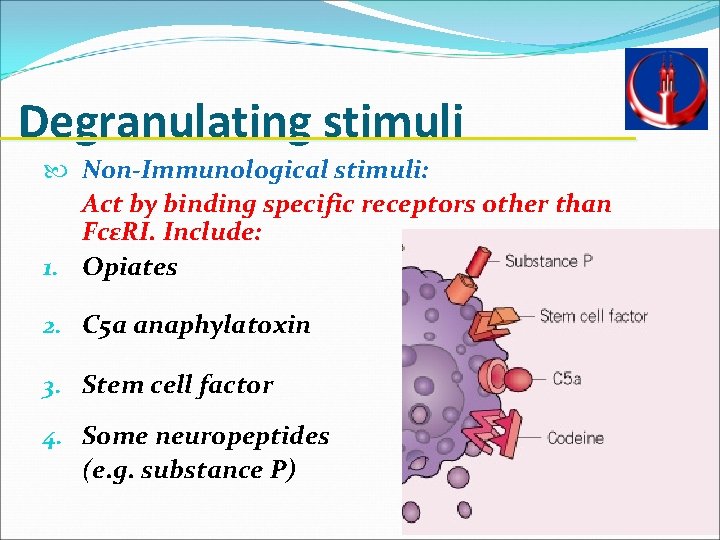
Degranulating stimuli Non-Immunological stimuli: Act by binding specific receptors other than FcεRI. Include: 1. Opiates 2. C 5 a anaphylatoxin 3. Stem cell factor 4. Some neuropeptides (e. g. substance P)
Mast cell Pro-inflammatory mediators Mast cell granules contain preformed mediators of inflammation e. g. Histamine Heparin Proteases (chymase & tryptase) A wide range of cytokines including: TNF-α IL-3, -4, -5, -6, -8 and -13 GM-CSF
Mast cell Proi-nflammatory mediators Synthesis and secretion are upregulated following FcεRI stimulation. Prostaglandins (PG) and leukotrienes (LT) are synthesized from arachidonic acid derived from cell membrane phospholipids The most important are PGD 2 and the LT C 4, D 4 and E 4 (slow-releasing substance of anaphylaxis) NB. PGE 2 has inhibitory effects on mast cell degranulation and may have a protective role in urticaria.
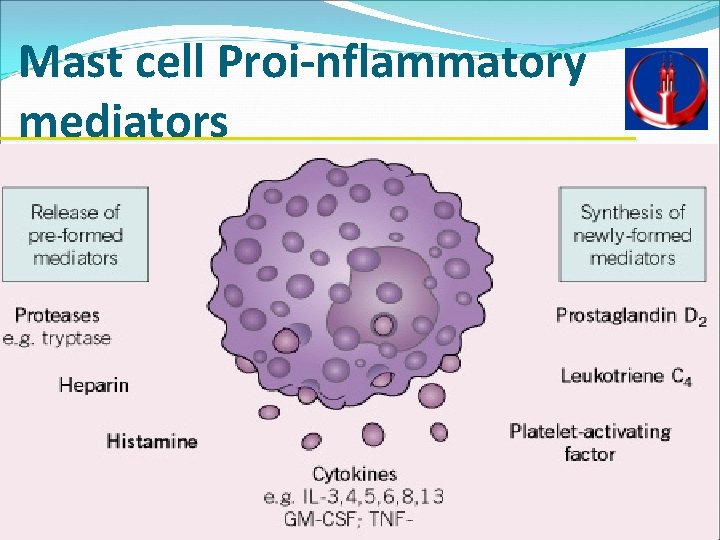
Mast cell Proi-nflammatory mediators
- Slides: 9