
Massive Transfusion the 6 Ws Christian Jones MD
- Slides: 22
Massive Transfusion & the 6 W’s Christian Jones, MD, MS, FACS Division of Acute Care Surgery, Department of Surgery Johns Hopkins University School of Medicine 23 February 2021
Financial Conflicts of Interest None
Learning Objectives • Define massive transfusion • Identify patient criteria most appropriate for activating a massive transfusion protocol (MTP) • Describe reasons patient outcomes are improved when an MTP is available
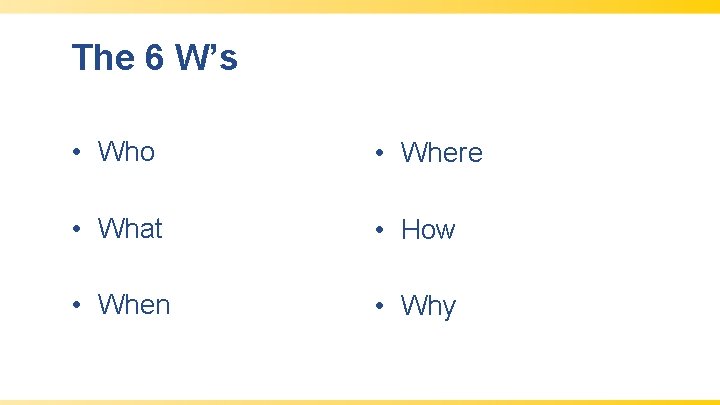
The 6 W’s • Who • Where • What • How • When • Why
Massive Transfusion • >10 u PRBC in <24 h • typically rapid • less testing/triggers
Are we there yet? • Start when bleeding identified? • Start at a Hgb of y? • Start after x units? Inaba 2012
Choosing the Patient • scoring: ABC – – – Assessment of Blood Consumption SBP < 90 HR > 120 penetrance +FAST x / 36% / 45% / 100% need for MTP • probably no better than clinician judgment Massive 2010, Elmer 2013
So, just RBCs, then… • maybe some plasma… • and a few platelets… • whole blood? – unavailability? – Wiggers’ prep Millham 2010
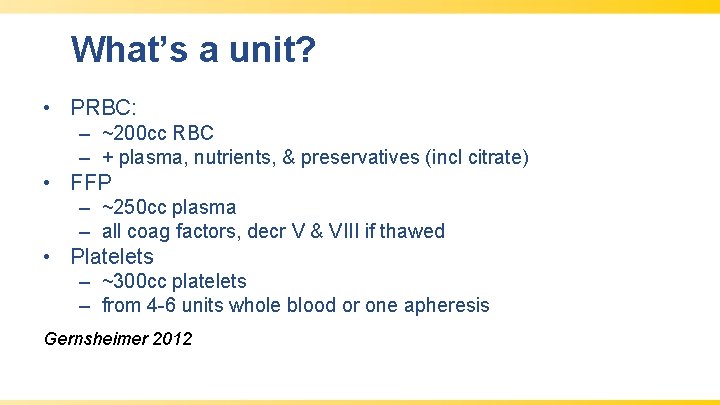
What’s a unit? • PRBC: – ~200 cc RBC – + plasma, nutrients, & preservatives (incl citrate) • FFP – ~250 cc plasma – all coag factors, decr V & VIII if thawed • Platelets – ~300 cc platelets – from 4 -6 units whole blood or one apheresis Gernsheimer 2012
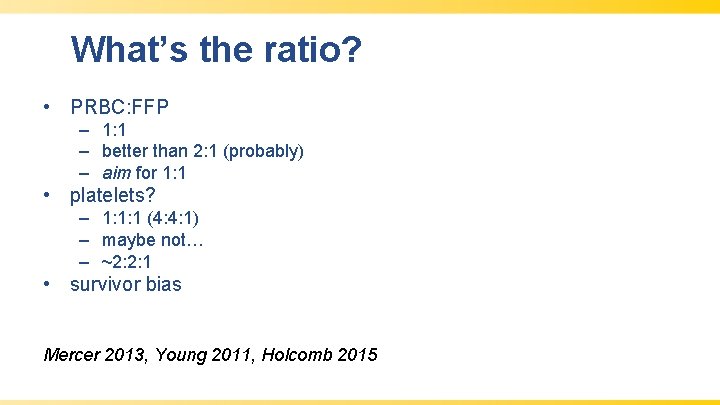
What’s the ratio? • PRBC: FFP – 1: 1 – better than 2: 1 (probably) – aim for 1: 1 • platelets? – 1: 1: 1 (4: 4: 1) – maybe not… – ~2: 2: 1 • survivor bias Mercer 2013, Young 2011, Holcomb 2015
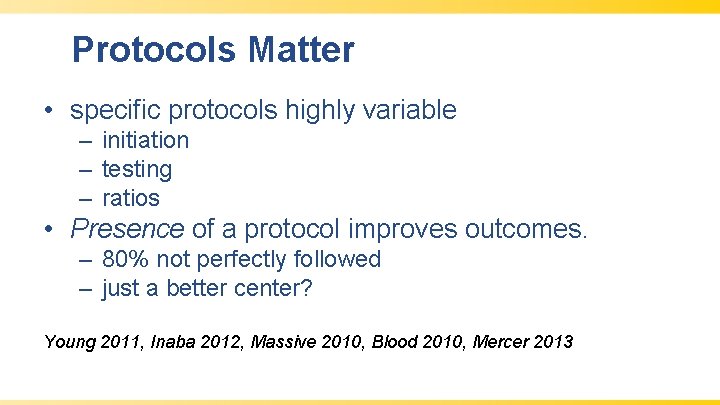
Protocols Matter • specific protocols highly variable – initiation – testing – ratios • Presence of a protocol improves outcomes. – 80% not perfectly followed – just a better center? Young 2011, Inaba 2012, Massive 2010, Blood 2010, Mercer 2013
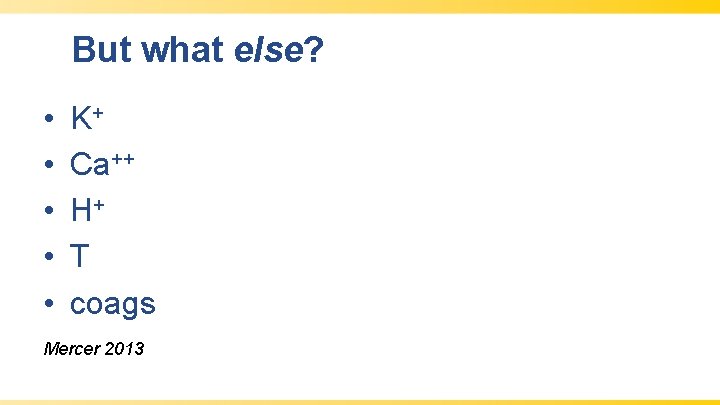
But what else? • • • K+ Ca++ H+ T coags Mercer 2013
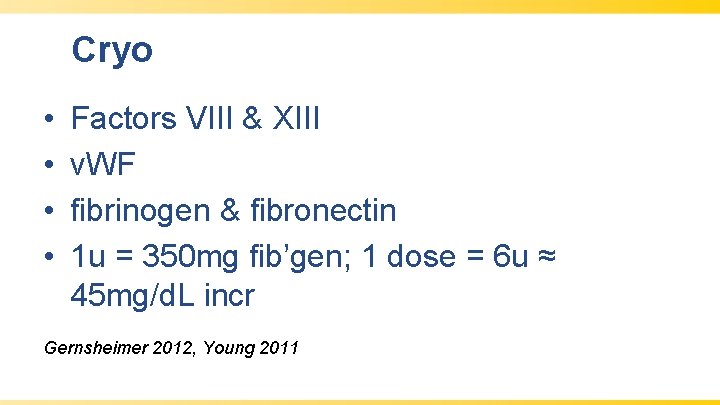
Cryo • • Factors VIII & XIII v. WF fibrinogen & fibronectin 1 u = 350 mg fib’gen; 1 dose = 6 u ≈ 45 mg/d. L incr Gernsheimer 2012, Young 2011
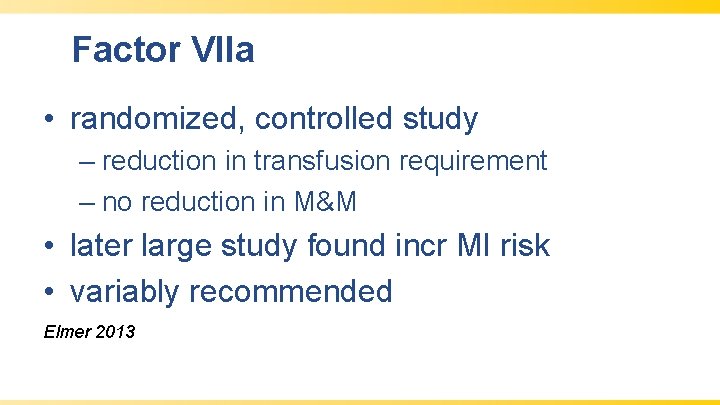
Factor VIIa • randomized, controlled study – reduction in transfusion requirement – no reduction in M&M • later large study found incr MI risk • variably recommended Elmer 2013
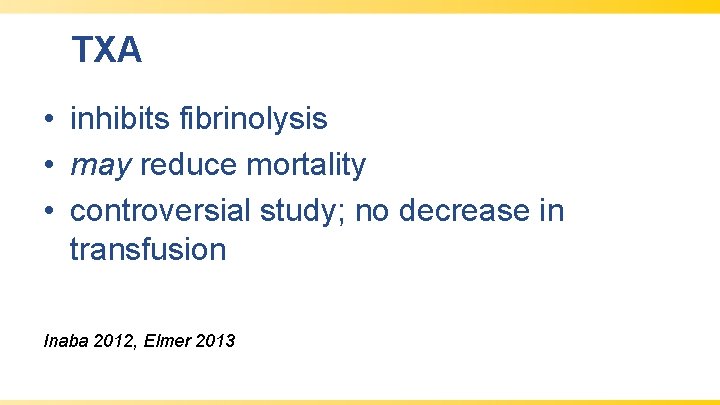
TXA • inhibits fibrinolysis • may reduce mortality • controversial study; no decrease in transfusion Inaba 2012, Elmer 2013
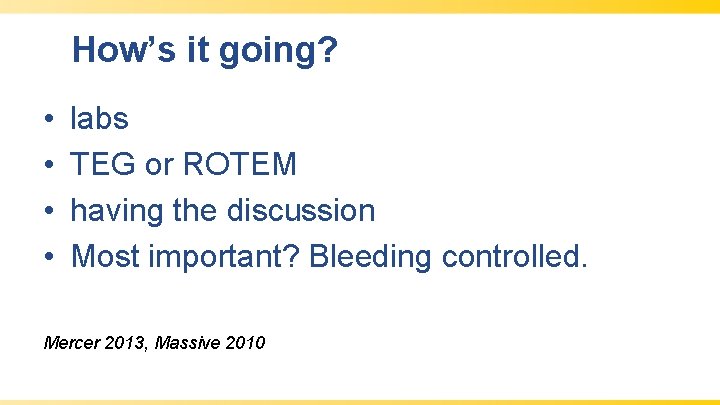
How’s it going? • • labs TEG or ROTEM having the discussion Most important? Bleeding controlled. Mercer 2013, Massive 2010
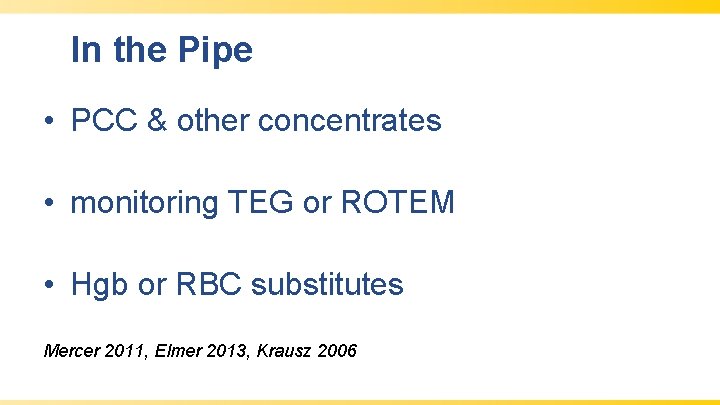
In the Pipe • PCC & other concentrates • monitoring TEG or ROTEM • Hgb or RBC substitutes Mercer 2011, Elmer 2013, Krausz 2006
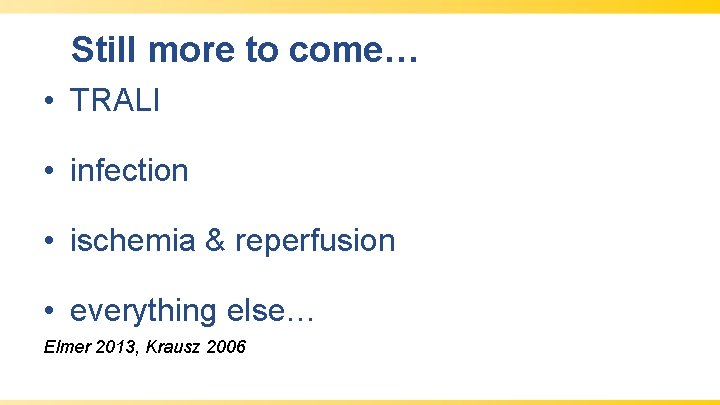
Still more to come… • TRALI • infection • ischemia & reperfusion • everything else… Elmer 2013, Krausz 2006
Let me sum up. • Who • Where • What • How • When • Why
Thanks. @jonessurgery on-call@christianjones. md
References • • • Blood and Blood Products in the Perioperative Department. (2010, April 28). The Ohio State University Medical Center. Elmer, J. , Wilcox, S. R. , & Raja, A. S. (2013). Massive Transfusion in Traumatic Shock. The Journal of emergency medicine, (November 2012), 1– 10. doi: 10. 1016/j. jemermed. 2012. 11. 025 Gernsheimer, T. , & Delaney, M. (2012). Blood Component Therapy. Seattle, WA: Puget Sound Blood Center (PSBC). Retrieved from http: //www. psbc. org/therapy/ Inaba, K. , & Weingart, S. (2012, April 16). Critical Questions on Massive Transfusion Protocols with Kenji Inaba. EMCrit Podcast, No. 71. [Podcast Episode] Retrieved from http: //emcrit. org/podcasts/massive-transfusion-kenji/ on 2012 Apr 16 Krausz, M. M. (2006). Initial resuscitation of hemorrhagic shock. World journal of emergency surgery : WJES, 1, 14. doi: 10. 1186/1749 -7922 -1 -14 Massive Transfusion Protocol (MTP). (2010, May). The University of Kansas Hospital. Mercer, S. J. , Tarmey, N. T. , Woolley, T. , Wood, P. , & Mahoney, P. F. (2013). Haemorrhage and coagulopathy in the Defence Medical Services. Anaesthesia, 68 Suppl 1, 49– 60. doi: 10. 1111/anae. 12056 Millham, F. H. (2010). A brief history of shock. Surgery, 148(5), 1026– 37. doi: 10. 1016/j. surg. 2010. 02. 014 Young, PP, Cotton, BA, & Goodnough, LT (2011). Massive transfusion protocols for patients with substantial hemorrhage. Transfusion medicine reviews, 25(4), 293– 303. doi: 10. 1016/j. tmrv. 2011. 04. 002 Holcomb, J. B. , Tilley, B. C. , Baraniuk, S. , Fox, E. E. , Wade, C. E. , Podbielski, J. M. , … van Belle, G. (2015). Transfusion of Plasma, Platelets, and Red Blood Cells in a 1: 1: 1 vs a 1: 1: 2 Ratio and Mortality in Patients With Severe Trauma. Jama, 313, 471. http: //doi. org/10. 1001/jama. 2015. 12
Acknowledgements & Copyrights • • • Piggy bank image on slide 2 modified from image downloaded from https: //www. pexels. com/photo/money-pink-coins-pig 9660/ and used under a CC 0 1. 0 Universal Public Domain Dedication. PRBC transfusion trigger clipping from Scrape, Scott. “Clinician’s Guide to Transfusion Therapy: Indications for Ordering”, 2 nd Ed. (31 Aug 2011); The Ohio State University Medical Center Evidence-Based Practice Clinical Resources. Johns Hopkins Power. Point theme used with implied permission as a member of the Johns Hopkins faculty Email icon on slide 20 downloaded from https: //pixabay. com/en/mail-post-e-mail-email-letter-99217/ on 17 January 2017 and used under a CC 0 1. 0 Universal Public Domain Dedication. Twitter icon on slide 20 used according to the Twitter Trademark Guidelines. TWITTER, TWEET, RETWEET and the Twitter logo are trademarks of Twitter, Inc. or its affiliates. Except as noted above, this document is the sole work of Christian Jones (on-call@christianjones. md), and is hereby released into the public domain or, as an alternative, under the Creative Commons 0 (CC 0) license, with no rights reserved. This is version 20180117 -1; the latest version is always available at http: //jonessurgery. com/massivetransfusion.