
Masses of Common Isotopes Carbon Hydrogen Nitrogen Oxygen

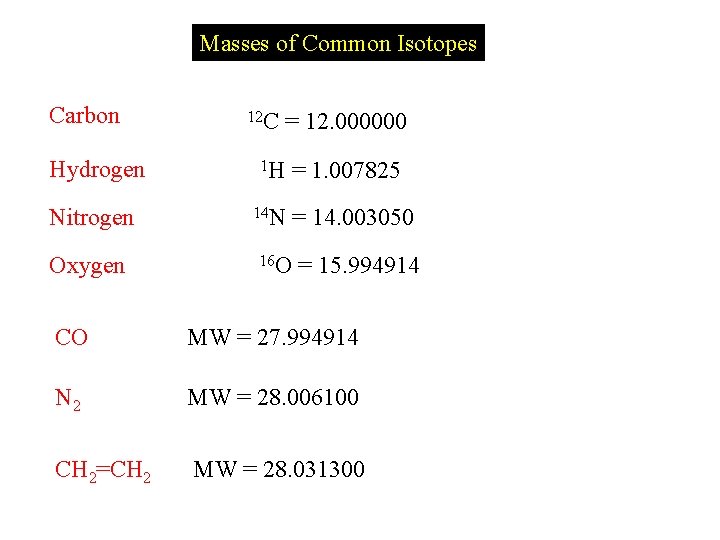
Masses of Common Isotopes Carbon Hydrogen Nitrogen Oxygen 12 C = 12. 000000 1 H 14 N = 1. 007825 = 14. 003050 16 O = 15. 994914 CO MW = 27. 994914 N 2 MW = 28. 006100 CH 2=CH 2 MW = 28. 031300
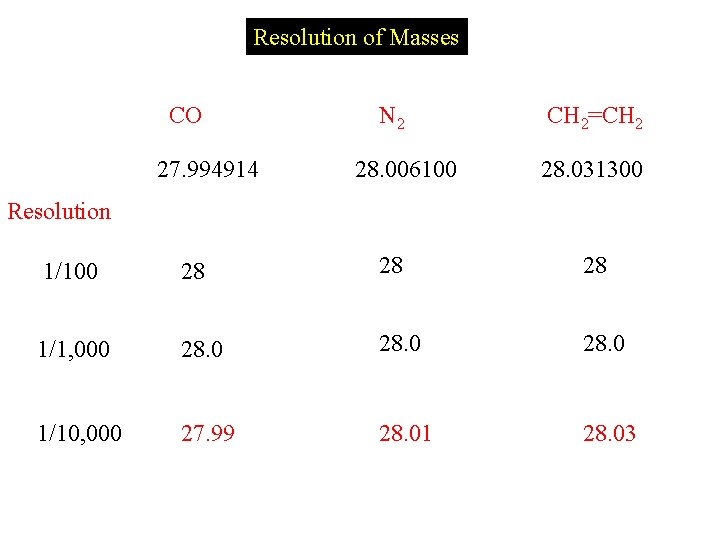
Resolution of Masses CO 27. 994914 N 2 28. 006100 CH 2=CH 2 28. 031300 Resolution 1/100 28 28 28 1/1, 000 28. 0 1/10, 000 27. 99 28. 01 28. 03
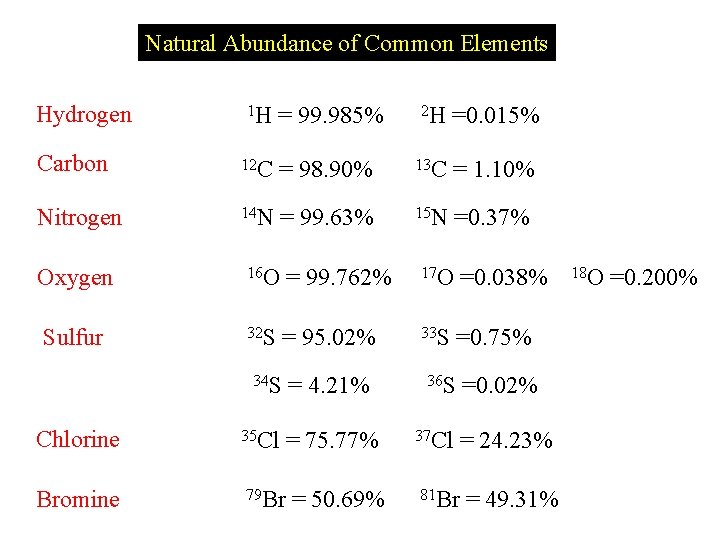
Natural Abundance of Common Elements Hydrogen 1 H = 99. 985% 2 H =0. 015% Carbon 12 C = 98. 90% 13 C = 1. 10% Nitrogen 14 N = 99. 63% 15 N =0. 37% Oxygen 16 O = 99. 762% 17 O =0. 038% Sulfur 32 S = 95. 02% 33 S =0. 75% 34 S = 4. 21% Chlorine 35 Cl Bromine 79 Br = 75. 77% = 50. 69% 36 S 37 Cl =0. 02% = 24. 23% 81 Br = 49. 31% 18 O =0. 200%
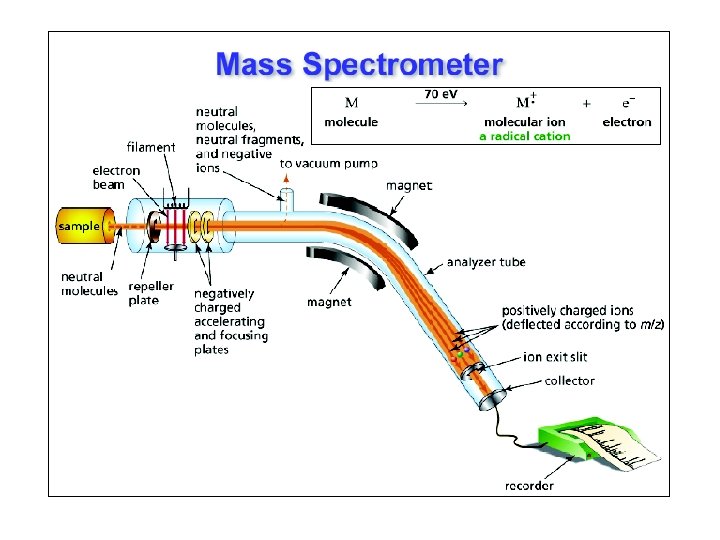
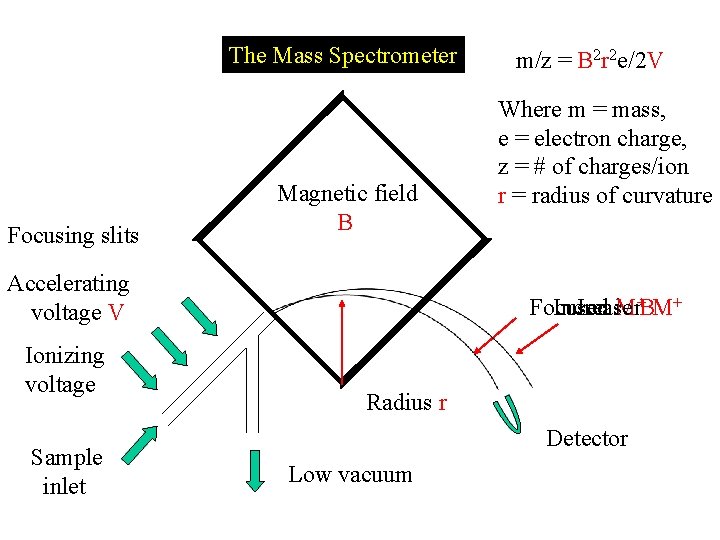
The Mass Spectrometer Focusing slits Magnetic field B Accelerating voltage V Ionizing voltage Sample inlet m/z = B 2 r 2 e/2 V Where m = mass, e = electron charge, z = # of charges/ion r = radius of curvature Focused Ion ion M+BM+ Increase Radius r Detector Low vacuum
For carbon, One in ~90 atoms of carbon is C-13 For every 90 molecules of methane. . .
only one molecule contains C-13
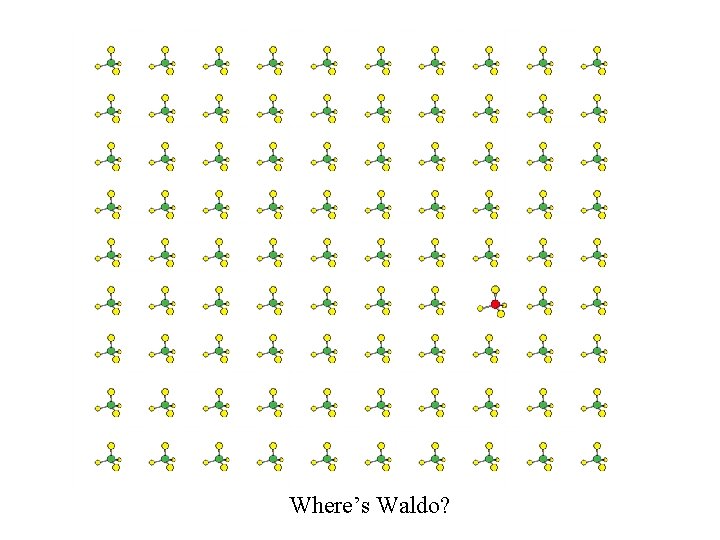
Where’s Waldo?
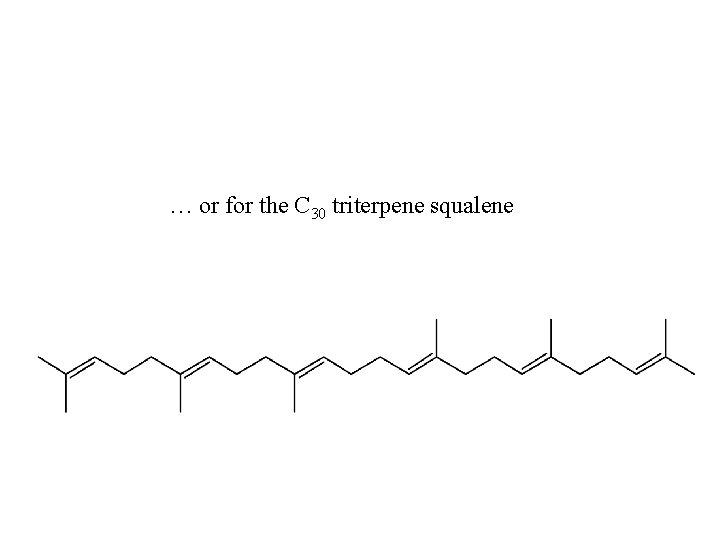
… or for the C 30 triterpene squalene
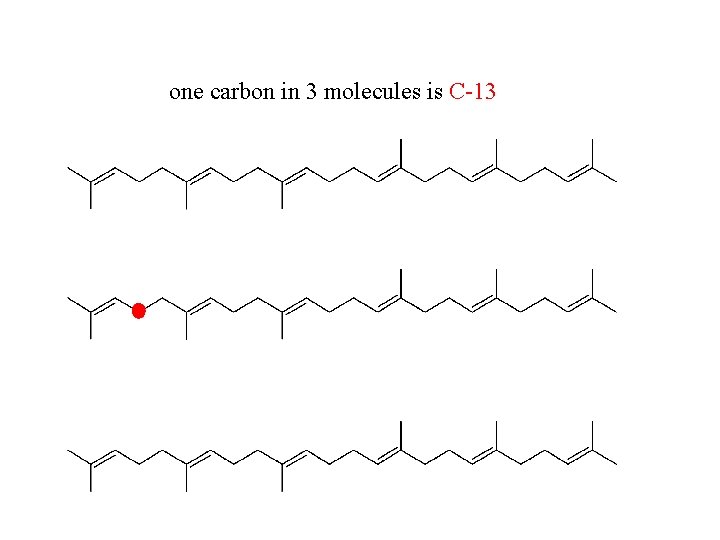
one carbon in 3 molecules is C-13
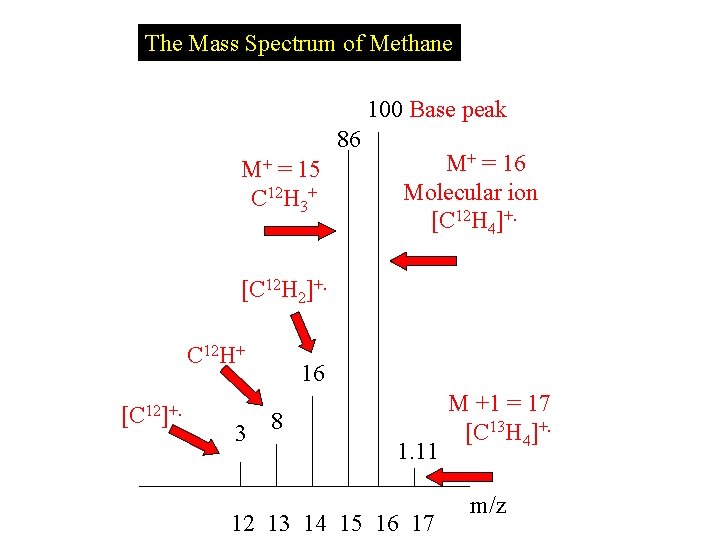
The Mass Spectrum of Methane 100 Base peak 86 M+ = 15 C 12 H 3+ M+ = 16 Molecular ion [C 12 H 4]+. [C 12 H 2]+. C 12 H+ [C 12]+. 3 16 8 1. 11 12 13 14 15 16 17 M +1 = 17 [C 13 H 4]+. m/z
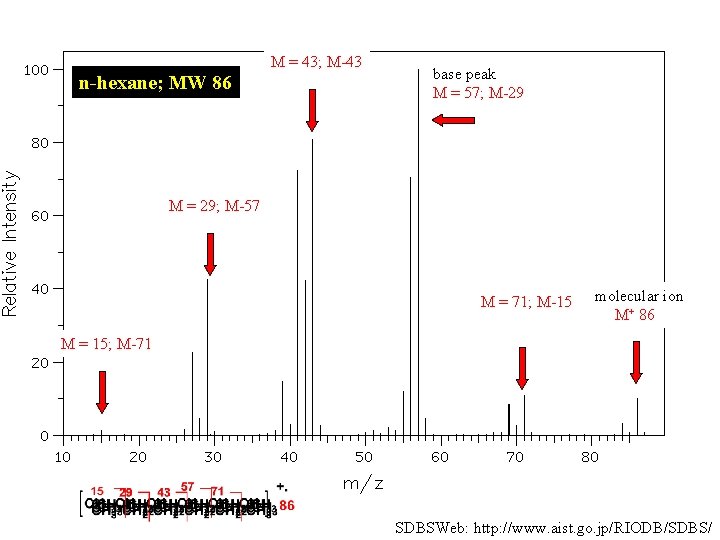
M = 43; M-43 n-hexane; MW 86 base peak M = 57; M-29 M = 29; M-57 M = 71; M-15 molecular ion M+ 86 M = 15; M-71 SDBSWeb: http: //www. aist. go. jp/RIODB/SDBS/

There are five constitutional isomers of C 6 H 14 Which one of the remaining four has the following mass spectrum?
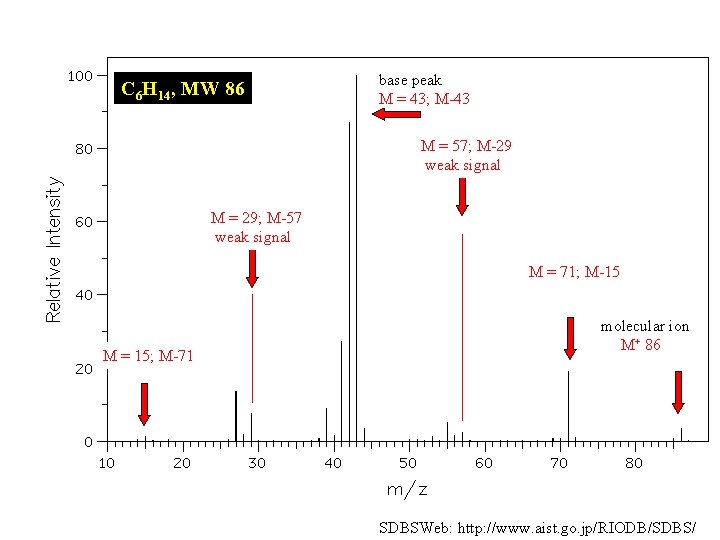
C 6 H 14, MW 86 base peak M = 43; M-43 M = 57; M-29 weak signal M = 29; M-57 weak signal M = 71; M-15 M = 15; M-71 molecular ion M+ 86 SDBSWeb: http: //www. aist. go. jp/RIODB/SDBS/
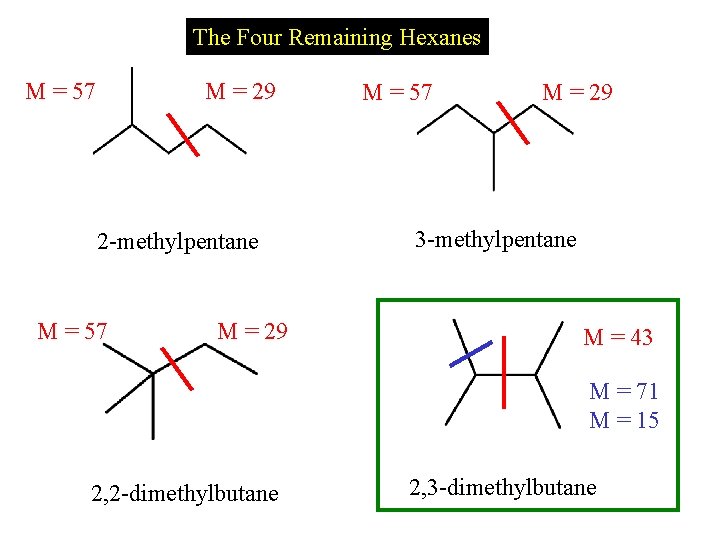
The Four Remaining Hexanes M = 57 M = 29 2 -methylpentane M = 57 M = 29 3 -methylpentane M = 43 M = 71 M = 15 2, 2 -dimethylbutane 2, 3 -dimethylbutane
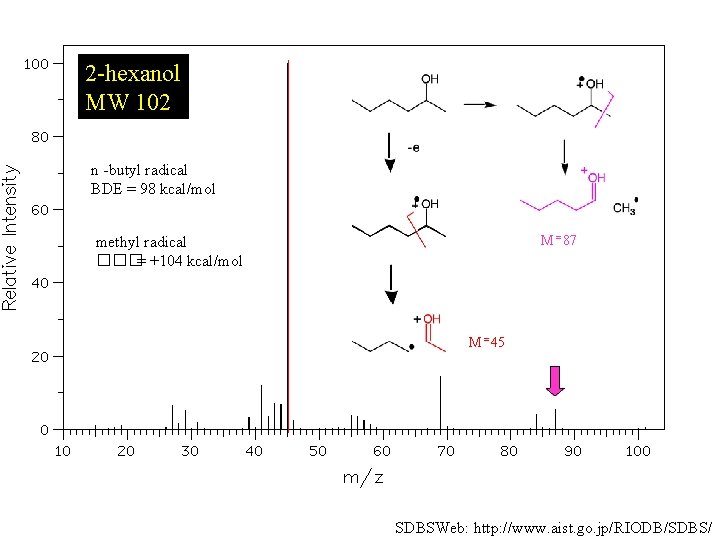
2 -hexanol MW 102 n -butyl radical BDE = 98 kcal/mol M = 87 methyl radical ���= +104 kcal/mol M = 45 SDBSWeb: http: //www. aist. go. jp/RIODB/SDBS/
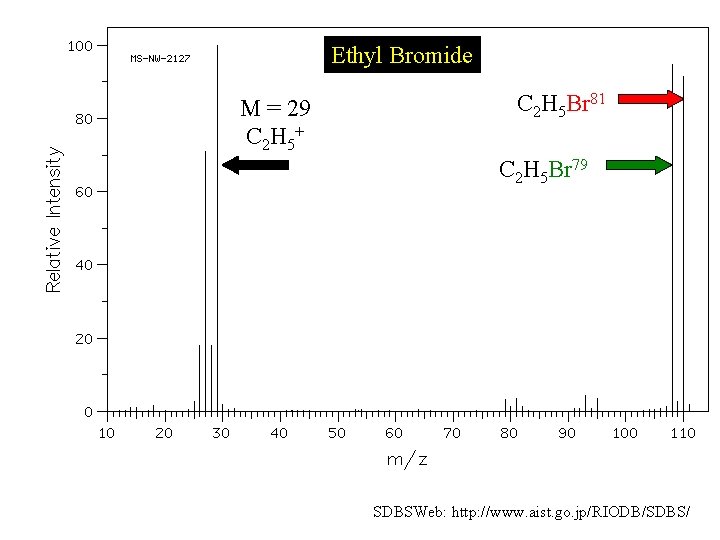
Ethyl Bromide M = 29 C 2 H 5+ C 2 H 5 Br 81 C 2 H 5 Br 79 SDBSWeb: http: //www. aist. go. jp/RIODB/SDBS/
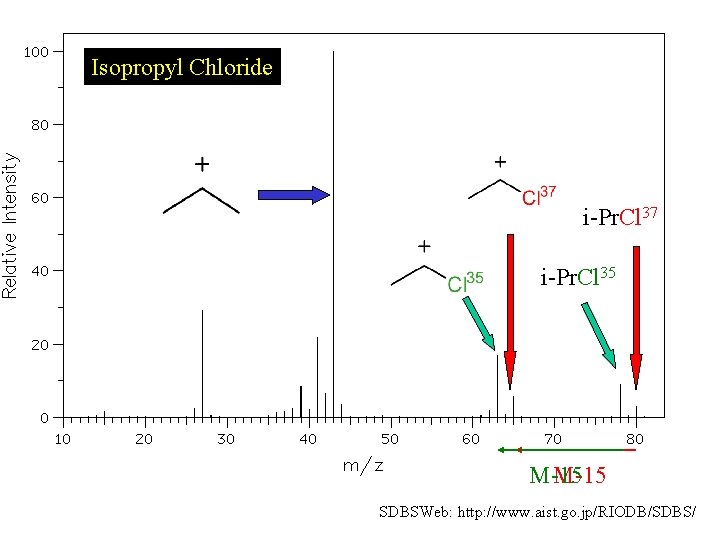
Isopropyl Chloride i-Pr. Cl 37 i-Pr. Cl 35 M-15 SDBSWeb: http: //www. aist. go. jp/RIODB/SDBS/
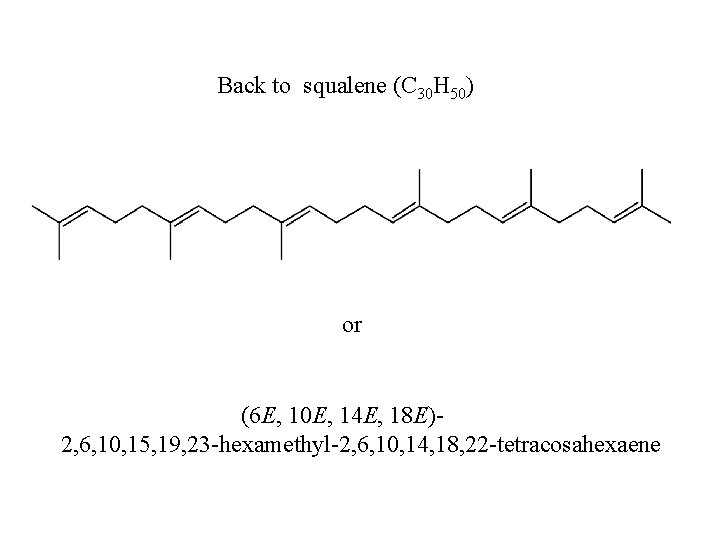
Back to squalene (C 30 H 50) or (6 E, 10 E, 14 E, 18 E)2, 6, 10, 15, 19, 23 -hexamethyl-2, 6, 10, 14, 18, 22 -tetracosahexaene
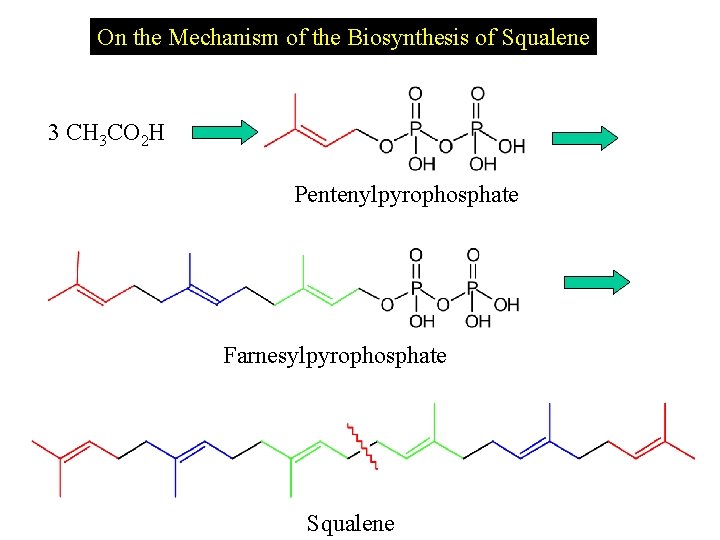
On the Mechanism of the Biosynthesis of Squalene 3 CH 3 CO 2 H Pentenylpyrophosphate Farnesylpyrophosphate Squalene
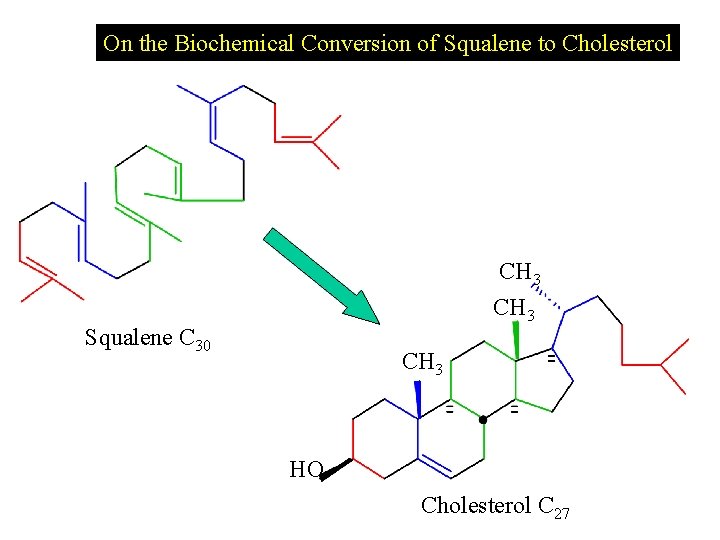
On the Biochemical Conversion of Squalene to Cholesterol CH 3 Squalene C 30 CH 3 HO Cholesterol C 27
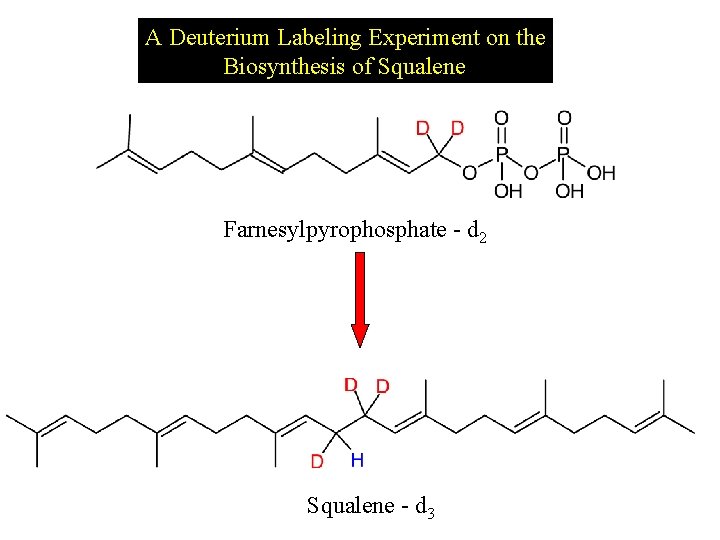
A Deuterium Labeling Experiment on the Biosynthesis of Squalene Farnesylpyrophosphate - d 2 Squalene - d 3
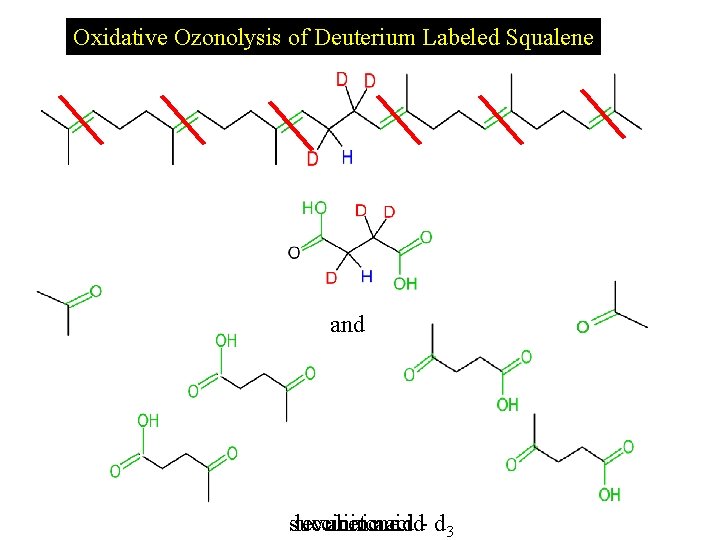
Oxidative Ozonolysis of Deuterium Labeled Squalene and succinic levulinic acetone acid- d 3
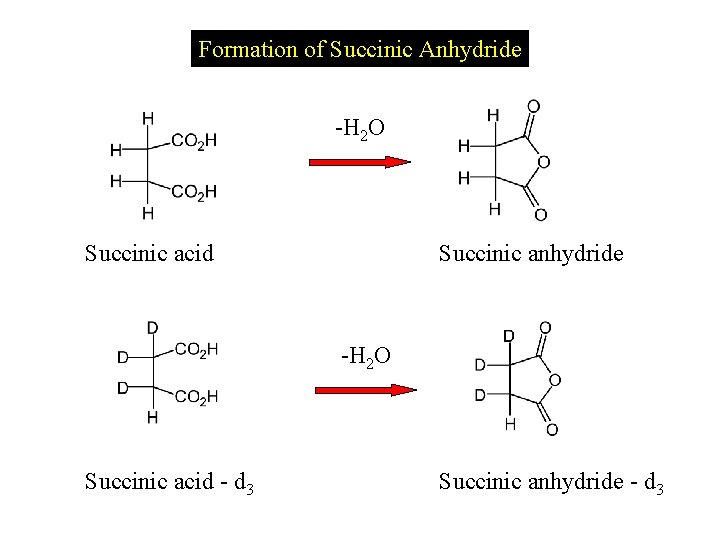
Formation of Succinic Anhydride -H 2 O Succinic acid Succinic anhydride -H 2 O Succinic acid - d 3 Succinic anhydride - d 3
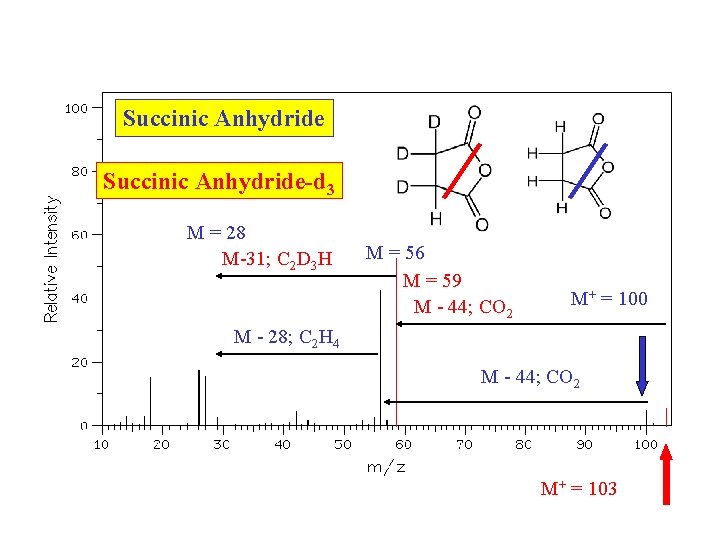
Succinic Anhydride-d 3 M = 28 M-31; C 2 D 3 H M = 56 M = 59 M - 44; CO 2 M+ = 100 M - 28; C 2 H 4 M - 44; CO 2 M+ = 103

- Slides: 27