
Mass Spectrometry Theory Lecture aims Introduce basic concepts
Mass Spectrometry Theory –Lecture aims Introduce basic concepts of mass spectrometry and commonly used instruments • Part 1: • Part 2: • Part 3: • Part 4: Basic Concepts Ion generation Ion separation Ion detection

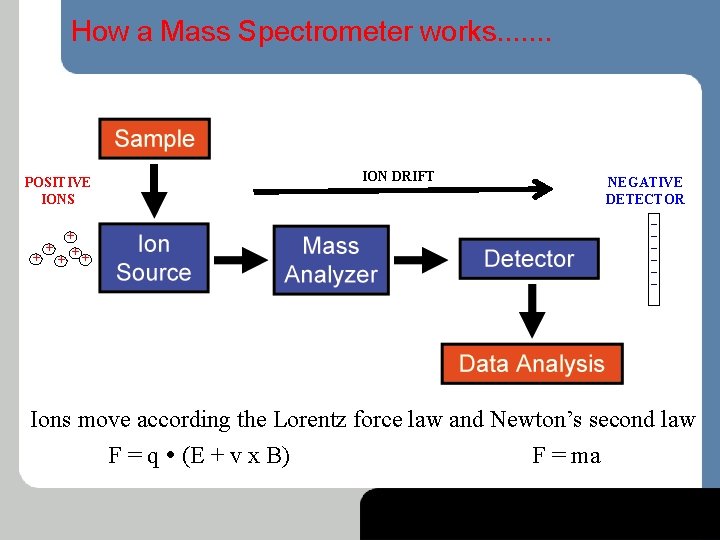
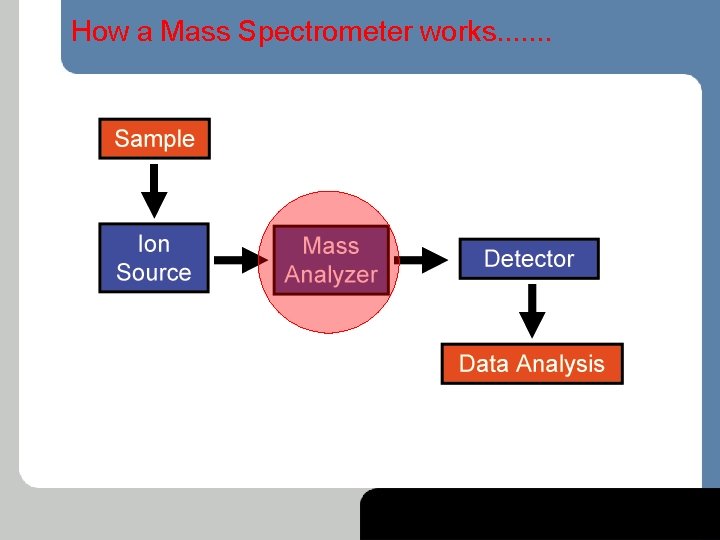
How a Mass Spectrometer works. . . . POSITIVE IONS + + + ION DRIFT NEGATIVE DETECTOR _ _ _ Ions move according the Lorentz force law and Newton’s second law F = q (E + v x B) F = ma
What is Mass? • Mass is given as m/z which is the mass of the ion divided by its charge • Monoisotopic mass is the mass of an ion for a given empirical formula calculated using the exact mass of the most abundant isotope of each element (C=12. 00000, H=1. 007825 etc) • Average mass is the mass of an ion for a given empirical formula calculated using the average exact mass for each element (C=12. 01115, H=1. 00797 etc) • Nominal mass is the mass of an ion for a given empirical formula calculated using the integer mass of the most abundant isotope for each element (C=12, H=1 etc)
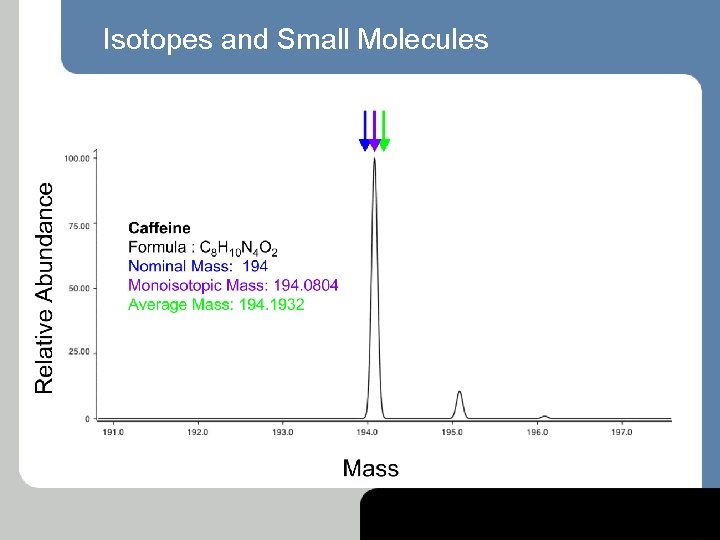
Isotopes and Small Molecules
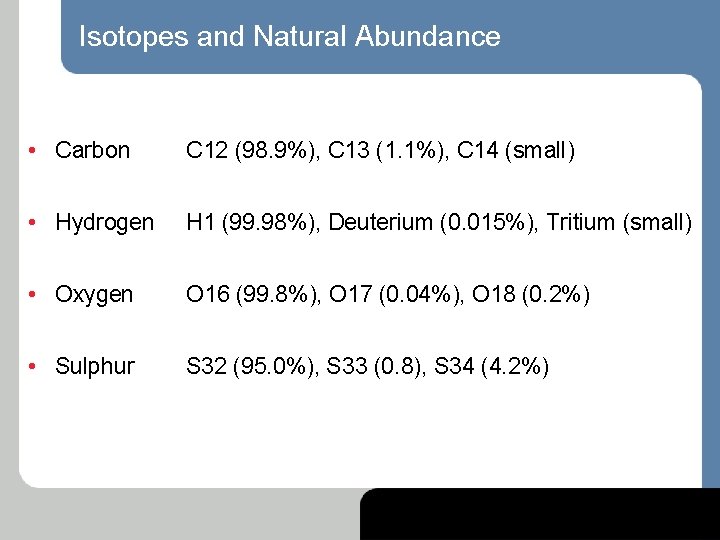
Isotopes and Natural Abundance • Carbon C 12 (98. 9%), C 13 (1. 1%), C 14 (small) • Hydrogen H 1 (99. 98%), Deuterium (0. 015%), Tritium (small) • Oxygen O 16 (99. 8%), O 17 (0. 04%), O 18 (0. 2%) • Sulphur S 32 (95. 0%), S 33 (0. 8), S 34 (4. 2%)

Isotopes and Peptides

Isotope Distribution Varies with Mass Variation of Peptide Isotope Clusters Resolution with Mass
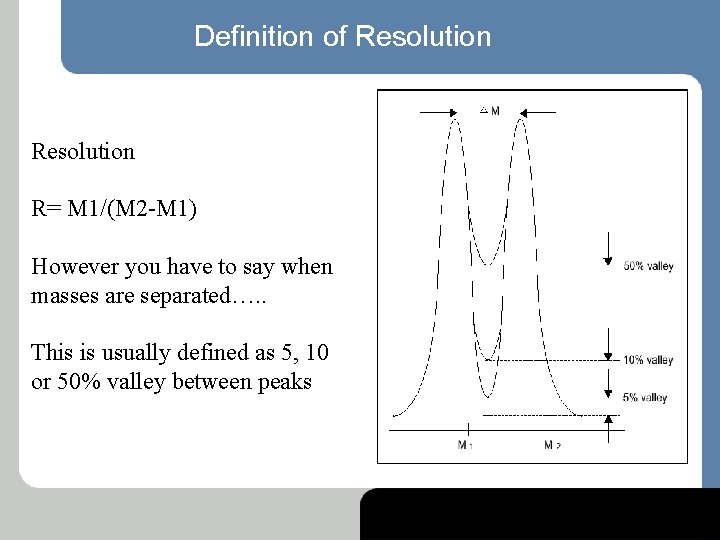
Definition of Resolution R= M 1/(M 2 -M 1) However you have to say when masses are separated…. . This is usually defined as 5, 10 or 50% valley between peaks
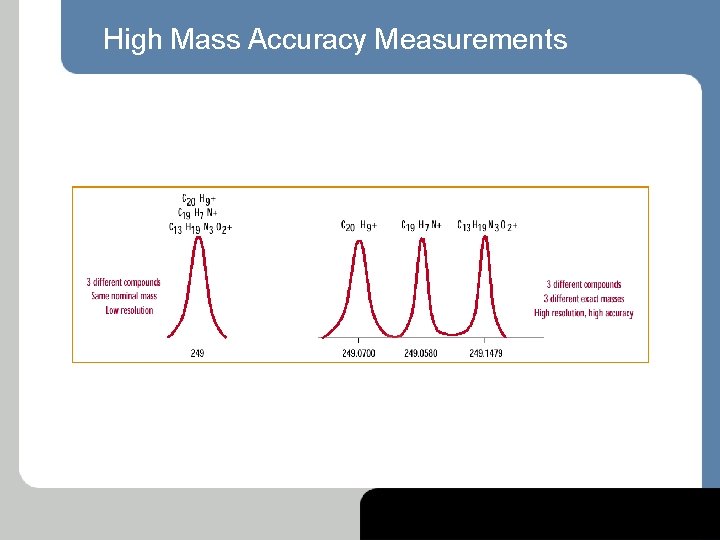
High Mass Accuracy Measurements

Measuring Mass Accuracy • Measured mass • Known (calculated) mass – 545. 3234 • Difference – (545. 4200 -545. 3234)/545 =0. 00011724 545. 4200 Relative Ion Intensity – 545. 4200 • Mass accuracy = 117 ppm m/z
Summary of Part 1: Basic Concepts • Mass is defined in three different ways – Monoisotopic, average and nominal • Isotopes define the shape of a peak – Peak shape varies with mass – Peak maximum and mass type vary with mass • Resolution defines the ability to distinguish masses – Resolution must be quoted with a qualifier • Mass accuracy can be stated in two main ways – ppm and percentage
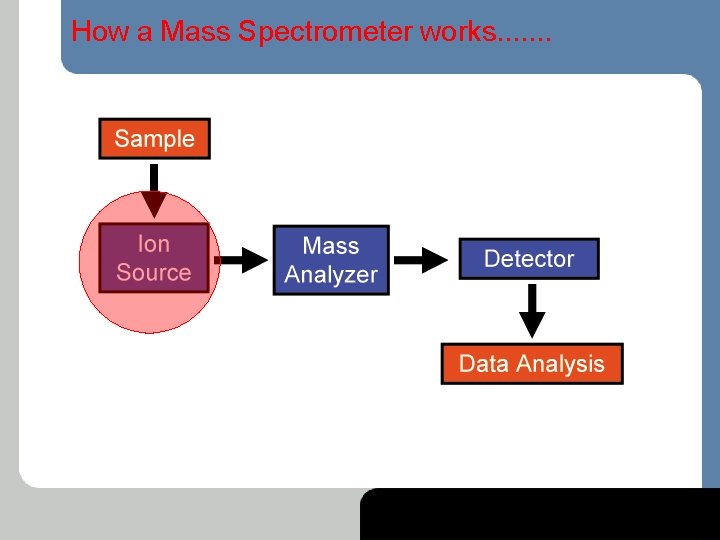
How a Mass Spectrometer works. . . .
Sample Ionisation • Derivatised small metabolites – Electron Impact (EI) – Chemica. I ionisation (CI) – Secondary ion • Peptides, proteins, RNA, DNA – Matrix assisted Laser Desorption and Ionisation (MALDI) – Electrospray ionisation (ESI) The above is also called atmospheric pressure ionisation (API). Depending on the size, it may also be called nanospray, microspray etc.
Interfacing Separation techniques with MS This involves the interfacing of a molecular separation technique to the mass spectrometer • Gas chromatography (GC) separates volatile small molecules by partitioning between the gas phase and hydrophobic solid/liquid phase • High Pressure Liquid Chromatography separates molecules by partitioning between the liquid phase and a solid phase • Capillary Zone Electrophoresis separates molecules by charge and size and can be combined with HPLC phases
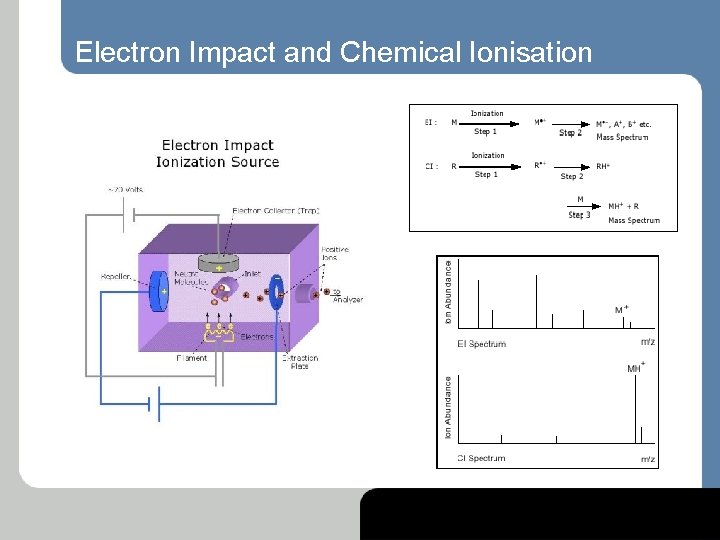
Electron Impact and Chemical Ionisation
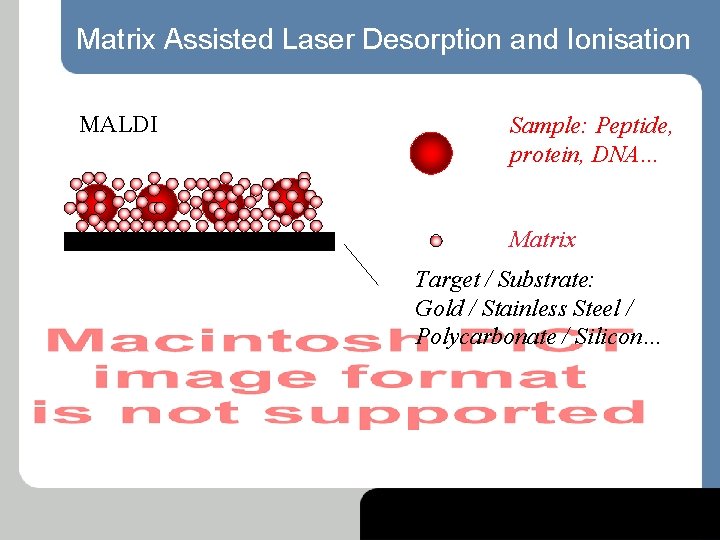
Matrix Assisted Laser Desorption and Ionisation MALDI Sample: Peptide, protein, DNA… Matrix Target / Substrate: Gold / Stainless Steel / Polycarbonate / Silicon…
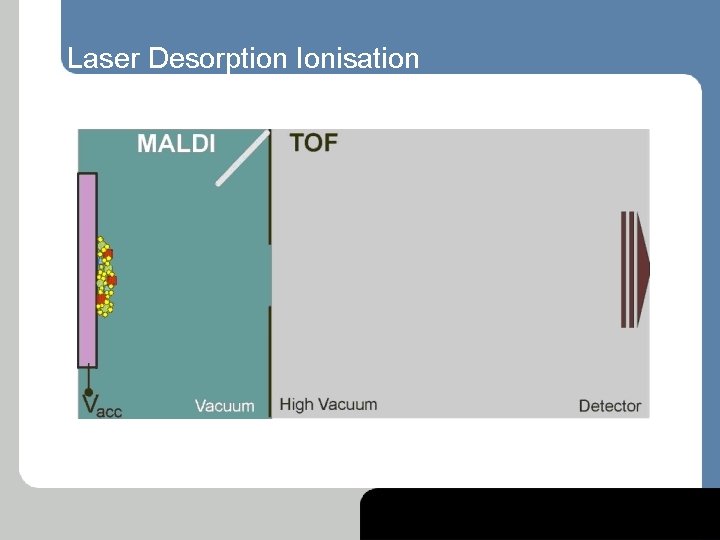
Laser Desorption Ionisation
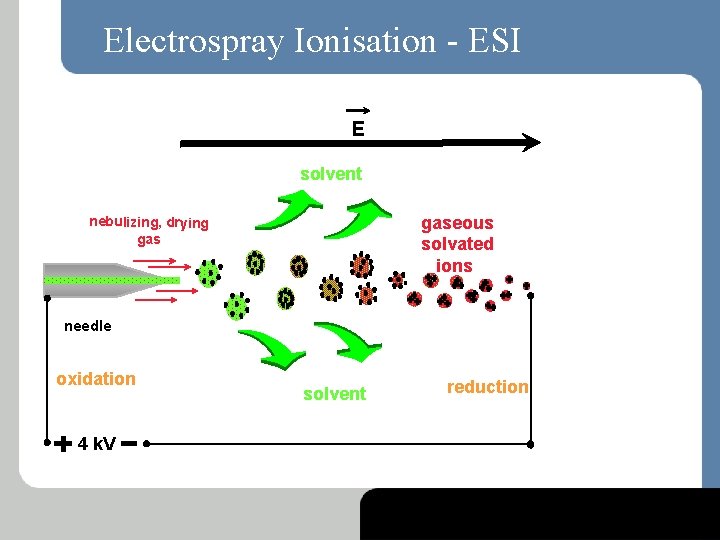
Electrospray Ionisation - ESI E solvent gaseous solvated ions nebulizing, drying gas needle oxidation 4 k. V solvent reduction
![Electrospray Ionisation and Charge [M+2 H]2 + 674. 7 100 Substance P % 462.](http://slidetodoc.com/presentation_image_h2/ec075f4271c0ae2539904c9737688a77/image-20.jpg "Electrospray Ionisation and Charge [M+2 H]2 + 674. 7 100 Substance P % 462.")
Electrospray Ionisation and Charge [M+2 H]2 + 674. 7 100 Substance P % 462. 8 [M+H] + 685. 7 600. 4 666. 1 693. 6 1347. 7 0 300 Da/e 400 500 600 700 800 900 1000 1100 1200 1300
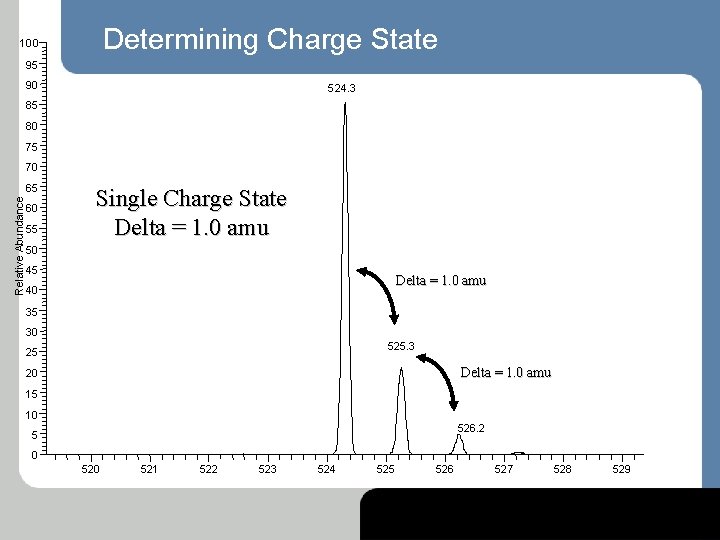
Determining Charge State 100 95 90 524. 3 85 80 75 70 Relative Abundance 65 60 55 Single Charge State Delta = 1. 0 amu 50 45 Delta = 1. 0 amu 40 35 30 525. 3 25 Delta = 1. 0 amu 20 15 10 526. 2 5 0 521 522 523 524 525 m/z 526 527 528 529
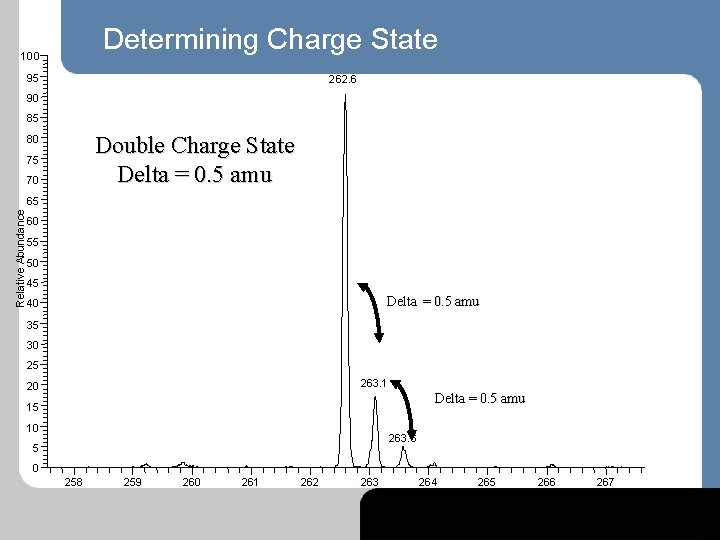
Determining Charge State 100 95 262. 6 90 85 Double Charge State Delta = 0. 5 amu 80 75 70 Relative Abundance 65 60 55 50 45 Delta = 0. 5 amu 40 35 30 25 263. 1 20 Delta = 0. 5 amu 15 10 263. 6 5 0 258 259 260 261 262 263 m/z 264 265 266 267
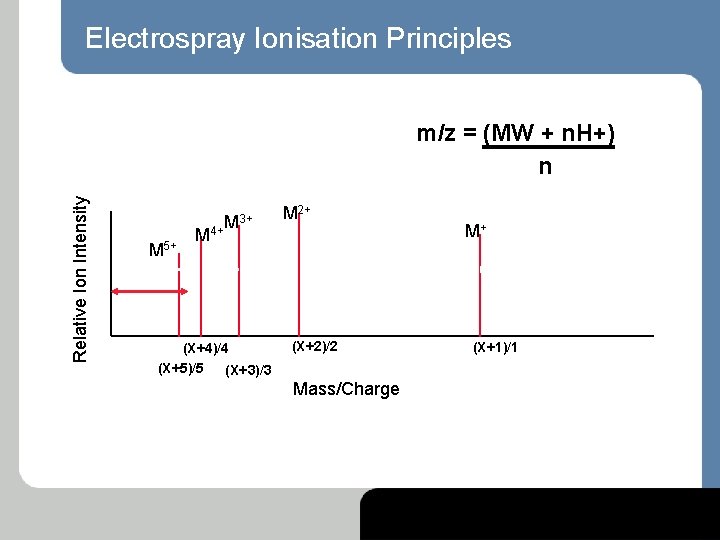
Electrospray Ionisation Principles Relative Ion Intensity m/z = (MW + n. H+) n M 5+ M 4+ M 3+ (X+4)/4 (X+5)/5 (X+3)/3 M 2+ (X+2)/2 Mass/Charge M+ (X+1)/1
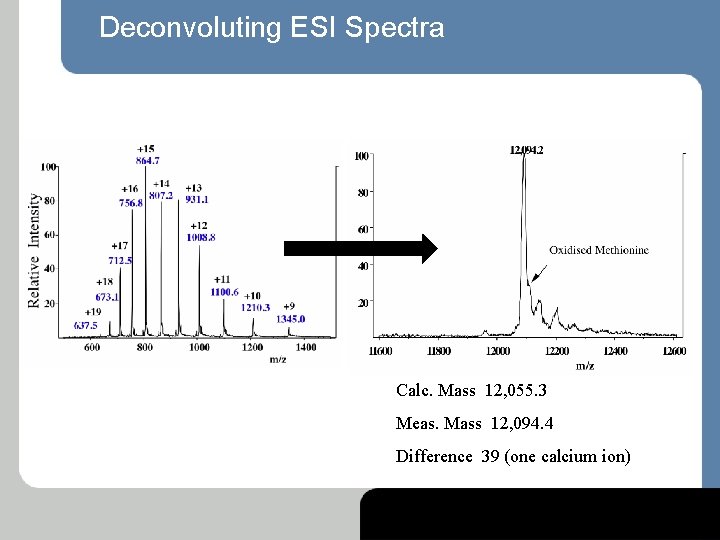
Deconvoluting ESI Spectra Calc. Mass 12, 055. 3 Meas. Mass 12, 094. 4 Difference 39 (one calcium ion)
Summary of Part 2: Ion generation • Molecules must be charged • Molecules must be in the gas phase • Sample ionisation should be delicate – EI and CI are hard methods causing some fragmentation – MALDI is soft and generates mostly singly charged ions – ESI is soft and generates multiply charged ions – Ion spacing defines the charge state – Charged ion series can be deconvoluted
How a Mass Spectrometer works. . . .
Ion Separation • • • Magnetic Sector Quadrupoles, single and triple (SSQ, TSQ) Ion traps (QIT) Time-of-Flight (TOF) Fourier Transform (FTICR-MS) Hybrids (Q-TOF, Q-trap, TOF-TOF, trap-ICR, …)
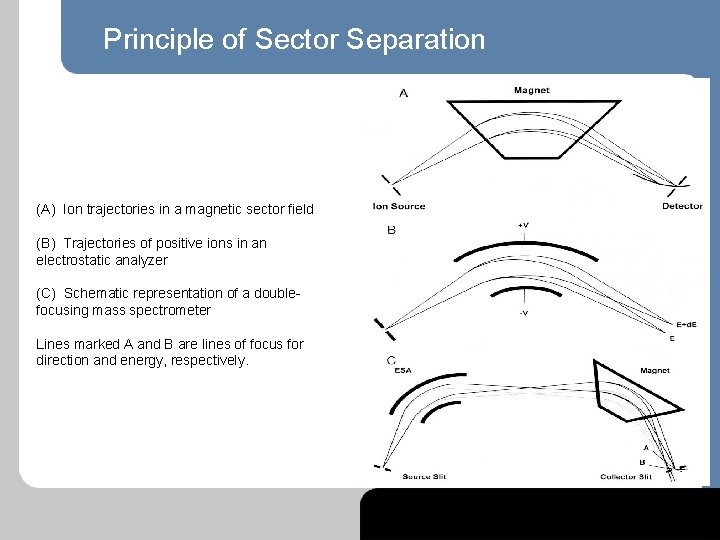
Principle of Sector Separation (A) Ion trajectories in a magnetic sector field (B) Trajectories of positive ions in an electrostatic analyzer (C) Schematic representation of a doublefocusing mass spectrometer Lines marked A and B are lines of focus for direction and energy, respectively.
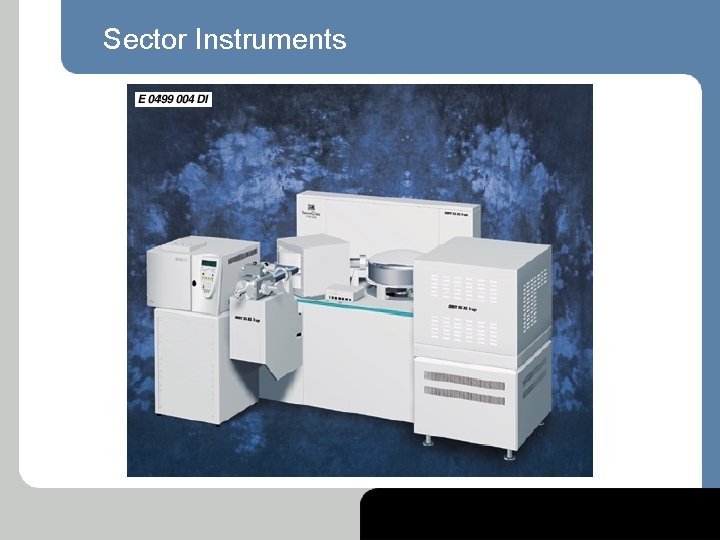
Sector Instruments
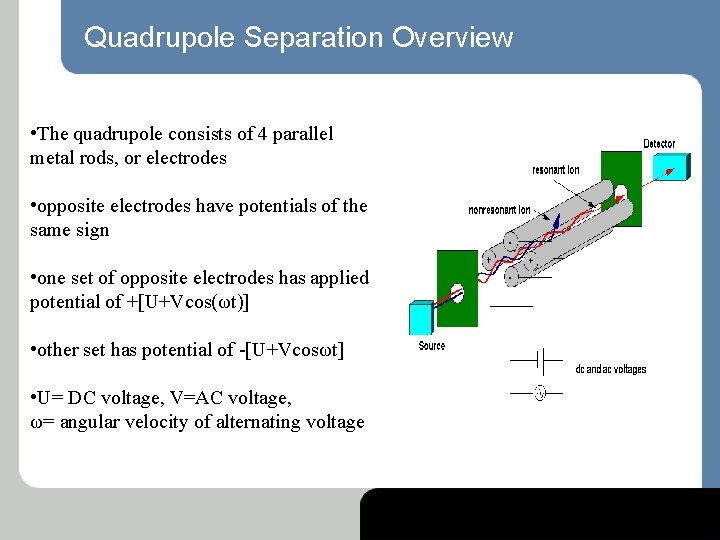
Quadrupole Separation Overview • The quadrupole consists of 4 parallel metal rods, or electrodes • opposite electrodes have potentials of the same sign • one set of opposite electrodes has applied potential of +[U+Vcos(ωt)] • other set has potential of -[U+Vcosωt] • U= DC voltage, V=AC voltage, ω= angular velocity of alternating voltage
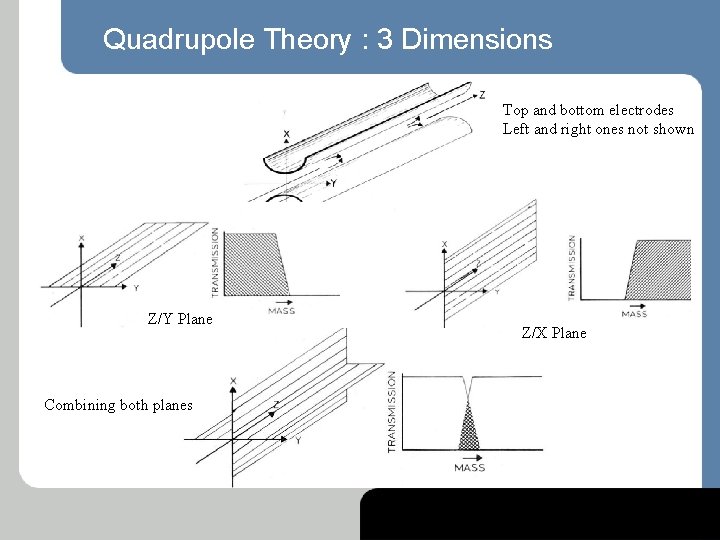
Quadrupole Theory : 3 Dimensions Top and bottom electrodes Left and right ones not shown Z/Y Plane Combining both planes Z/X Plane
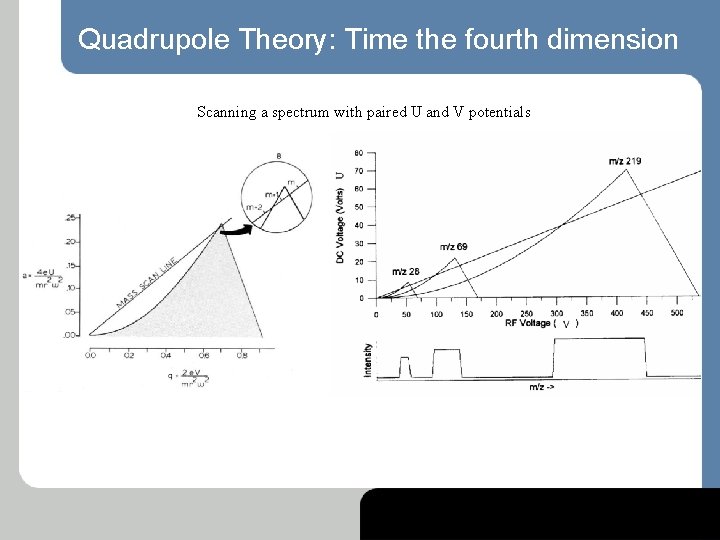
Quadrupole Theory: Time the fourth dimension Scanning a spectrum with paired U and V potentials
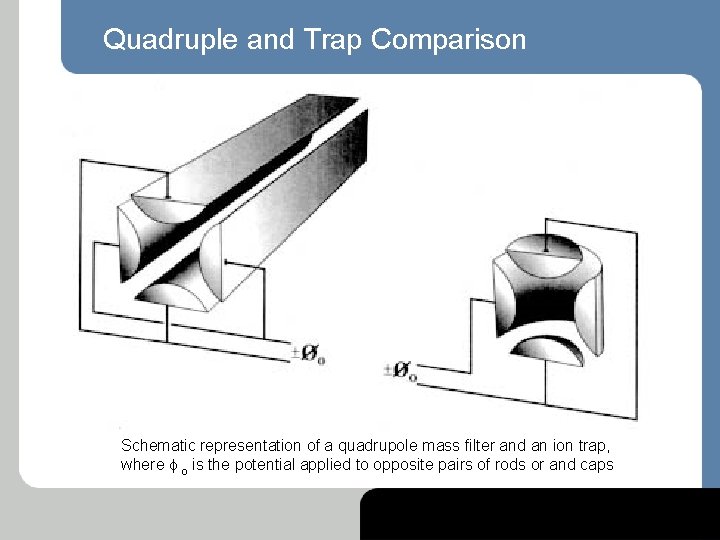
Quadruple and Trap Comparison Schematic representation of a quadrupole mass filter and an ion trap, where f o is the potential applied to opposite pairs of rods or and caps

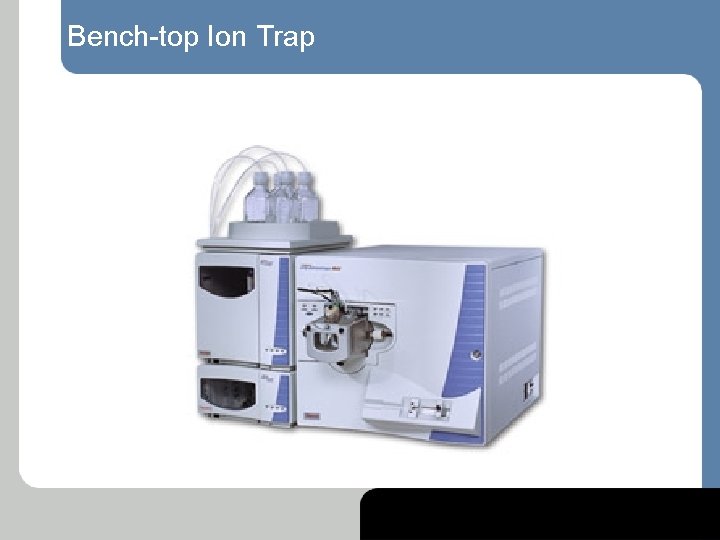
Linear Ion Trap
Bench-top Ion Trap
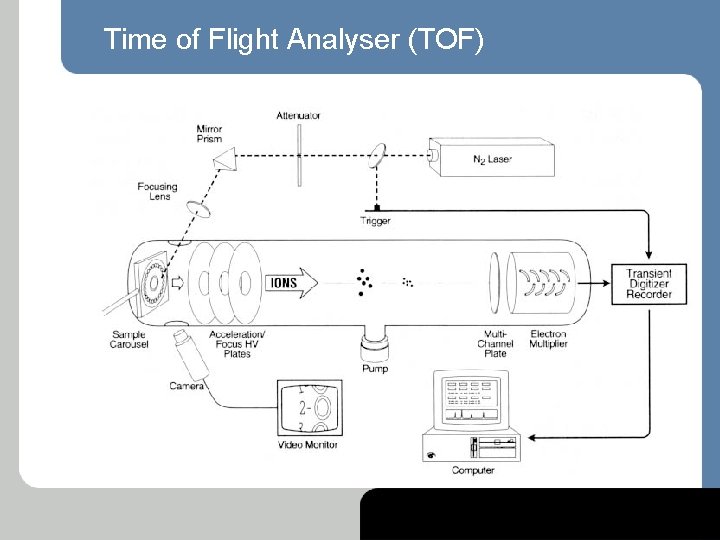
Time of Flight Analyser (TOF)
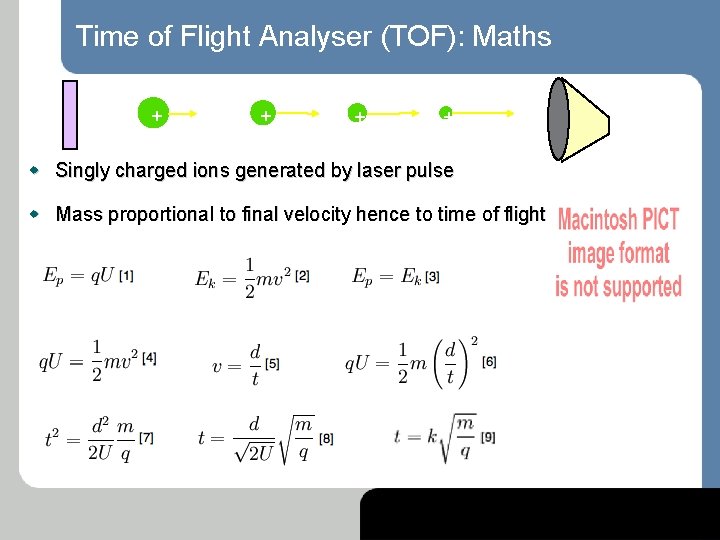
Time of Flight Analyser (TOF): Maths + + w Singly charged ions generated by laser pulse w Mass proportional to final velocity hence to time of flight
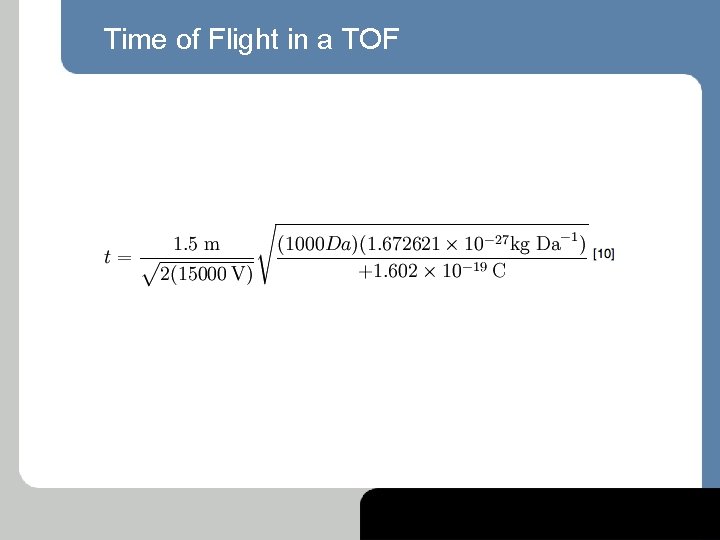
Time of Flight in a TOF
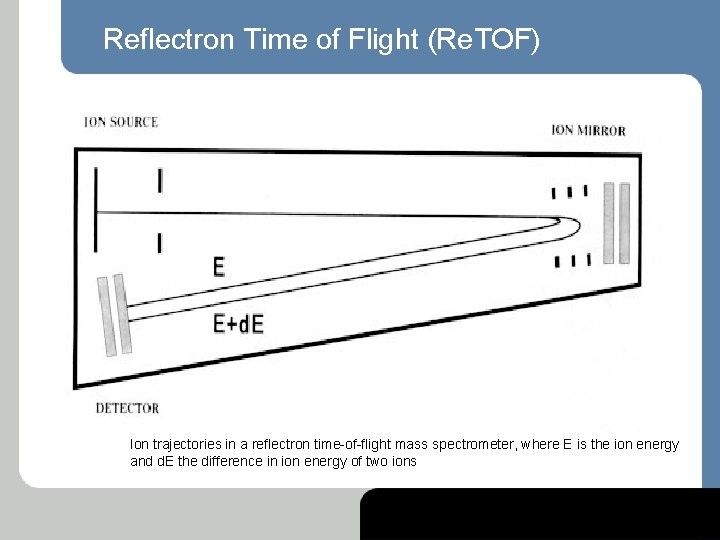
Reflectron Time of Flight (Re. TOF) Ion trajectories in a reflectron time-of-flight mass spectrometer, where E is the ion energy and d. E the difference in ion energy of two ions

A TOF mass spectrometer
Summary of Part 3: Ion separation • There are four main types of mass spectrometers – Sector instruments (magnetic/electric) – Quadrupole (radiofrequency/voltage) – Ion traps, linear and 3 D (radiofrequency/voltage) – Time of flight (voltage pulse)
Ion Detection • Point Detectors (Electron cascade) • Array Detectors (Multichannel plate) • Ion Cyclotron Resonance Cell detector
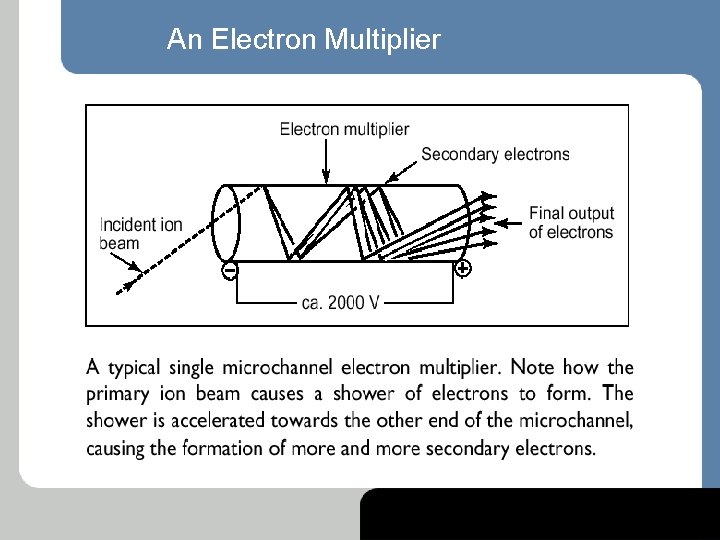
An Electron Multiplier
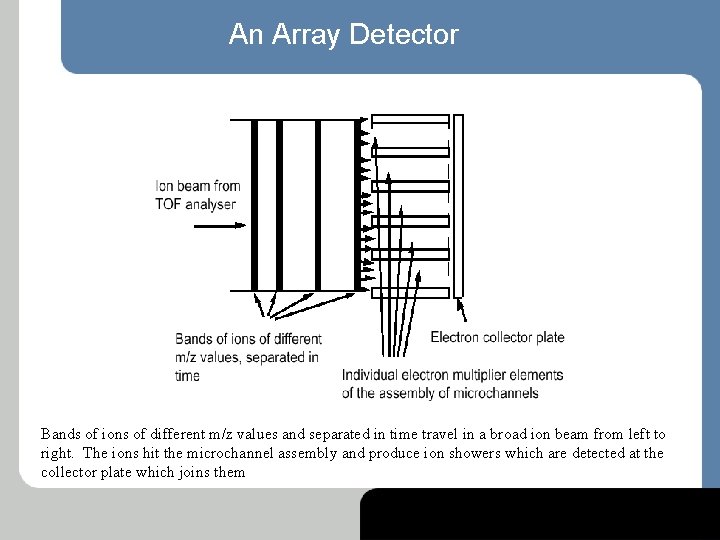
An Array Detector Bands of ions of different m/z values and separated in time travel in a broad ion beam from left to right. The ions hit the microchannel assembly and produce ion showers which are detected at the collector plate which joins them
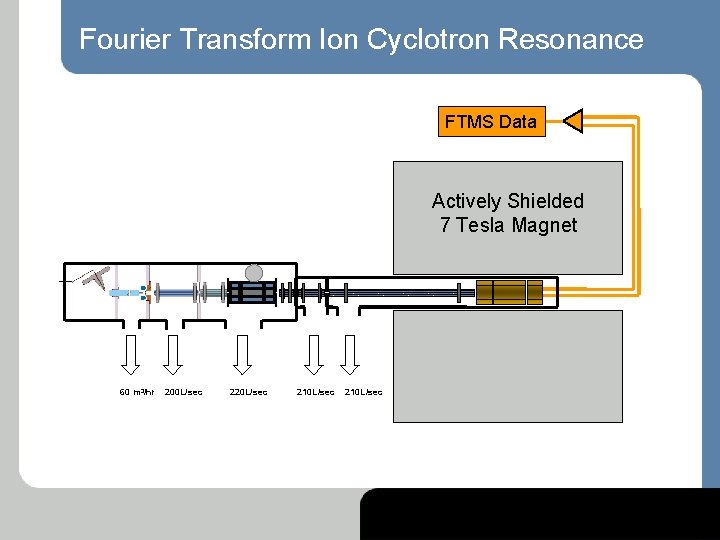
Fourier Transform Ion Cyclotron Resonance FTMS Data Actively Shielded 7 Tesla Magnet 60 m 3/hr 200 L/sec 220 L/sec 210 L/sec
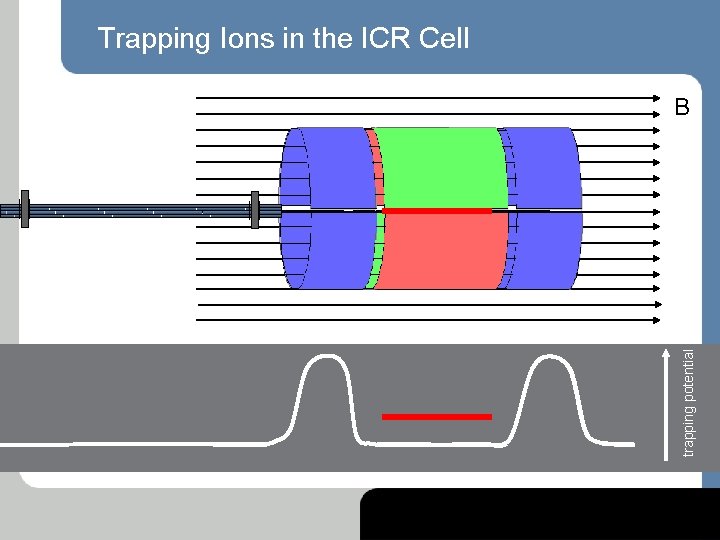
Trapping Ions in the ICR Cell trapping potential B
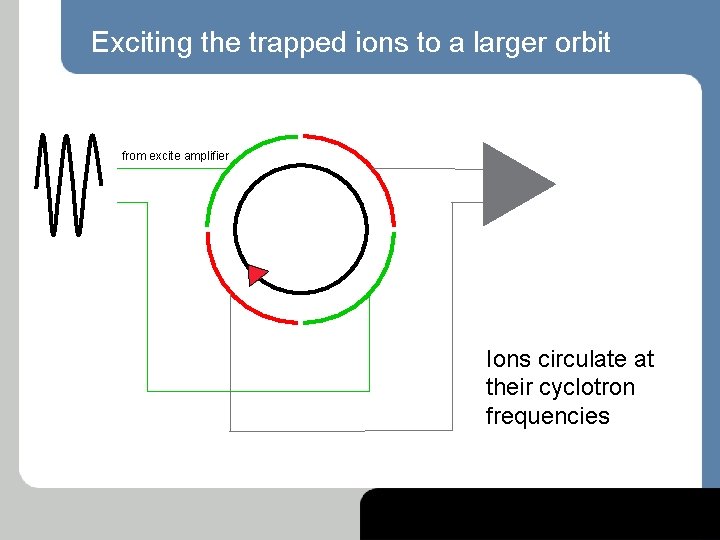
Exciting the trapped ions to a larger orbit from excite amplifier Ions circulate at their cyclotron frequencies
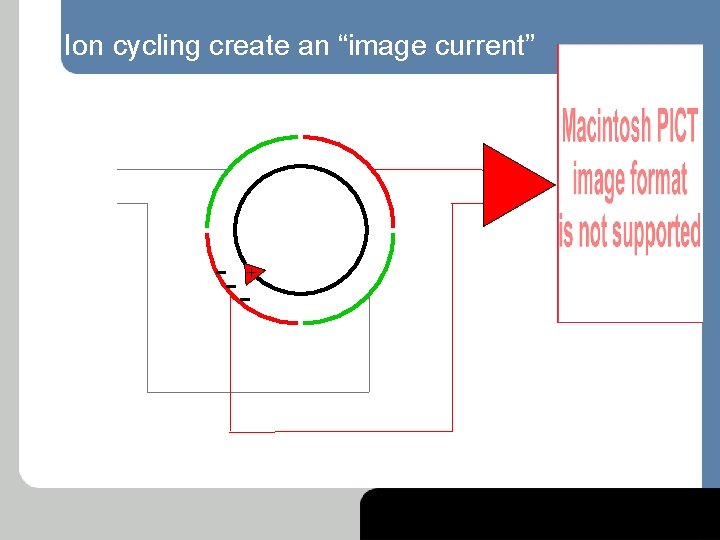
Ion cycling create an “image current” -- + -
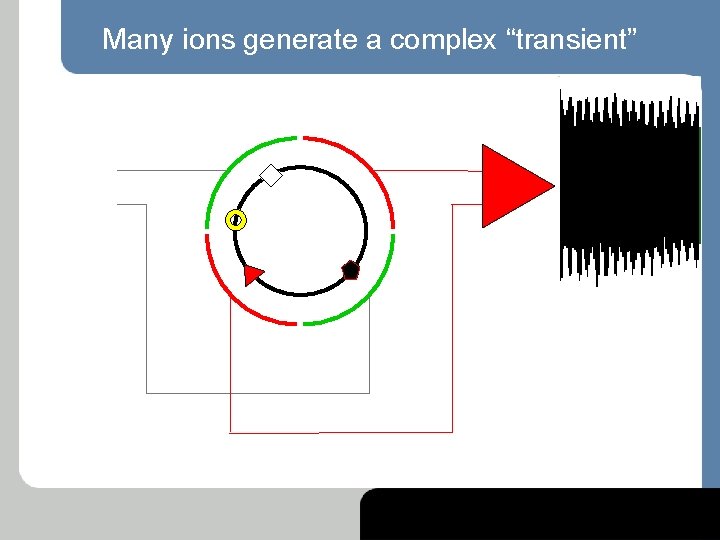
Many ions generate a complex “transient”
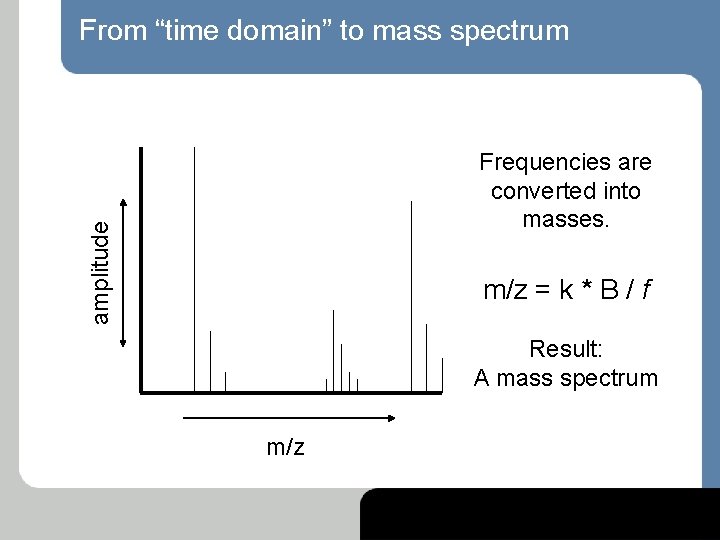
From “time domain” to mass spectrum amplitude Frequencies are converted into masses. m/z = k * B / f Result: A mass spectrum m/z
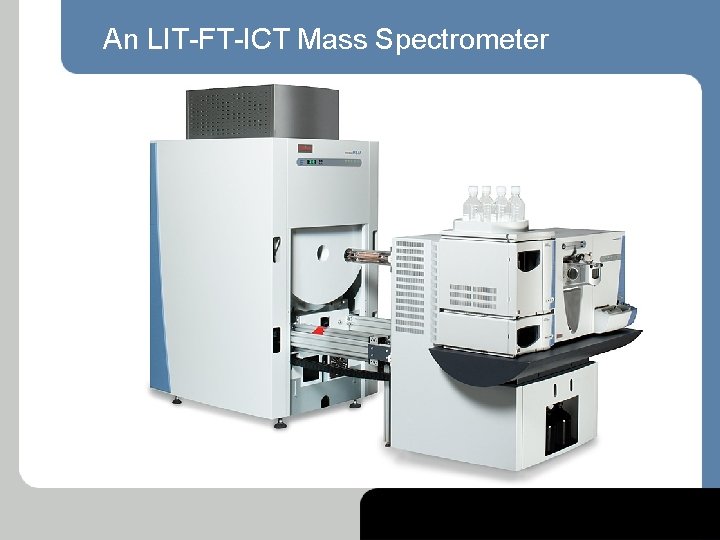
An LIT-FT-ICT Mass Spectrometer
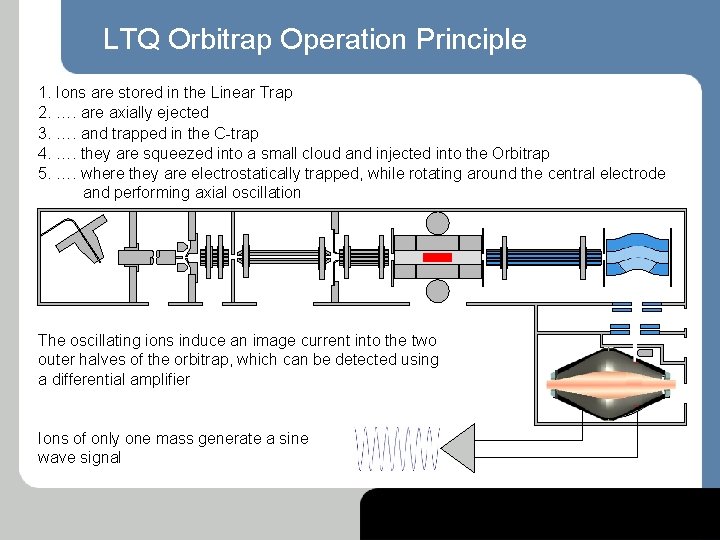
LTQ Orbitrap Operation Principle 1. Ions are stored in the Linear Trap 2. …. are axially ejected 3. …. and trapped in the C-trap 4. …. they are squeezed into a small cloud and injected into the Orbitrap 5. …. where they are electrostatically trapped, while rotating around the central electrode and performing axial oscillation The oscillating ions induce an image current into the two outer halves of the orbitrap, which can be detected using a differential amplifier Ions of only one mass generate a sine wave signal
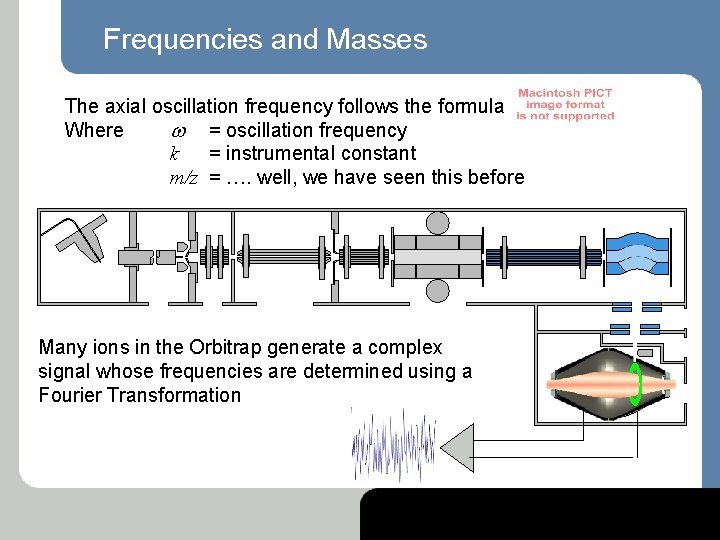
Frequencies and Masses The axial oscillation frequency follows the formula Where w = oscillation frequency k = instrumental constant m/z = …. well, we have seen this before Many ions in the Orbitrap generate a complex signal whose frequencies are determined using a Fourier Transformation
Summary of Part 4: Ion detection • There are three main types of detector – Electron multiplier – Array – Ion cyclotron resonance
- Slides: 54