
Mass Spectrometry Mass spectrometry technique for measuring the
- Slides: 11
Mass Spectrometry
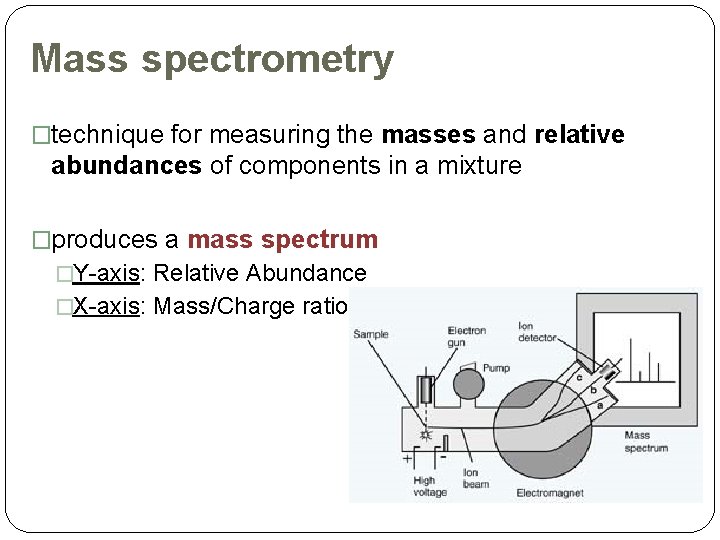
Mass spectrometry �technique for measuring the masses and relative abundances of components in a mixture �produces a mass spectrum �Y-axis: Relative Abundance �X-axis: Mass/Charge ratio
Uses: �find masses of isotopes in a sample �determine structural components of molecules
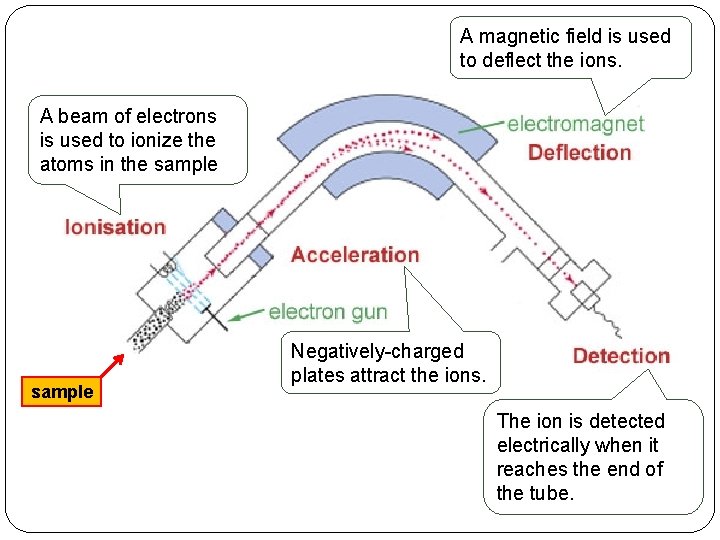
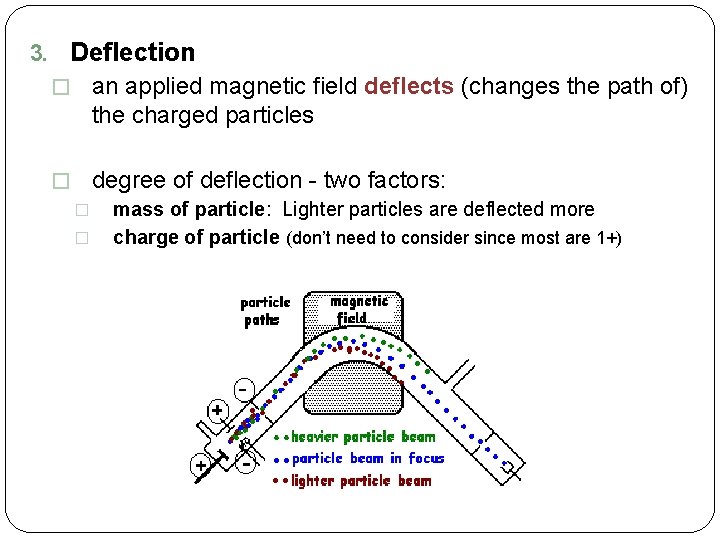
A magnetic field is used to deflect the ions. A beam of electrons is used to ionize the atoms in the sample Negatively-charged plates attract the ions. The ion is detected electrically when it reaches the end of the tube.
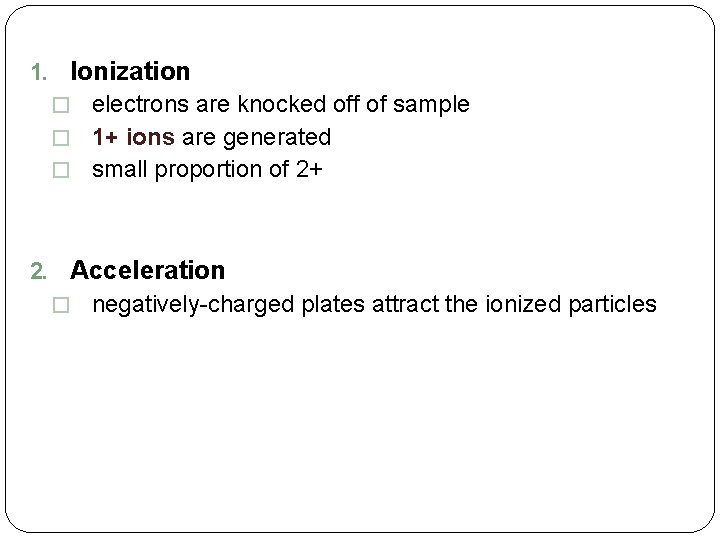
1. Ionization � electrons are knocked off of sample � 1+ ions are generated � small proportion of 2+ 2. Acceleration � negatively-charged plates attract the ionized particles
3. Deflection � an applied magnetic field deflects (changes the path of) the charged particles � degree of deflection - two factors: � mass of particle: Lighter particles are deflected more � charge of particle (don’t need to consider since most are 1+)
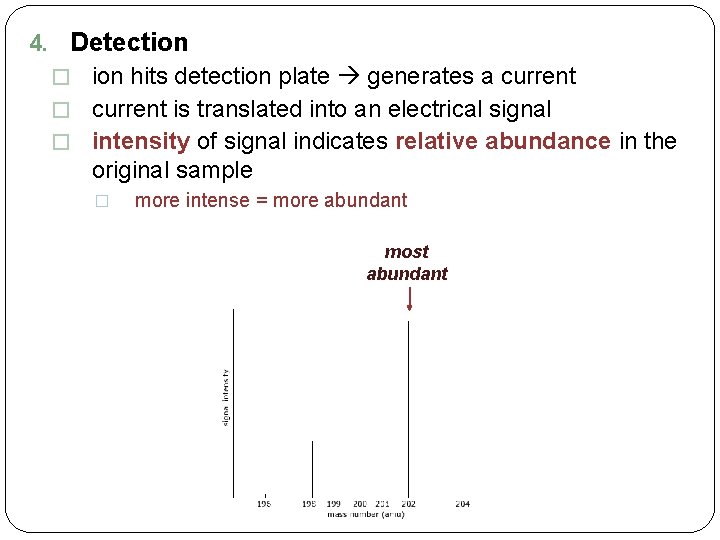
4. Detection � ion hits detection plate generates a current � current is translated into an electrical signal � intensity of signal indicates relative abundance in the original sample � more intense = more abundant most abundant
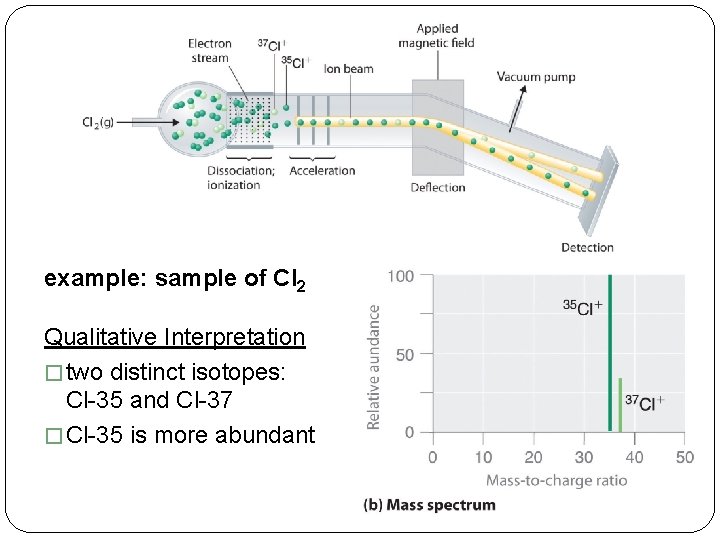
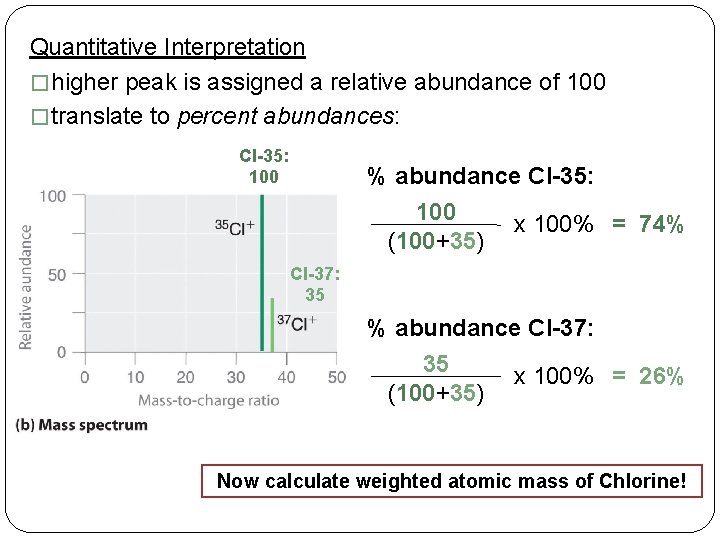
example: sample of Cl 2 Qualitative Interpretation � two distinct isotopes: Cl-35 and Cl-37 � Cl-35 is more abundant
Quantitative Interpretation � higher peak is assigned a relative abundance of 100 � translate to percent abundances: Cl-35: 100 % abundance Cl-35: 100 x 100% = 74% (100+35) Cl-37: 35 % abundance Cl-37: 35 x 100% = 26% (100+35) Now calculate weighted atomic mass of Chlorine!
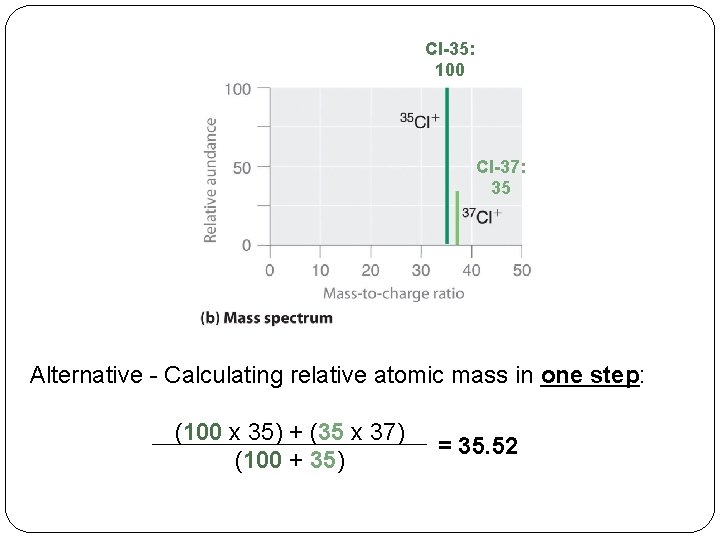
Cl-35: 100 Cl-37: 35 Alternative - Calculating relative atomic mass in one step: (100 x 35) + (35 x 37) (100 + 35) = 35. 52
Good Animation �https: //www. youtube. com/watch? v=t. OGM 2 g. OHKPc