
Mass spectrometry Ions are analyzed on the basis

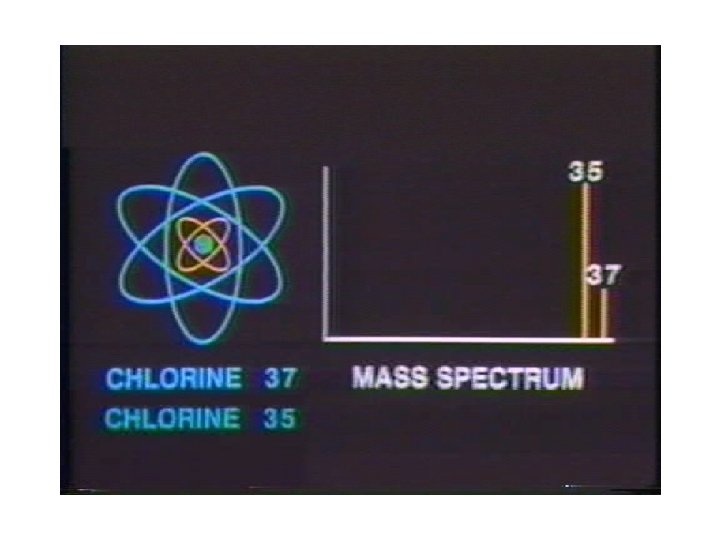
Mass spectrometry • Ions are analyzed on the basis of their m/z • Chlorine has 2 isotopes, 35 Cl and 37 Cl, in the approximate ratio of 3 : 1. • Electrons are knocked off Cl 2 in the beam and a molecular ion, Cl 2+ is formed. • Cl 2+ → Cl + Cl+ • We just determine the +ve ions (sometimes the –ve)
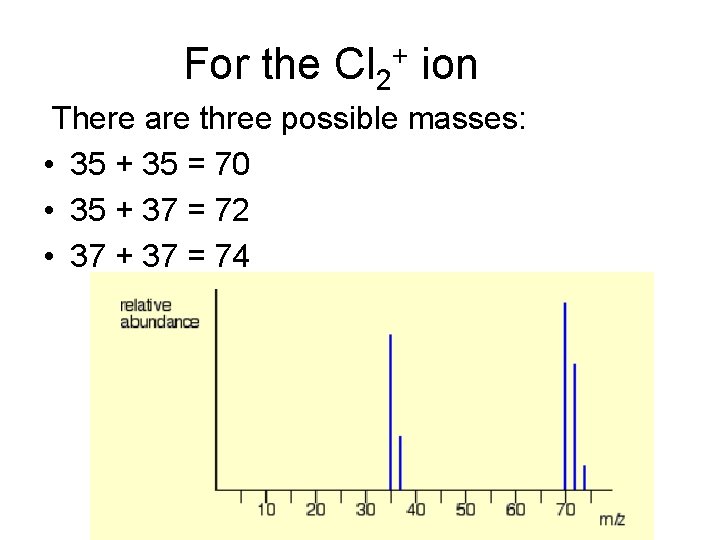
For the Cl 2+ ion There are three possible masses: • 35 + 35 = 70 • 35 + 37 = 72 • 37 + 37 = 74
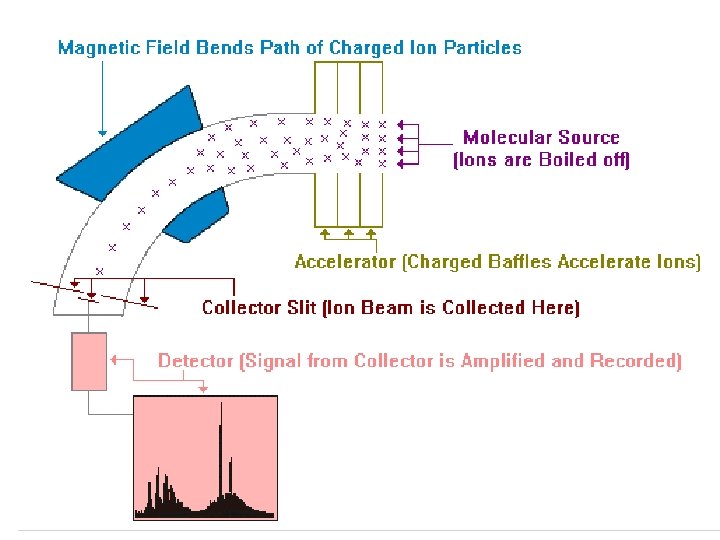
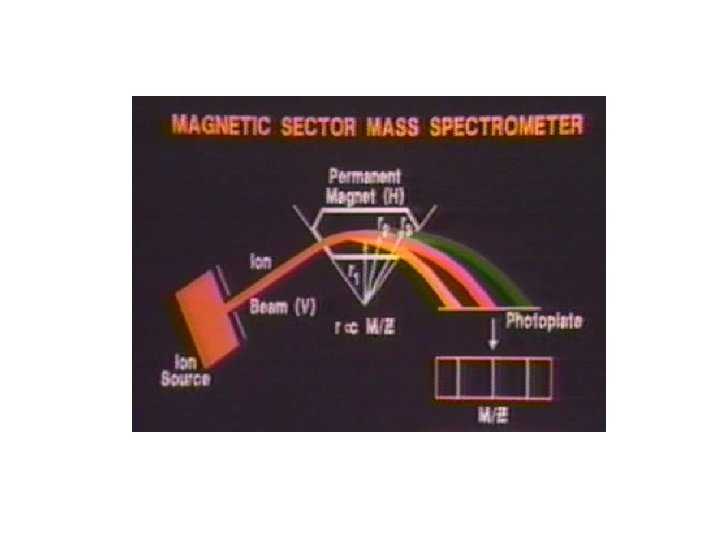
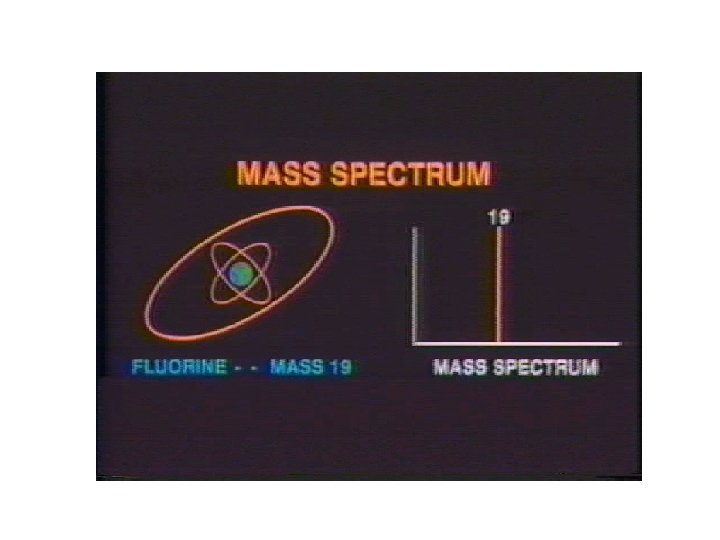
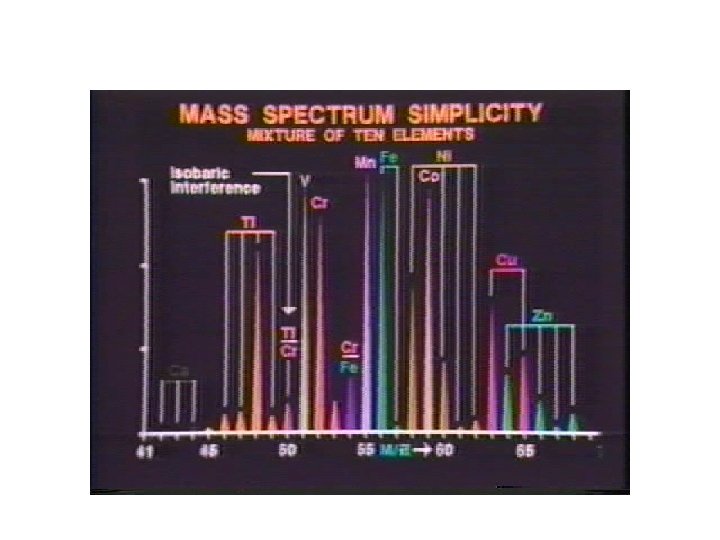
ICP-MS • A sample’s mass spectrum is generally much simpler than its emission spectrum • Elements with isotopes produce a peak for each mass eg. Cl: 35, 37 • For a mass analyzer – needs ions • You measure m/Z where often z = 1 eg. F- or Cl • Few interferences-masses differ by at least 1
Characteristics of an ICP-MS • Analyses are fast • >30 elements/min can be determined at concentrations ~10 × LOD • all masses accessible • 3 – 300 amu • background noise is small • Spectra are simple and mostly free of interferences
ICP-MS Instrumentation • • • ICP torch and nebulizer system Interface Vacuum system Quadrupole MS Powerful data management and control system
Interface • ICP operates at high temperature and with 10 -20 L/min Ar and atmospheric pressure • MS – 10 -5 torr or less • Plasma is operated in horizontal position • One interface is made of two cones/orifices • Expansion through the first orifice (the sampler) (~1 mm) produces a supersonic beam
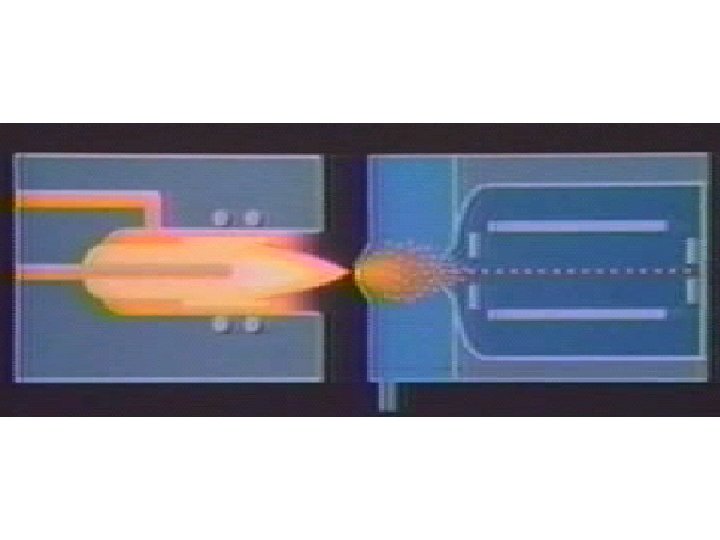
Interface • Mechanically pumped to ~1 torr • Only a small amount of plasma gas enters through the sampler • Some of this continues through the second orifice, the skimmer
One commercial design uses cryogenic pumping ~3 × 10 -5 torr • Any non-ionized gas atoms entering skimmer are cooled rapidly to 14 K and frozen out on cryoshell • Ions do not condense and go into the quadrupole
Quadrupole Spectrometer is used • • Compact design Moderate resolution High Stability Separates mass according to stability of ions in an oscillating electric field • Scan by ramping dc and ac voltages • Can peak-hop also
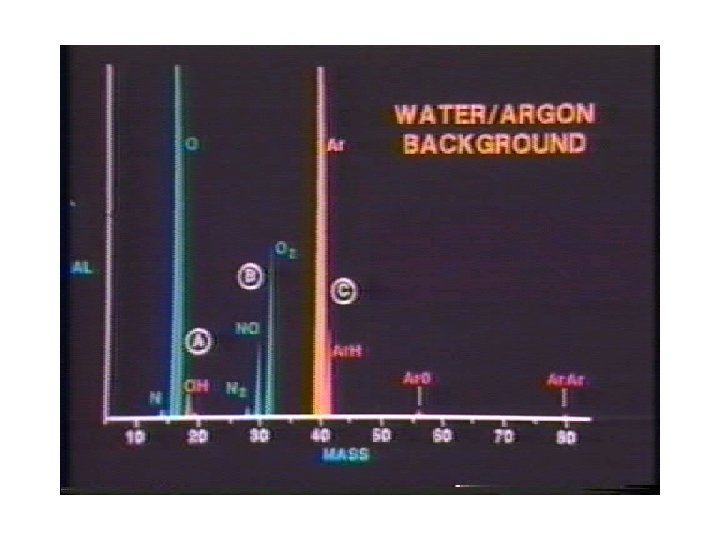
ICP-MS • • • Use plasma as ion source Nebulize aqueous samples into Ar plasma See H 2 O and Ar peaks 0 16, OH 17, NO 30, O 2 32, Ar 40, Ar. H 41 Noise – random – not set by interfering ions
Low LOD in ICP-MS • Ionization efficiency is high and similar for most elements • 90% of elements give LOD’s 0. 01 -0. 09 ng/m. L • limits are fairly similar for all elements – not the case for ICP-OES
Comparison with Electrothermal AA (furnace) • • • Lower detection limits Faster, more convenient Can do multielement analyses Can determine isotope ratio MORE EXPENSIVE
- Slides: 20