
Mass Spectrometry Ionization to Radical Cation Molecular Ion
- Slides: 49
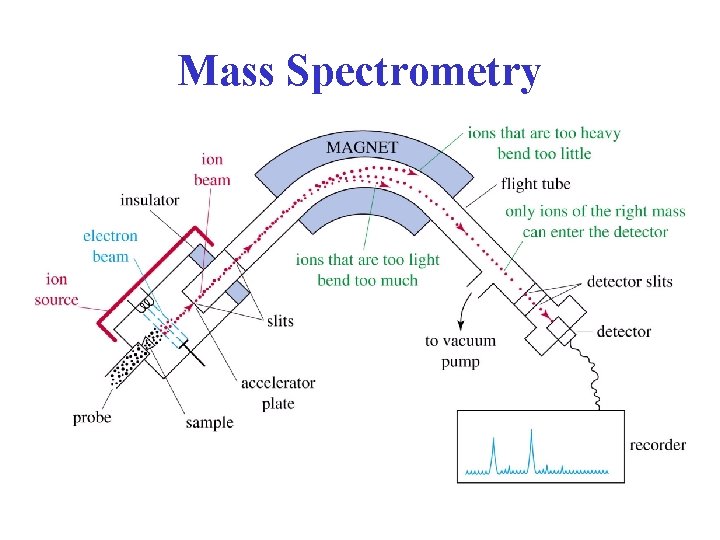
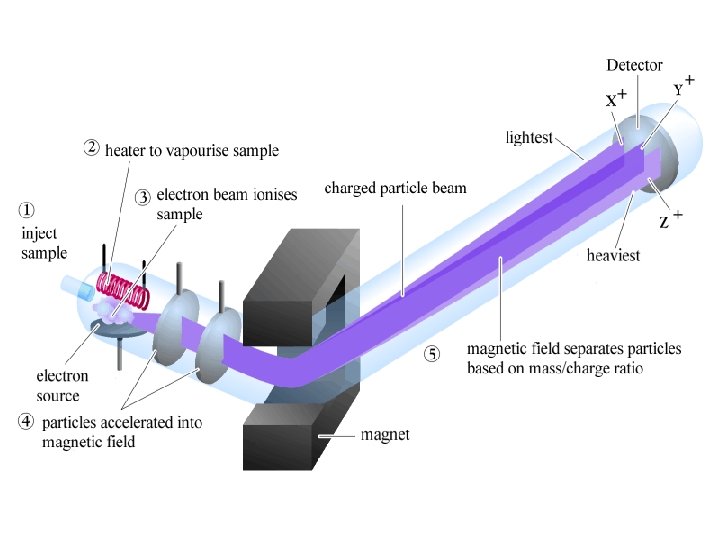
Mass Spectrometry
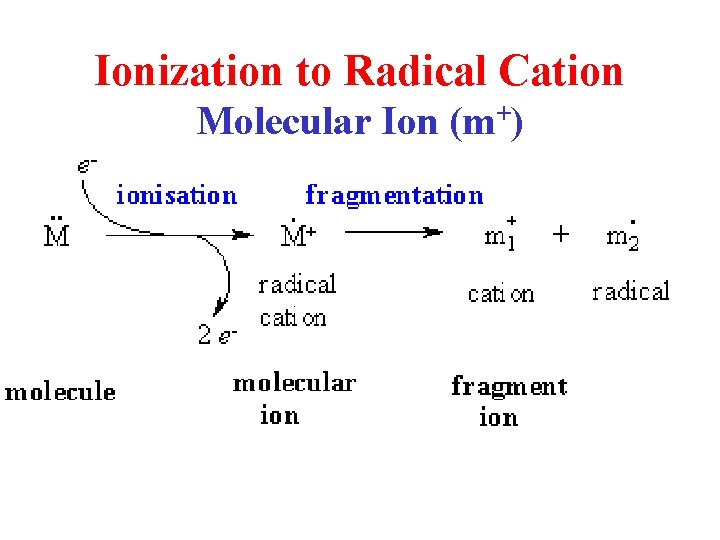
Ionization to Radical Cation Molecular Ion (m+)
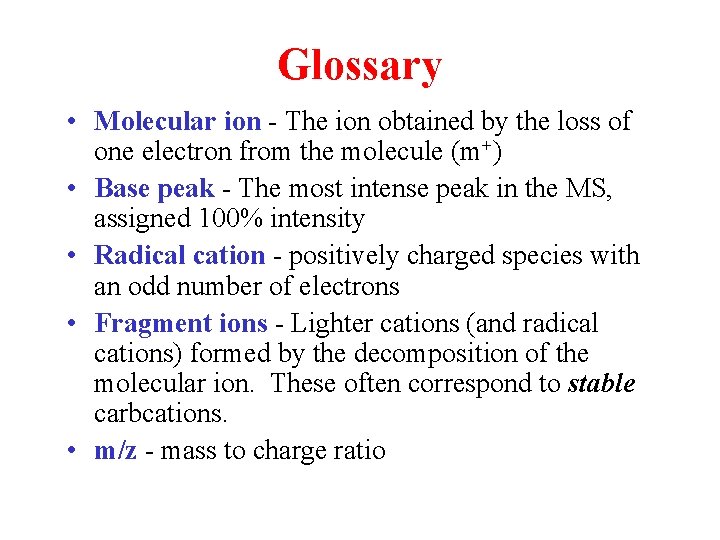
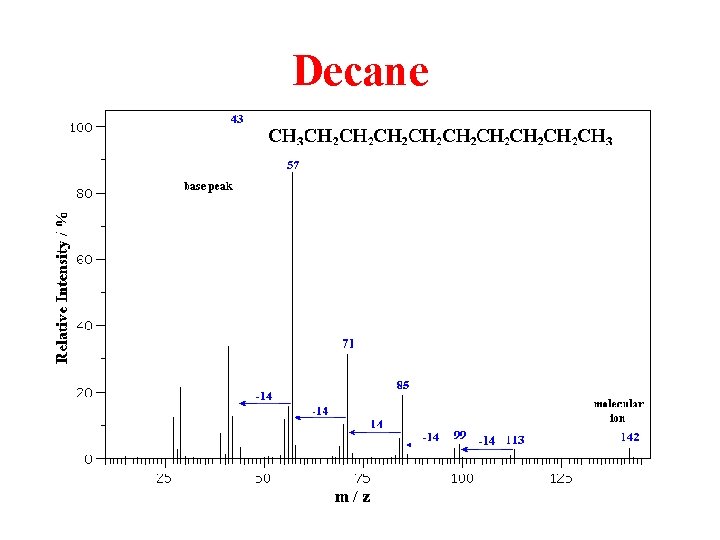
Glossary • Molecular ion - The ion obtained by the loss of one electron from the molecule (m+) • Base peak - The most intense peak in the MS, assigned 100% intensity • Radical cation - positively charged species with an odd number of electrons • Fragment ions - Lighter cations (and radical cations) formed by the decomposition of the molecular ion. These often correspond to stable carbcations. • m/z - mass to charge ratio
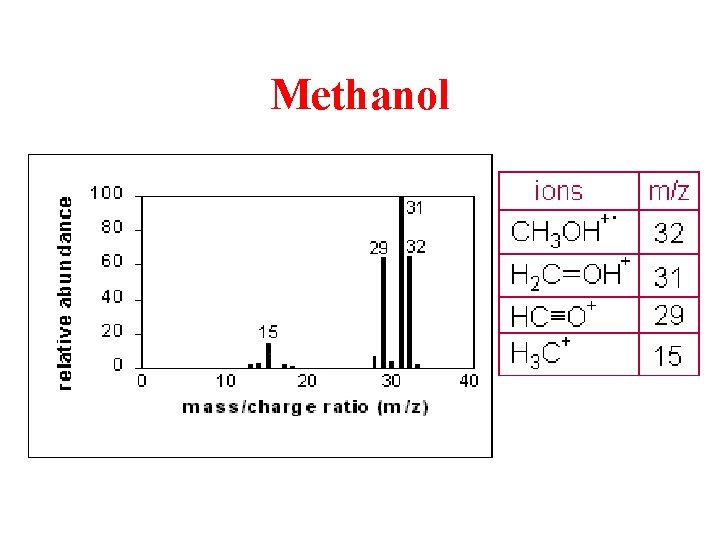
Methanol
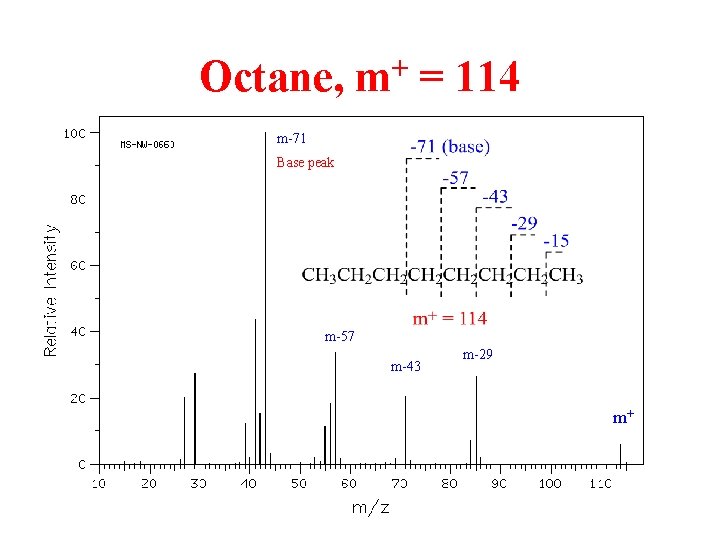
Octane, m+ = 114 m-71 Base peak m-57 m-43 m-29 m+
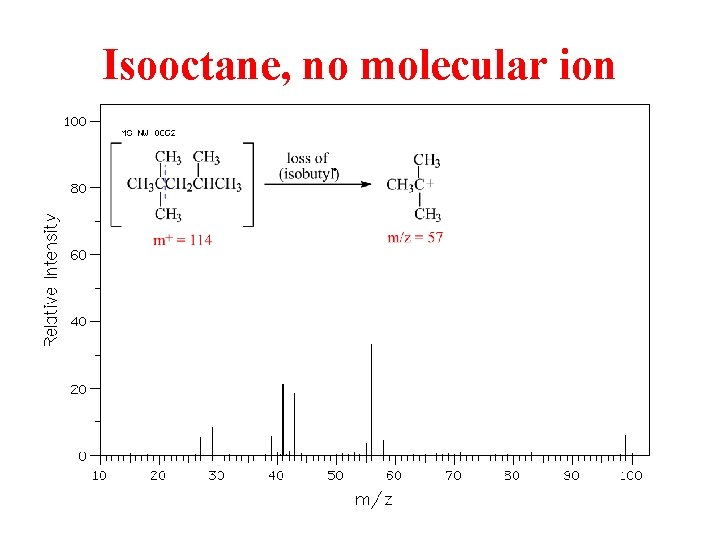
Isooctane, no molecular ion
Decane
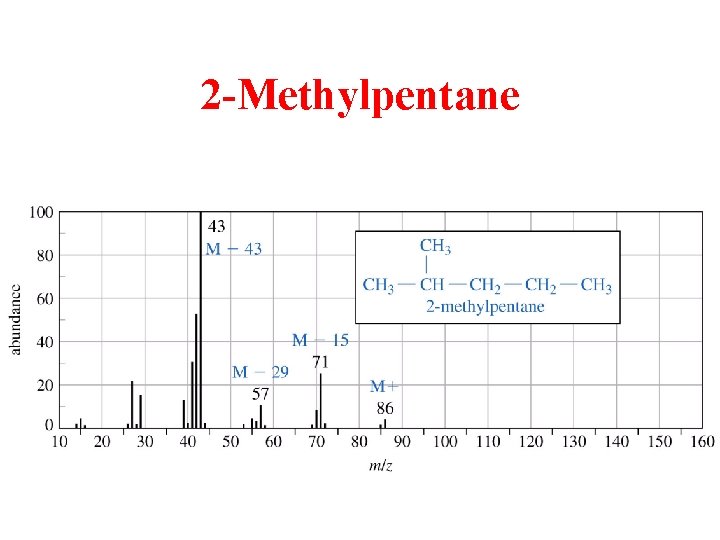
2 -Methylpentane
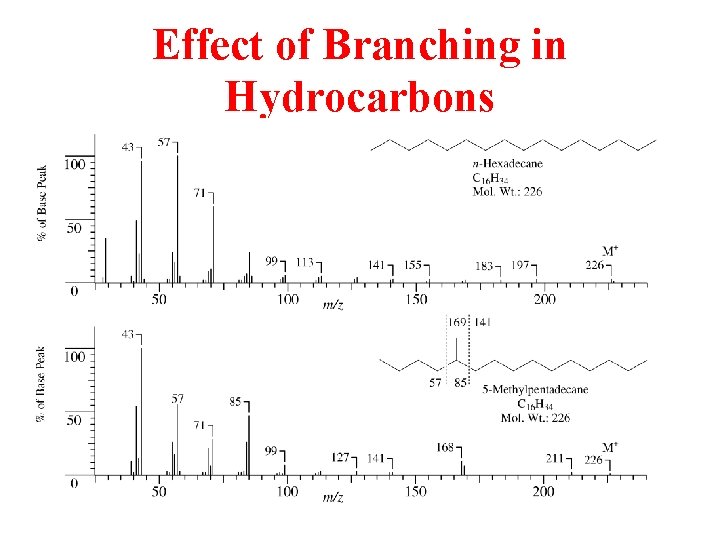
Effect of Branching in Hydrocarbons
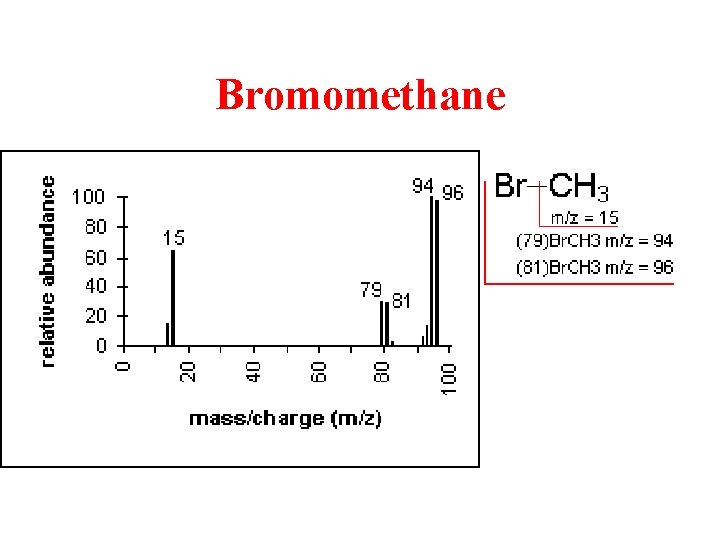
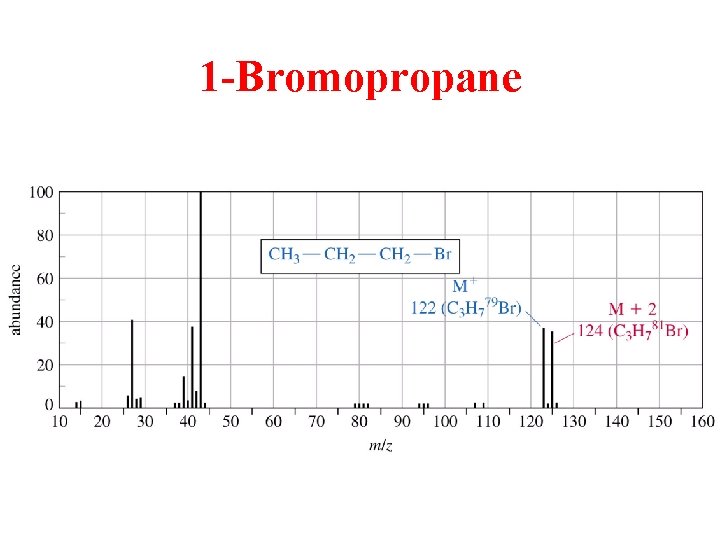
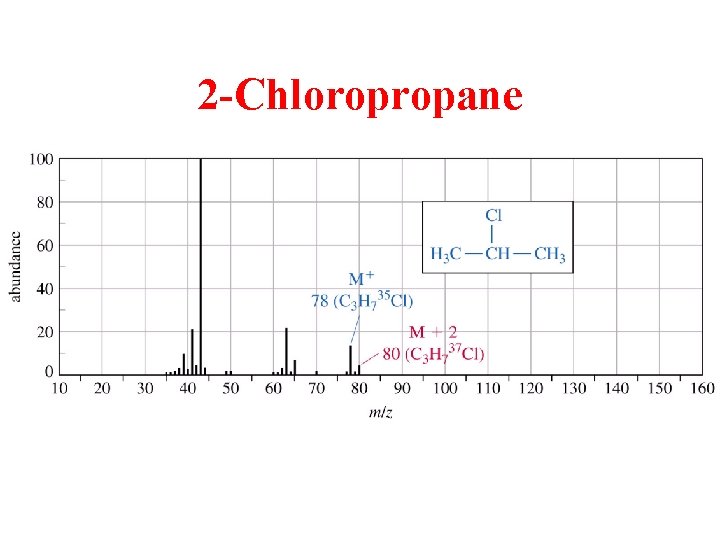
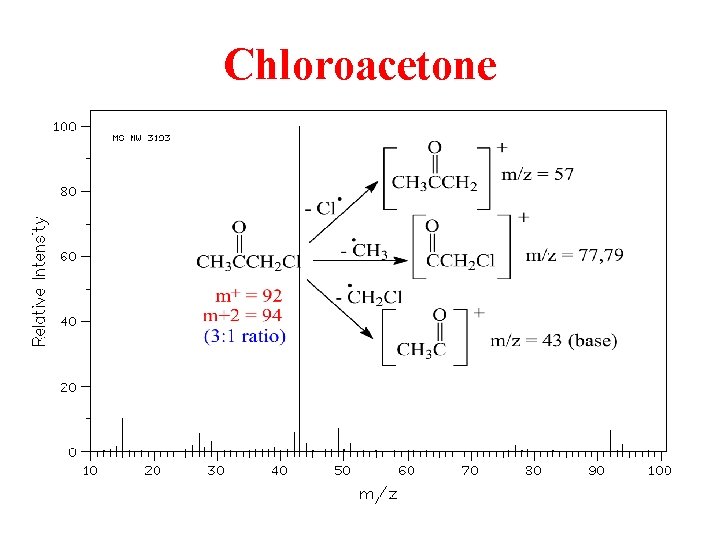
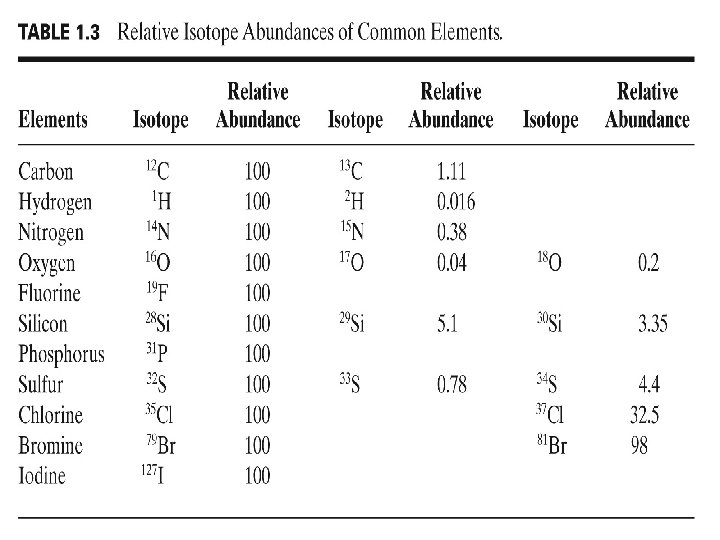
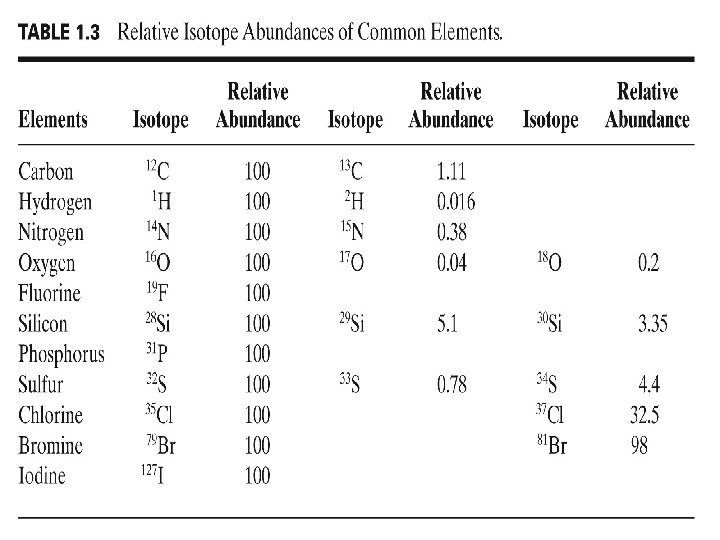
Isotopes • Mass spectrometers are capable of separating and detecting individual ions even those that only differ by a single atomic mass unit. • As a result molecules containing different isotopes can be distinguished. • This is most apparent when atoms such as bromine or chlorine are present (79 Br : 81 Br, intensity 1: 1 and 35 Cl : 37 Cl, intensity 3: 1) where peaks at "M" and "M+2" are obtained. • The intensity ratios in the isotope patterns are due to the natural abundance of the isotopes. • "M+1" peaks are seen due the presence of 13 C in the sample.
Bromomethane
1 -Bromopropane
2 -Chloropropane
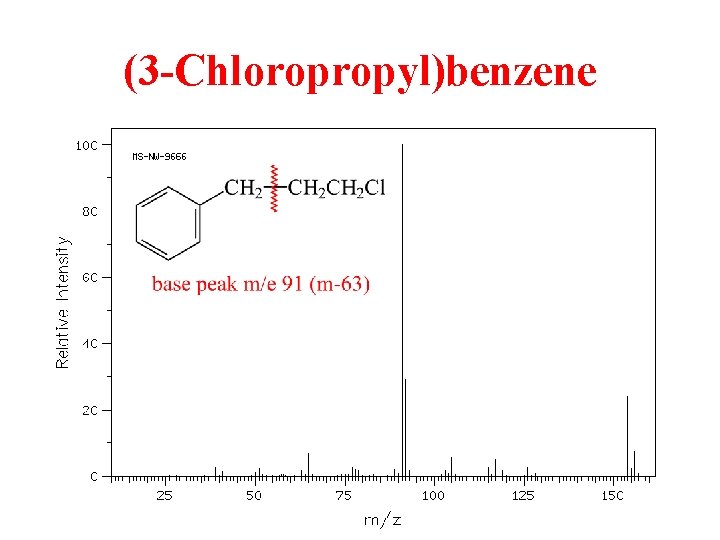
(3 -Chloropropyl)benzene
Chloroacetone
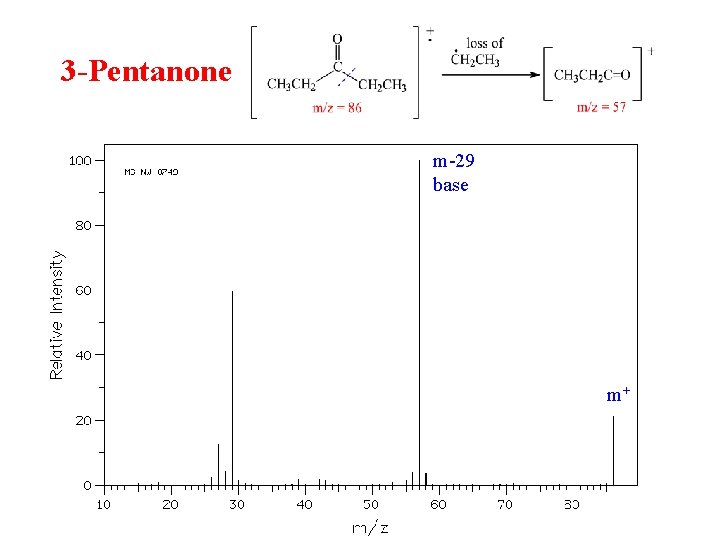
3 -Pentanone m-29 base m+
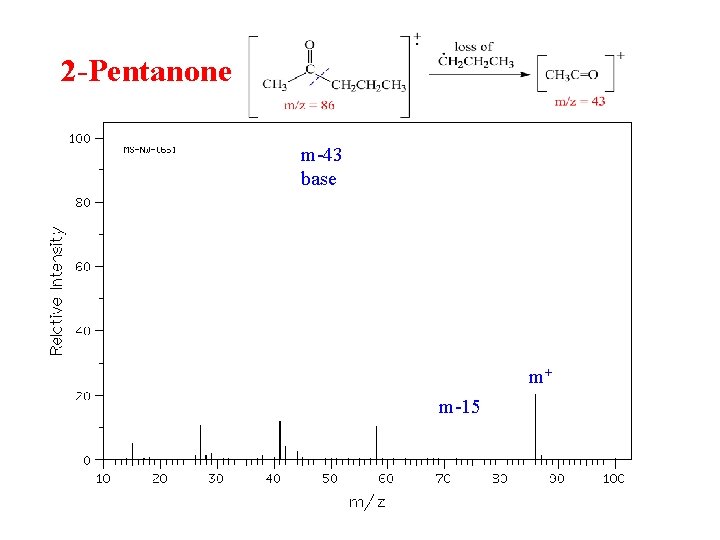
2 -Pentanone m-43 base m+ m-15
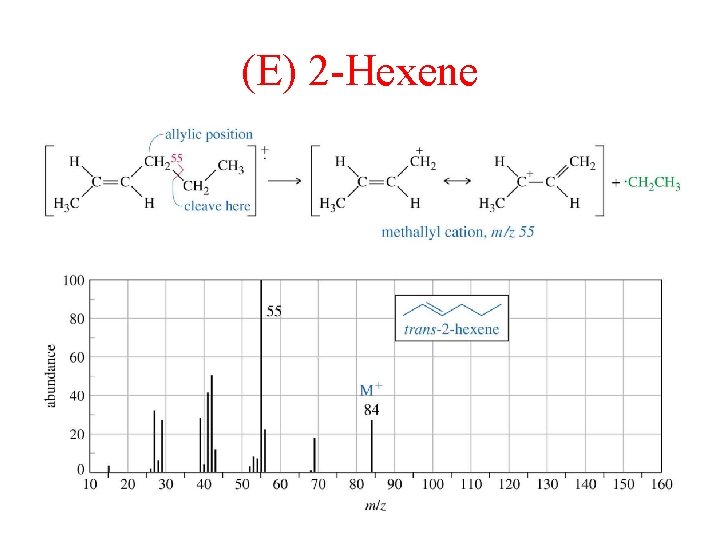
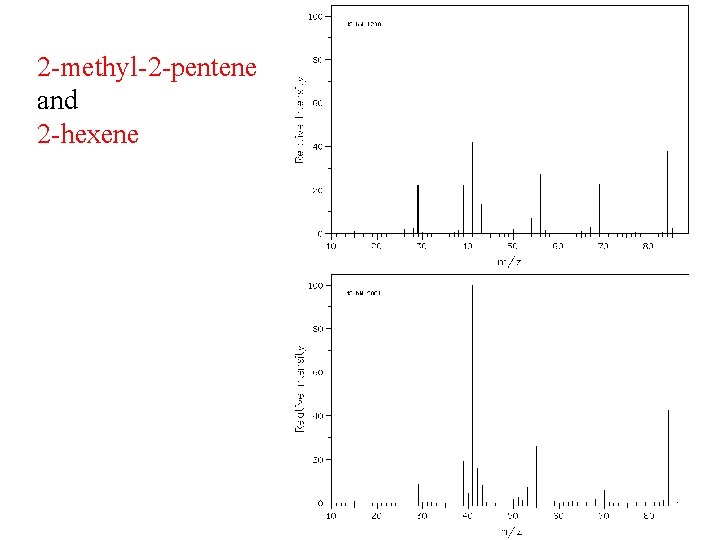
(E) 2 -Hexene
2 -methyl-2 -pentene and 2 -hexene
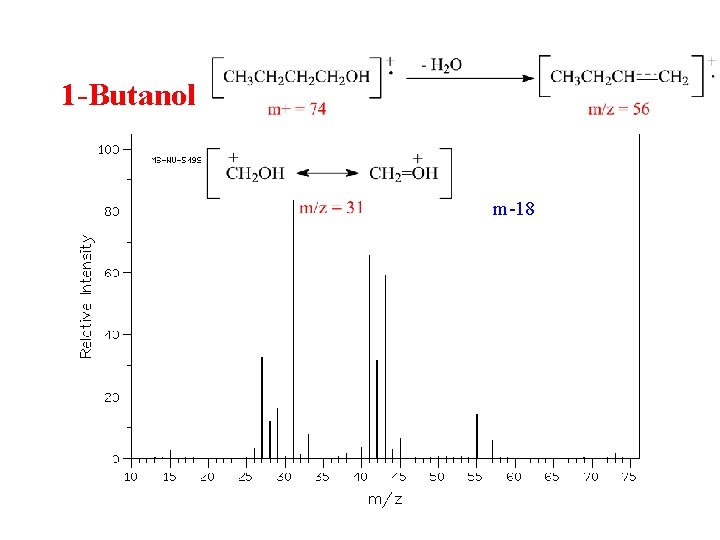
1 -Butanol m-18
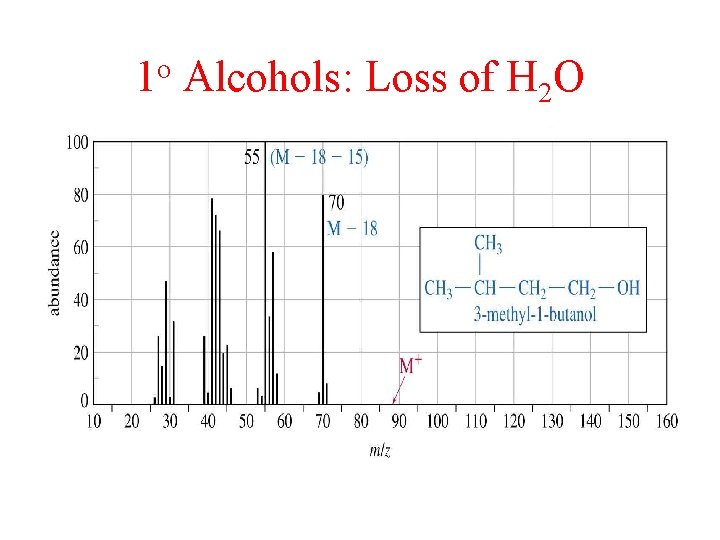
1 o Alcohols: Loss of H 2 O
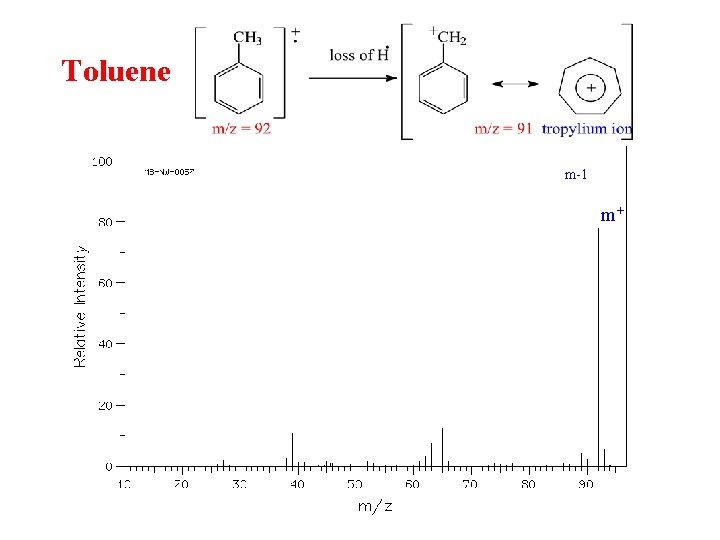
Toluene m-1 m+
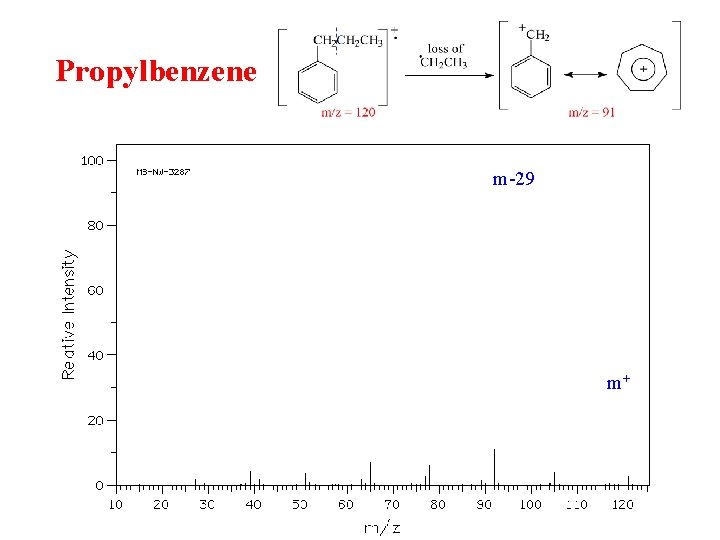
Propylbenzene m-29 m+
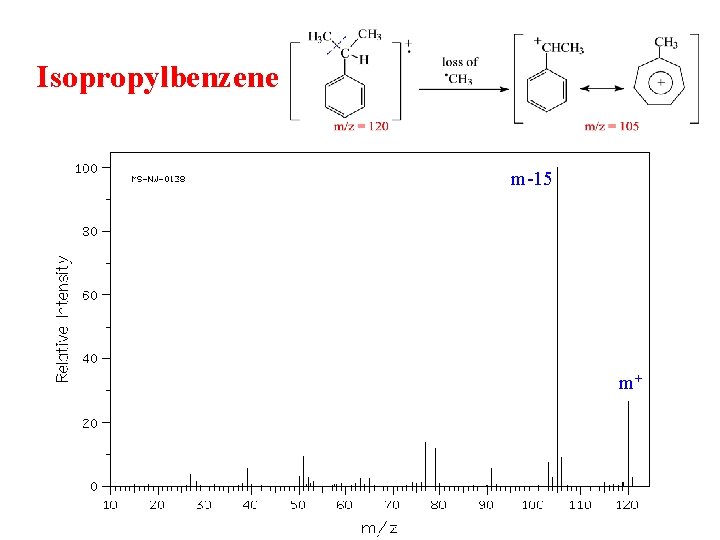
Isopropylbenzene m-15 m+
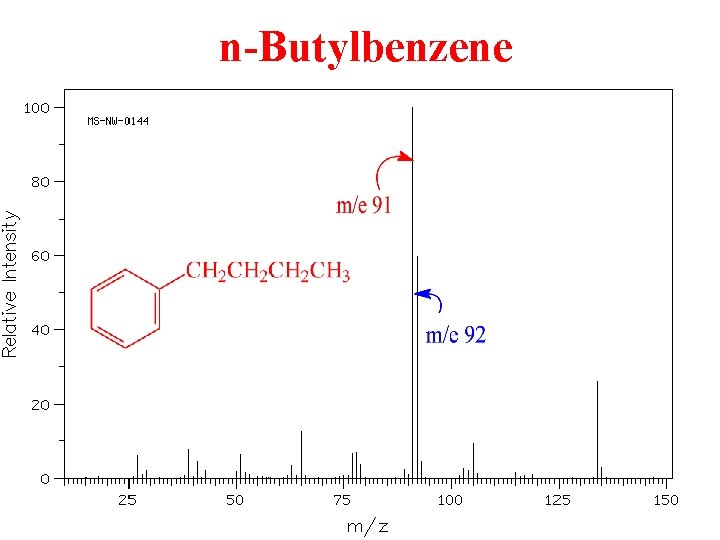
n-Butylbenzene
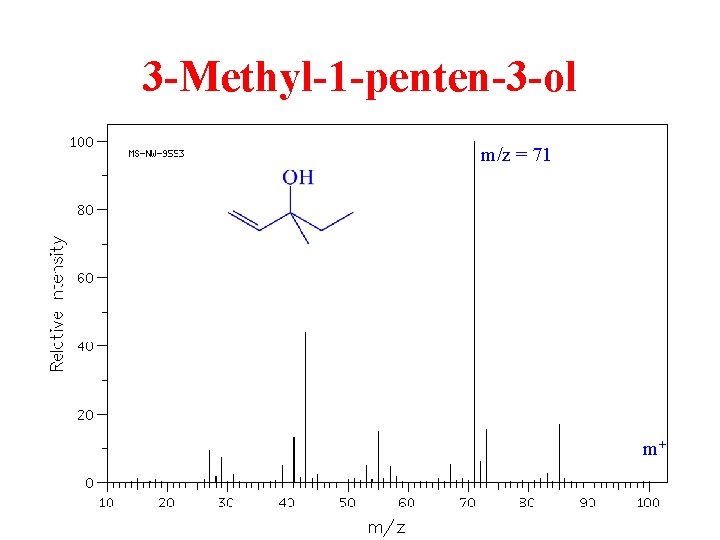
3 -Methyl-1 -penten-3 -ol m/z = 71 m+
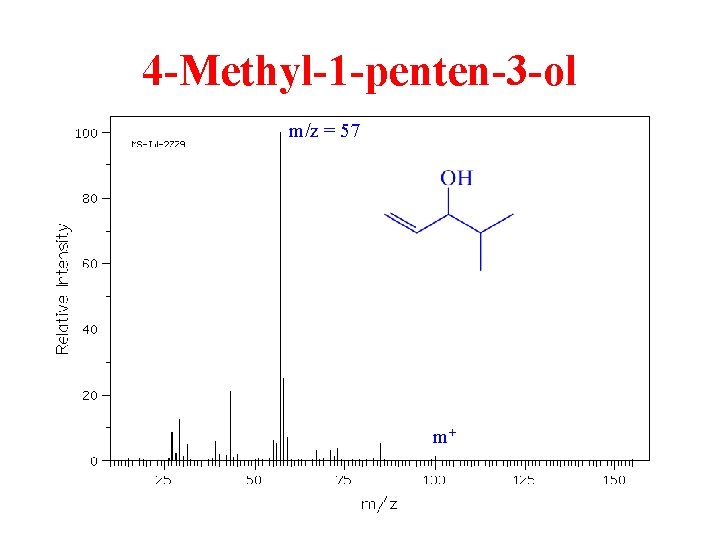
4 -Methyl-1 -penten-3 -ol m/z = 57 m+
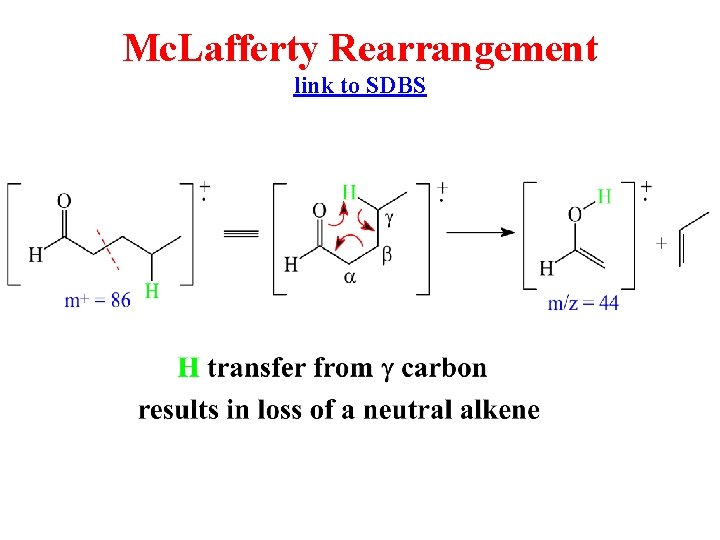
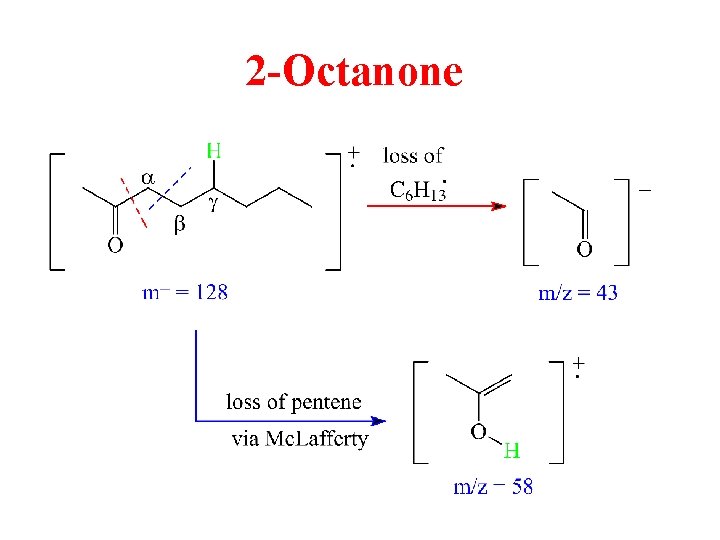
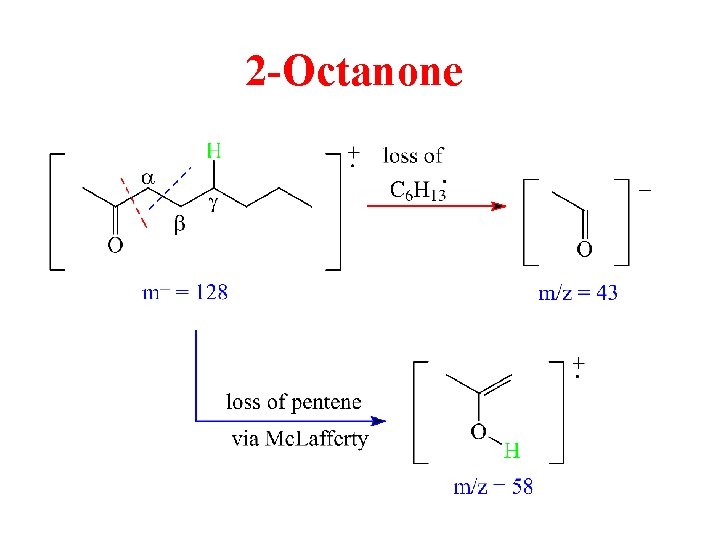
Mc. Lafferty Rearrangement link to SDBS
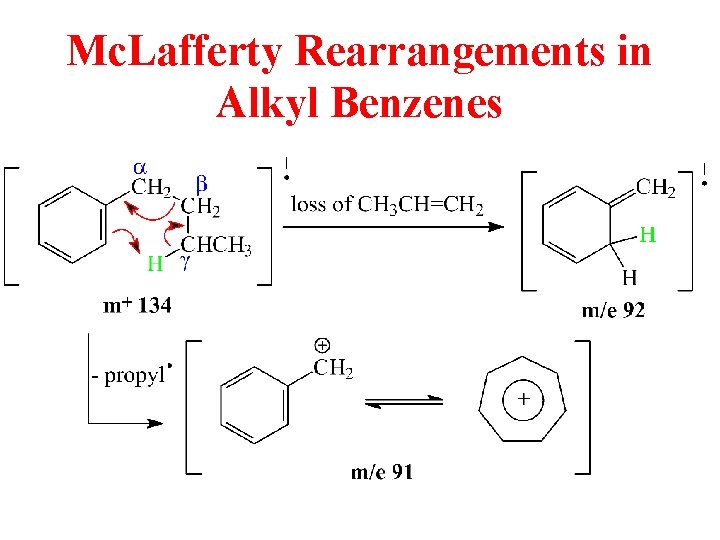
Mc. Lafferty Rearrangements in Alkyl Benzenes
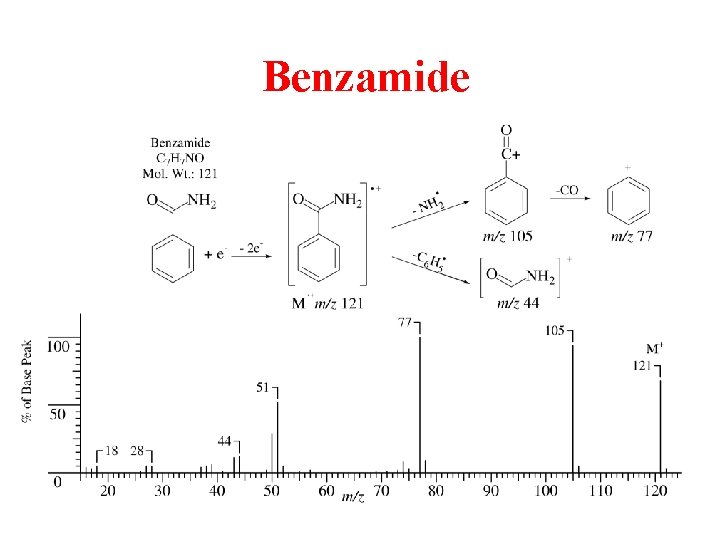
Benzamide
2 -Octanone
2 -Octanone
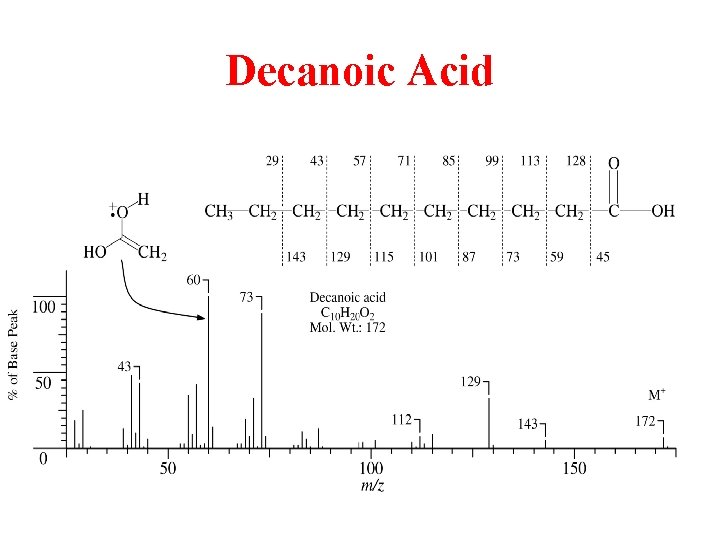
Decanoic Acid
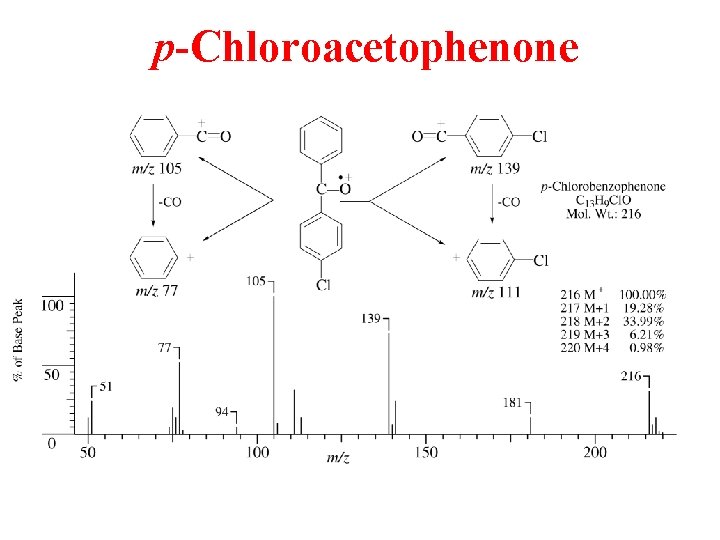
p-Chloroacetophenone
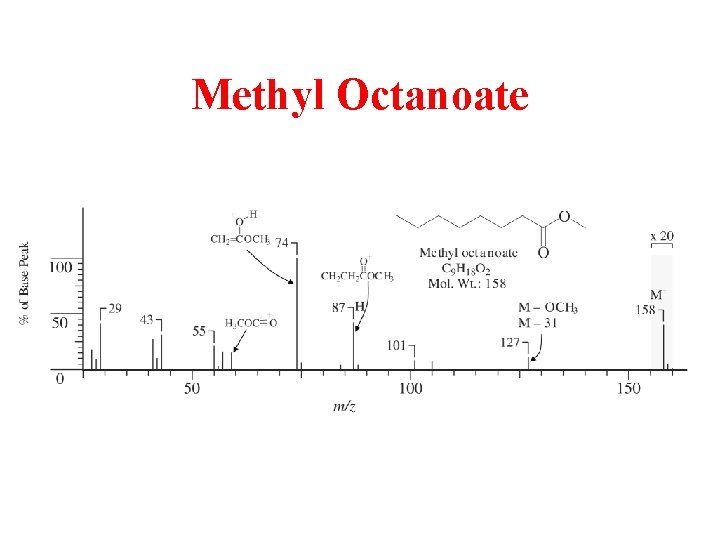
Methyl Octanoate
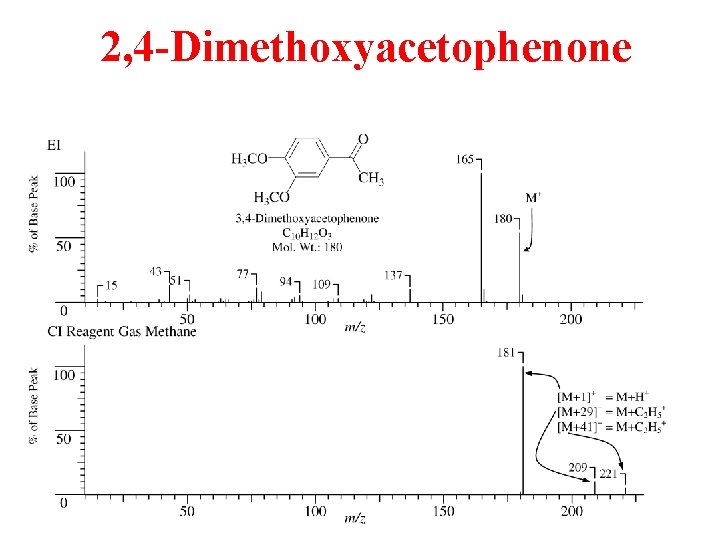
2, 4 -Dimethoxyacetophenone
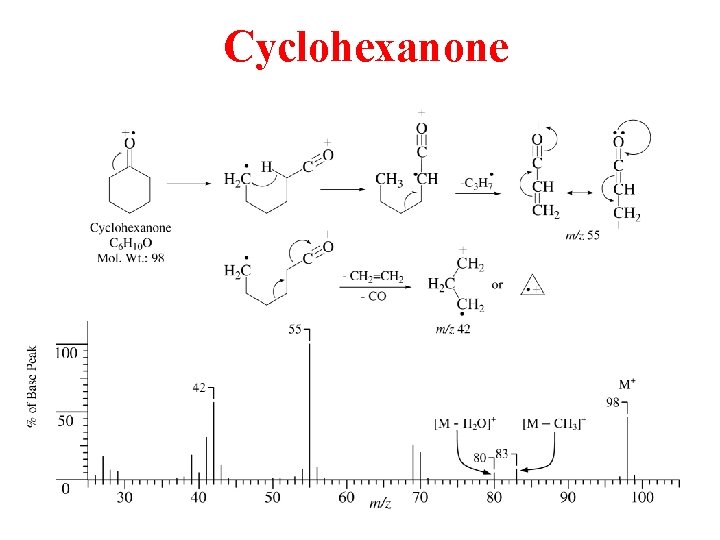
Cyclohexanone
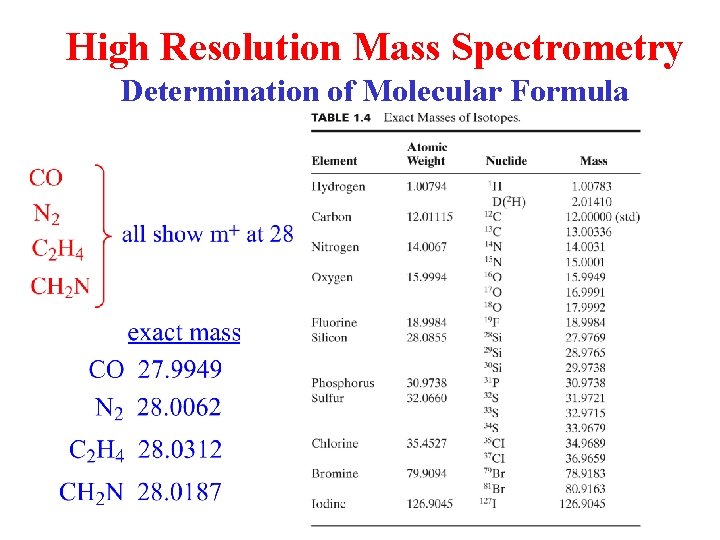
High Resolution Mass Spectrometry Determination of Molecular Formula
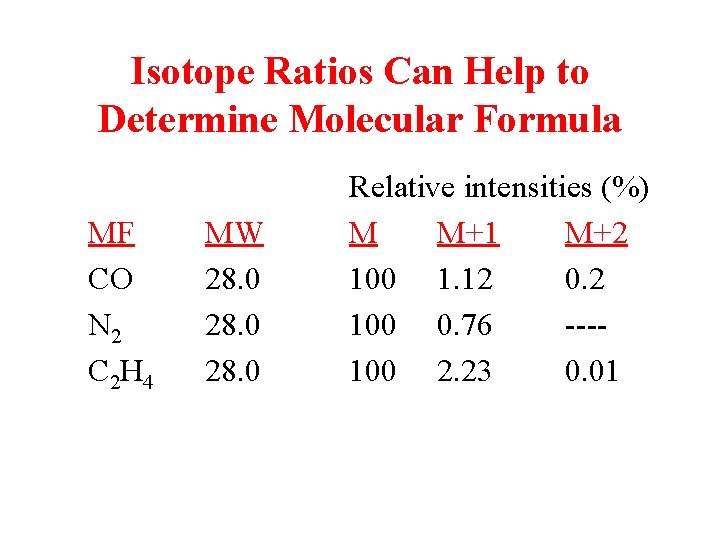
Isotope Ratios Can Help to Determine Molecular Formula MF CO N 2 C 2 H 4 MW 28. 0 Relative intensities (%) M M+1 M+2 100 1. 12 0. 2 100 0. 76 ---100 2. 23 0. 01
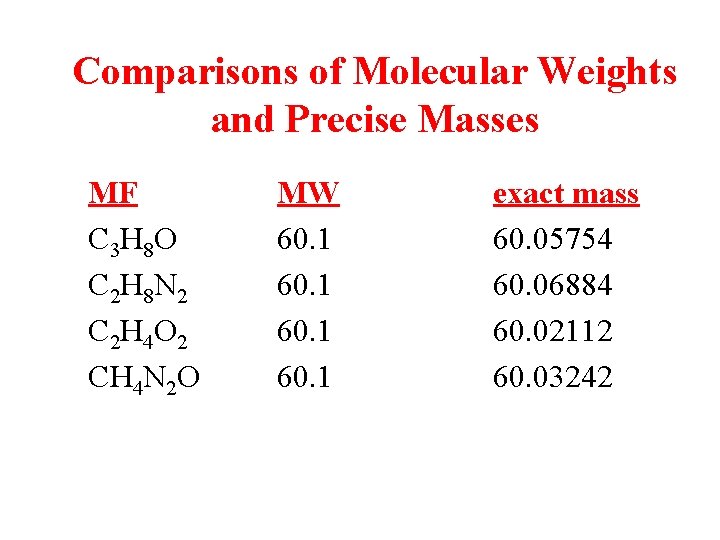
Comparisons of Molecular Weights and Precise Masses MF C 3 H 8 O C 2 H 8 N 2 C 2 H 4 O 2 CH 4 N 2 O MW 60. 1 exact mass 60. 05754 60. 06884 60. 02112 60. 03242
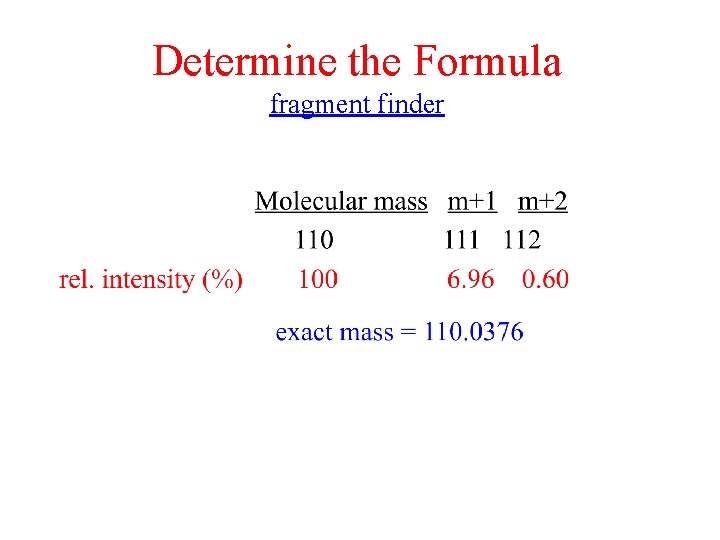
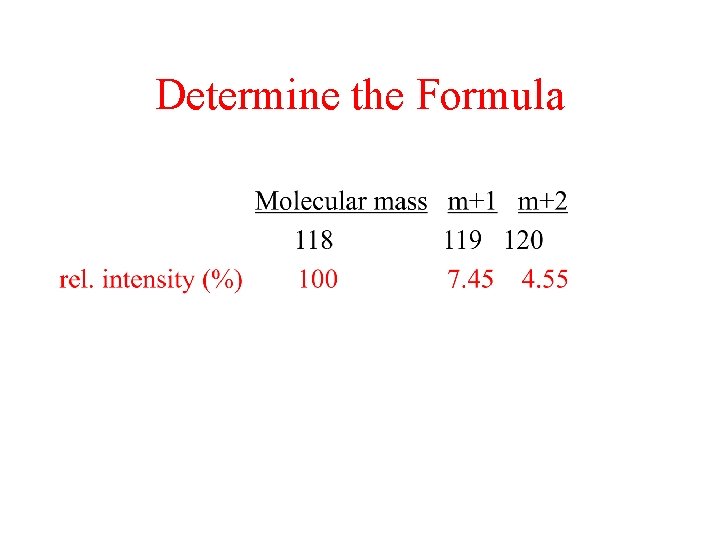
Determine the Formula fragment finder
Determine the Formula
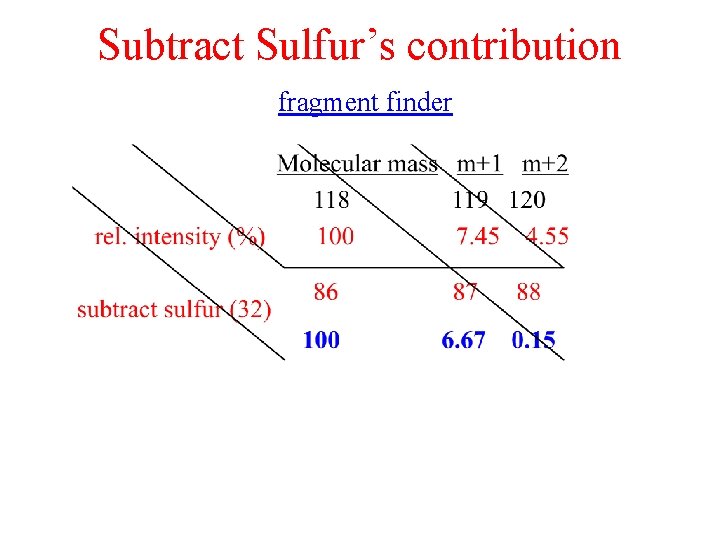
Subtract Sulfur’s contribution fragment finder
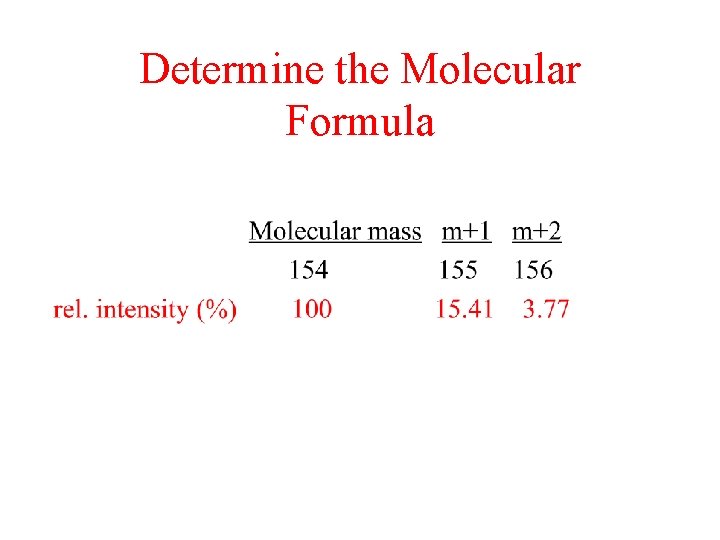
Determine the Molecular Formula
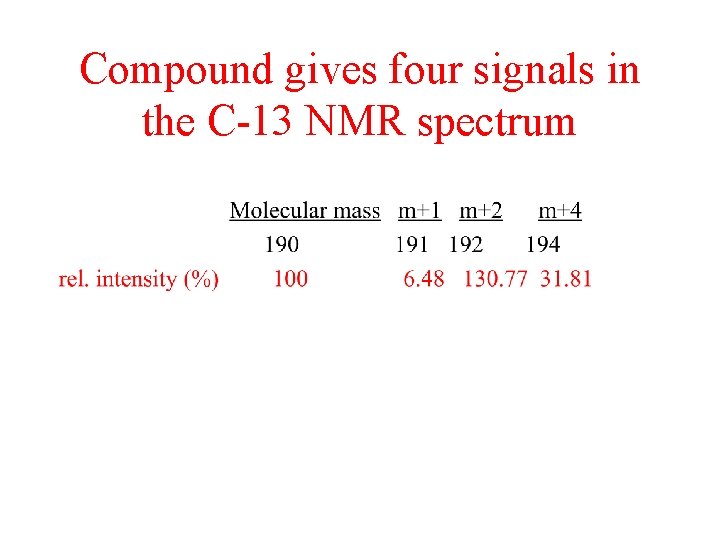
Compound gives four signals in the C-13 NMR spectrum