
MASS LOSS INDUCED BY ROTATION AT VERY LOW
MASS LOSS INDUCED BY ROTATION AT VERY LOW METALLICITY Georges Meynet, Sylvia Ekström, André Maeder Observatoire astronomique de l’Université de Genève Raphael Hirschi Dpt. of physics and astronomy, Basel University Consequences for chemical enrichments Consequences for long GRB progenitors
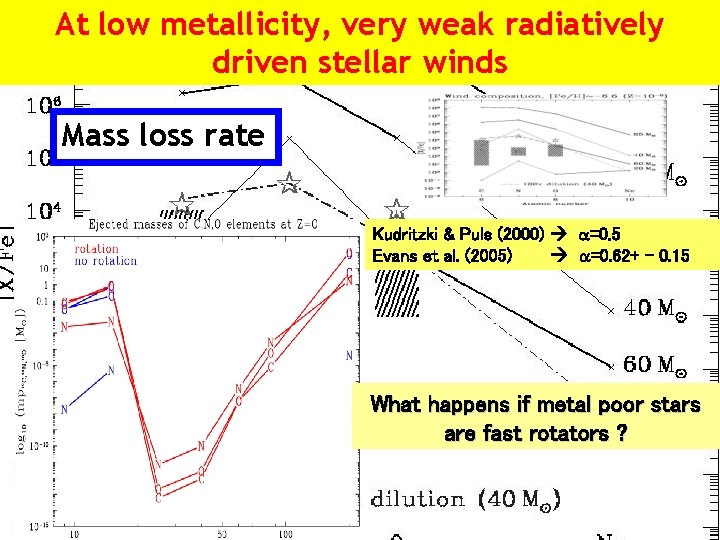
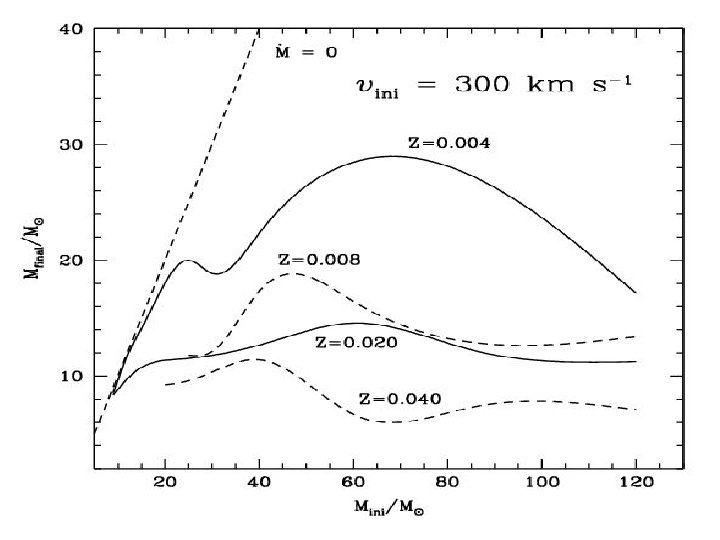
At low metallicity, very weak radiatively driven stellar winds Mass loss rate Kudritzki & Puls (2000) a=0. 5 Evans et al. (2005) a=0. 62+ - 0. 15 What happens if metal poor stars are fast rotators ? «
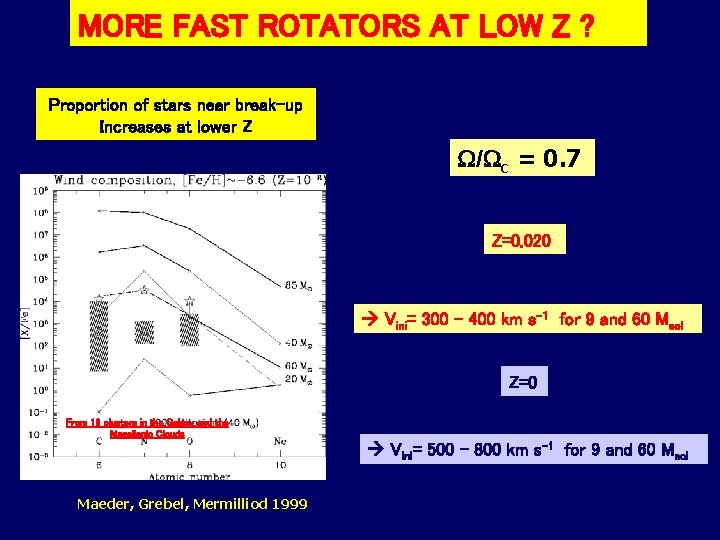
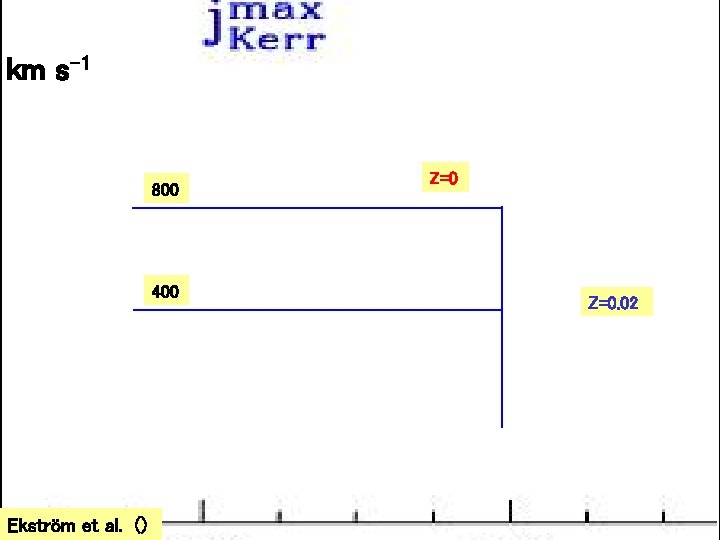
MORE FAST ROTATORS AT LOW Z ? Proportion of stars near break-up Increases at lower Z W/Wc = 0. 7 Z=0. 020 Vini= 300 - 400 km s-1 for 9 and 60 Msol Z=0 From 19 clusters in the Galaxy and the Magellanic Clouds Vini= 500 - 800 km s-1 for 9 and 60 Msol Maeder, Grebel, Mermilliod 1999
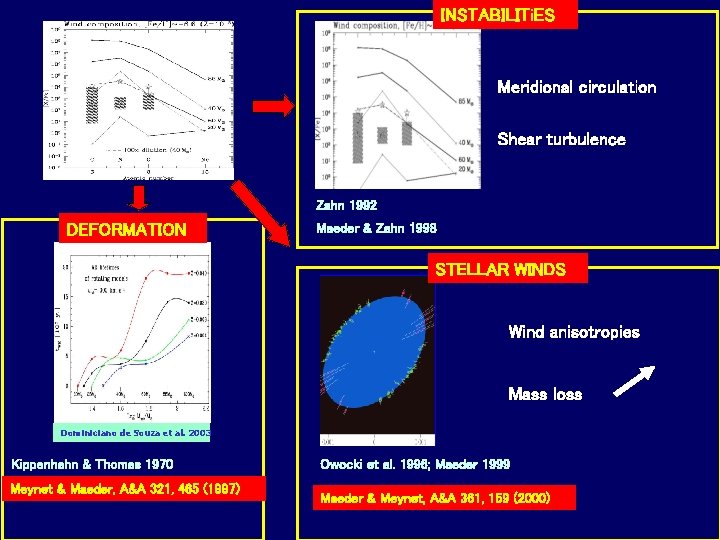
INSTABILITi. ES Meridional circulation Shear turbulence Zahn 1992 DEFORMATION Maeder & Zahn 1998 STELLAR WINDS Wind anisotropies Mass loss Dominiciano de Souza et al. 2003 Kippenhahn & Thomas 1970 Meynet & Maeder, A&A 321, 465 (1997) Owocki et al. 1996; Maeder 1999 Maeder & Meynet, A&A 361, 159 (2000)
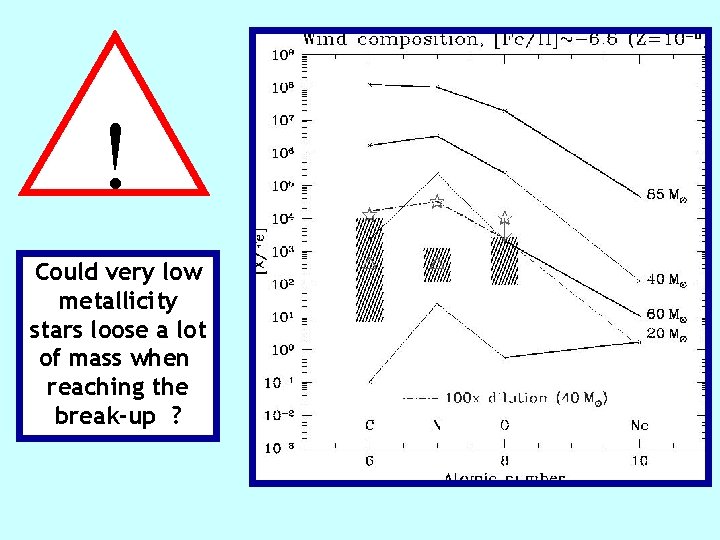
! Could very low metallicity stars loose a lot of mass when reaching the break-up ?
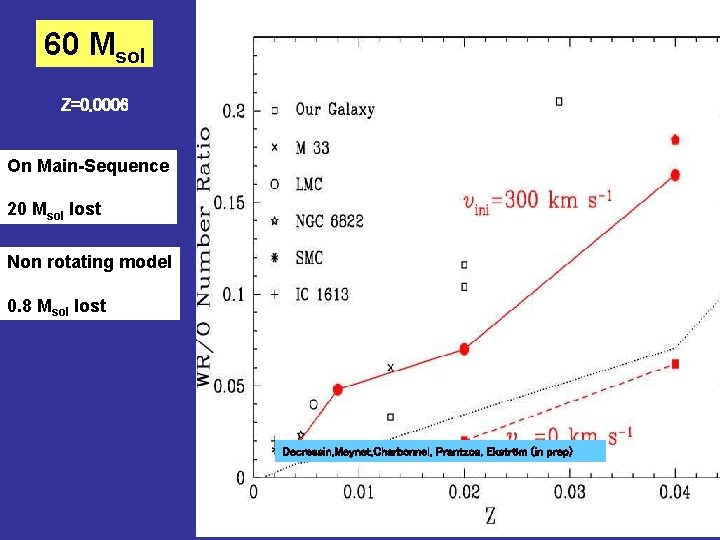
60 Msol Z=0. 0006 On Main-Sequence 20 Msol lost Non rotating model 0. 8 Msol lost Decressin, Meynet, Charbonnel, Prantzos, Ekström (in prep)
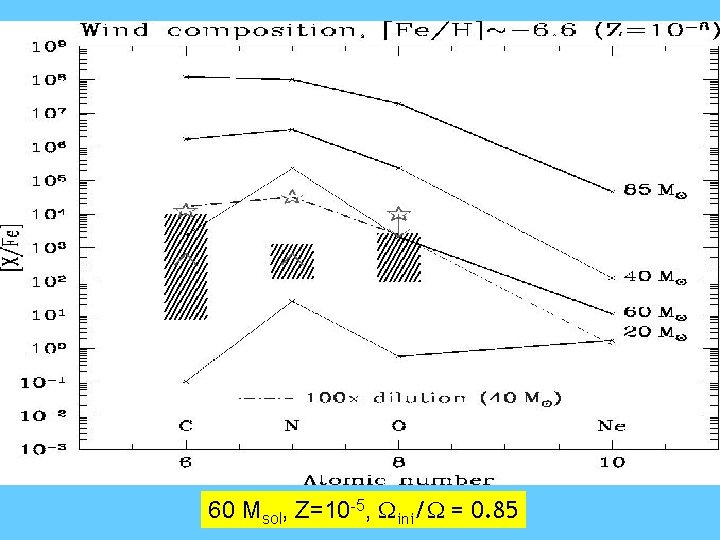
60 Msol, Z=10 -5, Wini/W = 0. 85
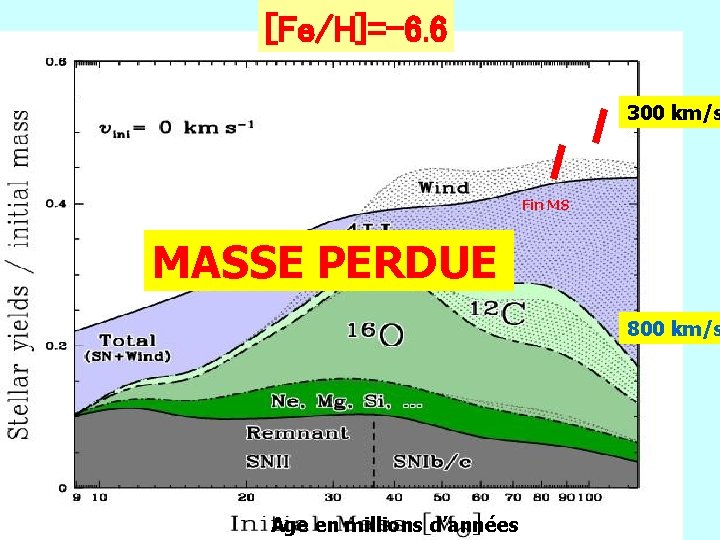
[Fe/H]=-6. 6 300 km/s Fin MS MASSE PERDUE 800 km/s Age en millions d’années
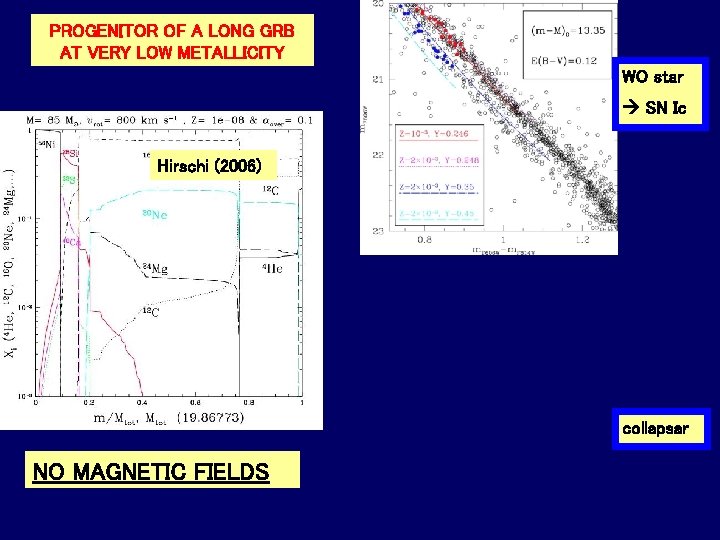
PROGENITOR OF A LONG GRB AT VERY LOW METALLICITY WO star SN Ic Hirschi (2006) collapsar NO MAGNETIC FIELDS
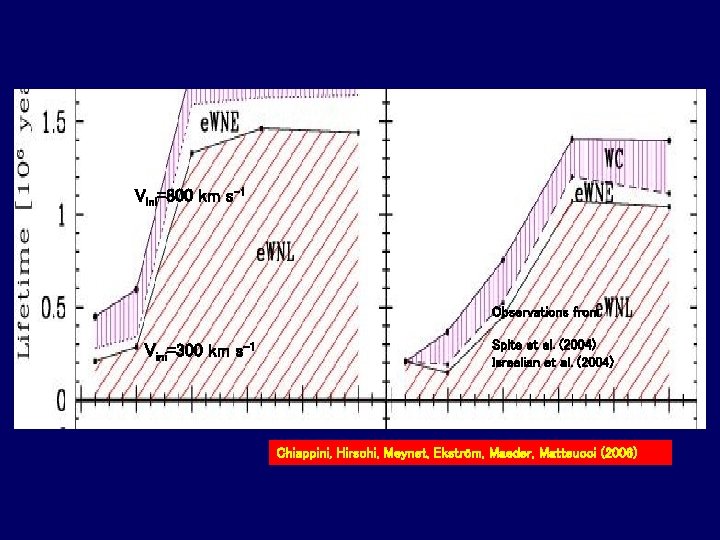
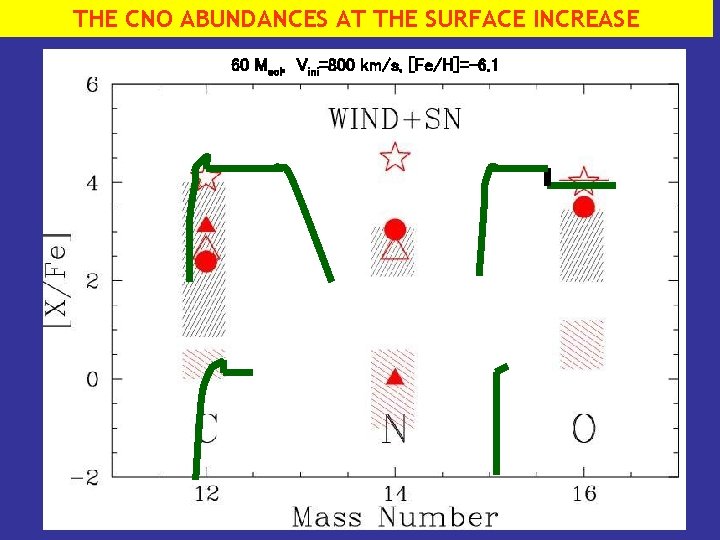
Vini=800 km s-1 Observations from Vini=300 km s-1 Spite et al. (2004) Israelian et al. (2004) Chiappini, Hirschi, Meynet, Ekström, Maeder, Matteucci (2006)
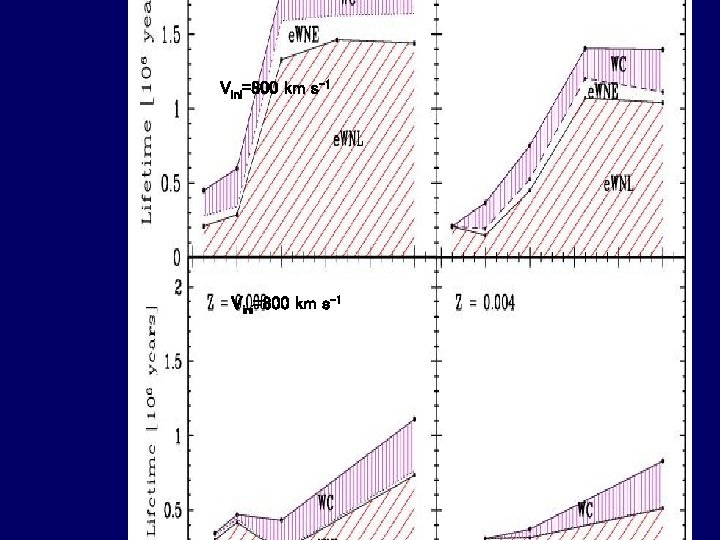
Vini=800 km s-1
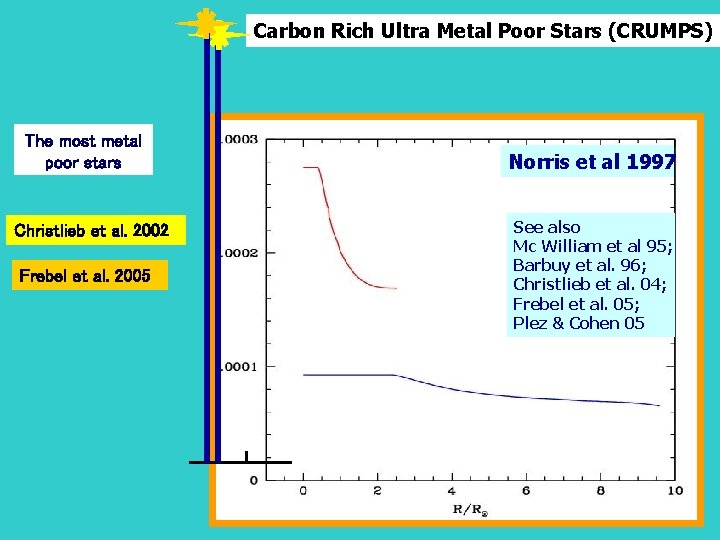
Carbon Rich Ultra Metal Poor Stars (CRUMPS) The most metal poor stars Christlieb et al. 2002 Frebel et al. 2005 Norris et al 1997 See also Mc William et al 95; Barbuy et al. 96; Christlieb et al. 04; Frebel et al. 05; Plez & Cohen 05
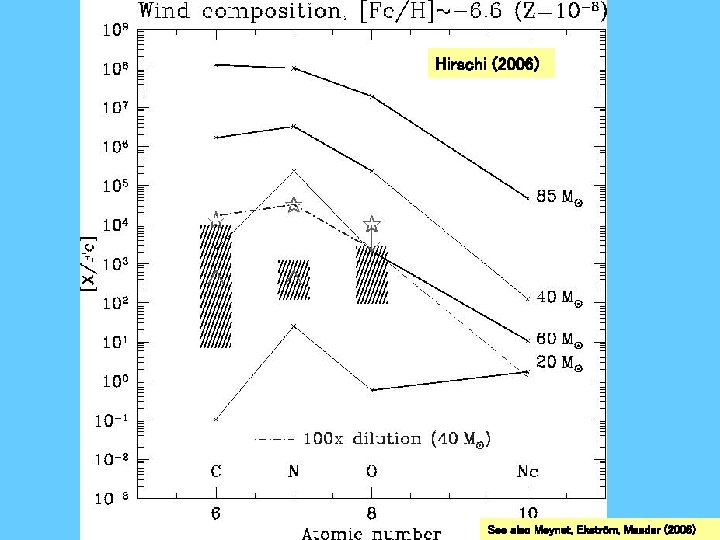
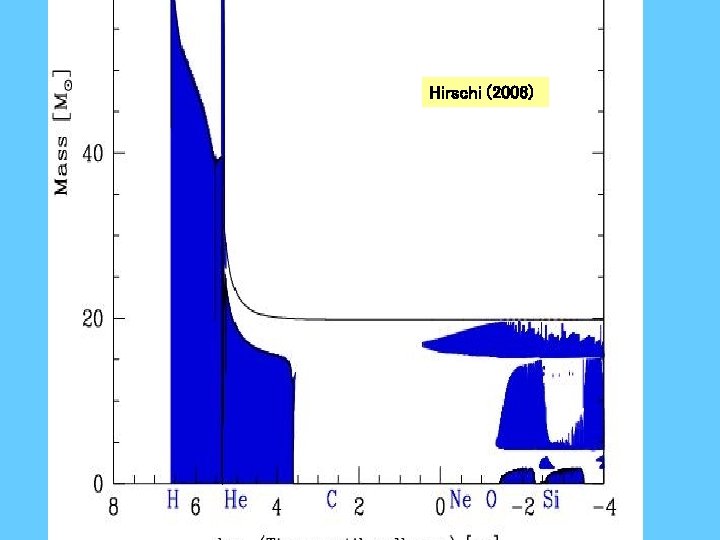
Hirschi (2006) See also Meynet, Ekström, Maeder (2006)
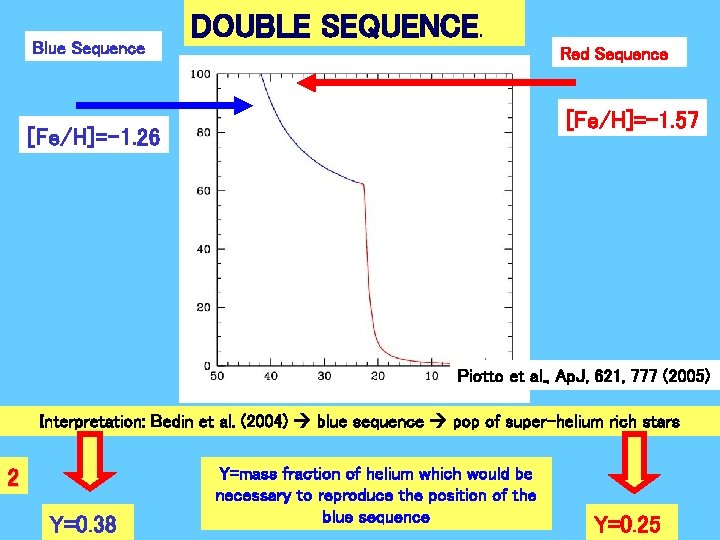
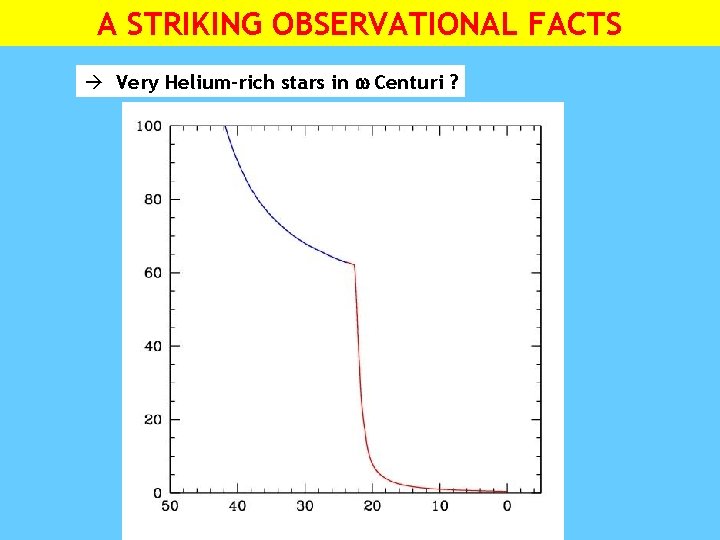
Blue Sequence DOUBLE SEQUENCE. Red Sequence [Fe/H]=-1. 57 [Fe/H]=-1. 26 Piotto et al. , Ap. J, 621, 777 (2005) Interpretation: Bedin et al. (2004) blue sequence pop of super-helium rich stars 2 Y=0. 38 Y=mass fraction of helium which would be necessary to reproduce the position of the blue sequence Y=0. 25
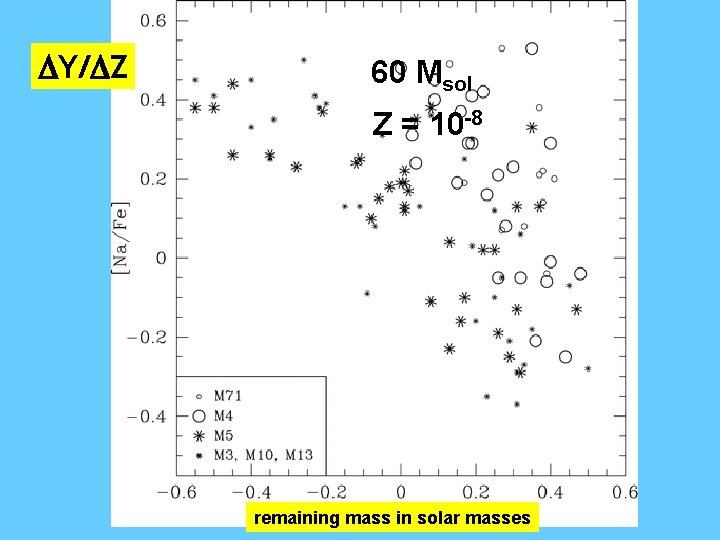
DY/DZ 60 Msol Z = 10 -8 remaining mass in solar masses
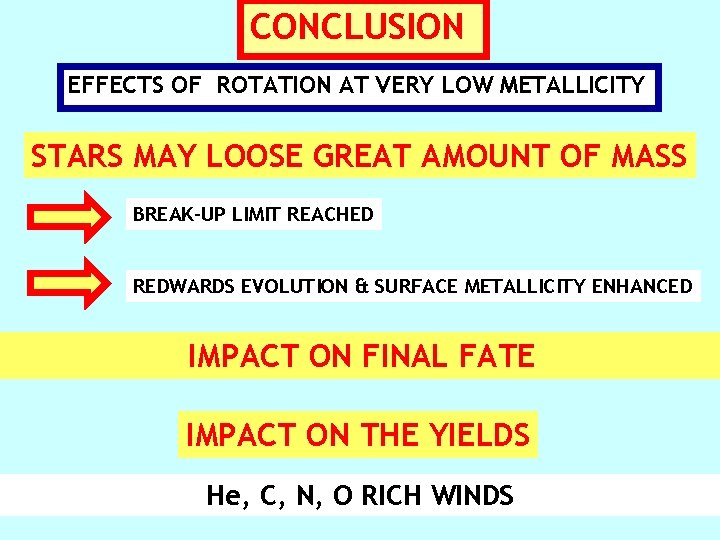
CONCLUSION EFFECTS OF ROTATION AT VERY LOW METALLICITY STARS MAY LOOSE GREAT AMOUNT OF MASS BREAK-UP LIMIT REACHED REDWARDS EVOLUTION & SURFACE METALLICITY ENHANCED IMPACT ON FINAL FATE IMPACT ON THE YIELDS He, C, N, O RICH WINDS
IMPACTS OF FAST ROTATION IN METAL POOR ENVIRONMENTS Primary nitrogen production Meynet & Maeder (2002); Chiappini et al. (2006); see posters 7, 61, 211 C-rich extremely metal poor stars Meynet, Ekström, Maeder (2006), Hirschi (2006) He-rich stars in Cen Maeder & Meynet (2006), see poster 203 Abundance inhomogeneities in globular clusters Decressin, Meynet, Charbonnel, Prantzos, Ekström (in prep. )
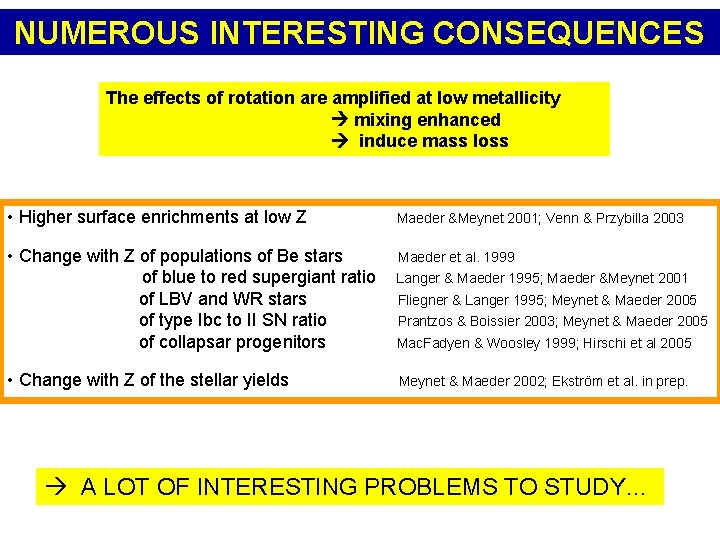
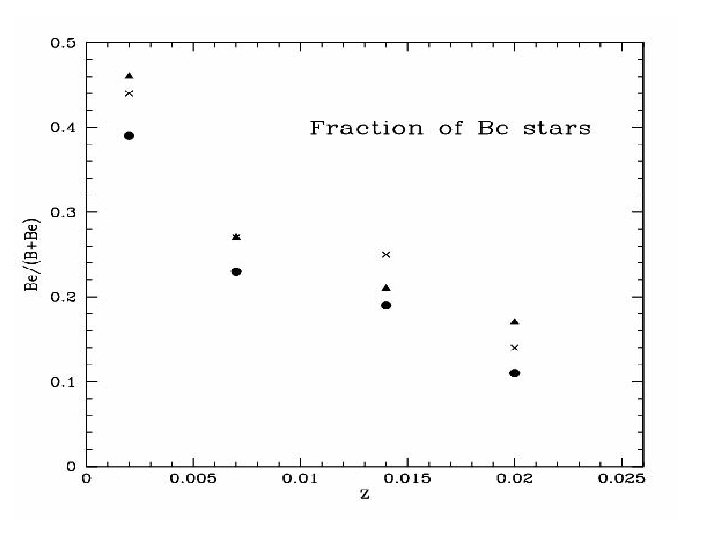
NUMEROUS INTERESTING CONSEQUENCES The effects of rotation are amplified at low metallicity mixing enhanced induce mass loss • Higher surface enrichments at low Z Maeder &Meynet 2001; Venn & Przybilla 2003 • Change with Z of populations of Be stars of blue to red supergiant ratio of LBV and WR stars of type Ibc to II SN ratio of collapsar progenitors Maeder et al. 1999 • Change with Z of the stellar yields Langer & Maeder 1995; Maeder &Meynet 2001 Fliegner & Langer 1995; Meynet & Maeder 2005 Prantzos & Boissier 2003; Meynet & Maeder 2005 Mac. Fadyen & Woosley 1999; Hirschi et al 2005 Meynet & Maeder 2002; Ekström et al. in prep. A LOT OF INTERESTING PROBLEMS TO STUDY…
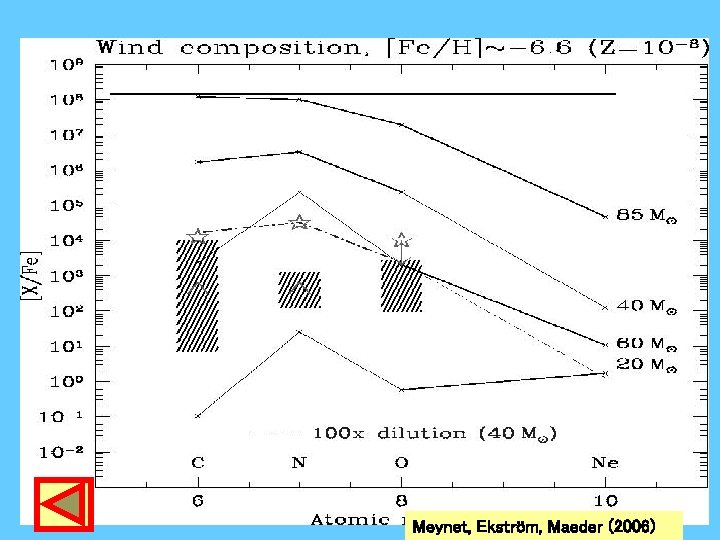
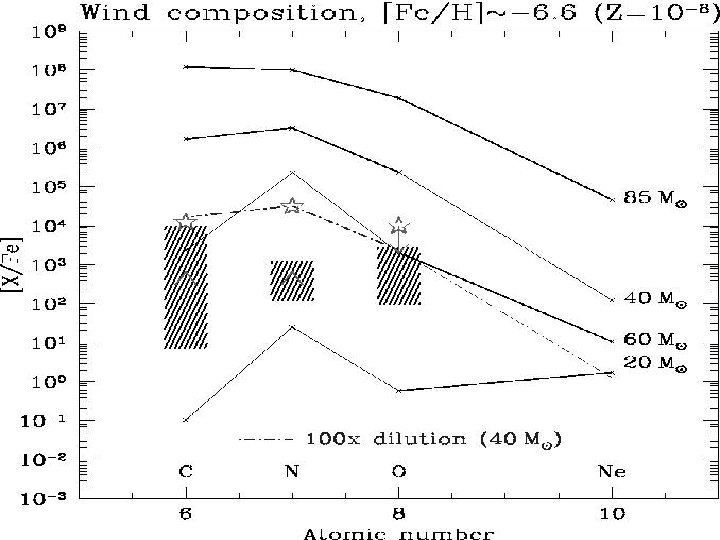
Meynet, Ekström, Maeder (2006)
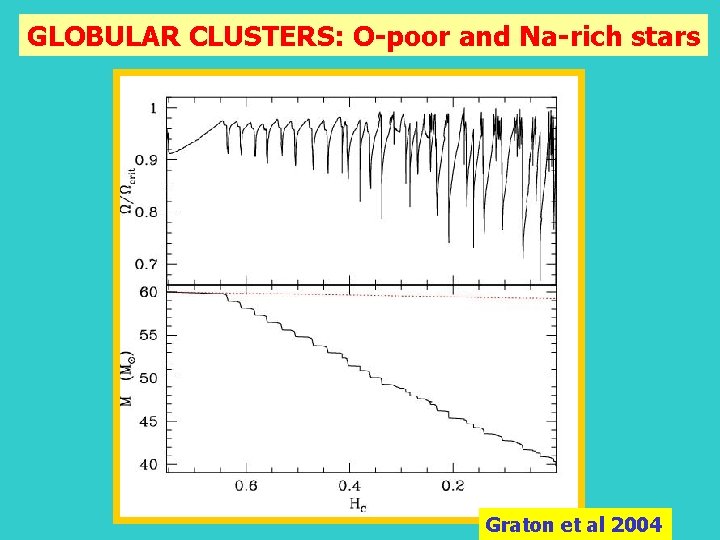
GLOBULAR CLUSTERS: O-poor and Na-rich stars Graton et al 2004
[O/Na]

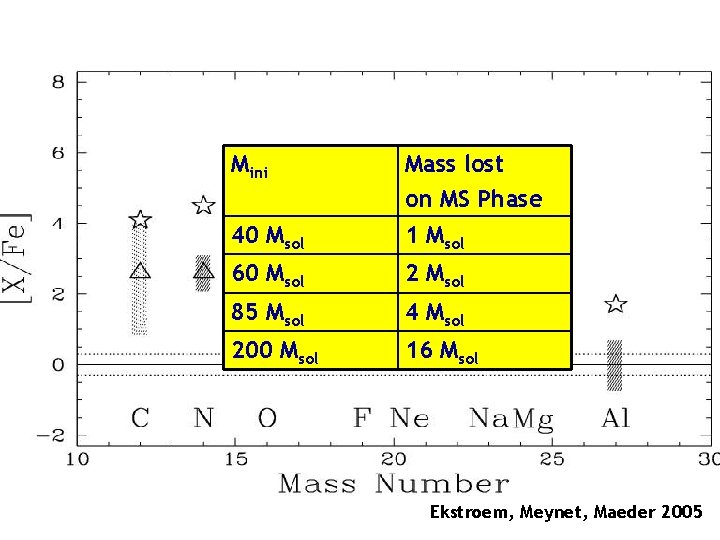
Mini Mass lost on MS Phase 40 Msol 1 Msol 60 Msol 2 Msol 85 Msol 4 Msol 200 Msol 16 Msol Ekstroem, Meynet, Maeder 2005
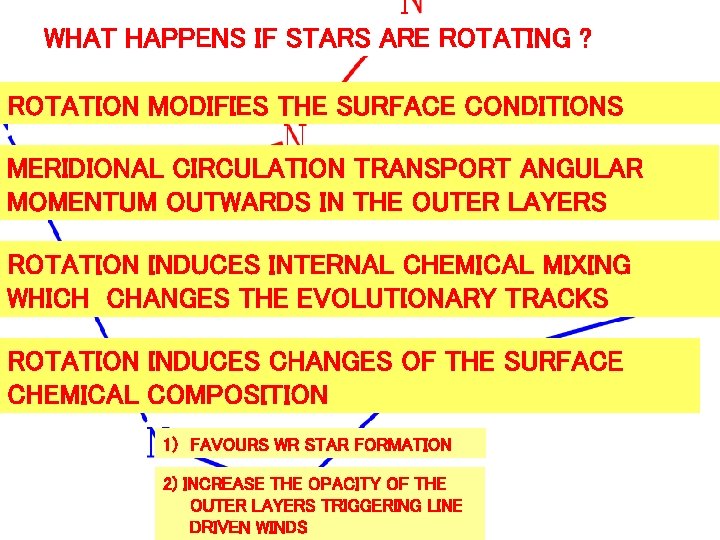
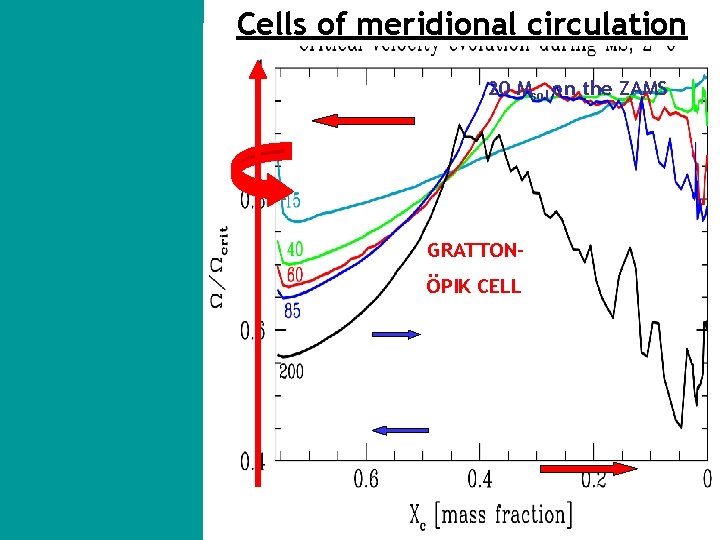
WHAT HAPPENS IF STARS ARE ROTATING ? ROTATION MODIFIES THE SURFACE CONDITIONS MERIDIONAL CIRCULATION TRANSPORT ANGULAR MOMENTUM OUTWARDS IN THE OUTER LAYERS ROTATION INDUCES INTERNAL CHEMICAL MIXING WHICH CHANGES THE EVOLUTIONARY TRACKS ROTATION INDUCES CHANGES OF THE SURFACE CHEMICAL COMPOSITION 1) FAVOURS WR STAR FORMATION 2) INCREASE THE OPACITY OF THE OUTER LAYERS TRIGGERING LINE DRIVEN WINDS
STARS ARE DEFORMED ACHERNAR Dominiciano de Souza et al. 2003
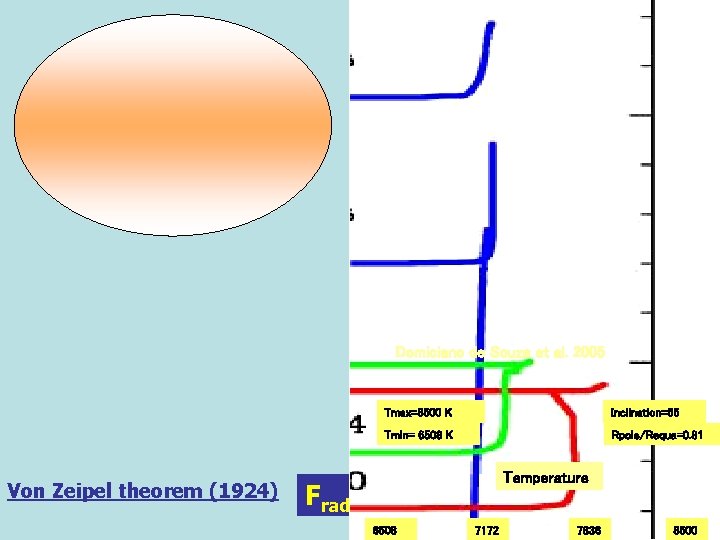
Domiciano de Souza et al. 2005 Tmax=8500 K Inclination=65 Ekström, Meynet, Maeder (in prep) Tmin= 6508 K Rpole/Requa=0. 81 Von Zeipel theorem (1924) Temperature Frad ~ geff=g-centrifugal force 6508 7172 7836 8500
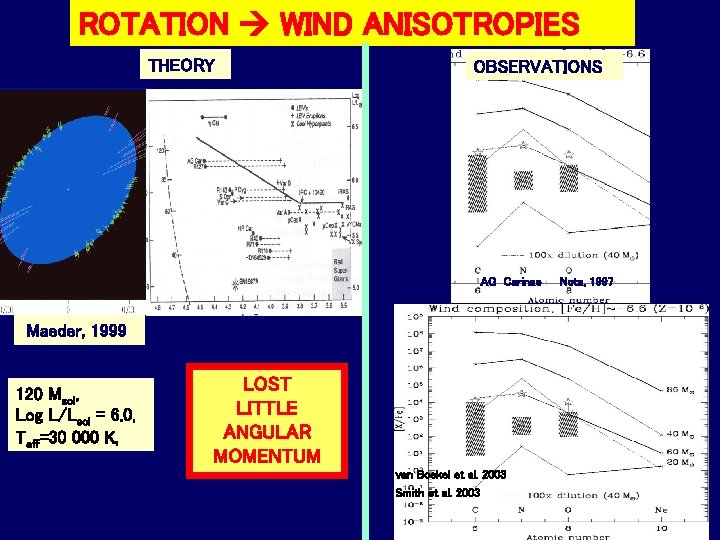
ROTATION WIND ANISOTROPIES THEORY OBSERVATIONS AG Carinae Maeder, 1999 120 Msol, Log L/Lsol = 6. 0, Teff=30 000 K, LOST LITTLE ANGULAR MOMENTUM van Boekel et al. 2003 Smith et al. 2003 Nota, 1997

Hirschi (2006)
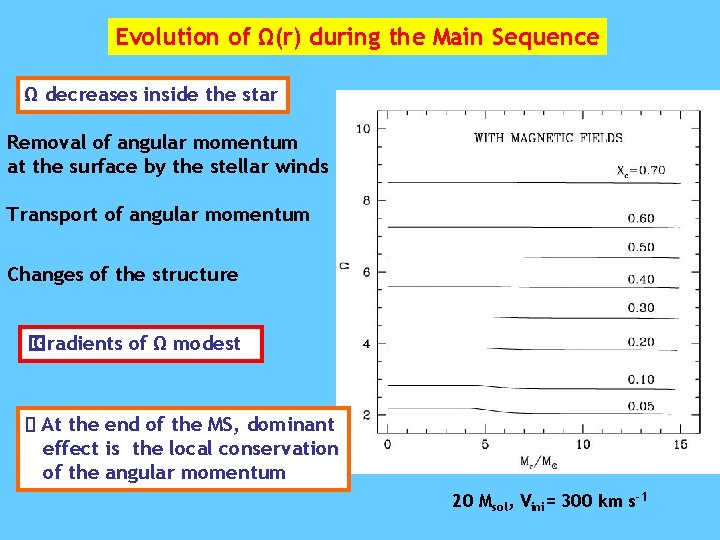
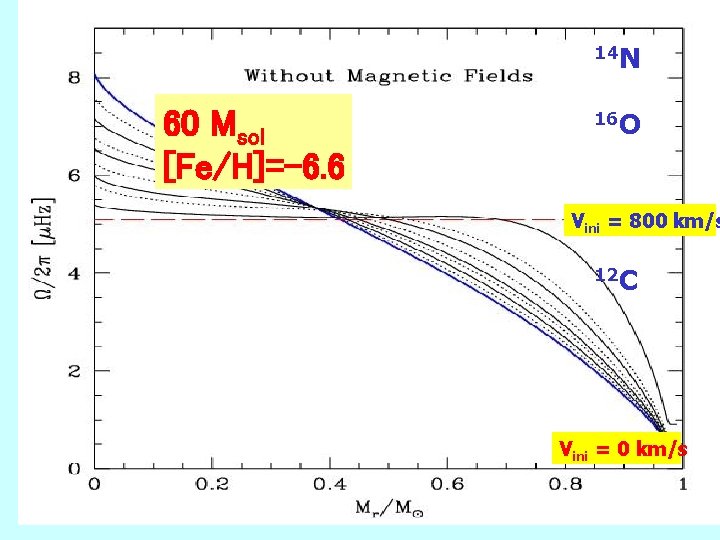
Evolution of Ω(r) during the Main Sequence Ω decreases inside the star Removal of angular momentum at the surface by the stellar winds Transport of angular momentum Changes of the structure � Gradients of Ω modest At the end of the MS, dominant effect is the local conservation of the angular momentum 20 Msol, Vini= 300 km s-1
Anisotropic mass loss • Different evolution rotation of • The account for anisotropic mass loss favours breakup Maeder, 2002
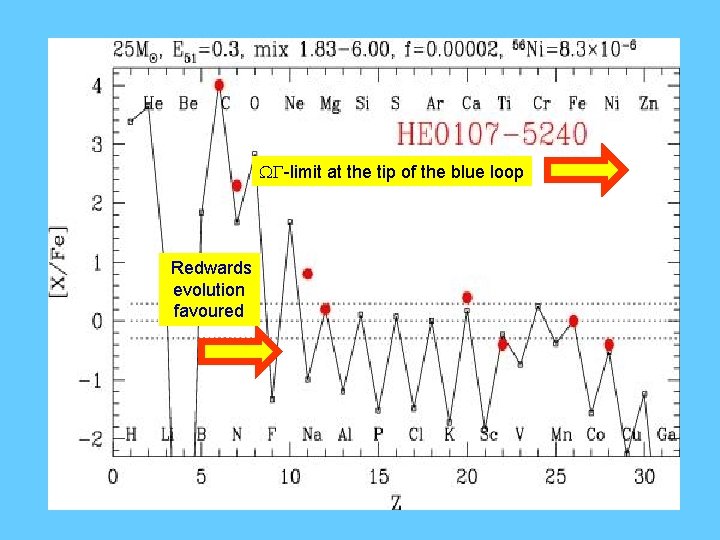
WG-limit at the tip of the blue loop Redwards evolution favoured
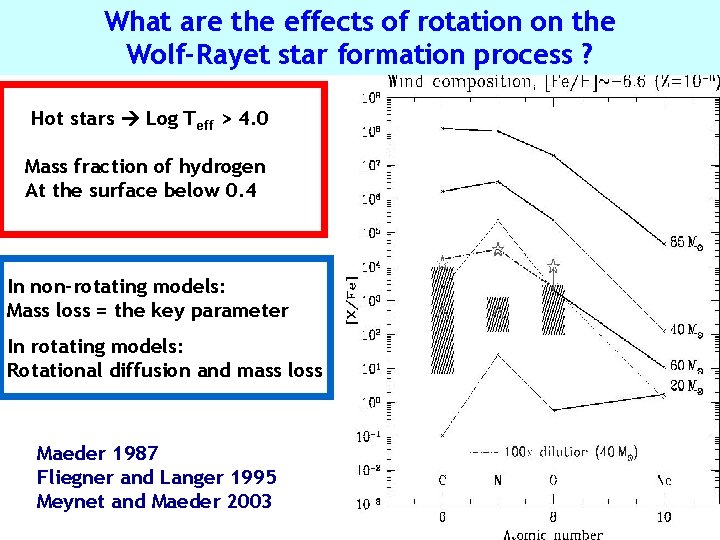
What are the effects of rotation on the Wolf-Rayet star formation process ? Hot stars Log Teff > 4. 0 Mass fraction of hydrogen At the surface below 0. 4 In non-rotating models: Mass loss = the key parameter In rotating models: Rotational diffusion and mass loss Maeder 1987 Fliegner and Langer 1995 Meynet and Maeder 2003
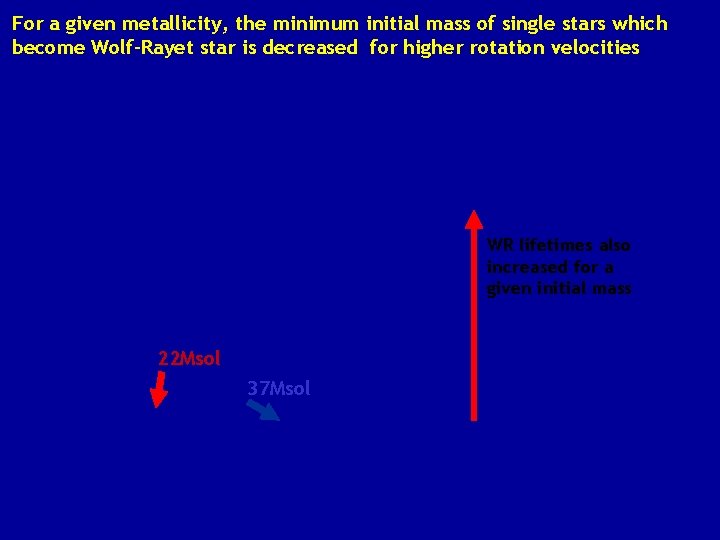
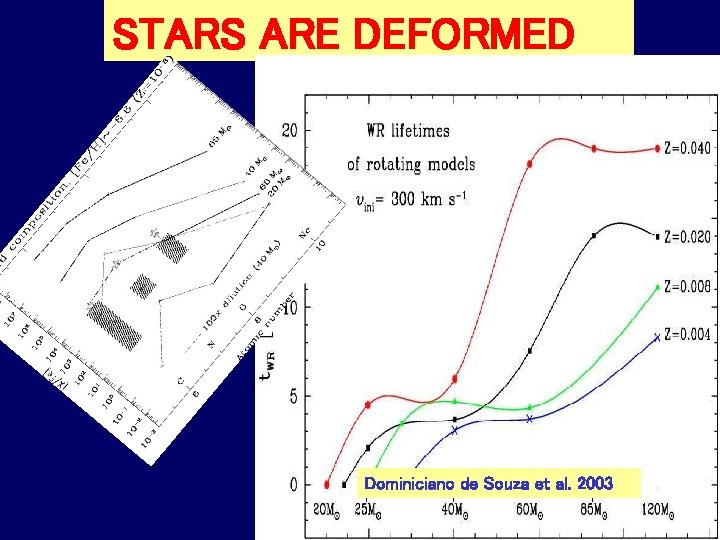
For a given metallicity, the minimum initial mass of single stars which become Wolf-Rayet star is decreased for higher rotation velocities WR lifetimes also increased for a given initial mass 22 Msol 37 Msol
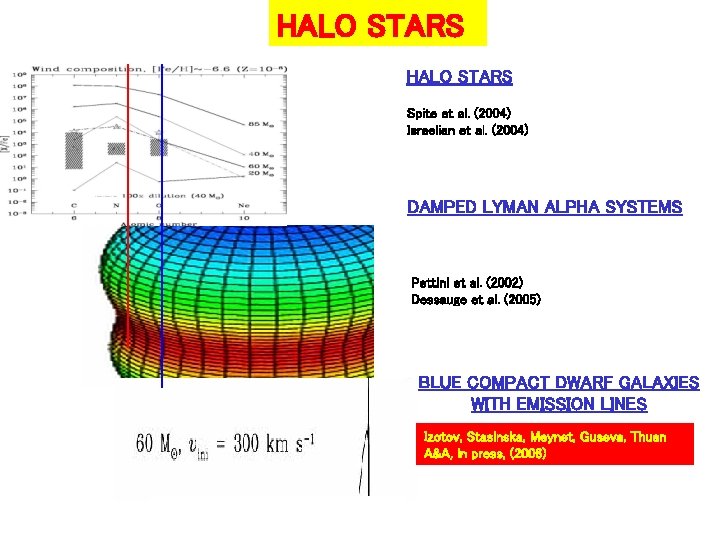
HALO STARS Spite et al. (2004) Israelian et al. (2004) DAMPED LYMAN ALPHA SYSTEMS Pettini et al. (2002) Dessauge et al. (2005) BLUE COMPACT DWARF GALAXIES WITH EMISSION LINES Izotov, Stasinska, Meynet, Guseva, Thuan A&A, in press, (2006)
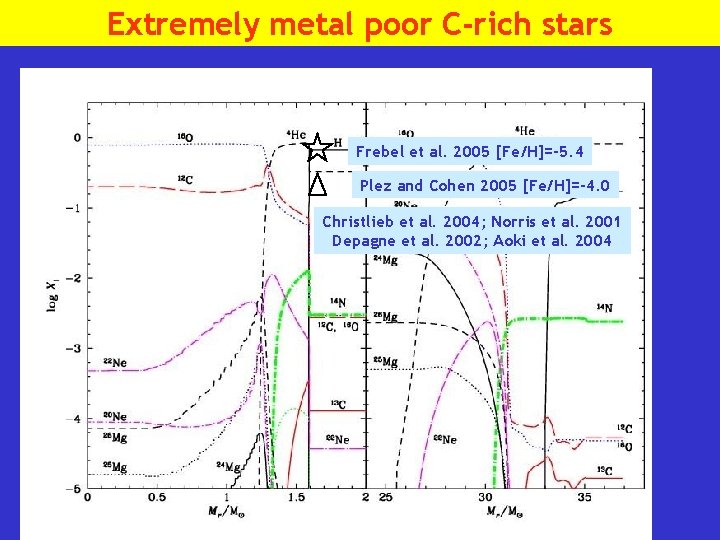
Extremely metal poor C-rich stars Frebel et al. 2005 [Fe/H]=-5. 4 Plez and Cohen 2005 [Fe/H]=-4. 0 Christlieb et al. 2004; Norris et al. 2001 Depagne et al. 2002; Aoki et al. 2004
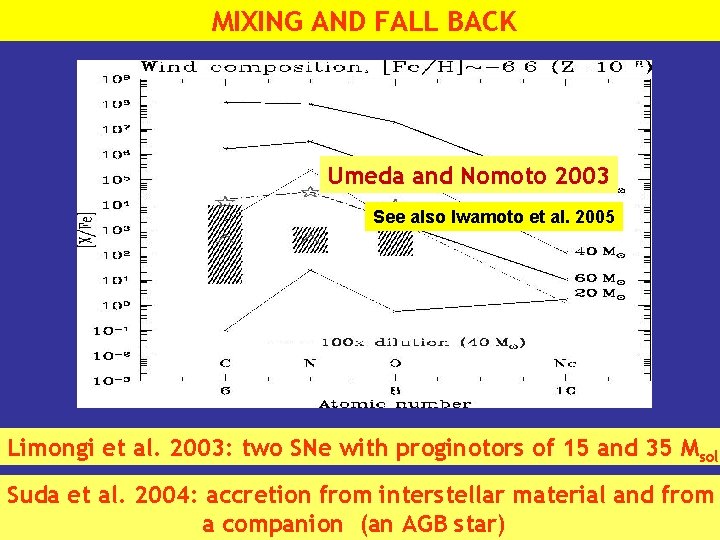
MIXING AND FALL BACK Umeda and Nomoto 2003 See also Iwamoto et al. 2005 Limongi et al. 2003: two SNe with proginotors of 15 and 35 Msol Suda et al. 2004: accretion from interstellar material and from a companion (an AGB star)
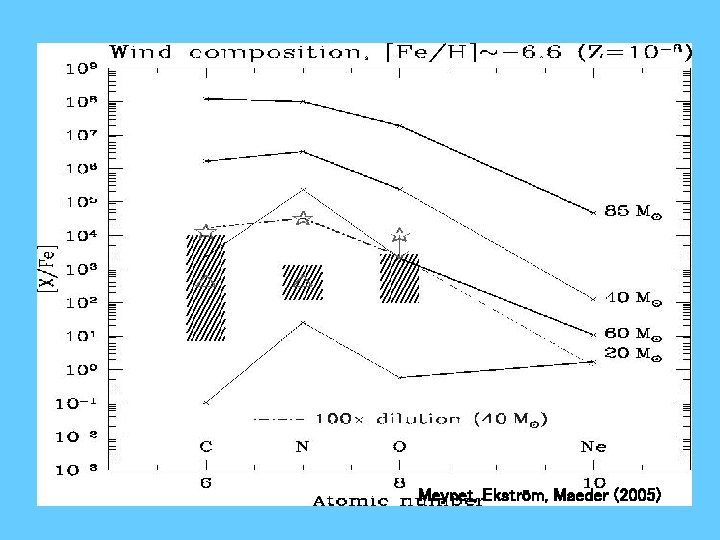
Meynet, Ekström, Maeder (2005)
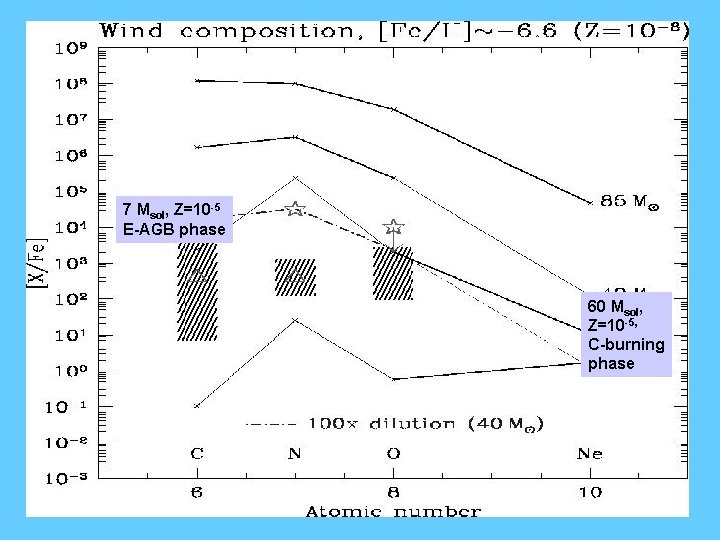
7 Msol, Z=10 -5 E-AGB phase 60 Msol, Z=10 -5, C-burning phase
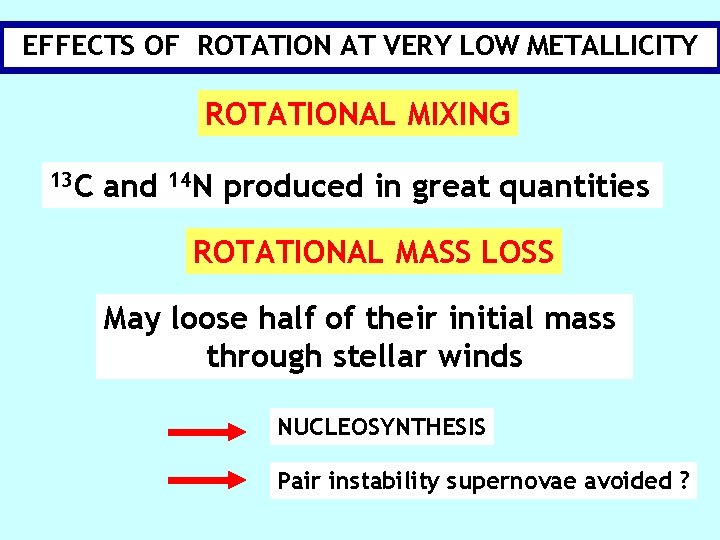
EFFECTS OF ROTATION AT VERY LOW METALLICITY ROTATIONAL MIXING 13 C and 14 N produced in great quantities ROTATIONAL MASS LOSS May loose half of their initial mass through stellar winds NUCLEOSYNTHESIS Pair instability supernovae avoided ?
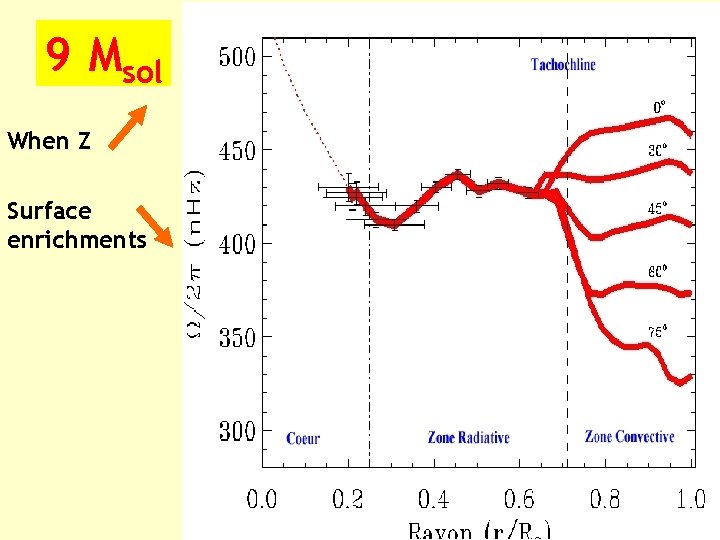
9 Msol When Z Surface enrichments
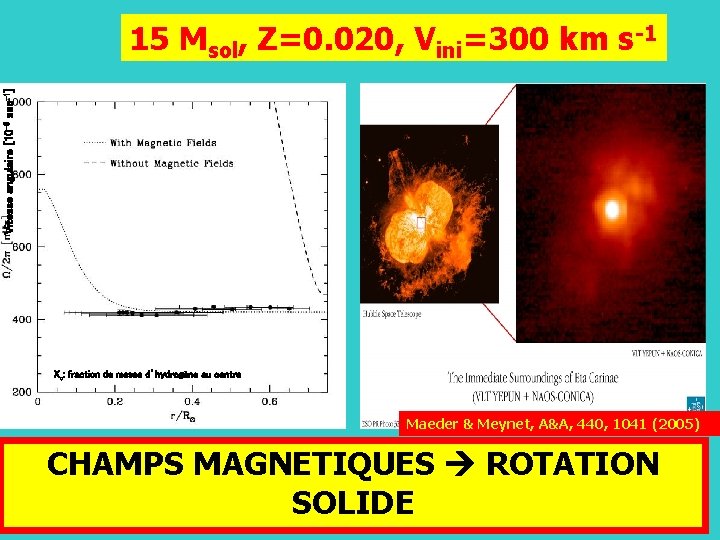
Vitesse angulaire [10 -5 sec-1] 15 Msol, Z=0. 020, Vini=300 km s-1 Xc: fraction de masse d’hydrogène au centre Maeder & Meynet, A&A, 440, 1041 (2005) CHAMPS MAGNETIQUES ROTATION SOLIDE
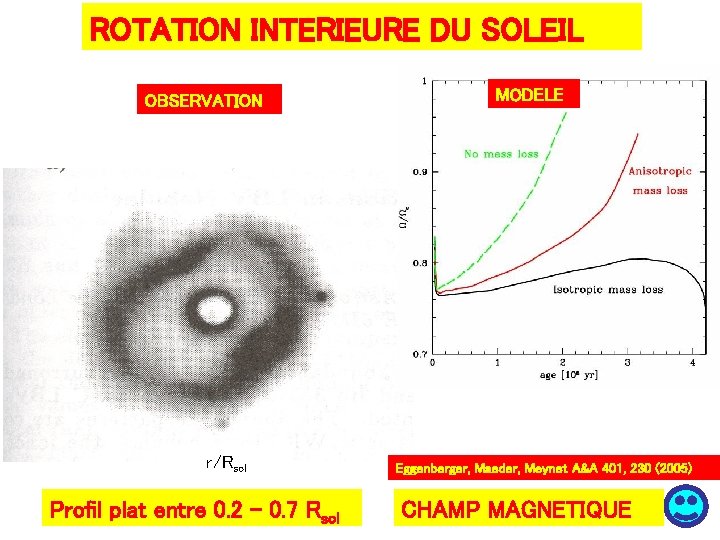
ROTATION INTERIEURE DU SOLEIL OBSERVATION r/Rsol Profil plat entre 0. 2 – 0. 7 Rsol MODELE Eggenberger, Maeder, Meynet A&A 401, 230 (2005) CHAMP MAGNETIQUE
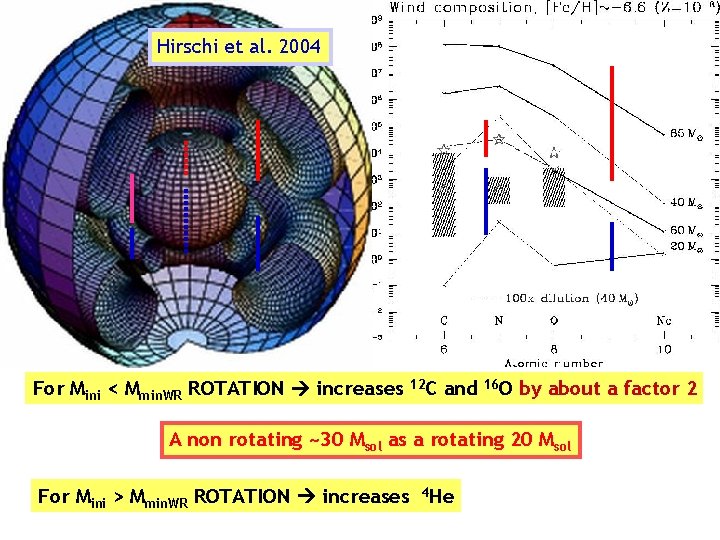
Hirschi et al. 2004 For Mini < Mmin. WR ROTATION increases 12 C and 16 O by about a factor 2 A non rotating ~30 Msol as a rotating 20 Msol For Mini > Mmin. WR ROTATION increases 4 He
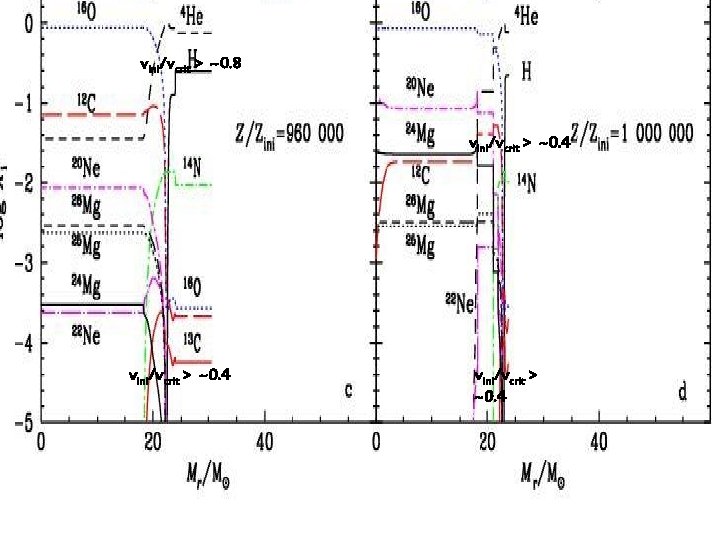
vini/vcrit > ~0. 8 vini/vcrit > ~0. 4
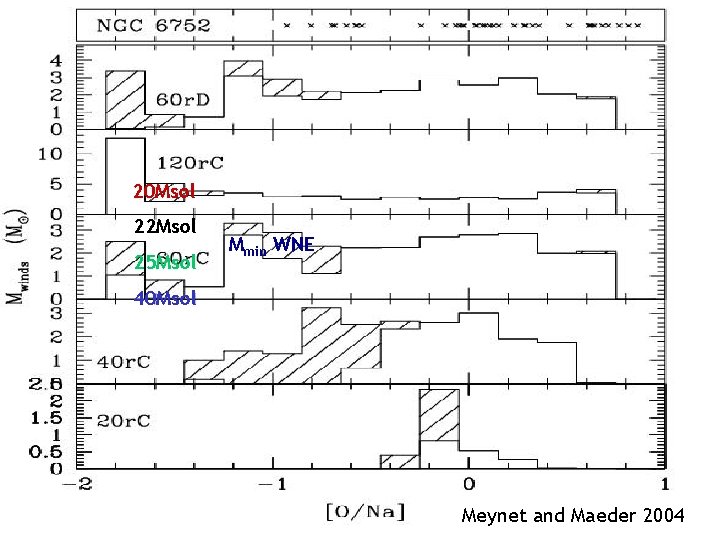
20 Msol 22 Msol 25 Msol Mmin WNE 40 Msol Meynet and Maeder 2004
Effect of a change of Z Other effects Star Formation Magnetic fields Internal waves Binaries and binary evolution
km s-1 800 400 Ekström et al. () Z=0. 02
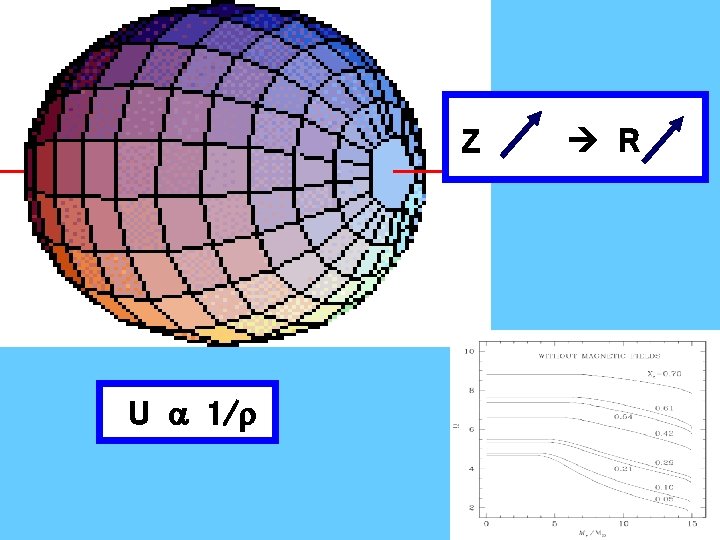
Z U a 1/r R
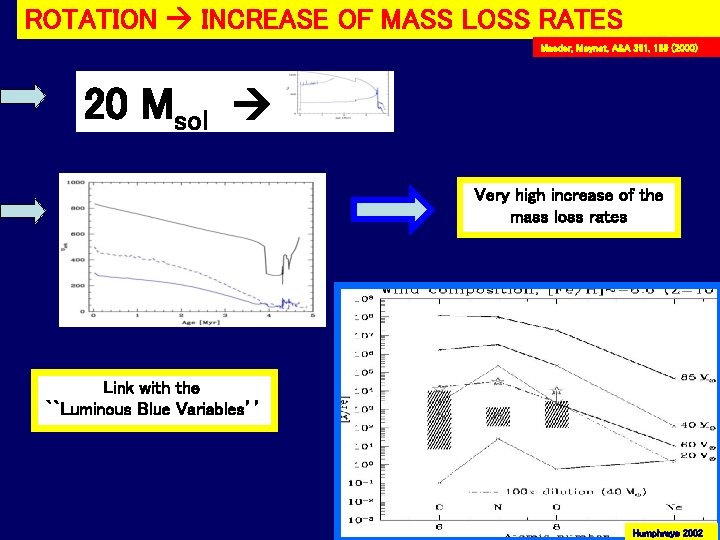
ROTATION INCREASE OF MASS LOSS RATES Maeder, Meynet, A&A 361, 159 (2000) 20 Msol Very high increase of the mass loss rates Link with the ``Luminous Blue Variables’’ Humphreys 2002
BUT WHAT HAPPENS IF STARS ARE ROTATING ?
Cells of meridional circulation 20 Msol on the ZAMS GRATTONÖPIK CELL
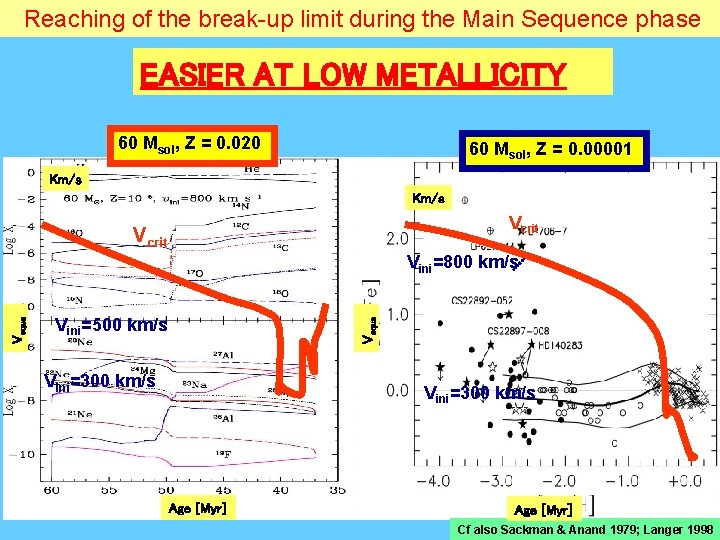
Reaching of the break-up limit during the Main Sequence phase EASIER AT LOW METALLICITY 60 Msol, Z = 0. 020 60 Msol, Z = 0. 00001 Km/s Vcrit Vini=500 km/s Vequa Vini=800 km/s Vini=300 km/s Age [Myr] Cf also Sackman & Anand 1979; Langer 1998
THE CNO ABUNDANCES AT THE SURFACE INCREASE 60 Msol, Vini=800 km/s, [Fe/H]=-6. 1
A STRIKING OBSERVATIONAL FACTS Very Helium-rich stars in Centuri ?
14 N 60 Msol [Fe/H]=-6. 6 16 O Vini = 800 km/s 12 C Vini = 0 km/s
- Slides: 61