
Mass Concreting Dr Saji Daniel Construction Engg Rizvi
- Slides: 35
Mass Concreting Dr. Saji Daniel Construction Engg. Rizvi COE 1
Dr. Saji Daniel Construction Engg. Rizvi COE 2
Dr. Saji Daniel Construction Engg. Rizvi COE 3
Dr. Saji Daniel Construction Engg. Rizvi COE 4
Dr. Saji Daniel Construction Engg. Rizvi COE 5
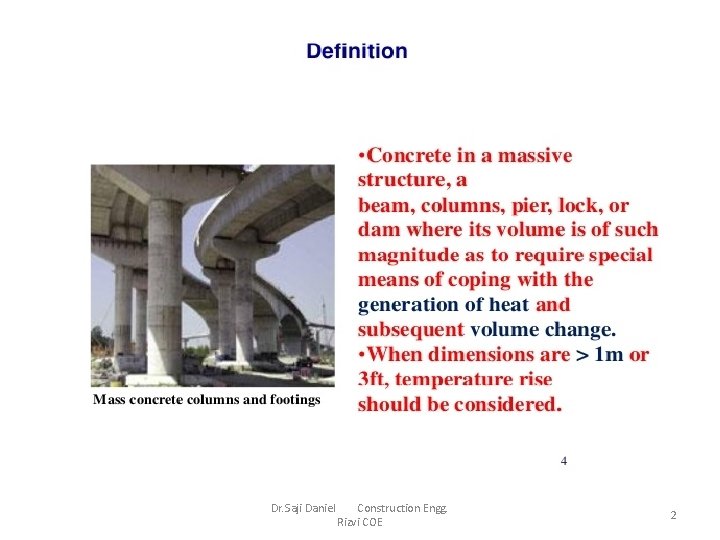
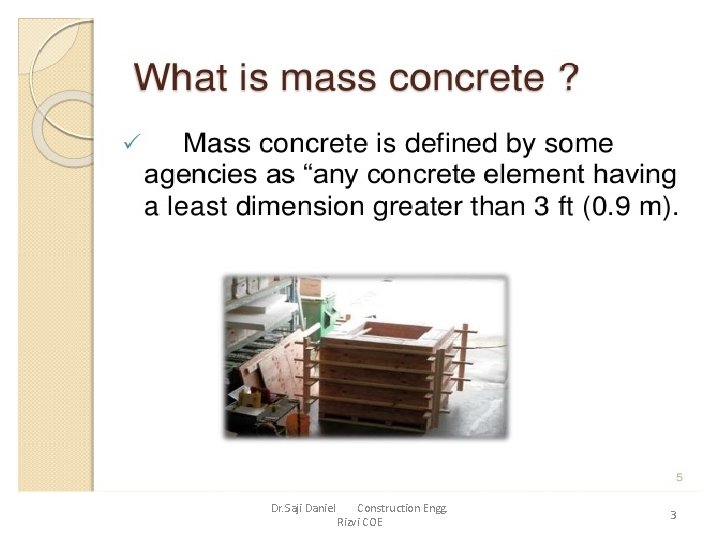
Mass Concreting • Mass concrete is defined by American Concrete Institute Committee 207 as "any volume of concrete with dimensions large enough to require that measures be taken to cope with the generation of heat from hydration of cement and attendant volume change to minimize cracking. " Dr. Saji Daniel Construction Engg. Rizvi COE 6
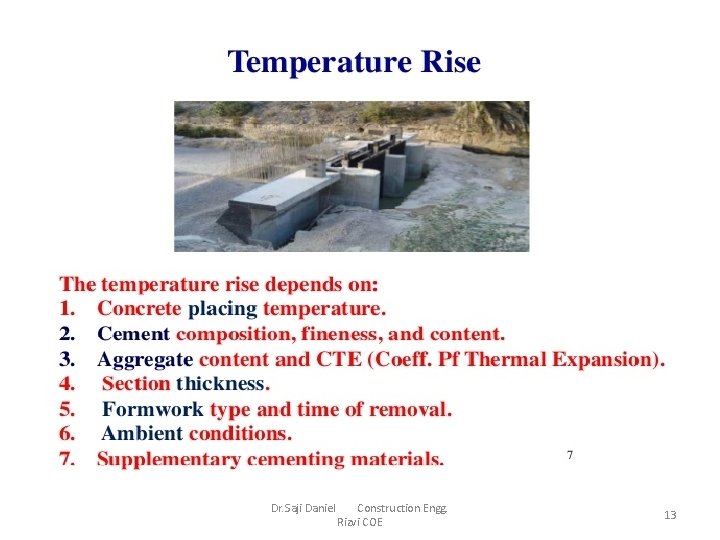
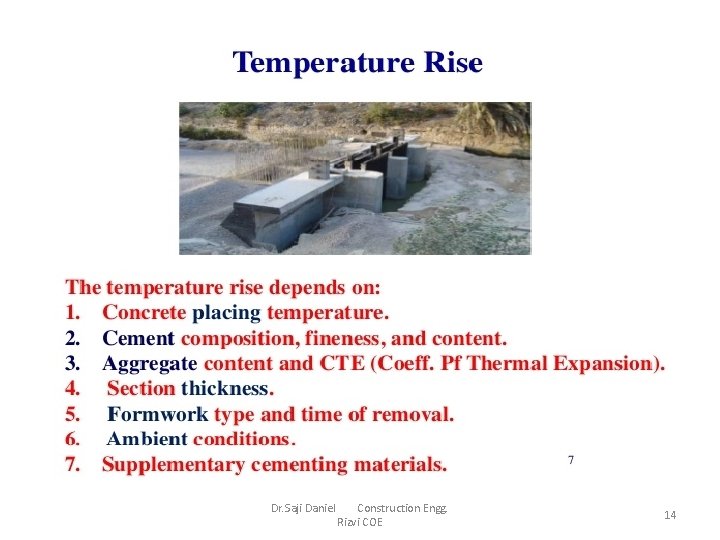
Mass Concreting • The main factors influencing temperature variation in the mass concrete structure are: • the size of the structure, • the ambient temperature, • the initial temperature of the concrete at time of placement and curing program, • the cement type, • the cement contents in the mix. Dr. Saji Daniel Construction Engg. Rizvi COE 7
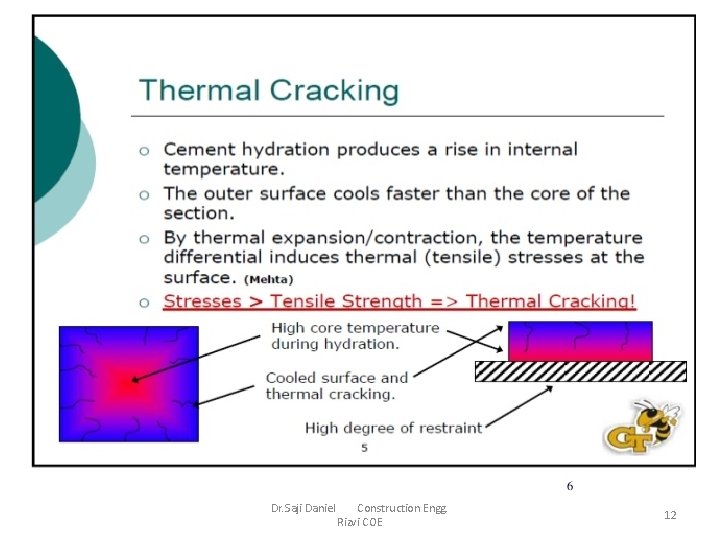
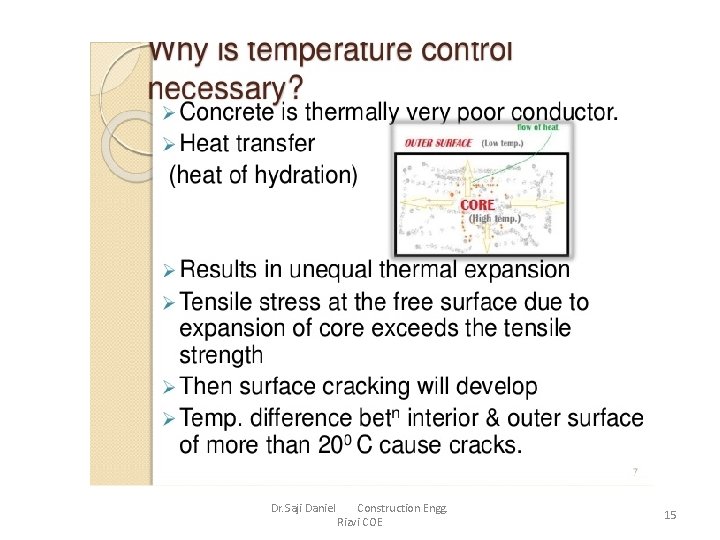
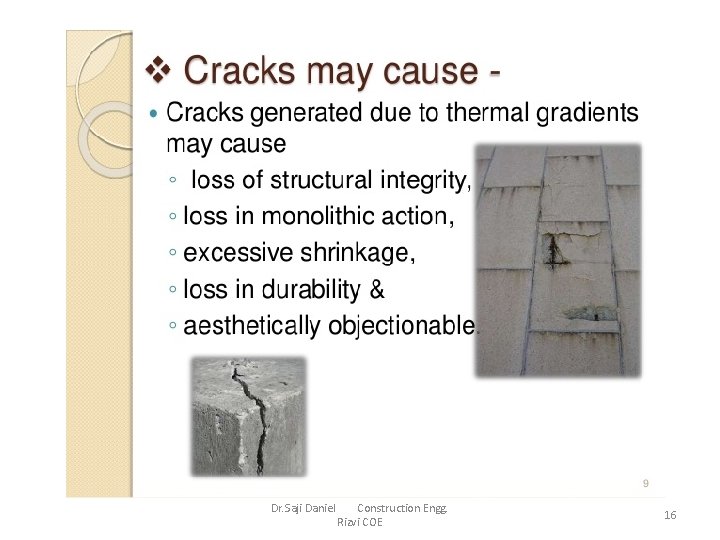
Mass Concreting • As interior temperature of mass concrete rises due to the process of cement hydration, the outer concrete may be cooling and contracting. • If the temperature differs too much within the structure, the material can crack. Dr. Saji Daniel Construction Engg. Rizvi COE 8
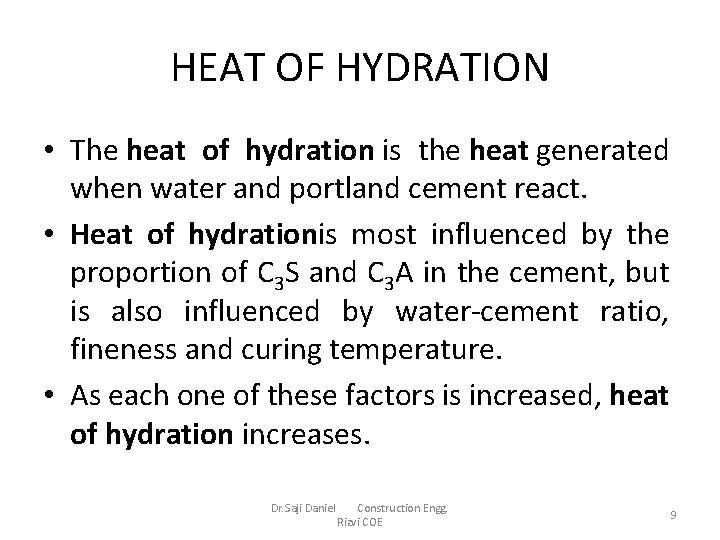
HEAT OF HYDRATION • The heat of hydration is the heat generated when water and portland cement react. • Heat of hydrationis most influenced by the proportion of C 3 S and C 3 A in the cement, but is also influenced by water-cement ratio, fineness and curing temperature. • As each one of these factors is increased, heat of hydration increases. Dr. Saji Daniel Construction Engg. Rizvi COE 9
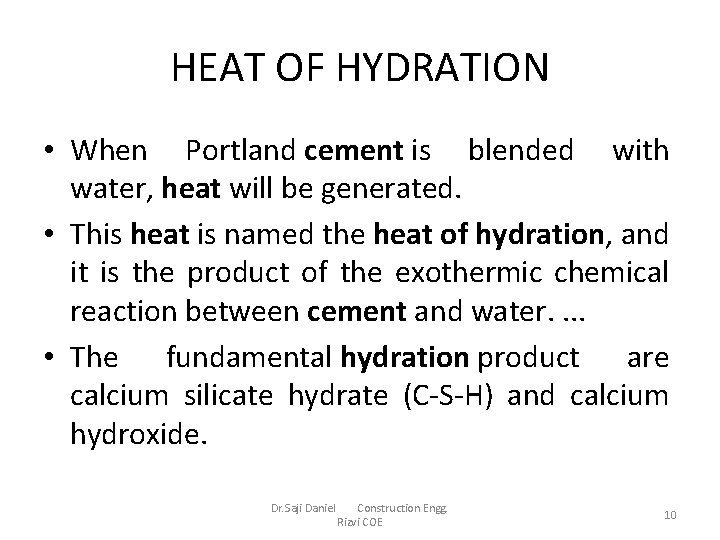
HEAT OF HYDRATION • When Portland cement is blended with water, heat will be generated. • This heat is named the heat of hydration, and it is the product of the exothermic chemical reaction between cement and water. . • The fundamental hydration product are calcium silicate hydrate (C-S-H) and calcium hydroxide. Dr. Saji Daniel Construction Engg. Rizvi COE 10
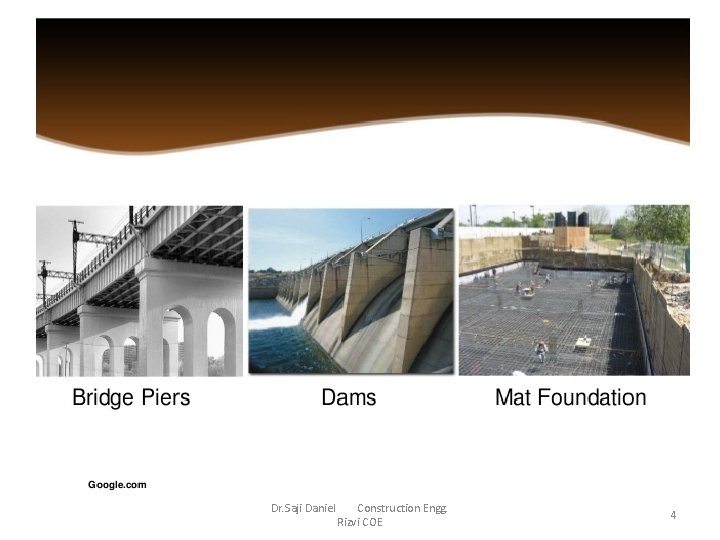
Mass Concreting Mass concrete structures include massive • mat foundations, • dams • other concrete structures with a width or depth exceeding three feet or one meter, Dr. Saji Daniel Construction Engg. Rizvi COE 11
Dr. Saji Daniel Construction Engg. Rizvi COE 12
Dr. Saji Daniel Construction Engg. Rizvi COE 13
Dr. Saji Daniel Construction Engg. Rizvi COE 14
Mass Concreting Dr. Saji Daniel Construction Engg. Rizvi COE 15
Mass Concreting Dr. Saji Daniel Construction Engg. Rizvi COE 16
Dr. Saji Daniel Construction Engg. Rizvi COE 17
Dr. Saji Daniel Construction Engg. Rizvi COE 18
Dr. Saji Daniel Construction Engg. Rizvi COE 19
Dr. Saji Daniel Construction Engg. Rizvi COE 20
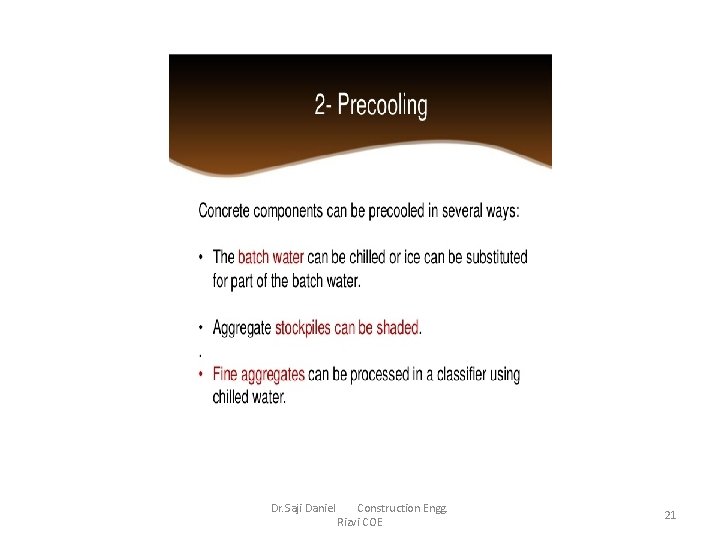
Dr. Saji Daniel Construction Engg. Rizvi COE 21
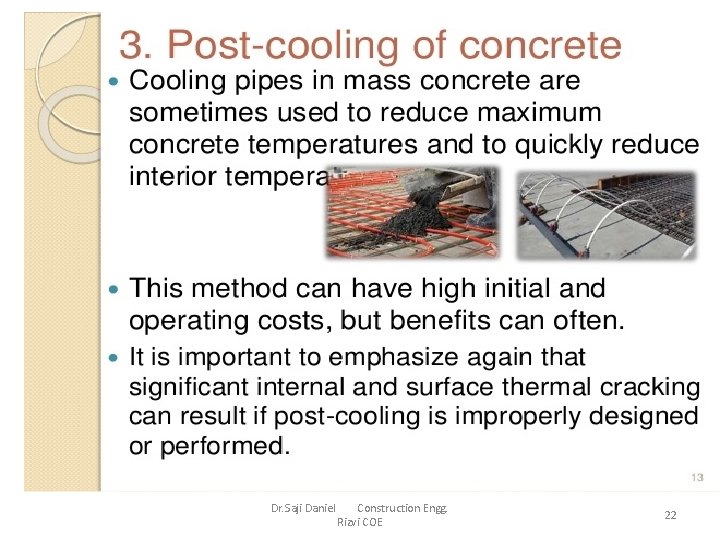
Dr. Saji Daniel Construction Engg. Rizvi COE 22
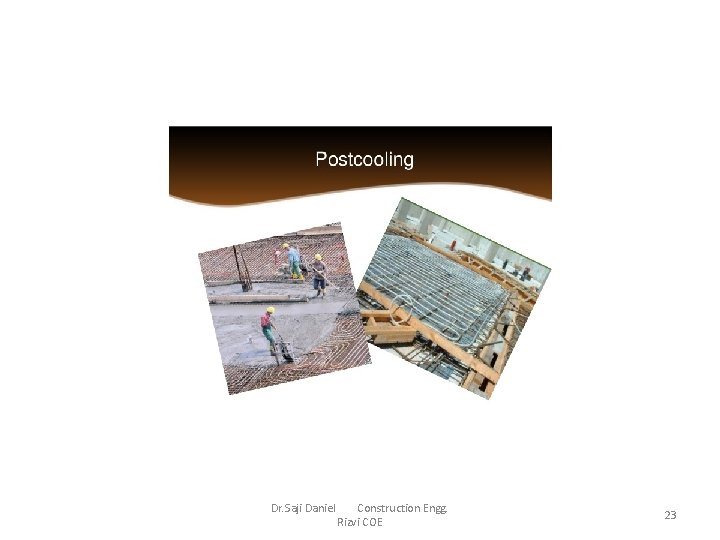
Dr. Saji Daniel Construction Engg. Rizvi COE 23
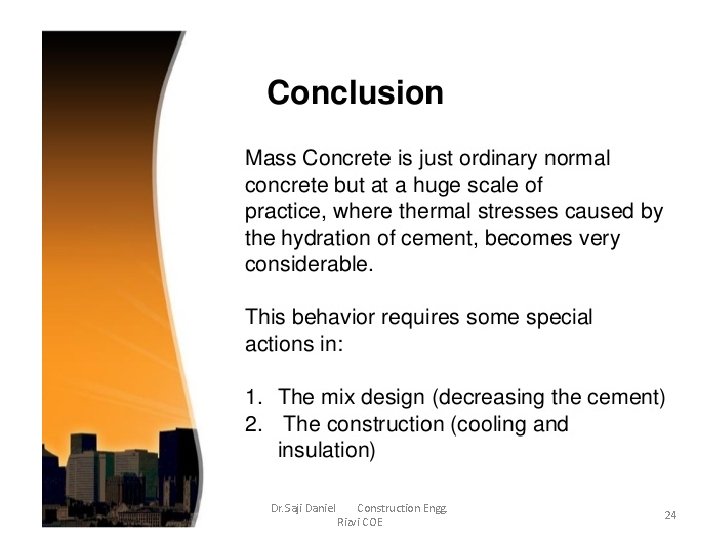
Dr. Saji Daniel Construction Engg. Rizvi COE 24
Vaccum Concrete Dr. Saji Daniel Construction Engg. Rizvi COE 25
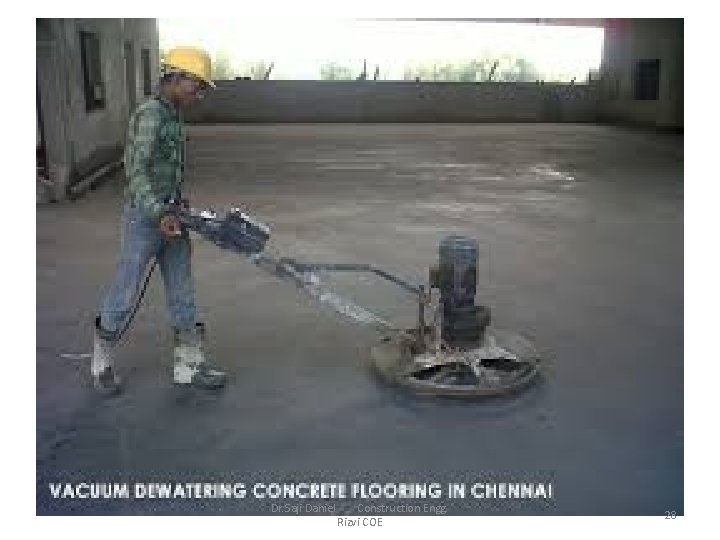
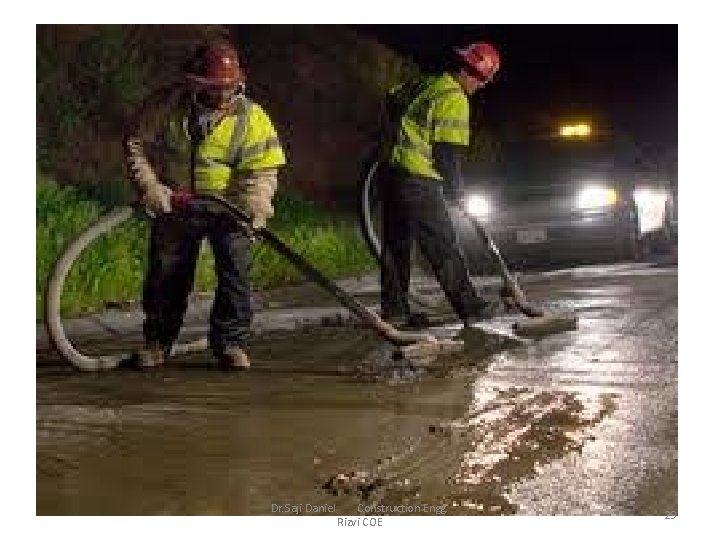
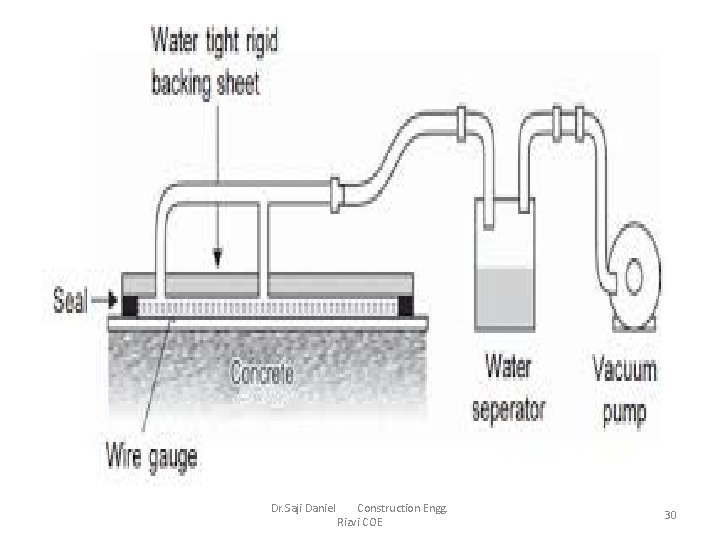
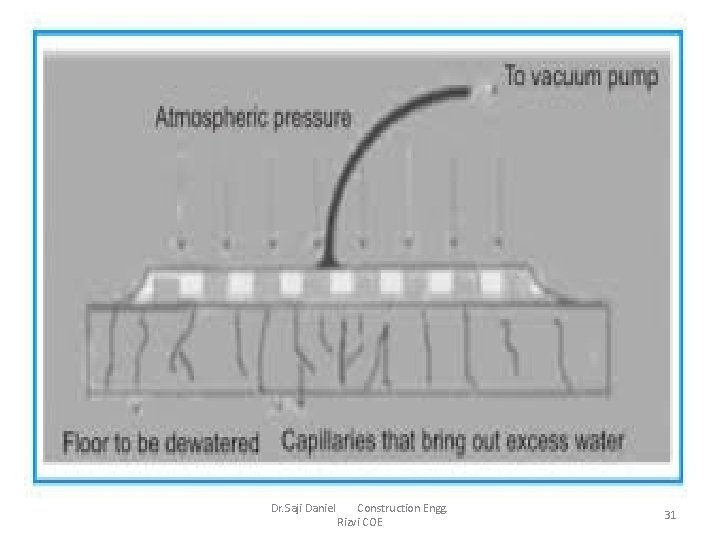
Vaccum Concrete • Vacuum concrete is the type of concrete in which the excess water is removed for improving concrete strength. The water is removed by use of vacuum mats connected to a vacuum pump. Dr. Saji Daniel Construction Engg. Rizvi COE 26
Vaccum Concrete • All the water used in mixing concrete is not required for hydration. Therefore, removal of excess water before hardening take place improves concrete strength. • Vacuum concrete is the type of concrete in which the excess water is removed for improving concrete strength. The water is removed by use of vacuum mats connected to a vacuum pump. Dr. Saji Daniel Construction Engg. Rizvi COE 27
Dr. Saji Daniel Construction Engg. Rizvi COE 28
Dr. Saji Daniel Construction Engg. Rizvi COE 29
Dr. Saji Daniel Construction Engg. Rizvi COE 30
Dr. Saji Daniel Construction Engg. Rizvi COE 31
Dr. Saji Daniel Construction Engg. Rizvi COE 32
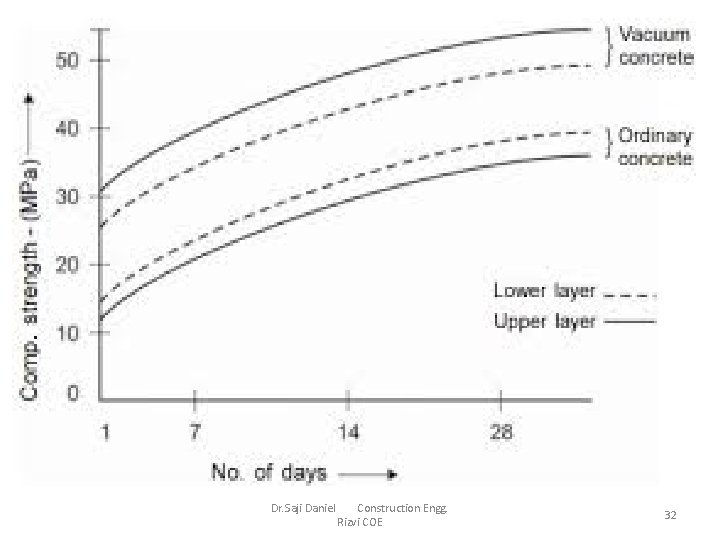
Advantages of Vacuum Concrete • The final strength of concrete is increased by about 25%. • Sufficient decrease in The permeability of concrete is sufficiently decreased. • Vacuum concrete stiffens very rapidly so that the form-works can be removed within 30 minutes of casting even on columns of 20 ft. high. • This is of considerable economic value, particularly in a precast factory as the forms can be reused at frequent intervals. Dr. Saji Daniel Construction Engg. Rizvi COE 33
Advantages of Vacuum Concrete • bond strength of vacuum concrete is about 20% higher. • The density of vacuum concrete is higher. • The surface of vacuum concrete is entirely free from pitting and the uppermost 1/16 inch is highly resistant to abrasion. • It bonds well to old concrete and can, therefore, be used for resurfacing road slabs and other repair works. Dr. Saji Daniel Construction Engg. Rizvi COE 34
conclusion • The vacuum dewatering process basically improves strength, durability, and other properties of concrete by reducing the watercement ratio immediately after the mix is placed, usually in floors and other flatwork. Dr. Saji Daniel Construction Engg. Rizvi COE 35