
Mass and Motion Energy Typical devices used to
- Slides: 5
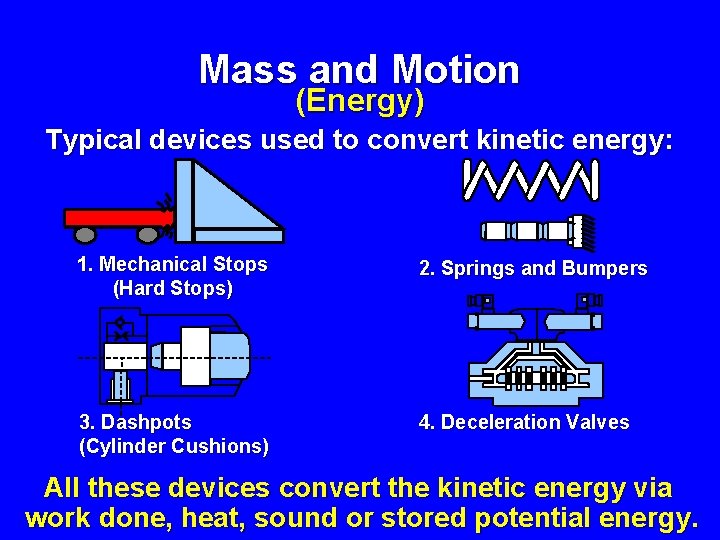
Mass and Motion (Energy) Typical devices used to convert kinetic energy: 1. Mechanical Stops (Hard Stops) 2. Springs and Bumpers 3. Dashpots (Cylinder Cushions) 4. Deceleration Valves All these devices convert the kinetic energy via work done, heat, sound or stored potential energy.
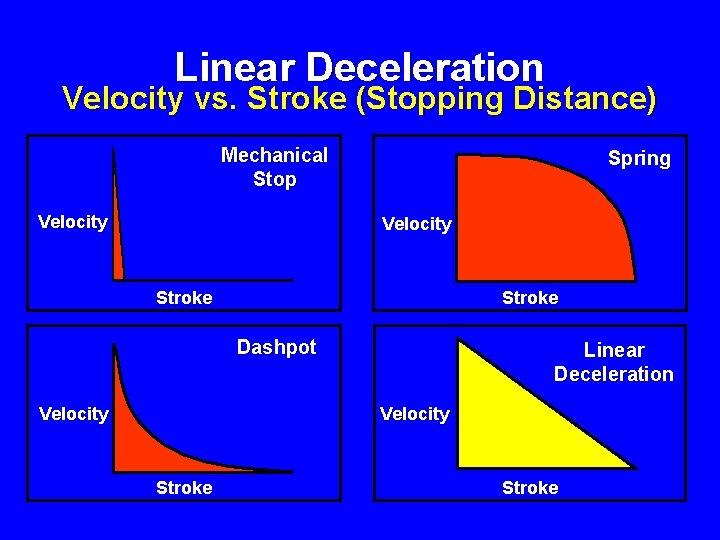
Linear Deceleration Velocity vs. Stroke (Stopping Distance) Mechanical Stop Velocity Spring Velocity Stroke Dashpot Velocity Linear Deceleration Velocity Stroke
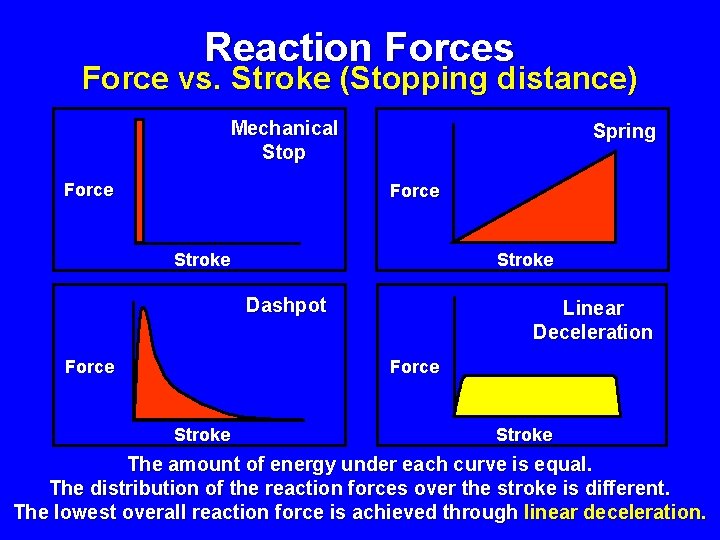
Reaction Forces Force vs. Stroke (Stopping distance) Mechanical Stop Force Spring Force Stroke Dashpot Force Linear Deceleration Force Stroke The amount of energy under each curve is equal. The distribution of the reaction forces over the stroke is different. The lowest overall reaction force is achieved through linear deceleration.
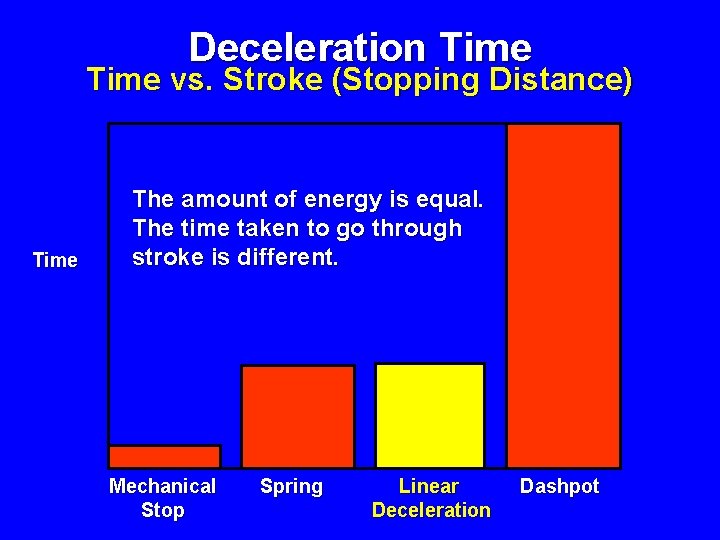
Deceleration Time vs. Stroke (Stopping Distance) Time The amount of energy is equal. The time taken to go through stroke is different. Mechanical Stop Spring Linear Deceleration Dashpot
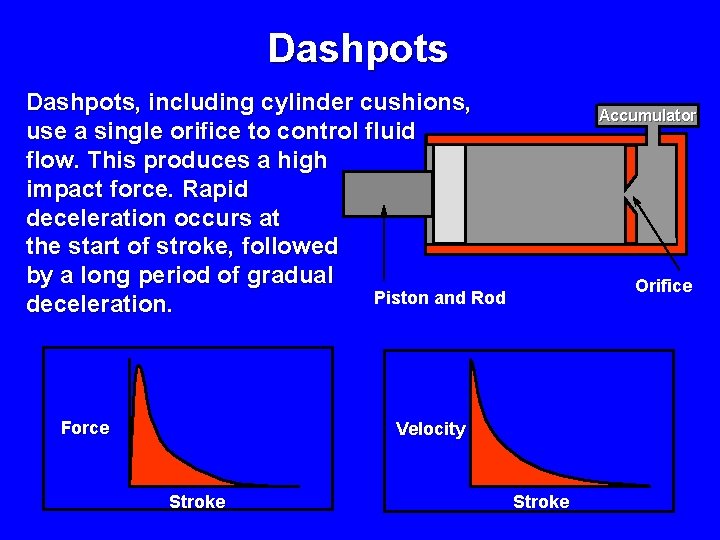
Dashpots, including cylinder cushions, use a single orifice to control fluid flow. This produces a high impact force. Rapid deceleration occurs at the start of stroke, followed by a long period of gradual Piston and Rod deceleration. Force Accumulator Orifice Velocity Stroke