
Mass Analyzers Double Focusing Magnetic Sector Quadrupole Mass
Mass Analyzers • • • Double Focusing Magnetic Sector Quadrupole Mass Filter Quadrupole Ion Trap Linear Time-of-Flight (TOF) Reflectron TOF Fourier Transform Ion Cyclotron Resonance (FT-ICR-MS)
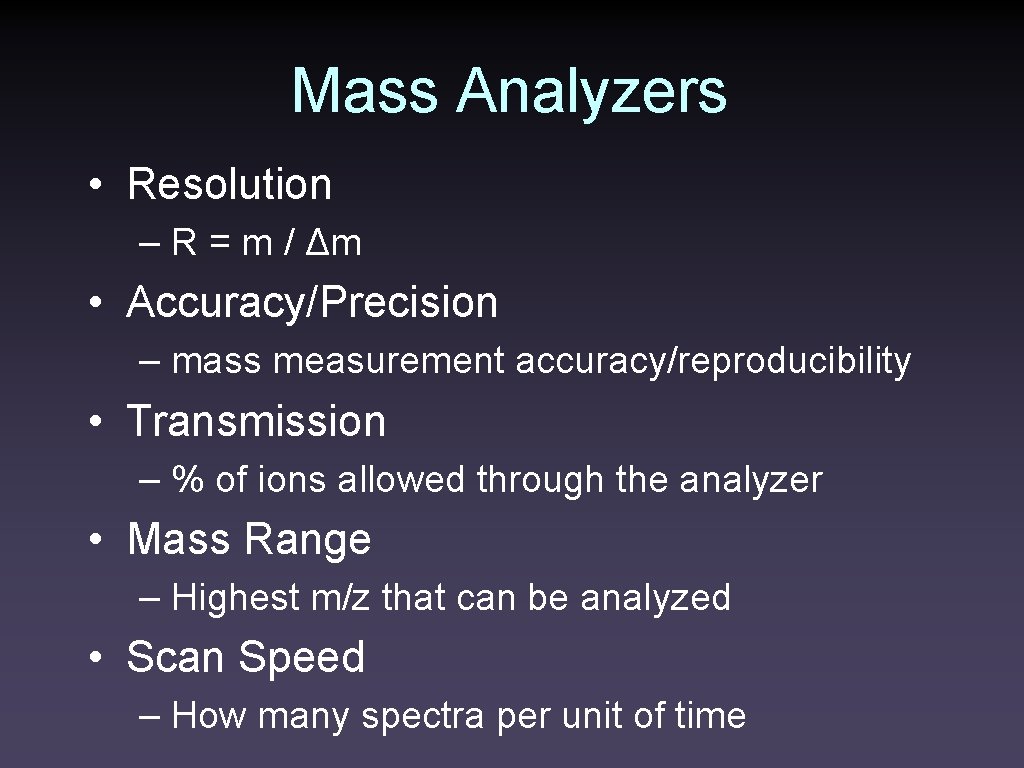
Mass Analyzers • Resolution – R = m / Δm • Accuracy/Precision – mass measurement accuracy/reproducibility • Transmission – % of ions allowed through the analyzer • Mass Range – Highest m/z that can be analyzed • Scan Speed – How many spectra per unit of time
Double-Focusing Magnetic Sector
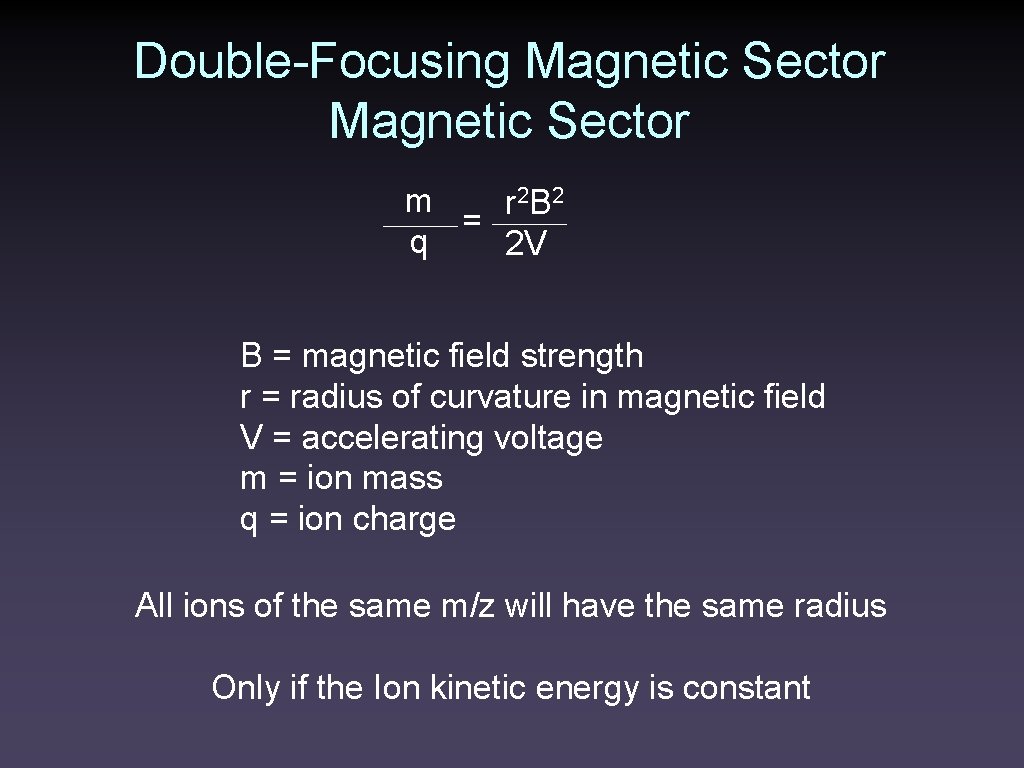
Double-Focusing Magnetic Sector m r 2 B 2 = q 2 V B = magnetic field strength r = radius of curvature in magnetic field V = accelerating voltage m = ion mass q = ion charge All ions of the same m/z will have the same radius Only if the Ion kinetic energy is constant
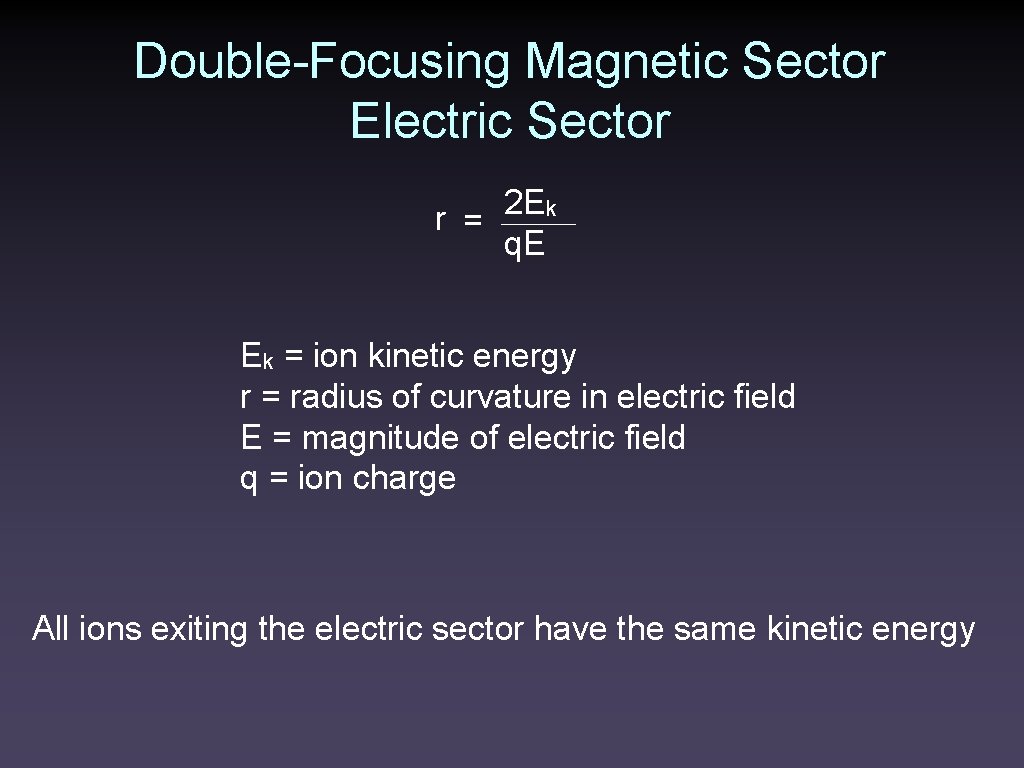
Double-Focusing Magnetic Sector Electric Sector 2 E k r = q. E Ek = ion kinetic energy r = radius of curvature in electric field E = magnitude of electric field q = ion charge All ions exiting the electric sector have the same kinetic energy

Double-Focusing Magnetic Sector
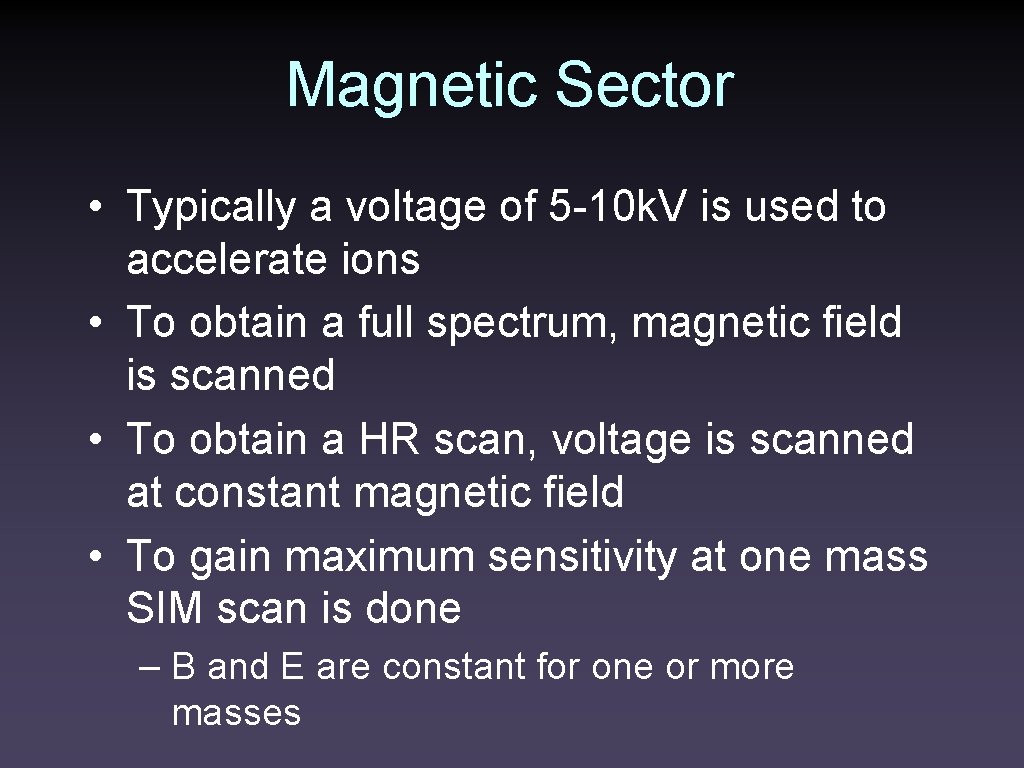
Magnetic Sector • Typically a voltage of 5 -10 k. V is used to accelerate ions • To obtain a full spectrum, magnetic field is scanned • To obtain a HR scan, voltage is scanned at constant magnetic field • To gain maximum sensitivity at one mass SIM scan is done – B and E are constant for one or more masses
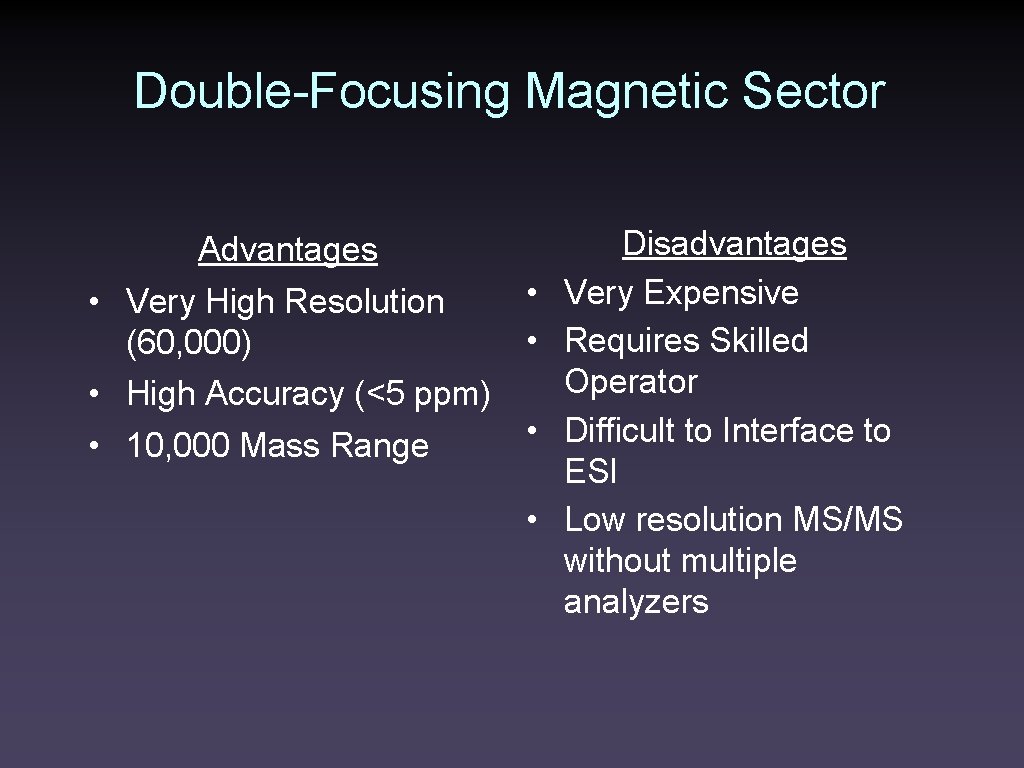
Double-Focusing Magnetic Sector Advantages • Very High Resolution (60, 000) • High Accuracy (<5 ppm) • 10, 000 Mass Range • • Disadvantages Very Expensive Requires Skilled Operator Difficult to Interface to ESI Low resolution MS/MS without multiple analyzers
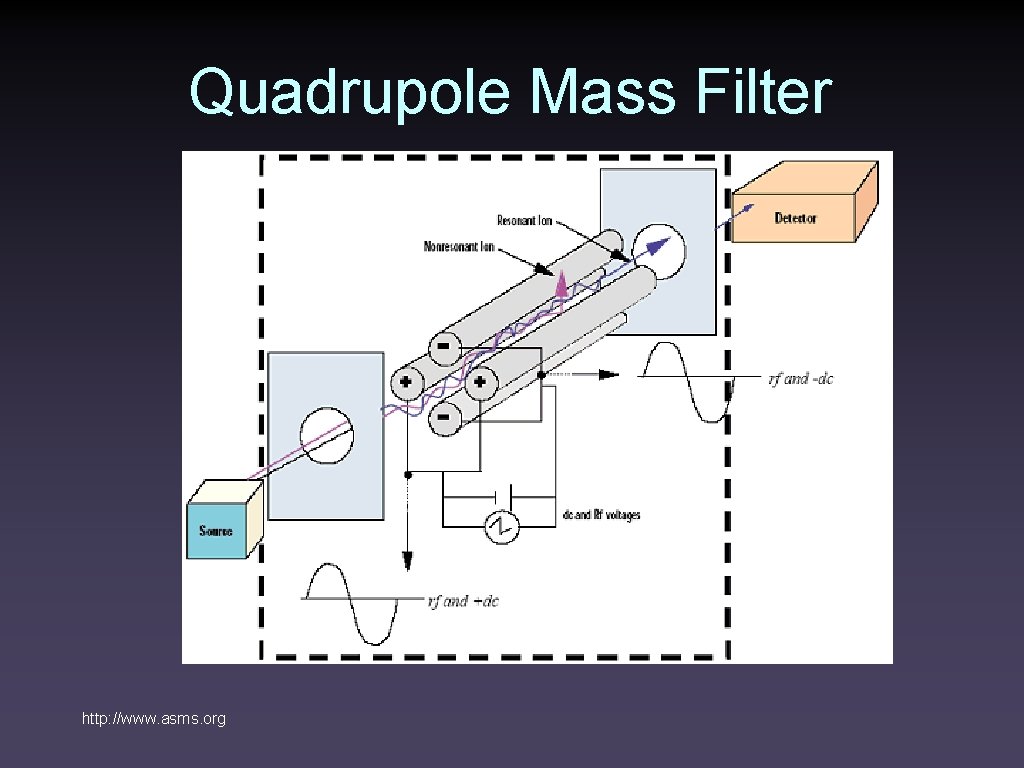
Quadrupole Mass Filter http: //www. asms. org
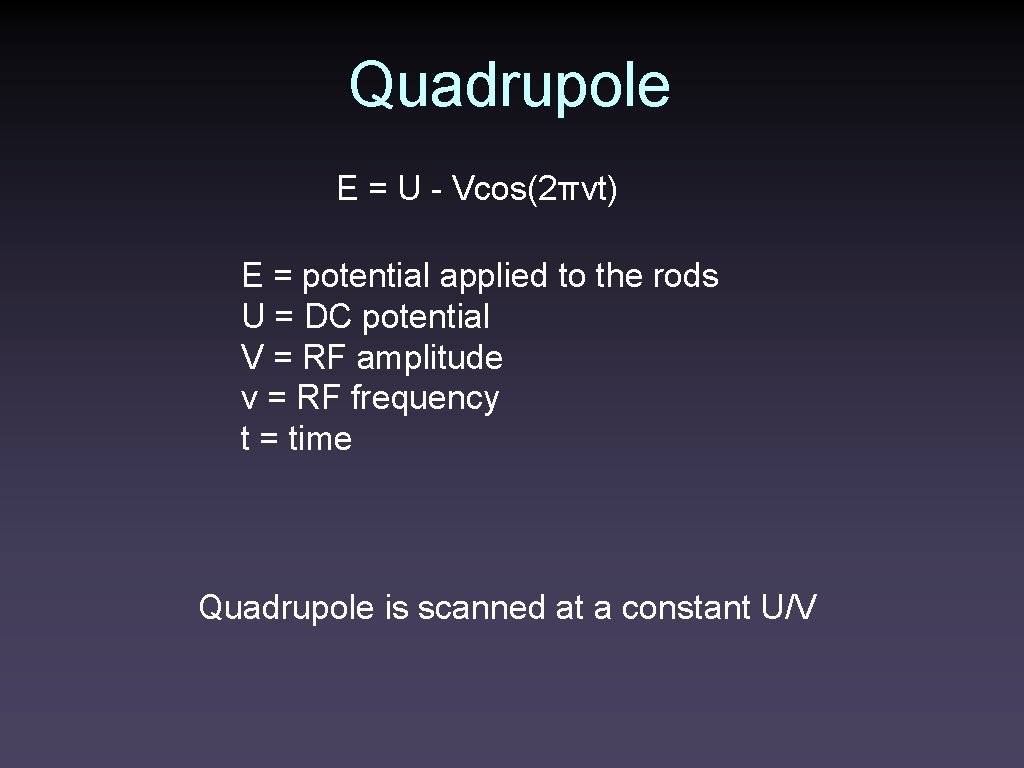
Quadrupole E = U - Vcos(2πνt) E = potential applied to the rods U = DC potential V = RF amplitude ν = RF frequency t = time Quadrupole is scanned at a constant U/V
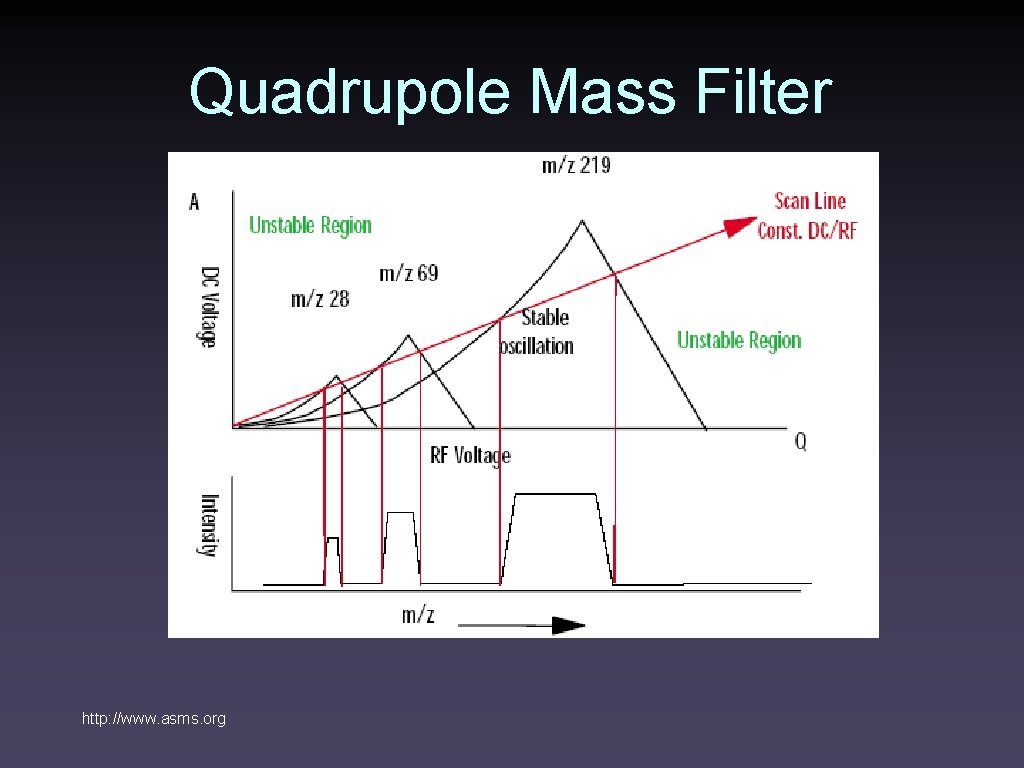
Quadrupole Mass Filter http: //www. asms. org
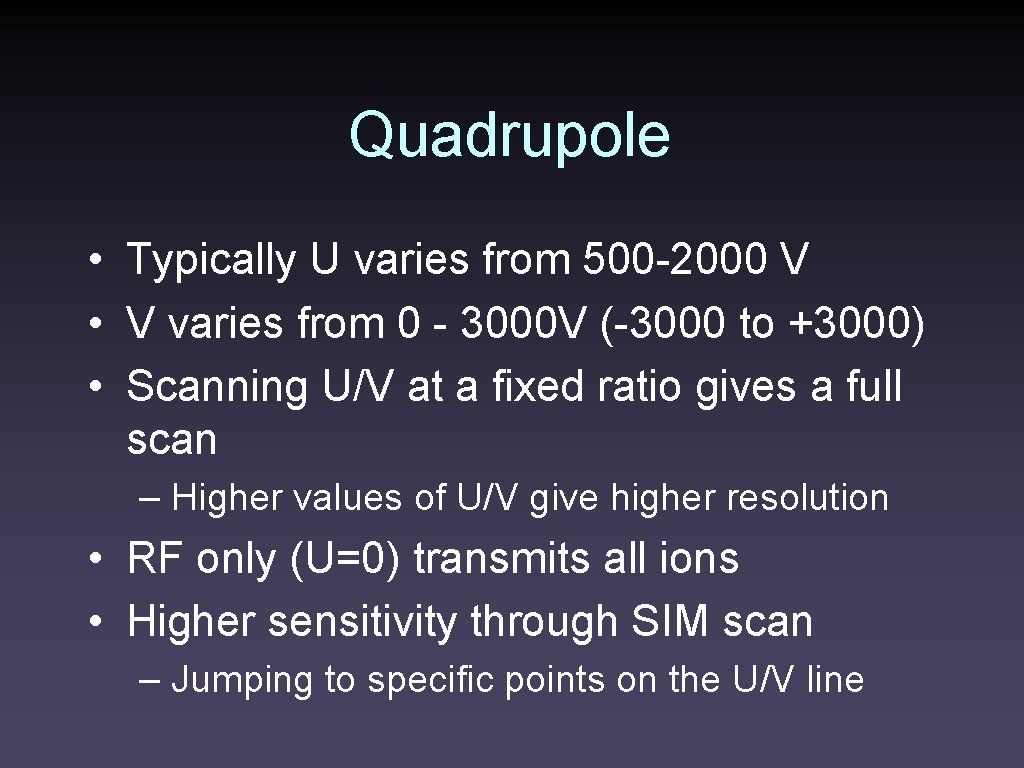
Quadrupole • Typically U varies from 500 -2000 V • V varies from 0 - 3000 V (-3000 to +3000) • Scanning U/V at a fixed ratio gives a full scan – Higher values of U/V give higher resolution • RF only (U=0) transmits all ions • Higher sensitivity through SIM scan – Jumping to specific points on the U/V line
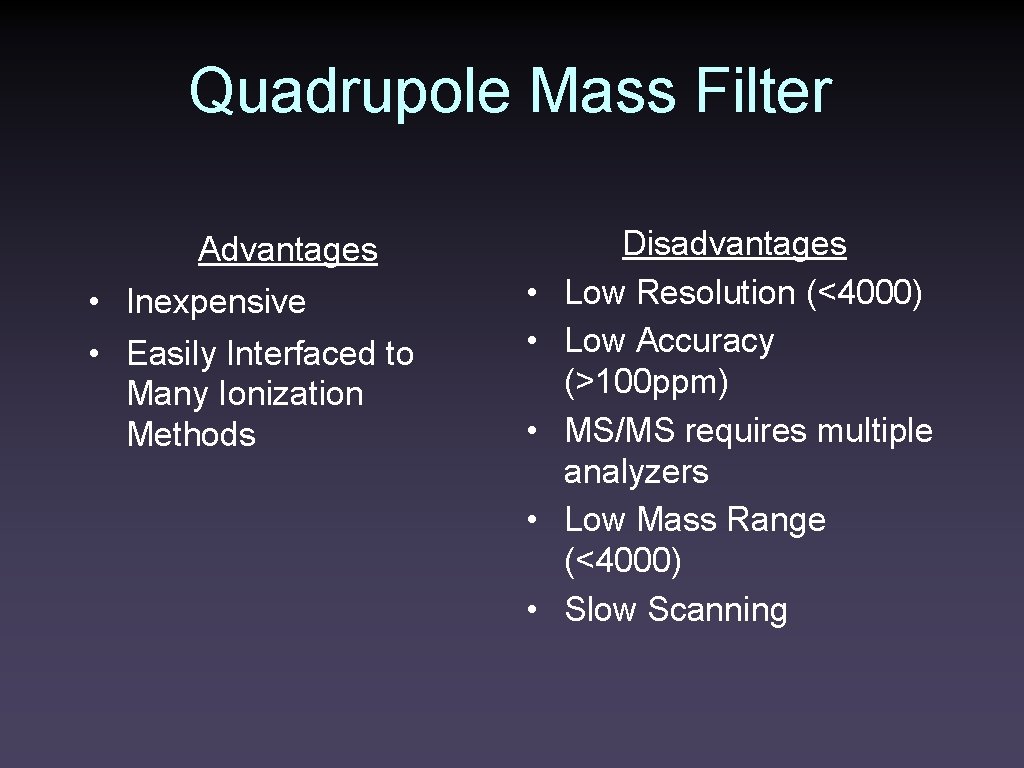
Quadrupole Mass Filter Advantages • Inexpensive • Easily Interfaced to Many Ionization Methods • • • Disadvantages Low Resolution (<4000) Low Accuracy (>100 ppm) MS/MS requires multiple analyzers Low Mass Range (<4000) Slow Scanning
Quadrupole Ion Trap
Quadrupole Ion Trap
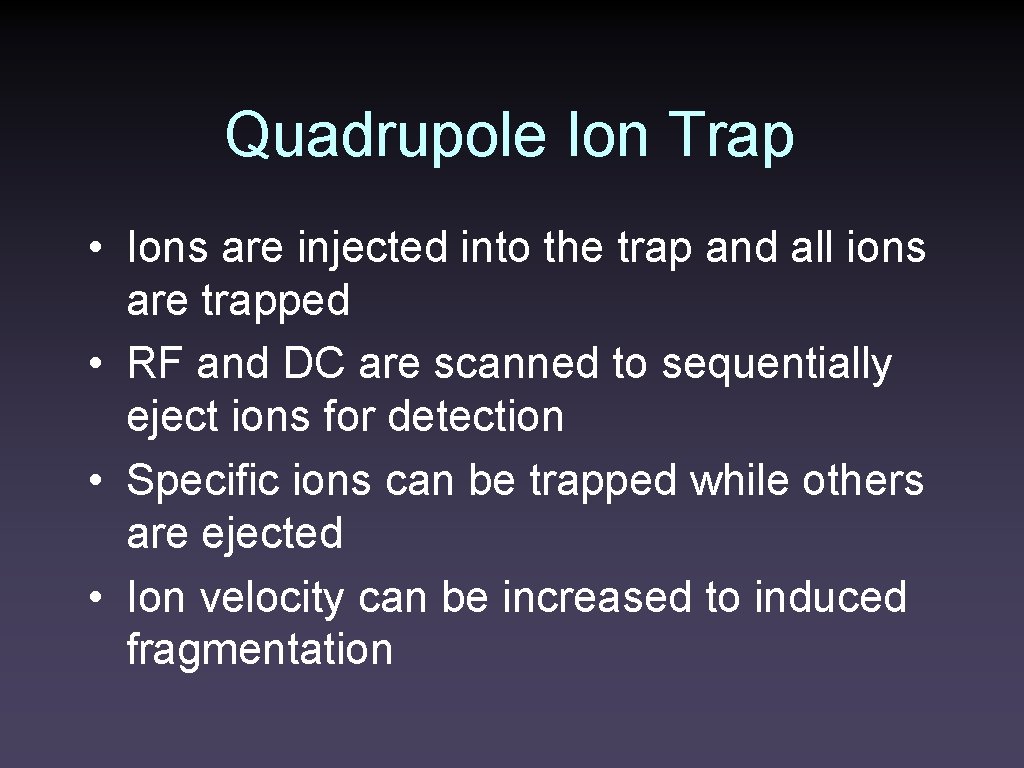
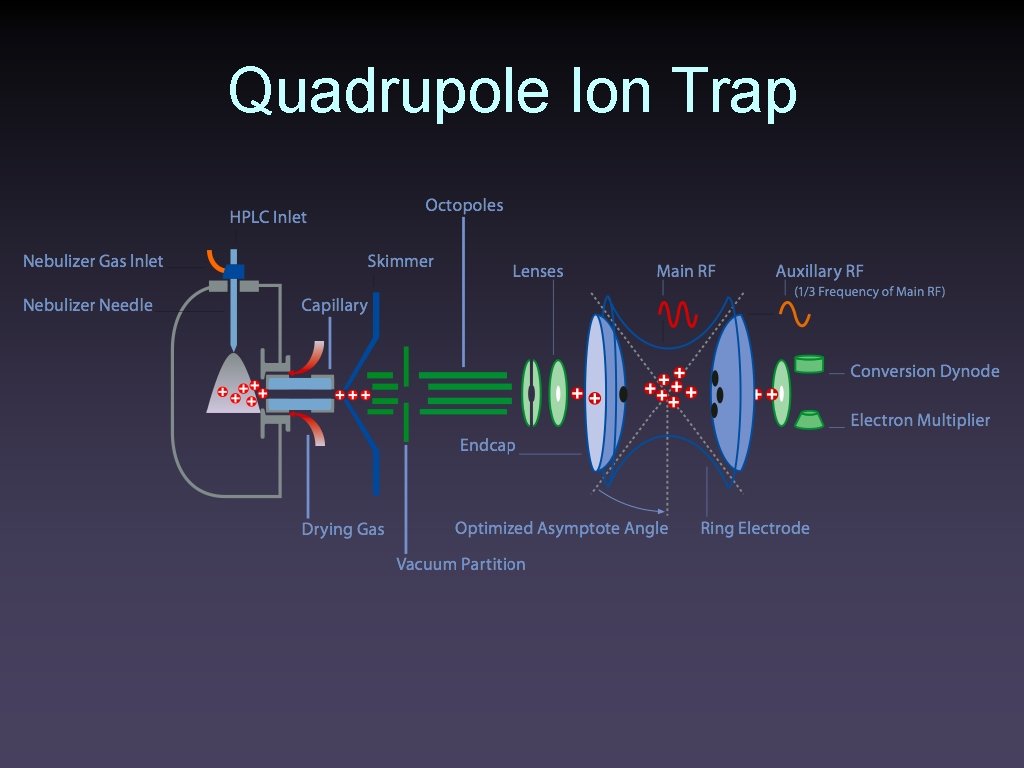
Quadrupole Ion Trap • Ions are injected into the trap and all ions are trapped • RF and DC are scanned to sequentially eject ions for detection • Specific ions can be trapped while others are ejected • Ion velocity can be increased to induced fragmentation
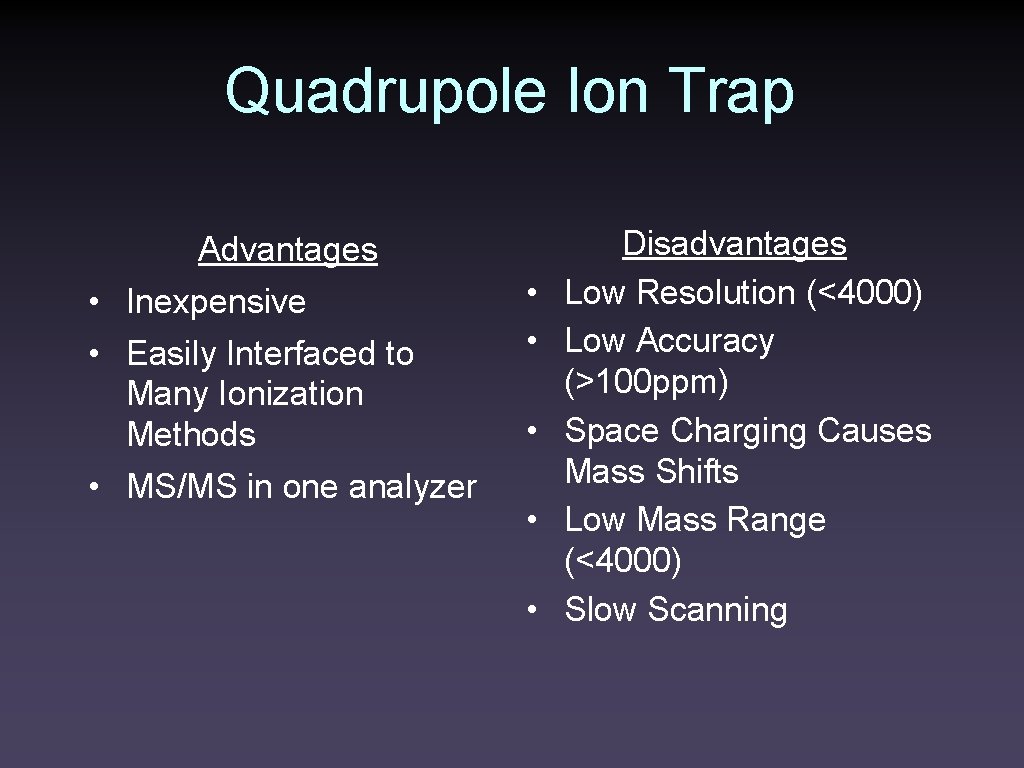
Quadrupole Ion Trap Advantages • Inexpensive • Easily Interfaced to Many Ionization Methods • MS/MS in one analyzer • • • Disadvantages Low Resolution (<4000) Low Accuracy (>100 ppm) Space Charging Causes Mass Shifts Low Mass Range (<4000) Slow Scanning
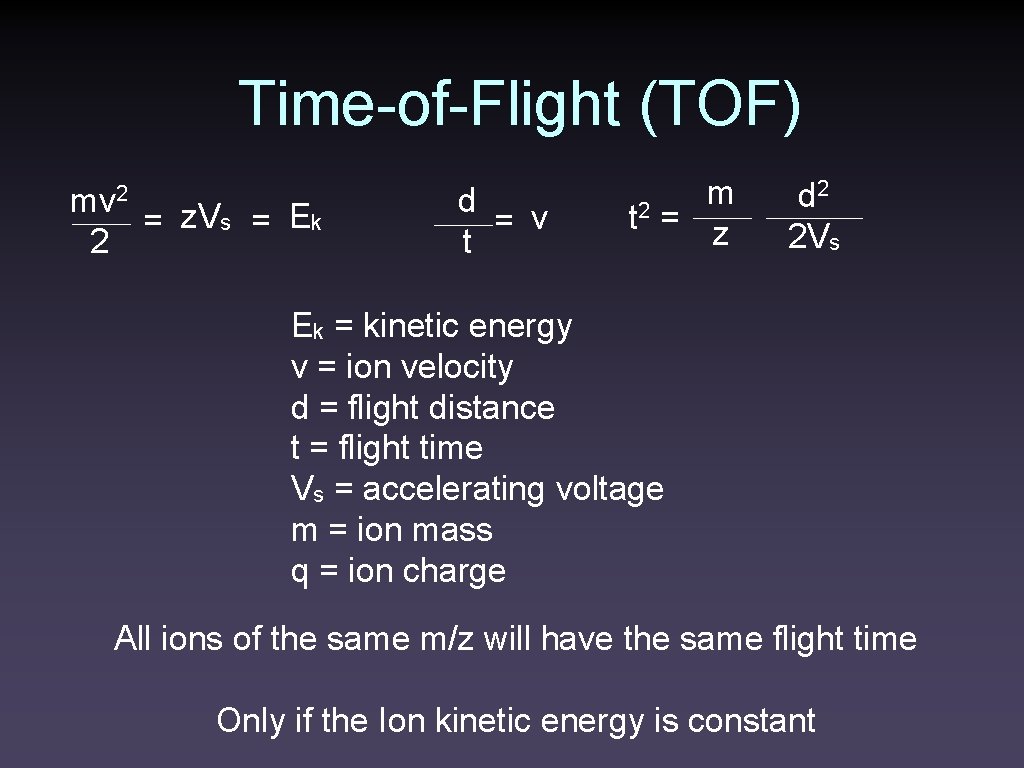
Time-of-Flight (TOF) mv 2 2 = z. Vs = Ek d = v t m 2 t = z d 2 2 Vs Ek = kinetic energy v = ion velocity d = flight distance t = flight time Vs = accelerating voltage m = ion mass q = ion charge All ions of the same m/z will have the same flight time Only if the Ion kinetic energy is constant
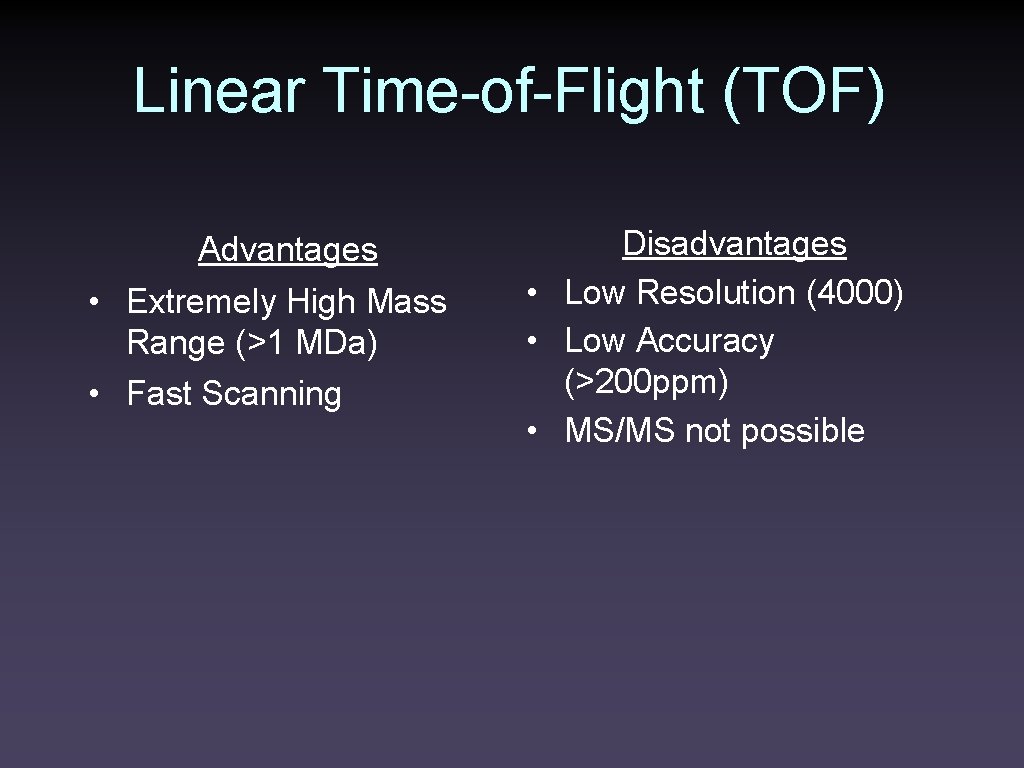
Linear Time-of-Flight (TOF) Advantages • Extremely High Mass Range (>1 MDa) • Fast Scanning Disadvantages • Low Resolution (4000) • Low Accuracy (>200 ppm) • MS/MS not possible
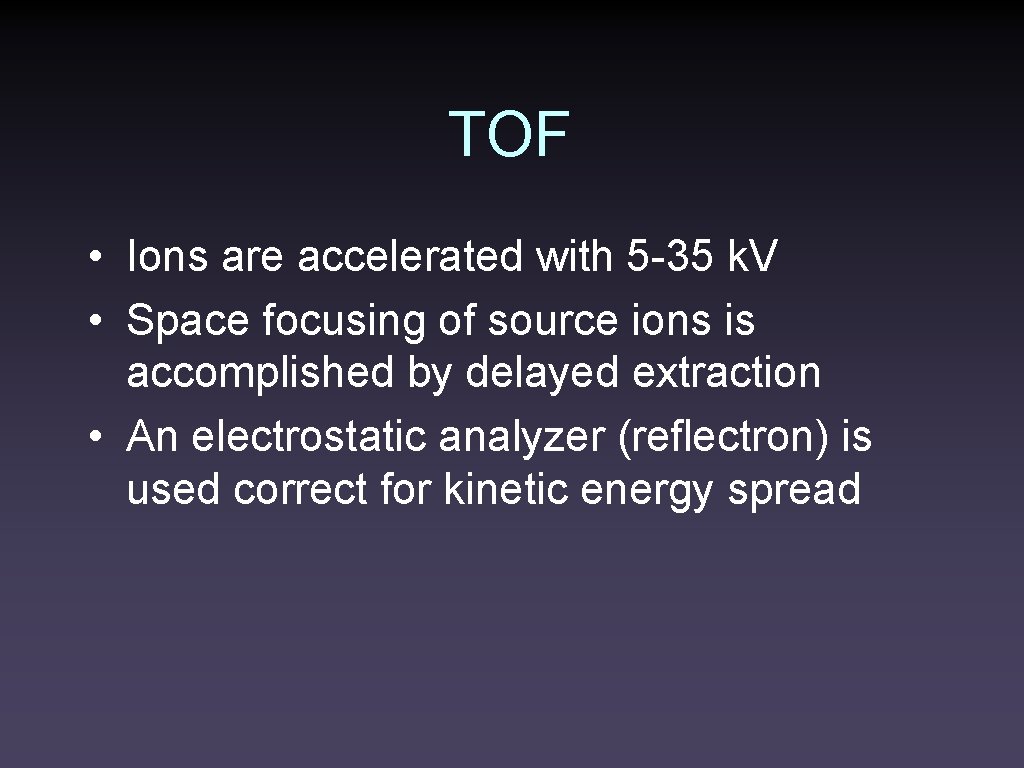
TOF • Ions are accelerated with 5 -35 k. V • Space focusing of source ions is accomplished by delayed extraction • An electrostatic analyzer (reflectron) is used correct for kinetic energy spread
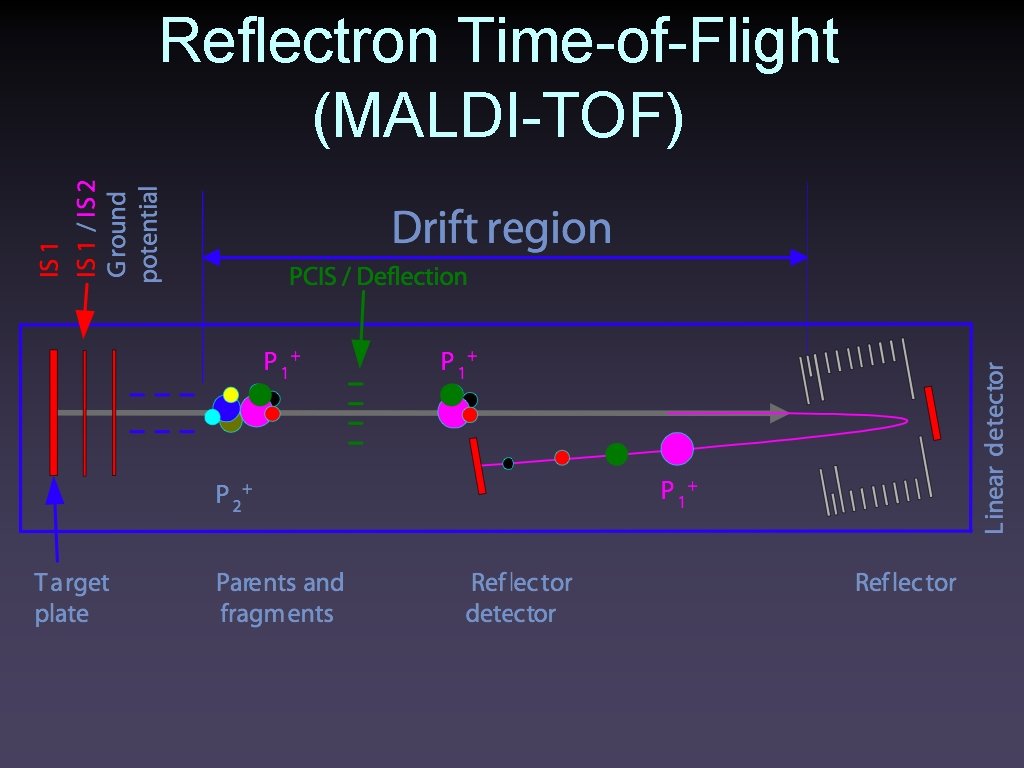
Reflectron Time-of-Flight (MALDI-TOF)
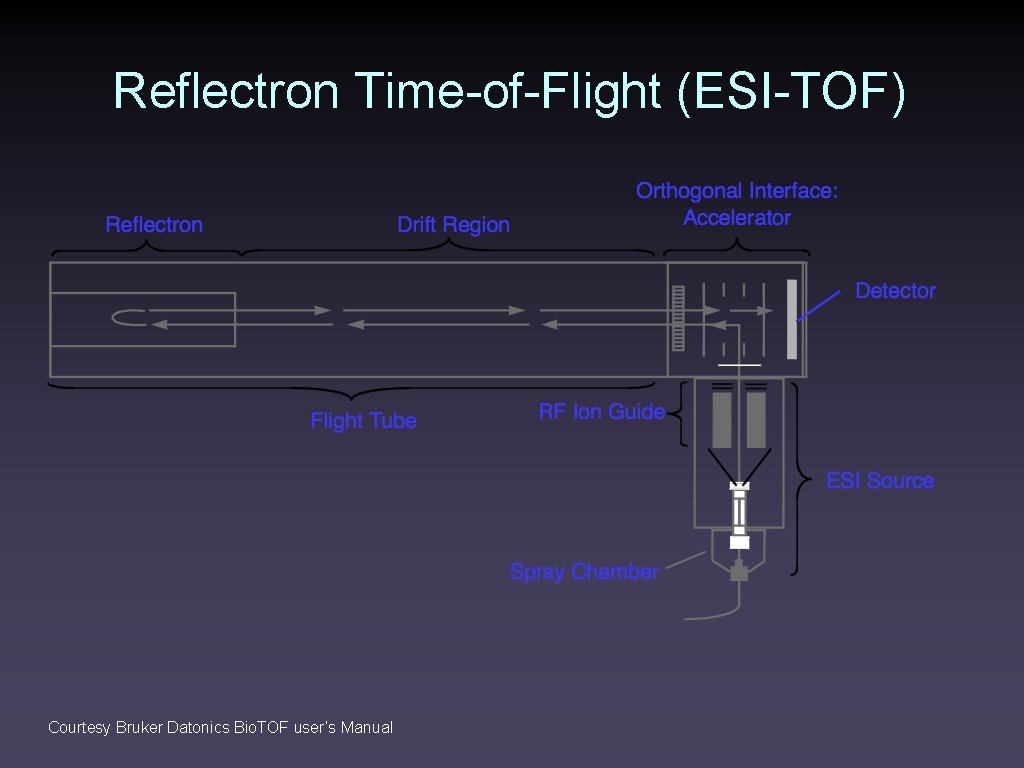
Reflectron Time-of-Flight (ESI-TOF) Courtesy Bruker Datonics Bio. TOF user’s Manual
Reflectron Time-of-Flight (TOF)
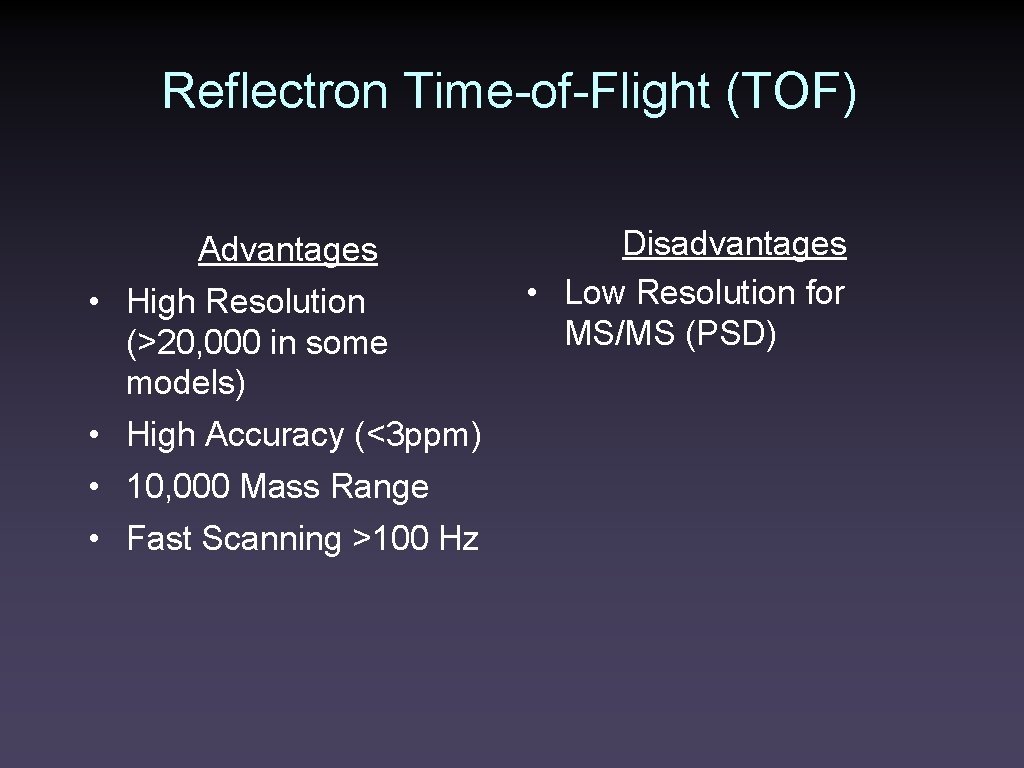
Reflectron Time-of-Flight (TOF) Advantages • High Resolution (>20, 000 in some models) • High Accuracy (<3 ppm) • 10, 000 Mass Range • Fast Scanning >100 Hz Disadvantages • Low Resolution for MS/MS (PSD)
FT-ICR-MS
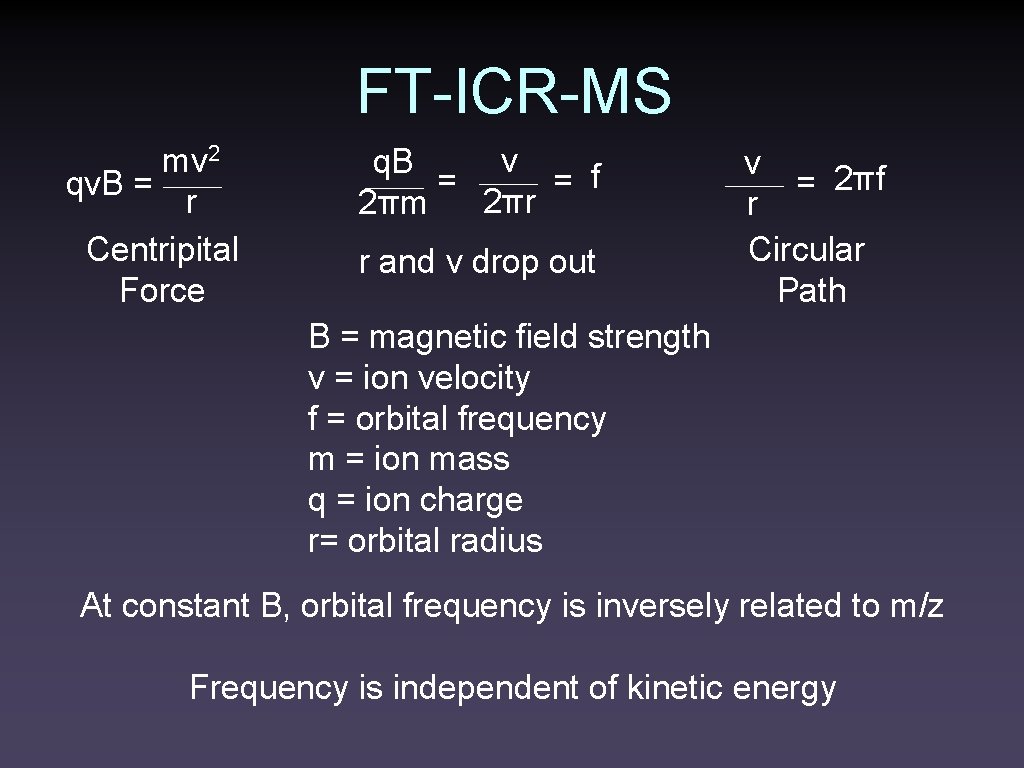
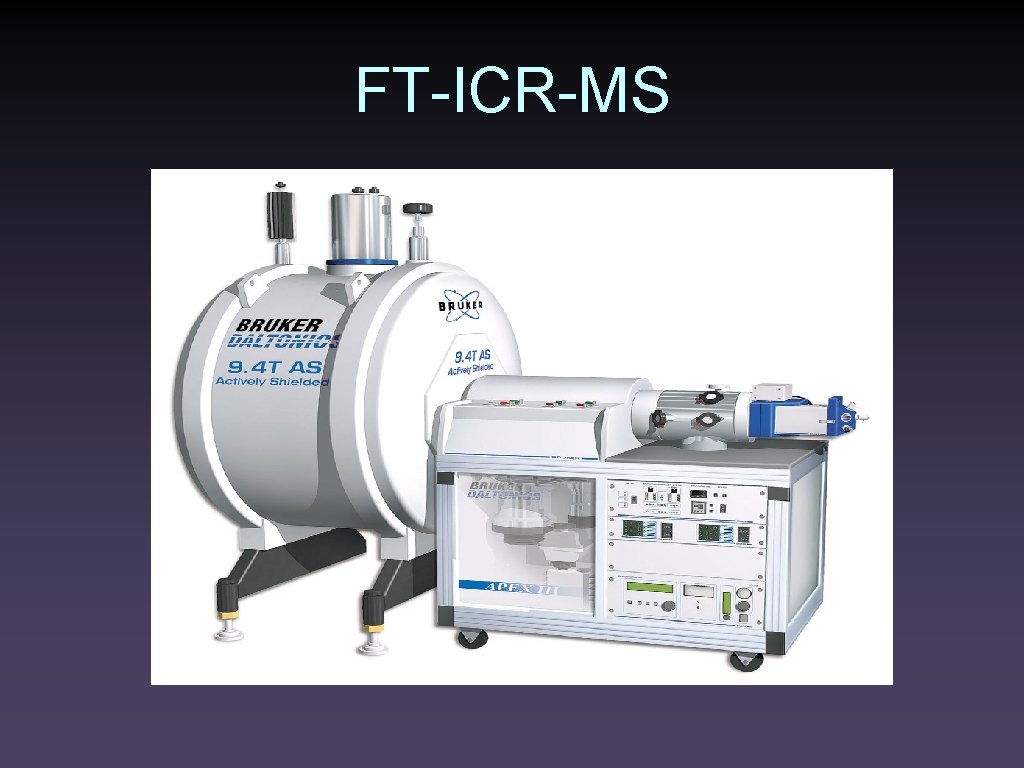
FT-ICR-MS mv 2 qv. B = r Centripital Force v q. B = = f 2πr 2πm r and v drop out v = 2πf r Circular Path B = magnetic field strength v = ion velocity f = orbital frequency m = ion mass q = ion charge r= orbital radius At constant B, orbital frequency is inversely related to m/z Frequency is independent of kinetic energy
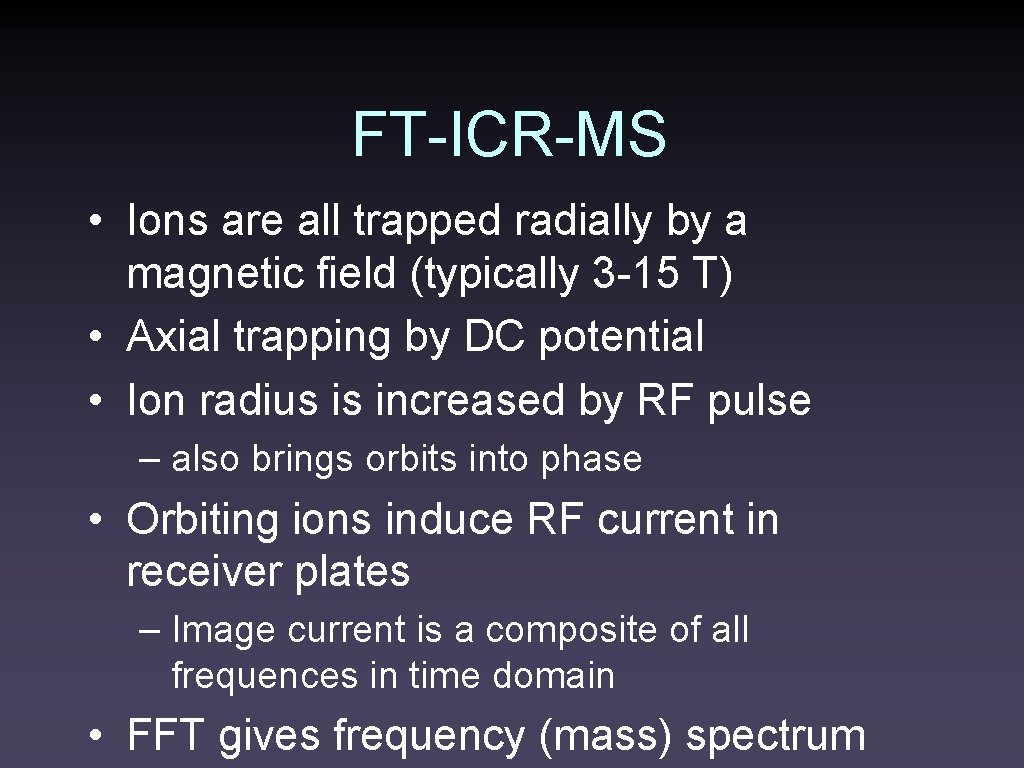
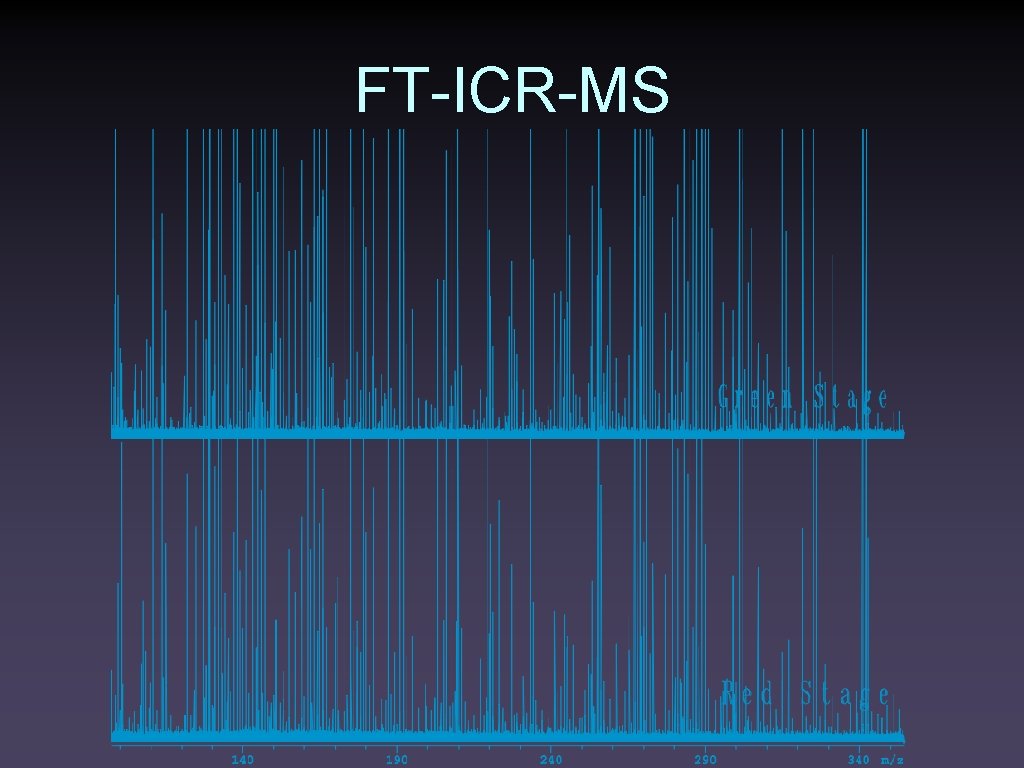
FT-ICR-MS • Ions are all trapped radially by a magnetic field (typically 3 -15 T) • Axial trapping by DC potential • Ion radius is increased by RF pulse – also brings orbits into phase • Orbiting ions induce RF current in receiver plates – Image current is a composite of all frequences in time domain • FFT gives frequency (mass) spectrum
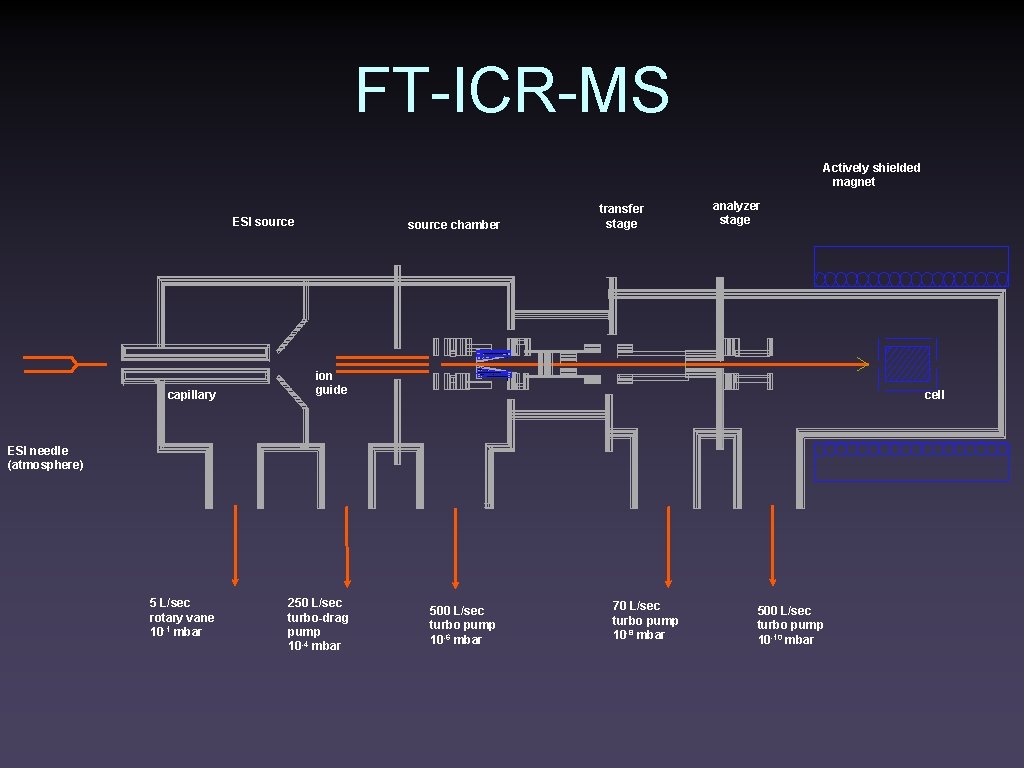
FT-ICR-MS Actively shielded magnet ESI source capillary source chamber transfer stage analyzer stage ion guide cell ESI needle (atmosphere) 5 L/sec rotary vane 10 -1 mbar 250 L/sec turbo-drag pump 10 -4 mbar 500 L/sec turbo pump 10 -6 mbar 70 L/sec turbo pump 10 -8 mbar 500 L/sec turbo pump 10 -10 mbar
FT-ICR-MS

FT-ICR-MS
FT-ICR-MS

FT-ICR-MS
FT-ICR-MS
FT-ICR-MS
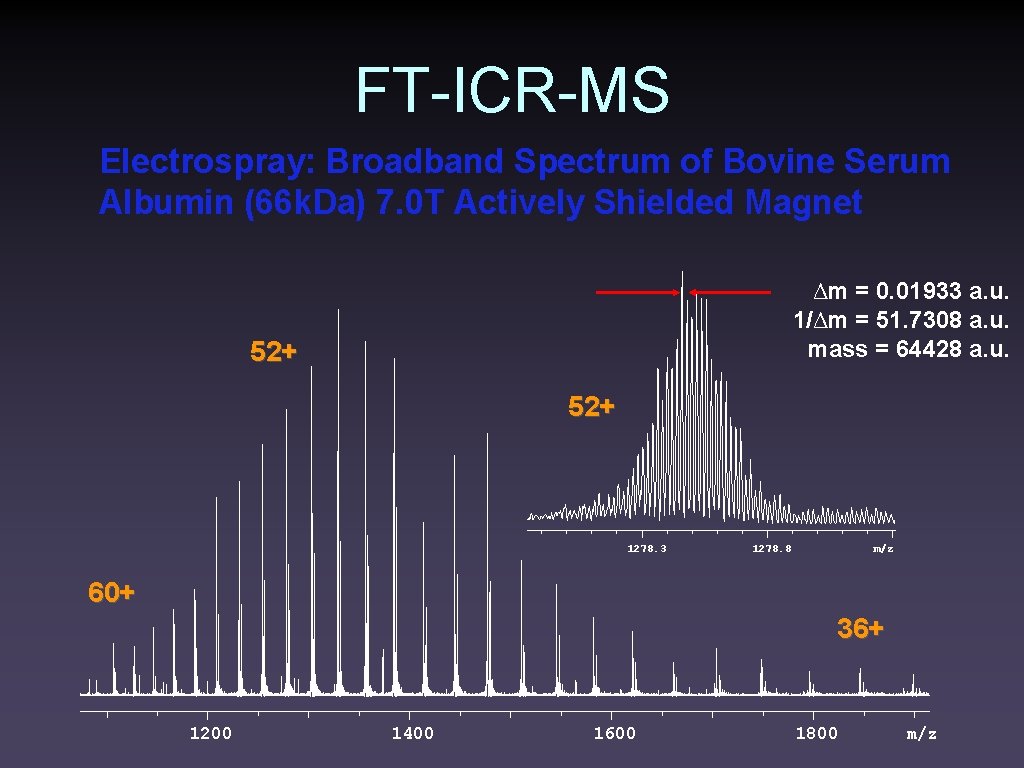
FT-ICR-MS Electrospray: Broadband Spectrum of Bovine Serum Albumin (66 k. Da) 7. 0 T Actively Shielded Magnet Δm = 0. 01933 a. u. 1/Δm = 51. 7308 a. u. mass = 64428 a. u. 52+ 1278. 3 1278. 8 m/z 60+ 36+ 1200 1400 1600 1800 m/z
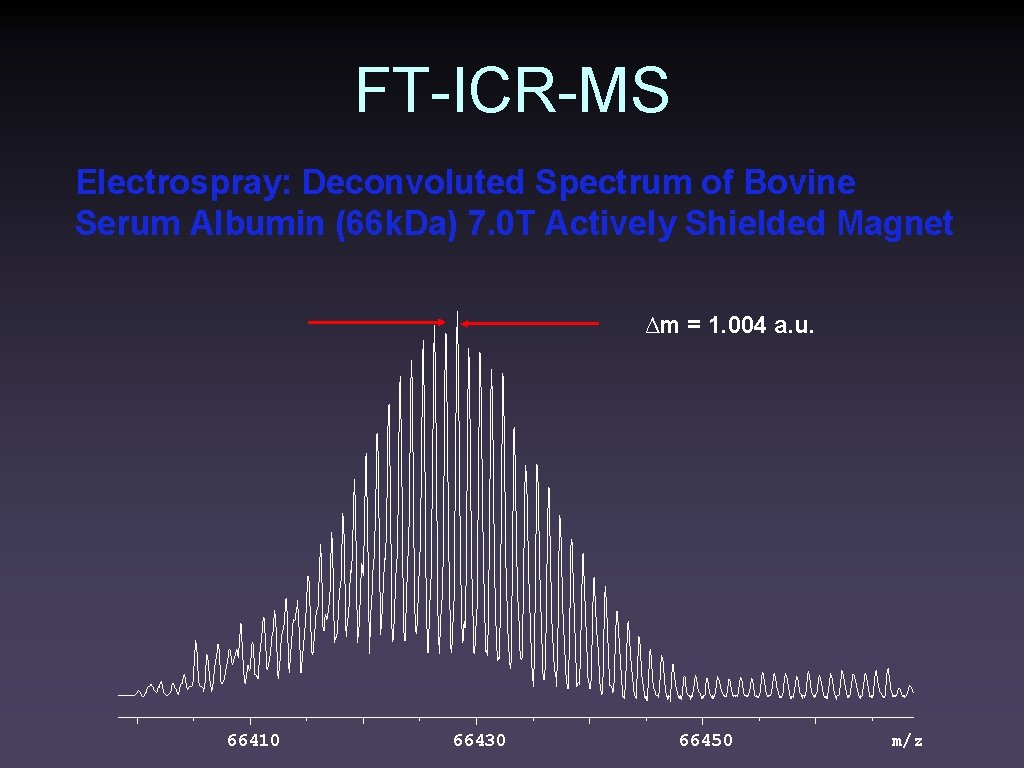
FT-ICR-MS Electrospray: Deconvoluted Spectrum of Bovine Serum Albumin (66 k. Da) 7. 0 T Actively Shielded Magnet Δm = 1. 004 a. u. 66410 66430 66450 m/z
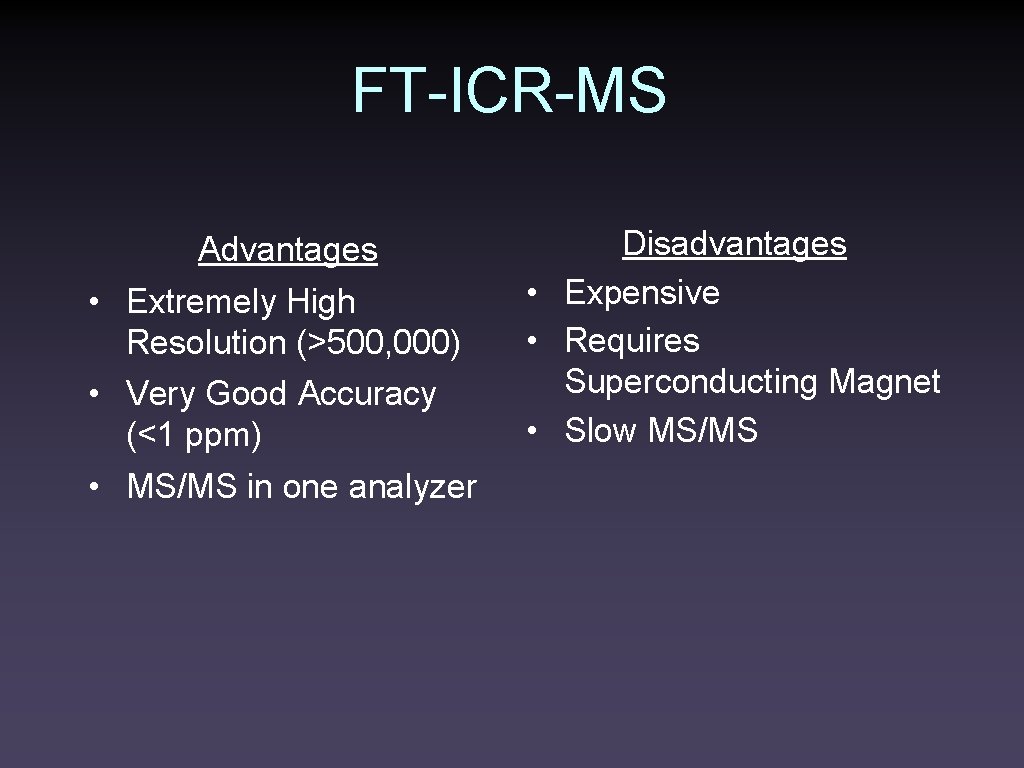
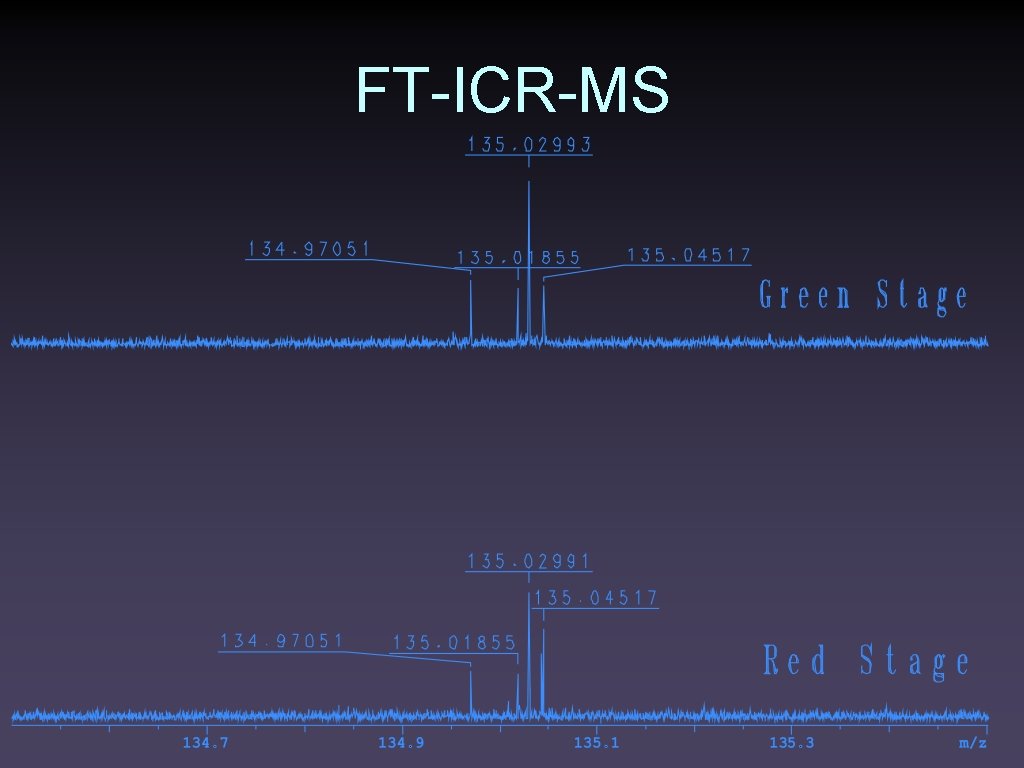
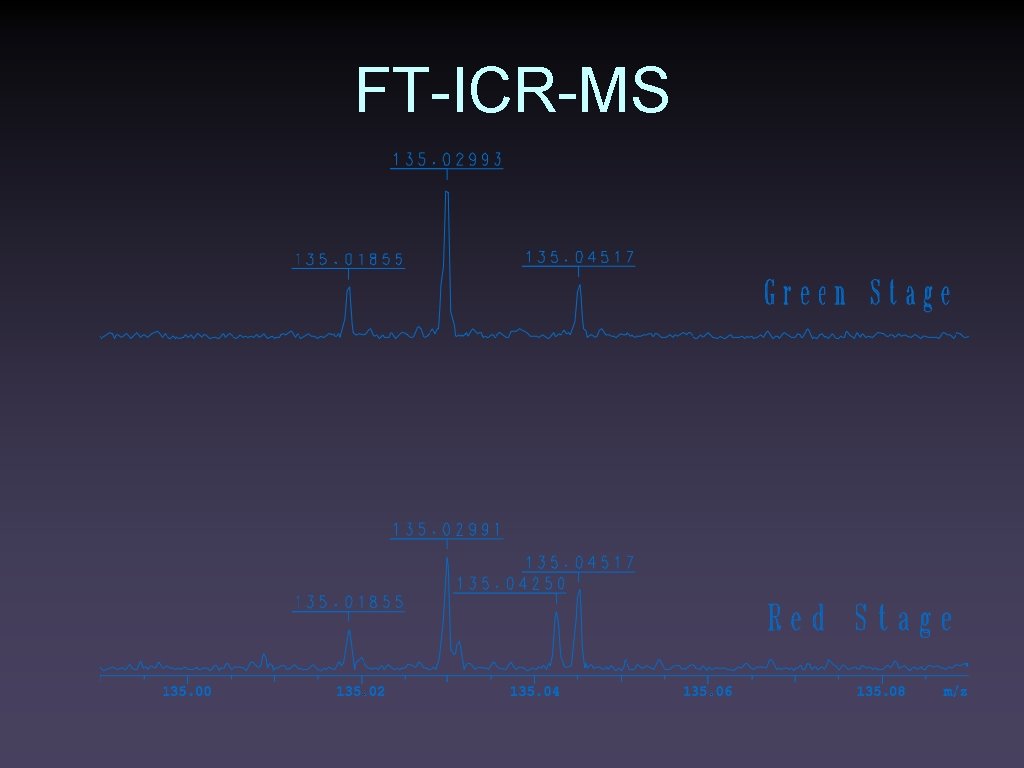
FT-ICR-MS Advantages • Extremely High Resolution (>500, 000) • Very Good Accuracy (<1 ppm) • MS/MS in one analyzer Disadvantages • Expensive • Requires Superconducting Magnet • Slow MS/MS
- Slides: 37