
Mason County Health Department Food Handlers Training Class



















- Slides: 65
Mason County Health Department Food Handlers Training Class
Food Milk Restaurant Grocery Temporary food Recreation Parks Campground Pools Fair/festivals Housing/Institutions Child Care Mobile Home Parks Hotels Bed and Breakfast Water Bottled Individual Wells Community
Sewage Training/Education Individual Subdivision Home Aerator Sewage Cleaners Disaster Preparedness Disease Control/ Epi Rabies Tattoo Studios
Why Are You Here? Receive training on Proper food handling Food storage Serving food Employee health Obtain card that expires every 3 years Prevent Foodborne illness in the community
Why Practice Food Safety? The health of everyone eating food depends on the food employee’s actions. Sloppy food preparation can result in FOOD POISONING
What is Food Poisoning / Food borne Illness? A disease that is carried or transmitted to humans by food containing harmful substances.
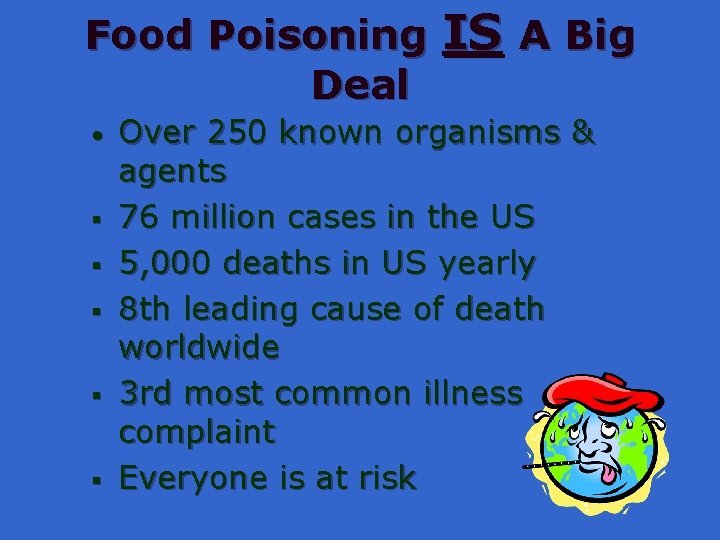
Food Poisoning Deal • § § § IS A Big Over 250 known organisms & agents 76 million cases in the US 5, 000 deaths in US yearly 8 th leading cause of death worldwide 3 rd most common illness complaint Everyone is at risk
Factors Causing Foodborne Illness Infected employees who practice poor personal hygiene at work (this is the #1 cause of illness) 2. Failure to properly cool food 3. Failure to thoroughly heat or cook food 4. Allowing foods to stay too long at temperatures favoring bacterial growth (danger zone 41 -135° F) 5. Failure to reheat cooked foods to temperatures that kill bacteria (reheat to 165° F or above) 6. Cross-contamination of cooked food by raw food, improperly cleaned equipment, or employees who mishandle food
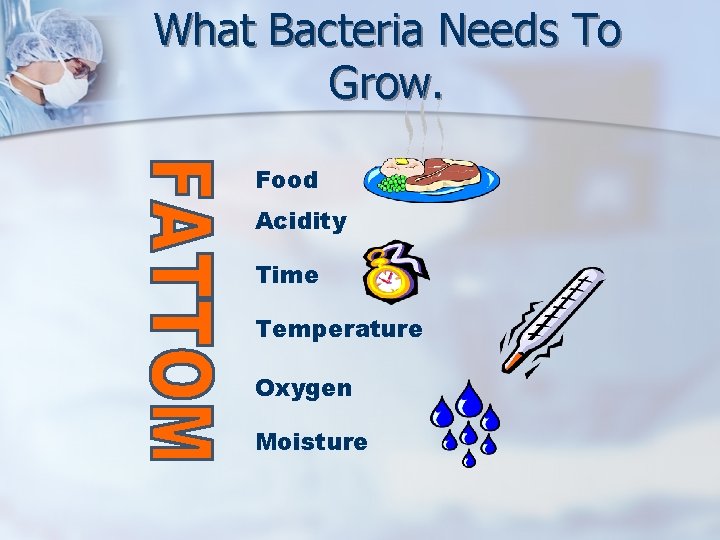
What Bacteria Needs To Grow. Food Acidity Time Temperature Oxygen Moisture
Common symptoms include: Abdominal Pain Vomiting Headache Cramps Nausea Diarrhea Fever Chills
Staph n Found in cuts, sores, pimples, throat infections, and on the skin. n Spreads from people handling food. n Is heat resistant. n Foods: meat, poultry, salads, cheese egg products, starchy salads, custards, cream filled desserts.
Salmonella n Found in infected meat, poultry, eggs, fish, and unpasteurized milk. n Spread by undercooked food, and cross contamination. n Cook food thoroughly. n Keep raw and cooked food separate.
Clostridium Perfringens The buffet or picnic germ. n Grows rapidly in large portions of food that are cooling slowly. Can also grow when food is not held at proper holding temperatures. n Keep hot food over 135° F. n Keep cold food under 41° F. n Cool and reheat food properly. n
Clostridium Botulinum “Botulism” n n n Occurs in improperly canned foods; home canned or commercially canned. Warning signs are: clear liquids turned milky, cracked jars, loose lids, swollen cans, dented cans or lids. Beware of any can that spurts liquid or has an off odor when opened. Don’t use any canned goods showing any of the warning signs. If you suspect that you or a family member has botulism symptoms, get medical help immediately.
“Botulism” Symptoms FATIGUE HEADACHE DIZZINESS VISUAL DISTURBANCES INABILITY TO SWALLOW
Shigella Food or water contaminated with fecal material Ready-to-eat foods touched by infected foodhandler Persons who are infected may have no symptoms at all, but may still pass the Shigella bacteria to others. Incubation period 24 -48 hours
Noro - Virus Ready-to-eat foods (including ice) touched by infected worker (poor handwashing procedures) High percentage of food-borne illness Incubation period 24 -48 hours
Personnel with infections Food handling conducted by a person with a communicable disease, sores, boils, respiratory infection, etc.
Employee Clothing Hair Must be restrained by net, cap, braid Clothing Clean, uniforms washed daily Jewelry None except single wedding band Nails Short, clean No artificial nails
Your Health Can Affect Others! Do NOT prepare food if: • you have been diagnosed with a foodborne illness • you are vomiting • you have diarrhea • you have a fever • you have a sore throat and fever • you are jaundiced • Any open sore or wound must be covered
Wash Your Hands! Wash your hands for 20 sec. with hot soapy water BEFORE: Handling food Putting on clean gloves AFTER: Using the toilet Handling raw foods Taking a break / smoking Coughing, sneezing, eating, drinking Cleaning / taking out trash As often as necessary to remove soil and contamination Taking off gloves Changing Tasks
HAND SANITIZERS • Hand sanitizers are not a substitute for handwashing when water and soap are readily available • Most often used as additional step in preventing spread of germs
Hand Sinks Are Important! Hand sinks must have: Warm running water Soap and Hand drying device (single-use) Nothing can be stored in front of, in or on the hand sink at any time.
NO Bare Hand Contact NO bare hand contact with foods that are ready-to-eat Use: • Single Use-Gloves • Tongs • Deli tissue • Other utensils
Gloves Single use only Change between tasks Tend to give false sense of assurance that hands are clean Glove use is not a substitute for handwashing
Clean Wiping Cloths • Store wiping cloths in sanitizer solution between uses. • Sanitizer should be 50 ppm chlorine or an equivalent chemical – 1 gallon water to 1 -2 caps of bleach Change sanitizer solution often! (use test strips to measure concentration)
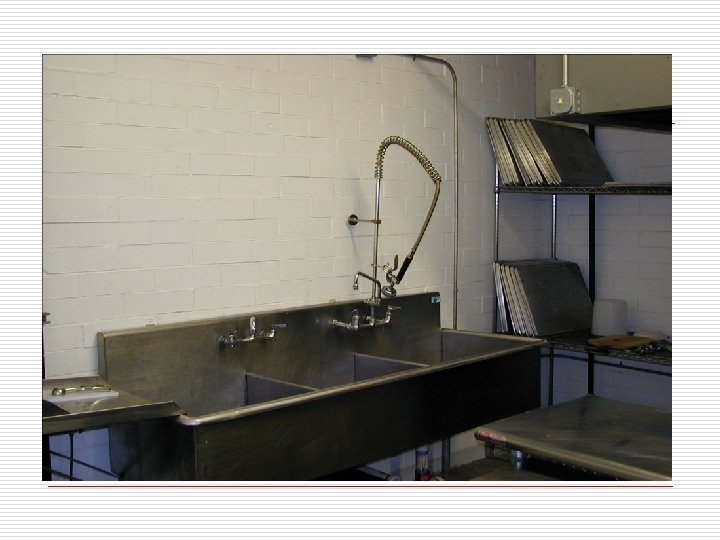
3 Sinks to Wash Utensils! Rinse 3 - Sink Set Up: Scrape Soak WASH Air Dry RINSE SANITIZE • Wash – using detergent and 120°F water • Rinse – in clear warm water • Sanitize – using 50100 ppm chlorine or an equivalent chemical • Air dry (use test strips to measure concentration of sanitizer)
Dishwashers • Wash – using detergent and hot water 140 - 165°F • Rinse – clear hot water • Sanitize – • Hot water - 180°F • Chemical sanitizer – 50 -100 ppm chlorine or an equivalent chemical (use test strips to measure concentration)
Food Prep and Handling • Order and obtain food from reliable source. • Home canned foods, ice made at home or foods prepared and stored in private homes are not allowed. • In 1938, before widespread adoption of milk pastuerization, 25% of foodbourne outbreaks were associated with milk. In 2001, less than 1%
Food Prep and Handling When food shipments are received, look for: - frozen food should be frozen, and show no signs of being wet and refrozen. - dry goods should be dry and clean. - no obvious signs of spoilage.
Food Guide Date mark PHF with a use by date. 1. at the time of preparation, if prepared on the premises and held over 24 hours or 2. at time container is opened, if obtained from a commercial food processing plant. Consume by date = 7 days or less at 41° F.
How to Thaw - Chill Thaw frozen foods the right way! Under running cold (70°F) water During cooking In the refrigerator In microwave Then Immediately cooked DO “NOT” THAW FROZEN FOODS AT ROOM TEMP
CHILL Do NOT cool food in 5 gallon containers or large pots!
Food Guide Hot & Cold Holding 41° F or less. 135° F or greater THIS IS THE DANGER ZONE! Cooling Potentially Hazardous Foods Within 2 hours: 135 to 70° F. Within 4 hours: 70 to 41° F.
Chill Use proper cooling methods Cool all hot foods from 135°F to 70°F in 2 hours or less and from 70°F to 41°F in another 4 hours or less Ice Bath Ice Wand Shallow Pans (not deeper than 2 inches) Blast Chiller
Separate Equipment to Food Do NOT use the same cutting board or equipment to prepare raw meats and cooked or ready-to-eat foods UNLESS cutting boards, equipment, utensils and hands have been washed, rinsed and sanitized between each use!
Thermometers All refrigerators and cold holding units must have an accurate visible thermometer. A probe thermometer must be readily available Clean and sanitize before each use If you don’t have a thermometer, how do you know the temperature? Need one? Ask Me
Potentially Hazardous Foods that require temperature control because it is able to support growth of bacteria Eggs, meats, poultry, fish, dairy foods, hot dogs, cream pies, cooked rice, potatoes, sliced fruits, chili
Non-potentially Hazardous foods Includes: dry goods cereals cookies breads cakes potato chips popcorn candy bars
Food Allergens l l Milk, egg, fish, tree nuts, wheat, peanuts and soybeans A food ingredient that contains protein derived from a food listed in this definition.
Temporary Food Stands Less than 14 consecutive days Fairs Carnival Regatta Festivals Circus
Concession Workers Same guidelines apply as in regular food service facilities
Handwashing Facilities
Dishwashing Facilities
Equipment and Utensils Keep clean and sanitized Best to use single service items and must be individually wrapped Store utensils with food handle up Make sure have running water dipper well for ice cream utensils Best place to store the serving spoon is in the product being served.
Flooring/ Building -- Covered structure designed to protect against dust, weather and insects. --Covered waste containers. -- Cleanable floors, no dirt, plastic, or canvas --Adequate lighting and shielded bulbs --Approved water hose from water source
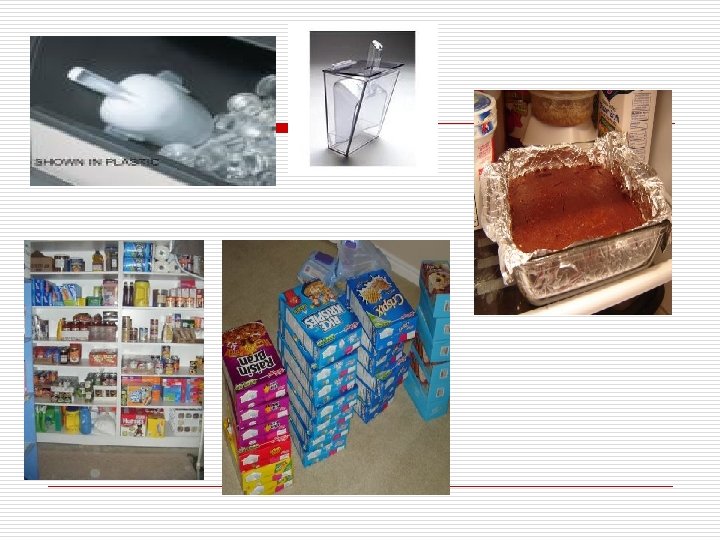
Food Storage Dry Everything off floor 6 to 8 inches Check dates Rotate stock to prevent outdates and waste Clean Well labeled containers that prevent water, moisture, insects and rodents to enter.
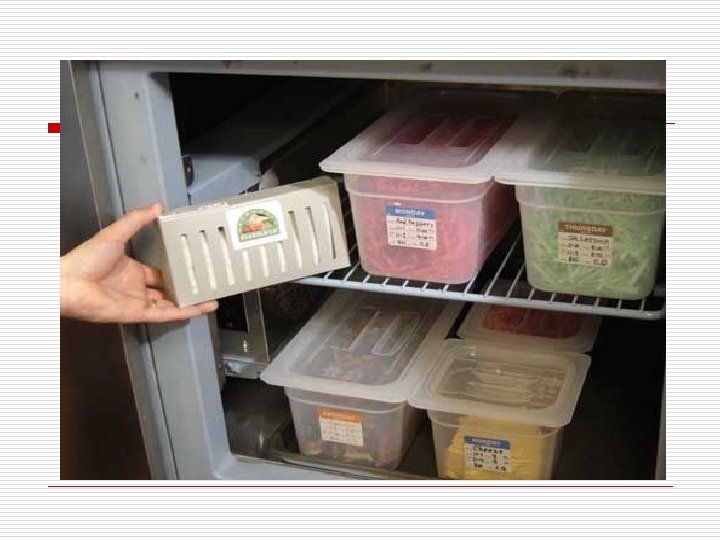
Food Storage l Cold – Refrigerator at 41 degrees F. – Keep everything off floor and keep floor clean. – Leave airspace around items, and avoid overcrowding – Keep meats and eggs on lower racks—leakage. – Prepared foods on upper racks • Covered • Dated • Labeled
HAVE A SAFE TRIP HOME “KEEP THE FOOD YOU SERVE SAFE!”