
Maryland Food System Map Food Access Data for
- Slides: 21
Maryland Food System Map: Food Access Data for Baltimore Data Day July 13, 2012 Amanda Behrens Johns Hopkins Center for a Livable Future www. jhsph. edu/clf www. mdfoodsystemmap. org
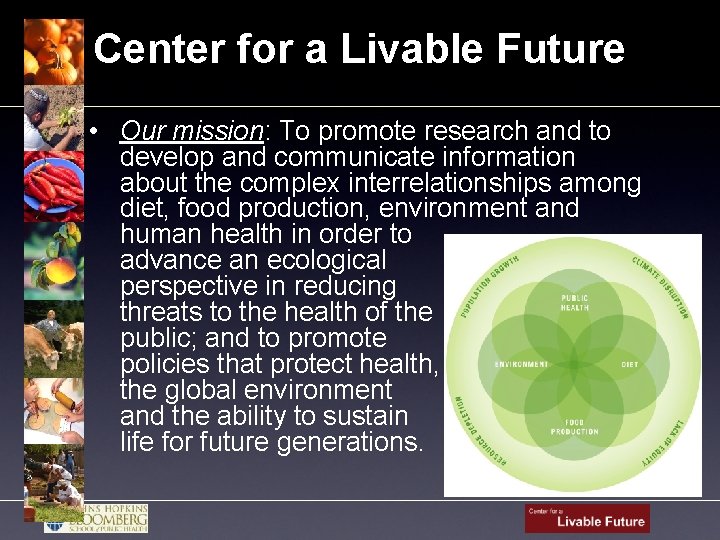
Center for a Livable Future • Our mission: To promote research and to develop and communicate information about the complex interrelationships among diet, food production, environment and human health in order to advance an ecological perspective in reducing threats to the health of the public; and to promote policies that protect health, the global environment and the ability to sustain life for future generations.
Maryland Food System Map Project Mission: • To create an interactive resource for public health, nutrition and agriculture communities who are developing research and activities to strengthen local food systems through improving farm viability, increasing access to healthy food, and addressing health disparities and inequities. Data collected: • Farms, food processors and distributors, retail food outlets and institutions, like schools and hospitals. • Detailed information is available for Baltimore City, to closely examine availability and access to healthy foods.
Baltimore Data • Food stores (supermarkets, corner stores, convenience) • Restaurants (fast food, carry outs, sit down) • Farmers markets • Public markets • Urban agriculture & community gardens • Income demographics and vehicle ownership • Health – mortality from diet-related disease • Coming soon… food processing and distribution sites
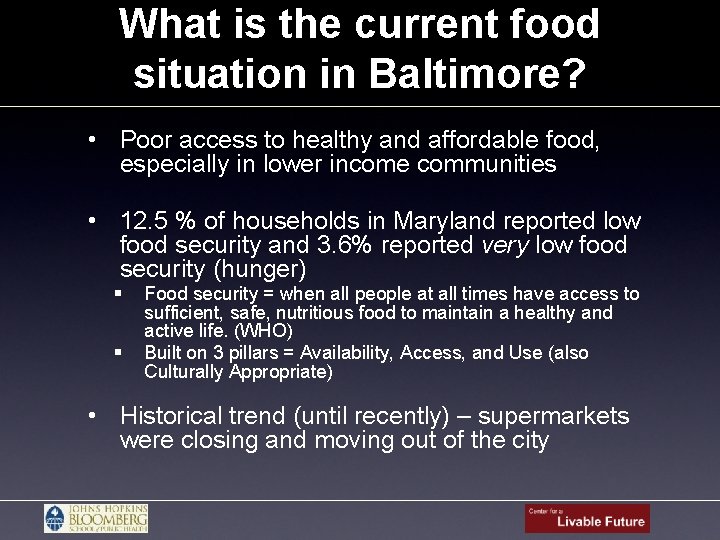
What is the current food situation in Baltimore? • Poor access to healthy and affordable food, especially in lower income communities • 12. 5 % of households in Maryland reported low food security and 3. 6% reported very low food security (hunger) § § Food security = when all people at all times have access to sufficient, safe, nutritious food to maintain a healthy and active life. (WHO) Built on 3 pillars = Availability, Access, and Use (also Culturally Appropriate) • Historical trend (until recently) – supermarkets were closing and moving out of the city
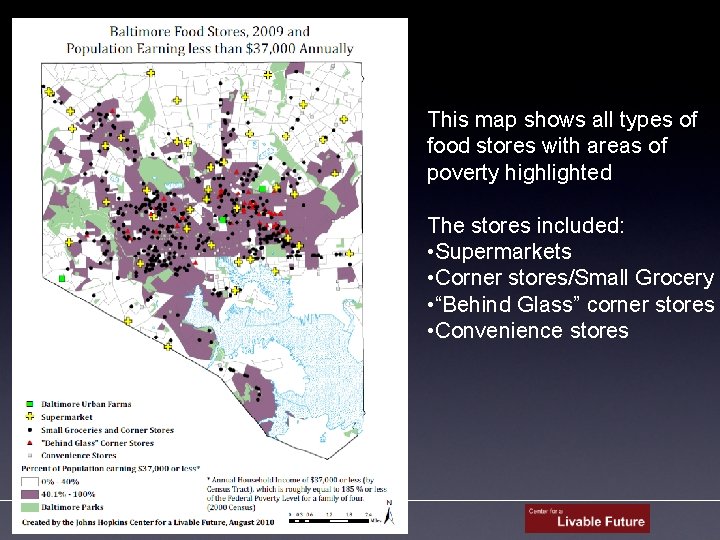
This map shows all types of food stores with areas of poverty highlighted The stores included: • Supermarkets • Corner stores/Small Grocery • “Behind Glass” corner stores • Convenience stores
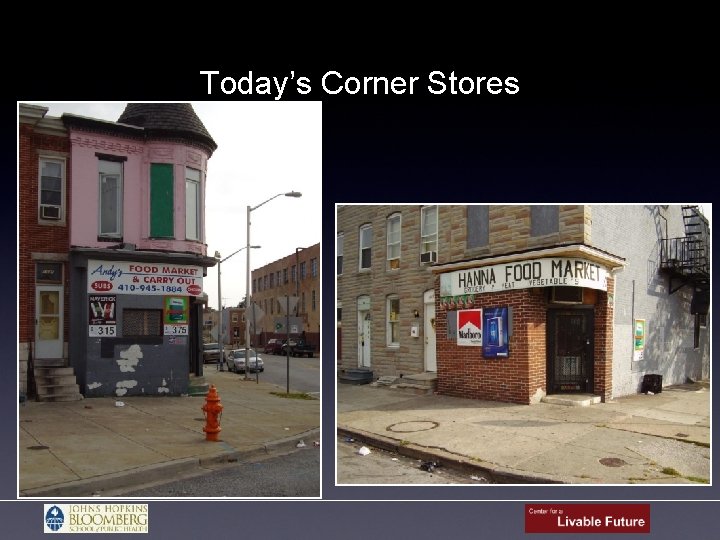
Today’s Corner Stores
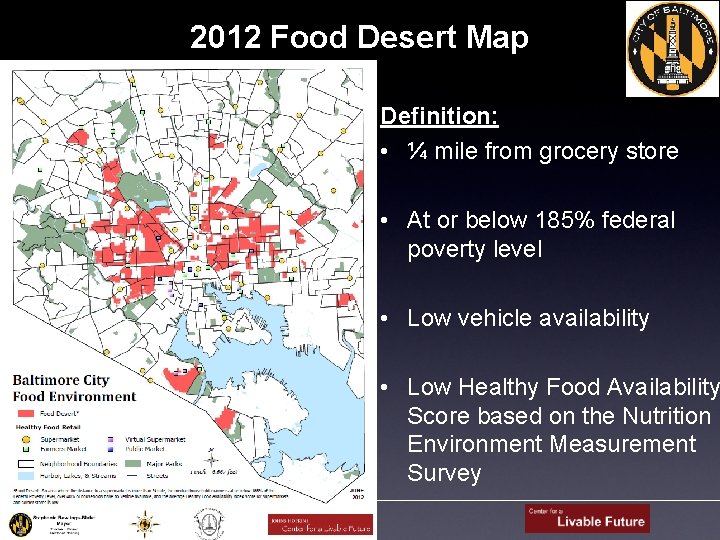
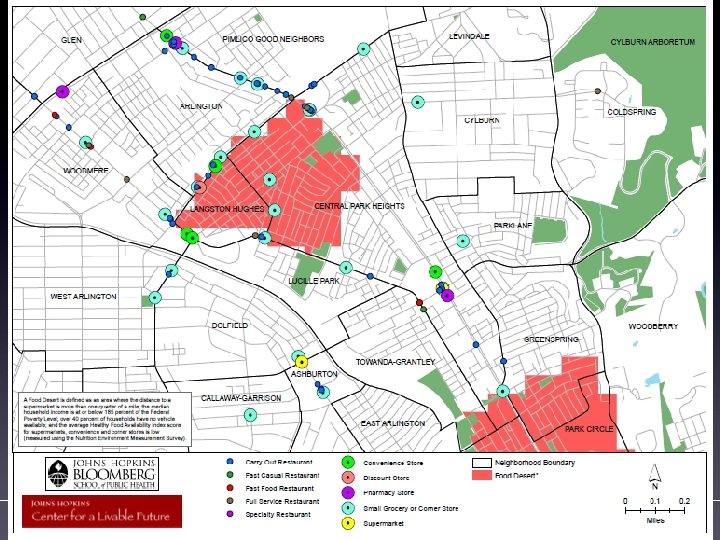
2012 Food Desert Map Definition: • ¼ mile from grocery store • At or below 185% federal poverty level • Low vehicle availability • Low Healthy Food Availability Score based on the Nutrition Environment Measurement Survey
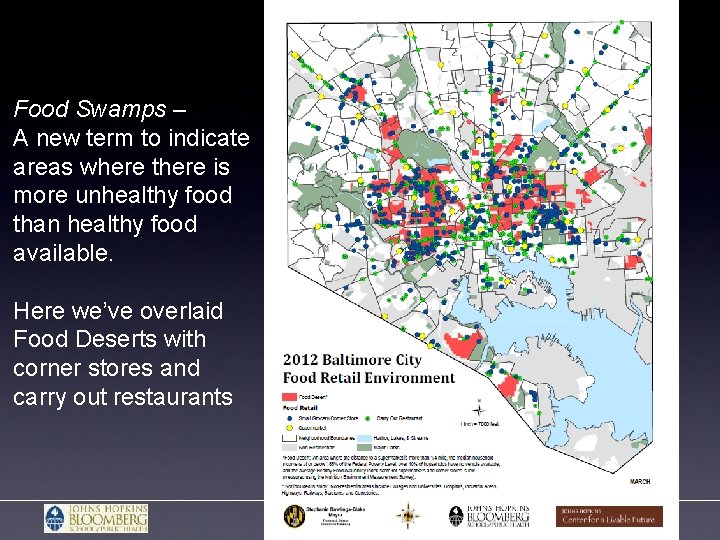
Food Swamps – A new term to indicate areas where there is more unhealthy food than healthy food available. Here we’ve overlaid Food Deserts with corner stores and carry out restaurants
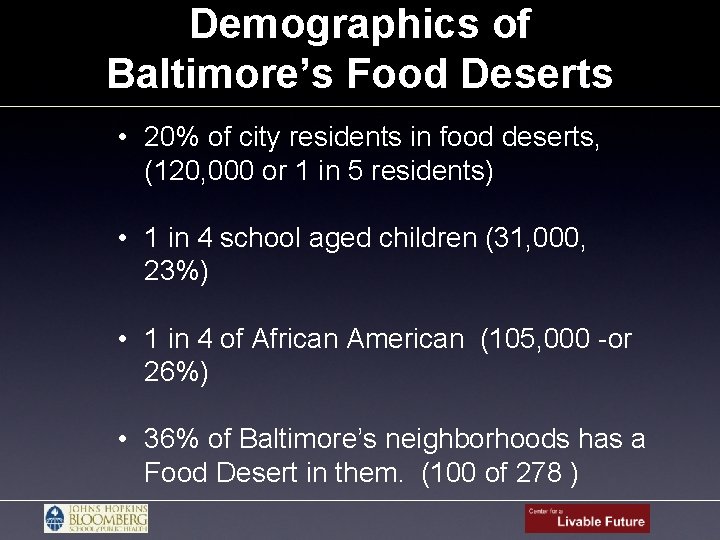
Demographics of Baltimore’s Food Deserts • 20% of city residents in food deserts, (120, 000 or 1 in 5 residents) • 1 in 4 school aged children (31, 000, 23%) • 1 in 4 of African American (105, 000 -or 26%) • 36% of Baltimore’s neighborhoods has a Food Desert in them. (100 of 278 )
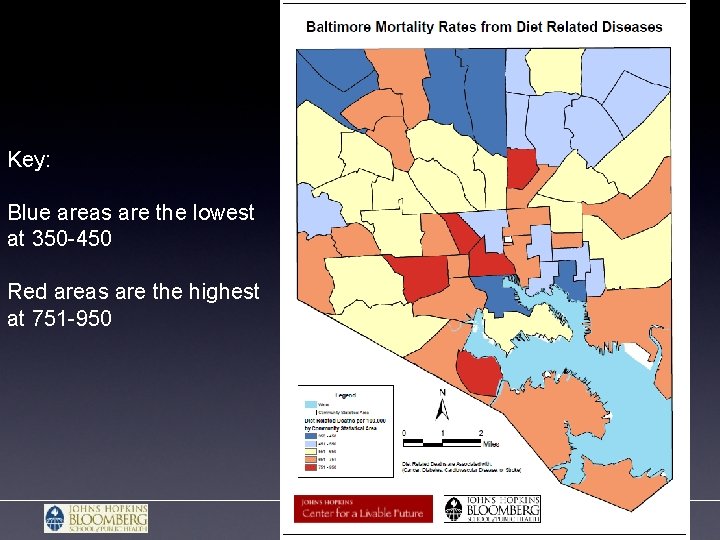
Key: Blue areas are the lowest at 350 -450 Red areas are the highest at 751 -950
How can we address food deserts? • Baltimore City Food Policy Initiative • Need alternatives to supermarkets too: § Farmers Markets § Urban agriculture § Arabbers or other “mobile food” • Community Food Assessments – understand the situation from the ground up to come up with location specific solutions
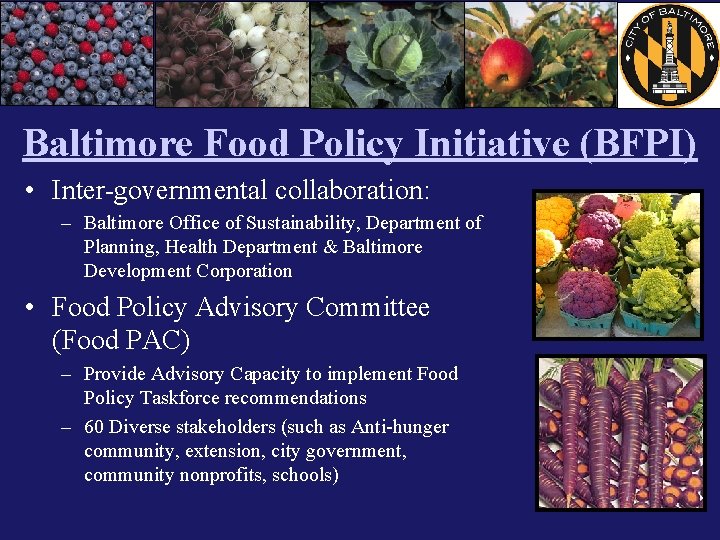
Baltimore Food Policy Initiative (BFPI) • Inter-governmental collaboration: – Baltimore Office of Sustainability, Department of Planning, Health Department & Baltimore Development Corporation • Food Policy Advisory Committee (Food PAC) – Provide Advisory Capacity to implement Food Policy Taskforce recommendations – 60 Diverse stakeholders (such as Anti-hunger community, extension, city government, community nonprofits, schools)
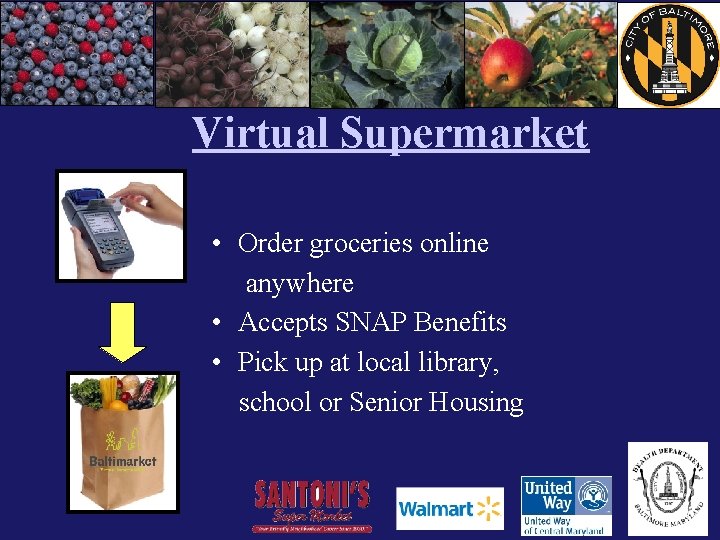
Virtual Supermarket • Order groceries online anywhere • Accepts SNAP Benefits • Pick up at local library, school or Senior Housing
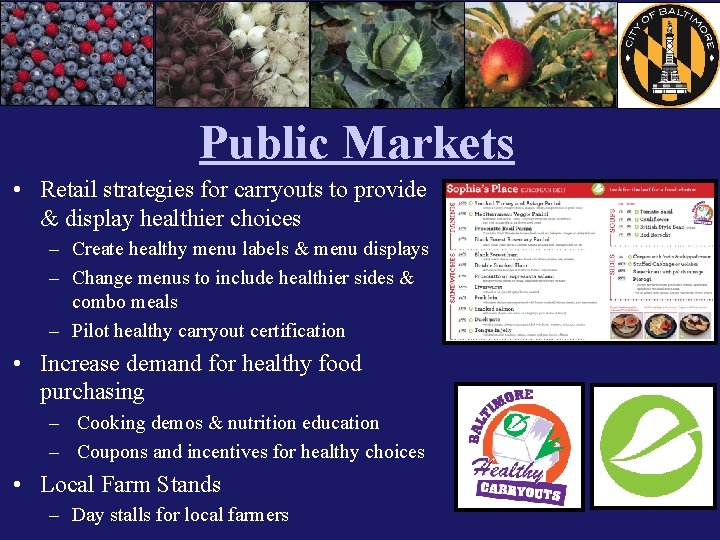
Public Markets • Retail strategies for carryouts to provide & display healthier choices – Create healthy menu labels & menu displays – Change menus to include healthier sides & combo meals – Pilot healthy carryout certification • Increase demand for healthy food purchasing – Cooking demos & nutrition education – Coupons and incentives for healthy choices • Local Farm Stands – Day stalls for local farmers
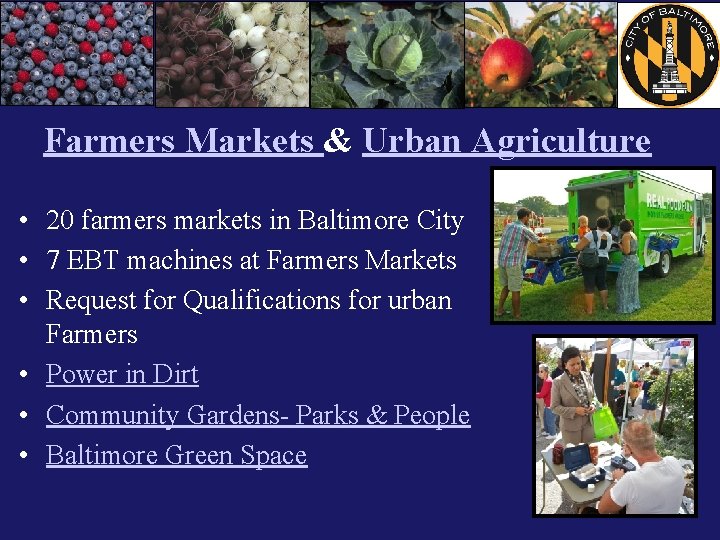
Farmers Markets & Urban Agriculture • 20 farmers markets in Baltimore City • 7 EBT machines at Farmers Markets • Request for Qualifications for urban Farmers • Power in Dirt • Community Gardens- Parks & People • Baltimore Green Space
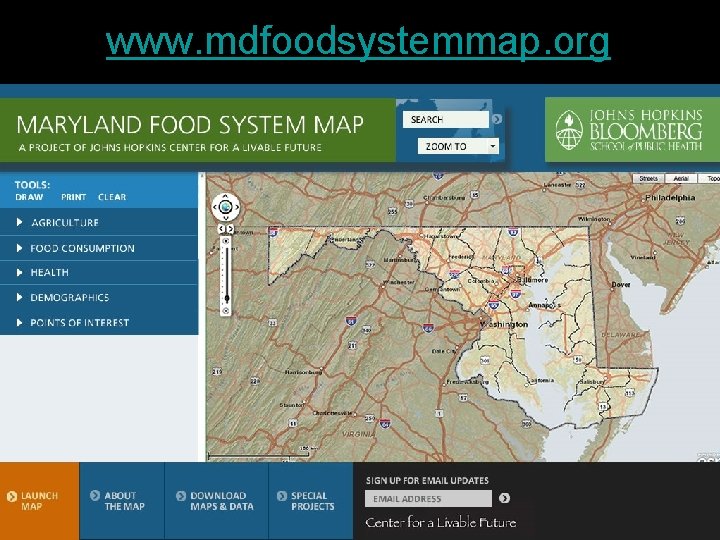
How can individuals use the map project resource? • Work with us to make a map for public meetings or advocacy – in support of gardening, lobbying for a new market, etc. • Use our data sets for your own analysis • Make your own maps on the interactive website • Again – Community Food Assessments
www. mdfoodsystemmap. org
Thank you! Please feel free to keep in touch: abehrens@jhsph. edu www. jhsph. edu/clf www. mdfoodsystemmap. org