
Mary Lee Fay National Co P NASDDDS Sheli
- Slides: 72
Mary Lee Fay, National Co. P, NASDDDS Sheli Reynolds, National Co. P/Missouri, UMKC-IHD Monday, November 10, 2014 AUCD, Washington, D. C.
About Us…. • Mary Lee Fay – Formerly Director of State Developmental Disability Services in Oregon – NASDDDS, Co-Principle Investigator Co. P and National Core Indicators • Sheli Reynolds – Sibling of brother with developmental disability – IHD, Mo UCEDD, Director of Individual Advocacy and Family Supports – Co-Principle Investigator Co. P
Outcomes for Today • Overview of the National Community of Practice on Supporting Families • Introduce the framework for “reframing the conversation and solution finding” at all levels • Share key areas of learning in States • Discuss next steps and ways for others to get involved
Initiatives that Lead to Co. P • Developmental Disability Act – 1986 Meaningful participation of individuals with disabilities and families in provision of services and policies – 2002 DD Act Title II: Family Support (unfunded) – Projects of National Significance • Statewide Systems Implementation Grants • Family Support 360 Military Focused • AUCD Family Support SIG • National Agenda on Supports to Families, Wingspread (2011)
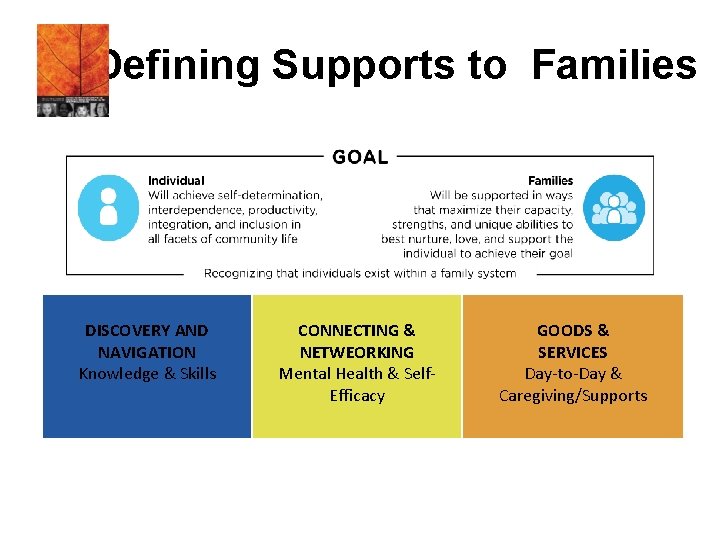
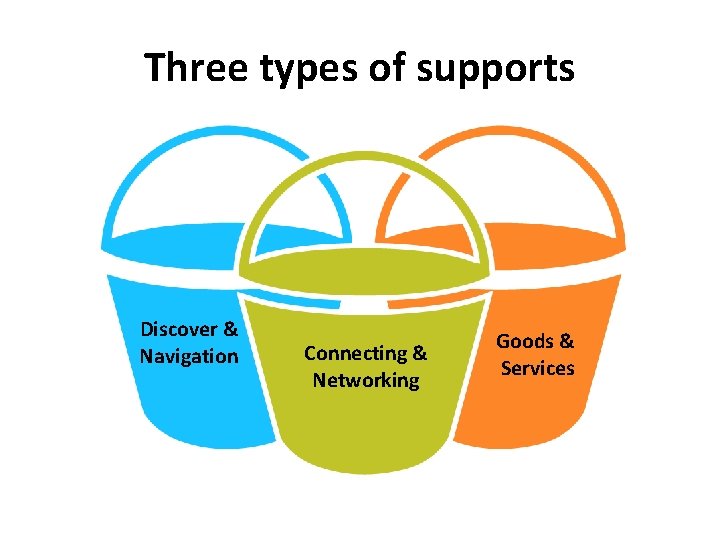
Defining Supports to Families DISCOVERY AND NAVIGATION Knowledge & Skills CONNECTING & NETWEORKING Mental Health & Self. Efficacy GOODS & SERVICES Day-to-Day & Caregiving/Supports
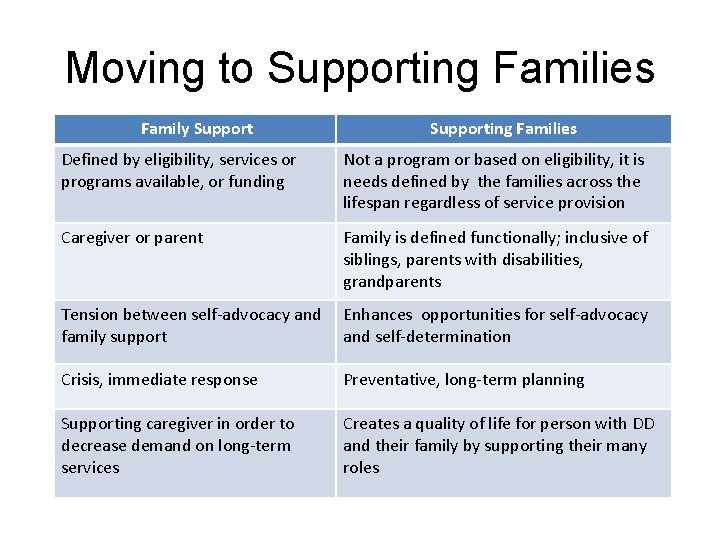
Moving to Supporting Families Family Supporting Families Defined by eligibility, services or programs available, or funding Not a program or based on eligibility, it is needs defined by the families across the lifespan regardless of service provision Caregiver or parent Family is defined functionally; inclusive of siblings, parents with disabilities, grandparents Tension between self-advocacy and Enhances opportunities for self-advocacy family support and self-determination Crisis, immediate response Preventative, long-term planning Supporting caregiver in order to decrease demand on long-term services Creates a quality of life for person with DD and their family by supporting their many roles
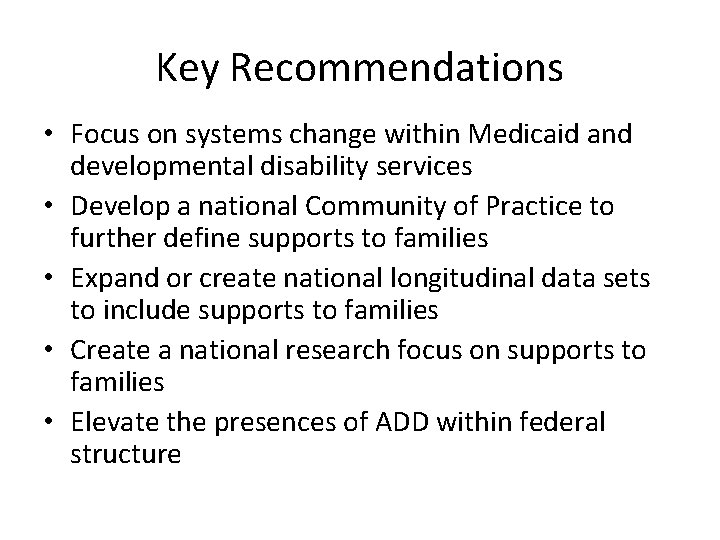
Key Recommendations • Focus on systems change within Medicaid and developmental disability services • Develop a national Community of Practice to further define supports to families • Expand or create national longitudinal data sets to include supports to families • Create a national research focus on supports to families • Elevate the presences of ADD within federal structure
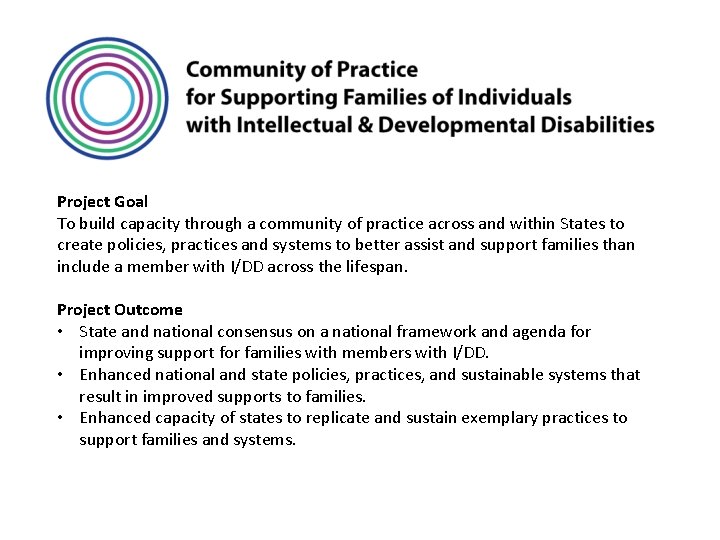
Project Goal To build capacity through a community of practice across and within States to create policies, practices and systems to better assist and support families than include a member with I/DD across the lifespan. Project Outcome • State and national consensus on a national framework and agenda for improving support for families with members with I/DD. • Enhanced national and state policies, practices, and sustainable systems that result in improved supports to families. • Enhanced capacity of states to replicate and sustain exemplary practices to support families and systems.
Funded by National Partners
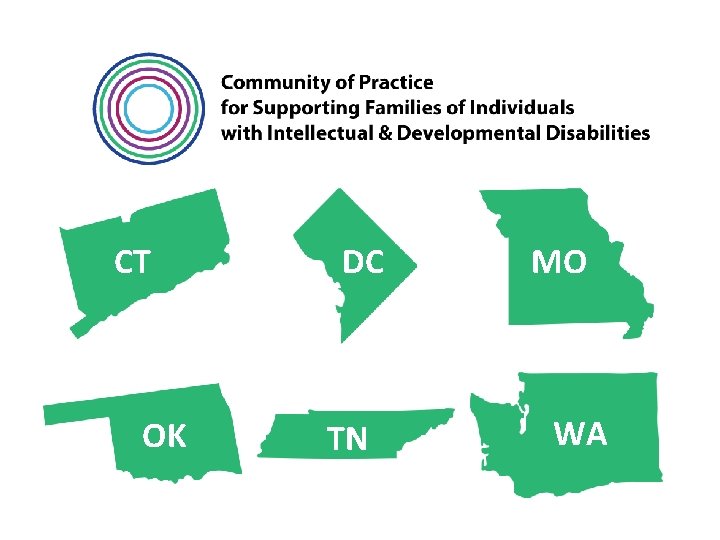
CT OK DC TN MO WA
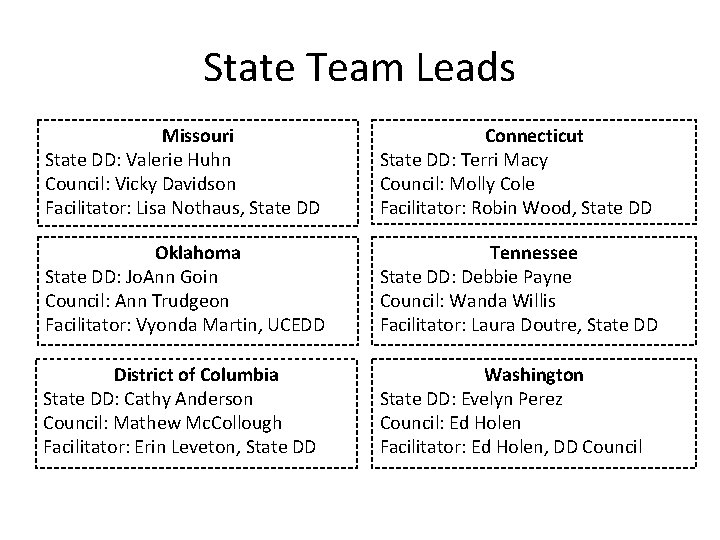
State Team Leads Missouri State DD: Valerie Huhn Council: Vicky Davidson Facilitator: Lisa Nothaus, State DD Connecticut State DD: Terri Macy Council: Molly Cole Facilitator: Robin Wood, State DD Oklahoma State DD: Jo. Ann Goin Council: Ann Trudgeon Facilitator: Vyonda Martin, UCEDD Tennessee State DD: Debbie Payne Council: Wanda Willis Facilitator: Laura Doutre, State DD District of Columbia State DD: Cathy Anderson Council: Mathew Mc. Collough Facilitator: Erin Leveton, State DD Washington State DD: Evelyn Perez Council: Ed Holen Facilitator: Ed Holen, DD Council
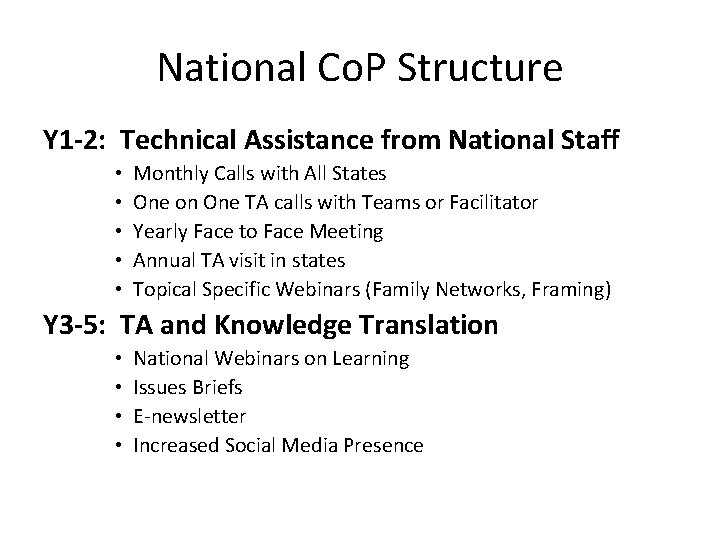
National Co. P Structure Y 1 -2: Technical Assistance from National Staff • • • Monthly Calls with All States One on One TA calls with Teams or Facilitator Yearly Face to Face Meeting Annual TA visit in states Topical Specific Webinars (Family Networks, Framing) Y 3 -5: TA and Knowledge Translation • • National Webinars on Learning Issues Briefs E-newsletter Increased Social Media Presence
Setting the Stage: Increasing Awareness of Need to Focus on Families WHY FOCUS ON FAMILIES, WHY NOW?
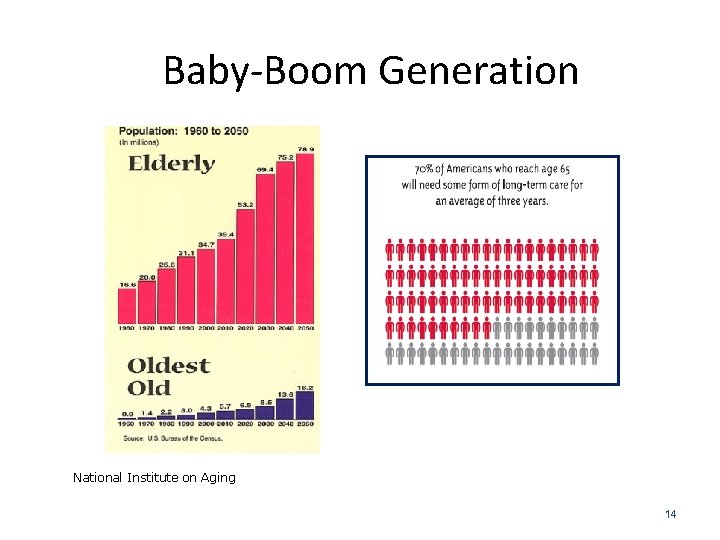
Baby-Boom Generation National Institute on Aging 14
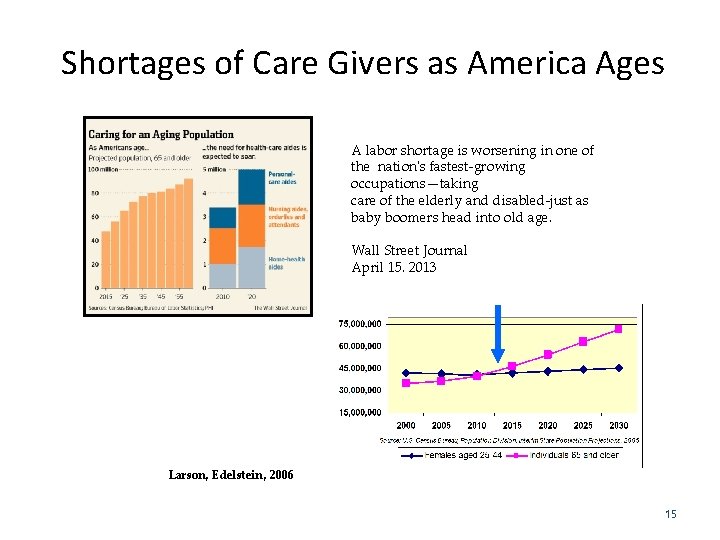
Shortages of Care Givers as America Ages A labor shortage is worsening in one of the nation's fastest-growing occupations—taking care of the elderly and disabled-just as baby boomers head into old age. Wall Street Journal April 15. 2013 Larson, Edelstein, 2006 15
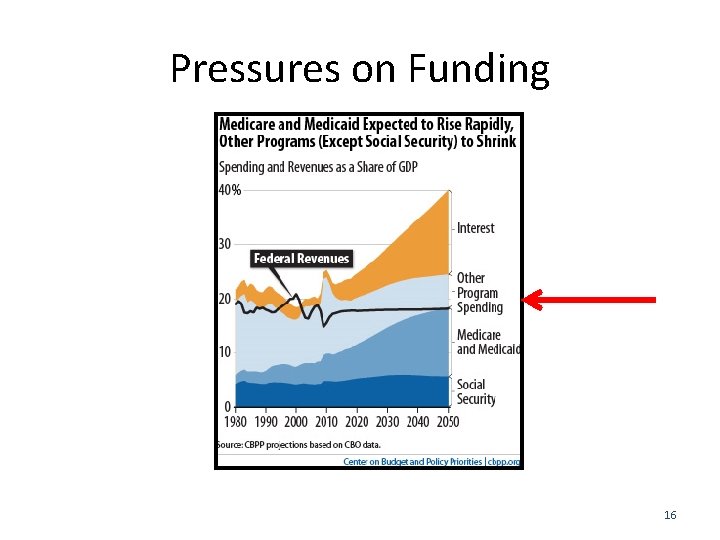
Pressures on Funding 16
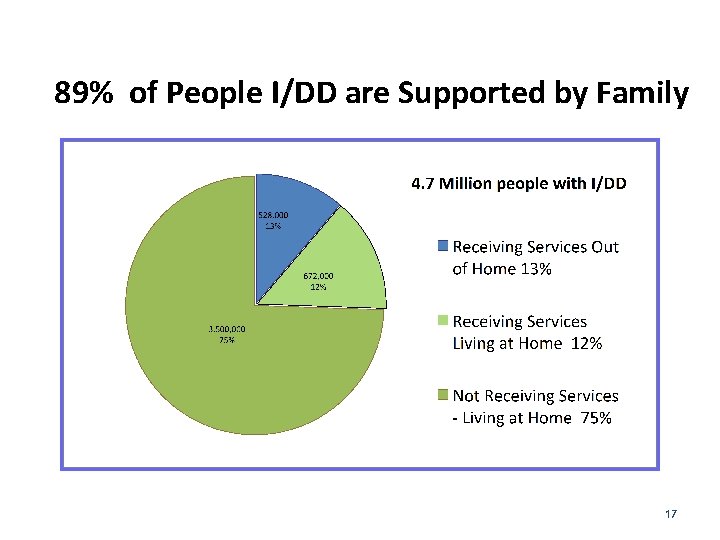
89% of People I/DD are Supported by Family 17
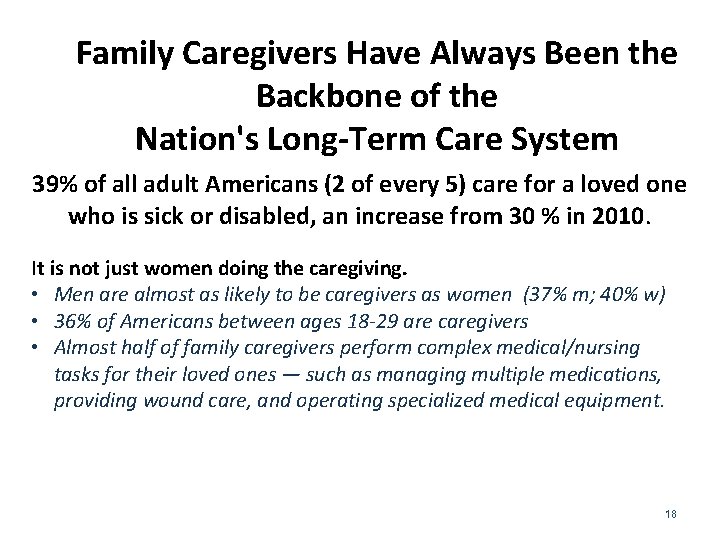
Family Caregivers Have Always Been the Backbone of the Nation's Long-Term Care System 39% of all adult Americans (2 of every 5) care for a loved one who is sick or disabled, an increase from 30 % in 2010. It is not just women doing the caregiving. • Men are almost as likely to be caregivers as women (37% m; 40% w) • 36% of Americans between ages 18 -29 are caregivers • Almost half of family caregivers perform complex medical/nursing tasks for their loved ones — such as managing multiple medications, providing wound care, and operating specialized medical equipment. 18
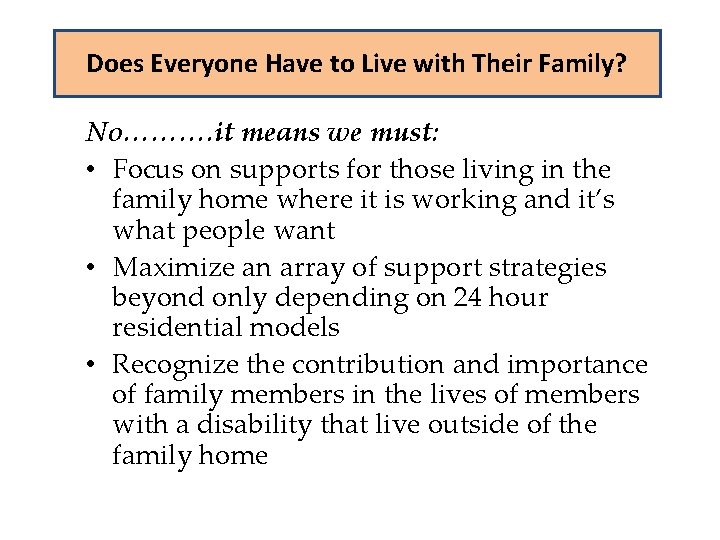
Does Everyone Have to Live with Their Family? No………. it means we must: • Focus on supports for those living in the family home where it is working and it’s what people want • Maximize an array of support strategies beyond only depending on 24 hour residential models • Recognize the contribution and importance of family members in the lives of members with a disability that live outside of the family home
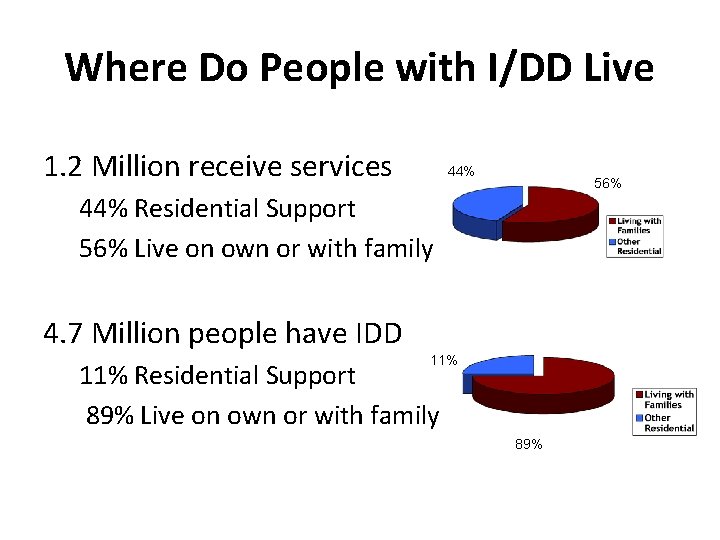
Where Do People with I/DD Live 1. 2 Million receive services 44% 56% 44% Residential Support 56% Live on own or with family 4. 7 Million people have IDD 11% Residential Support 89% Live on own or with family 89%
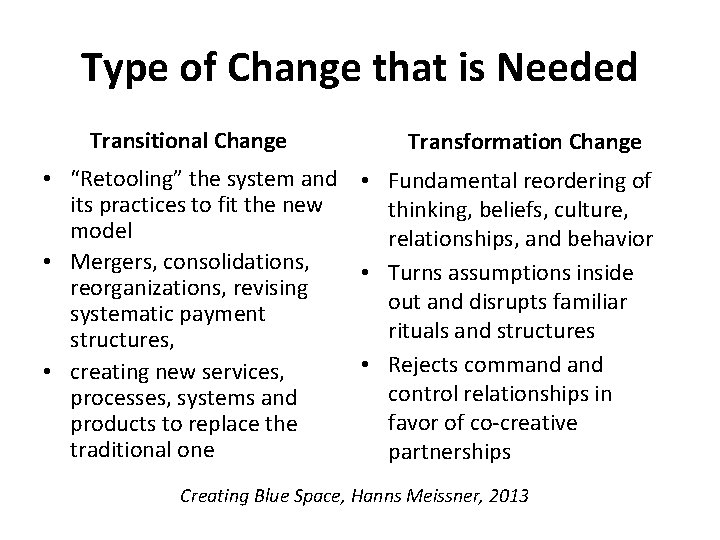
Type of Change that is Needed Transitional Change • “Retooling” the system and • its practices to fit the new model • Mergers, consolidations, • reorganizations, revising systematic payment structures, • • creating new services, processes, systems and products to replace the traditional one Transformation Change Fundamental reordering of thinking, beliefs, culture, relationships, and behavior Turns assumptions inside out and disrupts familiar rituals and structures Rejects command control relationships in favor of co-creative partnerships Creating Blue Space, Hanns Meissner, 2013
Reframing the Conversation at All Levels GUIDING PRINCIPLES AND LIFECOURSE FRAMEWORK
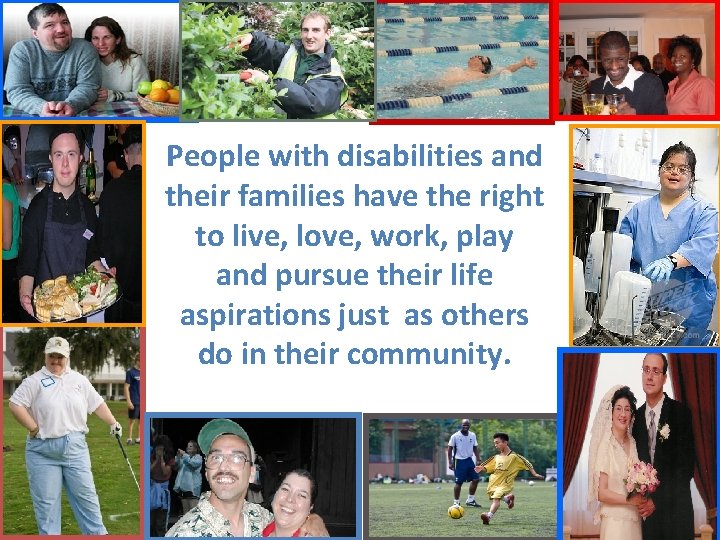
People with disabilities and their families have the right to live, love, work, play and pursue their life aspirations just as others do in their community. 23
100% Focus on “ALL” ALL individuals with disabilities and families are considered in our values and vision. (Family is defined by Individual)
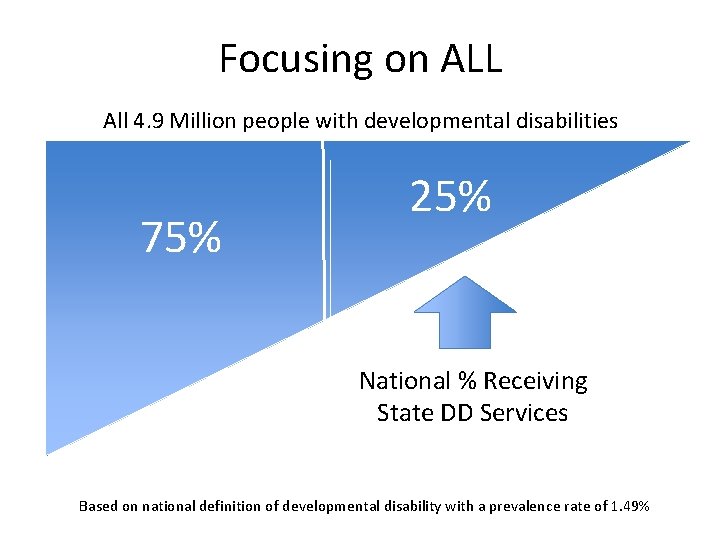
Focusing on ALL All 4. 9 Million people with developmental disabilities 75% 25% National % Receiving State DD Services Based on national definition of developmental disability with a prevalence rate of 1. 49%
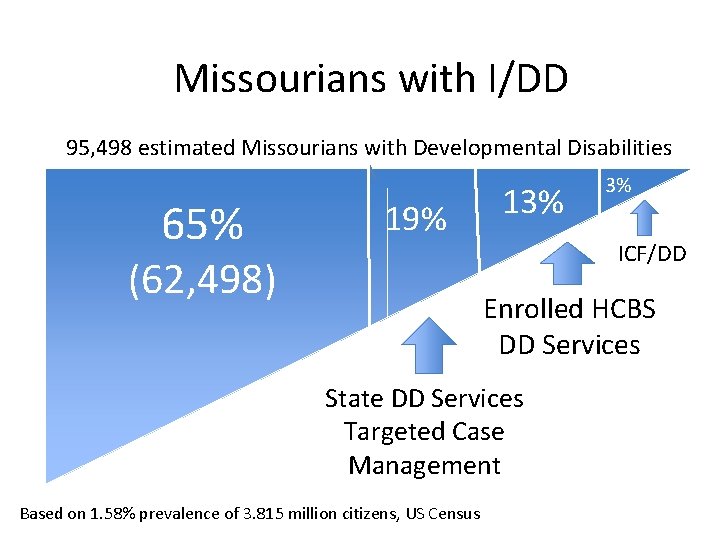
Missourians with I/DD 95, 498 estimated Missourians with Developmental Disabilities 65% 19% (62, 498) 13% 3% ICF/DD Enrolled HCBS DD Services State DD Services Targeted Case Management Based on 1. 58% prevalence of 3. 815 million citizens, US Census
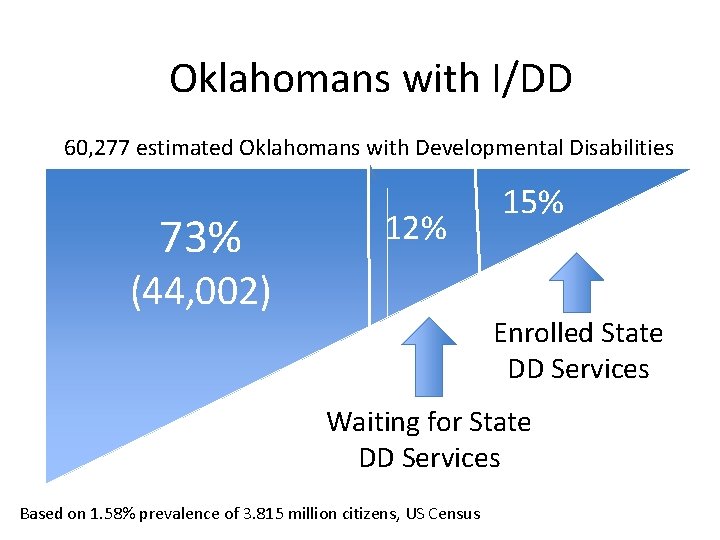
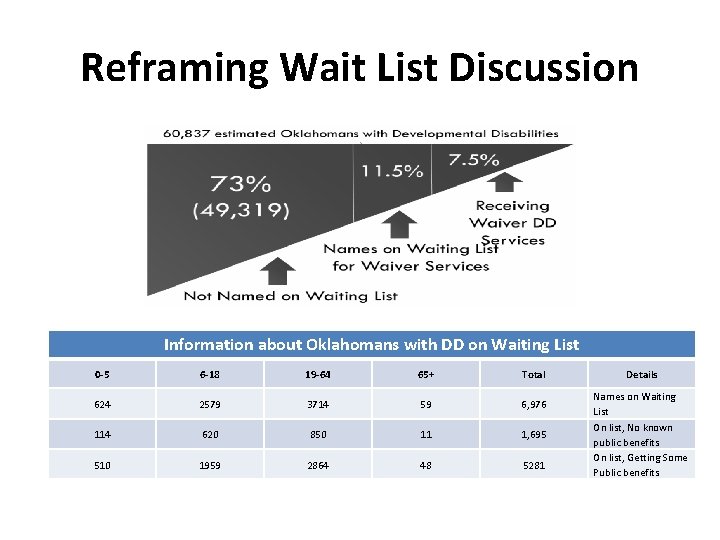
Oklahomans with I/DD 60, 277 estimated Oklahomans with Developmental Disabilities 73% 12% (44, 002) 15% Enrolled State DD Services Waiting for State DD Services Based on 1. 58% prevalence of 3. 815 million citizens, US Census
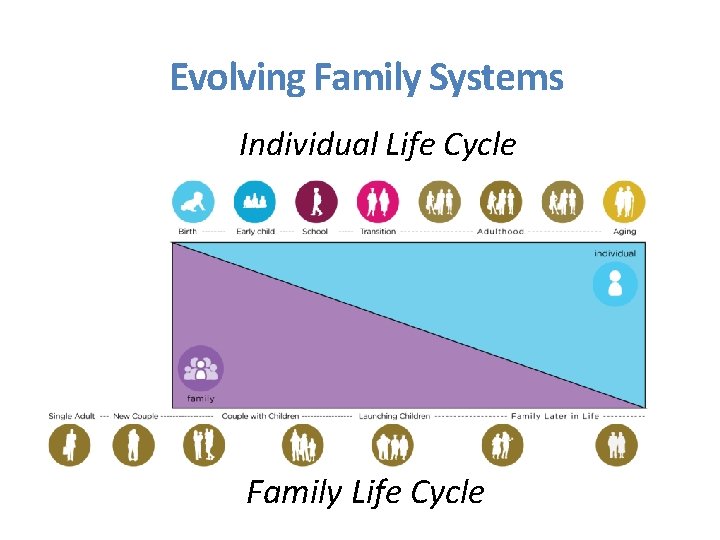
All individuals live within the context of a family Individual members and their family, as a whole, may need supports that address different facets of life and that adjust as roles and needs of all family members change as they age through both the life cycle and the family cycle. (Regardless of where a person lives)
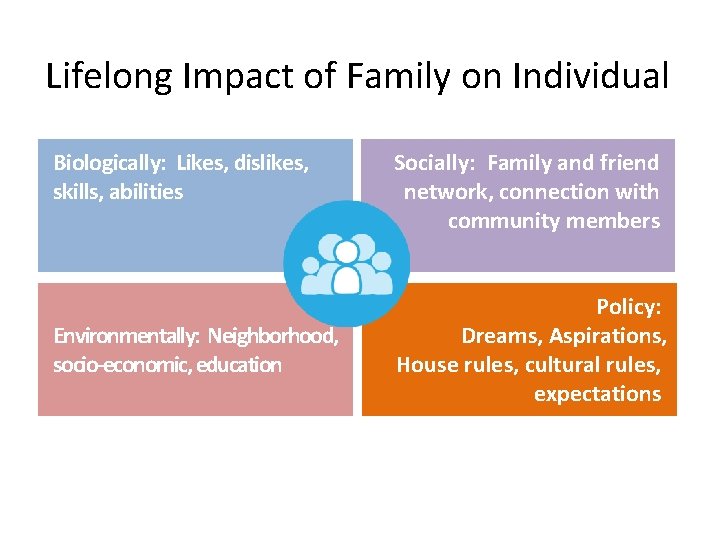
Lifelong Impact of Family on Individual Biologically: Likes, dislikes, skills, abilities Environmentally: Neighborhood, socio-economic, education Socially: Family and friend network, connection with community members Policy: Dreams, Aspirations, House rules, cultural rules, expectations
Evolving Family Systems Individual Life Cycle Family Life Cycle
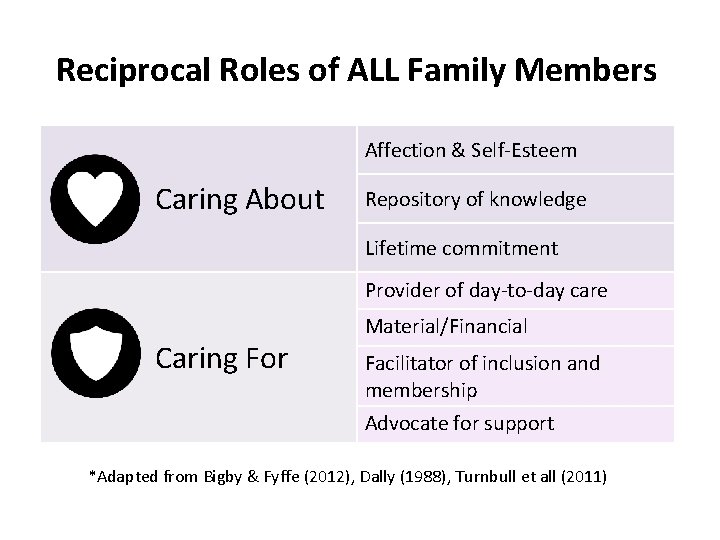
Reciprocal Roles of ALL Family Members Affection & Self-Esteem Caring About Repository of knowledge Lifetime commitment Provider of day-to-day care Caring For Material/Financial Facilitator of inclusion and membership Advocate for support *Adapted from Bigby & Fyffe (2012), Dally (1988), Turnbull et all (2011)
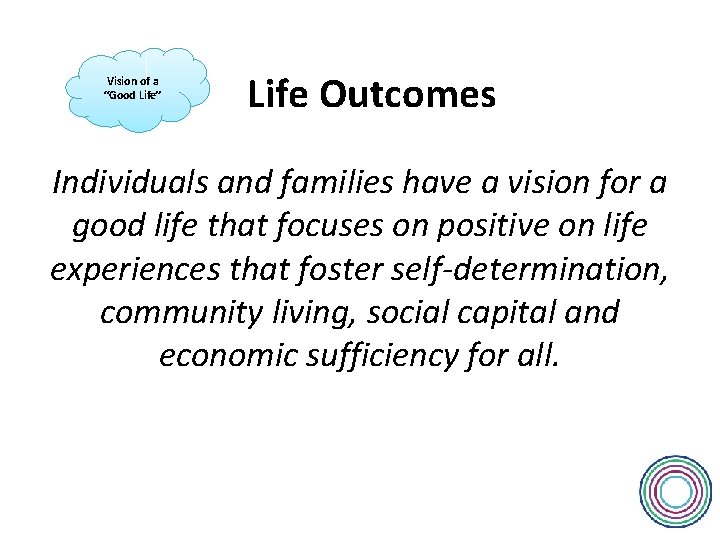
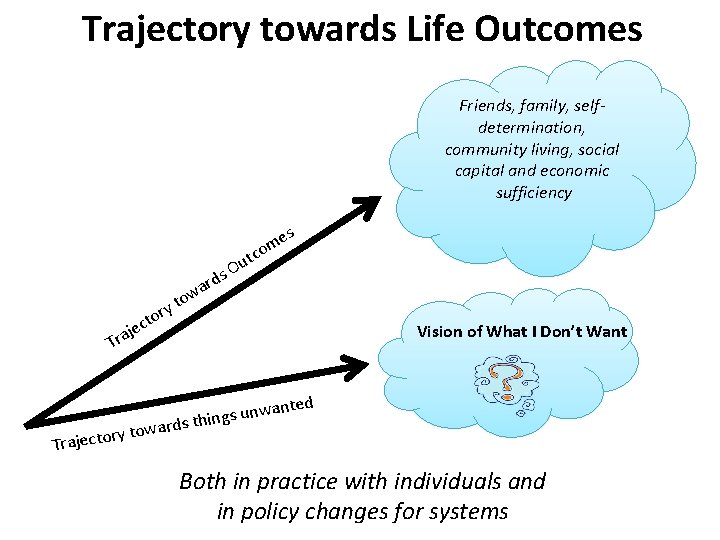
Vision of a “Good Life” Life Outcomes Individuals and families have a vision for a good life that focuses on positive on life experiences that foster self-determination, community living, social capital and economic sufficiency for all.
Trajectory towards Life Outcomes Friends, family, selfdetermination, community living, social capital and economic sufficiency s e m co t rd a w c je a r T u s O to y r to Vision of What I Don’t Want nted war o t y r o t Trajec nwa u s g n i h t ds Both in practice with individuals and in policy changes for systems
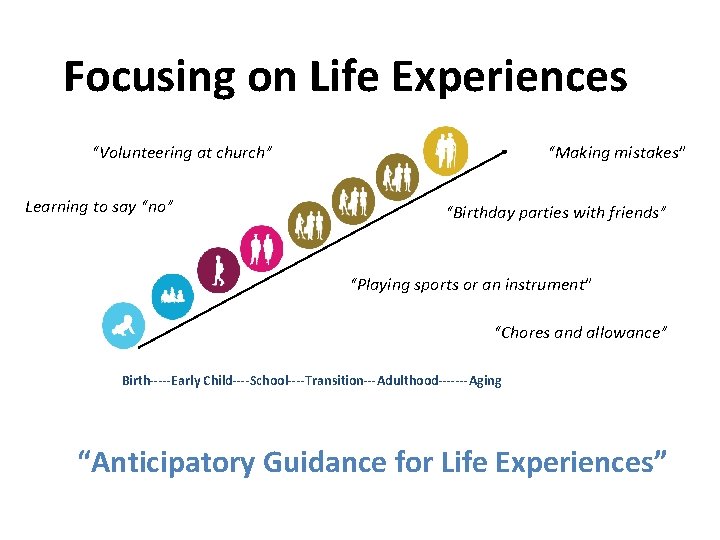
Focusing on Life Experiences “Volunteering at church” Learning to say “no” “Making mistakes” “Birthday parties with friends” “Playing sports or an instrument” “Chores and allowance” Birth-----Early Child----School----Transition---Adulthood-------Aging “Anticipatory Guidance for Life Experiences”
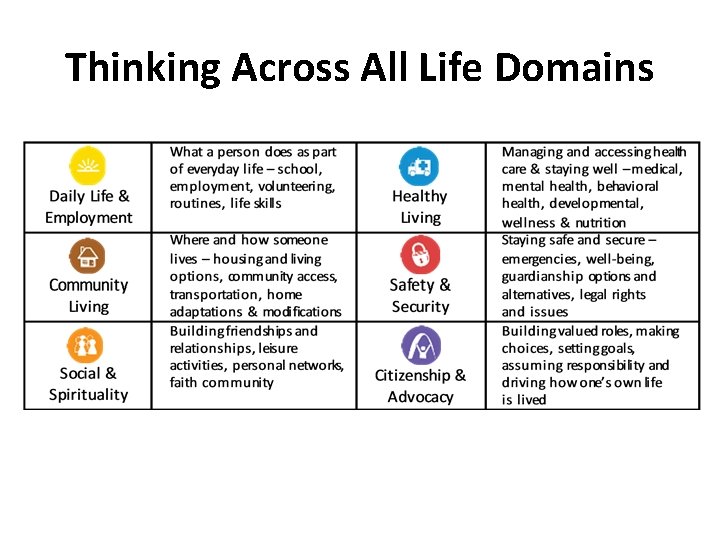
Thinking Across All Life Domains
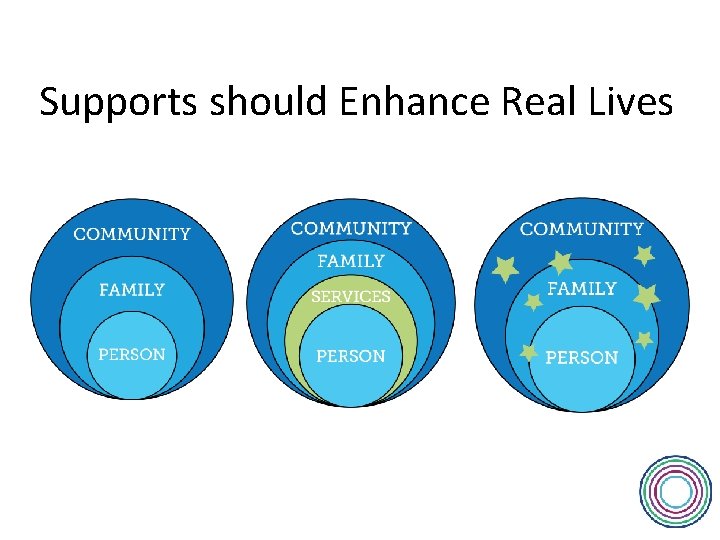
Supports should Enhance Real Lives
Three types of supports Discover & Navigation Connecting & Networking Goods & Services
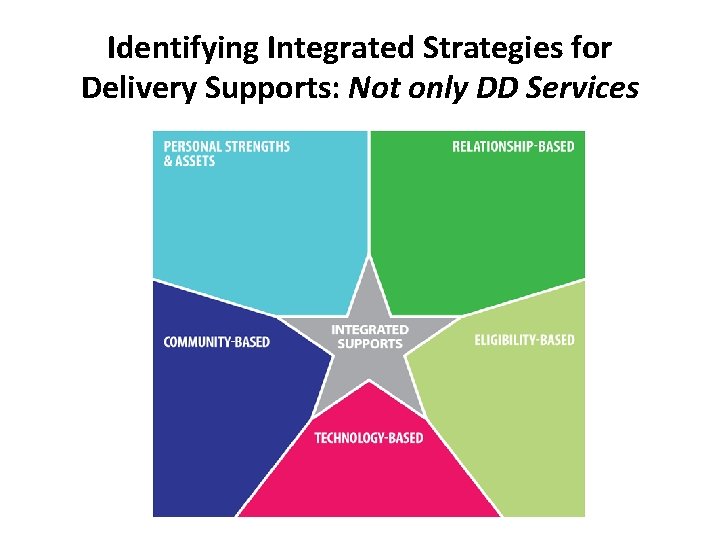
Identifying Integrated Strategies for Delivery Supports: Not only DD Services
Engage, Lead and Drive Policy and Systems Change
Community of Practice Teams “Create Space for Innovation” APPLYING THE FRAMEWORK TO TRANSFORMATIONAL CHANGE
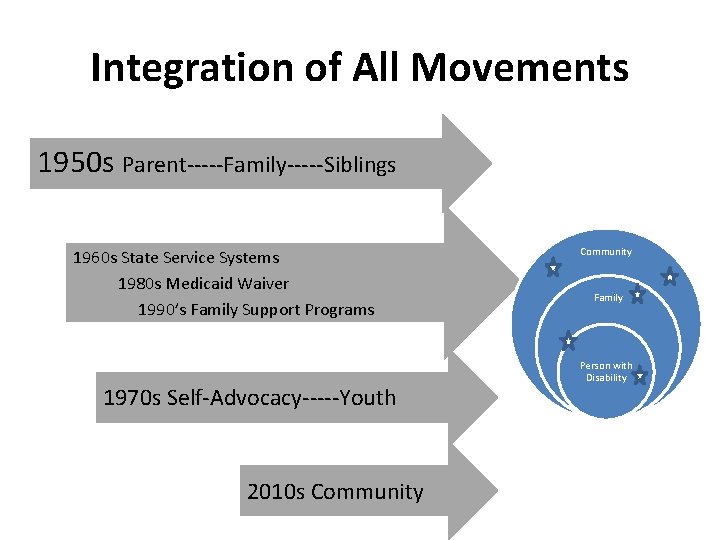
Integration of All Movements 1950 s Parent-----Family-----Siblings 1960 s State Service Systems 1980 s Medicaid Waiver 1990’s Family Support Programs 1970 s Self-Advocacy-----Youth 2010 s Community Family Person with Disability
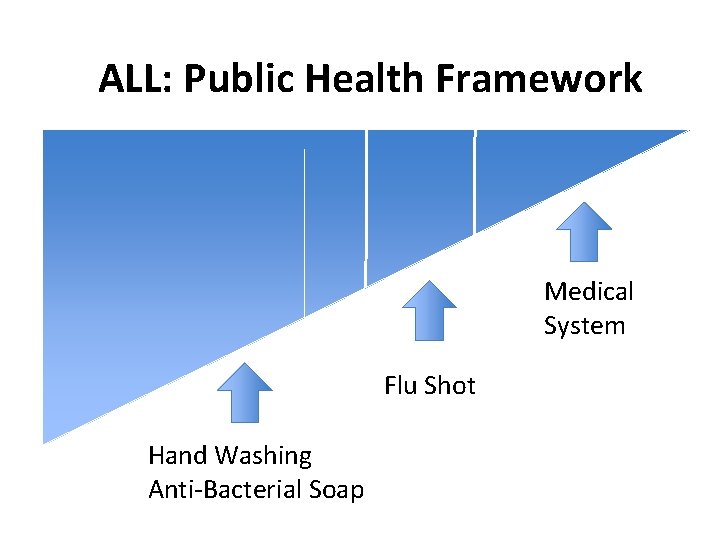
ALL: Public Health Framework Medical System Flu Shot Hand Washing Anti-Bacterial Soap
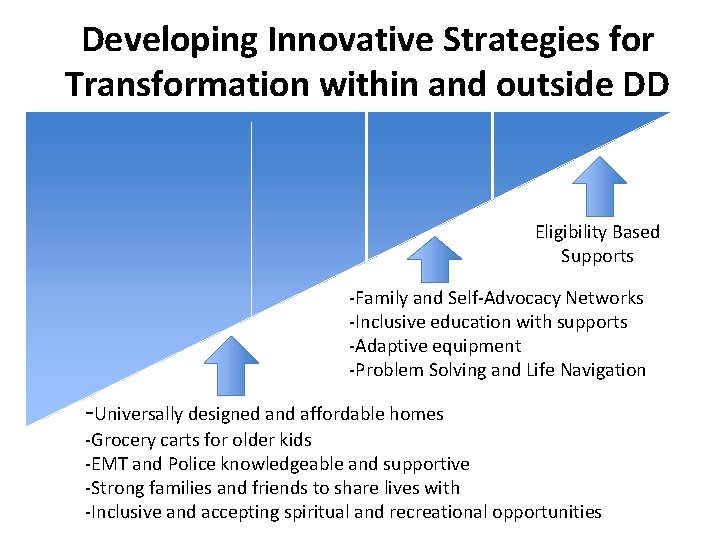
Developing Innovative Strategies for Transformation within and outside DD Eligibility Based Supports -Family and Self-Advocacy Networks -Inclusive education with supports -Adaptive equipment -Problem Solving and Life Navigation -Universally designed and affordable homes -Grocery carts for older kids -EMT and Police knowledgeable and supportive -Strong families and friends to share lives with -Inclusive and accepting spiritual and recreational opportunities
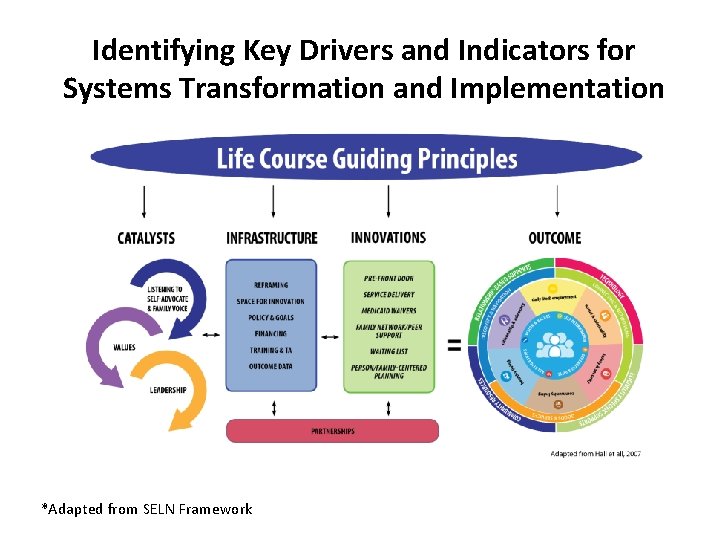
Identifying Key Drivers and Indicators for Systems Transformation and Implementation *Adapted from SELN Framework
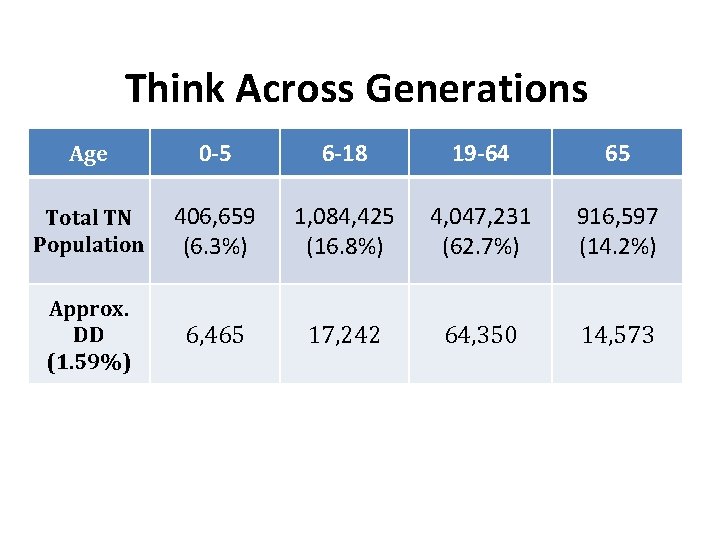
Think Across Generations Age 0 -5 6 -18 19 -64 65 Total TN Population 406, 659 (6. 3%) 1, 084, 425 (16. 8%) 4, 047, 231 (62. 7%) 916, 597 (14. 2%) Approx. DD (1. 59%) 6, 465 17, 242 64, 350 14, 573
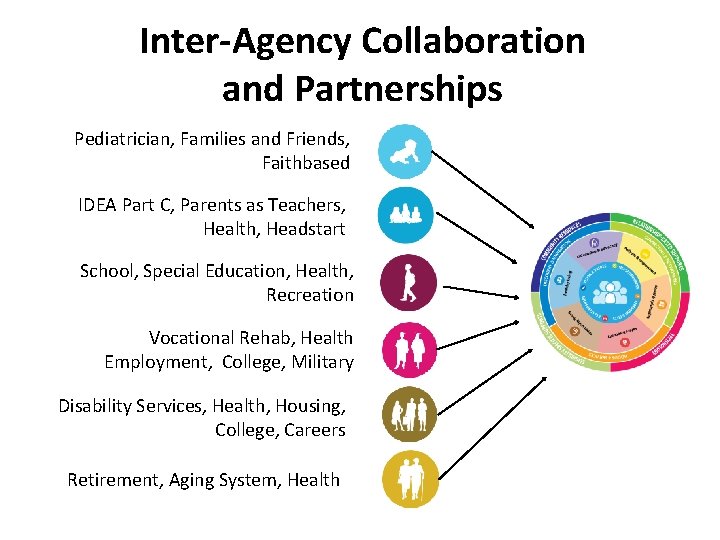
Inter-Agency Collaboration and Partnerships Pediatrician, Families and Friends, Faithbased IDEA Part C, Parents as Teachers, Health, Headstart School, Special Education, Health, Recreation Vocational Rehab, Health Employment, College, Military Disability Services, Health, Housing, College, Careers Retirement, Aging System, Health
What is happening in States? SUPPORTING FAMILIES “PRACTICES”
Practices for Discovery • Education, information and navigation strategies for the person with a disability and their family across the lifespan
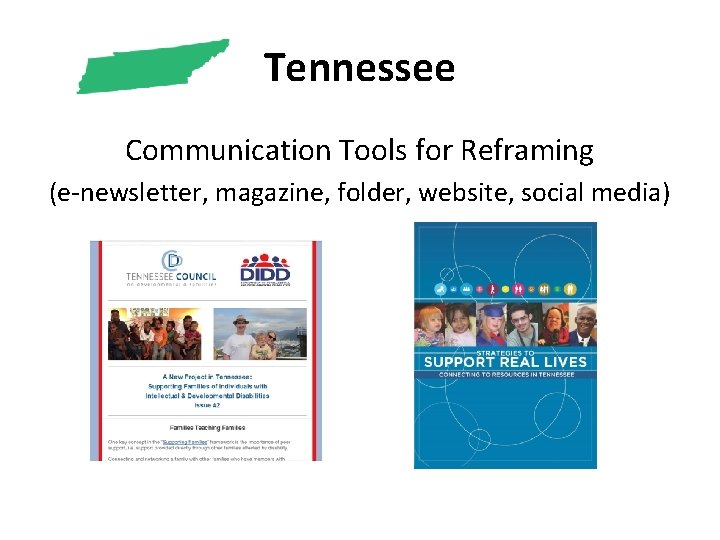
Tennessee Communication Tools for Reframing (e-newsletter, magazine, folder, website, social media)
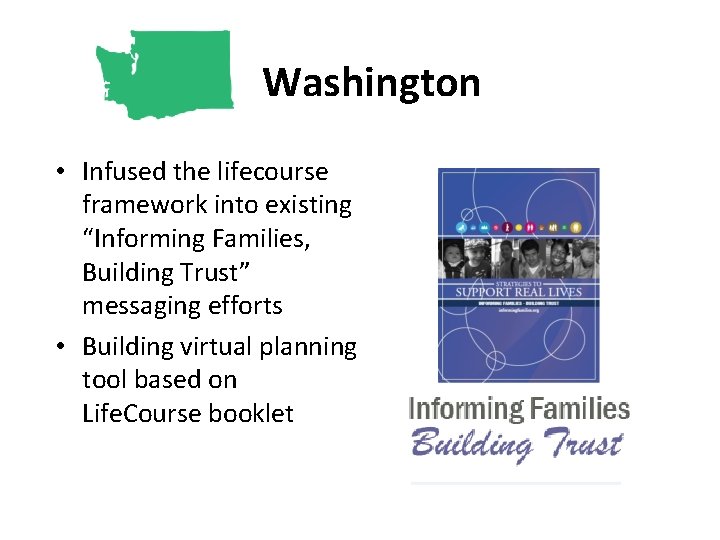
Washington • Infused the lifecourse framework into existing “Informing Families, Building Trust” messaging efforts • Building virtual planning tool based on Life. Course booklet
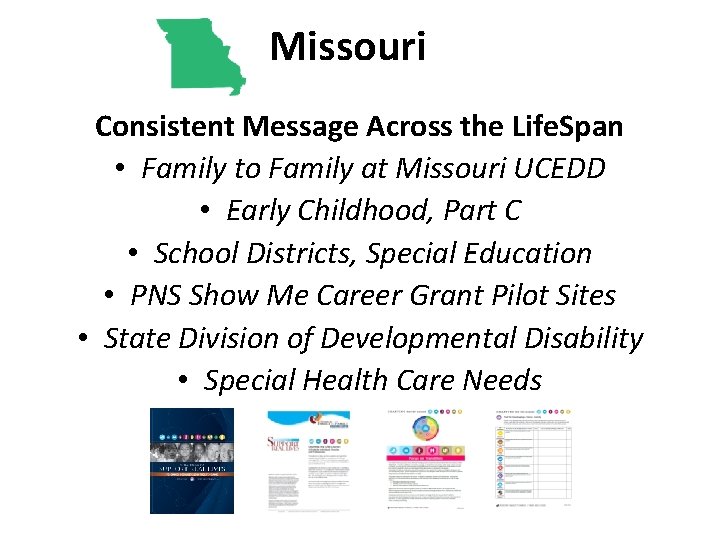
Missouri Consistent Message Across the Life. Span • Family to Family at Missouri UCEDD • Early Childhood, Part C • School Districts, Special Education • PNS Show Me Career Grant Pilot Sites • State Division of Developmental Disability • Special Health Care Needs
Peer Support Practices • Tennessee: Created sub-committee enhancing, connecting and sustaining • District of Columbia: State has contracted with P 2 P USA to assist in starting chapter • Washington: Adult Sibling Focus group • Connecticut: Hosted Parents with Disabilities conference • Missouri: State agency contracted with F 2 F HIC for seamless front door
Leadership Development Practices • Missouri: Partners in Policymaking and Alumna Weekend • Oklahoma: Statewide Joining Forces Family Leadership Conference and Rural Leadership Institutes • District of Columbia: Family Stipends, Advocacy Training with Georgetown • Connecticut: Facilitating bringing together Family Networks to work together on advocacy and information dissemination
Practices Focused on Those Served by the State Service System
Connecticut • Two full time people in Central office to focus on systems change to support families • Cross department life span team • Community Teams – – – – – Information Dissemination Family Mentoring and Leadership Training and Education Self-Directed Services and In-Home Supports Social Supports and Respite Positive Behavior Supports Person Centered Housing Employment Healthy Living Technology
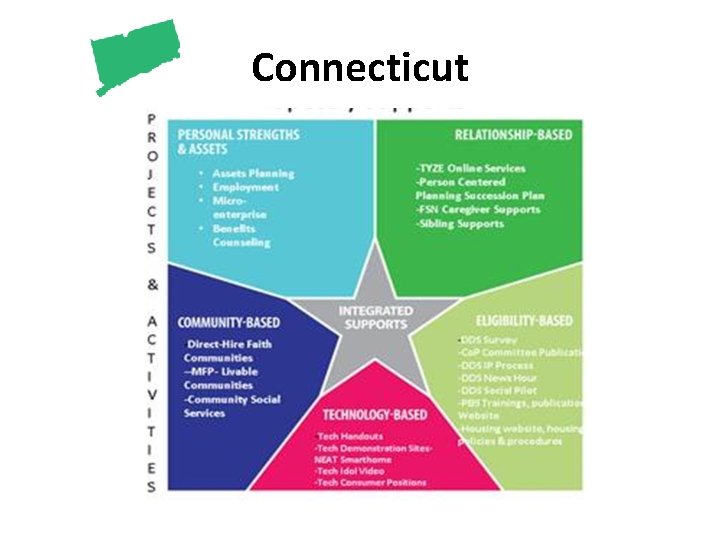
Connecticut
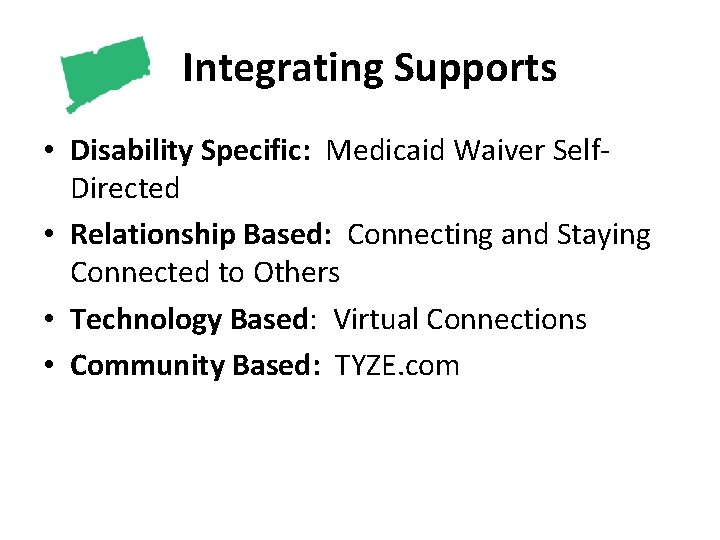
Integrating Supports • Disability Specific: Medicaid Waiver Self. Directed • Relationship Based: Connecting and Staying Connected to Others • Technology Based: Virtual Connections • Community Based: TYZE. com
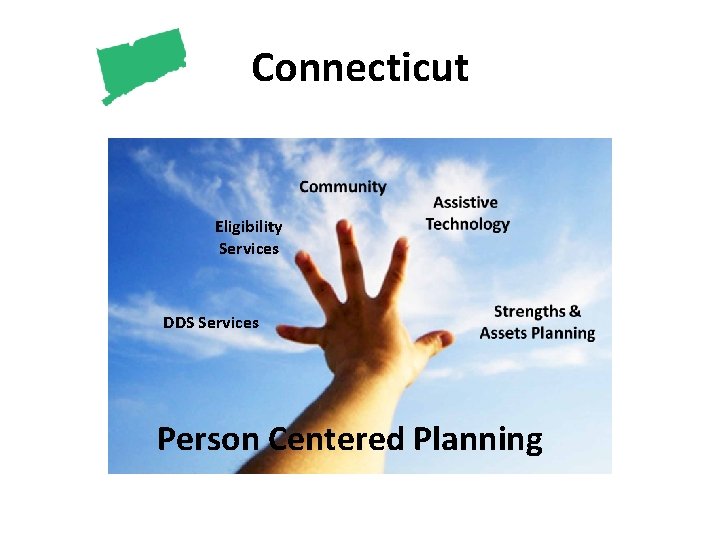
Connecticut Eligibility Services DDS Services Person Centered Planning
Washington • Strong leadership and partnership of state DD Council with State DD system • Recommendations made to integrating “supporting families” framework and specific services into the new states K Plan • Exploring “a family component” into already strong use of NCI data to drive systems change
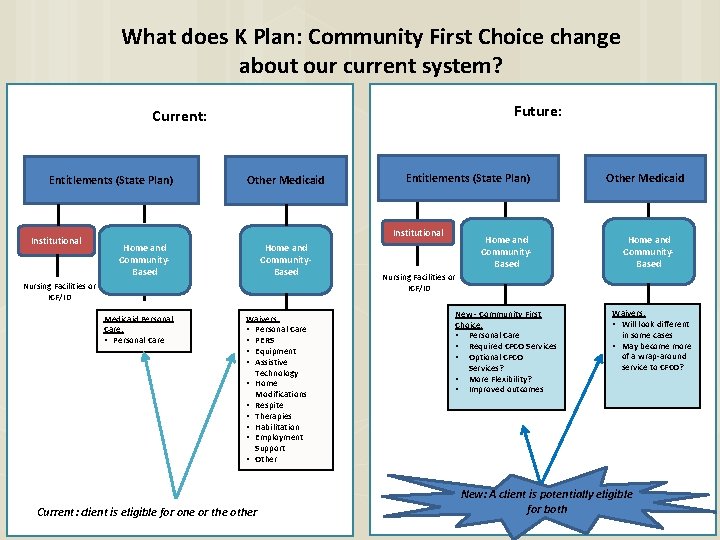
What does K Plan: Community First Choice change about our current system? Future: Current: Entitlements (State Plan) Institutional Other Medicaid Entitlements (State Plan) Institutional Home and Community. Based Nursing Facilities or ICF/ID Medicaid Personal Care: • Personal Care Waivers: • Personal Care • PERS • Equipment • Assistive Technology • Home Modifications • Respite • Therapies • Habilitation • Employment Support • Other Current: client is eligible for one or the other Home and Community. Based Other Medicaid Home and Community. Based Nursing Facilities or ICF/ID New - Community First Choice: • Personal Care • Required CFCO Services • Optional CFCO Services? • More Flexibility? • Improved outcomes Waivers: • Will look different in some cases • May become more of a wrap-around service to CFCO? New: A client is potentially eligible for both
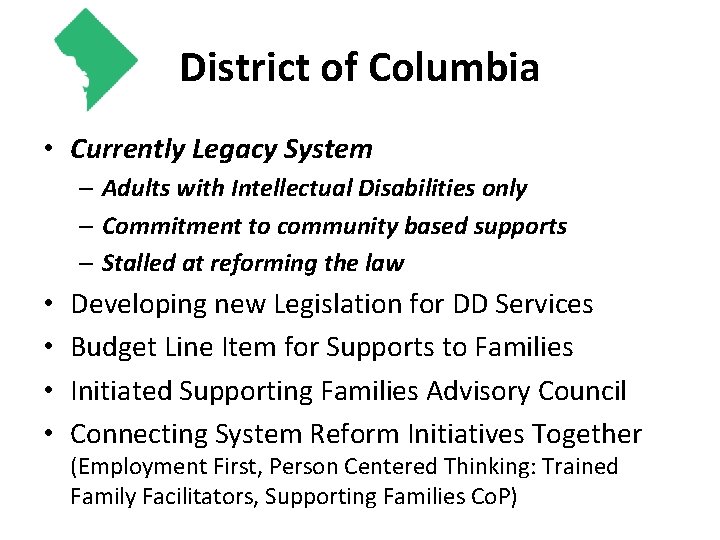
District of Columbia • Currently Legacy System – Adults with Intellectual Disabilities only – Commitment to community based supports – Stalled at reforming the law • • Developing new Legislation for DD Services Budget Line Item for Supports to Families Initiated Supporting Families Advisory Council Connecting System Reform Initiatives Together (Employment First, Person Centered Thinking: Trained Family Facilitators, Supporting Families Co. P)
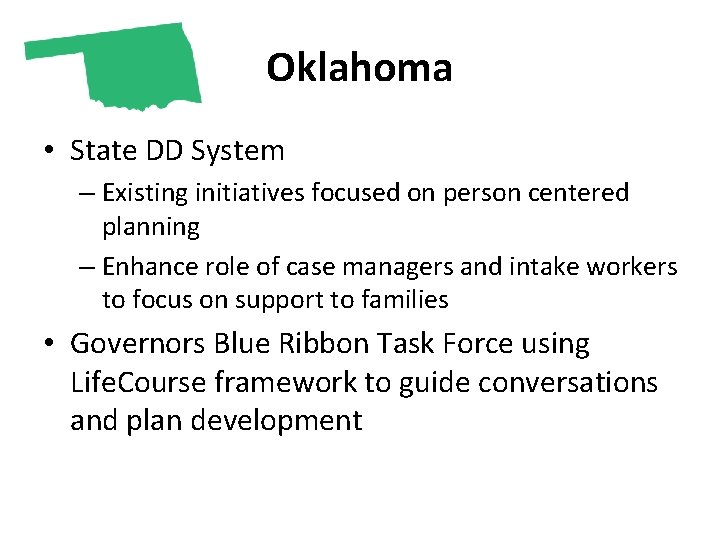
Oklahoma • State DD System – Existing initiatives focused on person centered planning – Enhance role of case managers and intake workers to focus on support to families • Governors Blue Ribbon Task Force using Life. Course framework to guide conversations and plan development
Reframing Wait List Discussion Information about Oklahomans with DD on Waiting List 0 -5 6 -18 19 -64 65+ Total 624 2579 3714 59 6, 976 114 620 850 11 1, 695 510 1959 2864 48 5281 Details Names on Waiting List On list, No known public benefits On list, Getting Some Public benefits
Integrated and Comprehensive Systems: Connecting the Dots • • • Employment First Alternatives to Guardianship/Supported Decision Making No Wrong Door Initiatives Aging and Disability Resource Center CMS Balanced Incentive Program CMS Community Settings and Person Centered Rule Family Information Systems Project NIDRR newly funded RRTC on Family support IDEA Performance Outcomes HRSA Home Visiting
Future Supporting Families Practice Areas • Providers Partnering with Families • Self-Directed Supports and Families • Goods and Services Specific to Family or Caregiver • Building Capacity of Community to Support Families
What are we learning? Overall Themes • Balancing Focus on Person with Disability as we try to increase supports to families • Concept of “all” has made a major impact • Family support vs. supporting families • Aging families or “traditional mindset” families comfortable with the current system
What are we learning? Overall Themes • Thinking about integrated supports: Technology is really exciting people and Increased focused on what are “natural or informal supports” • People are “ready” and excited for the message and concrete, practical tools • The skill of “partnering” with other entities and with self-advocates and families is hard
Difficulties in Capturing Learning – Constant priorities and changes in state systems (policy, CMS, leadership, staffing, funding) – No operational definition of family support – Lack of defined evidence based practices – Data on “family” and “family support services” difficult to capture – Different Starting Points for Systems Change – Supporting Families is a cultural change, it is bigger than one system
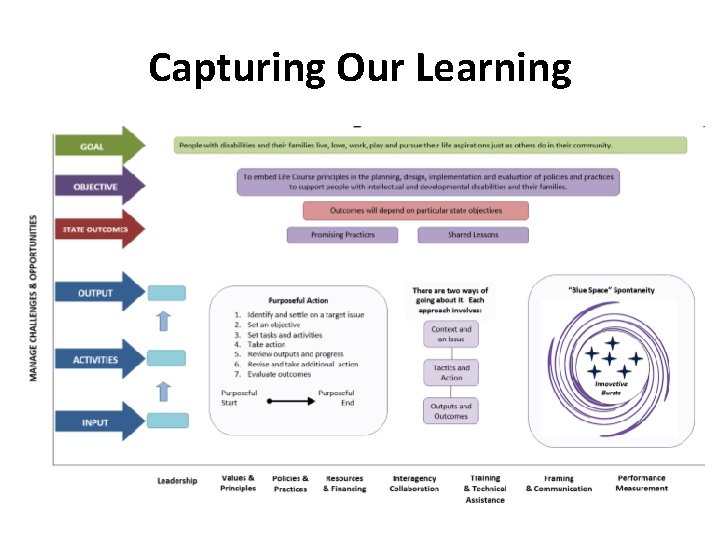
Capturing Our Learning
Mary Lee Fay National Association of State Directors of Developmental Disabilities Services (NASDDDS) 703 -683 -4202 mlfay@nasddds. org supportstofamilies. org
Questions, Reflections and Discussion
Contact Information Mary Lee Fay mlfay@nasddds. org Sheli Reynolds reynoldsmc@umkc. edu