
Martyrs of Reason The Resurrection of Sikhism post1984
- Slides: 11
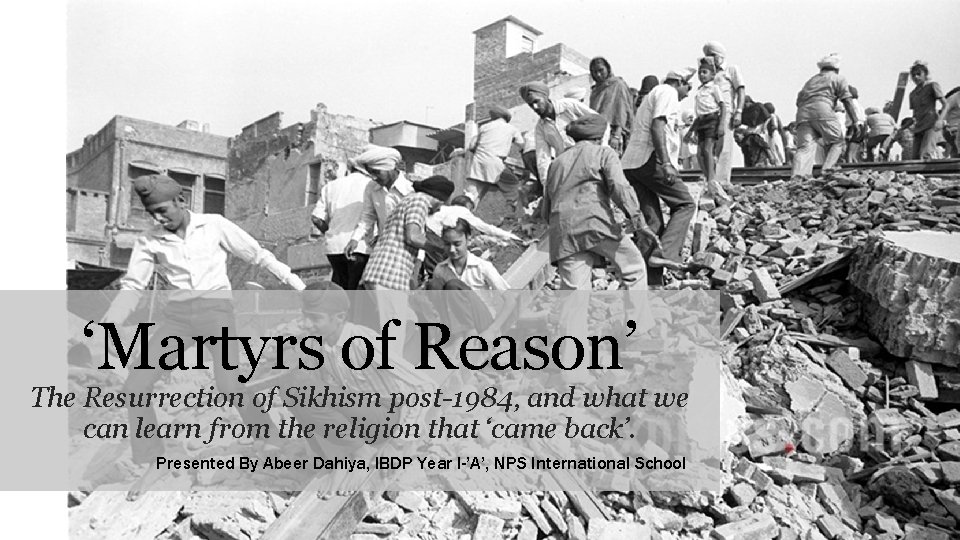
‘Martyrs of Reason’ The Resurrection of Sikhism post-1984, and what we can learn from the religion that ‘came back’. Presented By Abeer Dahiya, IBDP Year I-’A’, NPS International School
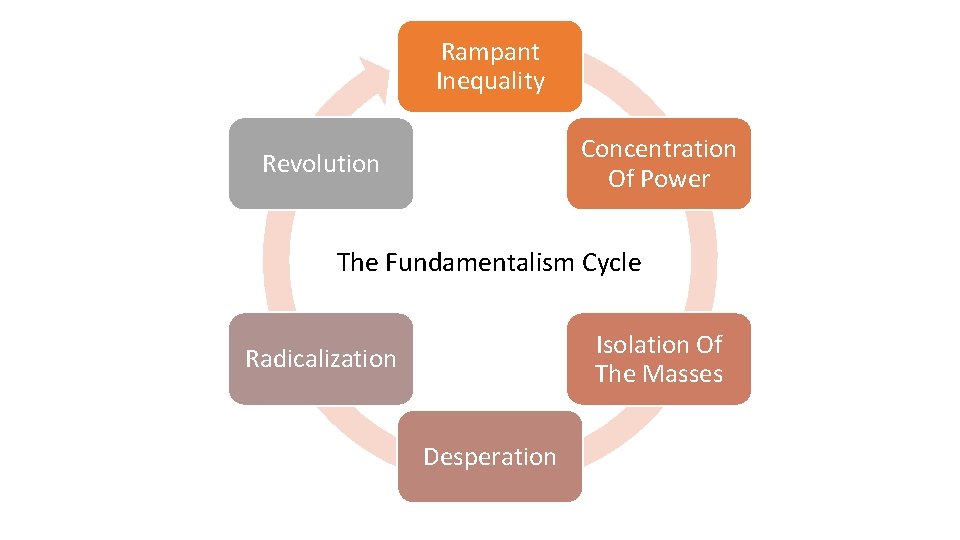
Rampant Inequality Concentration Of Power Revolution The Fundamentalism Cycle Isolation Of The Masses Radicalization Desperation
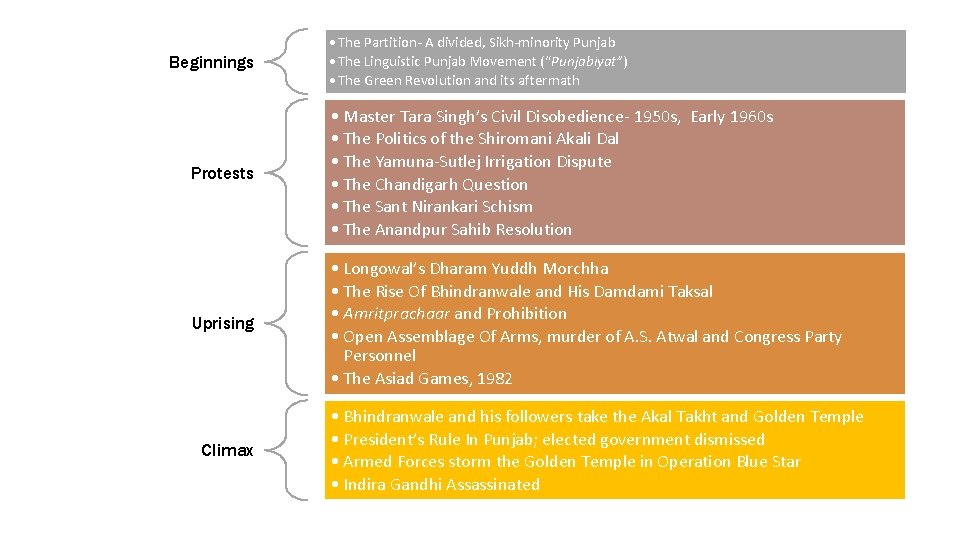
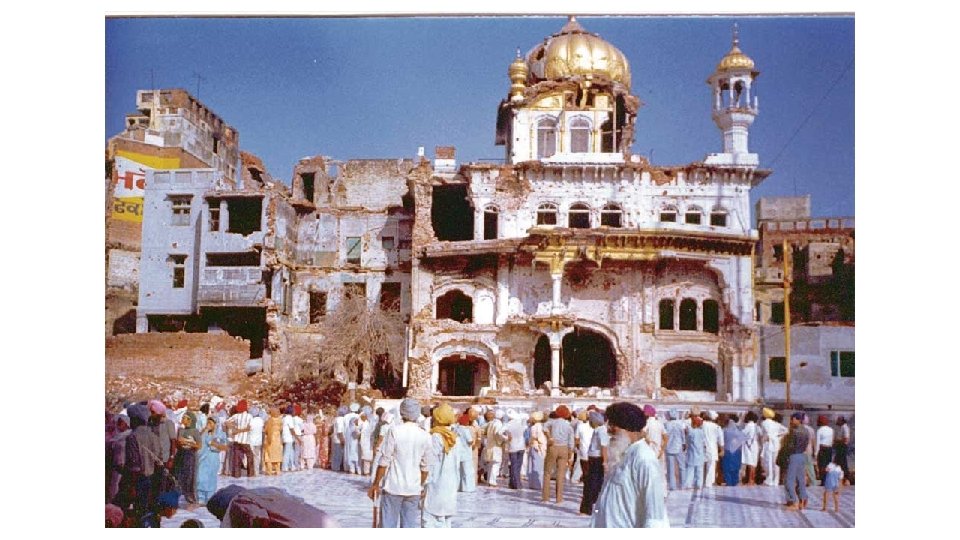
Beginnings • The Partition- A divided, Sikh-minority Punjab • The Linguistic Punjab Movement (“Punjabiyat”) • The Green Revolution and its aftermath Protests • Master Tara Singh’s Civil Disobedience- 1950 s, Early 1960 s • The Politics of the Shiromani Akali Dal • The Yamuna-Sutlej Irrigation Dispute • The Chandigarh Question • The Sant Nirankari Schism • The Anandpur Sahib Resolution Uprising • Longowal’s Dharam Yuddh Morchha • The Rise Of Bhindranwale and His Damdami Taksal • Amritprachaar and Prohibition • Open Assemblage Of Arms, murder of A. S. Atwal and Congress Party Personnel • The Asiad Games, 1982 Climax • Bhindranwale and his followers take the Akal Takht and Golden Temple • President’s Rule In Punjab; elected government dismissed • Armed Forces storm the Golden Temple in Operation Blue Star • Indira Gandhi Assassinated
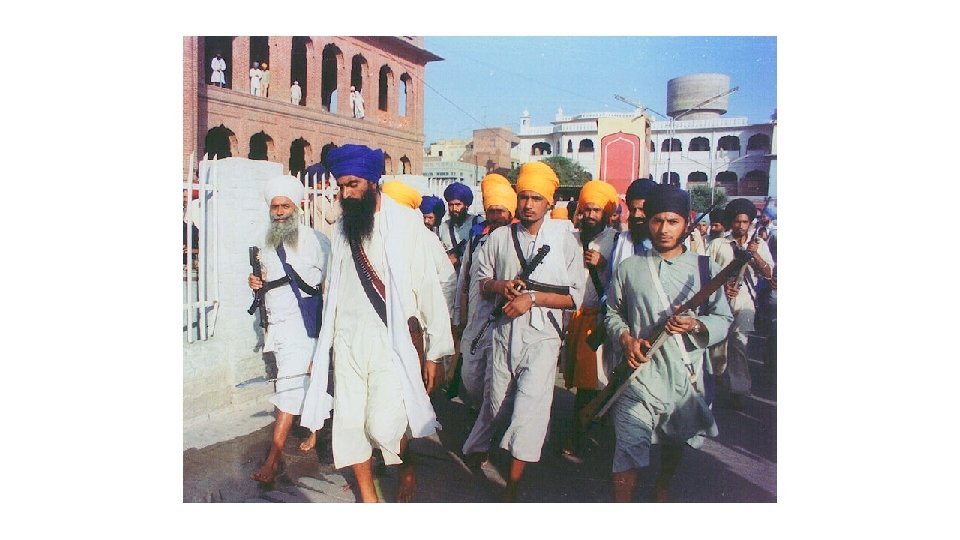
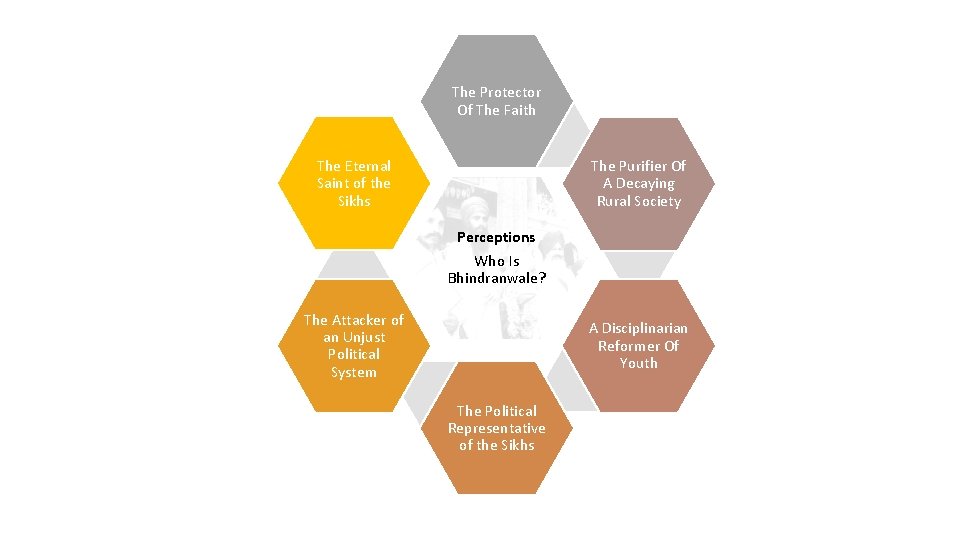
The Protector Of The Faith The Eternal Saint of the Sikhs The Purifier Of A Decaying Rural Society Perceptions Who Is Bhindranwale? The Attacker of an Unjust Political System A Disciplinarian Reformer Of Youth The Political Representative of the Sikhs
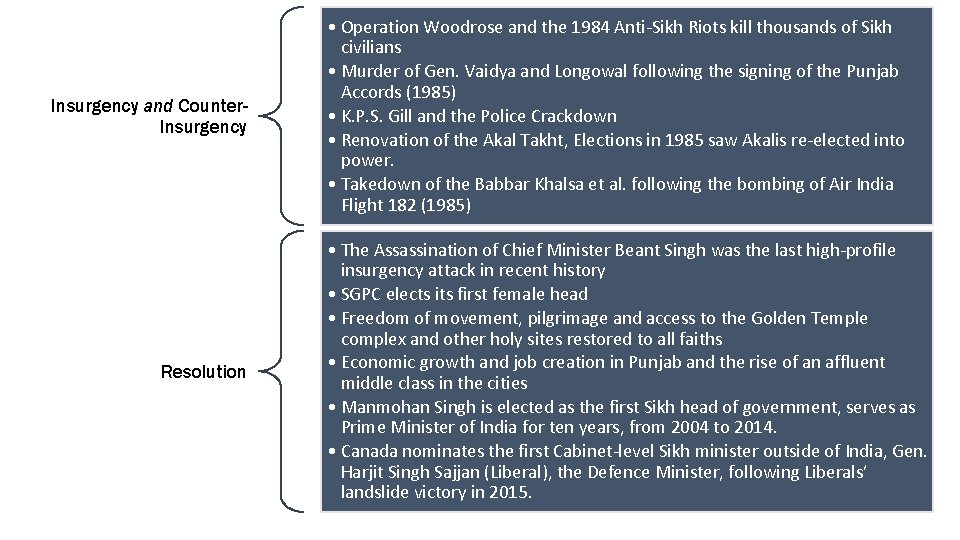
Insurgency and Counter. Insurgency Resolution • Operation Woodrose and the 1984 Anti-Sikh Riots kill thousands of Sikh civilians • Murder of Gen. Vaidya and Longowal following the signing of the Punjab Accords (1985) • K. P. S. Gill and the Police Crackdown • Renovation of the Akal Takht, Elections in 1985 saw Akalis re-elected into power. • Takedown of the Babbar Khalsa et al. following the bombing of Air India Flight 182 (1985) • The Assassination of Chief Minister Beant Singh was the last high-profile insurgency attack in recent history • SGPC elects its first female head • Freedom of movement, pilgrimage and access to the Golden Temple complex and other holy sites restored to all faiths • Economic growth and job creation in Punjab and the rise of an affluent middle class in the cities • Manmohan Singh is elected as the first Sikh head of government, serves as Prime Minister of India for ten years, from 2004 to 2014. • Canada nominates the first Cabinet-level Sikh minister outside of India, Gen. Harjit Singh Sajjan (Liberal), the Defence Minister, following Liberals’ landslide victory in 2015.
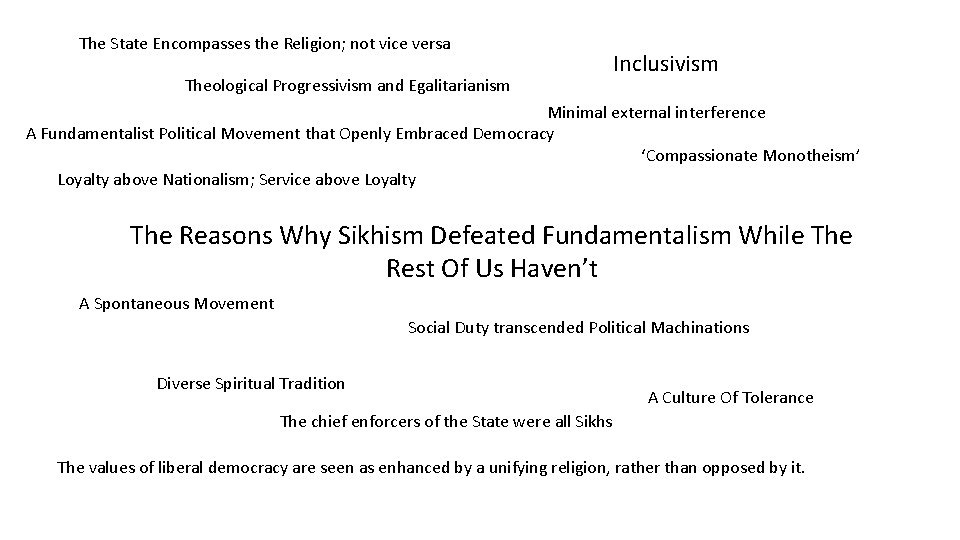
The State Encompasses the Religion; not vice versa Theological Progressivism and Egalitarianism Inclusivism Minimal external interference A Fundamentalist Political Movement that Openly Embraced Democracy ‘Compassionate Monotheism’ Loyalty above Nationalism; Service above Loyalty The Reasons Why Sikhism Defeated Fundamentalism While The Rest Of Us Haven’t A Spontaneous Movement Social Duty transcended Political Machinations Diverse Spiritual Tradition A Culture Of Tolerance The chief enforcers of the State were all Sikhs The values of liberal democracy are seen as enhanced by a unifying religion, rather than opposed by it.
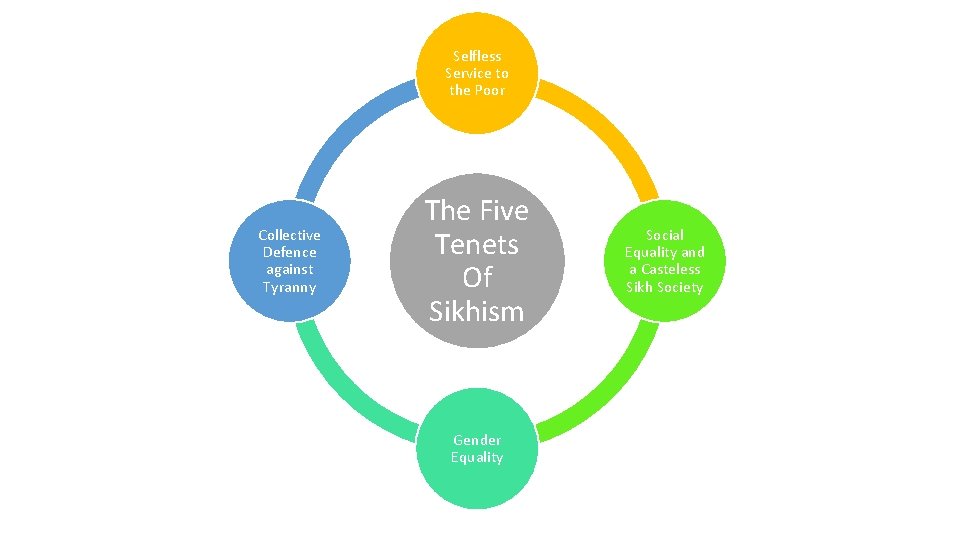
Selfless Service to the Poor Collective Defence against Tyranny The Five Tenets Of Sikhism Gender Equality Social Equality and a Casteless Sikh Society
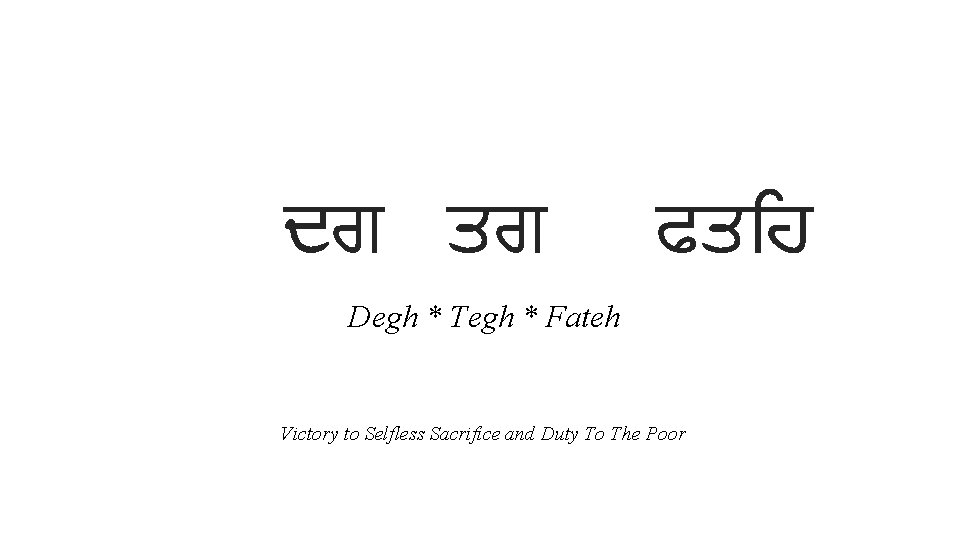
ਦਗ ਤਗ Degh * Tegh * Fateh ਫਤ ਹ Victory to Selfless Sacrifice and Duty To The Poor