
Martin Siegfried MD Cardiologist at Cardio Vascular GroupGwinnett





- Slides: 33
Martin Siegfried, MD Cardiologist at Cardio. Vascular Group/Gwinnett Cardiac Services Fellow of American College of Cardiology Board Certified in • Cardiovascular Disease Special interests: • Coronary Artery Disease • Stress Testing • Cardiac Echocardiography • No financial relationships to disclose Medical School: Thomas Jefferson University Residency: Emory University Hospital Fellowship: Emory University Hospital
Cardiology for the Internist/Hospitalist Martin R. Siegfried, MD/Ph. D
Falls and Anticoagulation in Afib
Falls • 1 of 3 adults > 65, fall each year (1/2 mention it to their healthcare providers) • Among older adults, falls are the leading cause of both fatal and nonfatal injuries • In 2013, 2. 5 million nonfatal falls among older adults were treated in emergency departments and more than 734, 000 of these patients were hospitalized • In 2013, the direct medical costs of falls, adjusted for inflation, were $34 billion
Falls • 20 -30% of patients who fall suffer moderate to severe injuries (lacerations, hip fractures, and head trauma) • Leading cause of traumatic brain injuries (TBI) • 50% of fatal falls are secondary to TBI • Among older adults most fractures are caused by falls
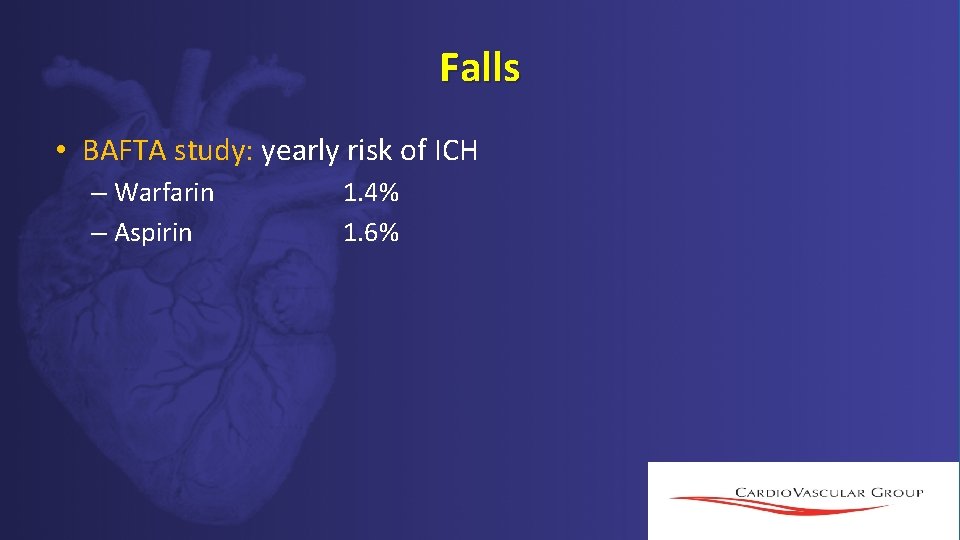
Falls • BAFTA study: yearly risk of ICH – Warfarin – Aspirin 1. 4% 1. 6%
Question • Based on statistical analysis, how many times per year would an fib patient have to fall to make Coumadin a poor choice? A) 2 B) 13 C) 295 D) Coumadin is a poor choice for any patient older than 75 YO due to fall risk
Falls • In a study using a Markov decision analytic model to determine optimal treatment in persons aged 65 years or older, which gave consideration to any potential for ICH, it was reported that persons taking warfarin would need to fall approximately 295 times within 1 year for warfarin to not be the optimal therapy. Man-Son-Hing M. , Nichol G. , Lau A. , Laupacis A. (1999) Choosing antithrombotic therapy for elderly persons with atrial fibrillation who are at risk for falls. Arch Intern Med 159: 677– 685
Falls • Warfarin is under-prescribed – 50% of eligible patients receiving therapy. • Falls are most often cited as the reason for not using anticoagulants in an elderly patient. • Meta-analysis of 29 trials involving 28, 044 participants shows warfarin’s benefits outweigh its risks even in patients who fall. • The risk of ICH was lower with the oral direct thrombin and factor Xa inhibitors compared with warfarin
BNP and CHF
BNP • A peptide synthesized and released in response to ventricular stretch • very little is stored • a lag often occurs between the appearance of the natriuretic peptides and the onset of clinical deterioration. • Genetic factors may account for 40% of the variation in plasma BNP levels in normal subjects
BNP • • Diuretic Natriuretic Vasodilator Inhibits the renin-angiotensin system Inhibits endothelin secretion Inhibits systemic and renal sympathetic activity Inhibits cardiac fibrosis
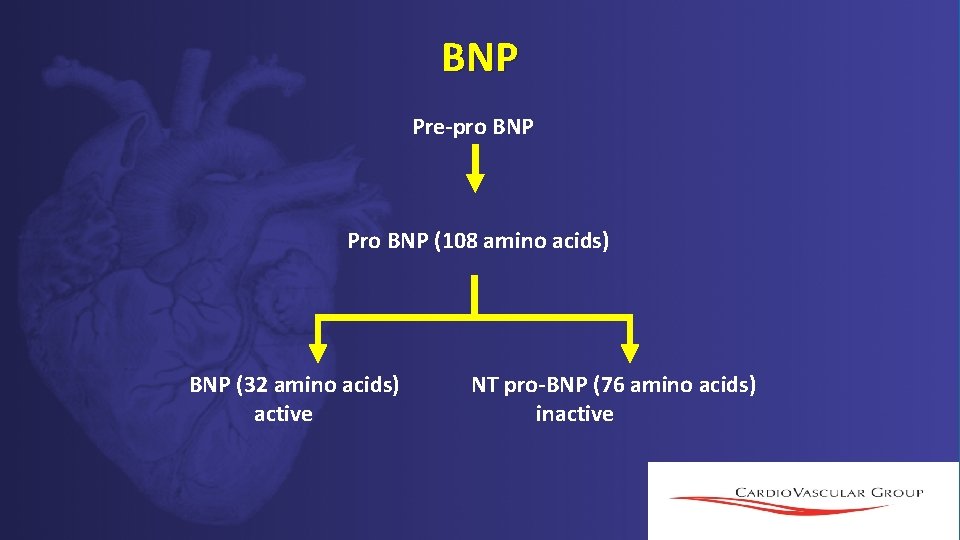
BNP Pre-pro BNP Pro BNP (108 amino acids) BNP (32 amino acids) active NT pro-BNP (76 amino acids) inactive
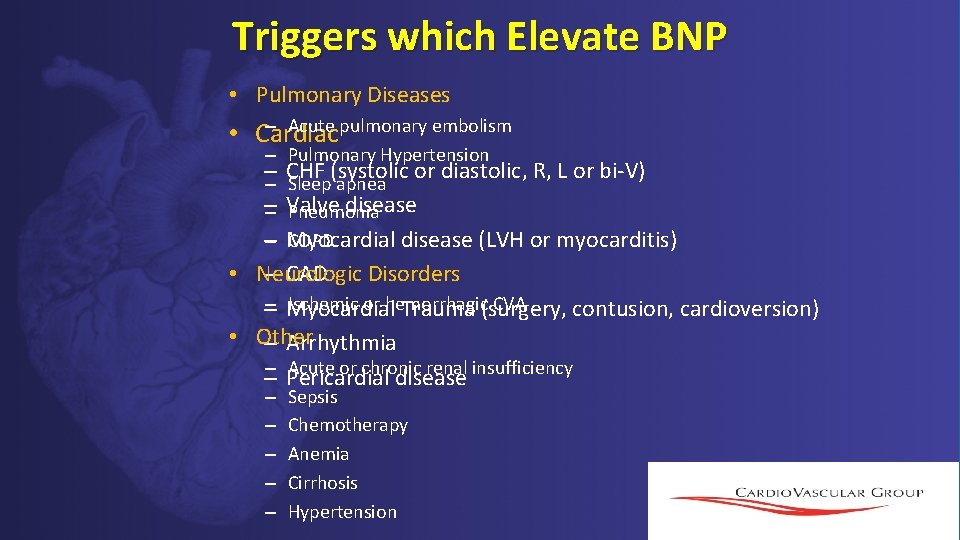
Triggers which Elevate BNP • Pulmonary Diseases – Acute pulmonary embolism • Cardiac – –– –– – Pulmonary Hypertension CHF (systolic or diastolic, R, L or bi-V) Sleep apnea Valve disease Pneumonia Myocardial disease (LVH or myocarditis) COPD • Neurologic Disorders – CAD Ischemic or hemorrhagic CVA –– Myocardial Trauma (surgery, contusion, cardioversion) • Other – Arrhythmia Acute or chronic renal insufficiency –– Pericardial disease – – – Sepsis Chemotherapy Anemia Cirrhosis Hypertension
BNP, future directions • to assess adequacy of CHF therapy in heart failure patients. (conflicting results) • prognostic value in CHF, as higher levels are predictive of increased morbidity and mortality. • Valvular diseases higher levels associated with worsening valvular lesions and poorer outcomes
BNP conclusion • If the BNP is negative your patient PROBABLY doesn’t have decompensated heart failure. • If the BNP is elevated decompensated CHF is one of more than 20 possible disease states that could be present
PVCs
PVCs • prevalence is directly related to – the study population – the detection method – the duration of observation • routine 12 -lead ECG of 30 -60 s duration ~1% • 24 -hour ambulatory monitoring 80% • Age-related increase in prevalence
PVCs • More frequent in – men vs. women – African-Americans vs. whites – Structural heart disease – Electrolyte abnormalities
PVCs Ischemia LVH Decompensated CHF Myocarditis Congenital heart disease COPD/Sleep apnea Pulmonary hypertension Thyroid or adrenal disease. Stimulants: nicotine, alcohol, decongestants, antihistamines, cocaine, amphetamines • Sleep disruption has been associated with an increased hourly number of PVCs • No significant differences in the frequency of PVCs between users and non -users of caffeine • PVCs MAY increase as estrogen decreases • • •
PVCs workup ECG, hopefully while symptomatic 24 or 48 hr Holter monitor Echocardiography to evaluate for structure disease Exercise treadmill stress test to screen for underlying ischemia. • Electrolyte levels, thyroid stimulating hormone • Sleep apnea testing, if appropriate • •
PVC-induced cardiomyopathy • PVC-related cardiomyopathy should be suspected in individuals who present with an unexplained cardiomyopathy and very frequent unifocal VPBs • typically when>20% of all beats are PVCs • Elimination of VPBs using catheter ablation or medications often leads to normalization of cardiac function.
PVCs • Bigeminy, trigeminy, quadrigeminy have no worsened prognostic significance
Transient Loss of Consciousness (TLOC) • • Multiple causes Approximately 5% ED visits Bimodal incidence 10 -30 YO, >65 YO If normal ECG and no cardiac disease, good prognosis
TLOC • • • Cardiac Seizure disorders Traumatic brain injury (concussion) Arrythmias Hypotension Intoxications Neurocardiogenic/Vagal Metabolic disturbances Structural Conversion disorders (psychogenic) Cardiac
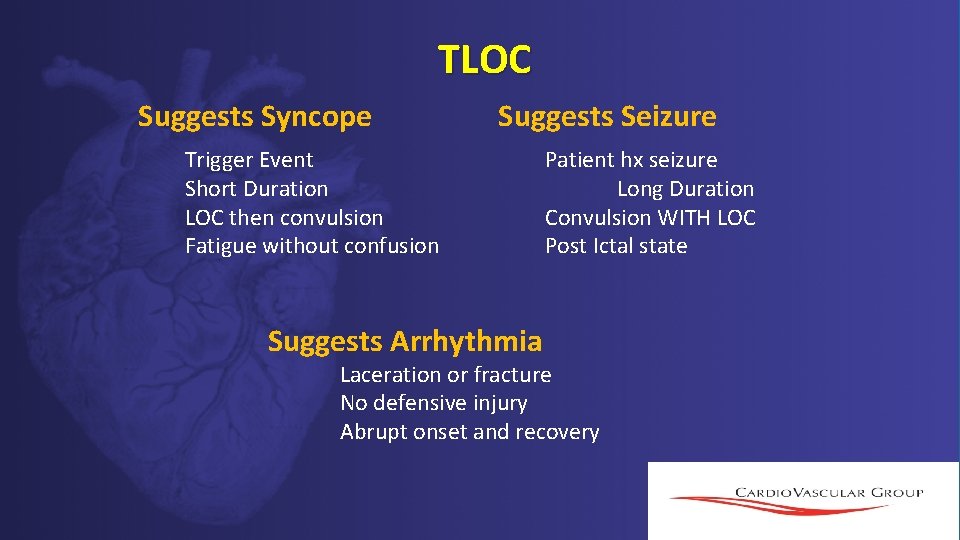
TLOC Suggests Syncope Suggests Seizure Trigger Event Short Duration LOC then convulsion Fatigue without confusion Suggests Arrhythmia Patient hx seizure Long Duration Convulsion WITH LOC Post Ictal state Laceration or fracture No defensive injury Abrupt onset and recovery
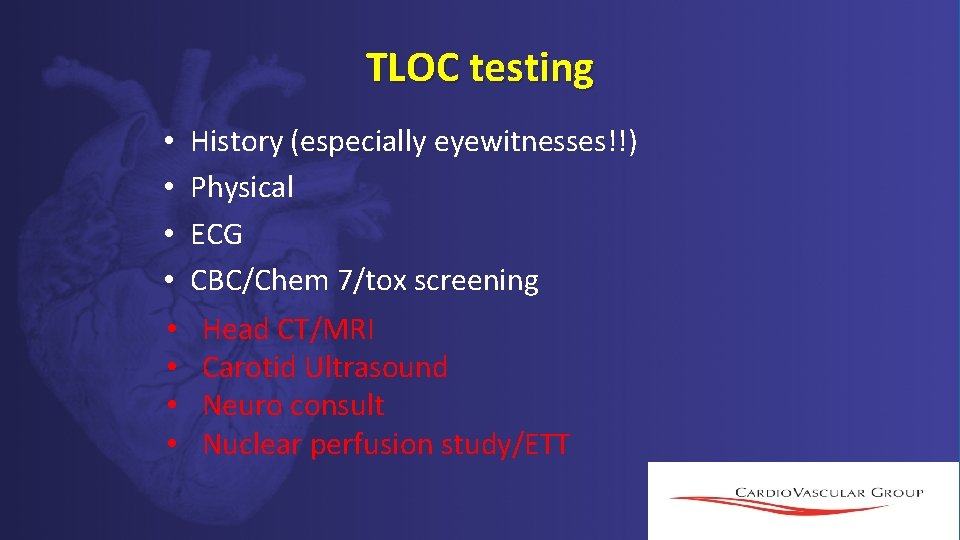
TLOC testing • • History (especially eyewitnesses!!) Physical ECG CBC/Chem 7/tox screening Head CT/MRI Carotid Ultrasound Neuro consult Nuclear perfusion study/ETT
Troponin Elevation
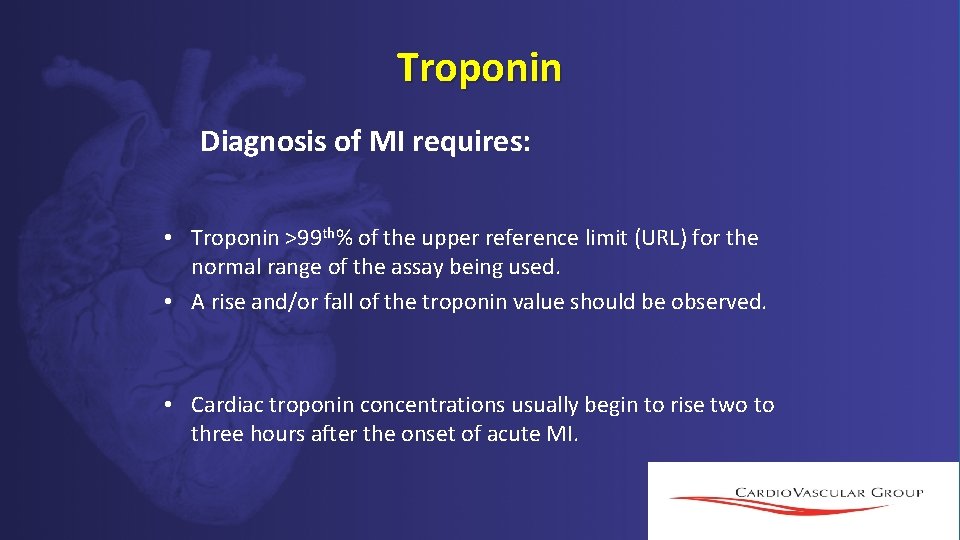
Troponin Diagnosis of MI requires: • Troponin >99 th% of the upper reference limit (URL) for the normal range of the assay being used. • A rise and/or fall of the troponin value should be observed. • Cardiac troponin concentrations usually begin to rise two to three hours after the onset of acute MI.
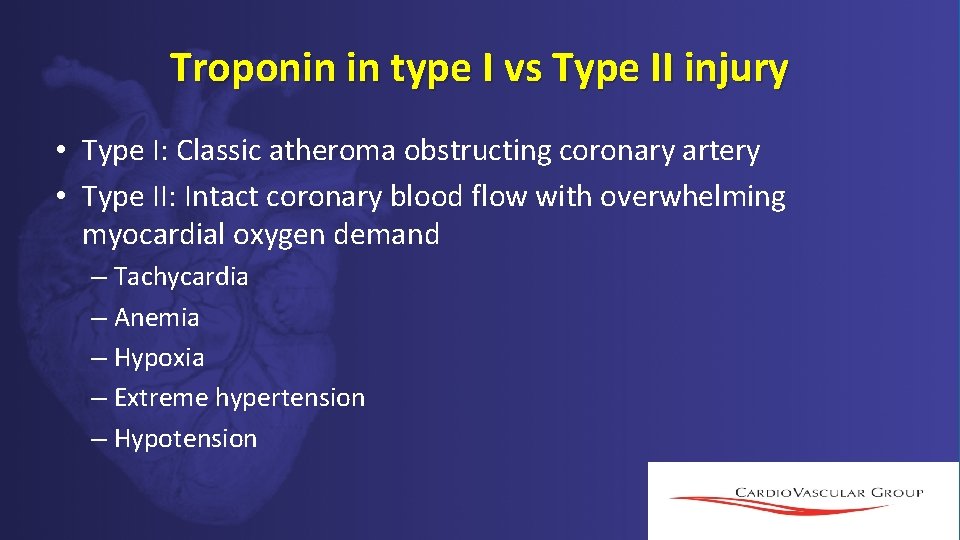
Troponin in type I vs Type II injury • Type I: Classic atheroma obstructing coronary artery • Type II: Intact coronary blood flow with overwhelming myocardial oxygen demand – Tachycardia – Anemia – Hypoxia – Extreme hypertension – Hypotension
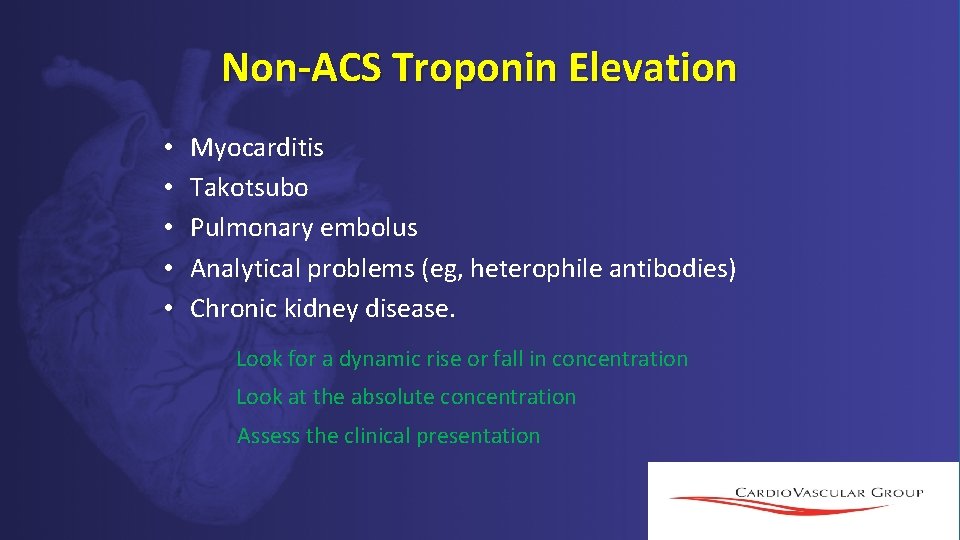
Non-ACS Troponin Elevation • • • Myocarditis Takotsubo Pulmonary embolus Analytical problems (eg, heterophile antibodies) Chronic kidney disease. Look for a dynamic rise or fall in concentration Look at the absolute concentration Assess the clinical presentation
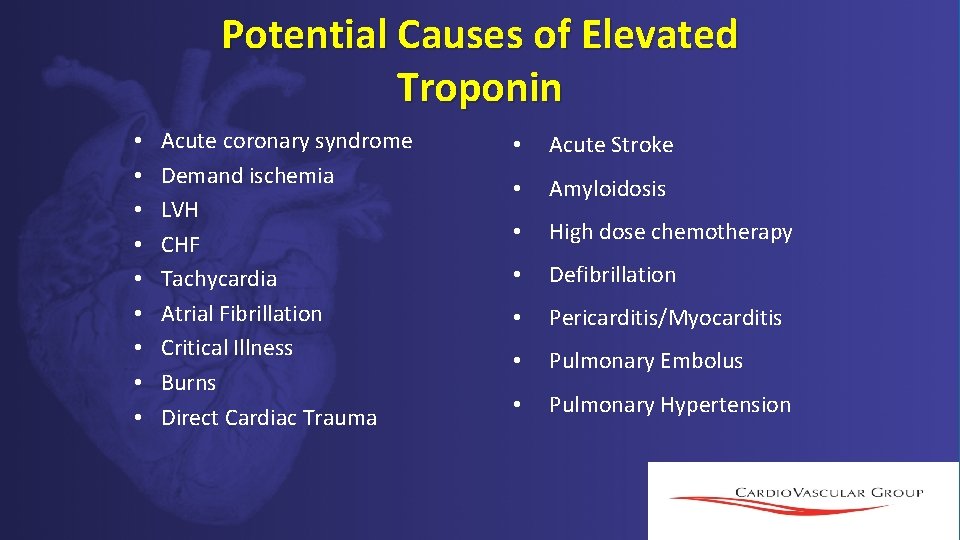
Potential Causes of Elevated Troponin • • • Acute coronary syndrome Demand ischemia LVH CHF Tachycardia Atrial Fibrillation Critical Illness Burns Direct Cardiac Trauma • Acute Stroke • Amyloidosis • High dose chemotherapy • Defibrillation • Pericarditis/Myocarditis • Pulmonary Embolus • Pulmonary Hypertension
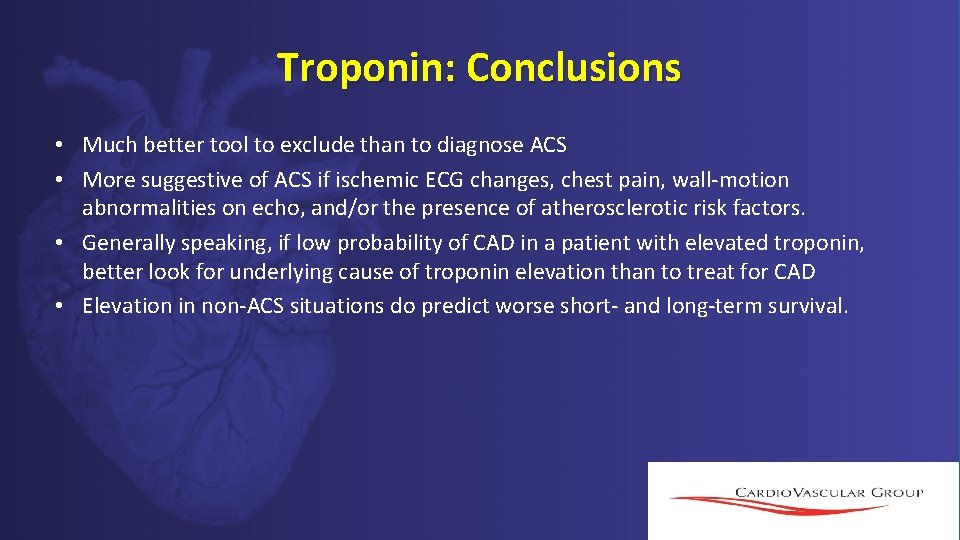
Troponin: Conclusions • Much better tool to exclude than to diagnose ACS • More suggestive of ACS if ischemic ECG changes, chest pain, wall-motion abnormalities on echo, and/or the presence of atherosclerotic risk factors. • Generally speaking, if low probability of CAD in a patient with elevated troponin, better look for underlying cause of troponin elevation than to treat for CAD • Elevation in non-ACS situations do predict worse short- and long-term survival.