
Martin Luther King Jr The Civil Rights Movement

- Slides: 16
Martin Luther King, Jr. The Civil Rights Movement
Civil Rights that apply to every citizen of a country
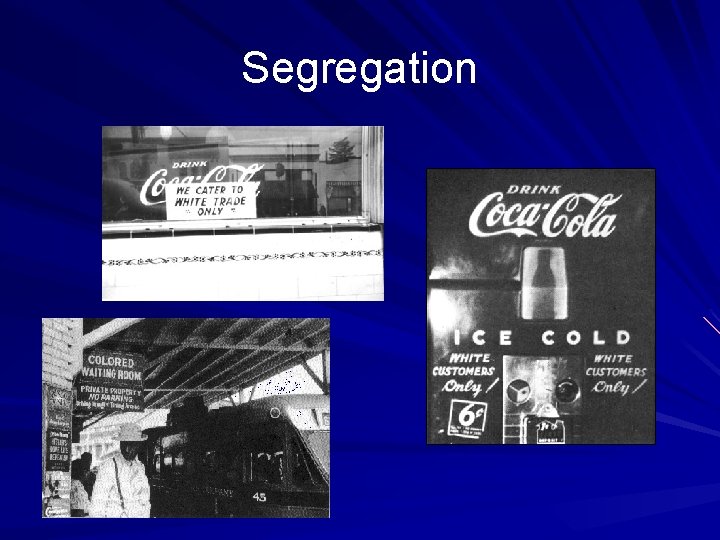
Segregation
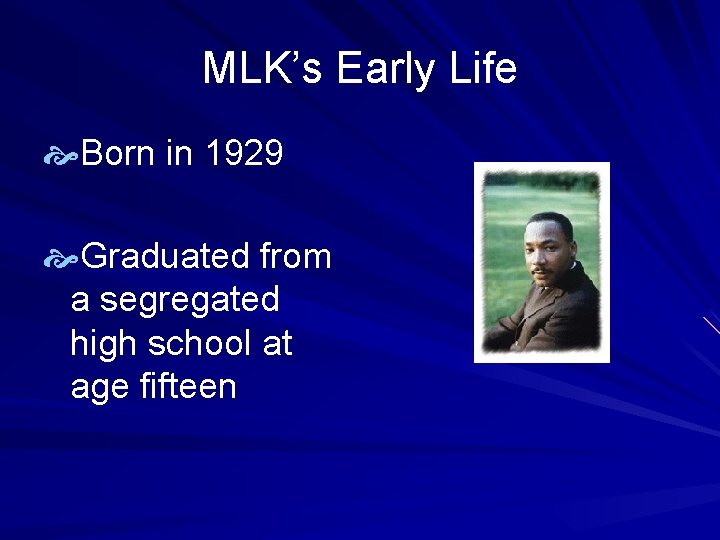
MLK’s Early Life Born in 1929 Graduated from a segregated high school at age fifteen
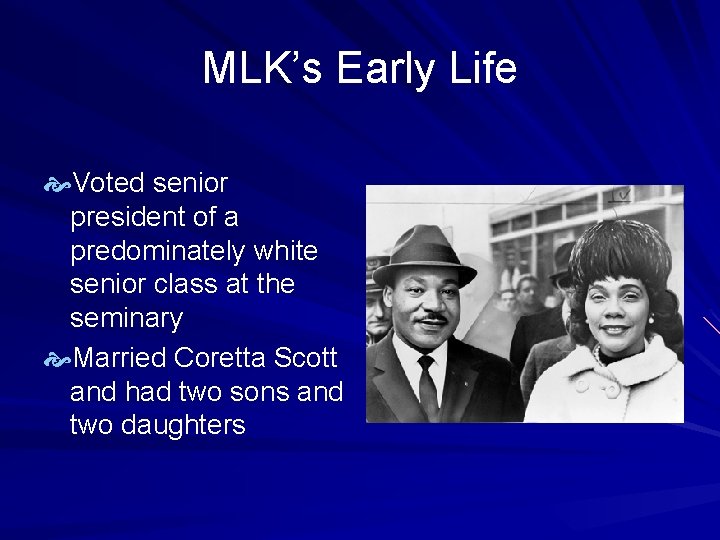
MLK’s Early Life Voted senior president of a predominately white senior class at the seminary Married Coretta Scott and had two sons and two daughters
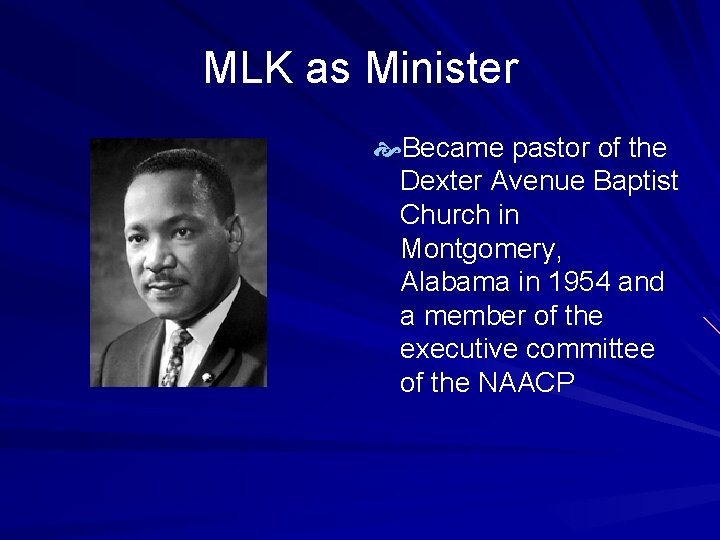
MLK as Minister Became pastor of the Dexter Avenue Baptist Church in Montgomery, Alabama in 1954 and a member of the executive committee of the NAACP
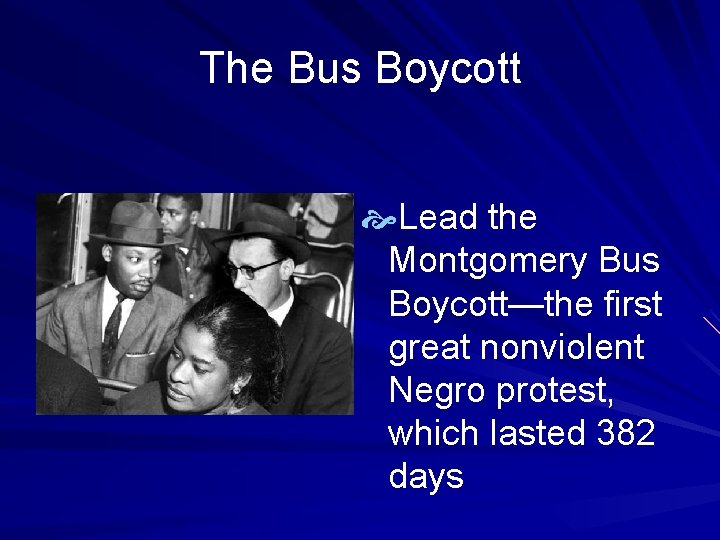
The Bus Boycott Lead the Montgomery Bus Boycott—the first great nonviolent Negro protest, which lasted 382 days
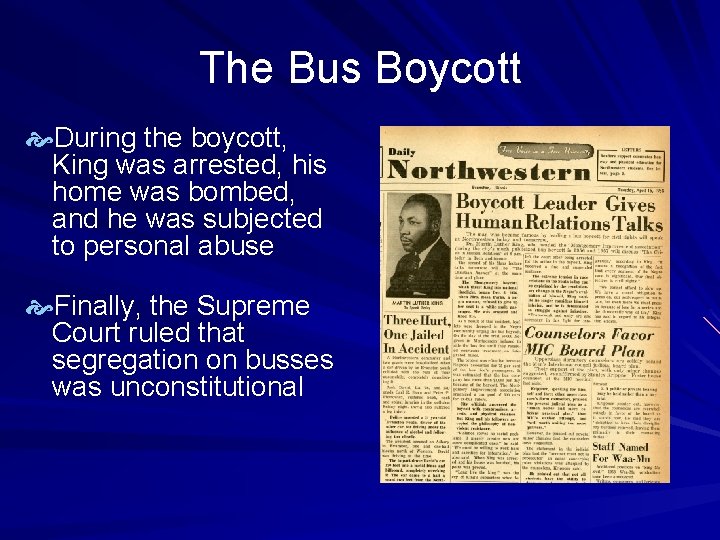
The Bus Boycott During the boycott, King was arrested, his home was bombed, and he was subjected to personal abuse Finally, the Supreme Court ruled that segregation on busses was unconstitutional
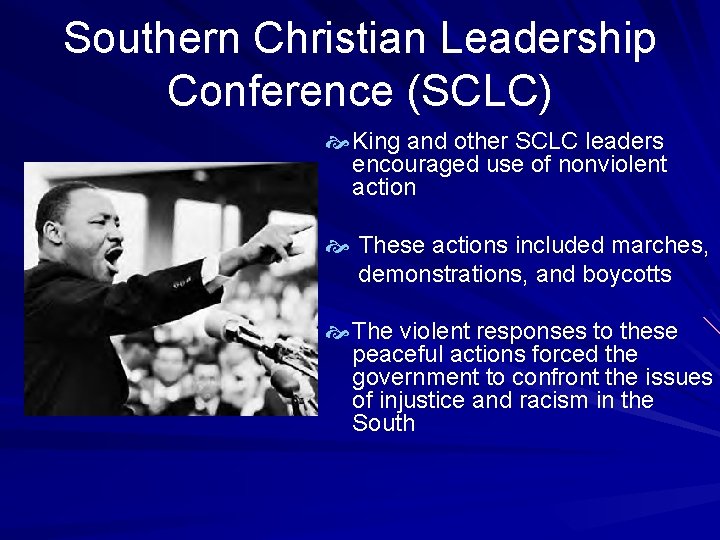
Southern Christian Leadership Conference (SCLC) King and other SCLC leaders encouraged use of nonviolent action These actions included marches, demonstrations, and boycotts The violent responses to these peaceful actions forced the government to confront the issues of injustice and racism in the South
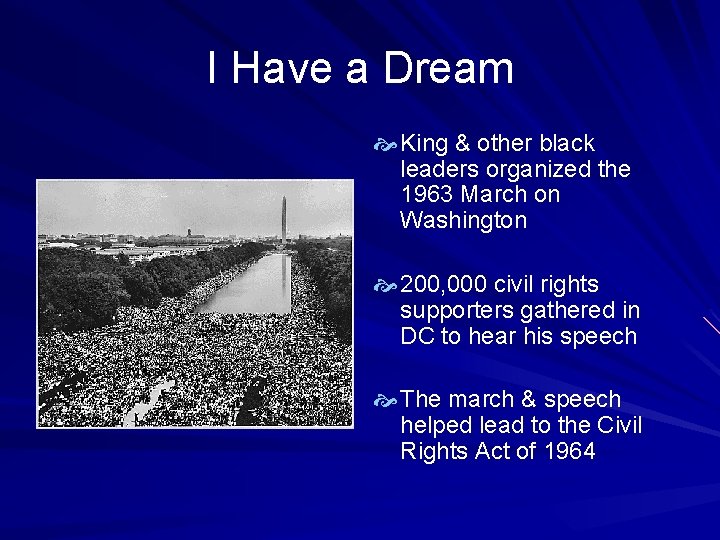
I Have a Dream King & other black leaders organized the 1963 March on Washington 200, 000 civil rights supporters gathered in DC to hear his speech The march & speech helped lead to the Civil Rights Act of 1964
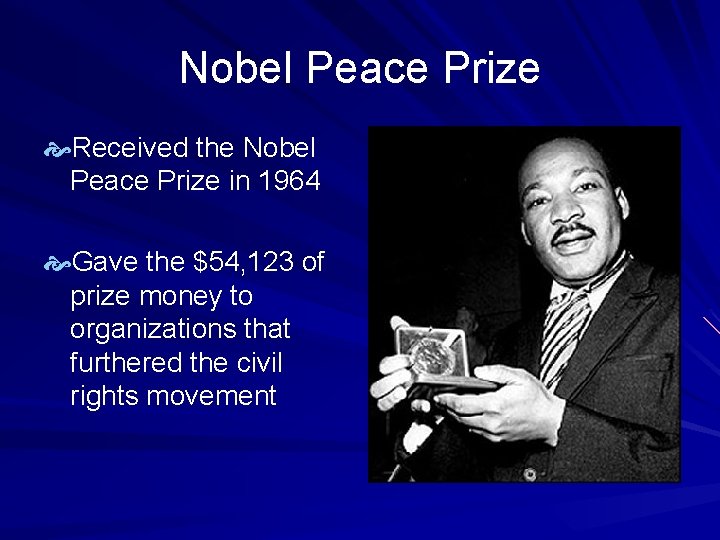
Nobel Peace Prize Received the Nobel Peace Prize in 1964 Gave the $54, 123 of prize money to organizations that furthered the civil rights movement
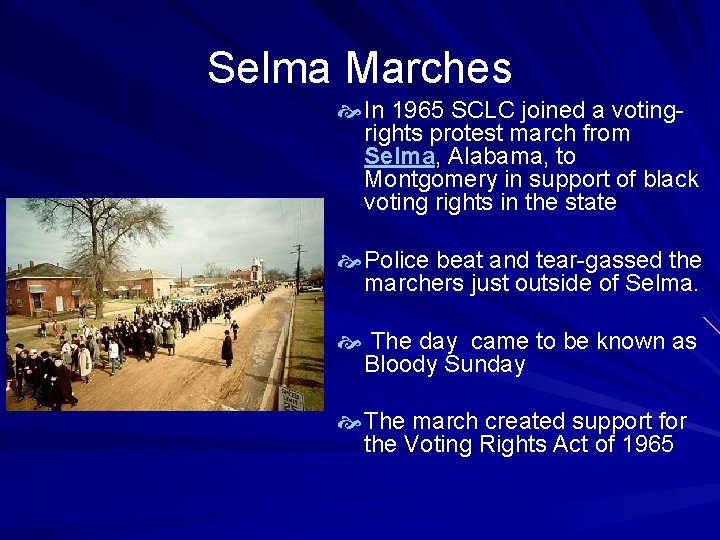
Selma Marches In 1965 SCLC joined a votingrights protest march from Selma, Alabama, to Montgomery in support of black voting rights in the state Police beat and tear-gassed the marchers just outside of Selma. The day came to be known as Bloody Sunday The march created support for the Voting Rights Act of 1965
Selma Marches After the Voting Rights Act of 1965 passed, many white Americans who had supported MLK believed that the job was done The focus began to shift from civil rights to the anti-war (Vietnam) movement
Economic Issues Throughout 1966 and 1967 King increasingly turned the focus of his civil rights activism toward economic issues This emphasis on economic rights took King to Memphis, Tennessee in support of striking black garbage workers in 1968
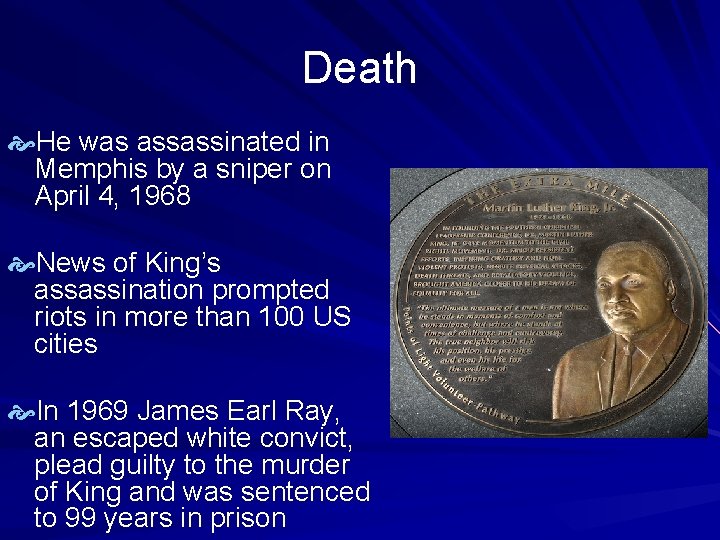
Death He was assassinated in Memphis by a sniper on April 4, 1968 News of King’s assassination prompted riots in more than 100 US cities In 1969 James Earl Ray, an escaped white convict, plead guilty to the murder of King and was sentenced to 99 years in prison
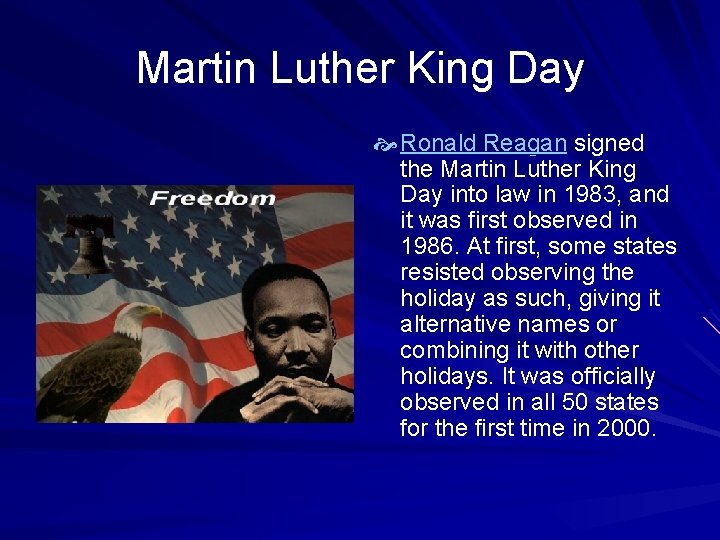
Martin Luther King Day Ronald Reagan signed the Martin Luther King Day into law in 1983, and it was first observed in 1986. At first, some states resisted observing the holiday as such, giving it alternative names or combining it with other holidays. It was officially observed in all 50 states for the first time in 2000.