
MARS MARS Named after Roman god of War

- Slides: 22
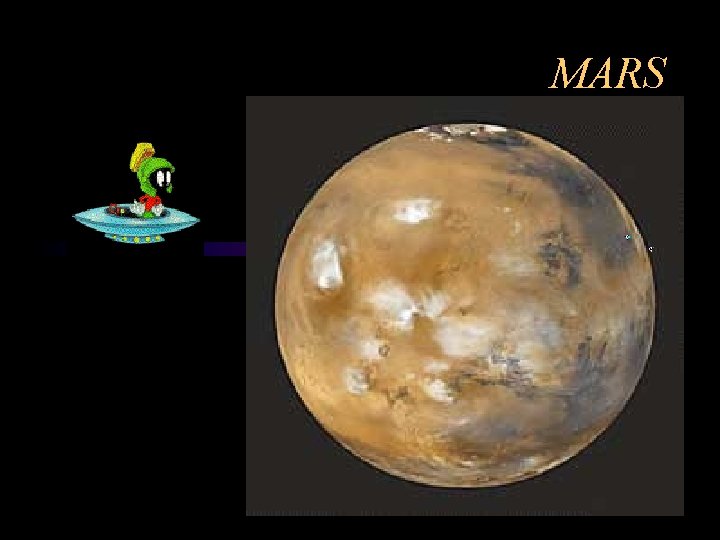
MARS
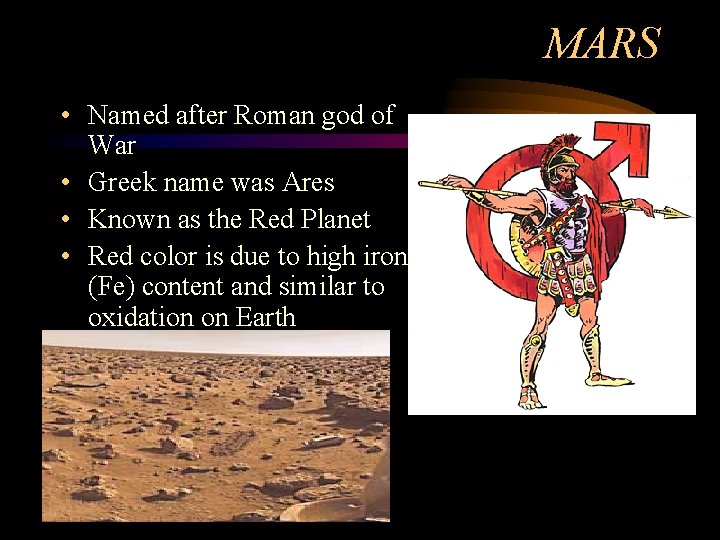
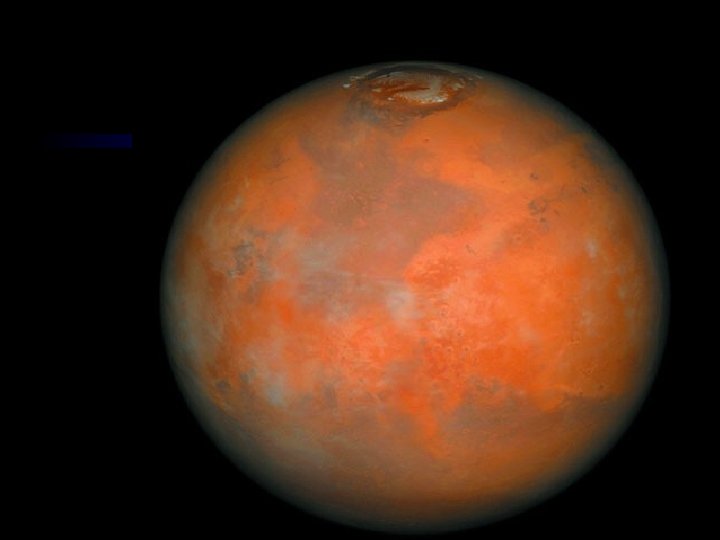
MARS • Named after Roman god of War • Greek name was Ares • Known as the Red Planet • Red color is due to high iron (Fe) content and similar to oxidation on Earth
Facts: • Temp: -195 F to 70 F • Distance from Sun: 141, 620, 000 miles (1. 5 times farther from Sun than Earth) • Diameter: 4, 212 miles (1/2 of Earth) • Revolution: 687 days • Rotation: 24 hours 39 minutes 35 seconds
More Facts • Tilt of axis: 25. 19 degrees • Distance from Earth: Close: 33, 900, 000 miles Far: 249, 000 miles • Gravity: 38 % of the Earth’s • About 1/10 as massive as Earth
FEATURES • • • Similar crust and mantle to Earth Composed mainly of peridotite (olivine) Core is Fe, Ni, and S Most likely a solid core No significant magnetic field Rocks studied show magnetic properties so Mars probably had a molten core in past
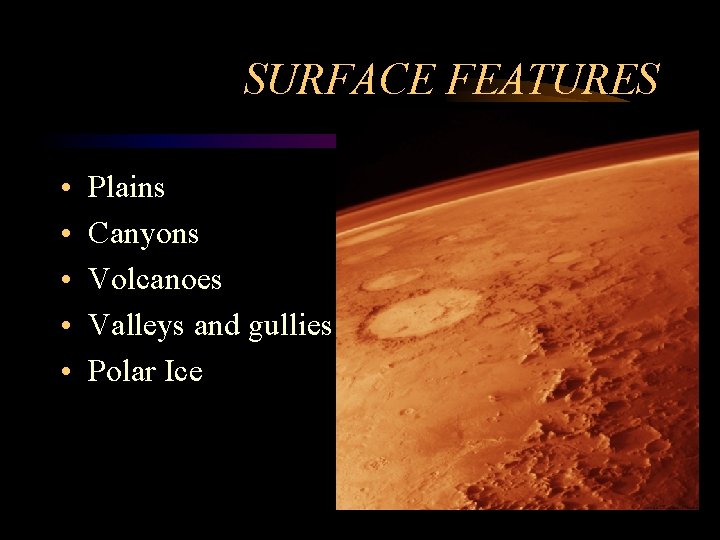
SURFACE FEATURES • • • Plains Canyons Volcanoes Valleys and gullies Polar Ice
PLAINS • • • Found mostly in Northern Hemisphere Flattest and smoothest in Solar System Possibly from settling sediments Few craters but immense Largest is 1400 miles in diameter and 5. 5 miles deep
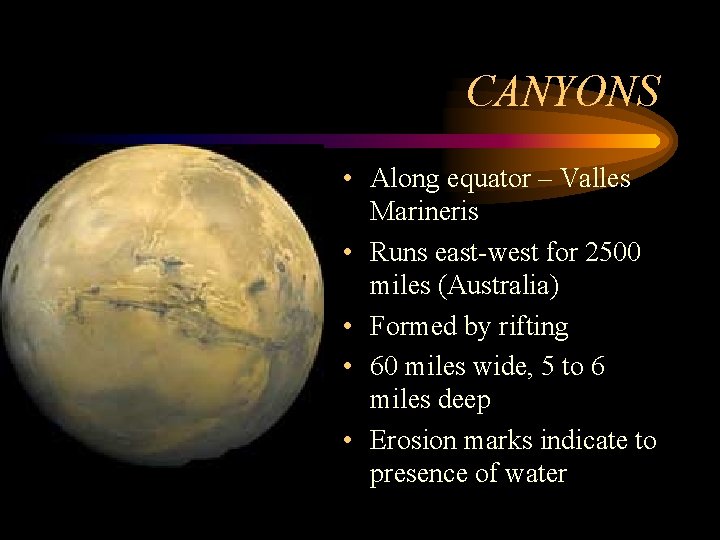
CANYONS • Along equator – Valles Marineris • Runs east-west for 2500 miles (Australia) • Formed by rifting • 60 miles wide, 5 to 6 miles deep • Erosion marks indicate to presence of water
VOLCANOES • Largest in the solar system • Olympus Mons – 17 miles high 370 miles around • Similar to Hawaii in shape • May still be slightly active
VALLEYS • • Known as outflow channels 60 miles wide, 1200 miles long Appeared to carved during floods Other areas have networks like river systems on Earth • Suggest that the planet may have had water as a liquid in ancient time
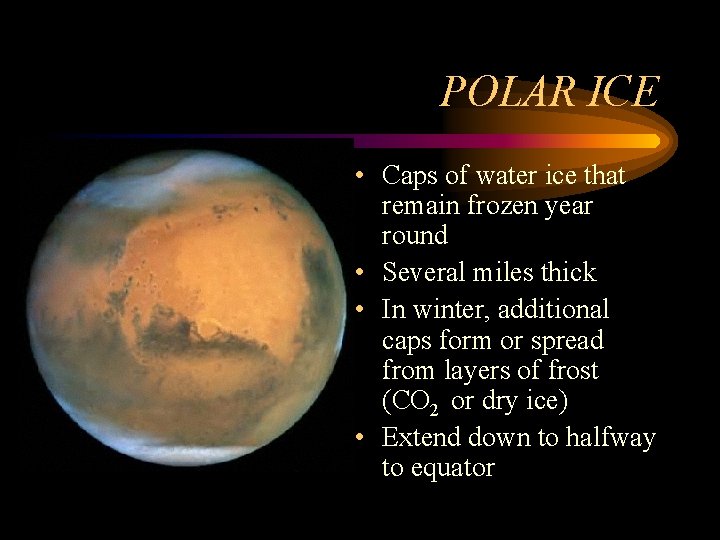
POLAR ICE • Caps of water ice that remain frozen year round • Several miles thick • In winter, additional caps form or spread from layers of frost (CO 2 or dry ice) • Extend down to halfway to equator
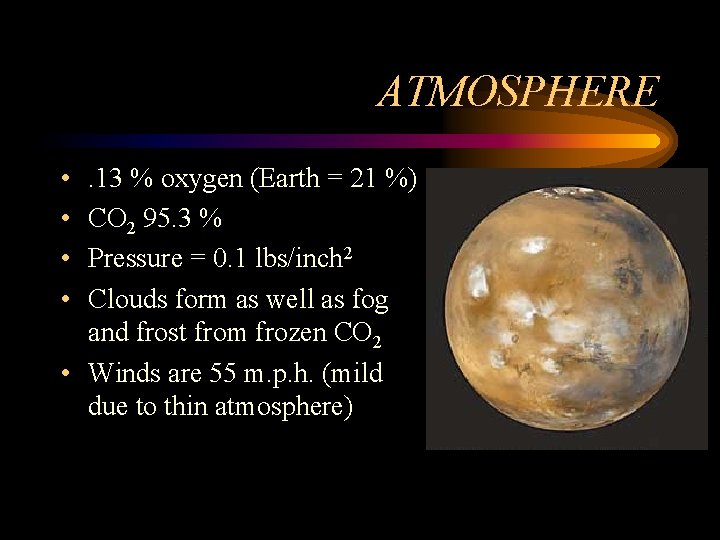
ATMOSPHERE • • . 13 % oxygen (Earth = 21 %) CO 2 95. 3 % Pressure = 0. 1 lbs/inch 2 Clouds form as well as fog and frost from frozen CO 2 • Winds are 55 m. p. h. (mild due to thin atmosphere)
DUST STORMS • Can last for months • Lift dust high in atmosphere • Cover an area 200 to 1000 miles, even the entire planet • More common when planet is closer to sun • Dust absorbs sunlight, warming the air, lifting more dust
SATELITES • 2 moons • Phobos – 17 mile diameter • Deimos – 9 mile diameter • Many craters on them despite size
EXPLORATION Earth BASED • Polar caps discovered by telescope in 1800’s • Winds as light and dark material was seen moving on surface • “Canals” found suspected life on Mars (Lowell)
SPACECRAFT • • • Mariner 4 in 1964 Mariners 6 and 7 in 1969 Pictures proved to be a barren landscape No water No life Saw only cratered region
SPACECRAFT • 1971 Mariner 9 went into orbit mapped 80% of surface • Discovered volcanoes, canyons, and dry riverbeds • Series of probes/orbiters through the 90’s and early 2000’s provided more information and tested new landing system
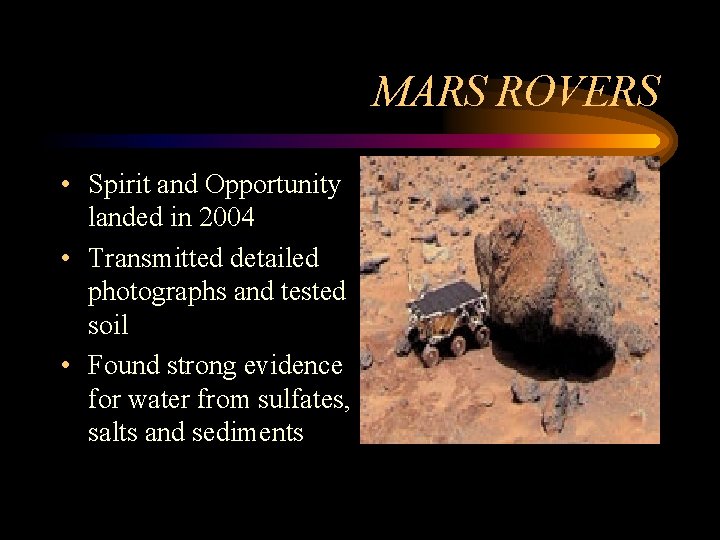
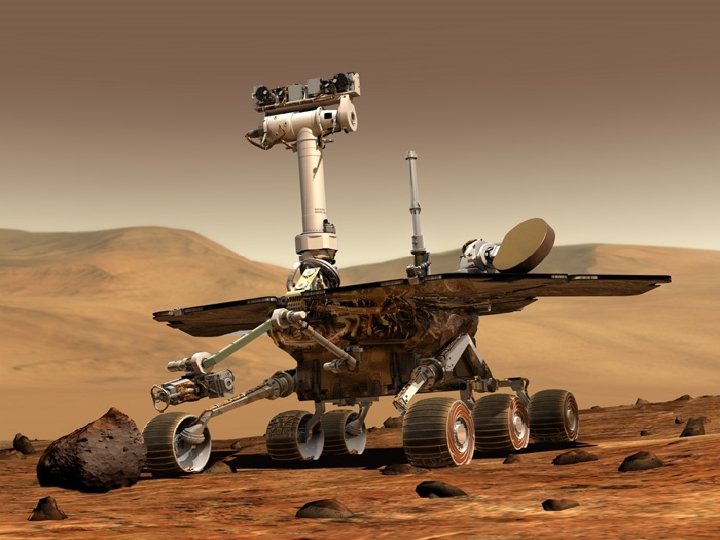
MARS ROVERS • Spirit and Opportunity landed in 2004 • Transmitted detailed photographs and tested soil • Found strong evidence for water from sulfates, salts and sediments
http: //www. pbs. org/wgbh/nova/m ars/launchland. html