
MARLENA BYRNE DEPUTY CHIEF RESILIENCE OFFICER LAURA HOGSHEAD
MARLENA BYRNE - DEPUTY CHIEF RESILIENCE OFFICER LAURA HOGSHEAD – CHIEF OPERATING OFFICER TOWARD A MORE RESILIENT NORTH CAROLINA Repay. Repair. Replace. Reconstruct. 30 January 2020
A NEW OFFICE WITH A DEDICATED FOCUS • Certified to become the grantee for Hurricane Florence and Hurricane Matthew assistance • Centralized structure for processing and issuing CDBG-DR awards • Institutionalizing processes for handling federal grants, resulting in quicker, more efficient assistance • Joint management of two major recoveries • Learning best practices from other states and applying lessons learned • Planning for seamless transition from Matthew recovery to Florence recovery • Working with State Disaster Recovery Funding to ensure coordination 2

STATUS OF CDBG FUNDS 06 March 2021 • Community Development Block Grant - Disaster Recovery (CDBG-DR) and Community Development Block Grant – Mitigation (CDBG-MIT) • Currently spending: $236. 5 million for Hurricane Matthew recovery – 80% must be spent in Cumberland, Robeson, Edgecombe, Wayne, Bladen and Columbus • Planning: $168 million for Hurricane Matthew mitigation – 50% must be spent in identified Matthew and Florence “Most Impacted and Distressed” Counties • Planning: $542. 6 million for Hurricane Florence recovery – 80% must be spent in Brunswick, Carteret, Columbus, Craven, Duplin, Jones, New Hanover, Onslow, Pender, Robeson and 28352 (Scotland), 28390 (Cumberland), 28433 (Bladen) and 28571 (Pamlico) • Total = $947. 1 million in CDBG-DR and –MIT for Matthew and Florence recovery 3

Programs – CDBG-DR Funding: • • • Homeowner Repair and Reconstruction Homeowner Reimbursement Manufactured Home Repair and Replacement Buyout Infrastructure Public Housing Restoration Affordable Housing Development Flood Insurance Assistance Small Rental Repair Program 4

NCORR ONE YEAR ACHIEVEMENTS 06 March 2021 • Certified by HUD to administer CDBG-DR funds and hired 45 staff. • Closed four major procurements to bring program capacity to NCORR including a Construction Management firm, an IT Systems firm, a Program Management firm, and a staff augmentation firm – this equals 140 contractor positions • SIGNIFICANT STRIDES IN PROGRAM DELIVERY IN ONE YEAR • December 2018: 154 award letters sent. Today: 1, 261 award letters delivered to applicants, up 719%. • December 2018: $14. 6 m committed. Today: $172. 9 m committed • December 2018: 19 construction projects initiated or completed. Today: 545 homes currently in construction or completed. 5
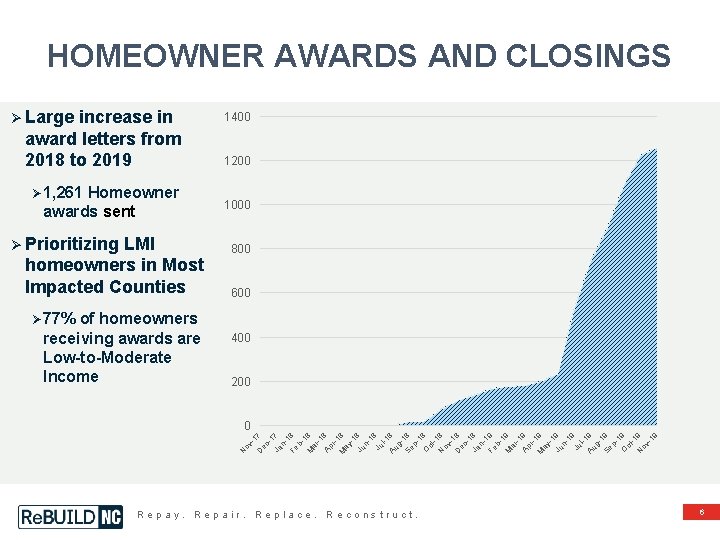
HOMEOWNER AWARDS AND CLOSINGS Ø Large increase in award letters from 2018 to 2019 Ø 1, 261 Homeowner awards sent Ø Prioritizing LMI homeowners in Most Impacted Counties of homeowners receiving awards are Low-to-Moderate Income 1400 1200 1000 800 600 Ø 77% 400 200 ec D N ov -1 7 -1 Ja 7 n 1 Fe 8 b 1 M 8 ar -1 Ap 8 r. M 18 ay -1 Ju 8 n 18 Ju l-1 Au 8 g 1 Se 8 p 1 O 8 ct -1 N 8 ov -1 D 8 ec -1 Ja 8 n 1 Fe 9 b 1 M 9 ar -1 Ap 9 r. M 19 ay -1 Ju 9 n 19 Ju l-1 Au 9 g 1 Se 9 p 1 O 9 ct -1 N 9 ov -1 9 0 Repay. Repair. Replace. Reconstruct. 6

LOCAL GOVERNMENT PROGRAMS • State Grant Program for Financially Distressed Local Governments Provides grants of up to $1, 000 to eligible local governments to assist with everyday operating expenses and administrative support costs incurred through their local disaster recovery efforts. • State Revolving Loan for Temporary Cash Assistance to Local Governments - Provides 0% interest loans of up to $2, 000 to assist eligible local governments in paying for disaster-related expenses while awaiting reimbursement from various federal disaster recovery resources or programs. • Applications will be received on a rolling basis, awardees will have 3 years to expend funds. • NCORR has awarded over $25 million in grants and loans to 24 local governments. 7
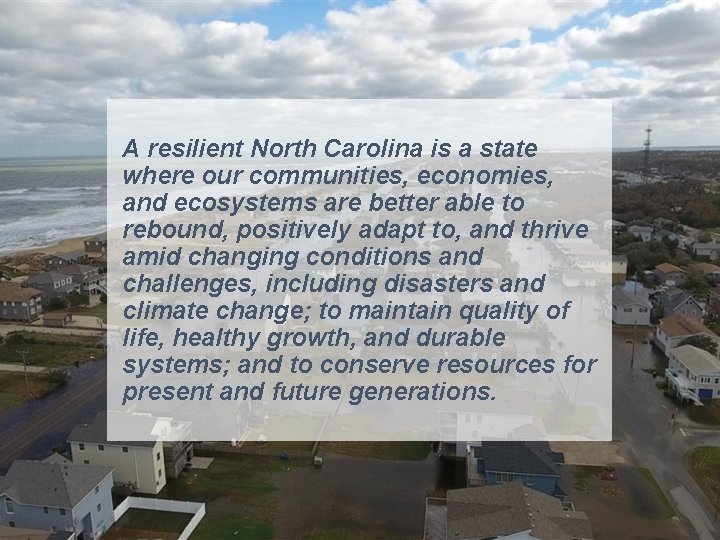
A resilient North Carolina is a state where our communities, economies, and ecosystems are better able to rebound, positively adapt to, and thrive amid changing conditions and challenges, including disasters and climate change; to maintain quality of life, healthy growth, and durable systems; and to conserve resources for present and future generations.
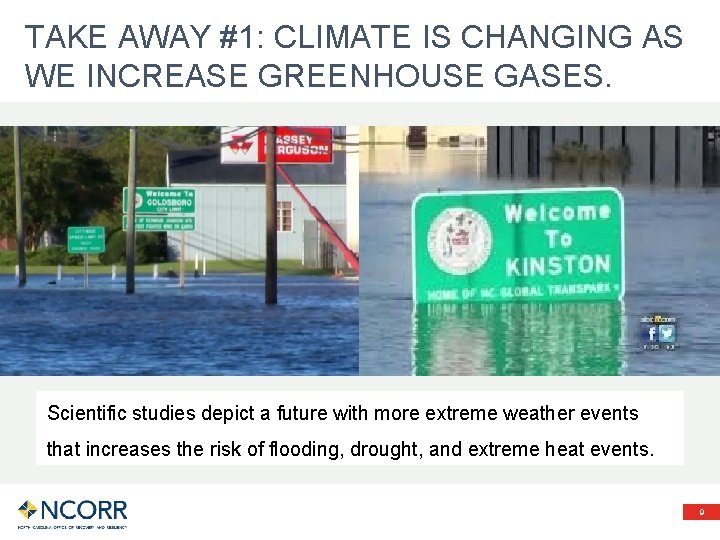
TAKE AWAY #1: CLIMATE IS CHANGING AS WE INCREASE GREENHOUSE GASES. Scientific studies depict a future with more extreme weather events that increases the risk of flooding, drought, and extreme heat events. 9
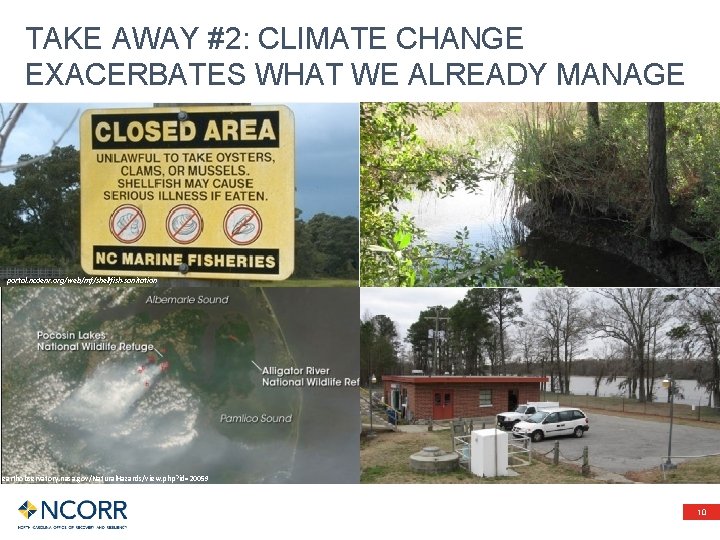
TAKE AWAY #2: CLIMATE CHANGE EXACERBATES WHAT WE ALREADY MANAGE portal. ncdenr. org/web/mf/shellfish-sanitation earthobservatory. nasa. gov/Natural. Hazards/view. php? id=20059 10

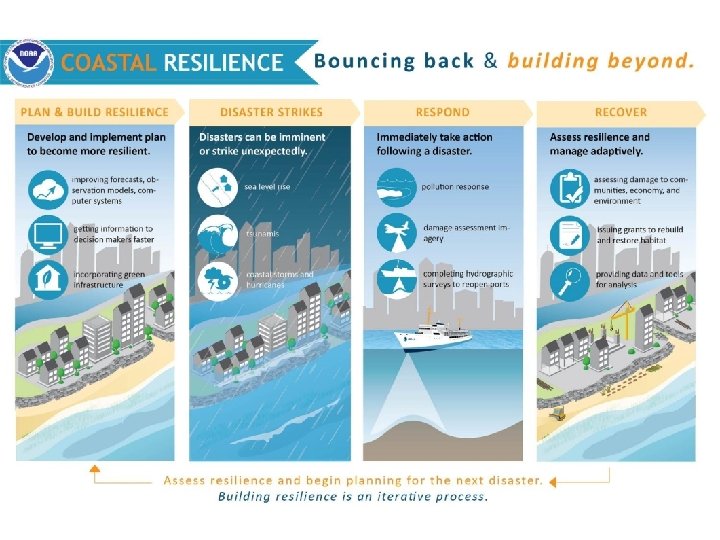
11
North Carolina’s road toward greater resilience Photo: Baxter Miller/RISING
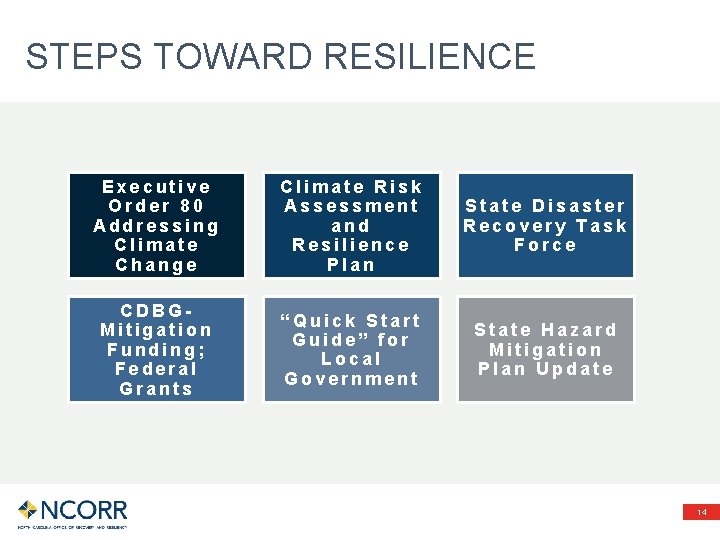
STEPS TOWARD RESILIENCE Executive Order 80 Addressing Climate Change Climate Risk Assessment and Resilience Plan State Disaster Recovery Task Force CDBGMitigation Funding; Federal Grants “Quick Start Guide” for Local Government State Hazard Mitigation Plan Update 14
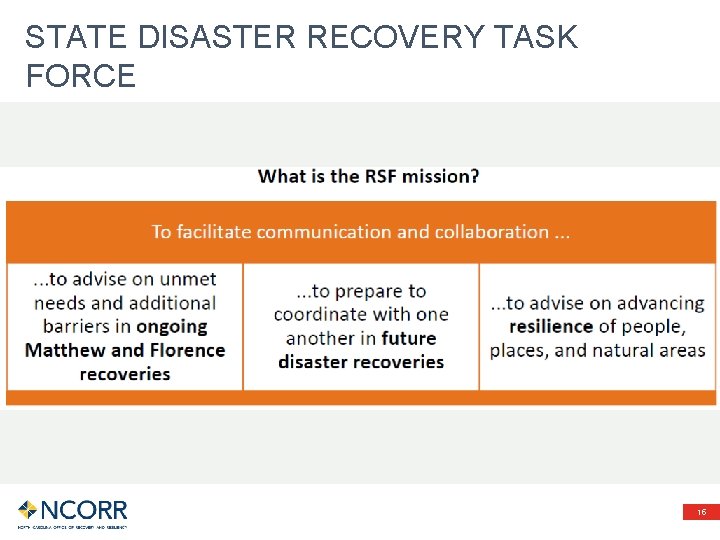
STATE DISASTER RECOVERY TASK FORCE 15
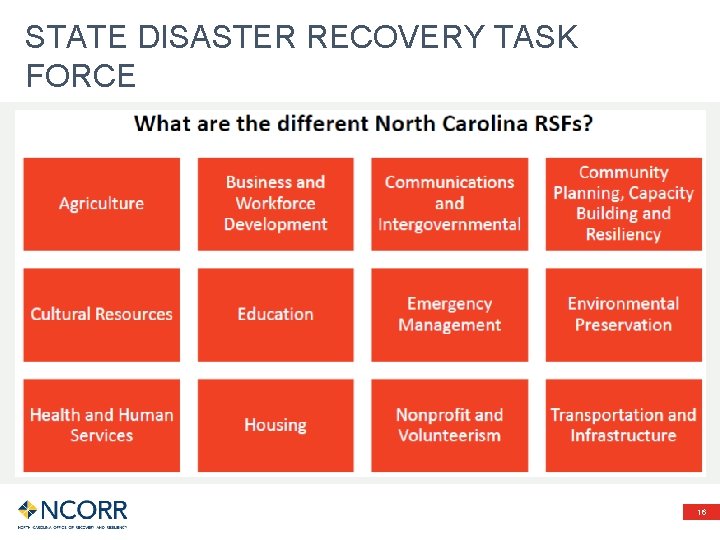
STATE DISASTER RECOVERY TASK FORCE 16
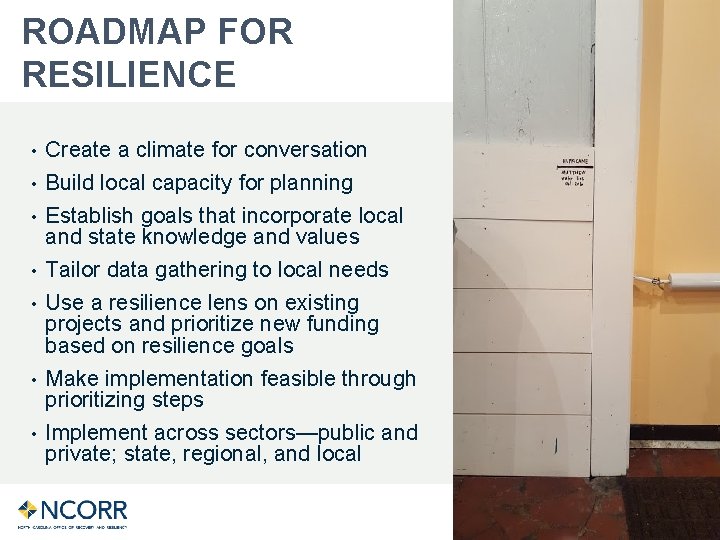
ROADMAP FOR RESILIENCE • Create a climate for conversation • Build local capacity for planning • Establish goals that incorporate local and state knowledge and values • Tailor data gathering to local needs • Use a resilience lens on existing projects and prioritize new funding based on resilience goals • Make implementation feasible through prioritizing steps • Implement across sectors—public and private; state, regional, and local 17
THANK YOU 18
- Slides: 18