
Markets of the world culture and economy mgr
- Slides: 112
Markets of the world: culture and economy mgr Anna Fornalska dr Monika Grottel
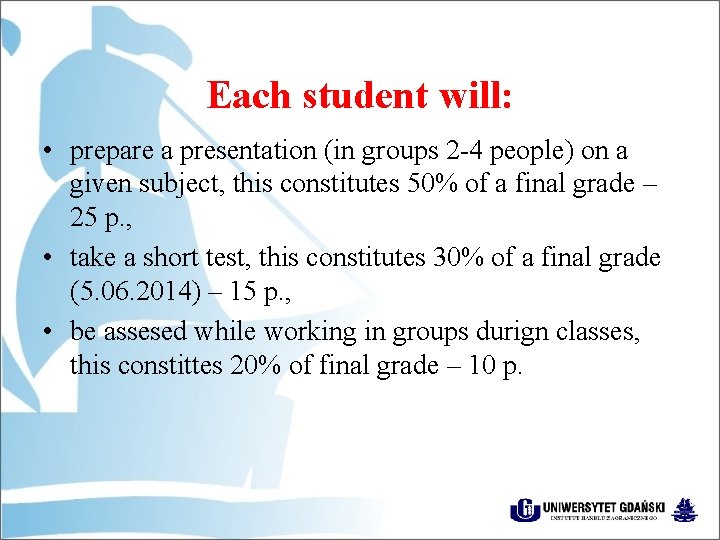
Each student will: • prepare a presentation (in groups 2 -4 people) on a given subject, this constitutes 50% of a final grade – 25 p. , • take a short test, this constitutes 30% of a final grade (5. 06. 2014) – 15 p. , • be assesed while working in groups durign classes, this constittes 20% of final grade – 10 p.
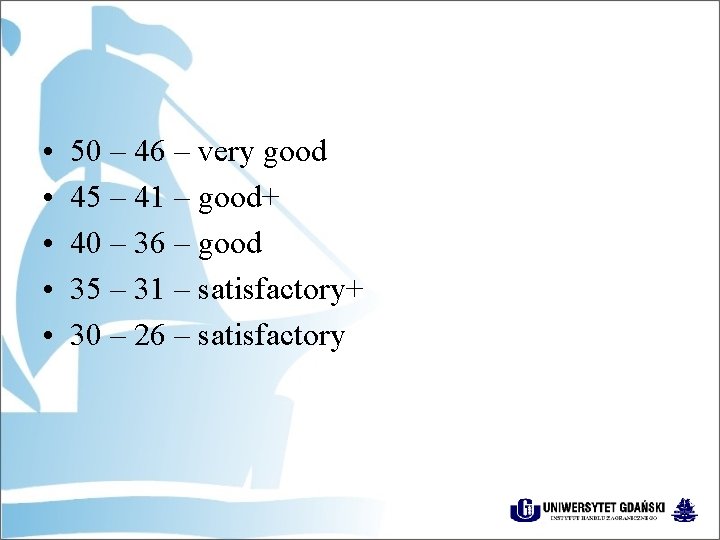
• • • 50 – 46 – very good 45 – 41 – good+ 40 – 36 – good 35 – 31 – satisfactory+ 30 – 26 – satisfactory
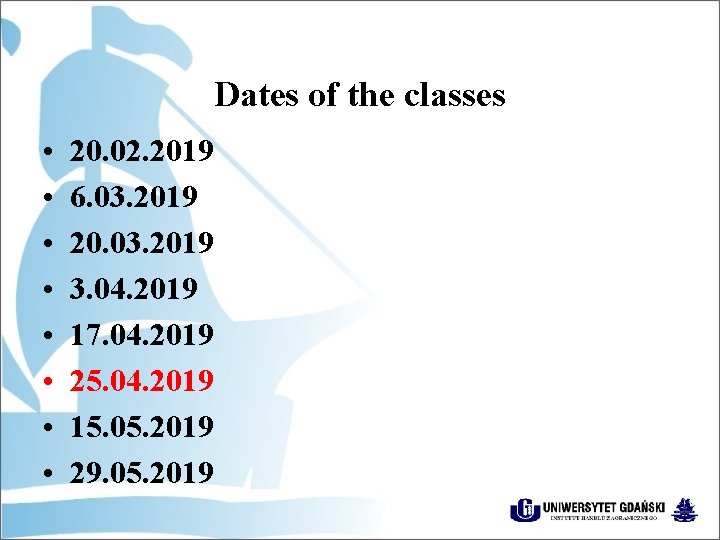
Dates of the classes • • 20. 02. 2019 6. 03. 2019 20. 03. 2019 3. 04. 2019 17. 04. 2019 25. 04. 2019 15. 05. 2019 29. 05. 2019
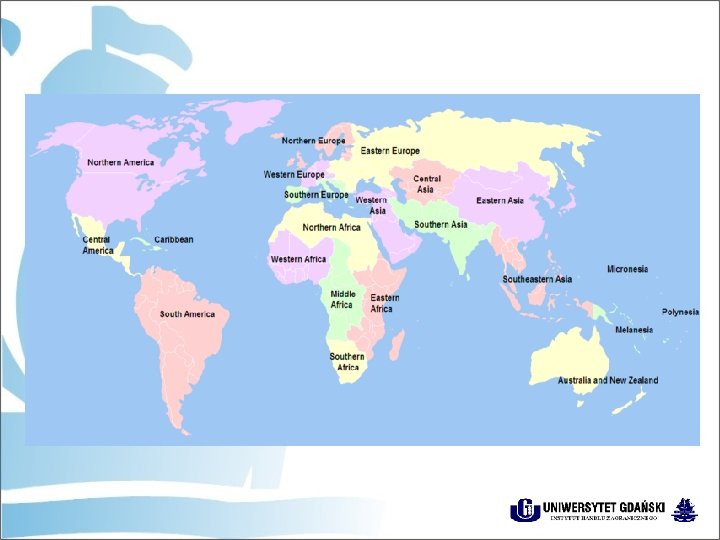
Range of topics 1. United Nations geoscheme – regions and subregions 2. Southern America - Brasil and Argentina – the birthplace of samba and tango 3. Central America – holiday destinations 4. Australia and Oceania – a region of diversity 5. Middle East countries – oil - the diamond of the Middle East? 6. African countries –from extreme poverty to prosperity 7. Southern Asia – a perfect place for retirement 8. Test, grades
Basic definitions and concepts • REGION • CULTURE • ECONOMY
World Regions • conventionally separated area, • relatively homogeneous, • different from the neighboring areas in terms of their natural or acquired features
World Regions • the distinguishing features of regions: : – natural : geographic location and characteristics of living nature or of inanimate nature – anthropogenic: distinct language, religion or ethnicity of the communities inhabiting the region and the characteristics of the local economy
Regions of the world – types • natural regions (climatic regions, phisogeographical, regions, zoogeographical etc. ) • cultural regions (common cultural features) • economic regions (economic relations – economic centers, industrial regions, agricultural regions) • administrative regions (legally separated units of local administration - administrative division).
Region is…. . • a unit of territorial organization in the country • a single, homogeneous area in terms of economic, social and cultural aspect • units of administrative division name in many countries of the world
Parts of the world • continent - physical geography, geology and geotectonics • part of the world - defined on the basis of regional geography • Europe and Asia are the two parts of the world, although they are one continent - Eurasia. • Australia and Oceania are one part of the world, but the continent is only Australia • America most often is regarded as one part of the world that covers two continents: South America and North America
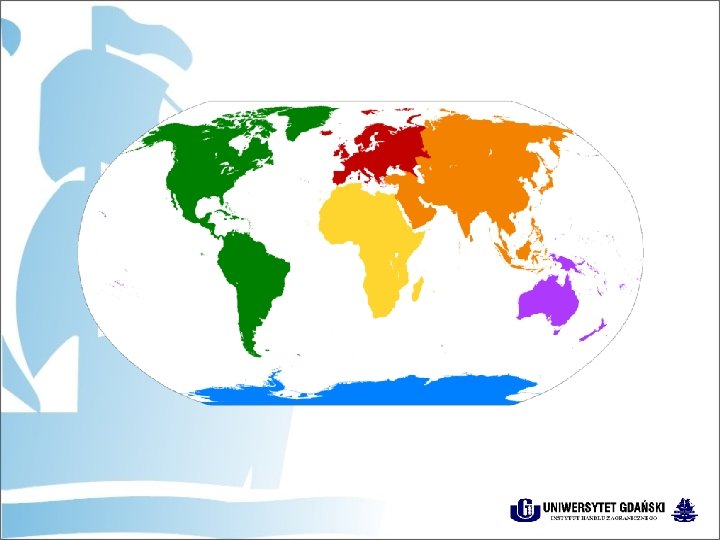
United Nations geoscheme • Geoschemat UN – schematic division of the world into regions and sub-regions • created by the United Nations for statistical purposes • regions are divided into smaller units subregions • UN scheme is just statistical (as such can not be used for political purposes)
Culture • the material and immaterial products made by people – material: works of art, books, buildings – immaterial: models of thinking and behaving, habits and customs.
Culture • material culture: goods and products made by people, człowieka, technology, practical skills, inventions, • spiritual culture: religion, knowledge, literature and literature, arts: visual arts, theater, music, film, fashion, and everything that belongs to the creations of the mind, such as philosophy, • social culture: moral norms, ideology, participation in cultural life, • language culture: language standard of communication, • political culture: values and patterns of behavior appropriate for politicians, political parties, • physical culture: system of behavior and actions.
Economy • the whole of the business activity in the region (regional economy), in the country (the national economy), or around the world (World Economy) • production of goods and services according to the needs of the population • three sectors: services, industry, agriculture
Resources: • United Nations Statistics Division: Standard Country or Area Codes for Statistical Use. Standard country or area codes and geographical regions for statistical use • M. Elżanowski, M. Maciołek, P. Przybysz, Region jako instytucja prawnoustrojowa, „Państwo i Prawo” 1990, nr 8 • J. Makowski, Geografia fizyczna świata, PWN, Warszawa 2007 • M. Filipiak, Socjologia kultury. Zarys zagadnień, Lublin 1996
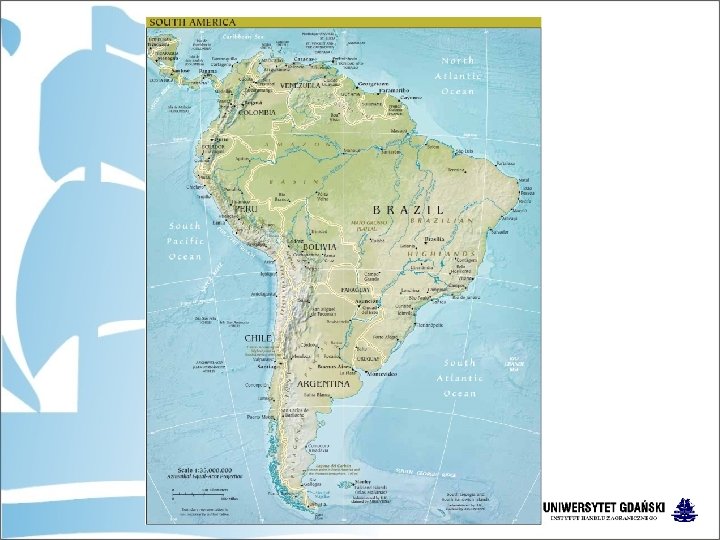
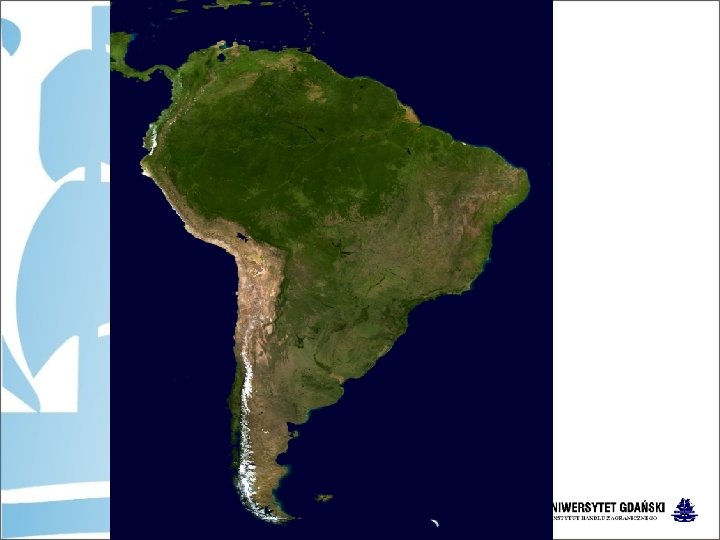
South America Amazon River, The Andes, Carnival in Rio, salsa Monika Grottel
Basic informations • Population: 387, 489, 196 (Source: 2010 United Nations) • Area: 6, 890, 000 square miles
Basic information • fourth largest continent in size and the fifth largest in population (after Eurasia, Africa, and North America) • the geography of South America is dominated by the Andes Mountain Range and the Amazon River (second longest river in the world). • São Paulo – ab. 20 million inhabitants - the largest city of the continent • North and South America were named after Italian explorer Amerigo Vespucci, in 1507. • New Land
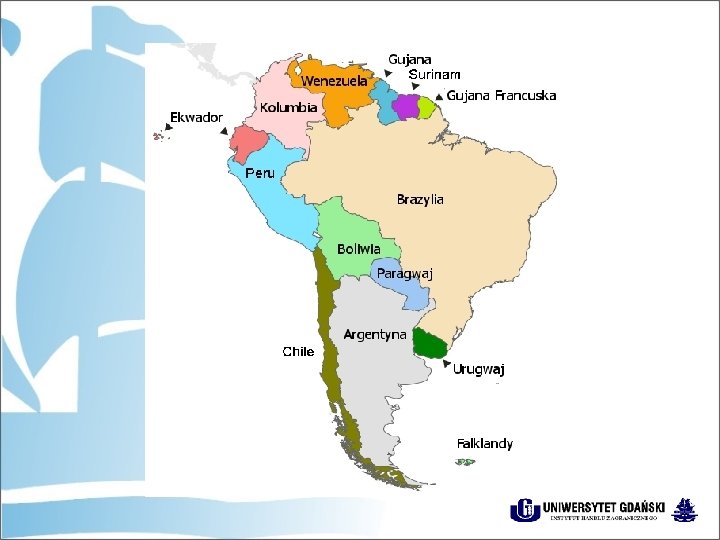
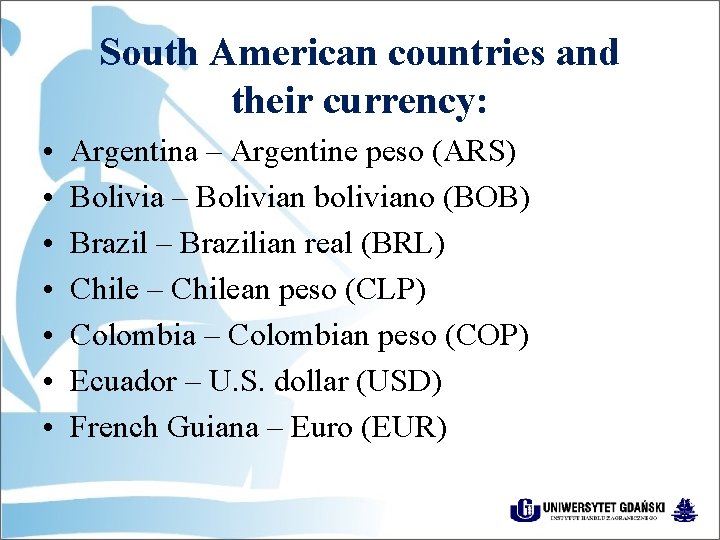
South American countries and their currency: • • Argentina – Argentine peso (ARS) Bolivia – Bolivian boliviano (BOB) Brazil – Brazilian real (BRL) Chile – Chilean peso (CLP) Colombia – Colombian peso (COP) Ecuador – U. S. dollar (USD) French Guiana – Euro (EUR)
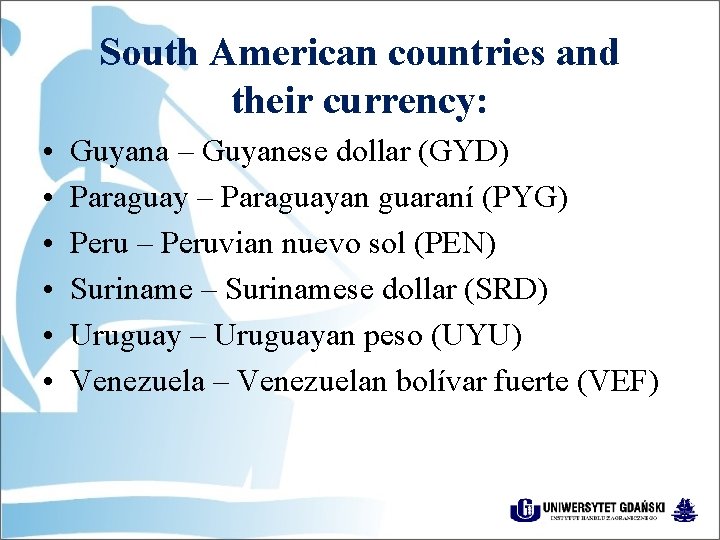
South American countries and their currency: • • • Guyana – Guyanese dollar (GYD) Paraguay – Paraguayan guaraní (PYG) Peru – Peruvian nuevo sol (PEN) Suriname – Surinamese dollar (SRD) Uruguay – Uruguayan peso (UYU) Venezuela – Venezuelan bolívar fuerte (VEF)
Major cities: • • • Sao Paulo, Brazil Buenos Aires, Argentina Rio de Janeiro, Brazil Santiago, Chile Brasilia, Brazil Lima, Peru Bogota, Colombia Caracas, Venezuela Belo Horizonte, Brazil Medellin, Colombia
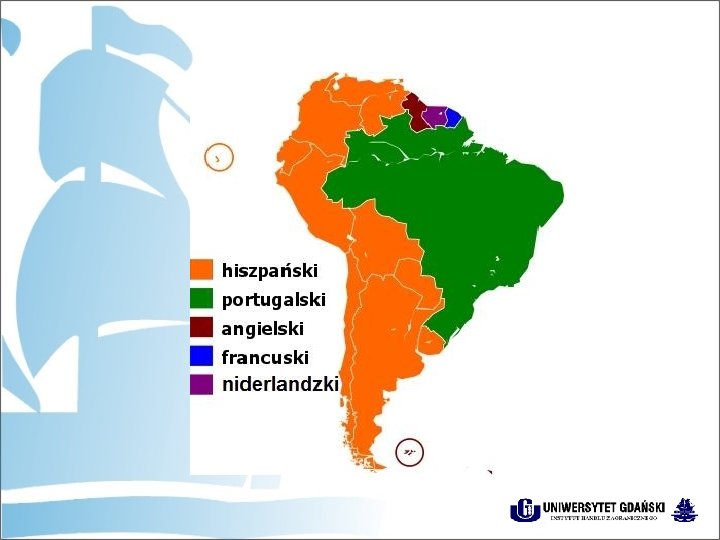
Languages: • Spanish is the official language of most countries, along with other native languages in some countries Portuguese is spoken in Brazil • Dutch is the official language of Suriname • English is the official language of Guyana and is also spoken in the Falkland Islands • French is the official language of French Guiana and the second language in Amapa (Brazil)
Bordering Bodies of Water • Pacific Ocean, • Atlantic Ocean, • Caribbean Sea.
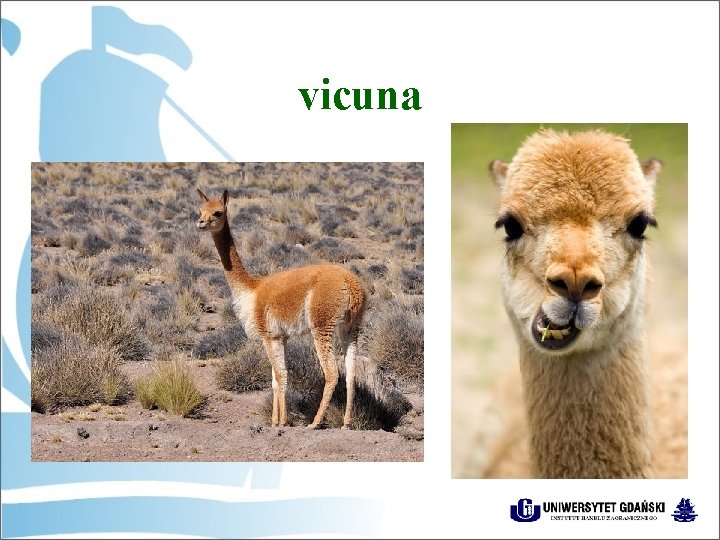
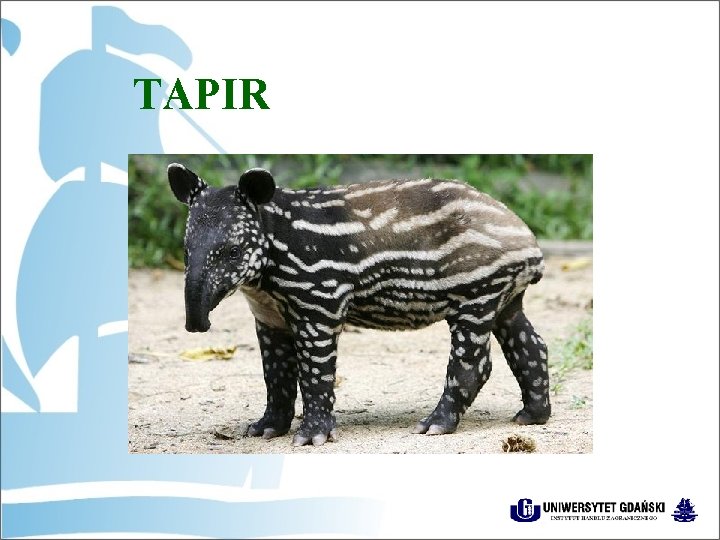
Fauna i flora • exotic animals, namely: llama, anaconda, piranha, jaguar, vicuna or tapir • biologically varied forests of Amazonia • plants: potato, tobacco, cocoa and pineapple
vicuna
TAPIR
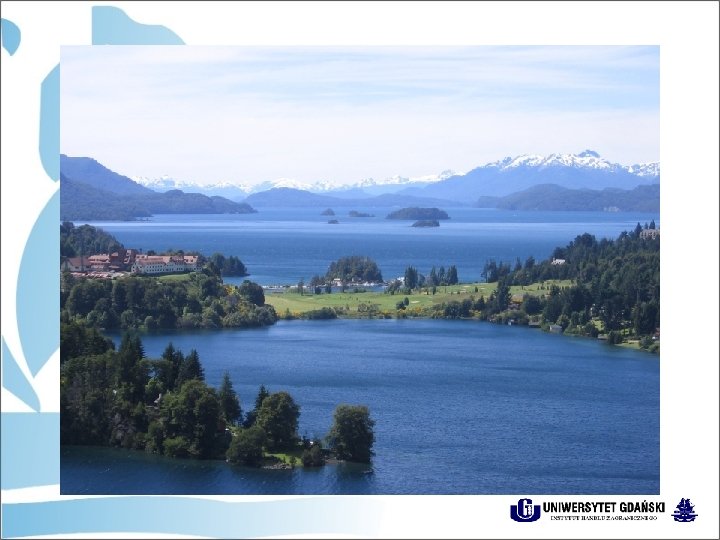
Major Rivers and Lakes • • Amazon River, Parana River, Orinoco River, Tocantins River, Strait of Magellan, Lake Titicaca, Lake Maracaibo.
the most…. . • the Atacama Desert in Chile is considered to be one of the driest places on Earth • the highest waterfall in the world is Santo del Angel (also called Angel Falls). It is almost 1000 meters high! • Sao Paulo, Brazil is one of the ten largest cities in the world
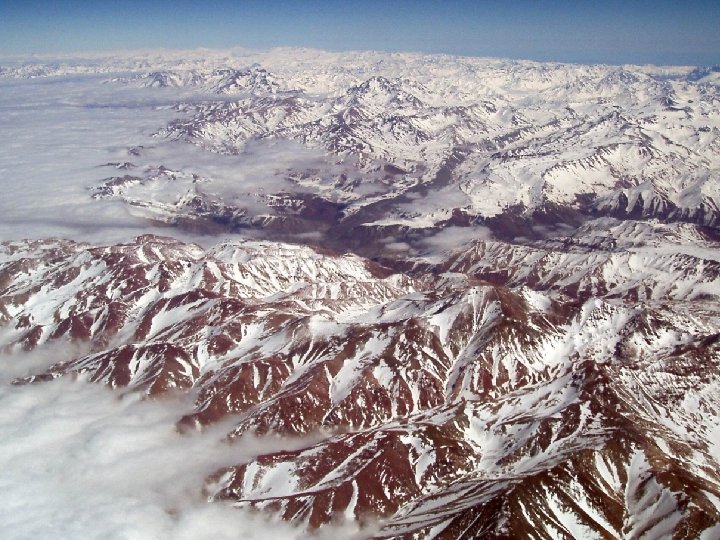
the most… • the highest point in South America is Cerro Aconcagua in the Andes Mountains in the country of Argentina (6962 m. above sea level) • the longest mountain chain – Andes • river with the highest average flow – Amazon River • the largest rainforest – the Amazon 7. 2 million square km
the most… • highest located lake used for commercial purposes– Titicaca Lake • the highest located volcano – Ojos del Salado (6885 m. above sea level ) • the highest located active volcano – Llullaillaco • highest located capital in the world – La Paz (3600 -4100 m a. s. l. ) • most southerly inhabited area – Puerto Toro in Chile.
NATURAL RESOURCES • main resources: gold, silver, copper, iron ore, petroleum • zinc, lead, tin, manganese, tungsten, antimony, uranium, sulfur, diamond
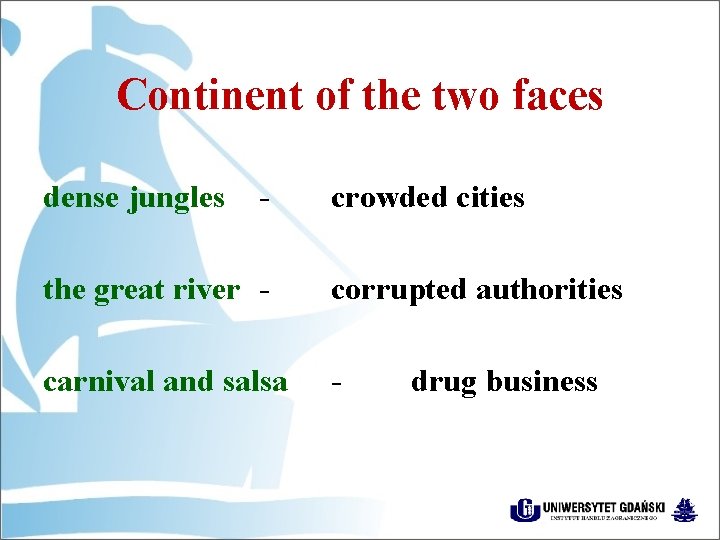
Continent of the two faces dense jungles - crowded cities the great river - corrupted authorities carnival and salsa - drug business
The giants of SOUTH AMERICA 1. BRAZIL 2. ARGENTINA 3. COLOMBIA
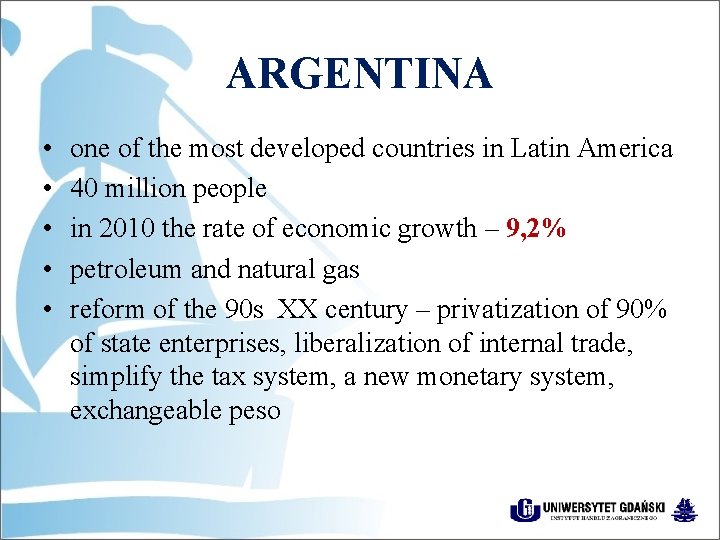
ARGENTINA • • • one of the most developed countries in Latin America 40 million people in 2010 the rate of economic growth – 9, 2% petroleum and natural gas reform of the 90 s XX century – privatization of 90% of state enterprises, liberalization of internal trade, simplify the tax system, a new monetary system, exchangeable peso
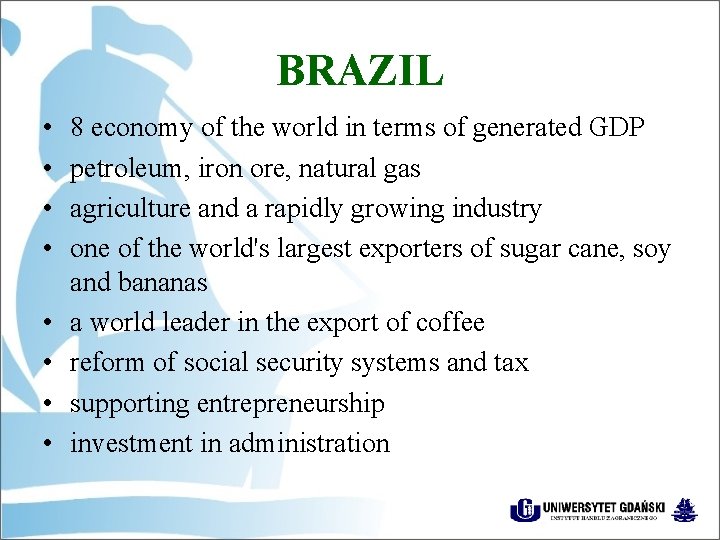
BRAZIL • • 8 economy of the world in terms of generated GDP petroleum, iron ore, natural gas agriculture and a rapidly growing industry one of the world's largest exporters of sugar cane, soy and bananas a world leader in the export of coffee reform of social security systems and tax supporting entrepreneurship investment in administration
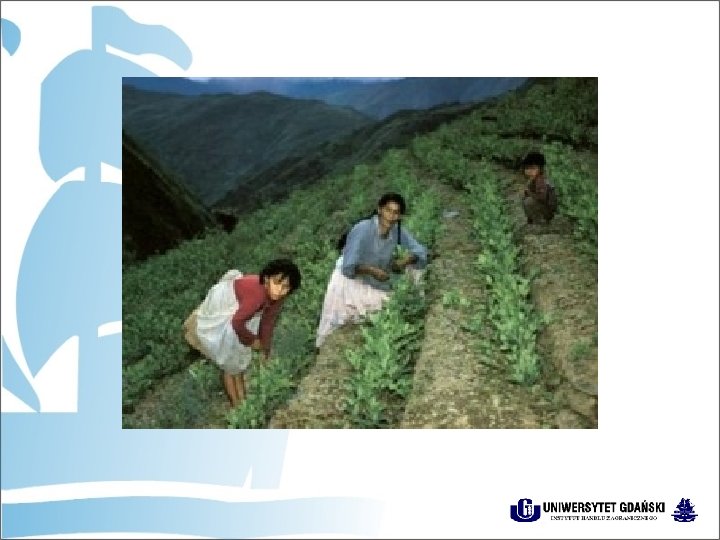
COLOMBIA • • • black character o. F the Latin continent DRUG BUSINESS 60. XX wieku - marihuana a world leader and broker in the cocaine trade 10% of the GDP DC comes from the production of drugs, especially cocaine • 50% of the leaves of cocaine in the world comes from Colombia (Peru – 30%, Boliwia – 15%)
COLOMBIA • Mafia - distribution and control transport routes • farmers are forced to grow DRUGplants • widespread having guns • exsport of: oil, coffee, coal, emeralds
RATING…. ! Corruption Perception Index • the most corrupted countries in the world – index of corruption 3 point
Music • • • rich variety of music the most famous: samba from Brazil, tango from Argentina & Uruguay, cumbia from Colombia.
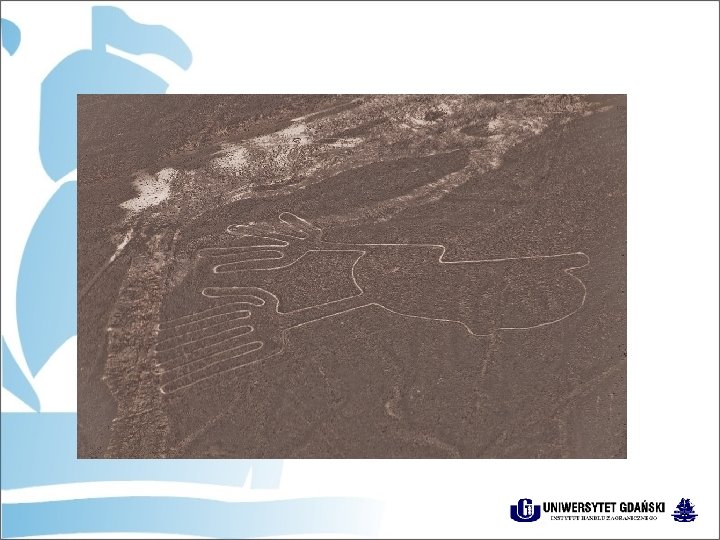
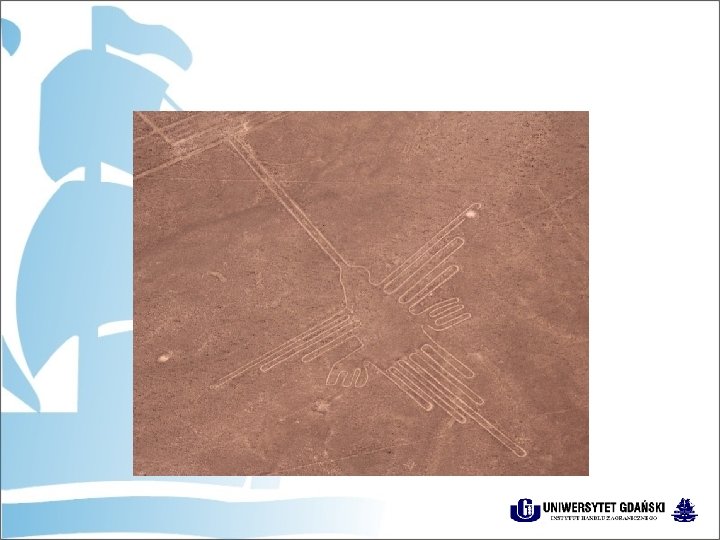
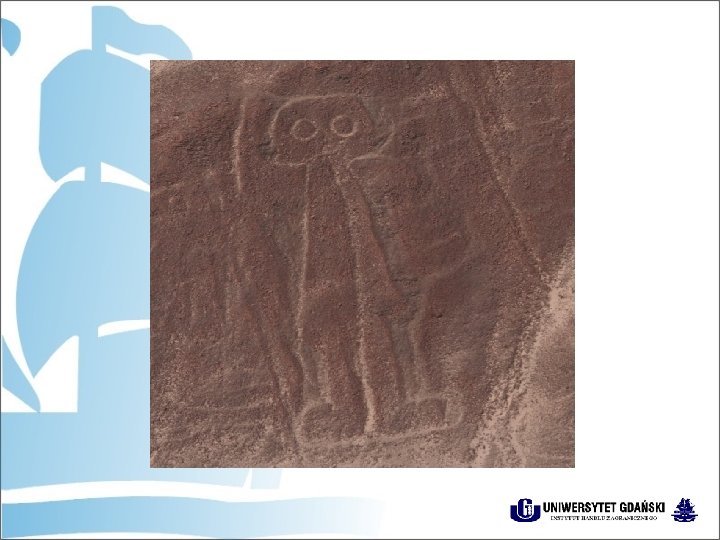
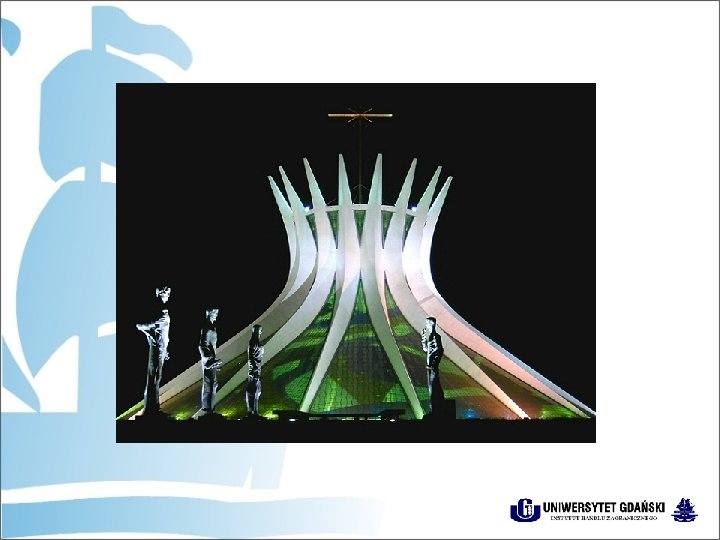
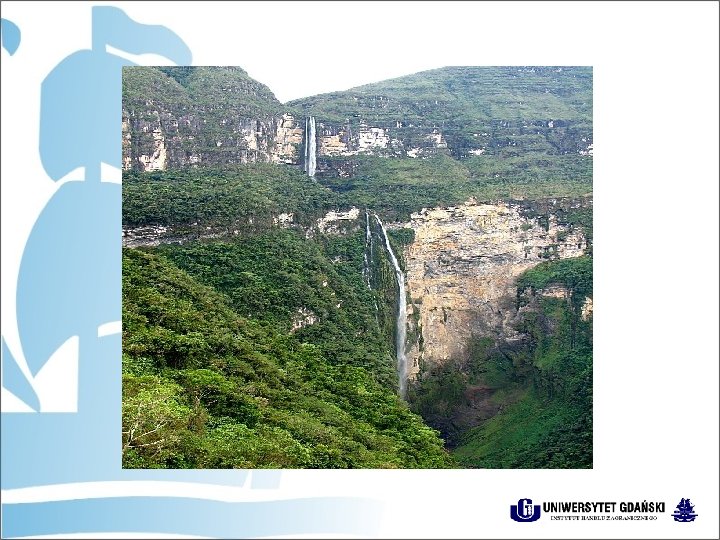
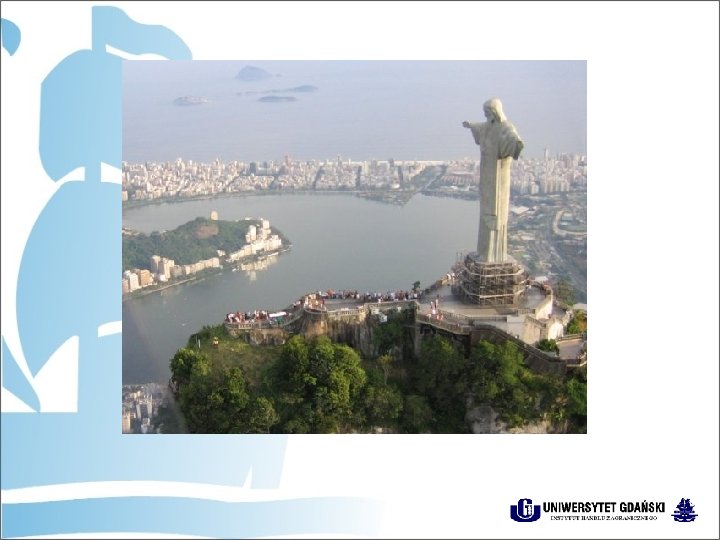
MIRACLEs OF SOUTH AMERICA • • DRAWINGS From NAZCA (Peru) CATHEDRAL in Brasilia Waterfall GOCTA The Christ Statue (Rd. J)
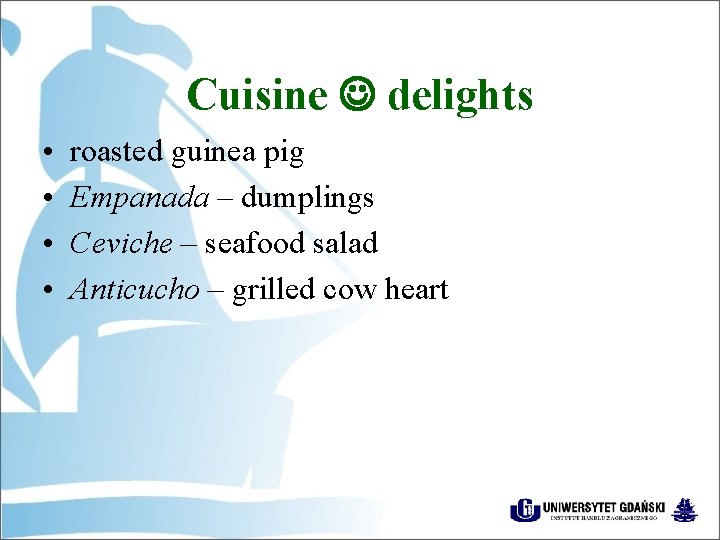
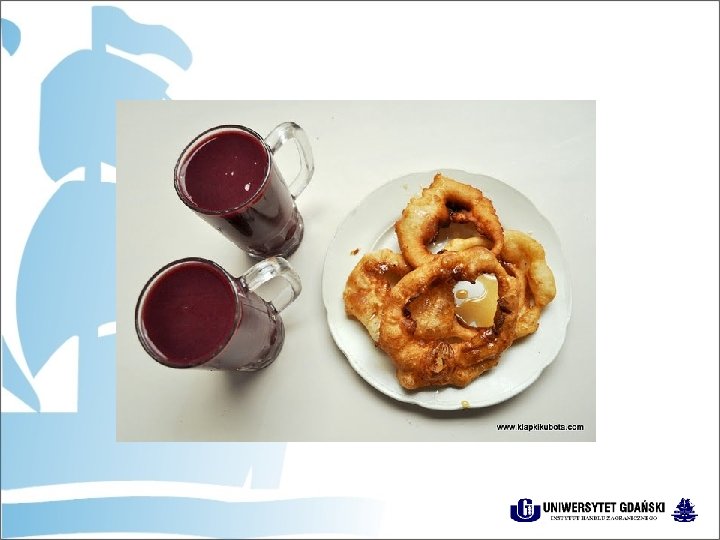
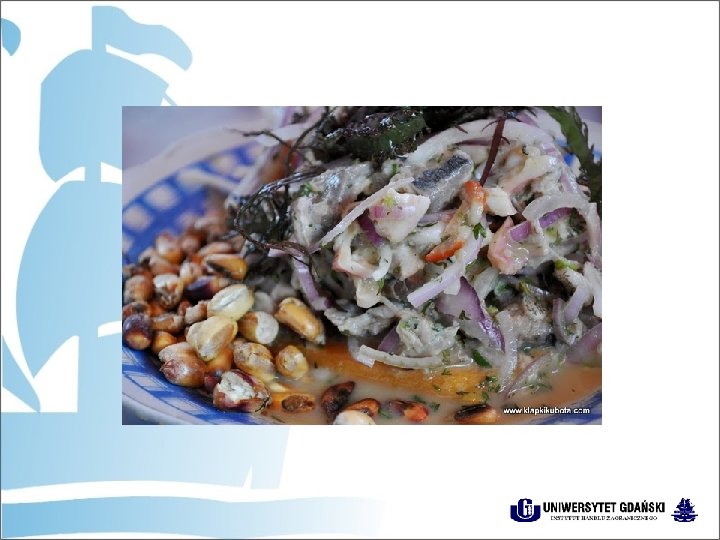
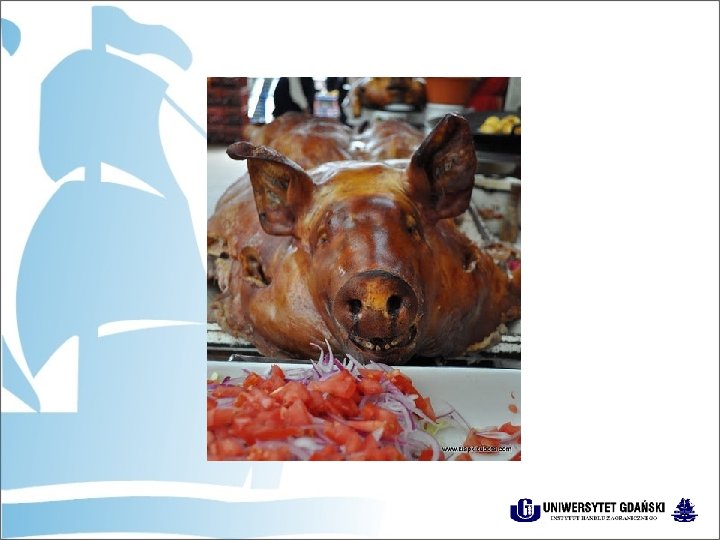
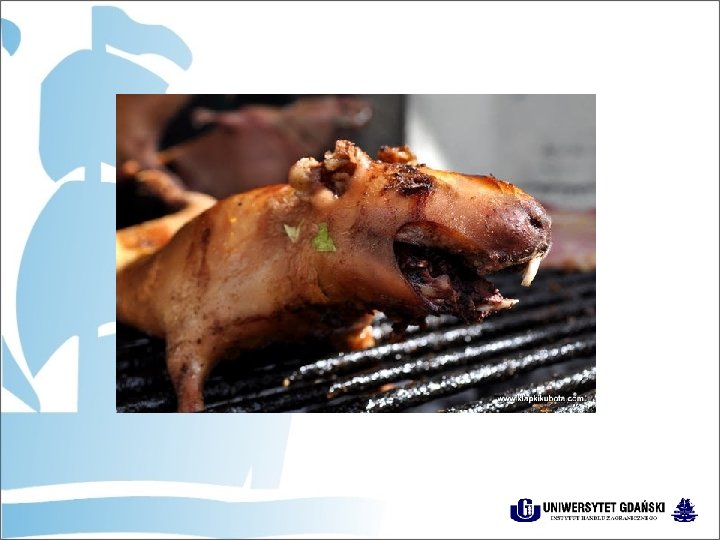
Cuisine delights • • roasted guinea pig Empanada – dumplings Ceviche – seafood salad Anticucho – grilled cow heart
• http: //www. conquest. pl/457/amerykapoludniowa-kontynent-dwoch-biegunow-cz-1 • http: //www. conquest. pl/446/amerykapoludniowa-kontynent-dwoch-biegunow-cz-2 • http: //cudaswiata. pl/ameryka_poludniowa/pust ynia_atakama. html
Australia and Oceania Main Ideas
• Australia and New Zealand were leaders in granting voting to women. • Volcanic activity on the high islands is part of the daily life for many people. • The coral reefs of the low islands are attached to underground mountains. • New Zealand has emphasized geotherma energy because of its lack of oil. • As a nuclear free zone, New Zealand banned many United States warships.
• Because of its isolation from the rest of the world, Australian life forms and societies developed a unique fashion. • Climate influenced patterns in Australia. • Sheep became one of Australia’s leading agricultural products because they could flourish on land that supported little else. • The major difference between Australia and New Zealand is New Zealand’s abundant rainfall. • Hunting and gathering is how the Aborigines made their living.
• Unlike the Aborigines, the Maoris people settled in villages. • The 1 st European settlers in Australia were those who had been convicted of crimes. • The Aborigines were driven into the interior of Australia as a result of British colonization. • In recent years, Australia has begun to build ties with the Pacific Rim neighbors.
• Melanesia, Micronesia and Polynesia are a group of islands that are far away from any landmass. • People of the low islands are depend on fishing for their livelihood. • New island nations in the Pacific have been brought into the world economy through tourist industry.
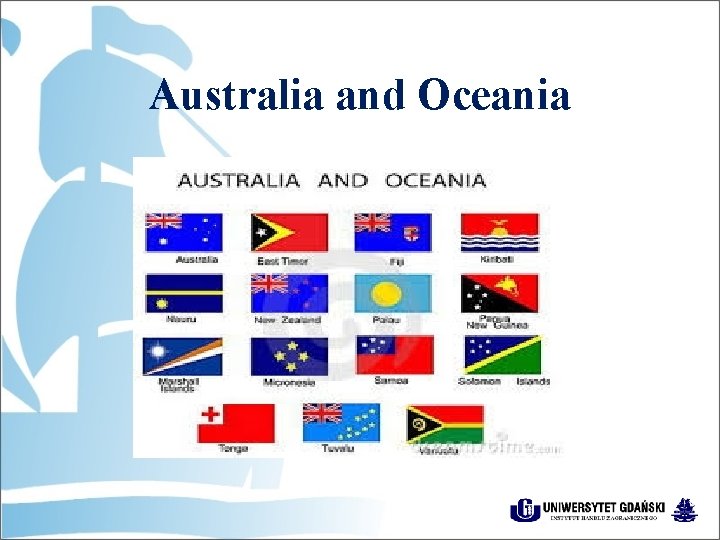
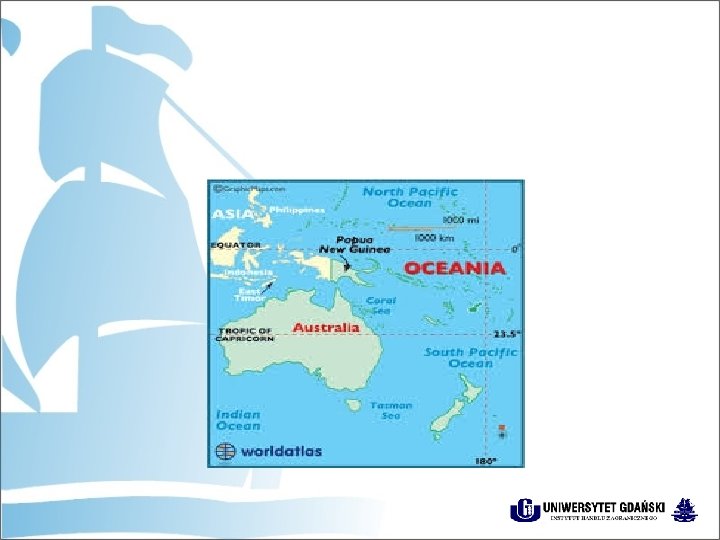
Australia and Oceania
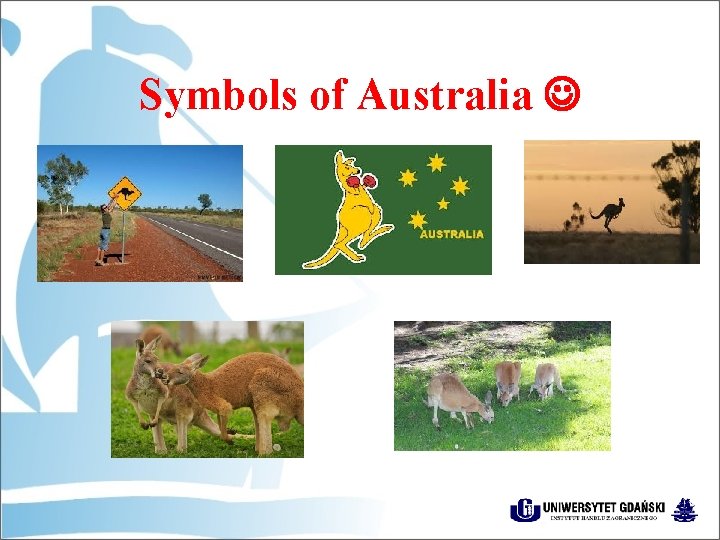
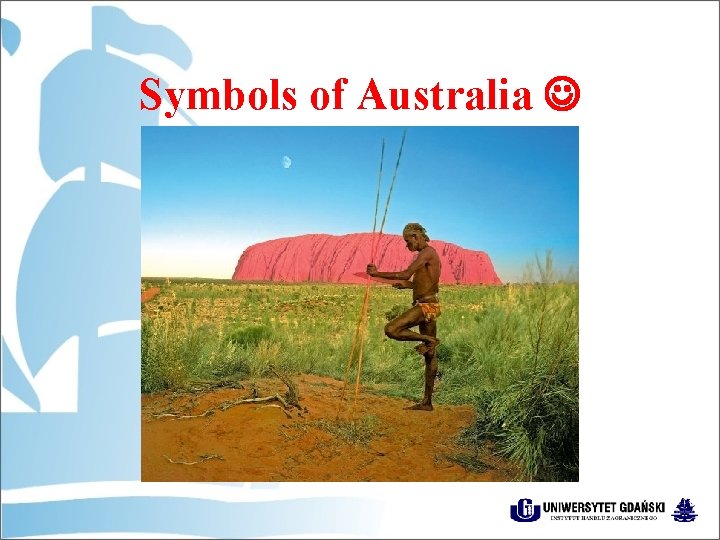
Symbols of Australia
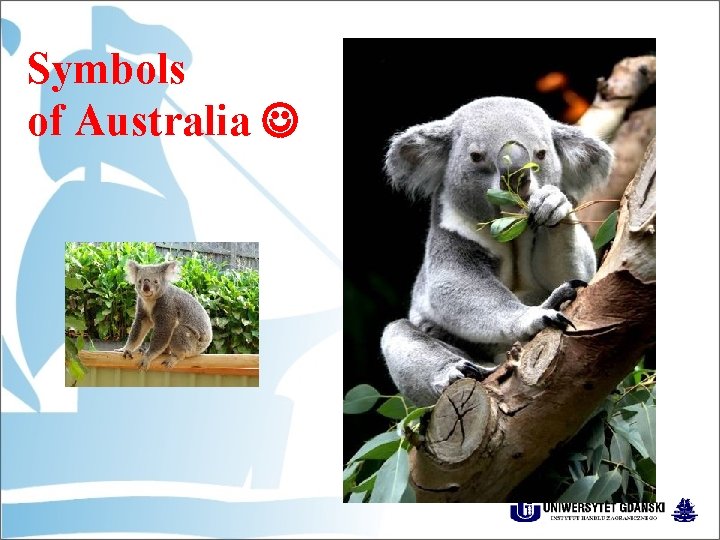
Symbols of Australia
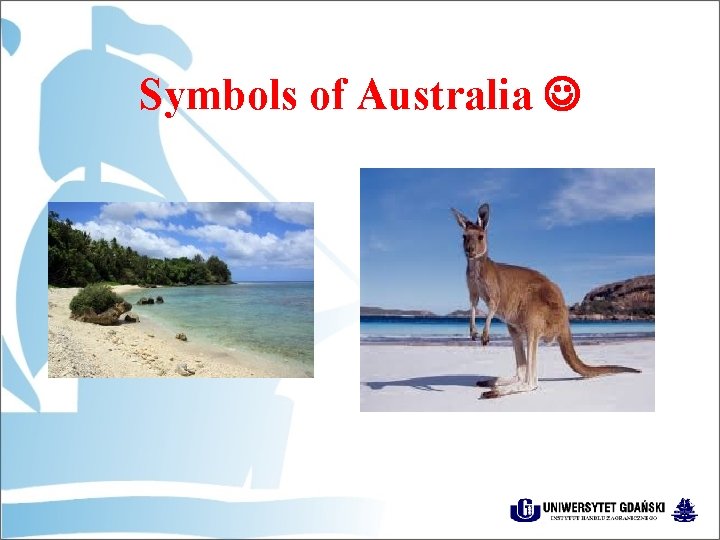
Symbols of Australia
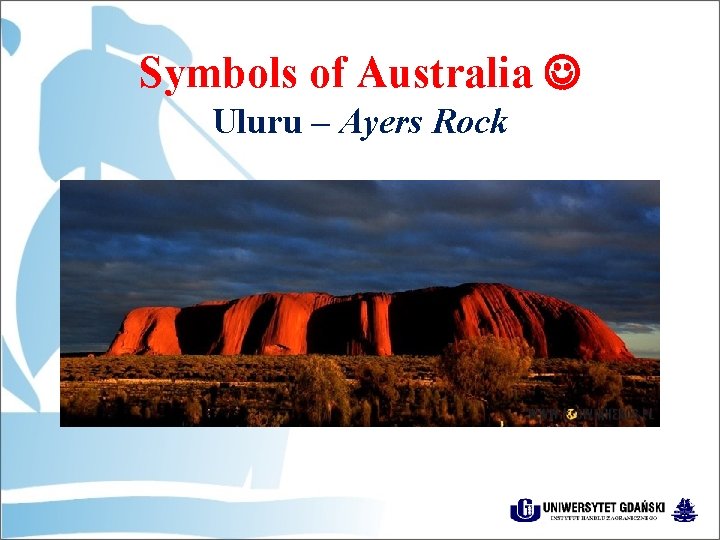
Symbols of Australia Uluru – Ayers Rock
Symbols of Australia
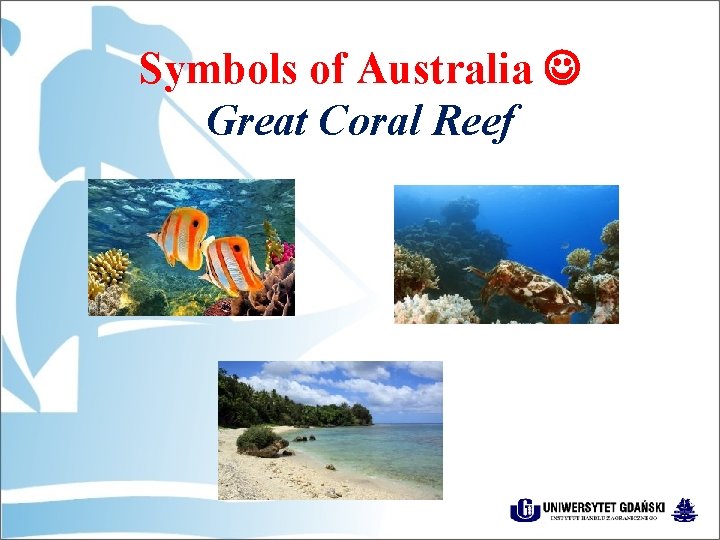
Symbols of Australia Great Coral Reef
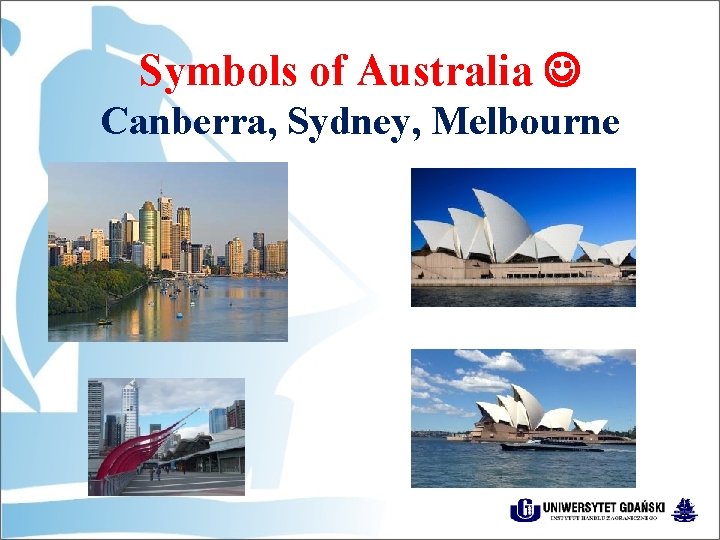
Symbols of Australia Canberra, Sydney, Melbourne
Symbols of Australia
Symbols of Australia
Symbols of Australia
Arab Countries Monika Grottel
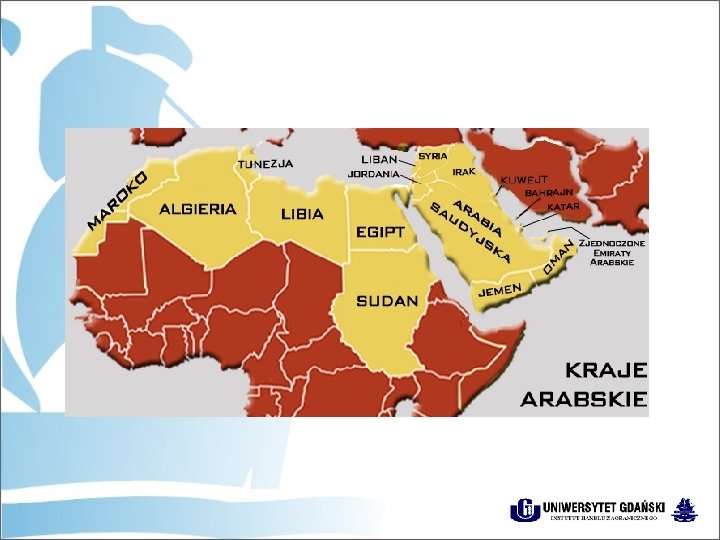
Arab World – basic facts • 20 to 25 countries that reach about 350 million people • lack of a uniformed definition of "Arab country", it sets a number of factors, such as: linguistic, historical, cultural and political factors • the most common is the classification covering the composition of the members of the League of Arab States, which constitutes 21 countries and the Palestinian Authority
Maghreb – Arab „West" Morroco Algeria Tunisia Libya Mauritania
Mashriq – Arab „East” Egypt Sudan Syria Jordan Palestine Lebanon Comoros Somalia Djibouti Kuwait Saudi Arabia Oman Bahrain UAE Qatar Jemen
Main facts about Arab World • diversity of culture, language and history • extreme economic differences • the richest countries in the Persian Gulf - GDP per capita exceeds $ 20000 • developing Arab countries - GDP three times lower than the Polish GDP
Saudi Arabia • • • Area – 2 149 690 km kw. Population – 28 686 000 inhabitants. Capital city – Rijad GDP – 745 b. USD (20. 1 tys. /person. ) The cradle of Islam The King of Saudi Arabia – „Guardian of Two Holy Mosques”
Saudi Arabia major producer of crude oil and natural gas • the largest and most important exporter of oil in the world • more than 20% of the world's oil (petroleum) The oil sector in Saudi Arabia: • provides 80% of the revenue to the budget, • accounts for 45% of GDP and 90% of export earnings. • About 40% of the GDP is produced by the private sector. In Saudi Arabia, there about 6. 4 million foreigners, mainly they work in the oil sector and services.
Saudi Arabia major producer of crude oil and natural gas • since 2005 member of the WTO • major problems: – rapid population growth, nearly 40% of the population are young people under 15 years of age – limited water resources – considerable dependence on oil sales and price – high unemployment, – the younger generation has no education or technical skills useful in the private sector
United Arab Emirates • • • Area – 83 600 km 2. Population – 4 798 000 inhabitants. Capital city – Abu Zabi GDP – 396 b. USD (39. 9 tys. /person. ) in the ancient area of today's UAE were under the influence of the highly developed civilization of Mesopotamia
United Arab Emirates • • rich deposits of oil, discovered over 30 years ago, opened economy, play a crucial role in the Gulf Region, GDP per capita equals the leading countries of Western Europe.
United Arab Emirates • projekt dywersyfikacji źródeł dochodów państwa i uniezależnienia się od wydobycia ropy i gazu • zaledwie 25% PKB zależy od wydobycia ropy i gazu, co jest wynikiem niespotykanym wśród potęg naftowych. • w 2004 r. ZEA podpisały układ o wolnej wymianie handlowej z USA, a tzw. Free Trade Jones (Strefy Wolnego Handlu), gwarantujące zwolnienie z podatków i 100% własność zagranicznym podmiotom • przyciągnęły i przyciągają setki nowych inwestorów
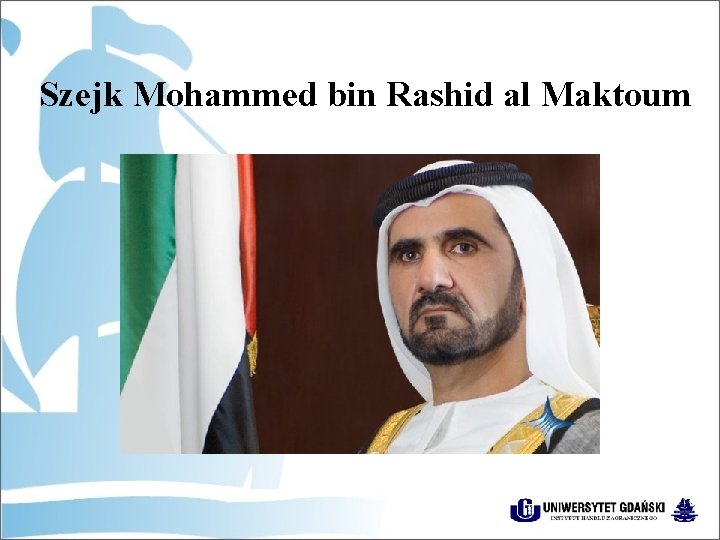
Szejk Mohammed bin Rashid al Maktoum
Szejk Mohammed bin Rashid al Maktoum • Prince of Dubai • Prime Minister and Vice President of the United Arab Emirates • politician, poet, social activist • not well known in the Western world • admired and respected in the Middle East • Father «of the economic miracle» Dubai – Statesman
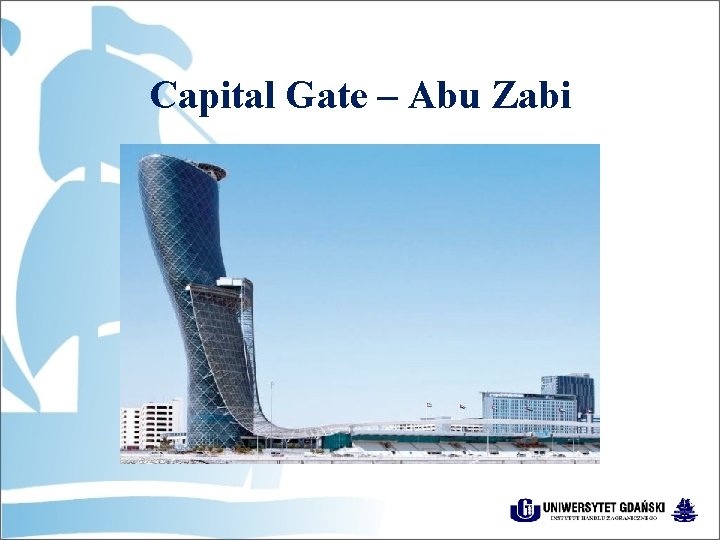
Capital Gate – Abu Zabi
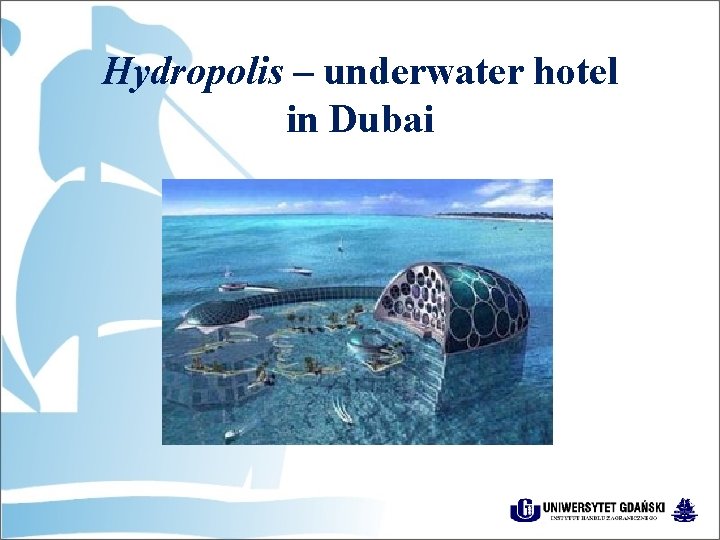
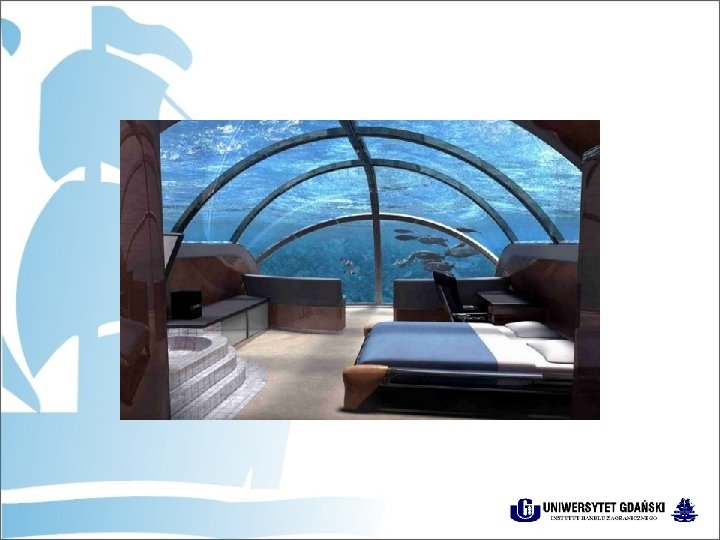
Hydropolis – underwater hotel in Dubai
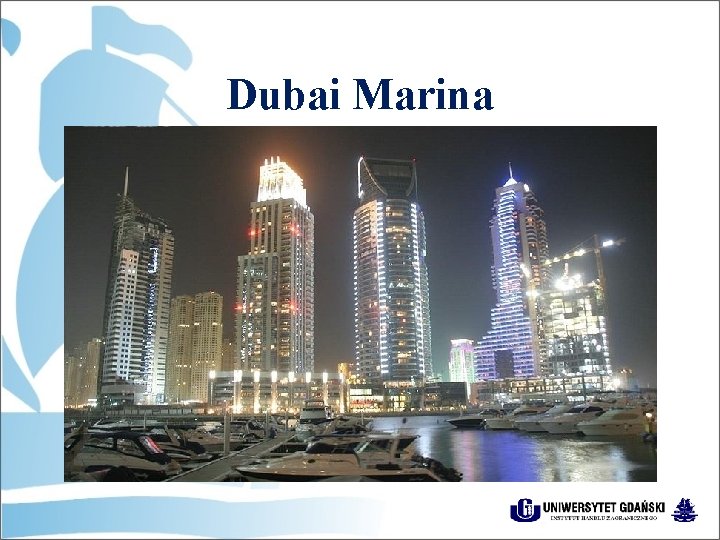
Dubai Marina
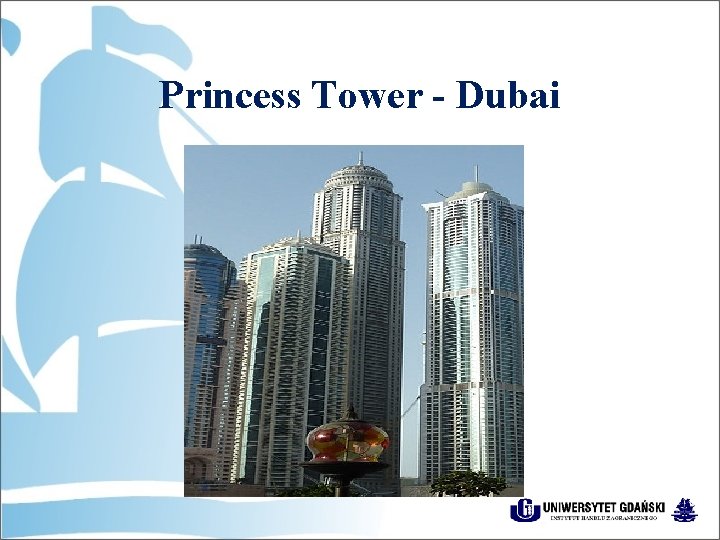
Princess Tower - Dubai
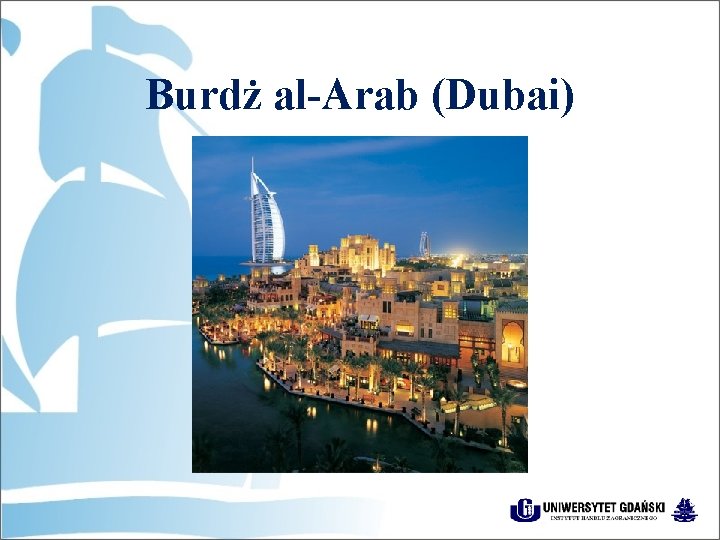
Burdż al-Arab (Dubai)
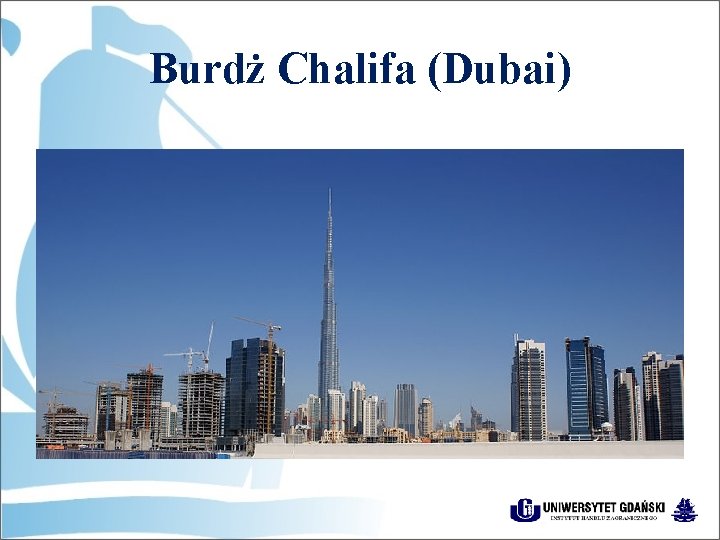
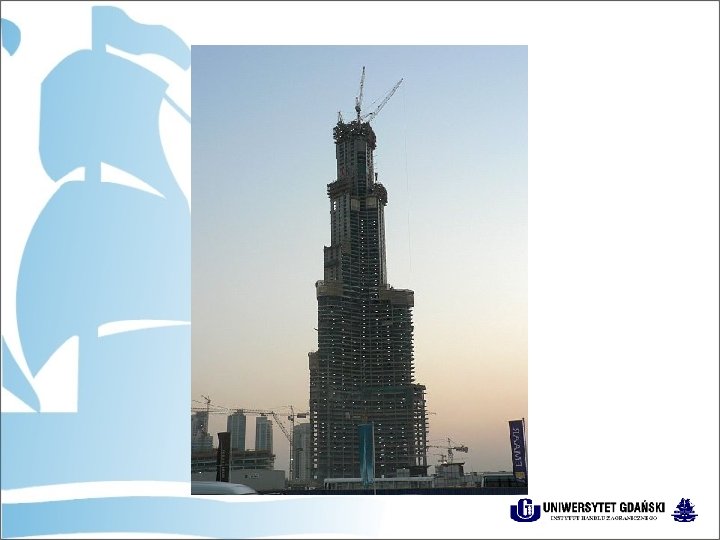
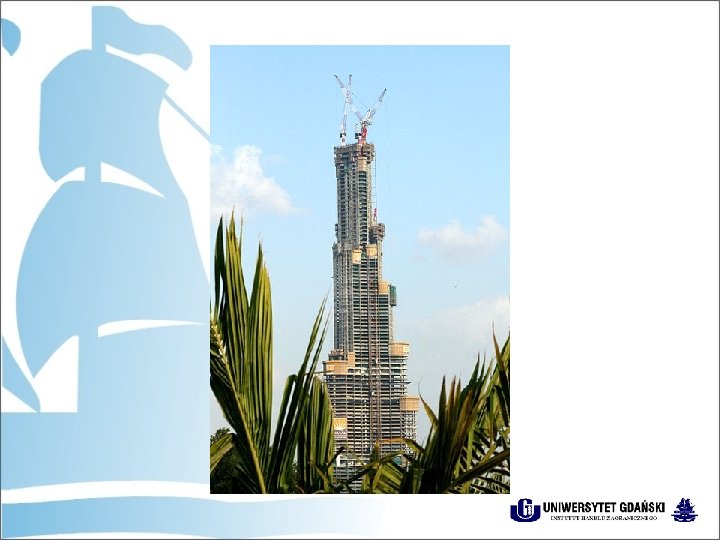
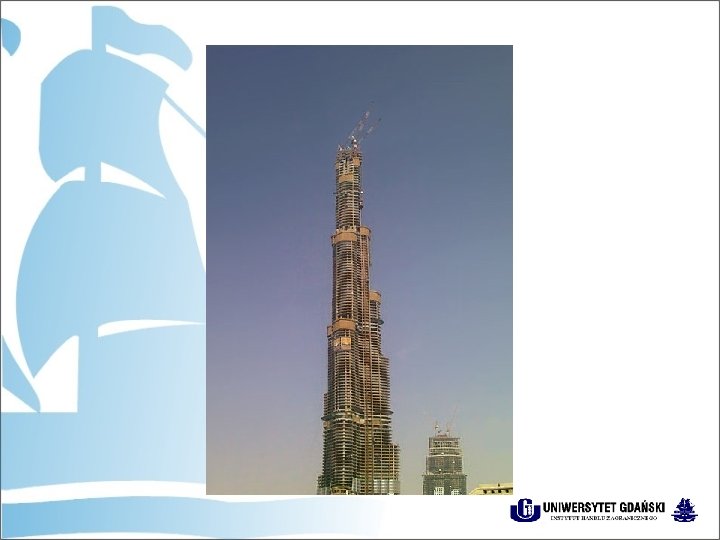
Burdż Chalifa (Dubai)
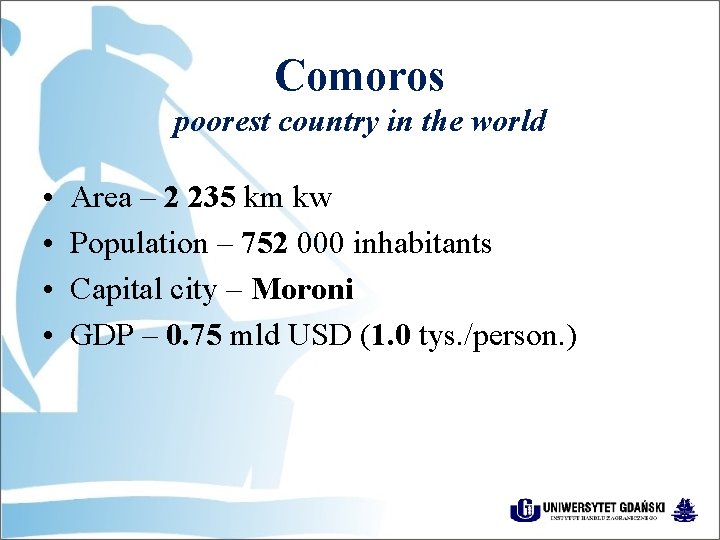
Comoros poorest country in the world • • Area – 2 235 km kw Population – 752 000 inhabitants Capital city – Moroni GDP – 0. 75 mld USD (1. 0 tys. /person. )
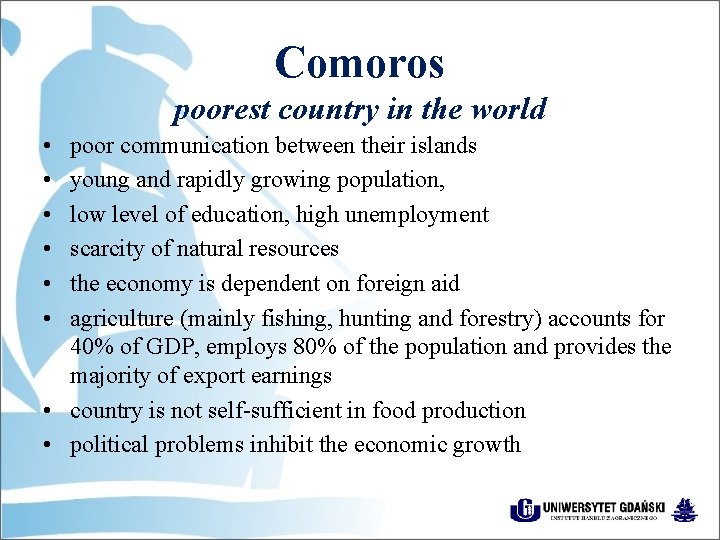
Comoros poorest country in the world • • • poor communication between their islands young and rapidly growing population, low level of education, high unemployment scarcity of natural resources the economy is dependent on foreign aid agriculture (mainly fishing, hunting and forestry) accounts for 40% of GDP, employs 80% of the population and provides the majority of export earnings • country is not self-sufficient in food production • political problems inhibit the economic growth
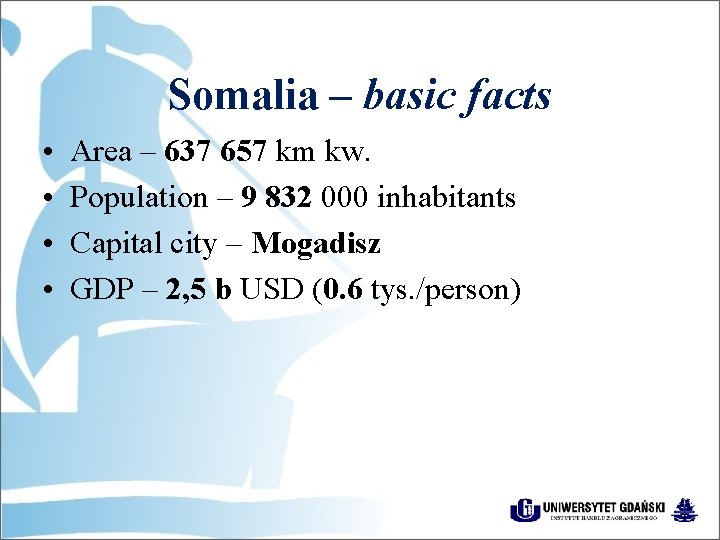
Somalia – basic facts • • Area – 637 657 km kw. Population – 9 832 000 inhabitants Capital city – Mogadisz GDP – 2, 5 b USD (0. 6 tys. /person)
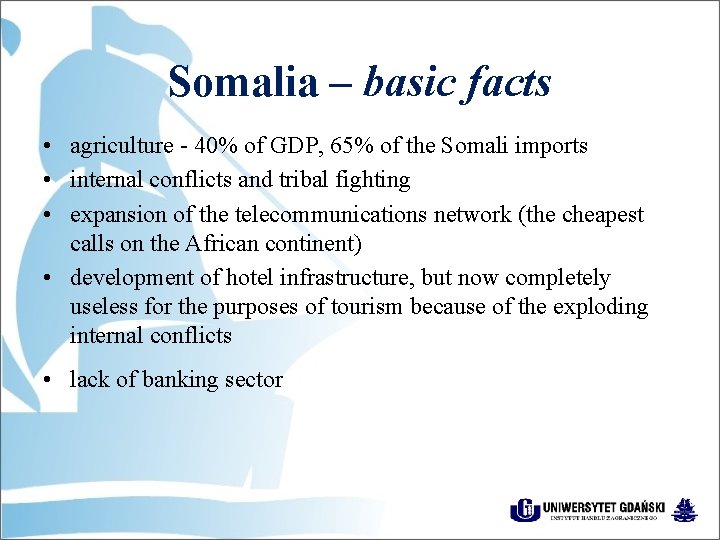
Somalia – basic facts • agriculture - 40% of GDP, 65% of the Somali imports • internal conflicts and tribal fighting • expansion of the telecommunications network (the cheapest calls on the African continent) • development of hotel infrastructure, but now completely useless for the purposes of tourism because of the exploding internal conflicts • lack of banking sector