
Marketing What Is Marketing Marketing is a process


- Slides: 25
Marketing
What Is Marketing? Marketing is a process by which companies create value for customers and build strong customer relationships to capture value from customers in return
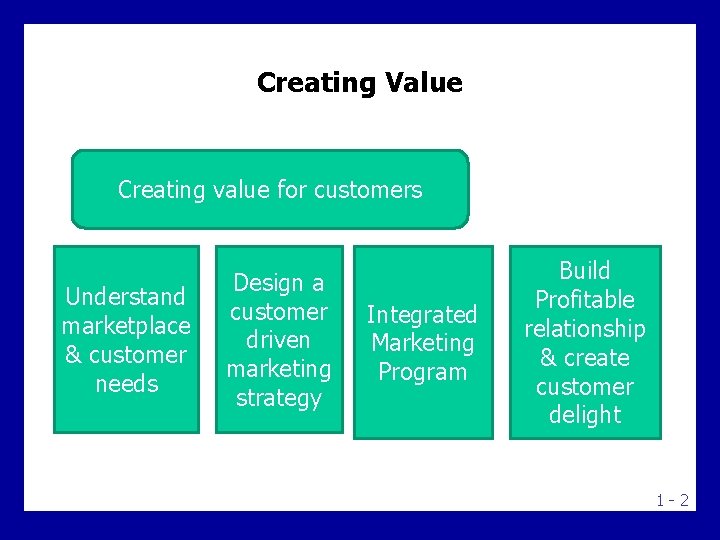
Creating Value Creating value for customers Understand marketplace & customer needs Design a customer driven marketing strategy Integrated Marketing Program Build Profitable relationship & create customer delight 1 -2
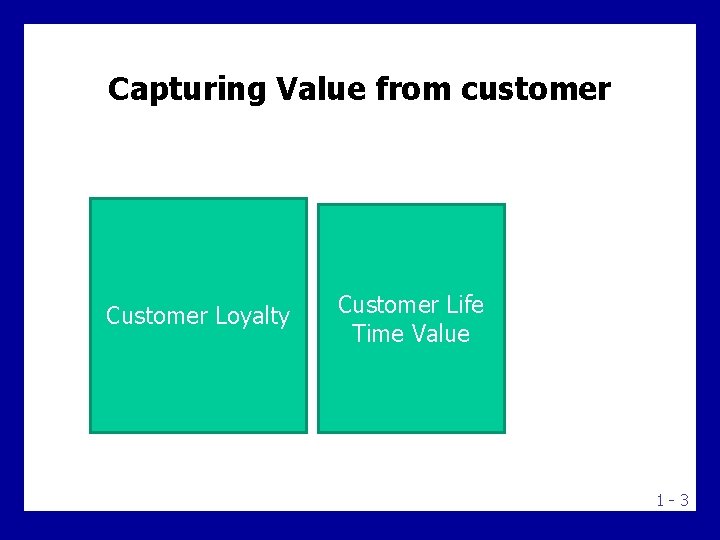
Capturing Value from customer Customer Loyalty Customer Life Time Value 1 -3
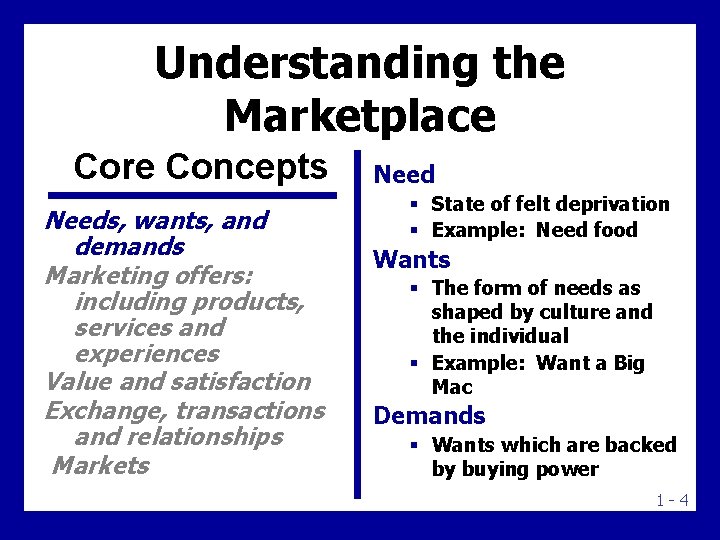
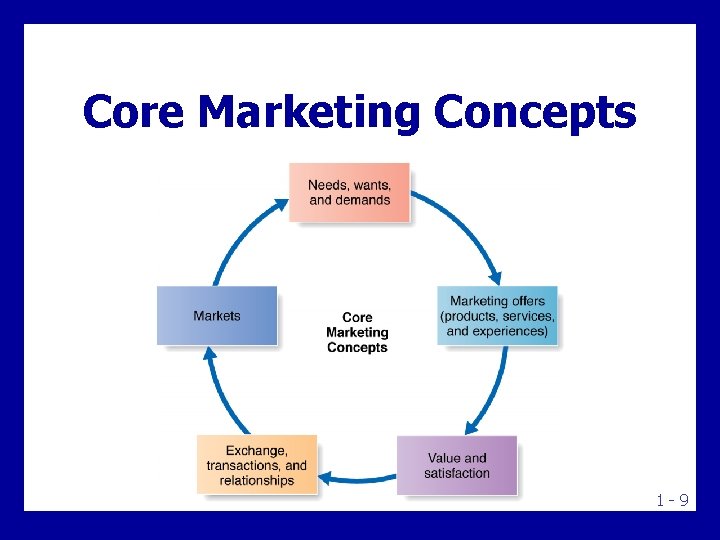
Understanding the Marketplace Core Concepts Needs, wants, and demands Marketing offers: including products, services and experiences Value and satisfaction Exchange, transactions and relationships Markets Need § State of felt deprivation § Example: Need food Wants § The form of needs as shaped by culture and the individual § Example: Want a Big Mac Demands § Wants which are backed by buying power 1 -4
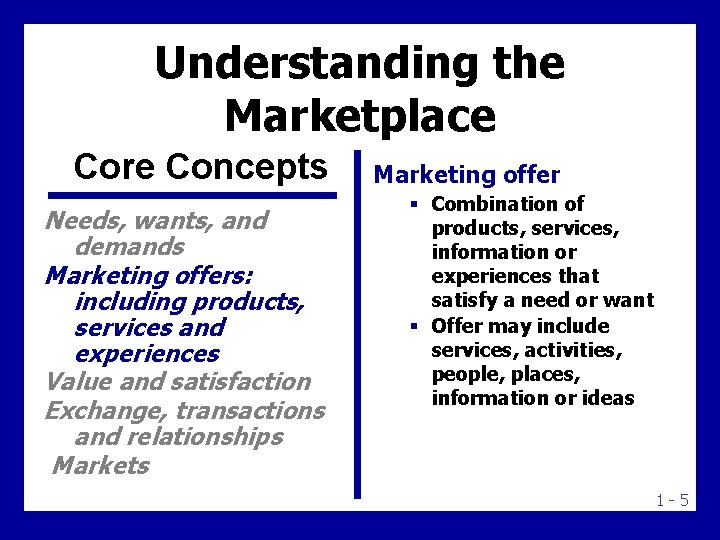
Understanding the Marketplace Core Concepts Needs, wants, and demands Marketing offers: including products, services and experiences Value and satisfaction Exchange, transactions and relationships Marketing offer § Combination of products, services, information or experiences that satisfy a need or want § Offer may include services, activities, people, places, information or ideas 1 -5
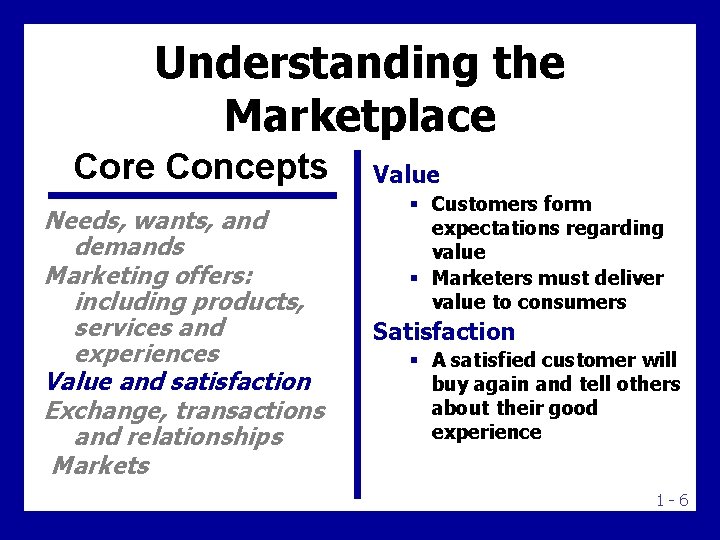
Understanding the Marketplace Core Concepts Needs, wants, and demands Marketing offers: including products, services and experiences Value and satisfaction Exchange, transactions and relationships Markets Value § Customers form expectations regarding value § Marketers must deliver value to consumers Satisfaction § A satisfied customer will buy again and tell others about their good experience 1 -6
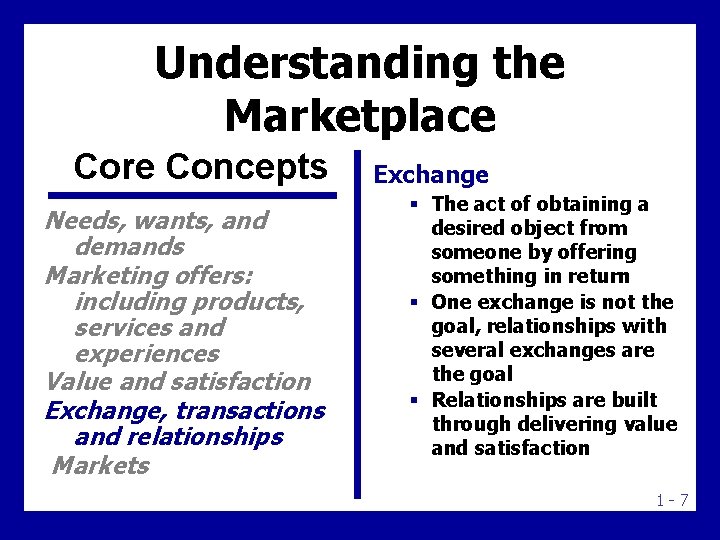
Understanding the Marketplace Core Concepts Needs, wants, and demands Marketing offers: including products, services and experiences Value and satisfaction Exchange, transactions and relationships Markets Exchange § The act of obtaining a desired object from someone by offering something in return § One exchange is not the goal, relationships with several exchanges are the goal § Relationships are built through delivering value and satisfaction 1 -7
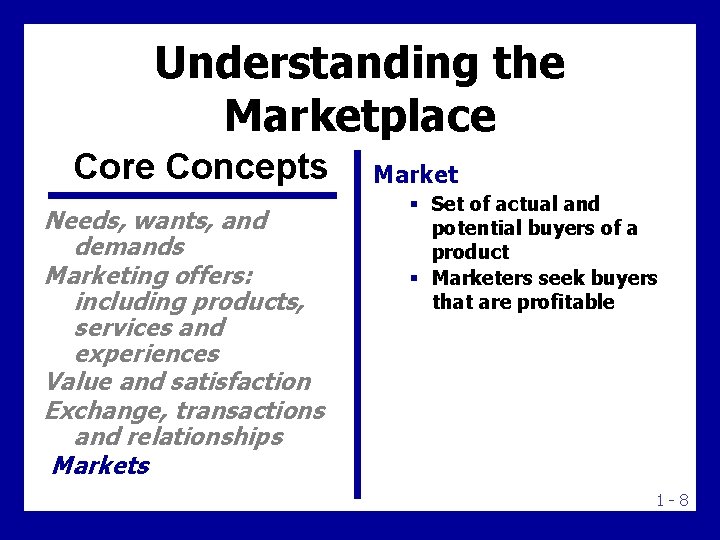
Understanding the Marketplace Core Concepts Needs, wants, and demands Marketing offers: including products, services and experiences Value and satisfaction Exchange, transactions and relationships Market § Set of actual and potential buyers of a product § Marketers seek buyers that are profitable 1 -8
Core Marketing Concepts 1 -9
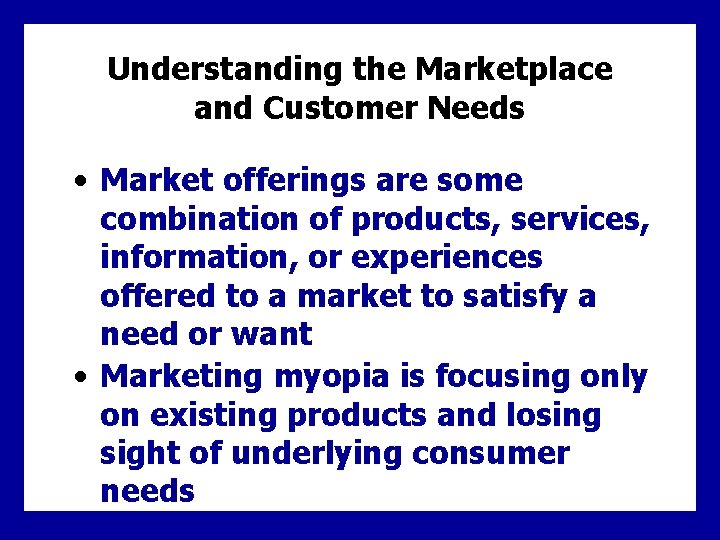
Understanding the Marketplace and Customer Needs • Market offerings are some combination of products, services, information, or experiences offered to a market to satisfy a need or want • Marketing myopia is focusing only on existing products and losing sight of underlying consumer needs
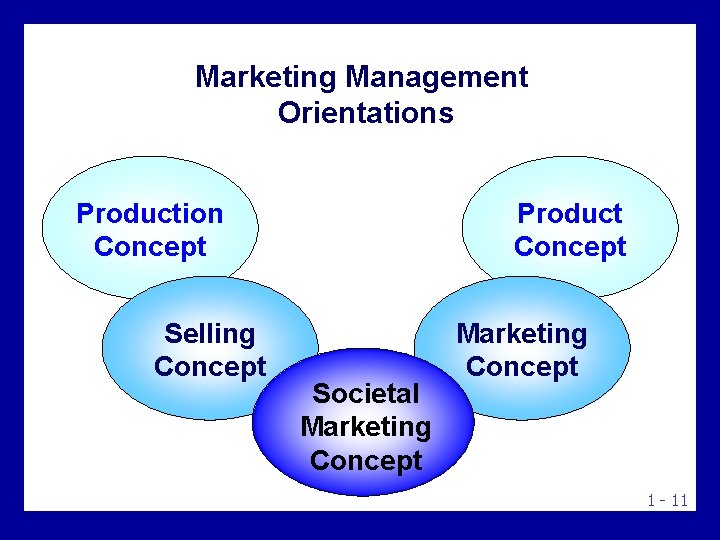
Marketing Management Orientations Production Concept Selling Concept Product Concept Societal Marketing Concept 1 - 11
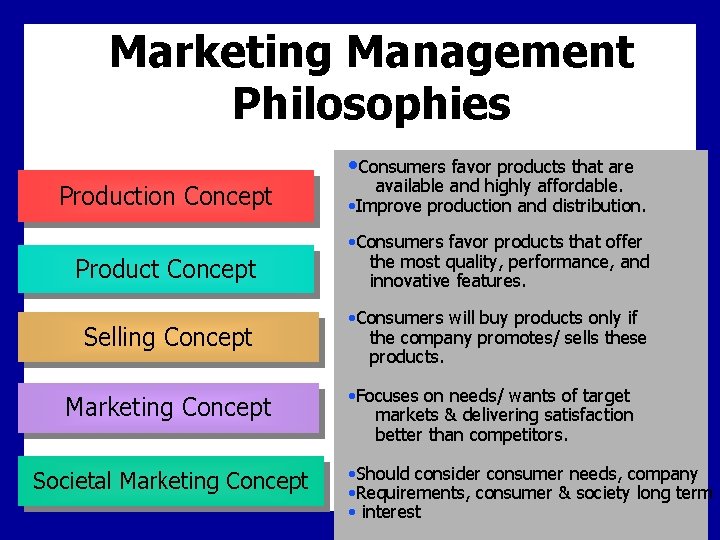
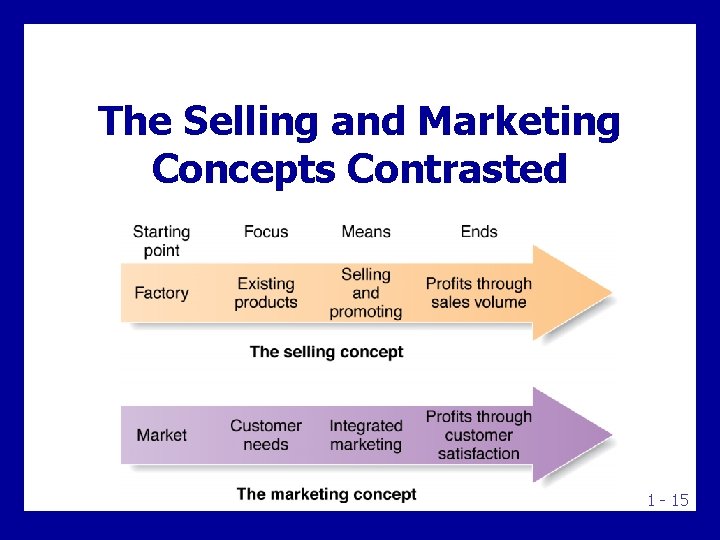
Marketing Management Philosophies • Consumers favor products that are Production Concept available and highly affordable. • Improve production and distribution. Product Concept • Consumers favor products that offer the most quality, performance, and innovative features. Selling Concept • Consumers will buy products only if the company promotes/ sells these products. Marketing Concept Societal Marketing Concept • Focuses on needs/ wants of target markets & delivering satisfaction better than competitors. • Should consider consumer needs, company • Requirements, consumer & society long term 1 - 12 • interest
• https: //www. youtube. com/watch ? v=BNr_c. N 3 p 5 ik 1 - 13
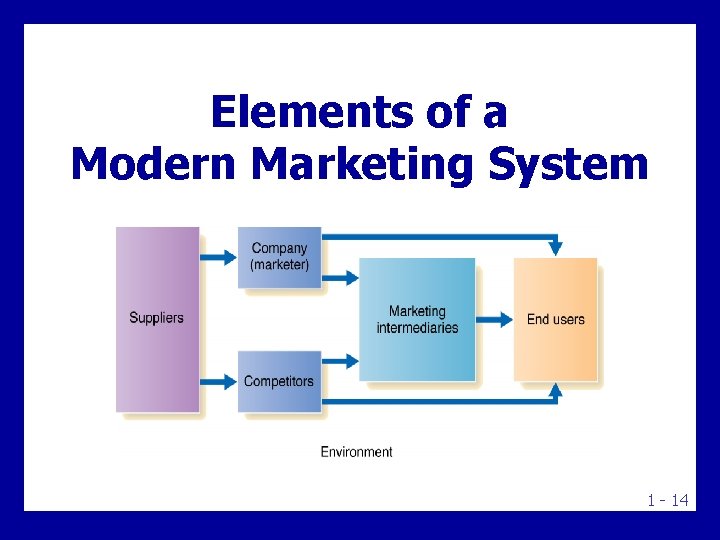
Elements of a Modern Marketing System 1 - 14
The Selling and Marketing Concepts Contrasted 1 - 15
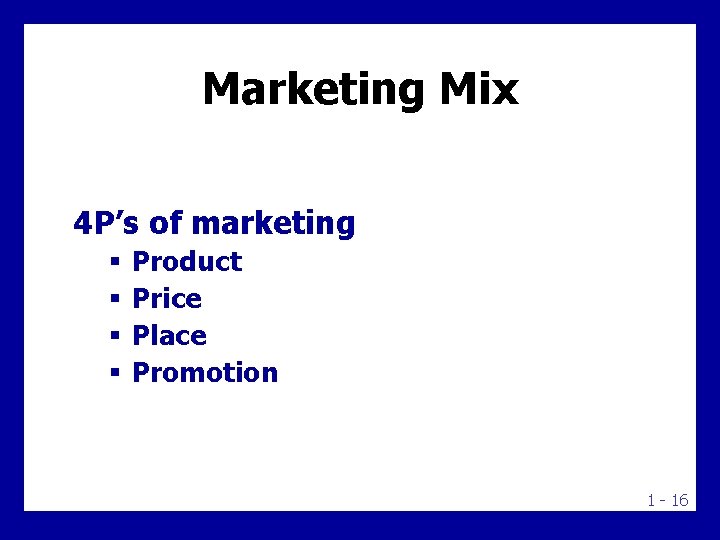
Marketing Mix 4 P’s of marketing § § Product Price Place Promotion 1 - 16
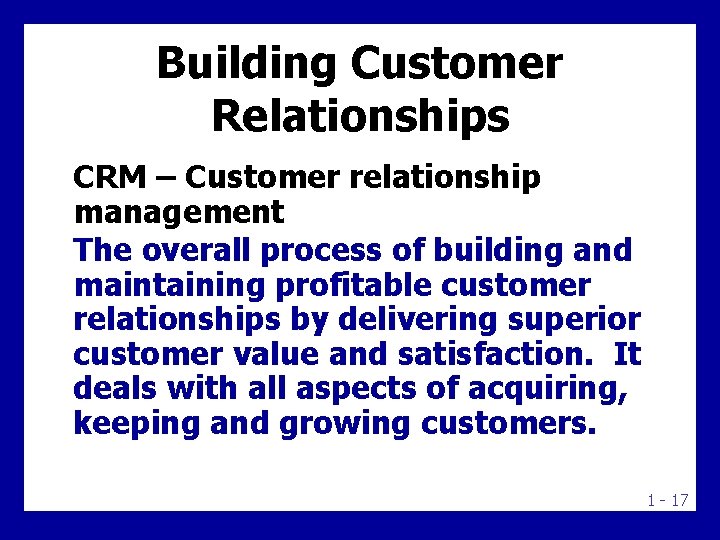
Building Customer Relationships CRM – Customer relationship management The overall process of building and maintaining profitable customer relationships by delivering superior customer value and satisfaction. It deals with all aspects of acquiring, keeping and growing customers. 1 - 17
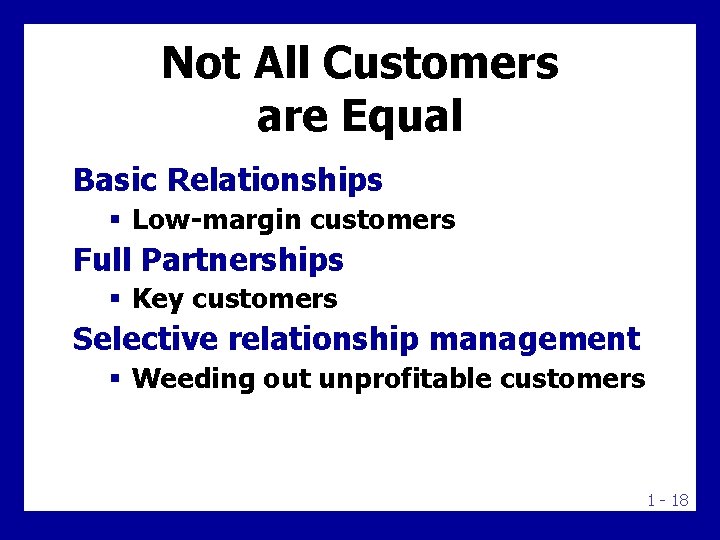
Not All Customers are Equal Basic Relationships § Low-margin customers Full Partnerships § Key customers Selective relationship management § Weeding out unprofitable customers 1 - 18
Frequent-buyer and Frequentuser Programs • Frequency marketing: frequentbuyer or user marketing programs that reward customers with cash, rebates, merchandise, or other premiums •
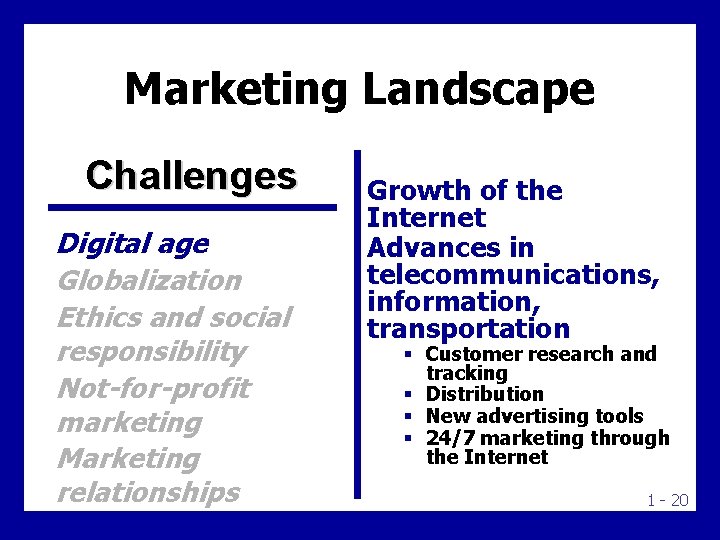
Marketing Landscape Challenges Digital age Globalization Ethics and social responsibility Not-for-profit marketing Marketing relationships Growth of the Internet Advances in telecommunications, information, transportation § Customer research and tracking § Distribution § New advertising tools § 24/7 marketing through the Internet 1 - 20
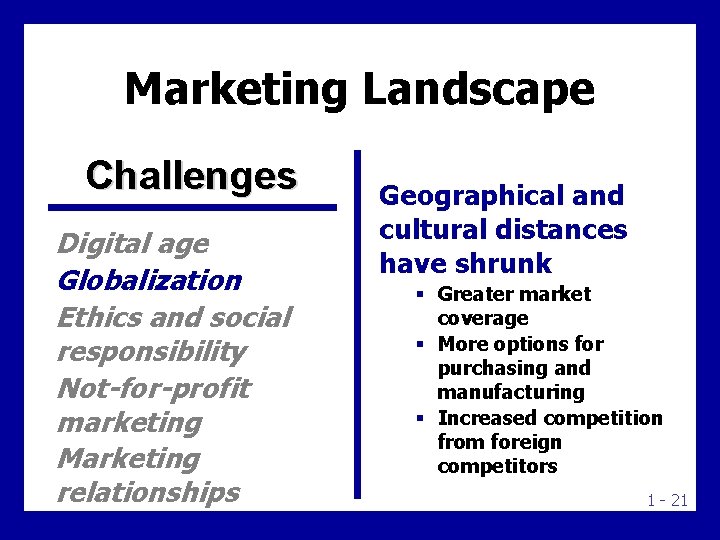
Marketing Landscape Challenges Digital age Globalization Ethics and social responsibility Not-for-profit marketing Marketing relationships Geographical and cultural distances have shrunk § Greater market coverage § More options for purchasing and manufacturing § Increased competition from foreign competitors 1 - 21
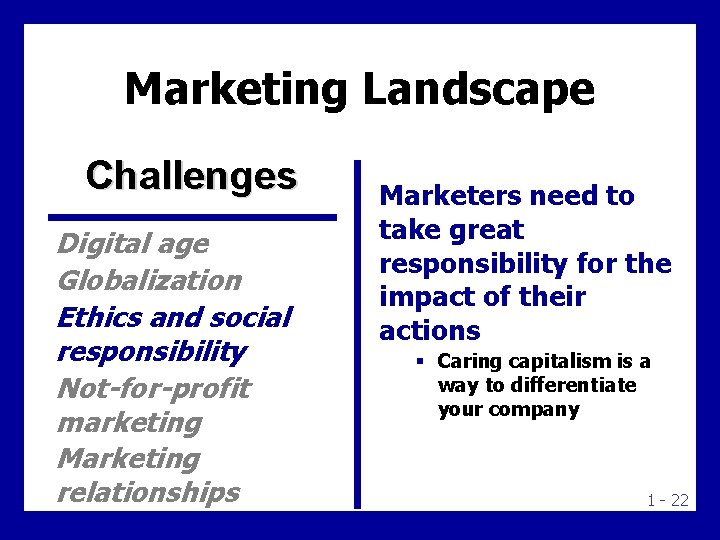
Marketing Landscape Challenges Digital age Globalization Ethics and social responsibility Not-for-profit marketing Marketing relationships Marketers need to take great responsibility for the impact of their actions § Caring capitalism is a way to differentiate your company 1 - 22
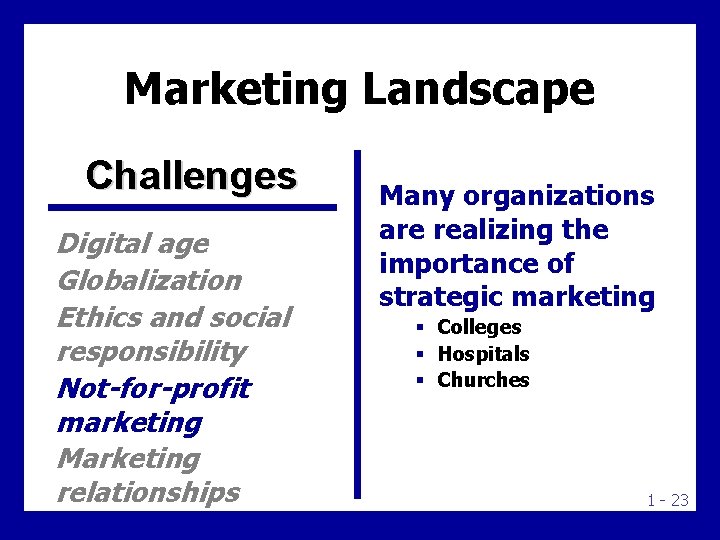
Marketing Landscape Challenges Digital age Globalization Ethics and social responsibility Not-for-profit marketing Marketing relationships Many organizations are realizing the importance of strategic marketing § Colleges § Hospitals § Churches 1 - 23
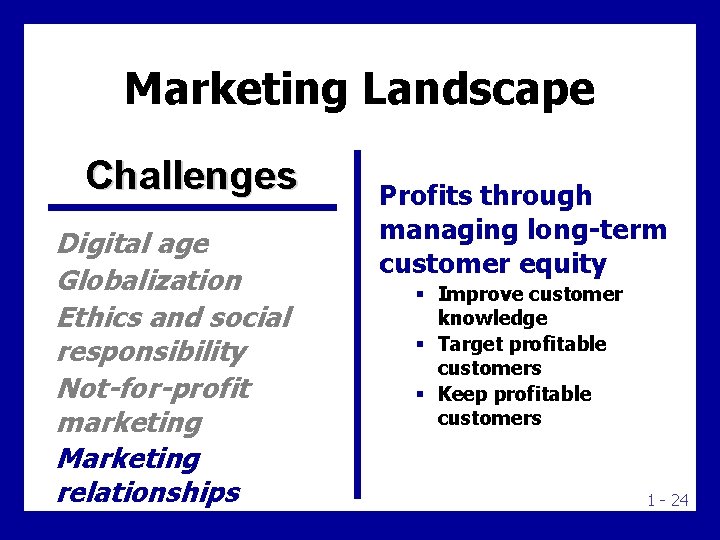
Marketing Landscape Challenges Digital age Globalization Ethics and social responsibility Not-for-profit marketing Marketing relationships Profits through managing long-term customer equity § Improve customer knowledge § Target profitable customers § Keep profitable customers 1 - 24