
Marketing to children Ethical issues in food Learning

- Slides: 14
Marketing to children Ethical issues in food
Learning Intention Understand the ethical issues around food marketing and promotion strategies aimed at children Success Criteria Analyse a newspaper article to assess it’s credibility Develop an argument about the ethics of advertising junk food in childrens sport
What is Marketing? the action or business of promoting and selling products or services, including market research and advertising. Food and drink companies now have many ways to reach children as the line between entertainment and advertising is increasingly blurred.
Promotional tools used to market products In order to market a product, a company may use: the internet social media viral marketing celebrity endorsements (particularly sports stars) product placement in TV shows and films competitions supermarket promotions and discounts smartphone "advergames" with embedded brand messages and licensed characters (Hungry Jack's "Shake & Win" smartphone app, for example, generates vouchers for free or discounted food when users shake their phone at any Hungry Jack's store. )
Brainstorm…. What Why are ethics? are there ethics involved in marketing?
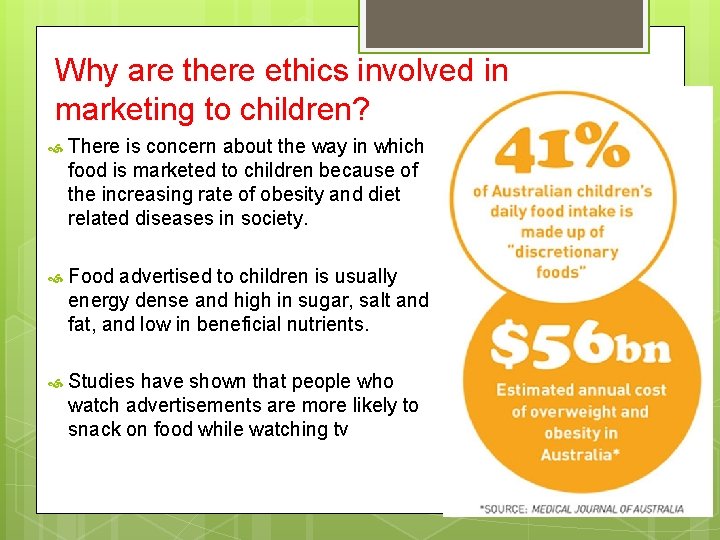
Why are there ethics involved in marketing to children? There is concern about the way in which food is marketed to children because of the increasing rate of obesity and diet related diseases in society. Food advertised to children is usually energy dense and high in sugar, salt and fat, and low in beneficial nutrients. Studies have shown that people who watch advertisements are more likely to snack on food while watching tv
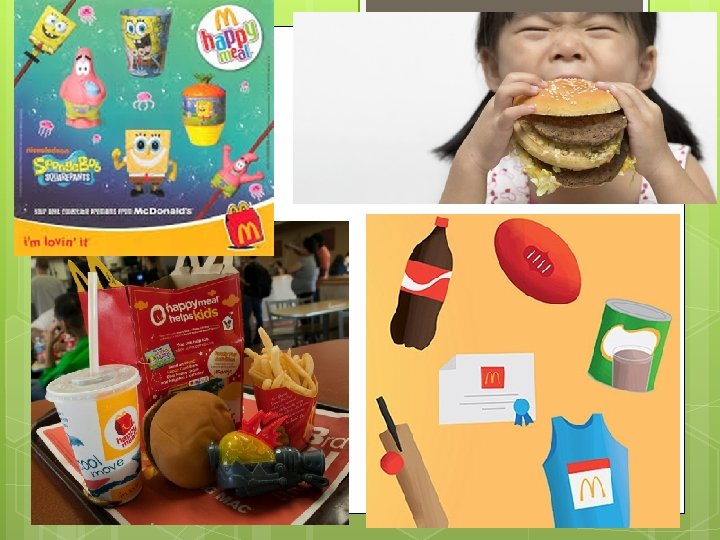
How is food marketed directly to children? Using cartoon characters Toy give-aways at fast food resturants- especially with the accumulation of ‘sets’ over numerous weeks Sponsorship over junior sports competitions Use of high fat – high sugar foods in fundraising Competitions to win bikes/sports equipment etc.
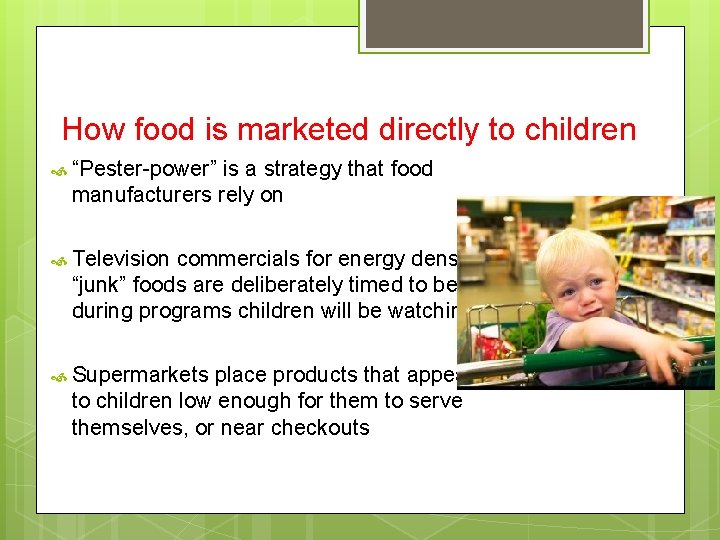
How food is marketed directly to children “Pester-power” is a strategy that food manufacturers rely on Television commercials for energy dense “junk” foods are deliberately timed to be on during programs children will be watching Supermarkets place products that appeal to children low enough for them to serve themselves, or near checkouts
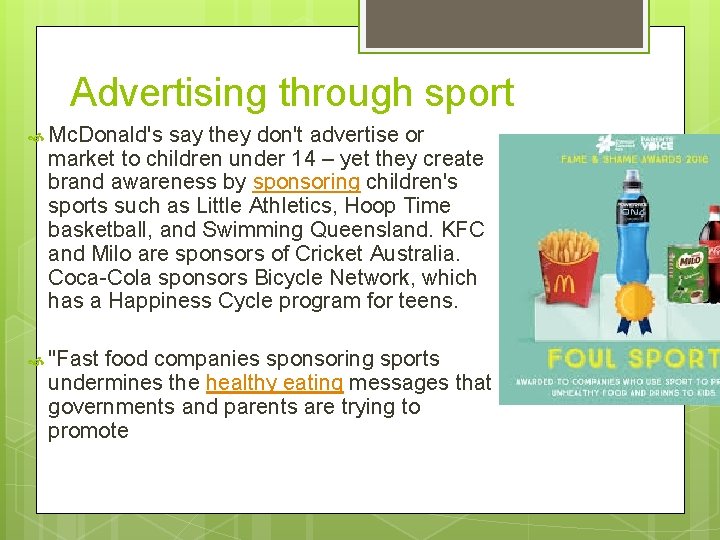
Advertising through sport Mc. Donald's say they don't advertise or market to children under 14 – yet they create brand awareness by sponsoring children's sports such as Little Athletics, Hoop Time basketball, and Swimming Queensland. KFC and Milo are sponsors of Cricket Australia. Coca-Cola sponsors Bicycle Network, which has a Happiness Cycle program for teens. "Fast food companies sponsoring sports undermines the healthy eating messages that governments and parents are trying to promote
Why do companies want to advertise to children? Food and drink companies are interested in selling products but also creating brand loyalty in children that they will carry into adulthood. According to information from a children's marketing conference, "a lifetime customer may be worth $100, 000 to a retailer, making children 'cradle-tograve' consumers.
Ethical concerns of marketing to children Makes parents’ jobs much harder Children are a vulnerable audience and don’t have the cognitive skills to recognise the persuasive intent of food advertising It is difficult for parents to control all the forms of advertising their children are exposed to
Problems with solutions…. A review of food advertising in Australia led to a restriction between 4 pm and 5 pm – which is actually a low rating time 5 times more children watch television between 6 pm and 9 pm on weekdays. This period is when the highest number of food advertisements are shown and between 55 and 81% are of low nutritional value
Your Task Read the articles provided answer the related questions