
MARKETING STRATEGY O C FERRELL MICHAEL D HARTLINE
- Slides: 12
MARKETING STRATEGY O. C. FERRELL • MICHAEL D. HARTLINE 8 Pricing Strategy
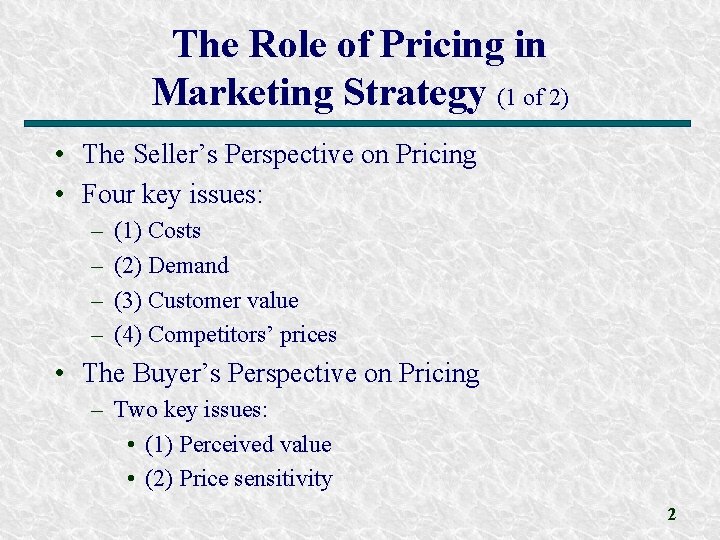
The Role of Pricing in Marketing Strategy (1 of 2) • The Seller’s Perspective on Pricing • Four key issues: – – (1) Costs (2) Demand (3) Customer value (4) Competitors’ prices • The Buyer’s Perspective on Pricing – Two key issues: • (1) Perceived value • (2) Price sensitivity 2
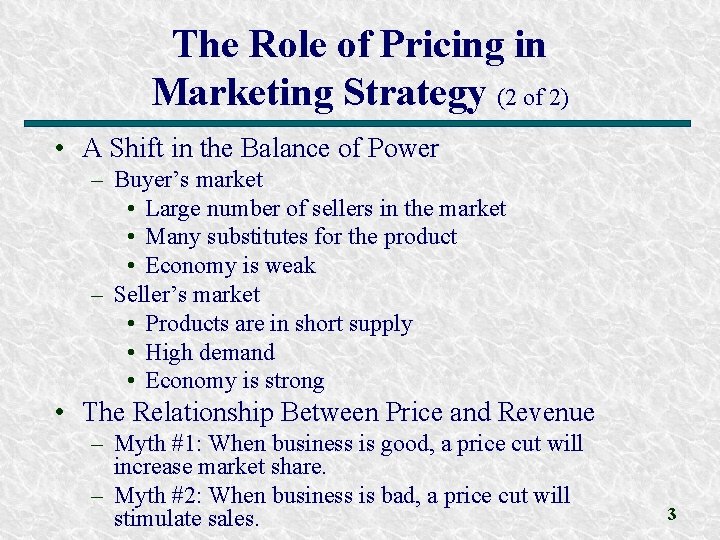
The Role of Pricing in Marketing Strategy (2 of 2) • A Shift in the Balance of Power – Buyer’s market • Large number of sellers in the market • Many substitutes for the product • Economy is weak – Seller’s market • Products are in short supply • High demand • Economy is strong • The Relationship Between Price and Revenue – Myth #1: When business is good, a price cut will increase market share. – Myth #2: When business is bad, a price cut will stimulate sales. 3
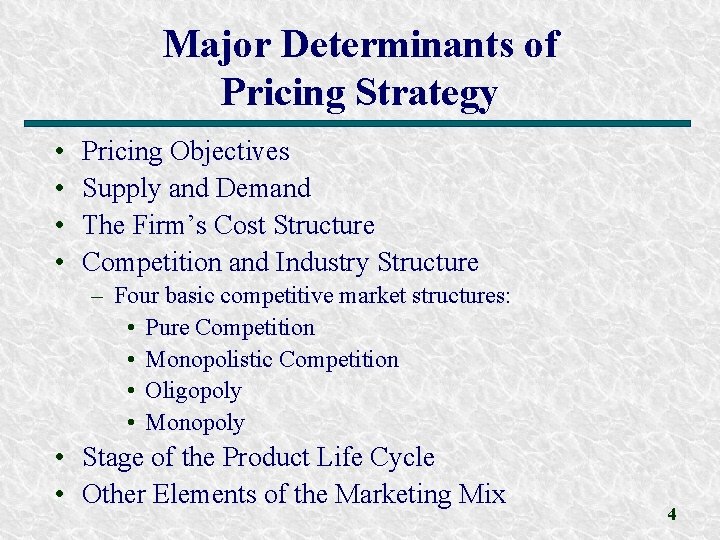
Major Determinants of Pricing Strategy • • Pricing Objectives Supply and Demand The Firm’s Cost Structure Competition and Industry Structure – Four basic competitive market structures: • Pure Competition • Monopolistic Competition • Oligopoly • Monopoly • Stage of the Product Life Cycle • Other Elements of the Marketing Mix 4
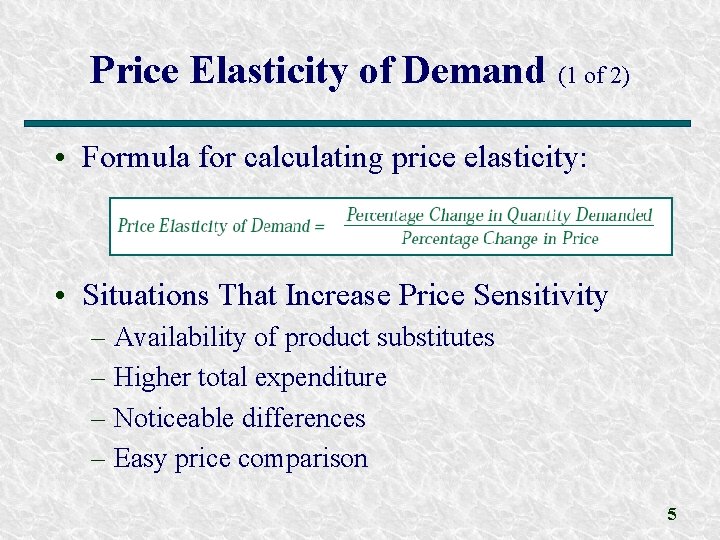
Price Elasticity of Demand (1 of 2) • Formula for calculating price elasticity: • Situations That Increase Price Sensitivity – Availability of product substitutes – Higher total expenditure – Noticeable differences – Easy price comparison 5
Price Elasticity of Demand (2 of 2) • Situations That Decrease Price Sensitivity – – – Real or perceived necessities Lack of product substitutes Complementary products Product differentiation Perceived product benefits Situational influences • Price Elasticity and Yield Management – Allows simultaneous control of capacity and demand • Control capacity by limiting available capacity at certain price points • Control demand through price changes and overbooking capacity 6
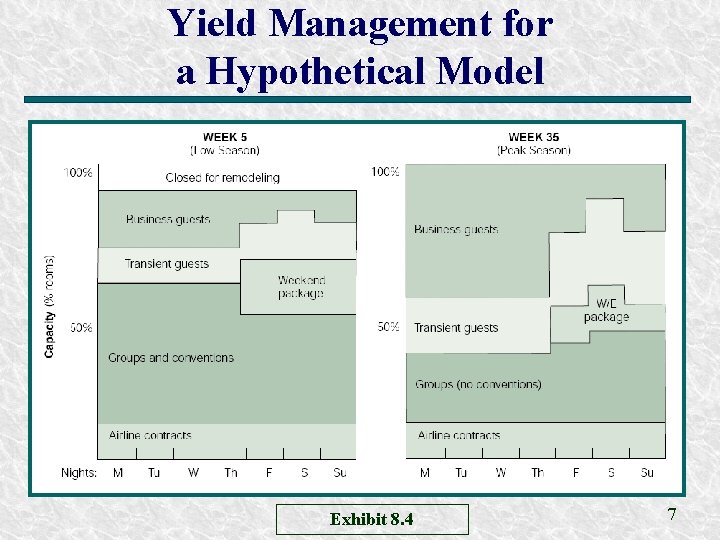
Yield Management for a Hypothetical Model Exhibit 8. 4 7
Pricing Strategies (1 of 2) • Base Pricing Strategies – – – Price Skimming Penetration Pricing Prestige Pricing Value-Based Pricing (EDLP) Competitive Matching Non-Price Strategies • Adjusting Prices in Consumer Markets – – Promotional Discounting Reference Pricing Odd-Even Pricing Price Bundling 8
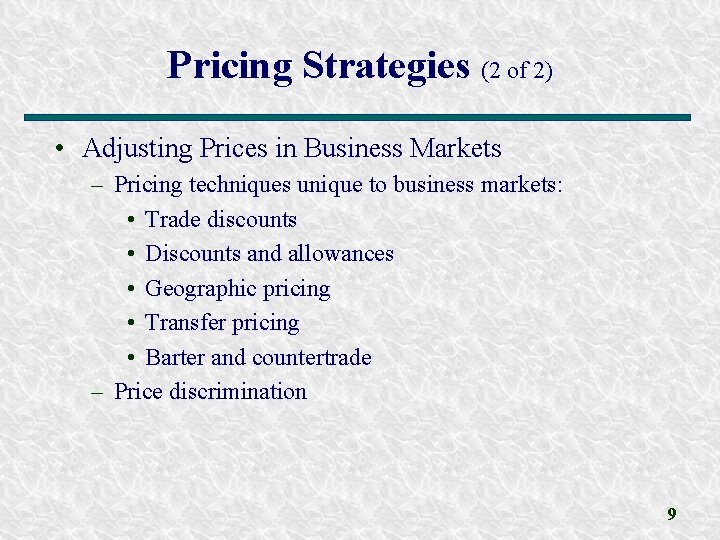
Pricing Strategies (2 of 2) • Adjusting Prices in Business Markets – Pricing techniques unique to business markets: • Trade discounts • Discounts and allowances • Geographic pricing • Transfer pricing • Barter and countertrade – Price discrimination 9
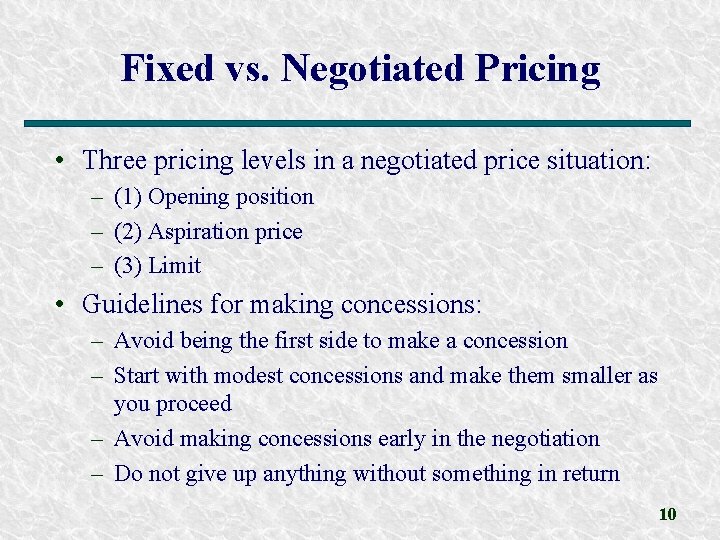
Fixed vs. Negotiated Pricing • Three pricing levels in a negotiated price situation: – (1) Opening position – (2) Aspiration price – (3) Limit • Guidelines for making concessions: – Avoid being the first side to make a concession – Start with modest concessions and make them smaller as you proceed – Avoid making concessions early in the negotiation – Do not give up anything without something in return 10
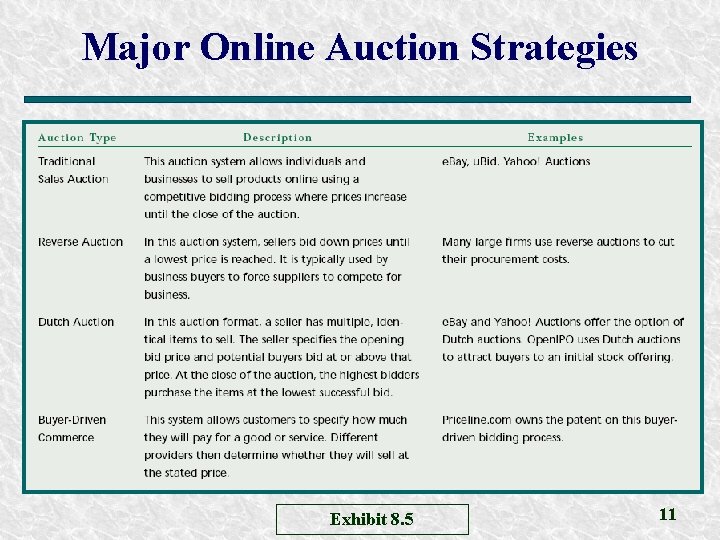
Major Online Auction Strategies Exhibit 8. 5 11
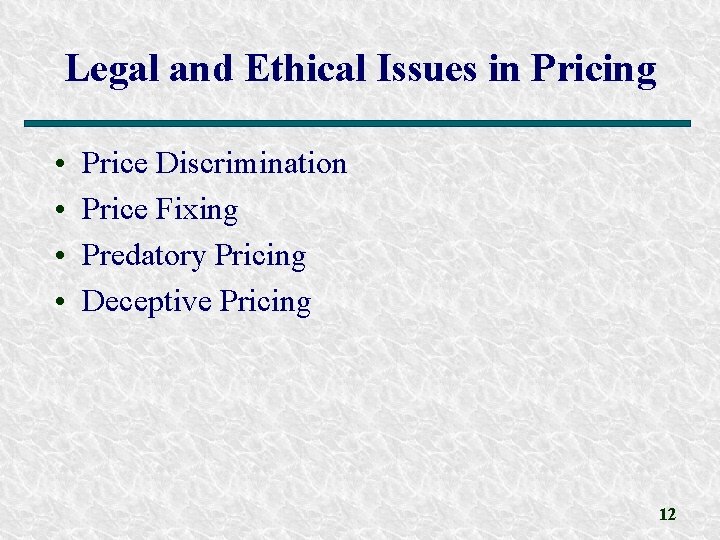
Legal and Ethical Issues in Pricing • • Price Discrimination Price Fixing Predatory Pricing Deceptive Pricing 12