
Marketing Strategy ADMI Javed Kalangade Assistant Professor ADMIFMS


- Slides: 40
Marketing Strategy ADMI Javed Kalangade Assistant Professor ADMIFMS FYMMS Sem II
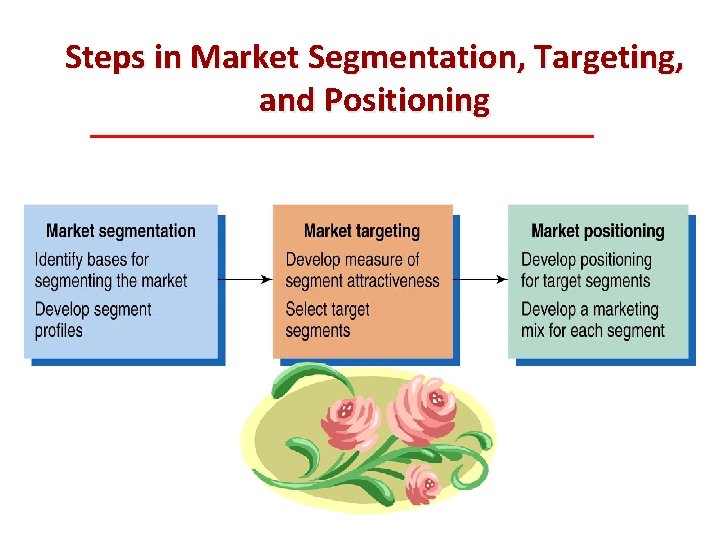
Steps in Market Segmentation, Targeting, and Positioning
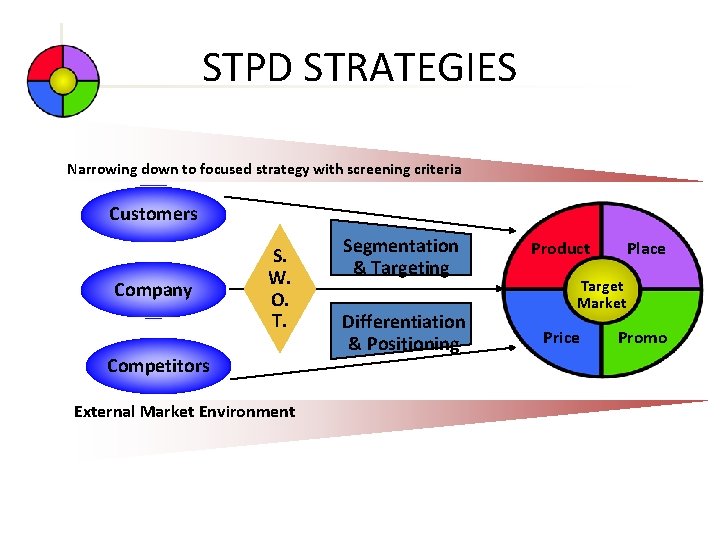
STPD STRATEGIES Narrowing down to focused strategy with screening criteria Customers Company S. W. O. T. Competitors External Market Environment Segmentation & Targeting Product Differentiation & Positioning Price Place Target Market Promo
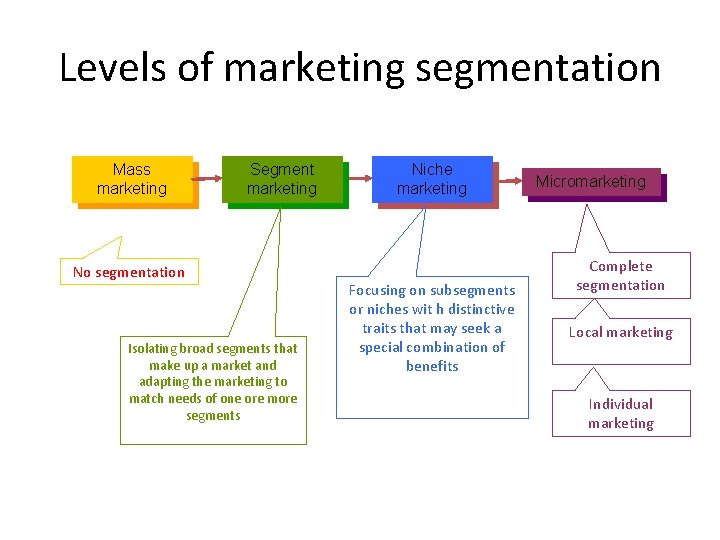
Levels of marketing segmentation Mass marketing Segment marketing No segmentation Isolating broad segments that make up a market and adapting the marketing to match needs of one ore more segments Niche marketing Focusing on subsegments or niches wit h distinctive traits that may seek a special combination of benefits Micromarketing Complete segmentation Local marketing Individual marketing
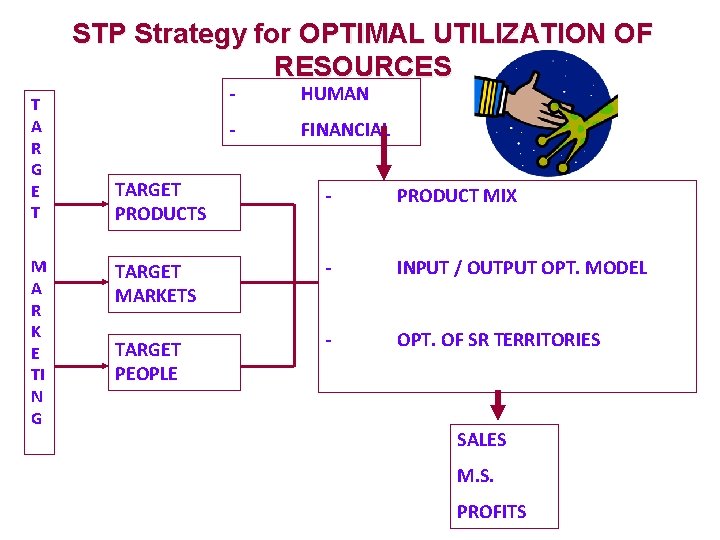
STP Strategy for OPTIMAL UTILIZATION OF RESOURCES T A R G E T M A R K E TI N G - HUMAN - FINANCIAL TARGET PRODUCTS - PRODUCT MIX TARGET MARKETS - INPUT / OUTPUT OPT. MODEL TARGET PEOPLE - OPT. OF SR TERRITORIES SALES M. S. PROFITS
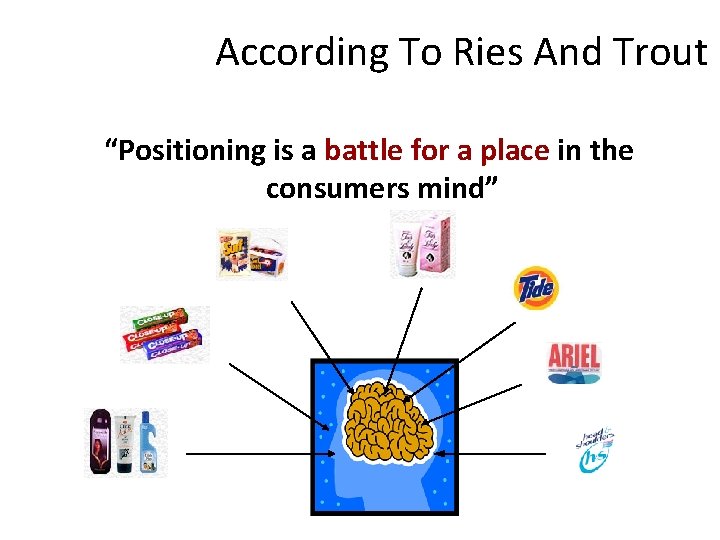
According To Ries And Trout “Positioning is a battle for a place in the consumers mind”
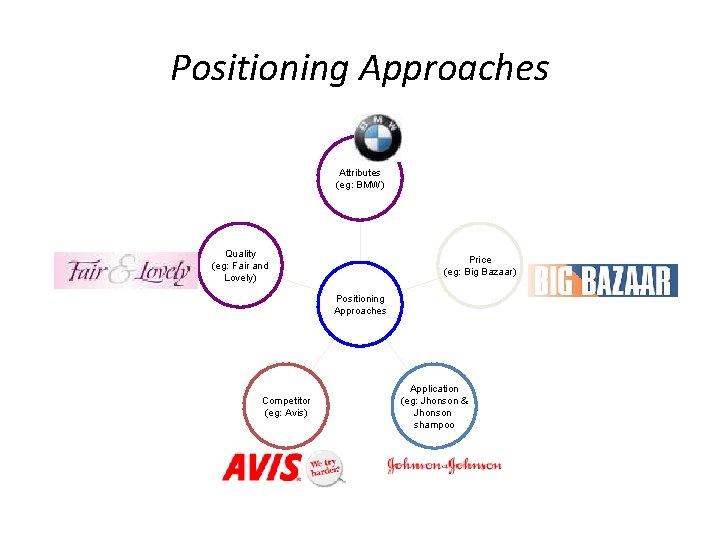
Positioning Approaches Attributes (eg: BMW) Quality (eg: Fair and Lovely) Price (eg: Big Bazaar) Positioning Approaches Competitor (eg: Avis) Application (eg: Jhonson & Jhonson shampoo
Types of Market situation strategy • There were generally thought to be four types of business warfare theories. They are • Offensive marketing warfare strategies - are used to secure competitive advantages; market leaders, runners-up or struggling competitors are usually attacked. • Defensive marketing warfare strategies - are used to defend competitive advantages; lessen risk of being attacked, decrease effects of attacks, strengthen position. • Flanking marketing warfare strategies - Operate in areas of little importance to the competitor. • Guerrilla marketing warfare strategies - Attack, retreat, hide, then do it again, and again, until the competitor moves on to other markets.
Offensive • Offensive marketing warfare strategies used to secure competitive advantages; market leaders, runners-up or struggling competitors are usually attacked Offensive marketing is used to put best products, offers and promotions directly to challenge the opposition. • e. g Mc. Donalds V Burger King
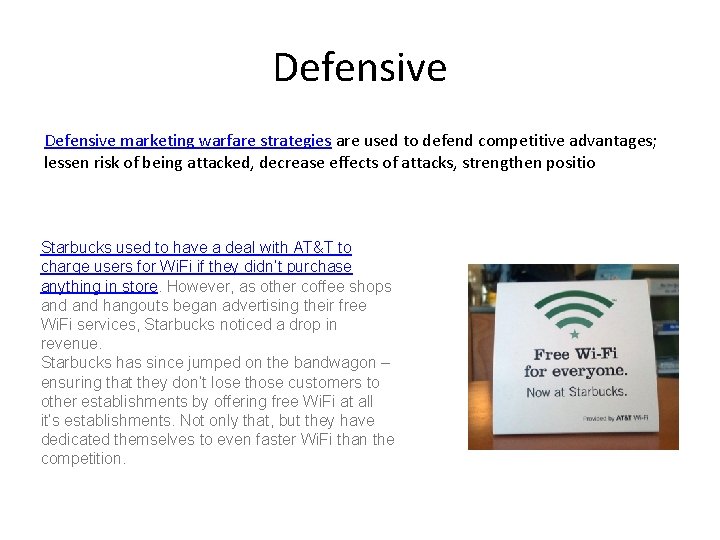
Defensive marketing warfare strategies are used to defend competitive advantages; lessen risk of being attacked, decrease effects of attacks, strengthen positio Starbucks used to have a deal with AT&T to charge users for Wi. Fi if they didn’t purchase anything in store. However, as other coffee shops and hangouts began advertising their free Wi. Fi services, Starbucks noticed a drop in revenue. Starbucks has since jumped on the bandwagon – ensuring that they don’t lose those customers to other establishments by offering free Wi. Fi at all it’s establishments. Not only that, but they have dedicated themselves to even faster Wi. Fi than the competition.
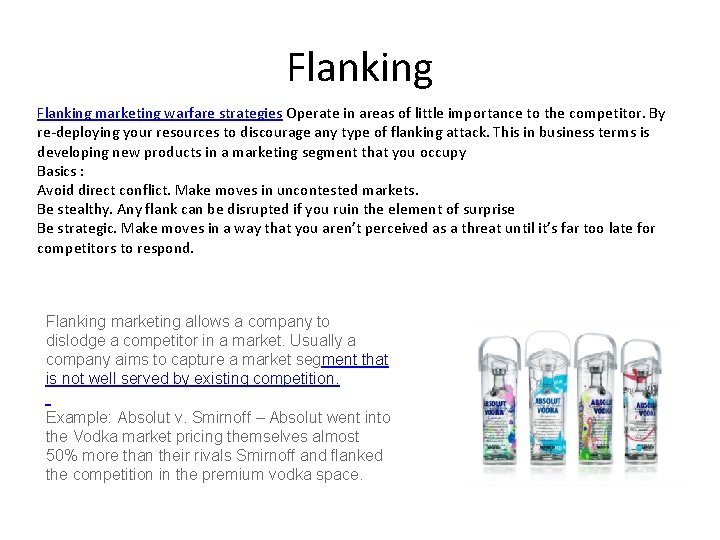
Flanking marketing warfare strategies Operate in areas of little importance to the competitor. By re-deploying your resources to discourage any type of flanking attack. This in business terms is developing new products in a marketing segment that you occupy Basics : Avoid direct conflict. Make moves in uncontested markets. Be stealthy. Any flank can be disrupted if you ruin the element of surprise Be strategic. Make moves in a way that you aren’t perceived as a threat until it’s far too late for competitors to respond. Flanking marketing allows a company to dislodge a competitor in a market. Usually a company aims to capture a market segment that is not well served by existing competition. Example: Absolut v. Smirnoff – Absolut went into the Vodka market pricing themselves almost 50% more than their rivals Smirnoff and flanked the competition in the premium vodka space.
Guerilla Marketing Guerrilla marketing is an advertisement strategy concept designed for businesses to promote their products or services in an unconventional way with little budget to spend. This involves high energy and imagination focusing on grasping the attention of the public in more personal and memorable level The main point of guerrilla marketing is that the activities are done exclusively on the streets or other public places, such as shopping centers, parks or beaches with maximum people access so as to attract a bigger audience.
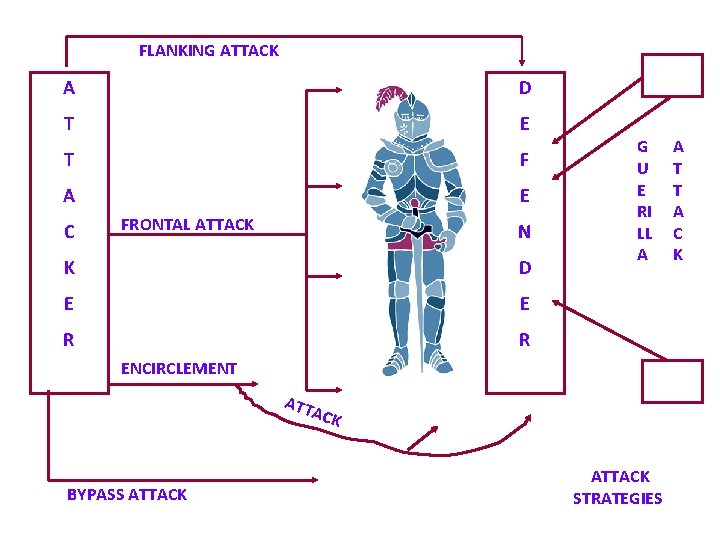
FLANKING ATTACK A D T E T F A E C FRONTAL ATTACK N K D E E R R G U E RI LL A ENCIRCLEMENT ATT ACK BYPASS ATTACK STRATEGIES A T T A C K
Five Forces Model of Competition ute bstit f Su ts eat o Thr Produc Five Forces of Competition Bargaining Power of Buyers Barg ainin g Po wer Sup plier of s Th g on s re m m at r A i of y g. F r l Ne va etin i w R p En m tra Co nt s
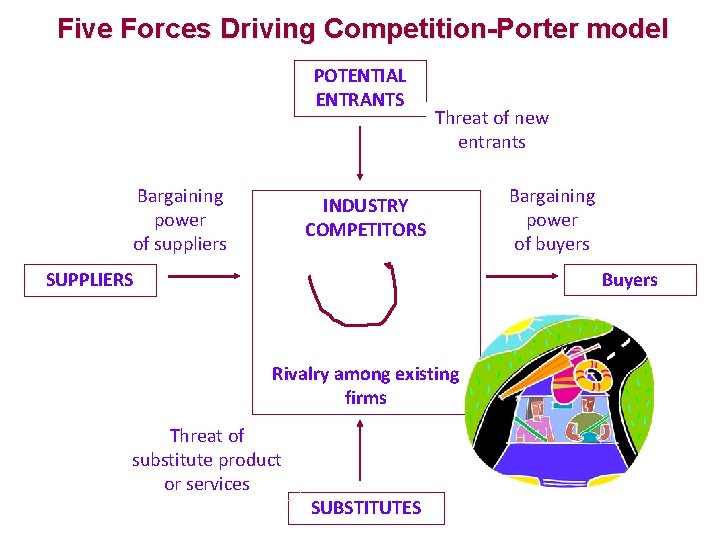
Five Forces Driving Competition-Porter model POTENTIAL ENTRANTS Bargaining power of suppliers Threat of new entrants INDUSTRY COMPETITORS SUPPLIERS Bargaining power of buyers Buyers Rivalry among existing firms Threat of substitute product or services SUBSTITUTES
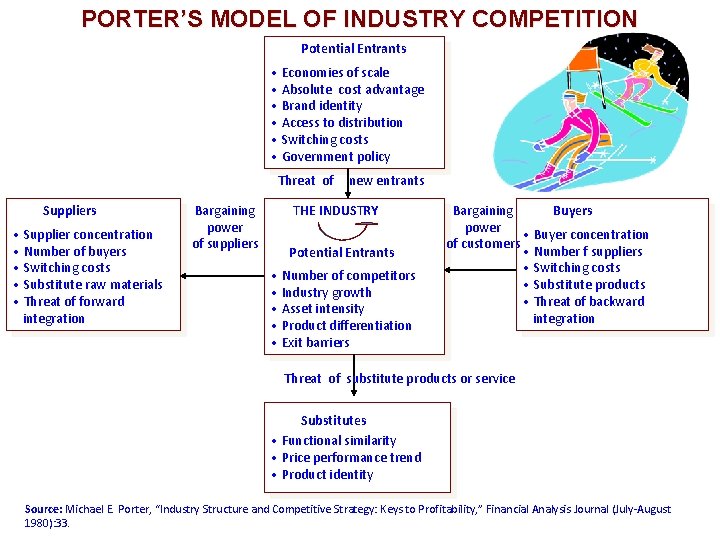
PORTER’S MODEL OF INDUSTRY COMPETITION Potential Entrants • Economies of scale • Absolute cost advantage • Brand identity • Access to distribution • Switching costs • Government policy Threat of Suppliers • Supplier concentration • Number of buyers • Switching costs • Substitute raw materials • Threat of forward integration Bargaining power of suppliers new entrants THE INDUSTRY Potential Entrants • Number of competitors • Industry growth • Asset intensity • Product differentiation • Exit barriers Bargaining Buyers power • Buyer concentration of customers • Number f suppliers • Switching costs • Substitute products • Threat of backward integration Threat of substitute products or service Substitutes • Functional similarity • Price performance trend • Product identity Source: Michael E. Porter, “Industry Structure and Competitive Strategy: Keys to Profitability, ” Financial Analysis Journal (July-August 1980): 33.
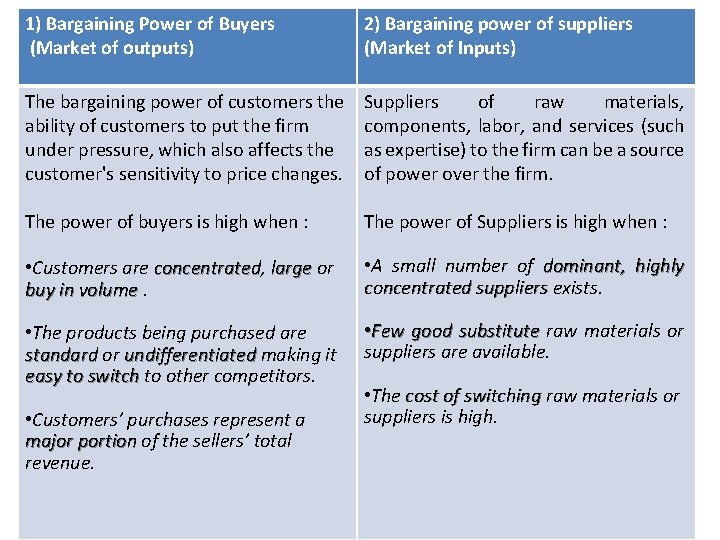
1) Bargaining Power of Buyers (Market of outputs) 2) Bargaining power of suppliers (Market of Inputs) The bargaining power of customers the ability of customers to put the firm under pressure, which also affects the customer's sensitivity to price changes. Suppliers of raw materials, components, labor, and services (such as expertise) to the firm can be a source of power over the firm. The power of buyers is high when : The power of Suppliers is high when : • Customers are concentrated, concentrated large or buy in volume. • A small number of dominant, highly concentrated suppliers exists. • The products being purchased are standard or undifferentiated making it easy to switch to other competitors. • Few good substitute raw materials or suppliers are available. • Customers’ purchases represent a major portion of the sellers’ total revenue. • The cost of switching raw materials or suppliers is high.
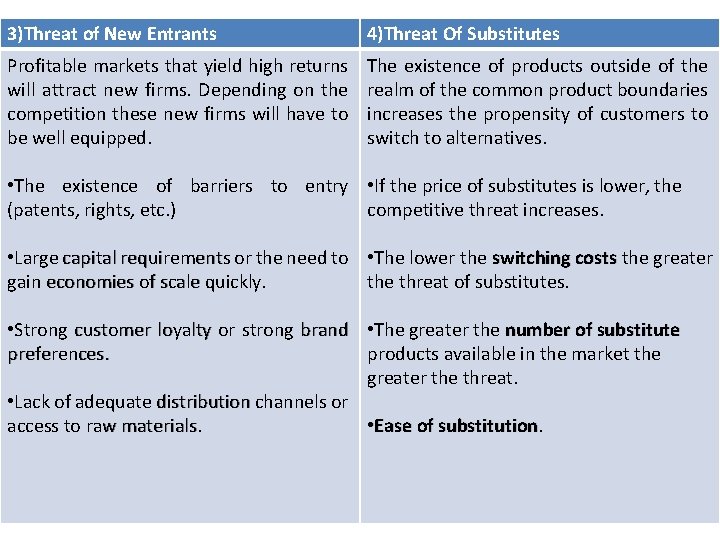
3)Threat of New Entrants 4)Threat Of Substitutes Profitable markets that yield high returns will attract new firms. Depending on the competition these new firms will have to be well equipped. The existence of products outside of the realm of the common product boundaries increases the propensity of customers to switch to alternatives. • The existence of barriers to entry • If the price of substitutes is lower, the (patents, rights, etc. ) competitive threat increases. • Large capital requirements or the need to • The lower the switching costs the greater gain economies of scale quickly. the threat of substitutes. • Strong customer loyalty or strong brand • The greater the number of substitute preferences. products available in the market the greater the threat. • Lack of adequate distribution channels or access to raw materials. • Ease of substitution. materials substitution
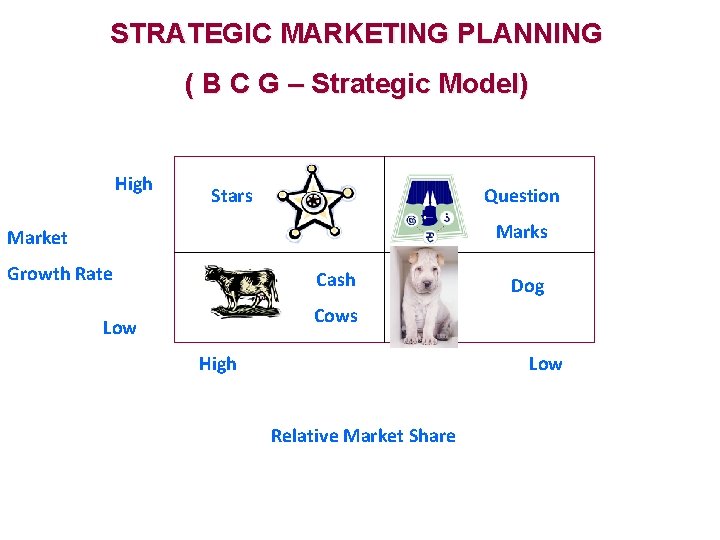
STRATEGIC MARKETING PLANNING ( B C G – Strategic Model) High Stars Question Marks Market Growth Rate Cash Dog Cows Low High Low Relative Market Share
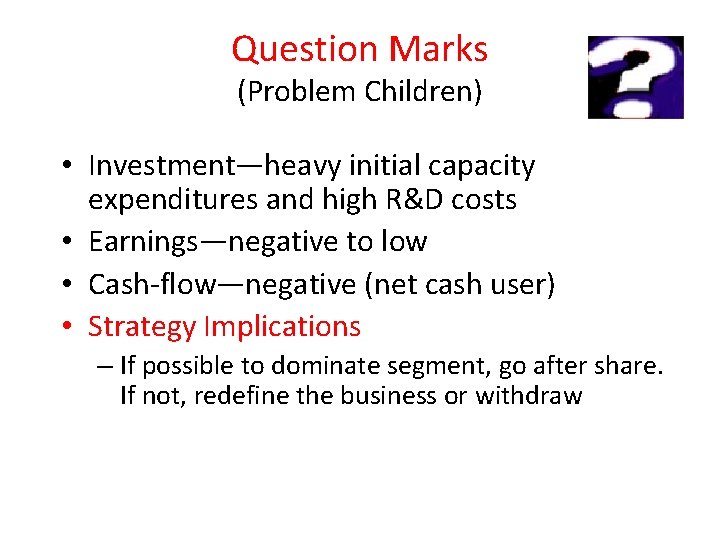
Question Marks (Problem Children) • Investment—heavy initial capacity expenditures and high R&D costs • Earnings—negative to low • Cash-flow—negative (net cash user) • Strategy Implications – If possible to dominate segment, go after share. If not, redefine the business or withdraw
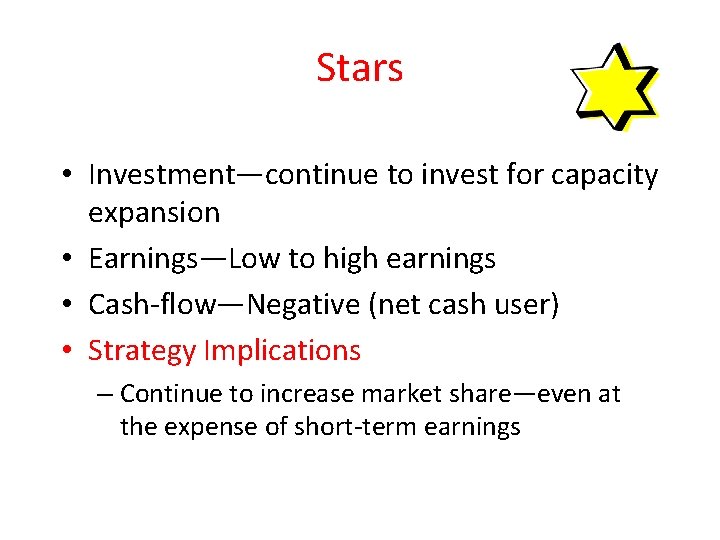
Stars • Investment—continue to invest for capacity expansion • Earnings—Low to high earnings • Cash-flow—Negative (net cash user) • Strategy Implications – Continue to increase market share—even at the expense of short-term earnings
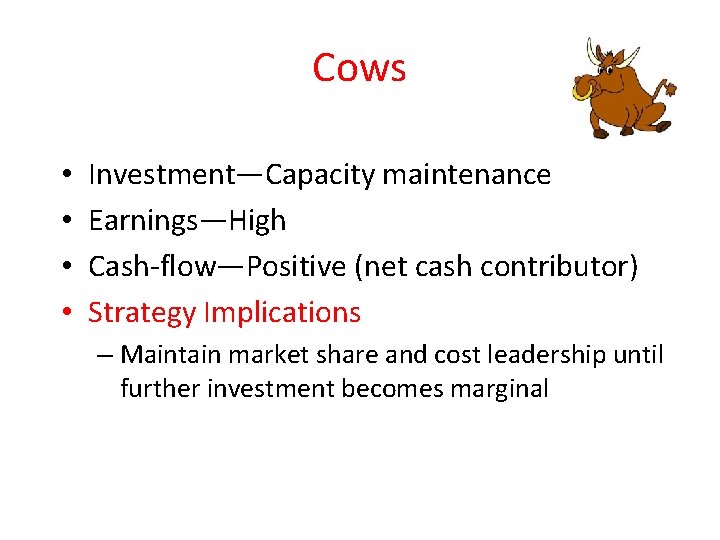
Cows • • Investment—Capacity maintenance Earnings—High Cash-flow—Positive (net cash contributor) Strategy Implications – Maintain market share and cost leadership until further investment becomes marginal
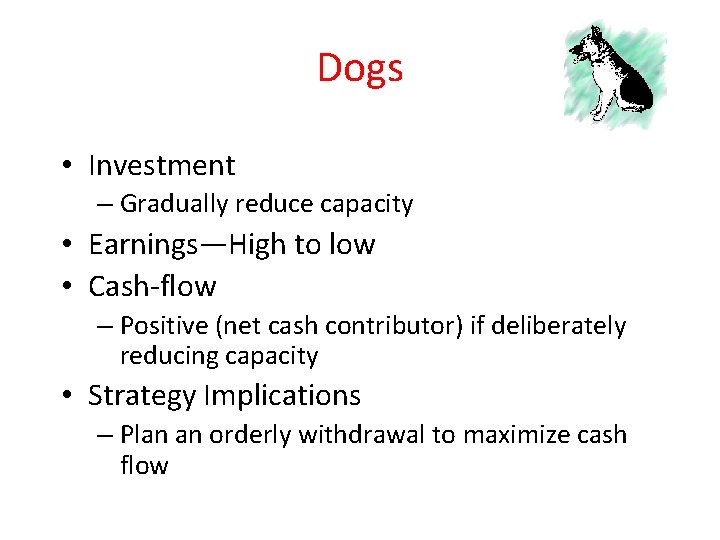
Dogs • Investment – Gradually reduce capacity • Earnings—High to low • Cash-flow – Positive (net cash contributor) if deliberately reducing capacity • Strategy Implications – Plan an orderly withdrawal to maximize cash flow
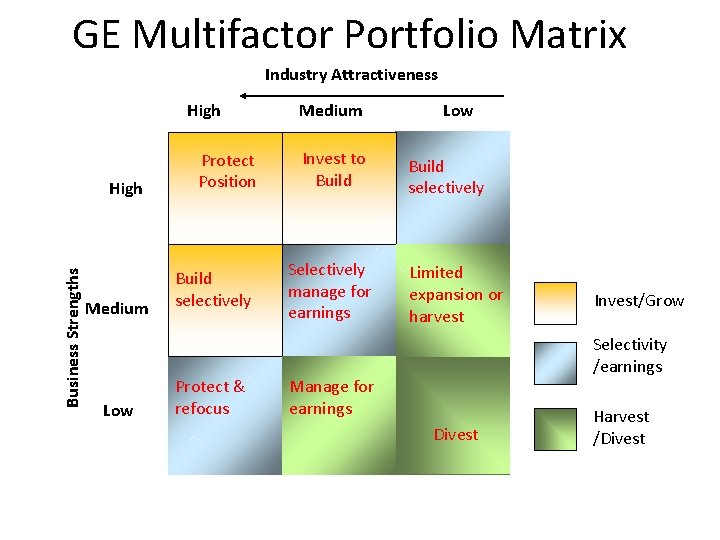
GE Multifactor Portfolio Matrix Industry Attractiveness High Business Strengths High Medium Low Protect Position Build selectively Protect & refocus Medium Invest to Build Selectively manage for earnings Low Build selectively Limited expansion or harvest Invest/Grow Selectivity /earnings Manage for earnings Divest Harvest /Divest
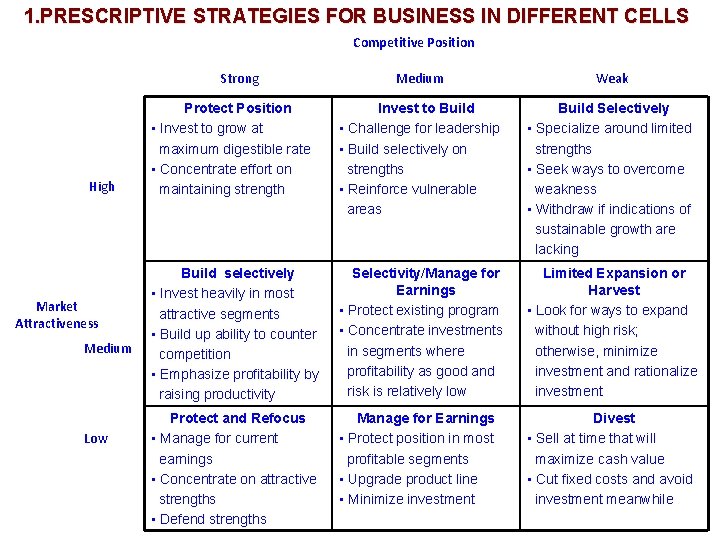
1. PRESCRIPTIVE STRATEGIES FOR BUSINESS IN DIFFERENT CELLS Competitive Position Strong High Market Attractiveness Medium Low Medium Weak Protect Position • Invest to grow at maximum digestible rate • Concentrate effort on maintaining strength Invest to Build • Challenge for leadership • Build selectively on strengths • Reinforce vulnerable areas Build Selectively • Specialize around limited strengths • Seek ways to overcome weakness • Withdraw if indications of sustainable growth are lacking Build selectively • Invest heavily in most attractive segments • Build up ability to counter competition • Emphasize profitability by raising productivity Selectivity/Manage for Earnings • Protect existing program • Concentrate investments in segments where profitability as good and risk is relatively low Limited Expansion or Harvest • Look for ways to expand without high risk; otherwise, minimize investment and rationalize investment Protect and Refocus • Manage for current earnings • Concentrate on attractive strengths • Defend strengths Manage for Earnings • Protect position in most profitable segments • Upgrade product line • Minimize investment Divest • Sell at time that will maximize cash value • Cut fixed costs and avoid investment meanwhile
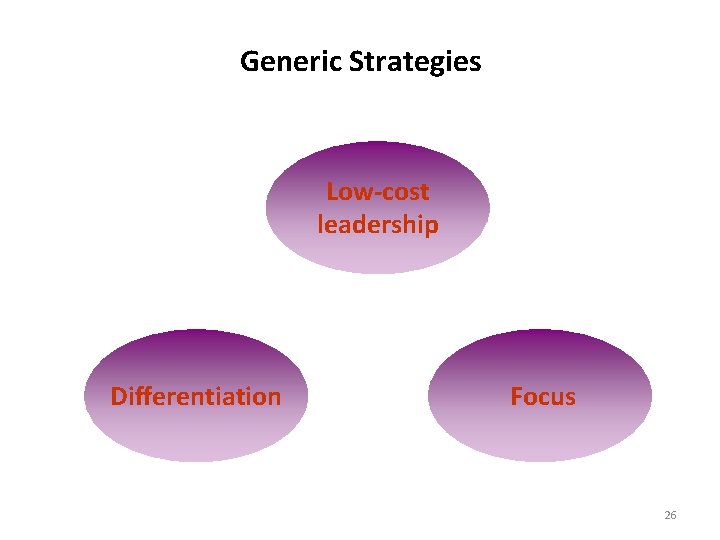
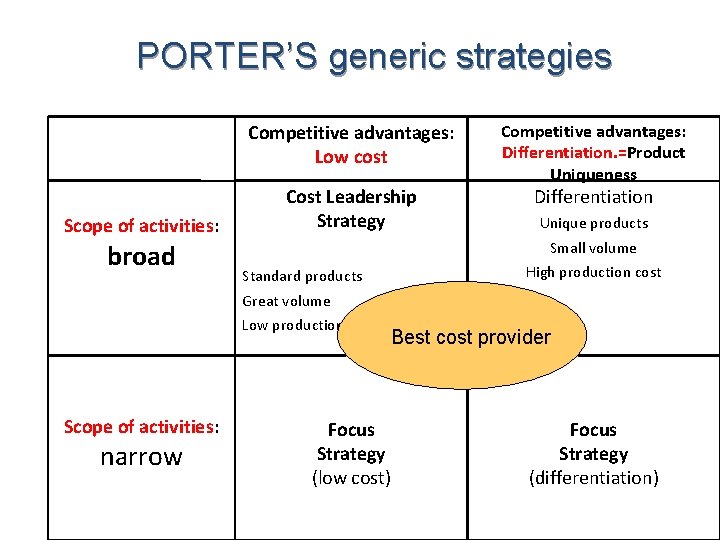
Generic Strategies Low-cost leadership Differentiation Focus 26
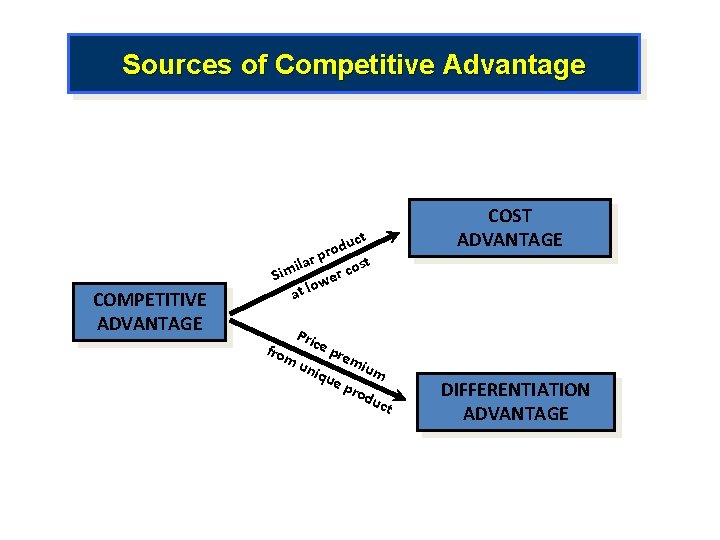
Sources of Competitive Advantage COMPETITIVE ADVANTAGE uct d o r ar p cost l i Sim wer o at l fro COST ADVANTAGE Pric mu ep rem ium niq ue pro duc t DIFFERENTIATION ADVANTAGE
PORTER’S generic strategies Competitive advantages: Low cost Scope of activities: broad Cost Leadership Strategy Competitive advantages: Differentiation. =Product Uniqueness Differentiation Unique products Small volume High production cost Standard products Great volume Low production costs Scope of activities: narrow Best cost provider Focus Strategy (low cost) Focus Strategy (differentiation)
Product prunning • A product may be pruned gradually by discontinuing all promotion expenditures and milking the market for any remaining demand. • The declining product may also be sold to a competitor or sold in limited quantities to a market segment with self-sustaining demand.
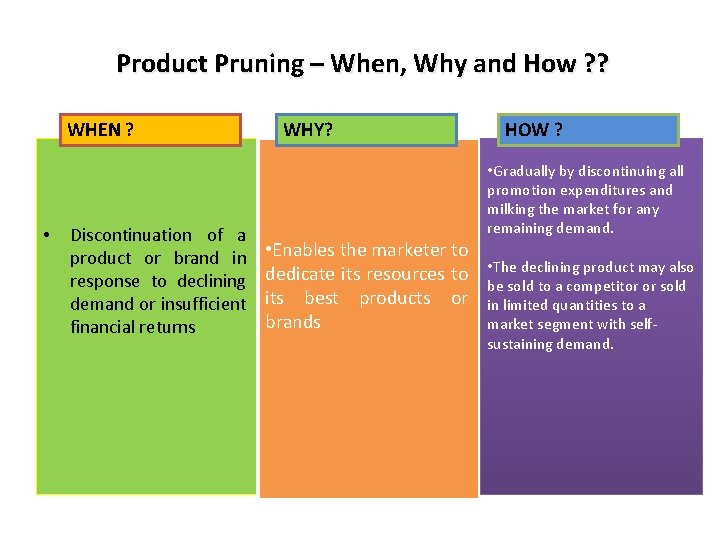
Product Pruning – When, Why and How ? ? WHEN ? • Discontinuation of a product or brand in response to declining demand or insufficient financial returns WHY? HOW ? • Gradually by discontinuing all promotion expenditures and milking the market for any remaining demand. • Enables the marketer to dedicate its resources to • The declining product may also be sold to a competitor or sold its best products or in limited quantities to a brands market segment with selfsustaining demand.
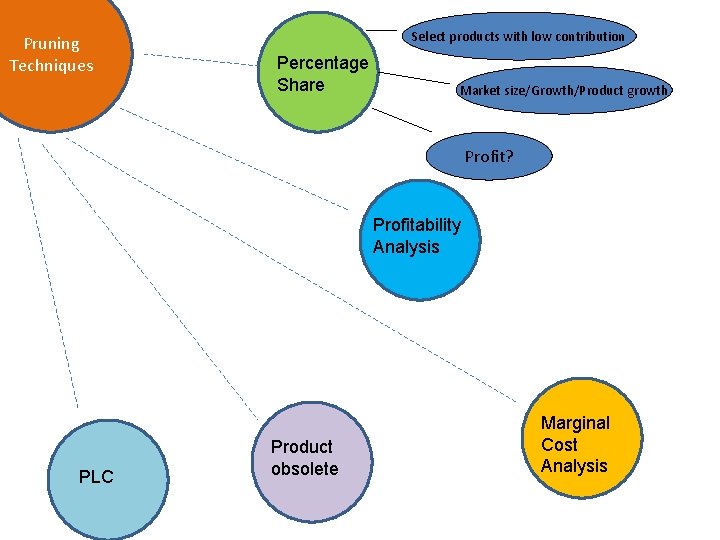
Pruning Techniques Select products with low contribution Percentage Share Market size/Growth/Product growth Profit? Profitability Analysis PLC Product obsolete Marginal Cost Analysis
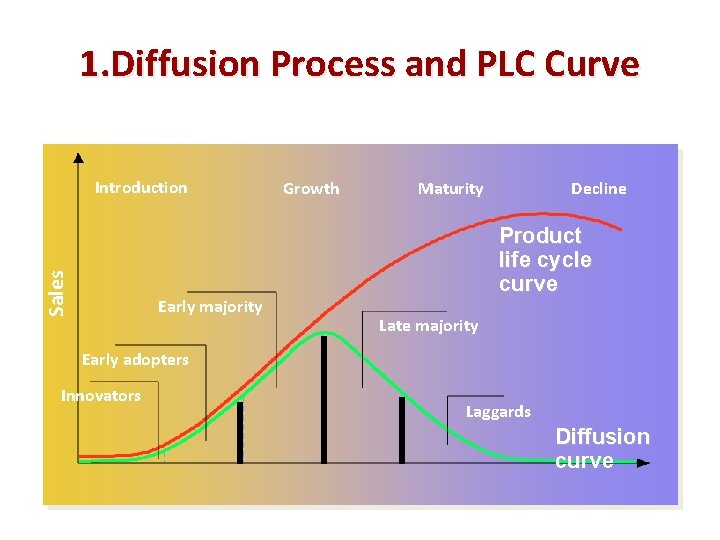
1. Diffusion Process and PLC Curve Sales Introduction Early majority Growth Decline Maturity Product life cycle curve Late majority Early adopters Innovators Laggards Diffusion curve
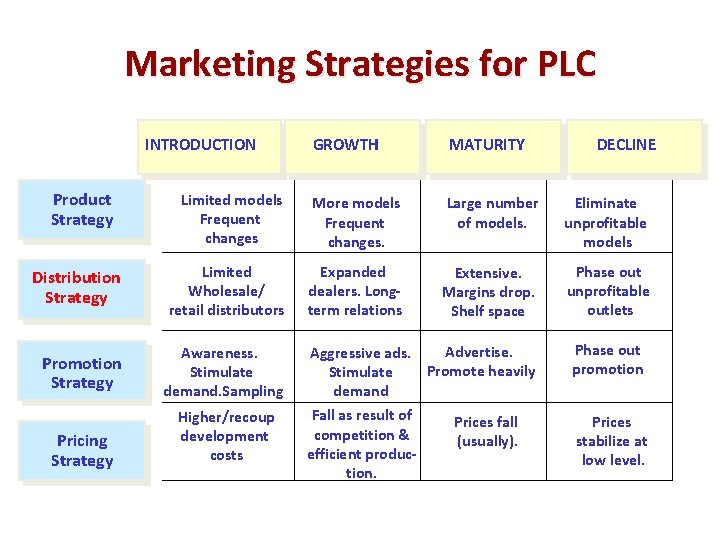
Marketing Strategies for PLC INTRODUCTION GROWTH MATURITY Limited models Frequent changes More models Frequent changes. Large number of models. Eliminate unprofitable models Distribution Strategy Limited Wholesale/ retail distributors Expanded dealers. Longterm relations Extensive. Margins drop. Shelf space Phase out unprofitable outlets Promotion Strategy Awareness. Stimulate demand. Sampling Pricing Strategy Higher/recoup development costs Product Strategy DECLINE Advertise. Aggressive ads. Promote heavily Stimulate demand Phase out promotion Fall as result of competition & efficient production. Prices stabilize at low level. Prices fall (usually).
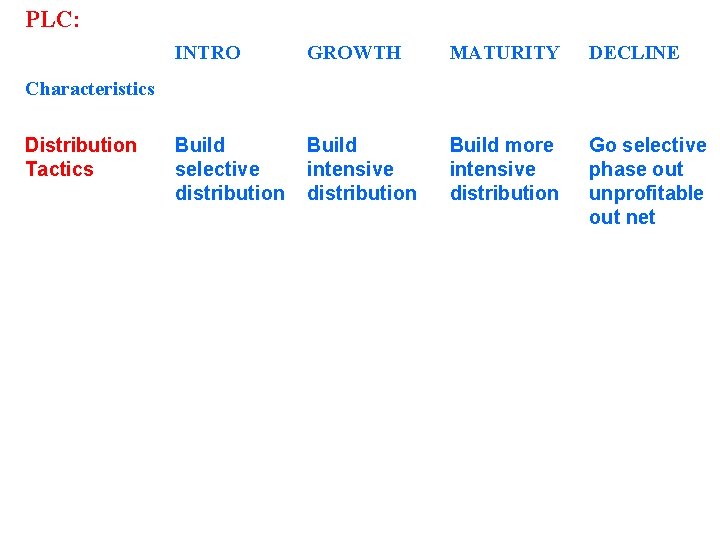
PLC: INTRO GROWTH MATURITY DECLINE Build selective distribution Build intensive distribution Build more intensive distribution Go selective phase out unprofitable out net Characteristics Distribution Tactics
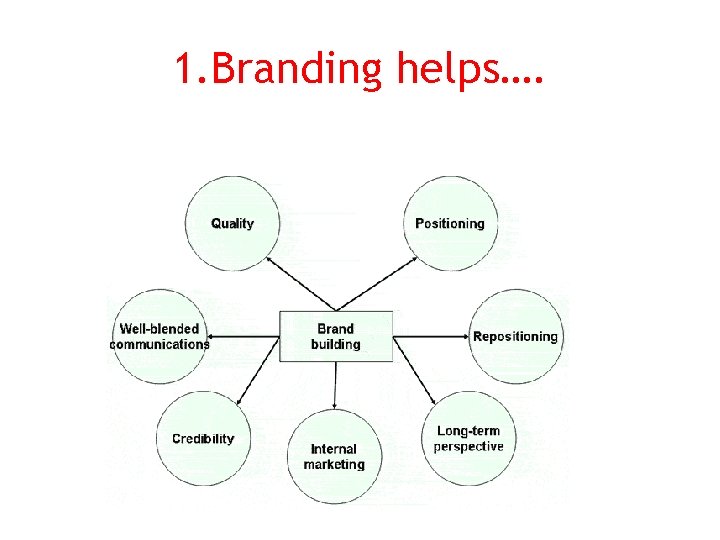
1. Branding helps….
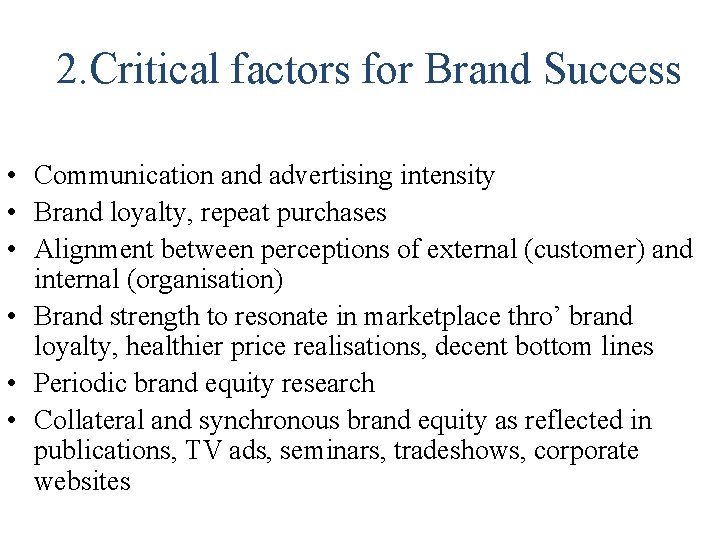
2. Critical factors for Brand Success • Communication and advertising intensity • Brand loyalty, repeat purchases • Alignment between perceptions of external (customer) and internal (organisation) • Brand strength to resonate in marketplace thro’ brand loyalty, healthier price realisations, decent bottom lines • Periodic brand equity research • Collateral and synchronous brand equity as reflected in publications, TV ads, seminars, tradeshows, corporate websites
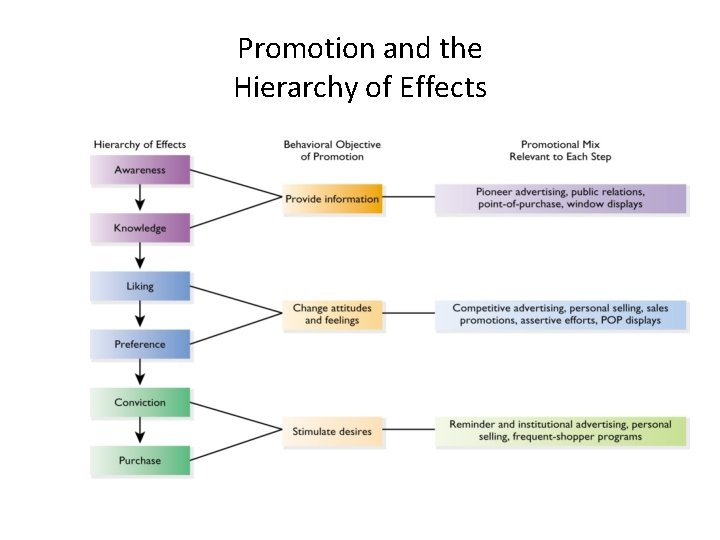
Promotion and the Hierarchy of Effects
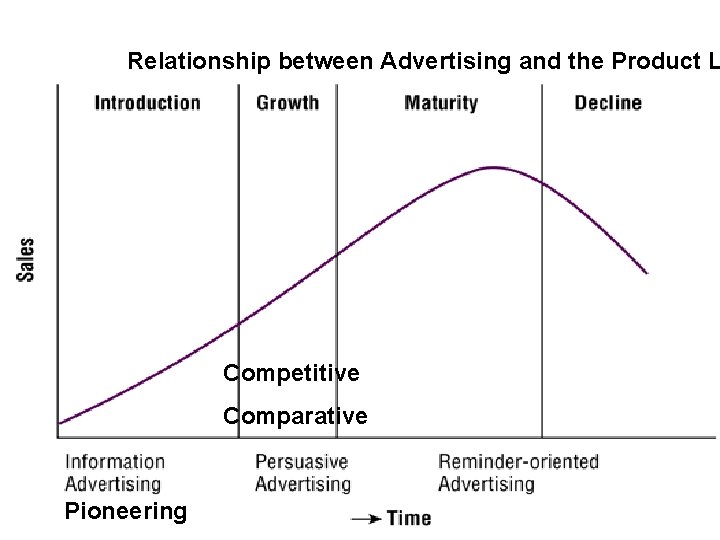
Relationship between Advertising and the Product L Cycle Competitive Comparative Prepared for Marketing 106 Copyright, Professor W. T. G. Richardson, Seneca College Pioneering
Creative Strategy • Develop the USP “unique selling proposition” or the “Creative Hook” Unique Selling Proposition • Translates “brand positioning” into a compelling message. • Objective is “Memorability”
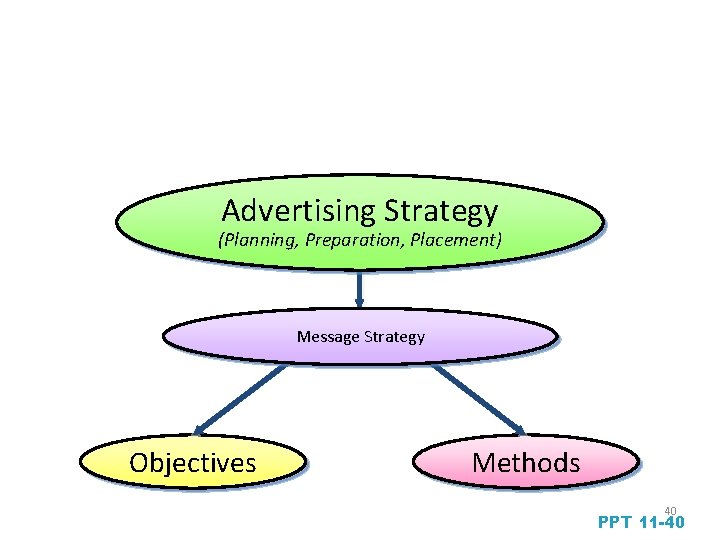
Context for Message Strategy Advertising Strategy (Planning, Preparation, Placement) Message Strategy Objectives Methods 40 PPT 11 -40