
MARKETING RESEARCH MEANING OF MARKETING RESEARCH Marketing research


- Slides: 54
MARKETING RESEARCH
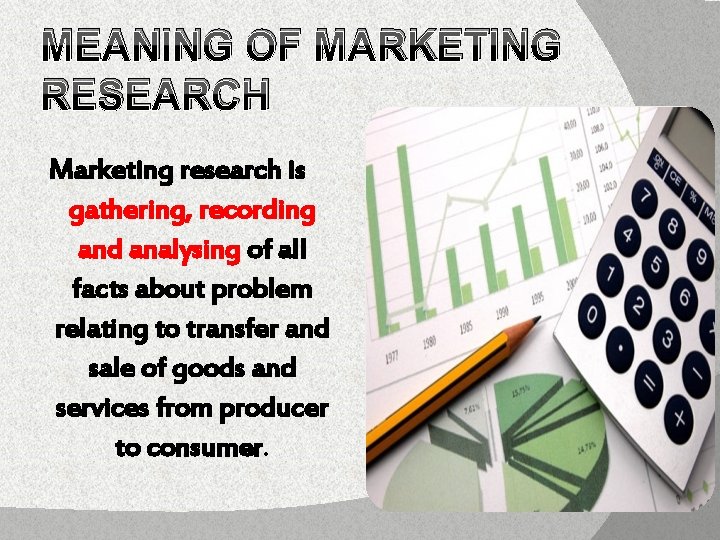
MEANING OF MARKETING RESEARCH Marketing research is gathering, recording and analysing of all facts about problem relating to transfer and sale of goods and services from producer to consumer.
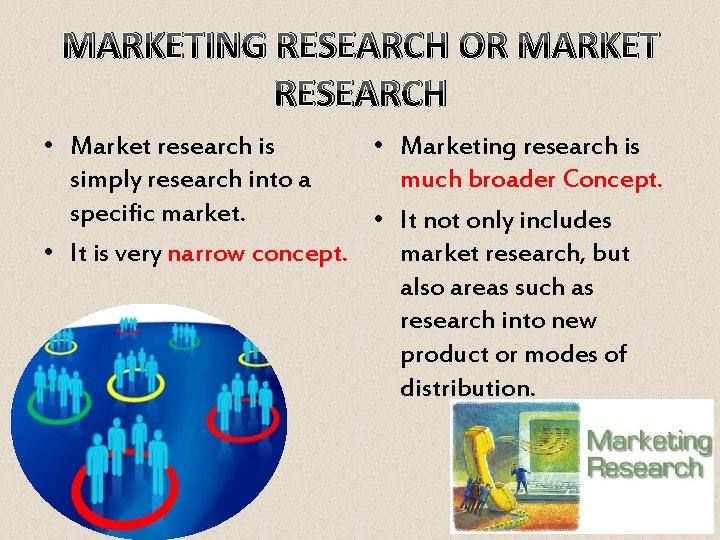
MARKETING RESEARCH OR MARKET RESEARCH • Market research is • Marketing research is simply research into a much broader Concept. specific market. • It not only includes • It is very narrow concept. market research, but also areas such as research into new product or modes of distribution.
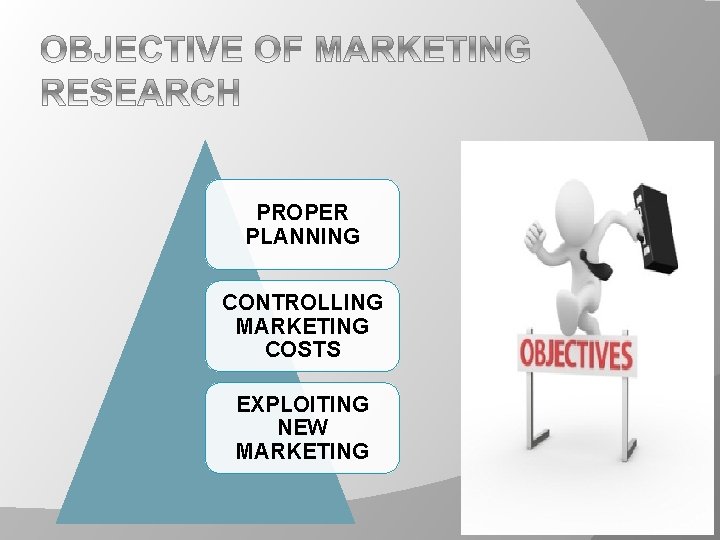
PROPER PLANNING CONTROLLING MARKETING COSTS EXPLOITING NEW MARKETING
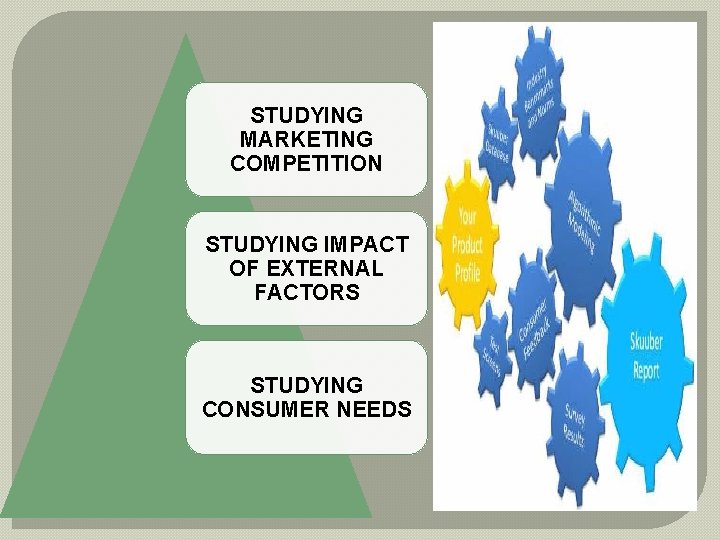
STUDYING MARKETING COMPETITION STUDYING IMPACT OF EXTERNAL FACTORS STUDYING CONSUMER NEEDS
ü ü ü Proper Planning: It enables the planning of sales and other marketing programmes. The sales forecasts will be made on the basis of data collected from the market and other activities will be planned by keeping these figures in mind. Controlling Marketing Costs: The ever increasing competition is necessitating more and more expenditure on marketing. A systematized approach based on facts collected in marketing research will help in controlling costs on advertising, selling and distribution. Exploiting New Markets: It collects information about new areas where the product can be marketed. The tastes of consumers, the type of products already in the market, purchasing power of buyers will enable the marketing men to try the new markets.
ü Studying Marketing Competition : Marketing programmes will be successful only if we know the strength of our competitors. The marketing strategies adopted by the competitors should be counted to sell the products. Marketing research will be helpful in collecting every information about the competitors. ü Studying Impact of External Factors: A number of external factors such as Govt. policies, spending habits, purchasing power of consumers substitutes available will influence marketing plans and programmers. The impact of external factors should be regularly analyzed with the help of information collected in marketing research. ü Studying Consumer Needs: It aims to ascertain the actual needs of the consumers for a product which is already put on the market to manufacture a similar but more suitable product. The failure of a product should also be enquired to help future planning.
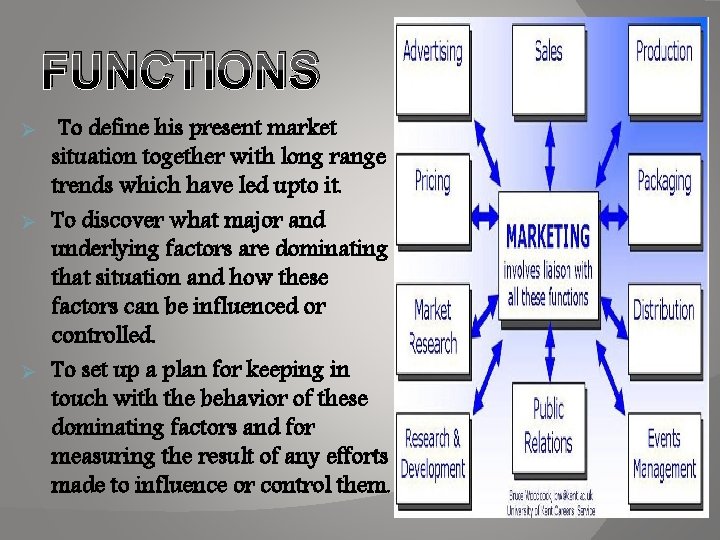
FUNCTIONS To define his present market situation together with long range trends which have led upto it. Ø To discover what major and underlying factors are dominating that situation and how these factors can be influenced or controlled. Ø To set up a plan for keeping in touch with the behavior of these dominating factors and for measuring the result of any efforts made to influence or control them. Ø
BENEFITS OF MARKETING RESEARCH � INCREASE IN SALES. � DISCOVERING NEW OPPORTUNITIES. � REDUCING MARKETING COSTS. � REVIEWING MARKETING POLICIES. � HELPING IN PLANNING. � PRODUCTION AS PER CONSUMER NEEDS.
1. 2. 3. Increase in Sales: Marking research will help in predetermining of sales, best ways of reaching consumer, proper timing of sales promotion etc. All the factors will in accelerating sales. Production as per Consumer Needs: Marketing research will provide information about changes in consumer tastes and preferences. This will help in producing goods as per consumer needs. The products will be priced in accordance with demand quality will also be suitable as per the needs of the markets. Discovering New Opportunities: Research in marketing will help in spotting new areas where the product may be marketed. The product can be made suitable to the needs of new customers and this will bring greater satisfaction to consumers.
4. Reducing Marketing Costs: Research will help in reducing marketing expenses. It will help in avoiding duplication in marketing efforts. The increase in sales will also reduce selling and distribution expenses per unit. 5. Reviewing Marketing Policies: Marketing policies and programmes will be reviewed at regular intervals with the help of data collected by research. The successive failure of various policies will be determined with the help of sales budget data. 6. Helping in Planning: Research helps the marketing manager to plan volume of business. It forecasts changes in market, nature of competition, expert possibilities etc. All these efforts will enable the manager to set for sales targets and plan the working accordingly.
ELMA S. MOULTON CONTRIBUTIONS § To keep a business in touch with its markets. § To eliminate waste in marketing methods. § To develop new products or markets. § To ensure against unforeseen changes in the market. § To guide sales promotion efforts, and § To infuse enthusiasm in the organisation through the knowledge on the part of the personnel that marketing activities are based on scientific knowledge of its market.
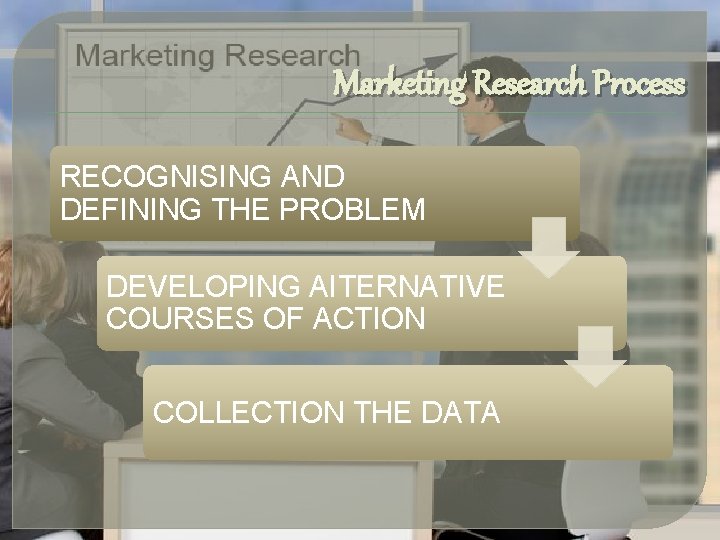
Marketing Research Process RECOGNISING AND DEFINING THE PROBLEM DEVELOPING AITERNATIVE COURSES OF ACTION COLLECTION THE DATA
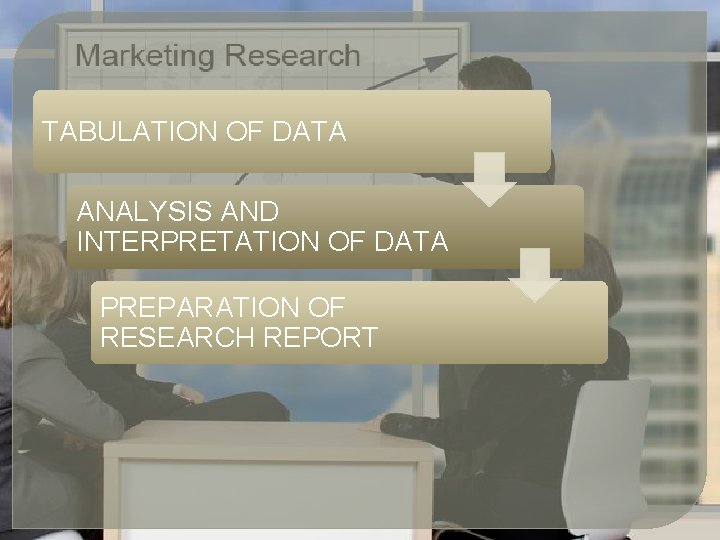
TABULATION OF DATA ANALYSIS AND INTERPRETATION OF DATA PREPARATION OF RESEARCH REPORT
STEP 1: DEFINE THE PROBLEM Problems should not be defined either too broadly or too narrowly. A very broad or vague definition leads to excessive wastage of resources. Too narrow a definition leads to inadequate data or information required to take an effective decision. Get the right answer to the questions: q What is to be researched (the content, the scope) ? q Why is it to be researched (the decisions that are to be made) ?
STEP 2: DEVELOP THE RESEARCH PLAN The second stage of marketing research requires developing the most efficient plan for gathering the required information. This involves decisions on the data sources, research approaches, research instruments, sampling plan, and contract methods. Data sources: � Secondary data � Primary data
Secondary data Ø Data previously collected for any purpose other than the one at hand. Ø Always use this FIRST. Ø Already exist some where. Sources of Secondary Data: - Government agencies. - Marketing research firms. - Commercials publications. - News media.
Primary data Ø Information collected for the first time. Ø Always use this LAST. It can be collected in three ways: § Observational Research. § Focus Group Research. § Survey Research. § mail questionnaire. § telephone interview. § personal interview. § online interview.
STEP 3: COLLECT THE INFORMATION The data collection phase of marketing research is generally the most expensive and the most prone to error. Four major problems arise in surveys. Some respondents will not be at home and must be contacted again or replaced. Other respondent will refuse to cooperate. Still others will give biased or dishonest answers.
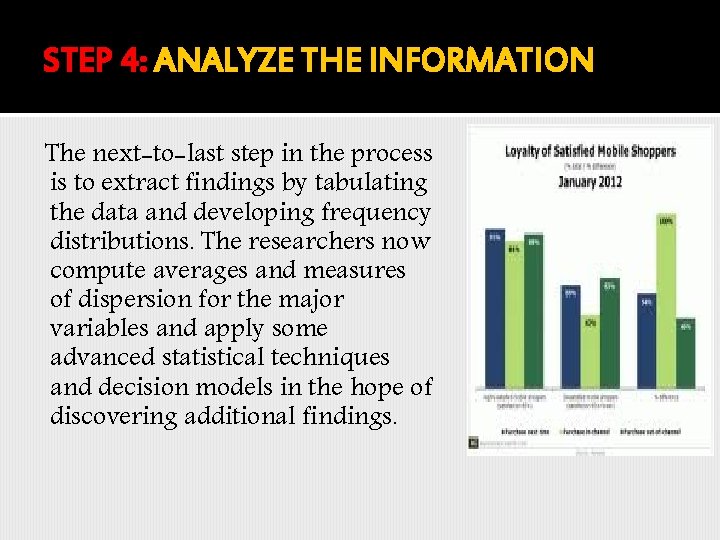
STEP 4: ANALYZE THE INFORMATION The next-to-last step in the process is to extract findings by tabulating the data and developing frequency distributions. The researchers now compute averages and measures of dispersion for the major variables and apply some advanced statistical techniques and decision models in the hope of discovering additional findings.
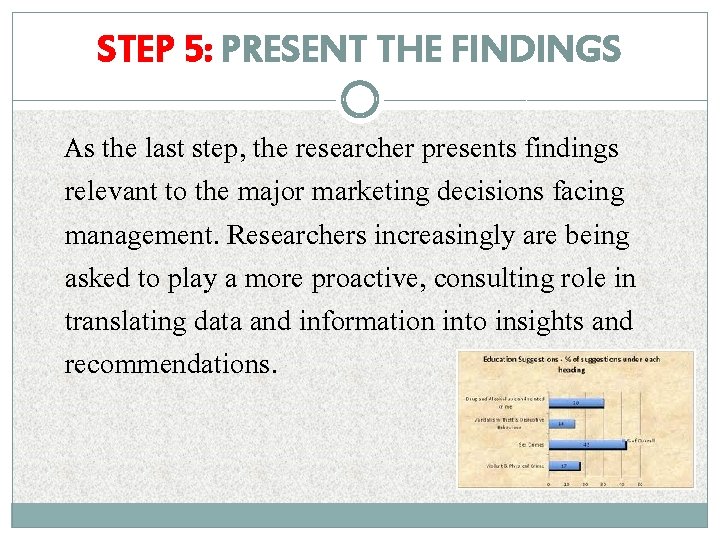
STEP 5: PRESENT THE FINDINGS As the last step, the researcher presents findings relevant to the major marketing decisions facing management. Researchers increasingly are being asked to play a more proactive, consulting role in translating data and information into insights and recommendations.
STEP 6: MAKE THE DECISION Research findings only provide additional information and insight to the managers. Depending on their confidence in the findings, managers decide to use it, discard it, or carry out more research.
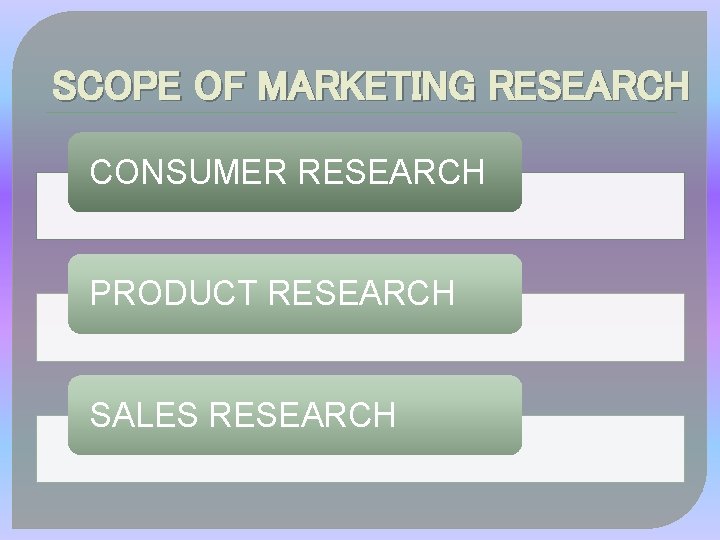
SCOPE OF MARKETING RESEARCH CONSUMER RESEARCH PRODUCT RESEARCH SALES RESEARCH
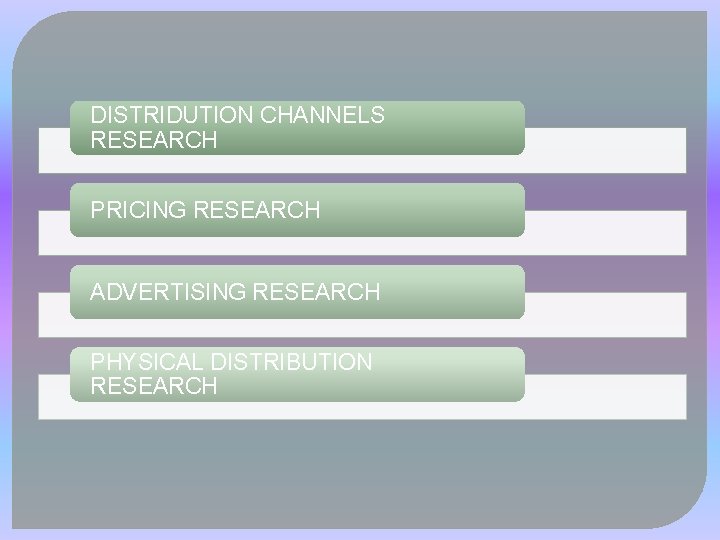
DISTRIDUTION CHANNELS RESEARCH PRICING RESEARCH ADVERTISING RESEARCH PHYSICAL DISTRIBUTION RESEARCH
CONSUMER RESEARCH Consumer research concentrates on consumer needs and preferences. This research includes both current and potential consumers. It deals with the following areas: (i) Ascertaining the levels of consumer satisfaction. (ii) Discussing the personal factors that affect consumer decision making. (iii) Ascertaining the level of preference of consumers for other similar products. (iv) Studying the influences of various factors on consumer decision making.
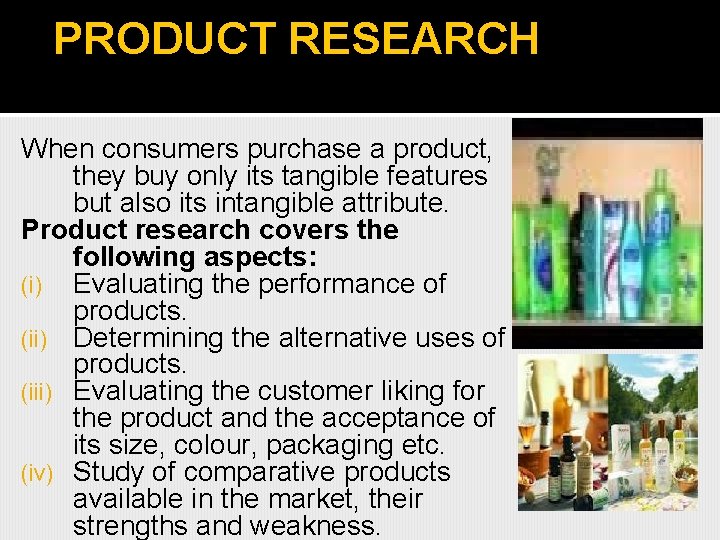
PRODUCT RESEARCH When consumers purchase a product, they buy only its tangible features but also its intangible attribute. Product research covers the following aspects: (i) Evaluating the performance of products. (ii) Determining the alternative uses of products. (iii) Evaluating the customer liking for the product and the acceptance of its size, colour, packaging etc. (iv) Study of comparative products available in the market, their strengths and weakness.
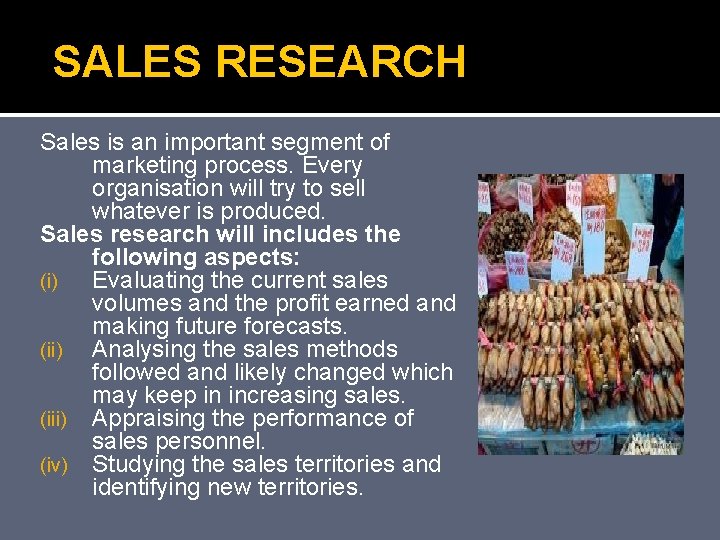
SALES RESEARCH Sales is an important segment of marketing process. Every organisation will try to sell whatever is produced. Sales research will includes the following aspects: (i) Evaluating the current sales volumes and the profit earned and making future forecasts. (ii) Analysing the sales methods followed and likely changed which may keep in increasing sales. (iii) Appraising the performance of sales personnel. (iv) Studying the sales territories and identifying new territories.
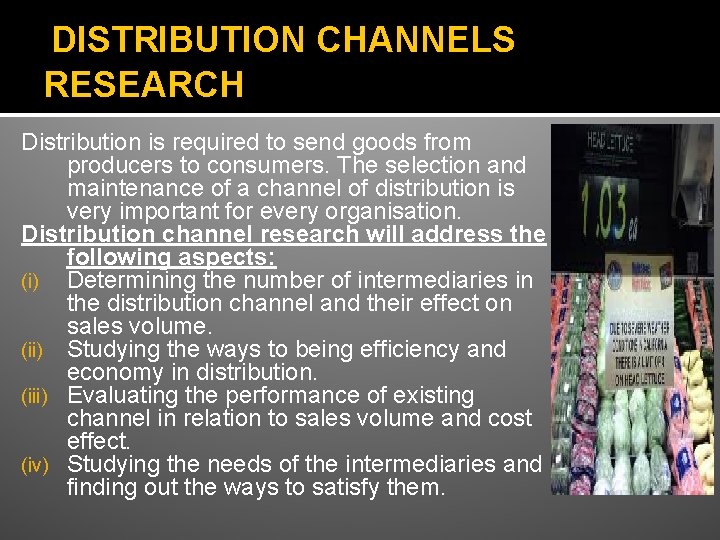
DISTRIBUTION CHANNELS RESEARCH Distribution is required to send goods from producers to consumers. The selection and maintenance of a channel of distribution is very important for every organisation. Distribution channel research will address the following aspects: (i) Determining the number of intermediaries in the distribution channel and their effect on sales volume. (ii) Studying the ways to being efficiency and economy in distribution. (iii) Evaluating the performance of existing channel in relation to sales volume and cost effect. (iv) Studying the needs of the intermediaries and finding out the ways to satisfy them.
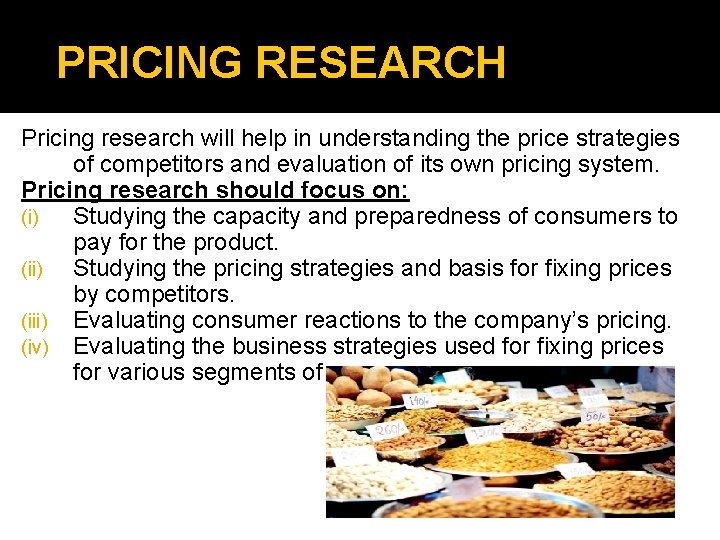
PRICING RESEARCH Pricing research will help in understanding the price strategies of competitors and evaluation of its own pricing system. Pricing research should focus on: (i) Studying the capacity and preparedness of consumers to pay for the product. (ii) Studying the pricing strategies and basis for fixing prices by competitors. (iii) Evaluating consumer reactions to the company’s pricing. (iv) Evaluating the business strategies used for fixing prices for various segments of consumers.
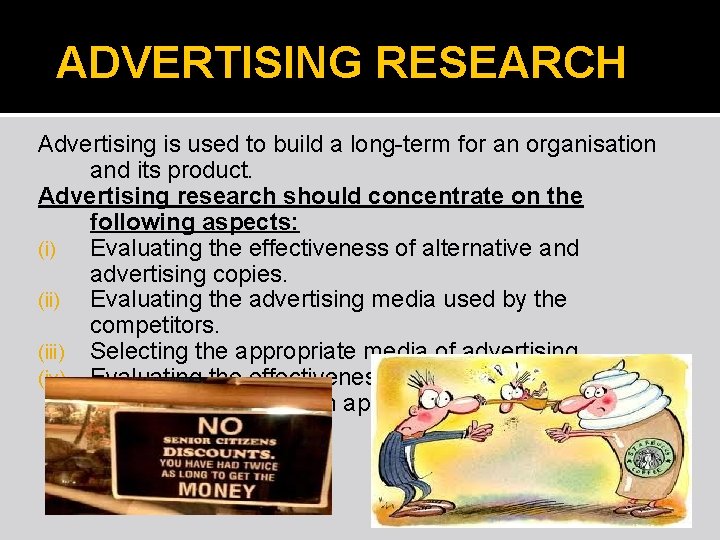
ADVERTISING RESEARCH Advertising is used to build a long-term for an organisation and its product. Advertising research should concentrate on the following aspects: (i) Evaluating the effectiveness of alternative and advertising copies. (ii) Evaluating the advertising media used by the competitors. (iii) Selecting the appropriate media of advertising. (iv) Evaluating the effectiveness of various advertising media and selecting an appropriate one for the company.
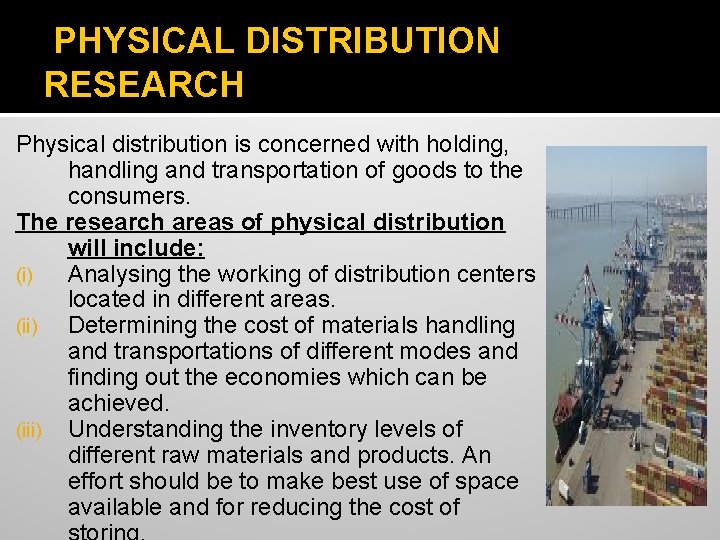
PHYSICAL DISTRIBUTION RESEARCH Physical distribution is concerned with holding, handling and transportation of goods to the consumers. The research areas of physical distribution will include: (i) Analysing the working of distribution centers located in different areas. (ii) Determining the cost of materials handling and transportations of different modes and finding out the economies which can be achieved. (iii) Understanding the inventory levels of different raw materials and products. An effort should be to make best use of space available and for reducing the cost of
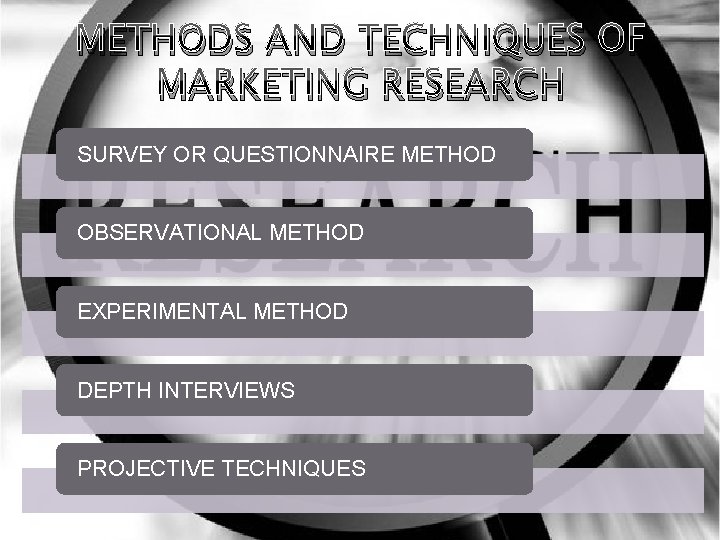
METHODS AND TECHNIQUES OF MARKETING RESEARCH SURVEY OR QUESTIONNAIRE METHOD OBSERVATIONAL METHOD EXPERIMENTAL METHOD DEPTH INTERVIEWS PROJECTIVE TECHNIQUES
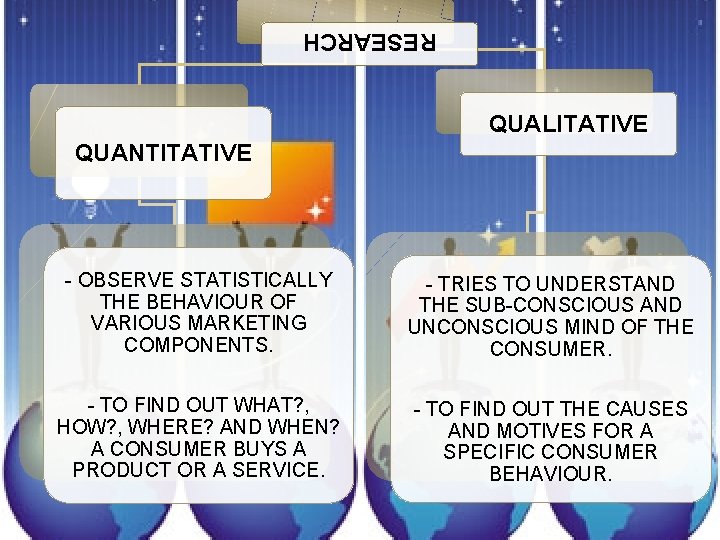
RESEARCH QUALITATIVE QUANTITATIVE - OBSERVE STATISTICALLY THE BEHAVIOUR OF VARIOUS MARKETING COMPONENTS. - TRIES TO UNDERSTAND THE SUB-CONSCIOUS AND UNCONSCIOUS MIND OF THE CONSUMER. - TO FIND OUT WHAT? , HOW? , WHERE? AND WHEN? A CONSUMER BUYS A PRODUCT OR A SERVICE. - TO FIND OUT THE CAUSES AND MOTIVES FOR A SPECIFIC CONSUMER BEHAVIOUR.
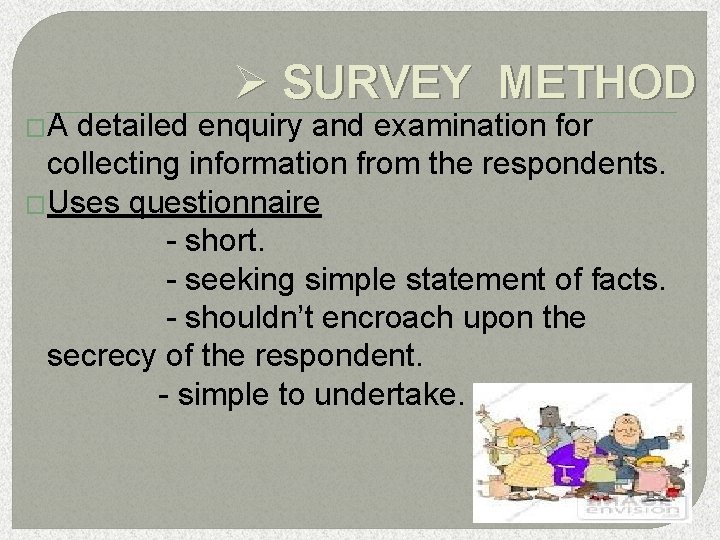
�A Ø SURVEY METHOD detailed enquiry and examination for collecting information from the respondents. �Uses questionnaire - short. - seeking simple statement of facts. - shouldn’t encroach upon the secrecy of the respondent. - simple to undertake.
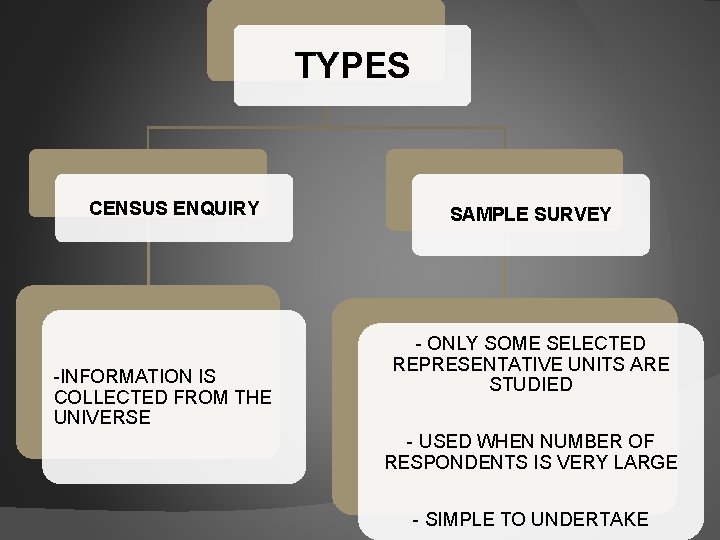
TYPES CENSUS ENQUIRY -INFORMATION IS COLLECTED FROM THE UNIVERSE SAMPLE SURVEY - ONLY SOME SELECTED REPRESENTATIVE UNITS ARE STUDIED - USED WHEN NUMBER OF RESPONDENTS IS VERY LARGE - SIMPLE TO UNDERTAKE
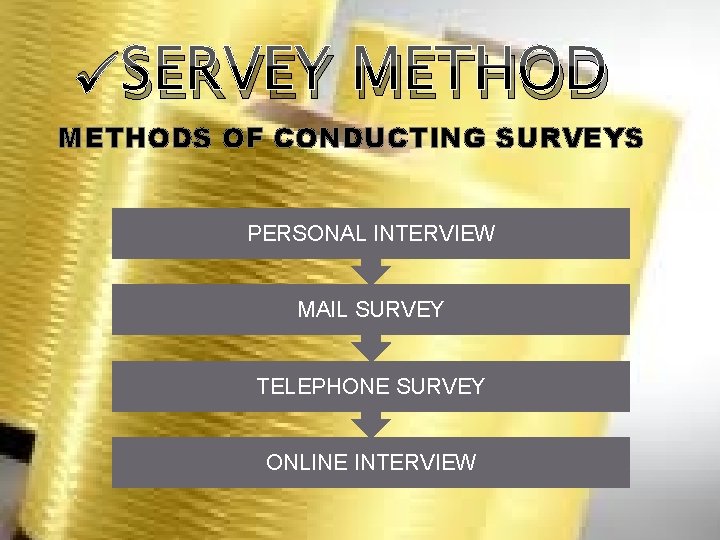
üSERVEY METHODS OF CONDUCTING SURVEYS PERSONAL INTERVIEW MAIL SURVEY TELEPHONE SURVEY ONLINE INTERVIEW
PERSONAL INTERVIEW �Information is collected directly from the respondent face to face. �Questionnaire may or may not be prepared. �Replies given are recorded. �A close rapport is established with the respondent and he can be motivated to answer all the questions satisfactorily.
PERSONAL INTERVIEW MERITS DEMERITS ü SUPERIOR ü EXPENSIVE METHOD. ü BIASED ü SUITABLE FOR INFORMATION ALL PERSONS. ü DIFFICULTIES IN ü MAXIMUM ADMINISTRATION INFORMATION COLLECTED.
MAIL SURVEY �Well worded questionnaire is sent to respondents by post. �Respondents are requested to send it back after filling the answers. �To ensure timely response: - answer format should be a ‘yes’ or ‘no’ format. - cost to return post should be borne by the investigator. - some gift may be sent along with the questionnaire for taking trouble of sparing time and filling the answers.
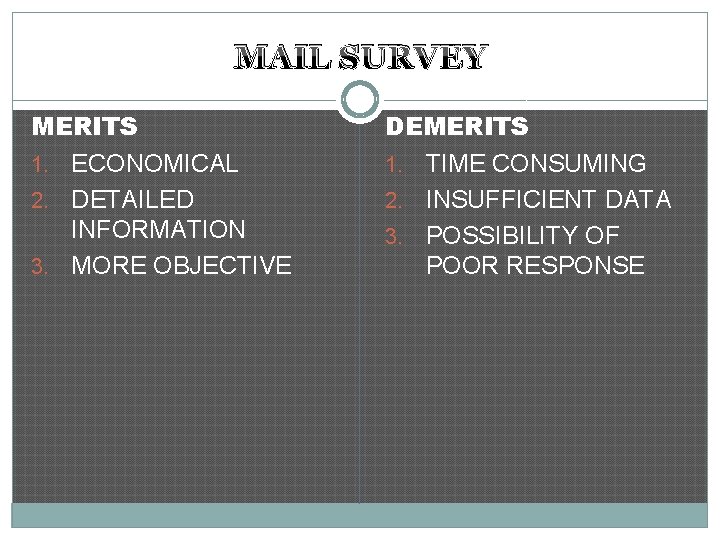
MAIL SURVEY MERITS 1. ECONOMICAL 2. DETAILED INFORMATION 3. MORE OBJECTIVE DEMERITS 1. TIME CONSUMING 2. INSUFFICIENT DATA 3. POSSIBILITY OF POOR RESPONSE
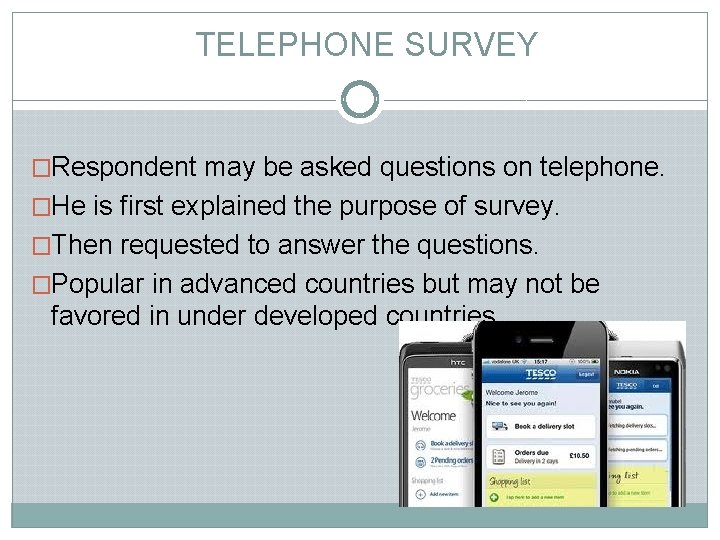
TELEPHONE SURVEY �Respondent may be asked questions on telephone. �He is first explained the purpose of survey. �Then requested to answer the questions. �Popular in advanced countries but may not be favored in under developed countries.
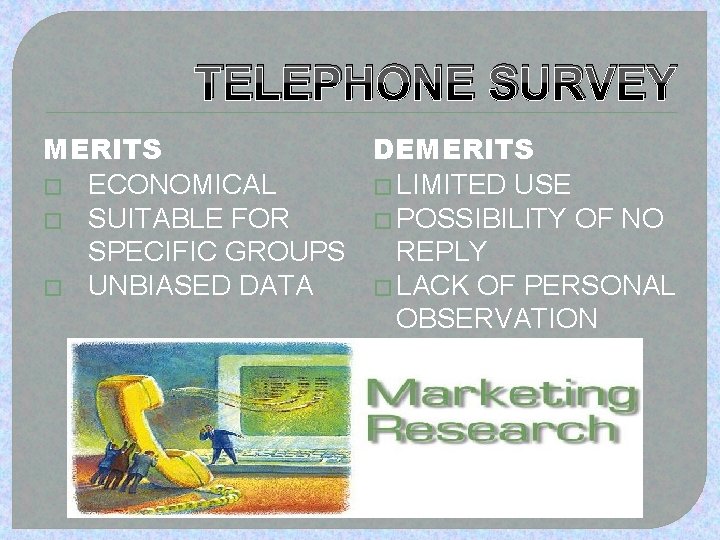
TELEPHONE SURVEY MERITS DEMERITS � ECONOMICAL � LIMITED USE � SUITABLE FOR � POSSIBILITY OF NO SPECIFIC GROUPS REPLY � UNBIASED DATA � LACK OF PERSONAL OBSERVATION
ONLINE INTERVIEW � Company places the questionnaire on its website � May offer incentives to those who provide answers to questions � A chat room may also be sponsored � Company can also post product features, different prices on web to learn the reaction of consumers
ONLINE INTERVIEW MERITS v QUICK v INEXPENSIVE v MORE RELIABLE INFPRMATION DEMERITS v LESS ACCESSABILITY v TECHNICAL PROBLEMS
Ø OBSERVATIONAL METHOD �A researcher observes the respondents. �Silently collects certain information – - not by asking questions. - by observing facts. - collecting relevant figures in a uniform manner. �Reports the central station of research. �Results are measured analyzed statistically. �Used in both quantitative & qualitative research. �Devices used are-hidden cameras, audio meters etc.
üOBSERVATIONAL METHOD MERITS � � � RELIABLE ACCURATE BIAS OF THE INTERVIER IS REDUCED DEMERITS � � INFORMATION COLLECTED MAY NOT BE SUFFICIENT COSTLY
ØEXPERIMENTAL METHOD � Applicable to test sales promotional schemes and the effectiveness of advertising themes or package presentation. � Requires establishment of several test area and control areas equal in number. � TEST MARKETING : - establishes the cause and effect relationship. - Its findings may be the basis for bringing about change in the product mix.
üEXPERIMENTAL METHOD MERITS � � SOLVING MARKETING PROBLEMS DETECTING REAL CAUSE OF IMPEDIMENTS DEMERITS � � COSTLY FINDINGS MAY NOT REMAIN VALID FOR LONG
Ø DEPTH INTERVIEWS �Collecting marketing information in a free and released way �Unstructured interview where respondent is asked to speak out his mind on the topic under research �Success depends upon the calibre and handling of questions by the interviewer
üDEPTH INTERVIEWS MERITS � � UNBIASED AND FRANK VIEWS OF THE RESPONDENT INFORMATION HELPFUL IN FRAMING MARKETING POLICIES DEMERITS � � � TIME CONSUMING DIFFICULT TO GET COMPETENT INTERVIEWERS RESPONDENT MAY NOT PROVIDE ALL WHAT THE INTERVIEWER WANTS
ü PROJECTIVE TECHNIQUES Ø Tests are conducted wherein the respondents are encouraged to project their feelings, attitudes, impressions, reactions etc to a third person or an object Ø The inner feelings of the respondent are revealed Ø Though the collection of data is important under such tests but equally important is the analysis of such data
LIMITATIONS OF MARKETING RESEARCH ü TIME CONSUMING ü LACK IN APPRECIATING RUPEE VALUE ü DEPENDENT ON INFORMATION COLLECTED ü LIMITED PERSONNEL ü UNPREDICTABLE CONSUMER
q TIME CONSUMING Requires too much of time to reach the final conclusions Considerable time gap between the inception & completion of the research. q LACK IN APPRECIATING RUPEE VALUE May be impossible to translate the value received from the marketing research into rupees. q DEPENDANT UPON INFORMATION COLLECTED The reliability of marketing research is related to the collection of proper information.
q LIMITED PERSONNEL It must be carried out by qualified personnel q UNPREDICTABLE CONSUMER The consumer habits go on changing and this change cannot be precisely predicted