MARKETING MANAGEMENT 14 thediti Developing Pricing Strategies and
- Slides: 31
MARKETING MANAGEMENT 14 thediti • Developing Pricing Strategies and Programs
Chapter Questions • Bagaimana konsumen melakukan evaluasi harga ? • Bagaimana perusahaan melakukan setting harga awal? • Bagaimana perusahaan melakukan perubahan harga sesuai peluang dan kejadian tertentu? • 14 -2
Synonyms for Price • • Rent Tuition Fee Fare Rate Toll Premium Honorarium • • Special assessment Bribe Dues Salary Commission Wage Tax • 14 -3
Faktor Harga 1. Apakah perusahaan mampu bersaing dari sisi harga. ? 2. Apakah perusahaan mampu memberikan discount? 3. Apakah perusahaan mempunyai hambatan dalam penentuan harga pokok produksi ? 4. Apakah ada konsukuensi yang harus dihadapi dengan harga yang telah ditetapkan? 5. Apakah margin keuntungan telah disepakati ? • 14 -4
Common Pricing Mistakes • Tentukan Biaya dan ambil margin industri yang berlaku selama ini • Gagal merevisi harga akibat perubahan pasar • Menentukan harga secara independen terhadap marketing mix yang lain • Gagal menentukan harga yang bervariasi berdasarkan item produk, segmen pasar, saluran distribusi, dan kejadian membeli • 14 -5
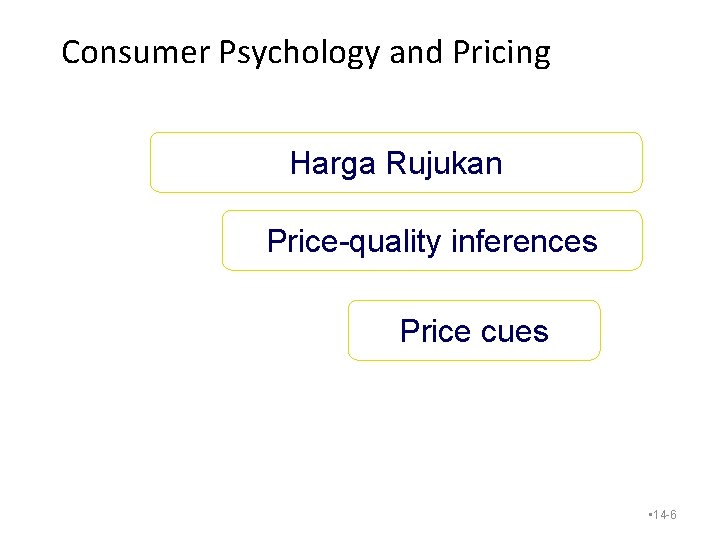
Consumer Psychology and Pricing Harga Rujukan Price-quality inferences Price cues • 14 -6
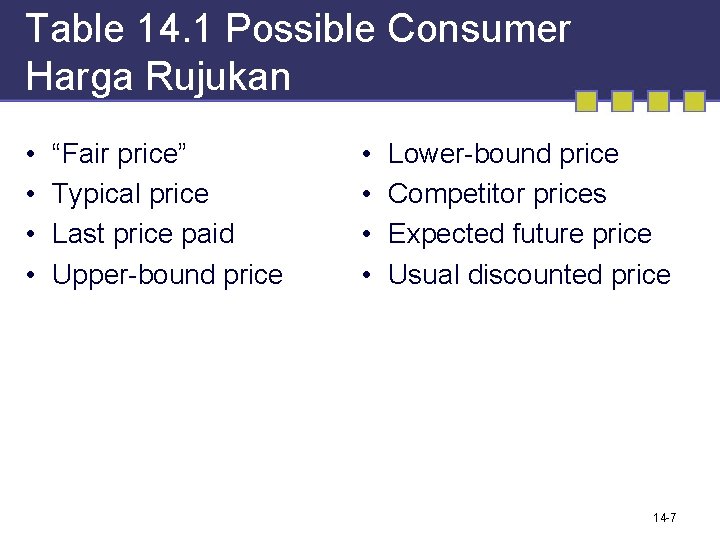
Table 14. 1 Possible Consumer Harga Rujukan • • “Fair price” Typical price Last price paid Upper-bound price • • Lower-bound price Competitor prices Expected future price Usual discounted price 14 -7
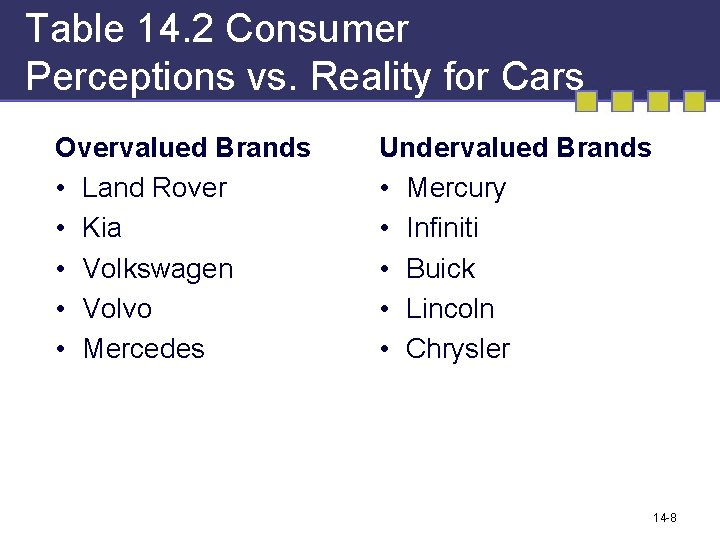
Table 14. 2 Consumer Perceptions vs. Reality for Cars Overvalued Brands • Land Rover • Kia • Volkswagen • Volvo • Mercedes Undervalued Brands • Mercury • Infiniti • Buick • Lincoln • Chrysler 14 -8
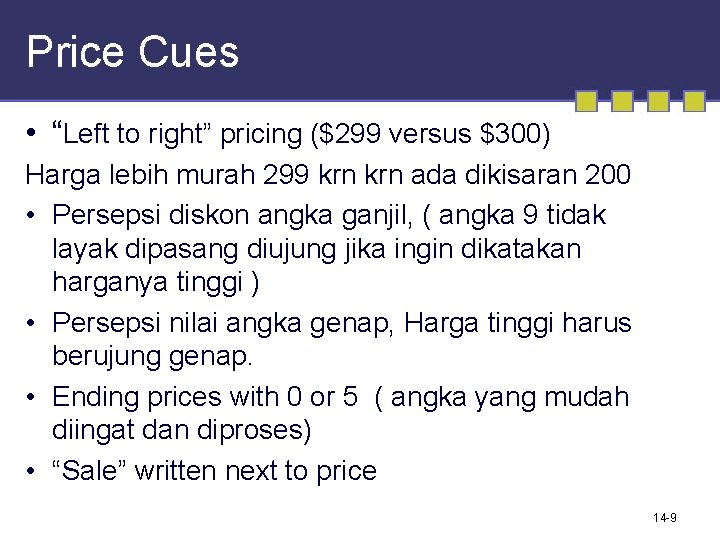
Price Cues • “Left to right” pricing ($299 versus $300) Harga lebih murah 299 krn ada dikisaran 200 • Persepsi diskon angka ganjil, ( angka 9 tidak layak dipasang diujung jika ingin dikatakan harganya tinggi ) • Persepsi nilai angka genap, Harga tinggi harus berujung genap. • Ending prices with 0 or 5 ( angka yang mudah diingat dan diproses) • “Sale” written next to price 14 -9
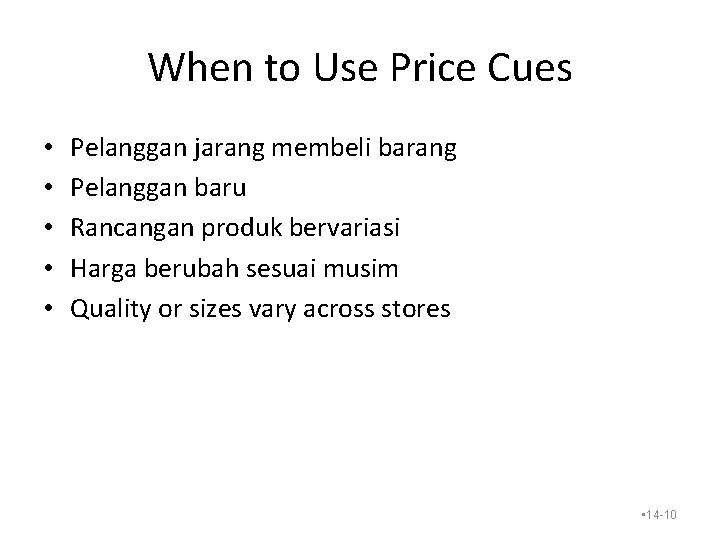
When to Use Price Cues • • • Pelanggan jarang membeli barang Pelanggan baru Rancangan produk bervariasi Harga berubah sesuai musim Quality or sizes vary across stores • 14 -10
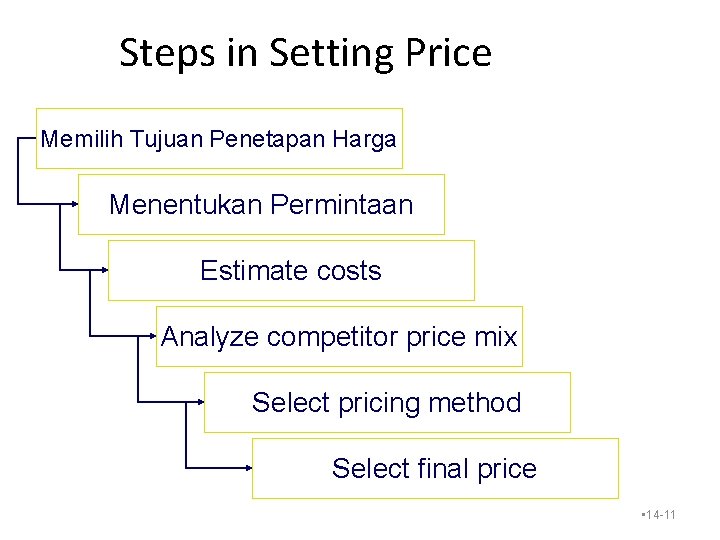
Steps in Setting Price Memilih Tujuan Penetapan Harga Menentukan Permintaan Estimate costs Analyze competitor price mix Select pricing method Select final price • 14 -11
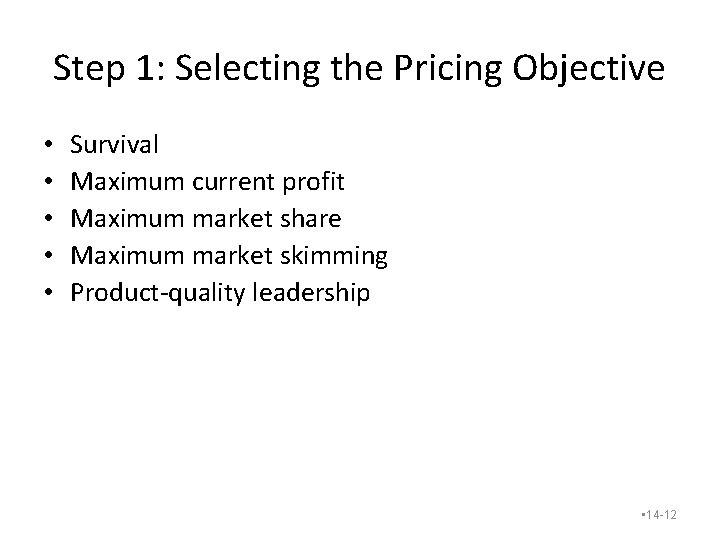
Step 1: Selecting the Pricing Objective • • • Survival Maximum current profit Maximum market share Maximum market skimming Product-quality leadership • 14 -12
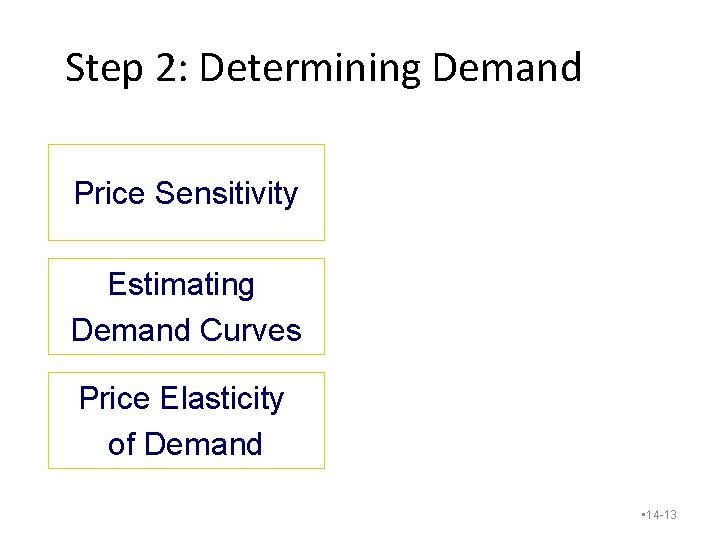
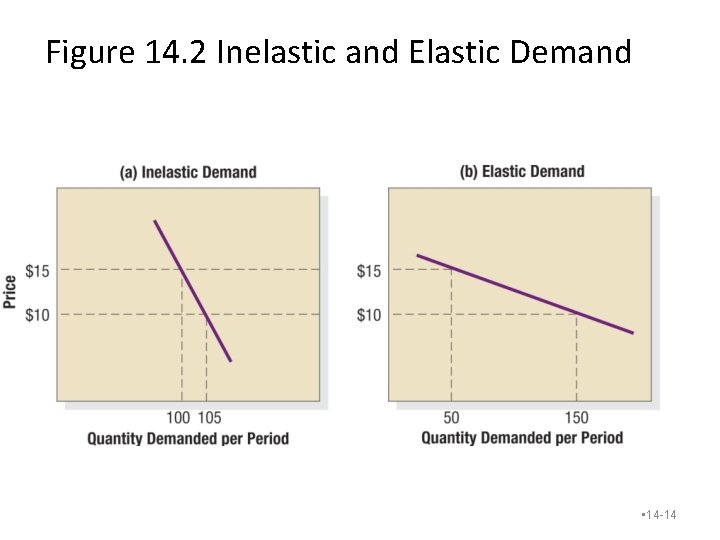
Step 2: Determining Demand Price Sensitivity Estimating Demand Curves Price Elasticity of Demand • 14 -13
Figure 14. 2 Inelastic and Elastic Demand • 14 -14
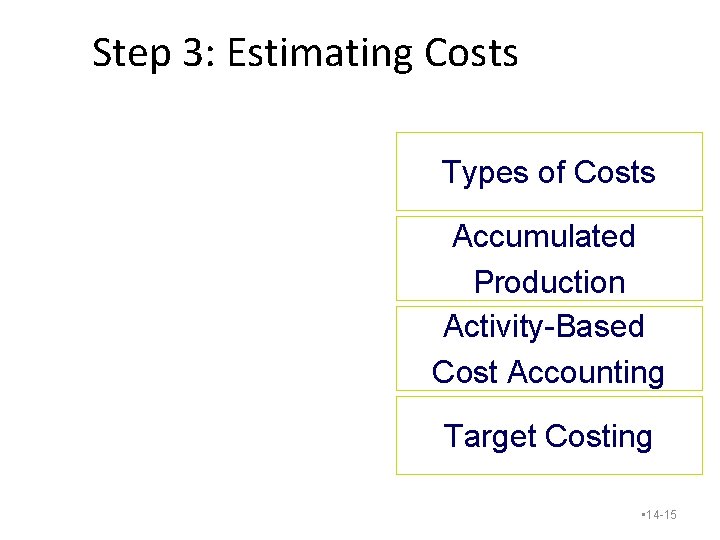
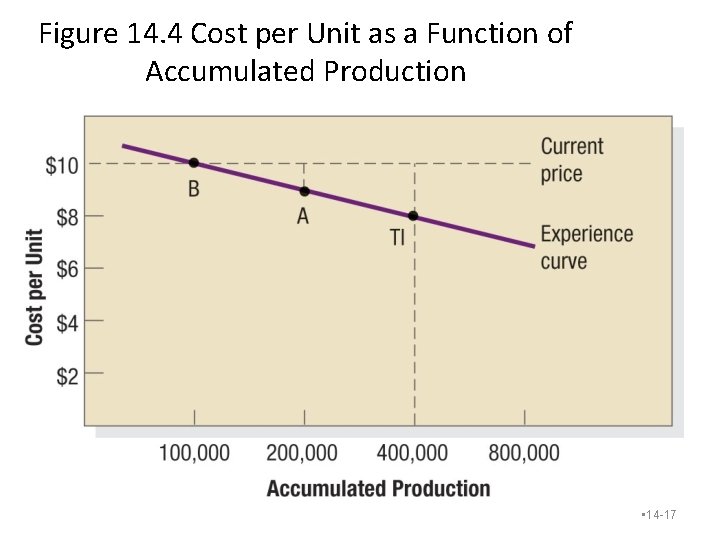
Step 3: Estimating Costs Types of Costs Accumulated Production Activity-Based Cost Accounting Target Costing • 14 -15
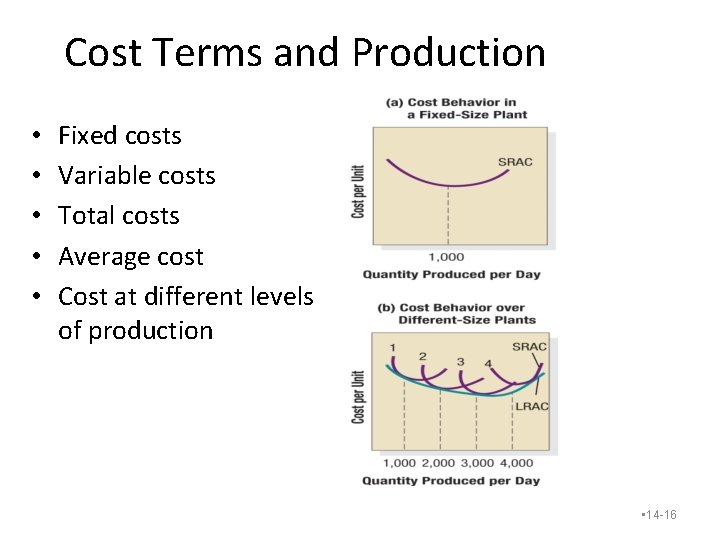
Cost Terms and Production • • • Fixed costs Variable costs Total costs Average cost Cost at different levels of production • 14 -16
Figure 14. 4 Cost per Unit as a Function of Accumulated Production • 14 -17
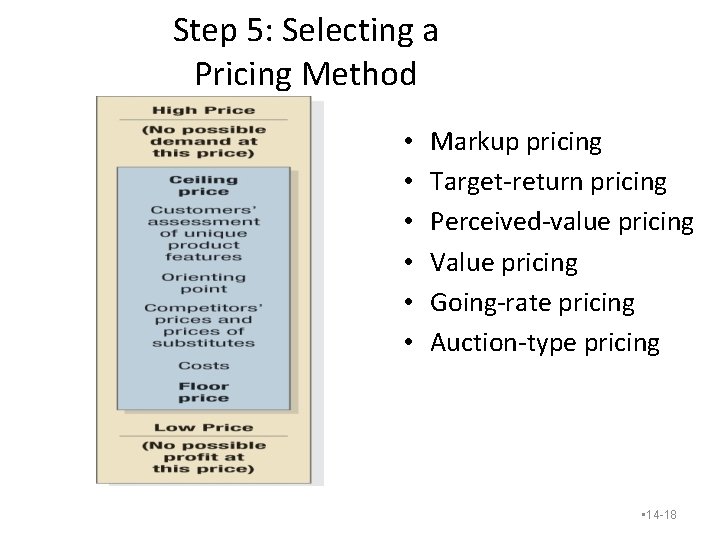
Step 5: Selecting a Pricing Method • • • Markup pricing Target-return pricing Perceived-value pricing Value pricing Going-rate pricing Auction-type pricing • 14 -18
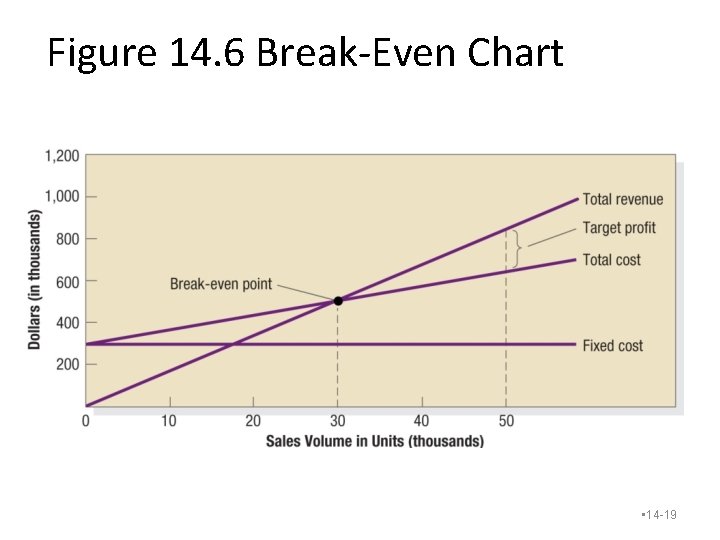
Figure 14. 6 Break-Even Chart • 14 -19
Step 6: Selecting the Final Price • • Impact of other marketing activities Company pricing policies Gain-and-risk sharing pricing Impact of price on other parties • 14 -20
Differentiated Pricing and Price Discrimination • • Customer-segment pricing Product-form pricing Image pricing Channel pricing Location pricing Time pricing Yield pricing • 14 -21
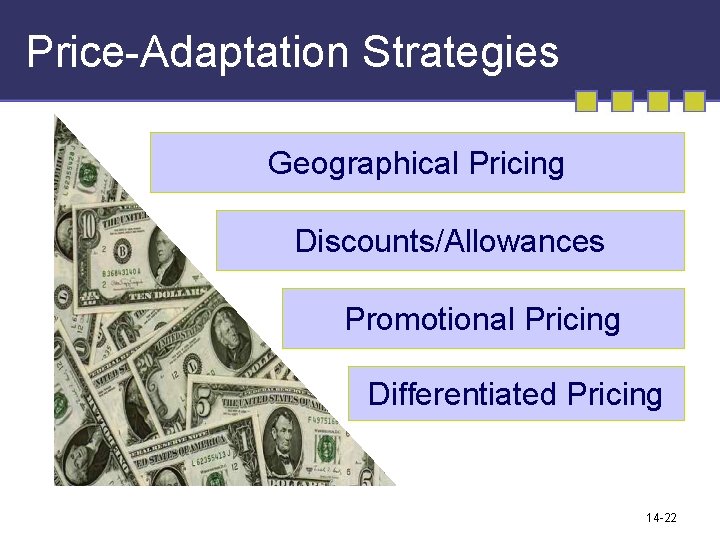
Price-Adaptation Strategies Geographical Pricing Discounts/Allowances Promotional Pricing Differentiated Pricing 14 -22
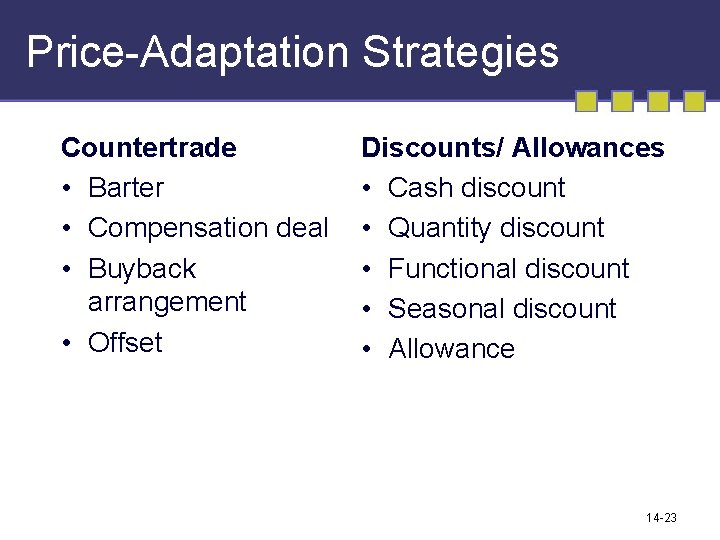
Price-Adaptation Strategies Countertrade • Barter • Compensation deal • Buyback arrangement • Offset Discounts/ Allowances • Cash discount • Quantity discount • Functional discount • Seasonal discount • Allowance 14 -23
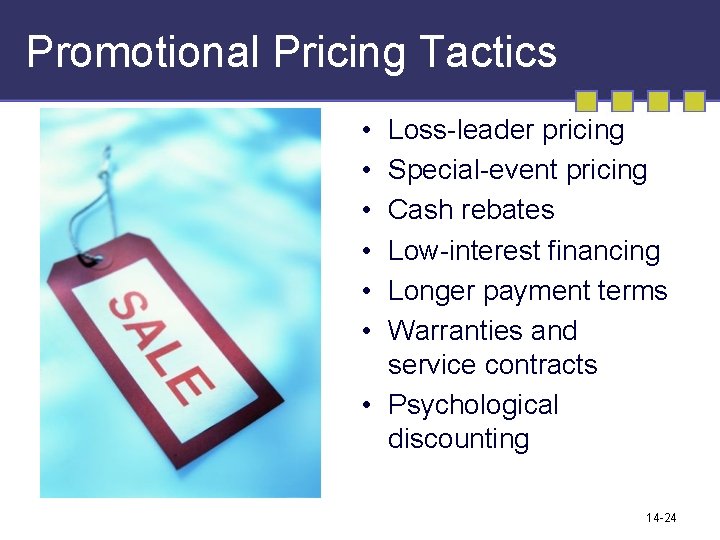
Promotional Pricing Tactics • • • Loss-leader pricing Special-event pricing Cash rebates Low-interest financing Longer payment terms Warranties and service contracts • Psychological discounting 14 -24
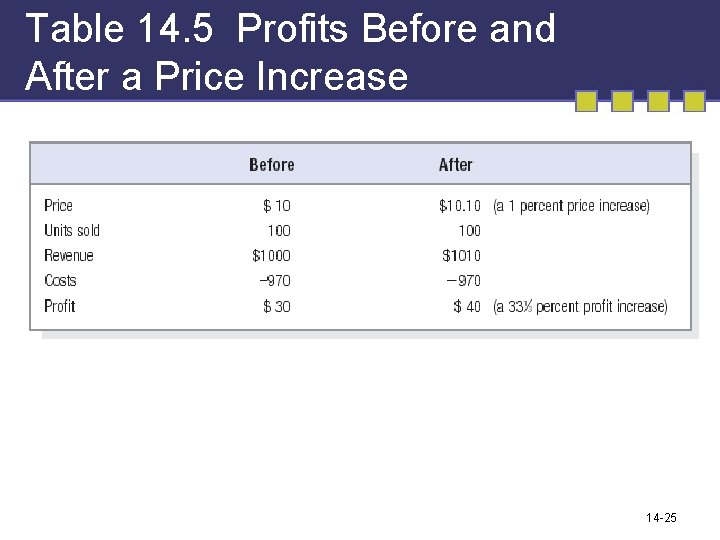
Table 14. 5 Profits Before and After a Price Increase 14 -25
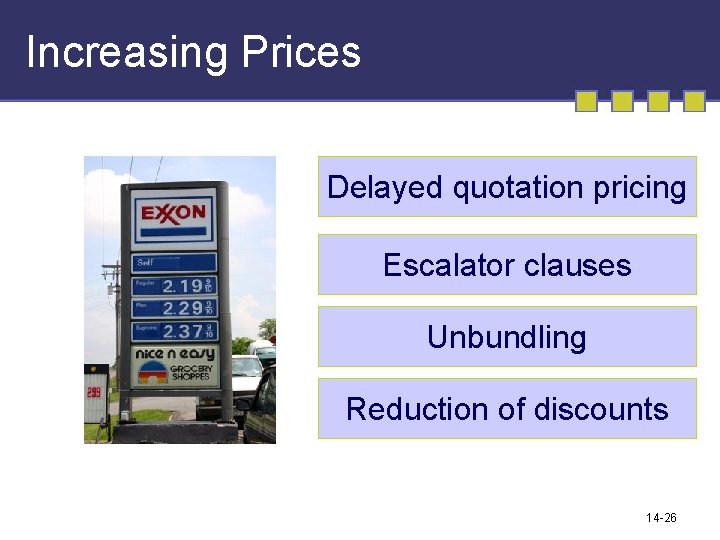
Increasing Prices Delayed quotation pricing Escalator clauses Unbundling Reduction of discounts 14 -26
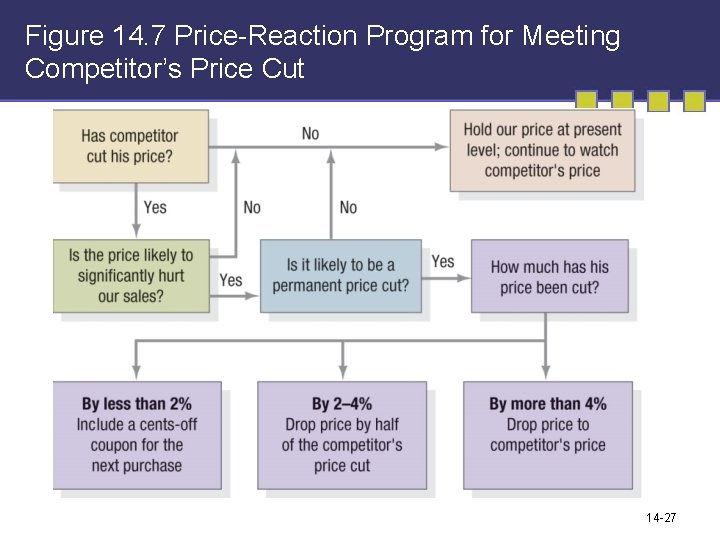
Figure 14. 7 Price-Reaction Program for Meeting Competitor’s Price Cut 14 -27
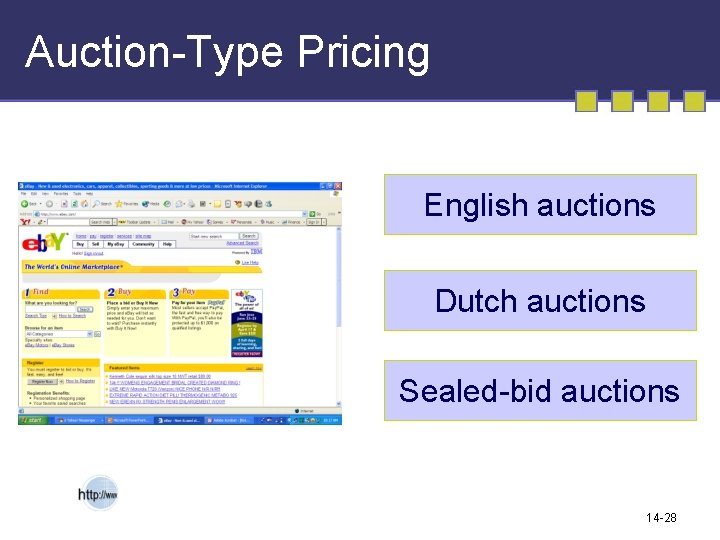
Auction-Type Pricing English auctions Dutch auctions Sealed-bid auctions 14 -28
Brand Leader Responses to Competitive Price Cuts • • • Maintain price and add value Reduce price Increase price and improve quality Launch a low-price fighter line 14 -29
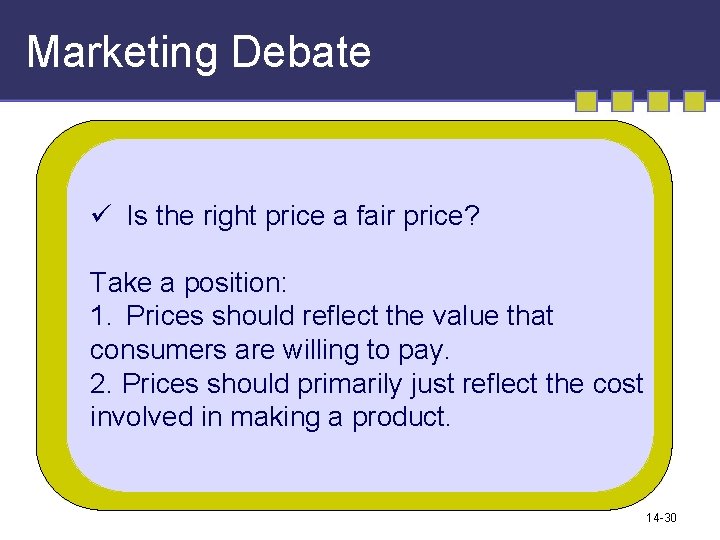
Marketing Debate ü Is the right price a fair price? Take a position: 1. Prices should reflect the value that consumers are willing to pay. 2. Prices should primarily just reflect the cost involved in making a product. 14 -30
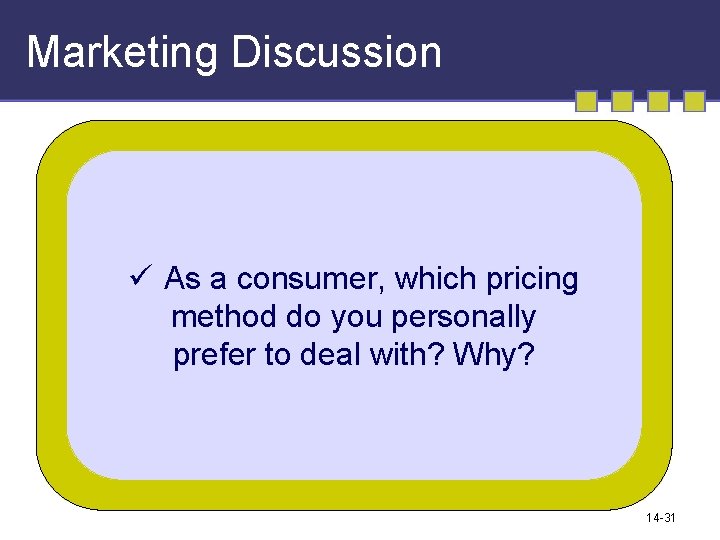
Marketing Discussion ü As a consumer, which pricing method do you personally prefer to deal with? Why? 14 -31