
Marketing Feasibility Study part 1 Marketing Analysis Conducting
Marketing Feasibility Study (part 1) Marketing Analysis
Conducting a Marketing Feasibility Study Too often, we launch new ideas without thinking through what our market is Preparing a feasibility study will help you determine if there is sufficient demand for the product or service AND can the product or service be provided on a profitable OR sustainable basis?
Before you begin we should think about the following questions… What defined market am I trying to reach? What specific companies/organizations are servicing this market? Are they successful? Something similar? What is their market share? Is the market saturated or wide open?
Questions continued… What is the size of the market? Is it growing? Is it stable, volatile, trendy? How can you reach this market? How are competitors currently reaching the market? What do customers expect from this type of product or service?
Questions continued… What are the business models of competitors? What core competencies must the product or service have? What are “customers” willing to pay for this service or product? What is your competitive advantage?

Market Assessment A market assessment may be conducted to help determine the viability of a proposed product in the marketplace. The assessment will help you identify opportunities in the market or market segment If no opportunities are found, then you don’t have to continue on with the feasibility study. If opportunities are found, the market assessment can give focus and direction to the “big idea”.

Market Feasibility Industry Description Describe the size and scope of the market Estimate the future direction of the market Describe the nature of the market Identify the life-cycle of the market
Market Feasibility “Industry” Competitiveness Investigate industry concentration Analyze major competitors Explore barriers of entry into market Determine concentration and competitiveness of input suppliers Identify price competitiveness of service
Market potential Identify the demand usage trends of the market or market segment Examine the potential for emerging market opportunities Assess estimated market usage and potential share of the market
Market Feasibility Access to market outlets Identify the potential “buyers” of the service and the associated marketing costs Investigate the distribution system and the costs involved
Marketing Strategy Involves the allocation of resources to develop and sell products or services that consumers will perceive to provide more value than competitive goods What is perceived value?
Foundations of Strategy A thorough understanding of: Ø Ø Ø Domestic and global market trends Models to predict purchase and consumption Communication methods to reach target markets most effectively
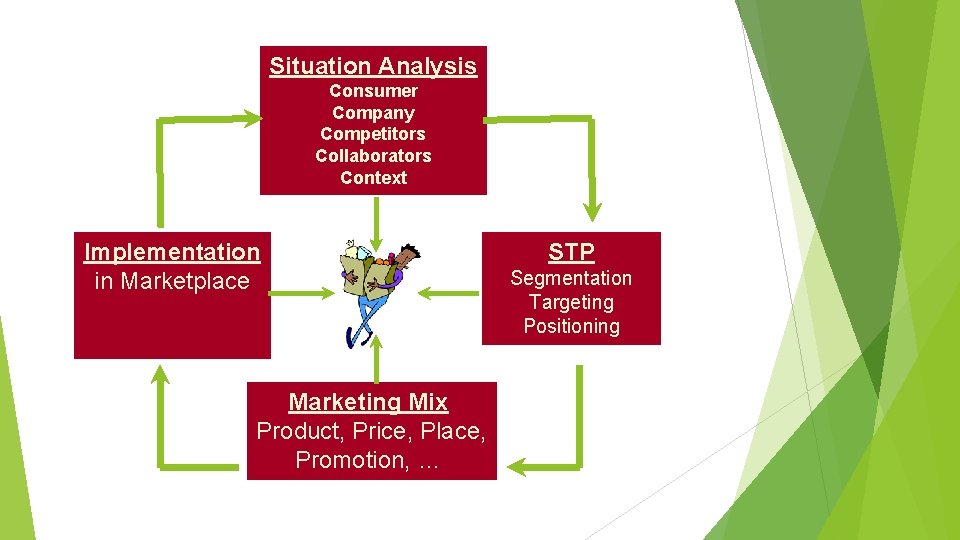
Situation Analysis Consumer Company Competitors Collaborators Context Implementation in Marketplace Marketing Mix Product, Price, Place, Promotion, … STP Segmentation Targeting Positioning
Situation Analysis The process of analyzing: Consumer characteristics & trends Resources of the Company Current and potential Competitors Current and potential Collaborators The Context or environmental factors
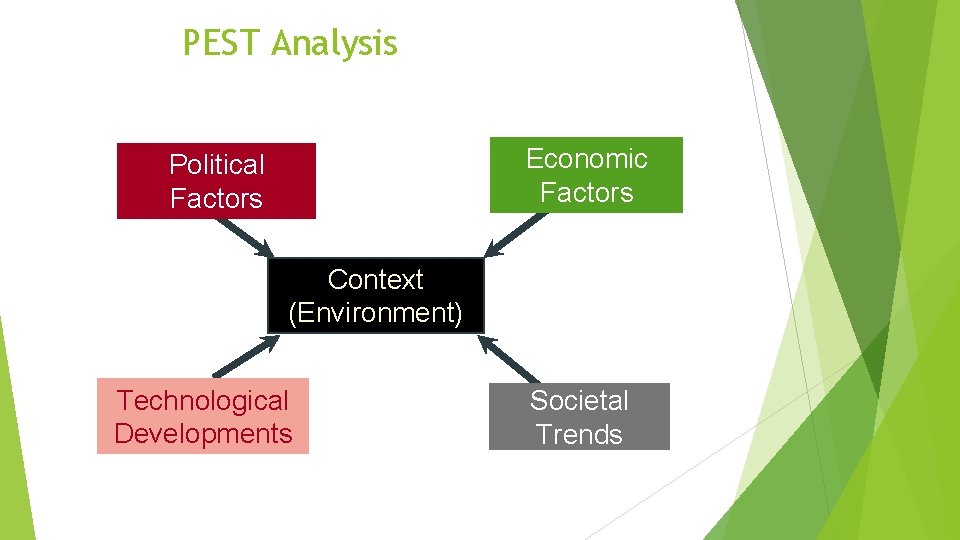
PEST Analysis Economic Factors Political Factors Context (Environment) Technological Developments Societal Trends
Situation Analysis: SWOT: Core strengths? Current weaknesses? What opportunities exist? What threats do we face?
Analyzing SWOTs Internal Factors Strengths: Competitive Advantages; Resources Weakness: Competitive Disadvantages; External Factors Opportunities: Social and economic conditions and situations that look positive Threats: Marketplace conditions that reduce the perceived value of an offering
Analyzing SWOTs Outside-in perspective One should consider the customer viewpoint rather than relying on internal judgments Conduct a brand audit comparing manager’s perceptions to employee and customer perceptions
Prioritizing SWOTs Useful Criteria: Realistic damage to brand relationships if a weakness or threat is not addressed Realistic benefit if a strength or opportunity is leveraged Cost of addressing or leveraging each SWOT Time company has to address or leverage each SWOT
Strategy Development Step 1: Market Segmentation Process of identifying a group of people similar in one or more ways, based on a variety of characteristics and behaviors. Goal: minimize variance within groups and maximize variance between groups
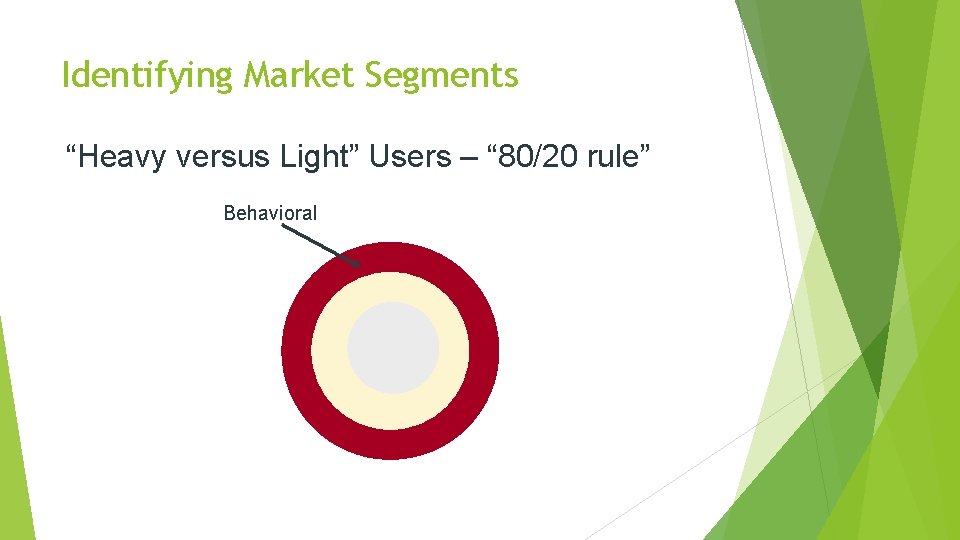
Identifying Market Segments “Heavy versus Light” Users – “ 80/20 rule” Behavioral
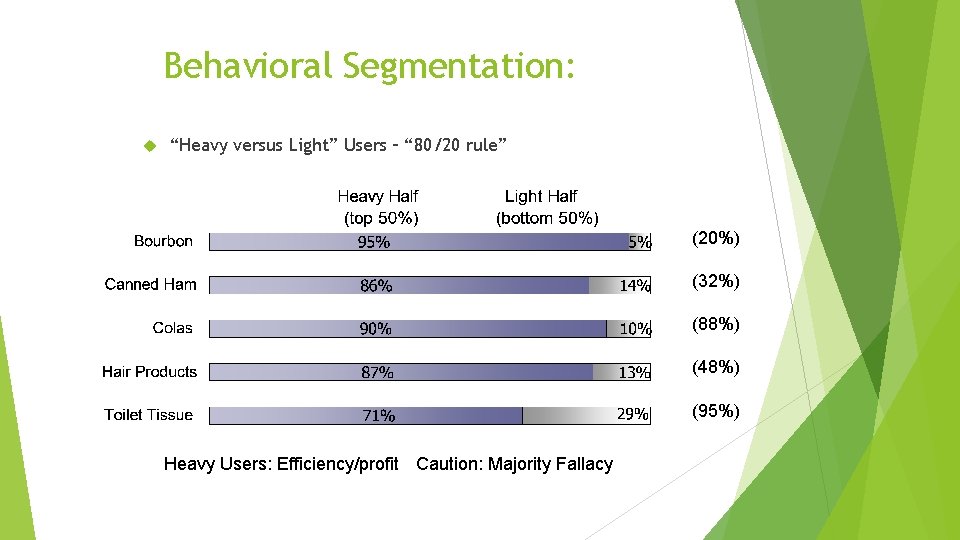
Behavioral Segmentation: “Heavy versus Light” Users – “ 80/20 rule” (20%) (32%) (88%) (48%) (95%) Heavy Users: Efficiency/profit Caution: Majority Fallacy
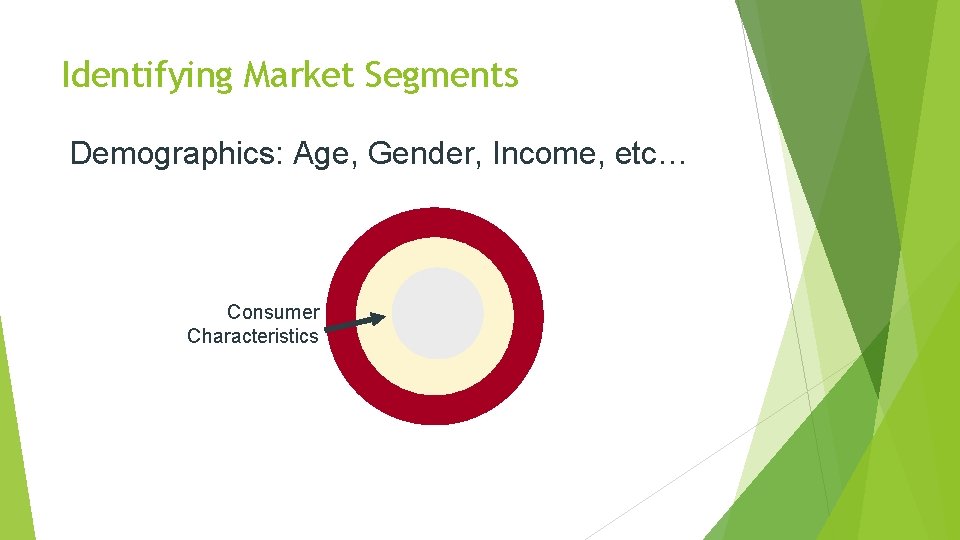
Identifying Market Segments Demographics: Age, Gender, Income, etc… Consumer Characteristics
Consumer Characteristics Geodemographics -- Examine regional differences in demographics -- Useful for store location decisions, and direct mailings, and grassroots efforts Why?
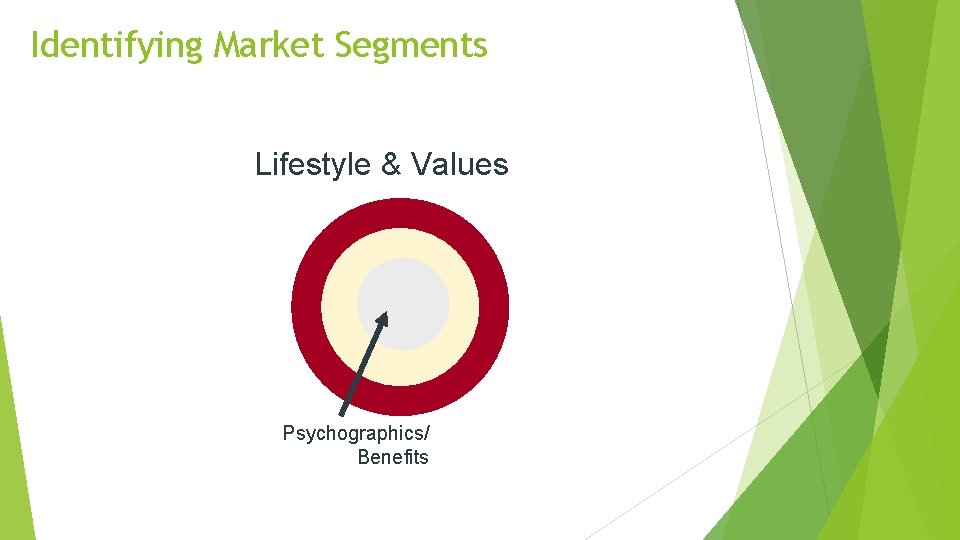
Identifying Market Segments Lifestyle & Values Psychographics/ Benefits
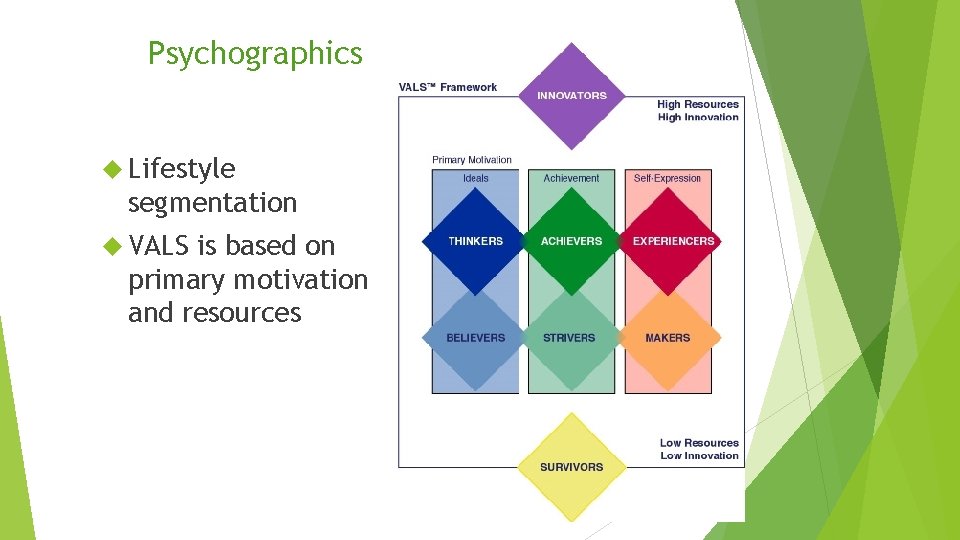
Psychographics Lifestyle segmentation VALS is based on primary motivation and resources
Strategy Development Step 2: Target Market Selection Select segments of the market to offer products and services Who can we most efficiently and effectively establish a relationship with better than our competitors? What criteria should be used to select a target market?
Customer Profiles Once a basis for segmentation has been determined and attractive segments have been selected, the target groups should be profiled by describing them on as many levels as possible.
Customer Profile Age, Education, Income (SES) Occupation, Hobbies Media Habits Musical Taste, Preferred Cars Aspirational Role Models
Strategy Development Step 3: Positioning How your product/company is perceived in the hearts and minds of your customers? Price leader/Innovator/Fashion leader/ Quality/Service What associations come to mind?
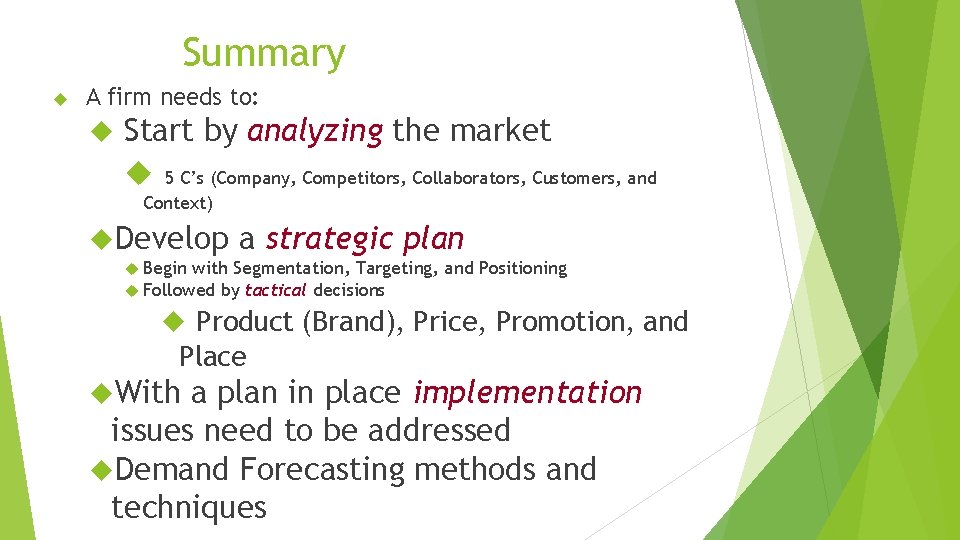
Summary A firm needs to: Start by analyzing the market 5 C’s (Company, Competitors, Collaborators, Customers, and Context) Develop a strategic plan Begin with Segmentation, Targeting, Followed by tactical decisions and Positioning Product (Brand), Price, Promotion, and Place With a plan in place implementation issues need to be addressed Demand Forecasting methods and techniques
- Slides: 31