
Marketing Chapter 10 Developing New Products Gilbert A
Marketing Chapter 10 Developing New Products Gilbert A. Churchill, Jr. J. Paul Peter
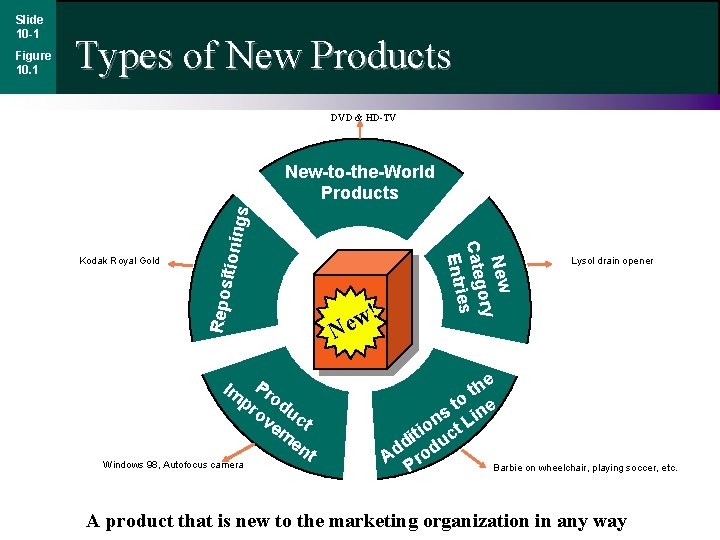
Types of New Products DVD & HD-TV gs New-to-the-World Products Im Pr pr od ov uc em t en t Windows 98, Autofocus camera N ! w e New ory Categ s e Entri Kodak Royal Gold sition in Figure 10. 1 Repo Slide 10 -1 Lysol drain opener e th to ne s n Li o i t uct i d Ad rod Barbie on wheelchair, playing soccer, etc. P A product that is new to the marketing organization in any way
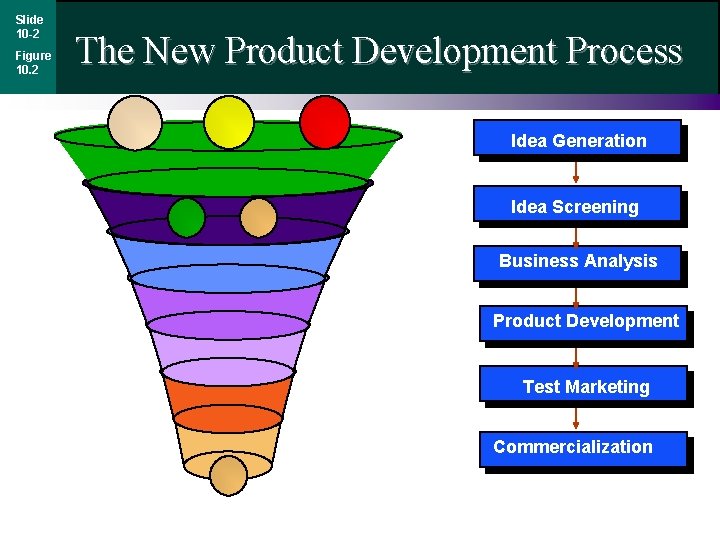
Slide 10 -2 Figure 10. 2 The New Product Development Process Idea Generation Idea Screening Business Analysis Product Development Test Marketing Commercialization
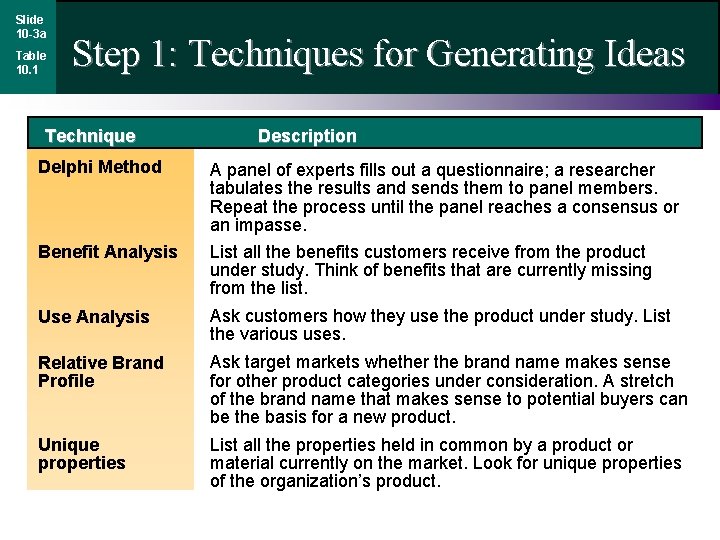
Slide 10 -3 a Table 10. 1 Step 1: Techniques for Generating Ideas Technique Delphi Method Benefit Analysis Description A panel of experts fills out a questionnaire; a researcher tabulates the results and sends them to panel members. Repeat the process until the panel reaches a consensus or an impasse. List all the benefits customers receive from the product under study. Think of benefits that are currently missing from the list. Use Analysis Ask customers how they use the product under study. List the various uses. Relative Brand Profile Ask target markets whether the brand name makes sense for other product categories under consideration. A stretch of the brand name that makes sense to potential buyers can be the basis for a new product. Unique properties List all the properties held in common by a product or material currently on the market. Look for unique properties of the organization’s product.
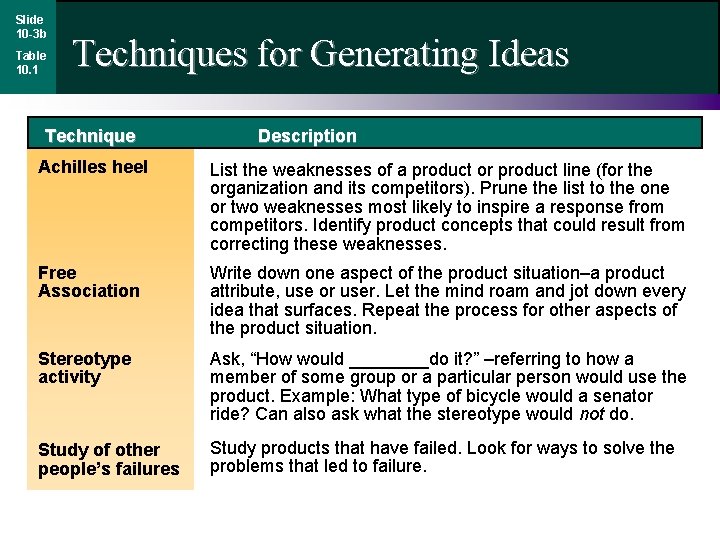
Slide 10 -3 b Table 10. 1 Techniques for Generating Ideas Technique Description Achilles heel List the weaknesses of a product or product line (for the organization and its competitors). Prune the list to the one or two weaknesses most likely to inspire a response from competitors. Identify product concepts that could result from correcting these weaknesses. Free Association Write down one aspect of the product situation–a product attribute, use or user. Let the mind roam and jot down every idea that surfaces. Repeat the process for other aspects of the product situation. Stereotype activity Ask, “How would ____do it? ” –referring to how a member of some group or a particular person would use the product. Example: What type of bicycle would a senator ride? Can also ask what the stereotype would not do. Study of other people’s failures Study products that have failed. Look for ways to solve the problems that led to failure.
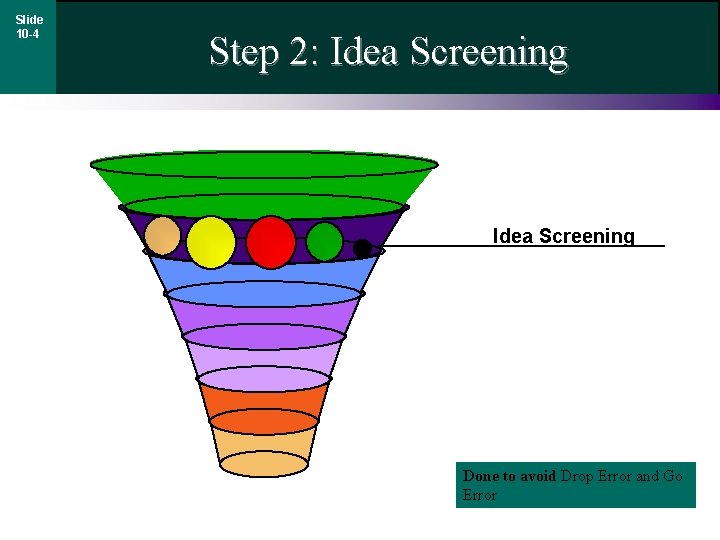
Slide 10 -4 Step 2: Idea Screening Done to avoid Drop Error and Go Error
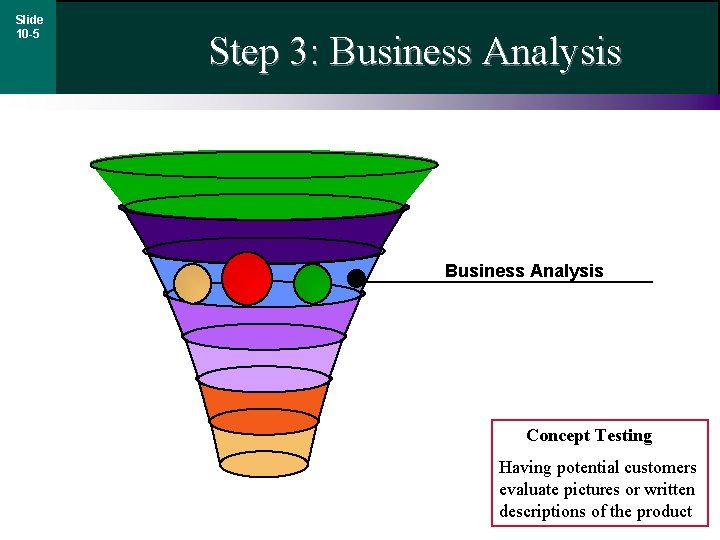
Slide 10 -5 Step 3: Business Analysis Concept Testing Having potential customers evaluate pictures or written descriptions of the product
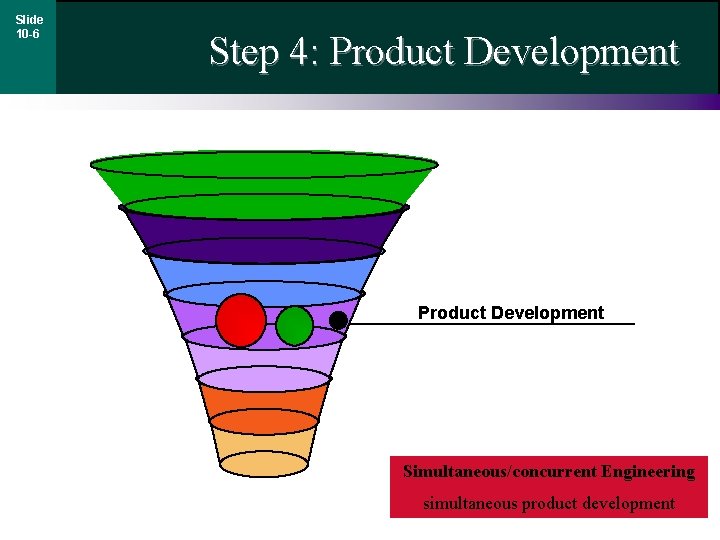
Slide 10 -6 Step 4: Product Development Simultaneous/concurrent Engineering simultaneous product development
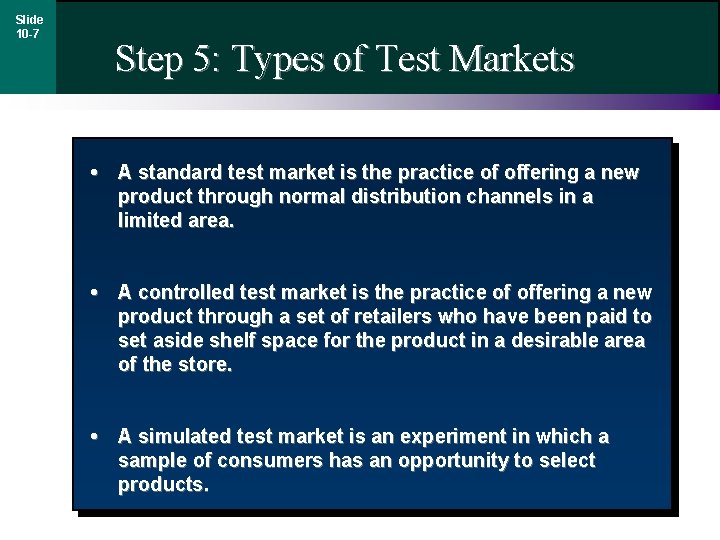
Slide 10 -7 Step 5: Types of Test Markets • A standard test market is the practice of offering a new product through normal distribution channels in a limited area. • A controlled test market is the practice of offering a new product through a set of retailers who have been paid to set aside shelf space for the product in a desirable area of the store. • A simulated test market is an experiment in which a sample of consumers has an opportunity to select products.
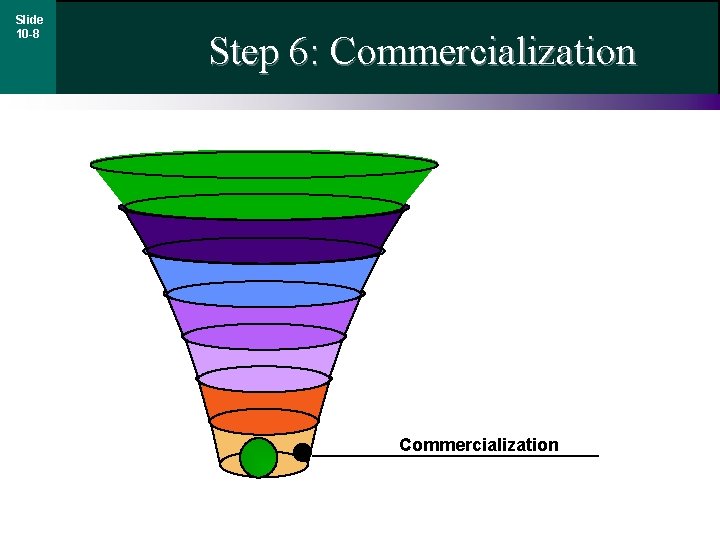
Slide 10 -8 Step 6: Commercialization
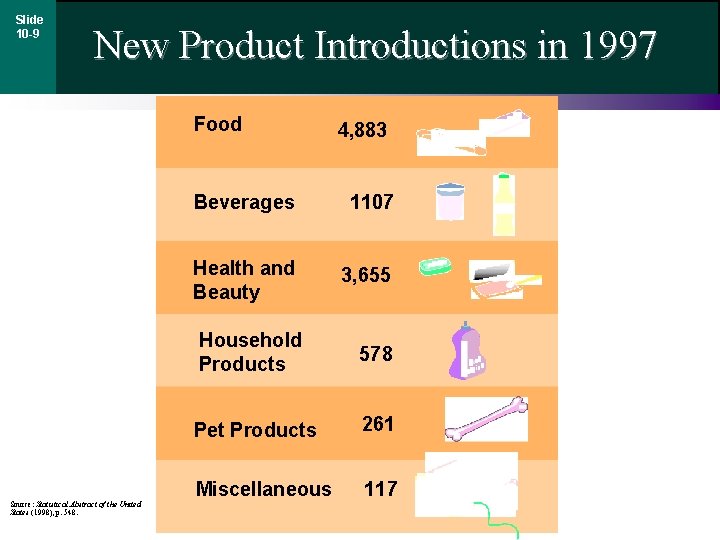
Slide 10 -9 New Product Introductions in 1997 Food Source: Statistical Abstract of the United States (1998), p. 548. 4, 883 Beverages 1107 Health and Beauty 3, 655 Household Products 578 Pet Products 261 Miscellaneous 117
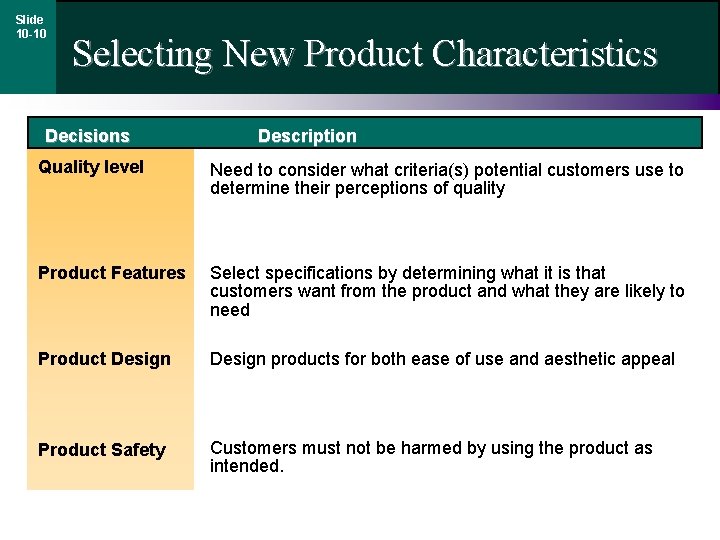
Slide 10 -10 Selecting New Product Characteristics Decisions Description Quality level Need to consider what criteria(s) potential customers use to determine their perceptions of quality Product Features Select specifications by determining what it is that customers want from the product and what they are likely to need Product Design products for both ease of use and aesthetic appeal Product Safety Customers must not be harmed by using the product as intended.
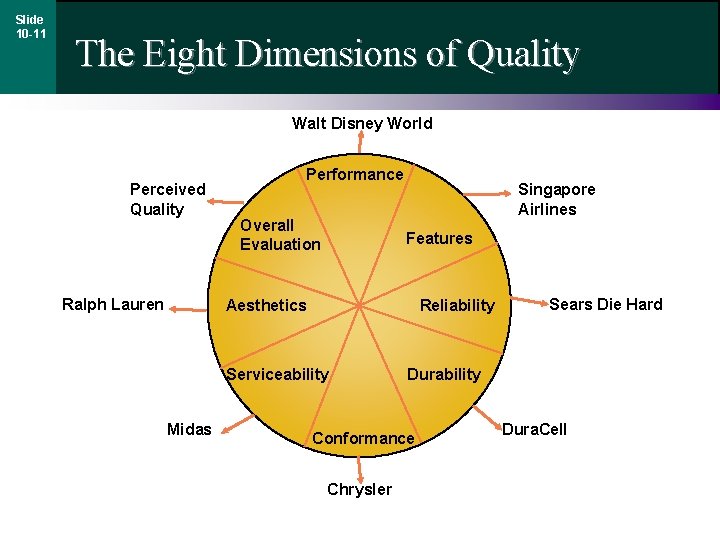
Slide 10 -11 The Eight Dimensions of Quality Walt Disney World Perceived Quality Ralph Lauren Performance Overall Evaluation Singapore Airlines Features Reliability Aesthetics Serviceability Midas Durability Conformance Chrysler Sears Die Hard Dura. Cell
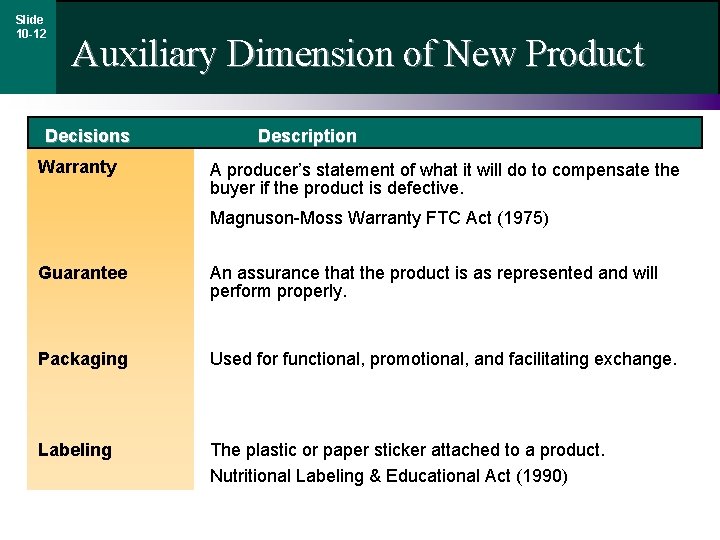
Slide 10 -12 Auxiliary Dimension of New Product Decisions Warranty Description A producer’s statement of what it will do to compensate the buyer if the product is defective. Magnuson-Moss Warranty FTC Act (1975) Guarantee An assurance that the product is as represented and will perform properly. Packaging Used for functional, promotional, and facilitating exchange. Labeling The plastic or paper sticker attached to a product. Nutritional Labeling & Educational Act (1990)
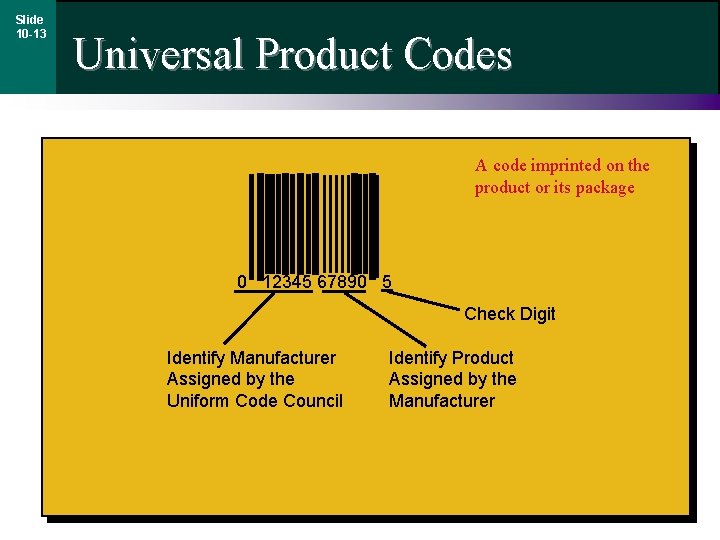
Slide 10 -13 Universal Product Codes A code imprinted on the product or its package 0 12345 67890 5 Check Digit Identify Manufacturer Assigned by the Uniform Code Council Identify Product Assigned by the Manufacturer
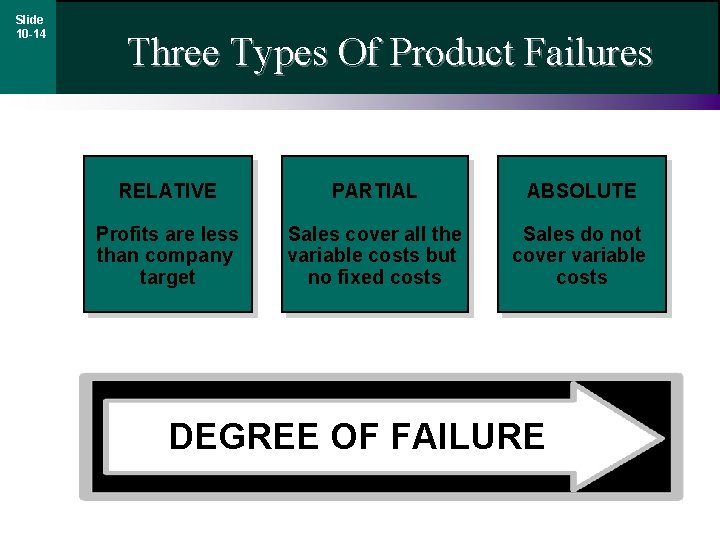
Slide 10 -14 Three Types Of Product Failures RELATIVE PARTIAL ABSOLUTE Profits are less than company target Sales cover all the variable costs but no fixed costs Sales do not cover variable costs DEGREE OF FAILURE
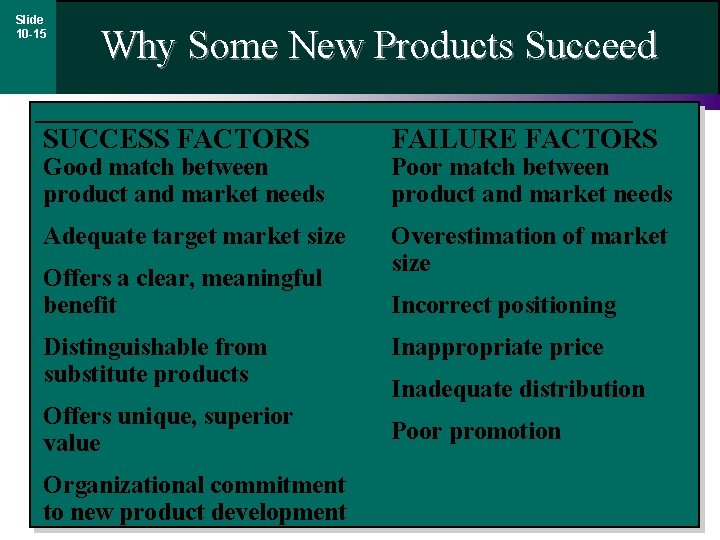
Slide 10 -15 Why Some New Products Succeed SUCCESS FACTORS FAILURE FACTORS Adequate target market size Overestimation of market size Good match between product and market needs Offers a clear, meaningful benefit Distinguishable from substitute products Offers unique, superior value Organizational commitment to new product development Poor match between product and market needs Incorrect positioning Inappropriate price Inadequate distribution Poor promotion
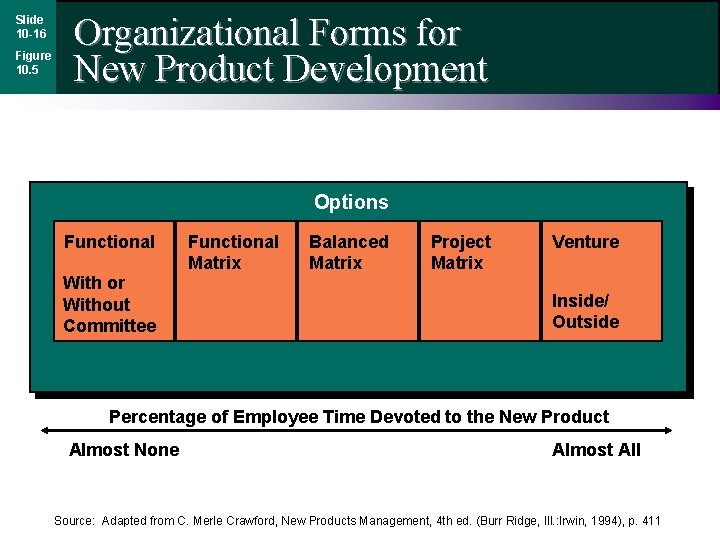
Slide 10 -16 Figure 10. 5 Organizational Forms for New Product Development Options Functional With or Without Committee Functional Matrix Balanced Matrix Project Matrix Venture Inside/ Outside Percentage of Employee Time Devoted to the New Product Almost None Almost All Source: Adapted from C. Merle Crawford, New Products Management, 4 th ed. (Burr Ridge, Ill. : Irwin, 1994), p. 411
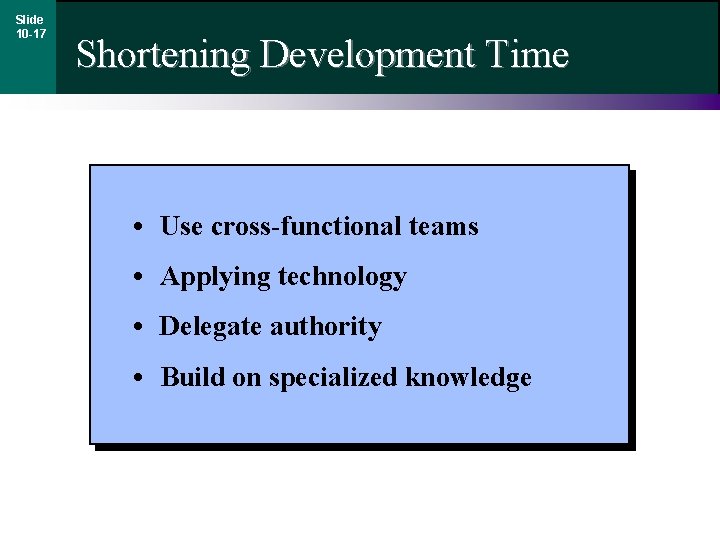
Slide 10 -17 Shortening Development Time • Use cross-functional teams • Applying technology • Delegate authority • Build on specialized knowledge
- Slides: 19