
MARKETING CHANNELS Product Management Strategy Berman Chapter 8
MARKETING CHANNELS Product Management Strategy Berman Chapter 8 Version 3. 0 1
Overview of Product Management Strategy • A. New Product Planning • B. Product Life Cycle • C. Reverse Channels – recall and recycling • D. Packaging • E. Legal Aspects 2
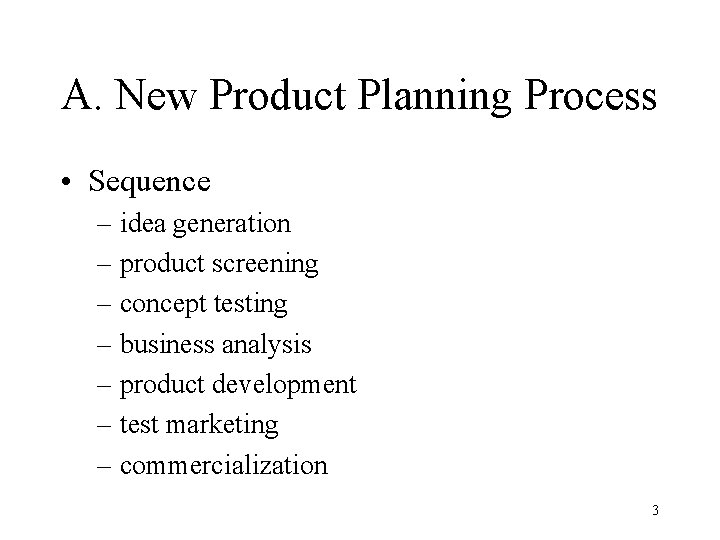
A. New Product Planning Process • Sequence – idea generation – product screening – concept testing – business analysis – product development – test marketing – commercialization 3

“Channel Considerations” New Product Plng – other channel members • wholesalers, retailers, facilitators – new product sales forecast – channel overlap • new , existing – test marketing – willingness to stock and display 4
• Justification • Channel members – generate new ideas – evaluate new product concepts – closer to market, customers, competitors – purchasing agents for customers – essential for success – unbiased response vs subordinates – parts, – suppliers expertise 5
• Existing Channels / New Product Fit Functional Fit • ability to store, sell, repair and service • channel overlap • incremental costs, new products vs existing • established customer relationships • incremental quantities, coop opportunities • single source suppliers • reduce order costs • compatibility problems • incremental expense of new members, suppliers 6
B. Channel Mgnt and Product Life Cycle • wholesaler/retailer by PLC stage • different strategies at each stage – training at introduction – reduced sales at decline – service experience and product life – boutique, specialty store, department store, discount store, direct marketing • wholesaler/retailer control – gatekeepers, change agents • derived demand sources 7
• Wholesaler Retailer Roles – at introduction • diffusers, gatekeepers, scouts, troops • pioneer brand, follower brands • slotting allowances, pay-to-stay, failure fee – at growth • reevaluation and adjustment • expansion of channel member responsibilities – at maturity • reevaluate coverage, increase enthusiasm • shelf space, private label strategies • new market segments, extend stage – at decline • reduce members, discontinue, develop new markets 8
• Evaluation of The Product Life Cycle – variance between categories, forms and brands – self fulfilling prophesy – cycle variances in length – cycle variances in intensity – recycling 9
• C. Reverse Channels • returned goods - credit, repair • product recall • product recycling – final consumer to manufacturer • backhaul opportunity – accumulate quantities vs sorting – combine categories vs separation (grades, color, sizes) – large quantities of manufacturers (customers) – unauthorized suppliers, customers, buyers • charities, schools 10
• Product Recall • measurement = completion rate – cost reductions during recalls • contacting customers • notification time period • reduce lost business 11
• Product recycling – waste - postconsumer, comparable, preconsumer – ways to promote - government, laws, financial incentives, disincentives, educational programs, – strategies to reduce waste, increase recycling • • design for ease of disposal innovative packaging closed loop recycling products with high recycling rates 12
• D. Packaging and Channels – Contain and Protect Products – Promote Products – Facilitate product storage, use and convenience – Facilitate recycling – Reducing environmental damage 13
• E. Legal Aspects of Channel Management – exclusive dealing – tying arrangements – full line forcing – reciprocity – refusal to deal – private label – slotting allowances 14
- Slides: 14