
Marketing Basics The Importance of Marketing Four Ps
Marketing Basics The Importance of Marketing Four P’s of Marketing Concept
Importance of Marketing Objectives • Explain why marketing is Dynamic. • Explain how marketing is Focused. • Identify and describe the Four P’s of marketing.
How Marketing Has Changed The Social Media Revolution
Marketing is Dynamic • Marketing is the dynamic force that helps drive businesses. • Dynamic describes something that is constantly changing. What makes Marketing Dynamic? ? ?
What Makes Marketing Dynamic? ? • The Goal of Marketing is to meet customers’ needs and wants with products they will buy. • The needs and wants of customers are constantly changing… • Therefore, Marketing MUST be Dynamic to meet those needs and wants of customers.
Targeting the Customer • “If you try to sell to everyone, you end up selling to no one. ” • Target Market – a specific group of customers that a business will focus on satisfying their needs. • Examples? ?

The Four P’s of Marketing Product Pric e Plac e Promotion
Product • Product – anything that can be bought or sold. • Most important of the Four P’s…. Why? ? • Without it, there are no sales.
Product • Goods are physical items that can be touched. • Services are actions that are done for you. Usually for a fee. • Ideas are concepts, causes, issues, images or philosophies that can be marketed. • How would a business market an Idea? ?
Price • Price is the amount of money requested or exchanged for a product. • Why is it important for marketers to set the best price? ?
Place • Place refers to the activities involved in getting a product or service to the end users. • Also known as Distribution activities include: • • Shipping Order Processing Inventory Warehousing/Storage Stocking
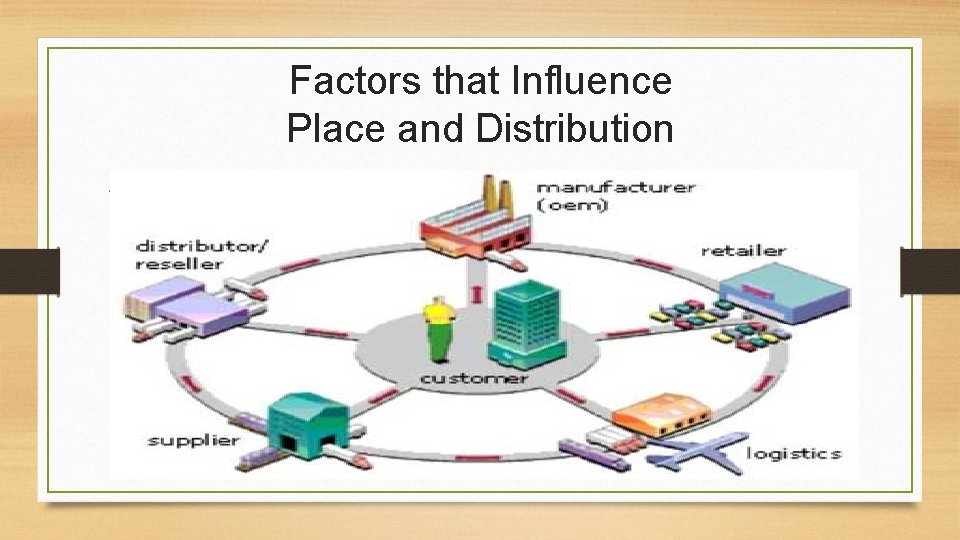
Factors that Influence Place and Distribution
Place Decisions • When, Where, and How products get to customers. • Where to locate Manufacturing Plants, Warehouses, and Stores. • Physical location, Internet location or Both.
Promotion • Promotion is the process of communicating with potential customers in an effort to influence their buying behavior. • Telling people about the Price of a Product and the Place where it is offered.
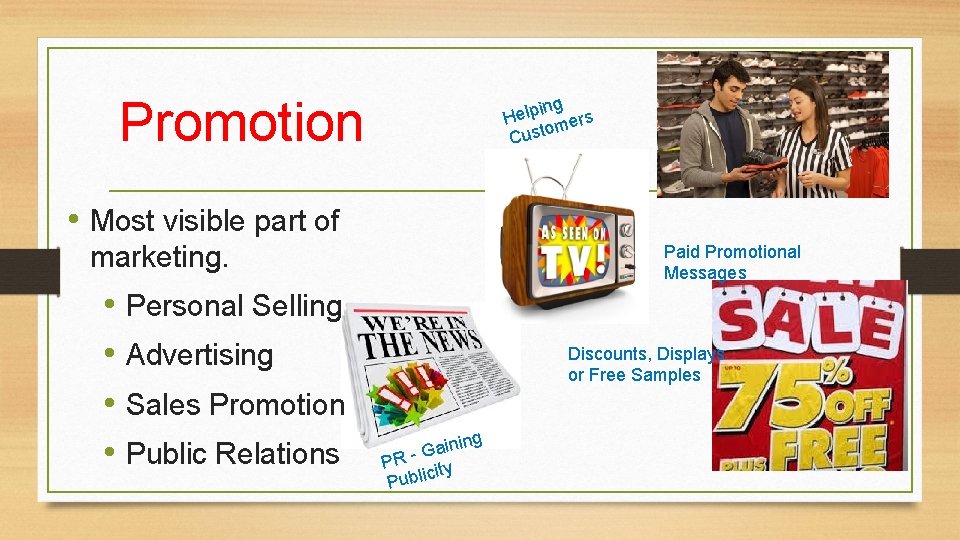
Promotion ing p l e H mers o t s Cu • Most visible part of marketing. • Personal Selling • Advertising • Sales Promotion • Public Relations Paid Promotional Messages Discounts, Displays or Free Samples ning i a G PR - ity c Publi
Marketing Mix • Marketing Mix – the strategy in which a business uses the elements of Product, Price, Place, and Promotion. • Choosing the right Product • Selling at the right Price • Making it available at the right Place • Promoting it to the right Target Customers
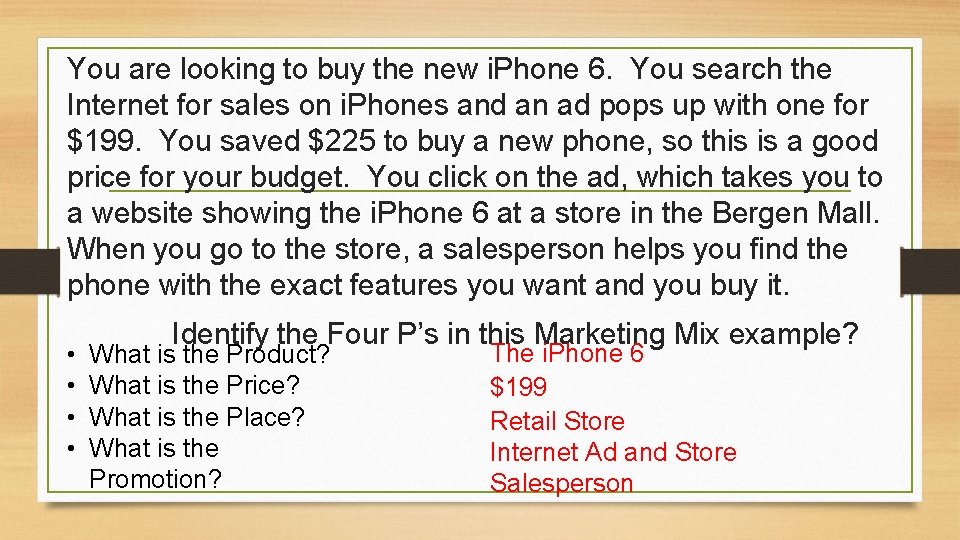
You are looking to buy the new i. Phone 6. You search the Internet for sales on i. Phones and an ad pops up with one for $199. You saved $225 to buy a new phone, so this is a good price for your budget. You click on the ad, which takes you to a website showing the i. Phone 6 at a store in the Bergen Mall. When you go to the store, a salesperson helps you find the phone with the exact features you want and you buy it. • • Identify the Four P’s in this Marketing Mix example? What is the Product? What is the Price? What is the Place? What is the Promotion? The i. Phone 6 $199 Retail Store Internet Ad and Store Salesperson
Marketing Concept • Marketing Concept – an approach to business that focuses on satisfying customers as the means of achieving profit goals. Three Main Elements: 1. Customer Satisfaction 2. Total Company Approach 3. Profit
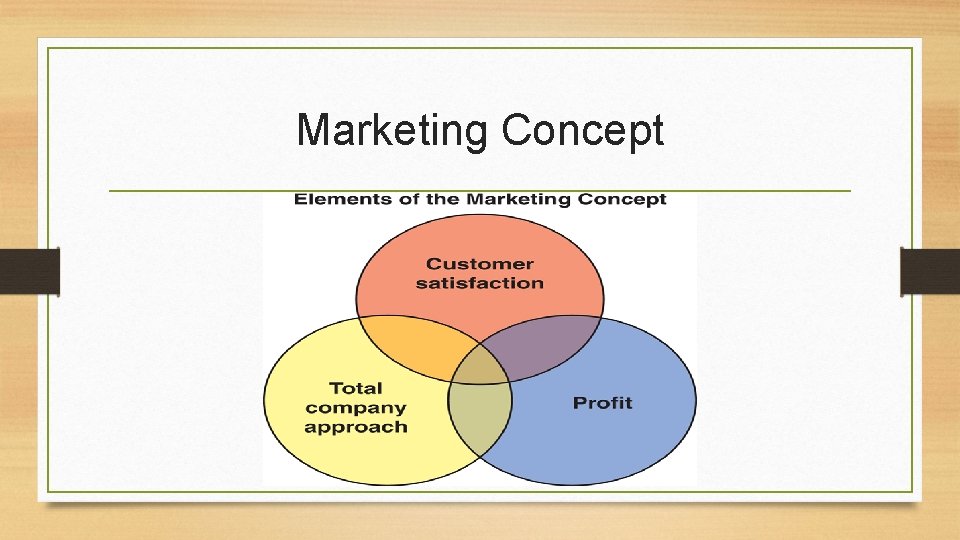
Marketing Concept
Customer Satisfaction • Customer Satisfaction – the degree to which customers are pleased with a company’s goods or services. • Customers are satisfied when the products and services meet or exceed their expectations
Total Company Approach • Total Company Approach means every person in the business has a goal of satisfying their customers. (All Functions of Business) • By sharing information about customers with Production, Finance, and Management Departments; Marketers help an entire business focus on customer satisfaction goals.
Profit • Profit is the money that a business has left after all the expenses and costs of running the business are paid. How does a business make a profit? • More Sales = Satisfied Customers • Satisfied Customers = Repeat Customers • Repeat Customers = Higher Sales
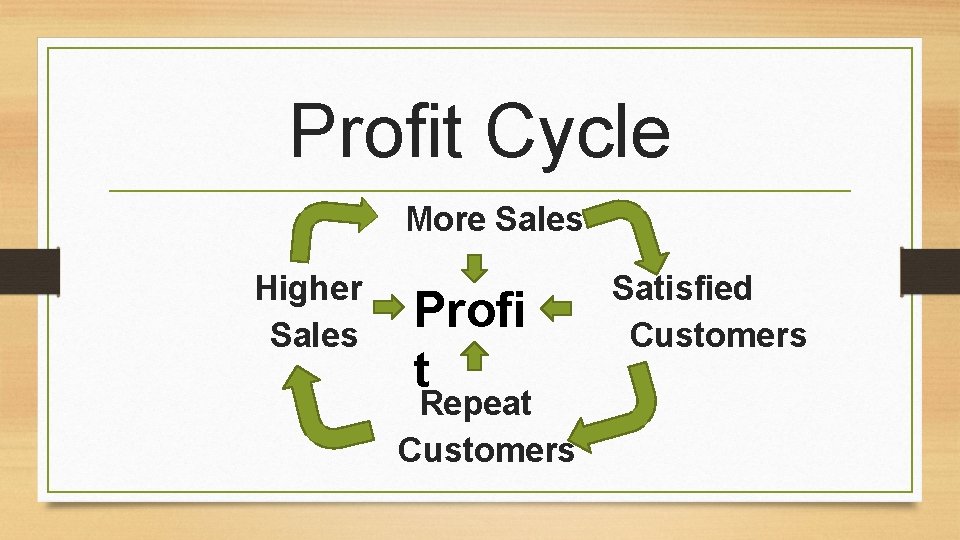
Profit Cycle More Sales Higher Sales Profi t Repeat Customers Satisfied Customers
There are Seven Main Functions of Marketing 1. Channel Management 2. Marketing-Information Management (MIM) 3. Market Planning 4. Pricing 5. Product/Service Management 6. Promotions 7. Selling
Channel Management • Channels are the different routes a product takes from the producers to the customers. • Channel Management handles the activities involved in getting the product through those different routes from the producers to the customers.
Channel Management Activities • Channel Management Activities Include: • Transportation and Storage of Goods • Deciding Where Products are Sold • Finding Sources of Products • On-Time Delivery • Transferring Product Ownership
Marketing-Information Management (MIM) • Marketing-Information Management (MIM) may also be called Marketing Research. • This involves gathering and analyzing information about: • Markets • New Technology • Customers • Competing • Industry Trends Businesses.
Market Planning • Market Planning is creating an actionable marketing plan designed to achieve business goals. • Market Planning Activities Include: • Identifying the Target Market • Determining Market Strategies • Setting a Marketing Budget
Pricing • The Pricing function handles all activities involved in setting acceptable prices for products. • Pricing activities include: • Researching and Analyzing Pricing of Competitors • Setting Prices that Cover Costs • Adjusting Prices when Conditions Change
Product/Service Management • Product/Service Management determines which products a business should offer to meet customer needs. • Activities include: • Developing a New Product or Service • Improving a Current Product or Service. • Deciding which Products(Services) to Carry(Offer) in a store. • Which Brands, Quantities, Sizes…. to Offer.
Promotions • Promotions refer to the non-personal communications with customers designed to influence purchasing. • Activities Include: • Creating and Running Advertising • Designing In-Store Displays and Promotions • Monitoring Sales Incentives
Selling • Selling includes all Personal Communications with customers. • Selling Activities Include: • Helping Customers in the Store • Sales Presentations • Product Demonstrations • Any Form of Customer Service
- Slides: 32