
Marketing An Introduction 6 CustomerDriven Marketing Strategy Creating
- Slides: 27
Marketing An Introduction 6 Customer-Driven Marketing Strategy Creating Value for Target Customers 3 -1
Learning Objectives • • Define the major steps in designing a customer-driven marketing strategy: market segmentation, targeting, differentiation, and positioning. List and discuss the major bases for segmenting consumer and business markets. 6 -2
Learning Objectives • • Explain how companies identify attractive market segments and choose a markettargeting strategy. Discuss how companies differentiate and position their products for maximum competitive advantage. 6 -3
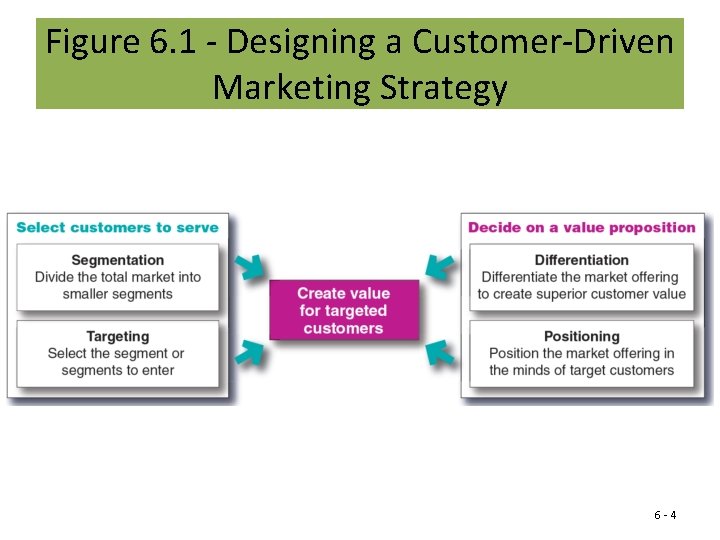
Figure 6. 1 - Designing a Customer-Driven Marketing Strategy 6 -4
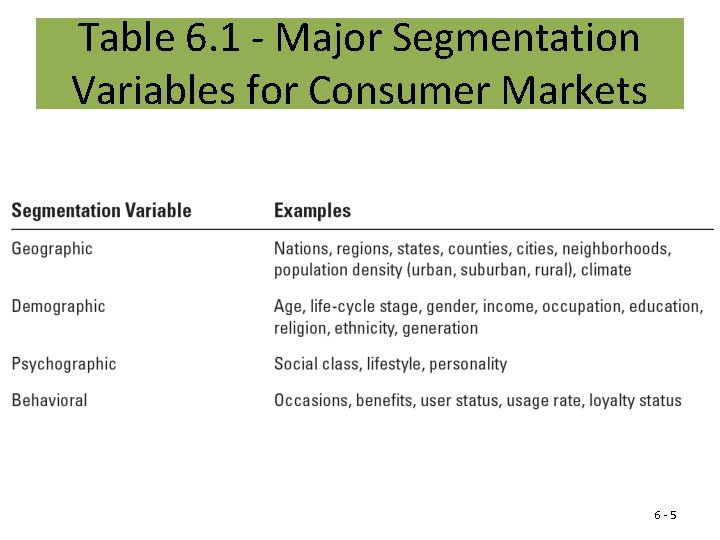
Table 6. 1 - Major Segmentation Variables for Consumer Markets 6 -5
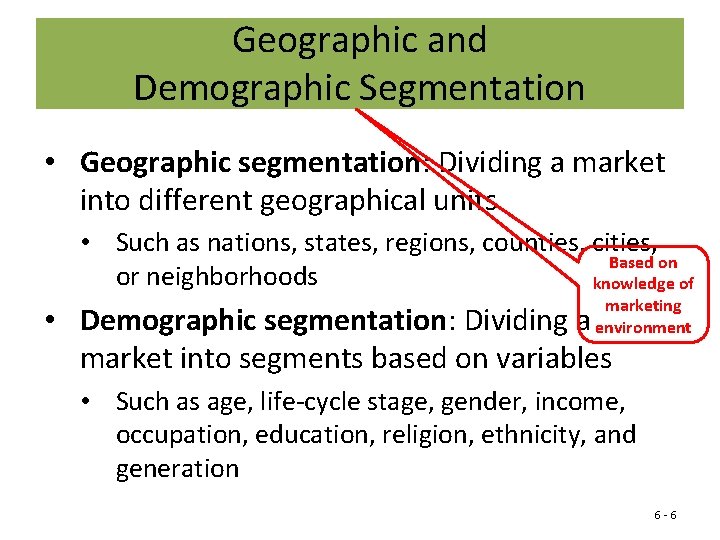
Geographic and Demographic Segmentation • Geographic segmentation: Dividing a market into different geographical units • Such as nations, states, regions, counties, cities, Based on or neighborhoods knowledge of marketing environment • Demographic segmentation: Dividing a market into segments based on variables • Such as age, life-cycle stage, gender, income, occupation, education, religion, ethnicity, and generation 6 -6
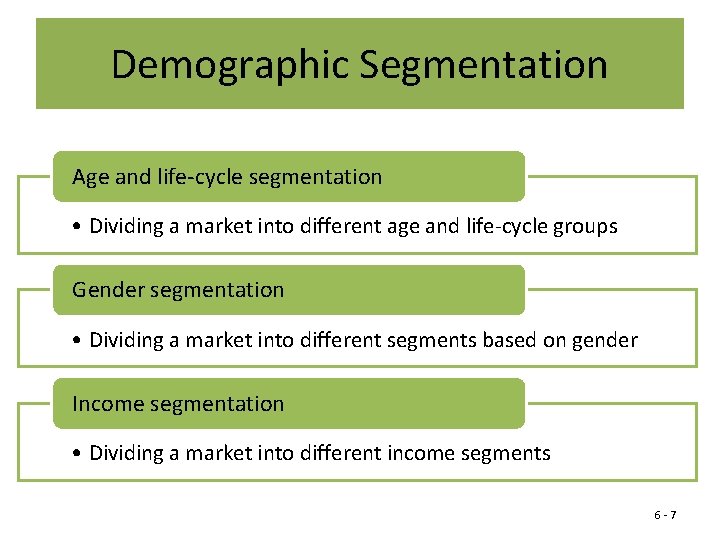
Demographic Segmentation Age and life-cycle segmentation • Dividing a market into different age and life-cycle groups Gender segmentation • Dividing a market into different segments based on gender Income segmentation • Dividing a market into different income segments 6 -7
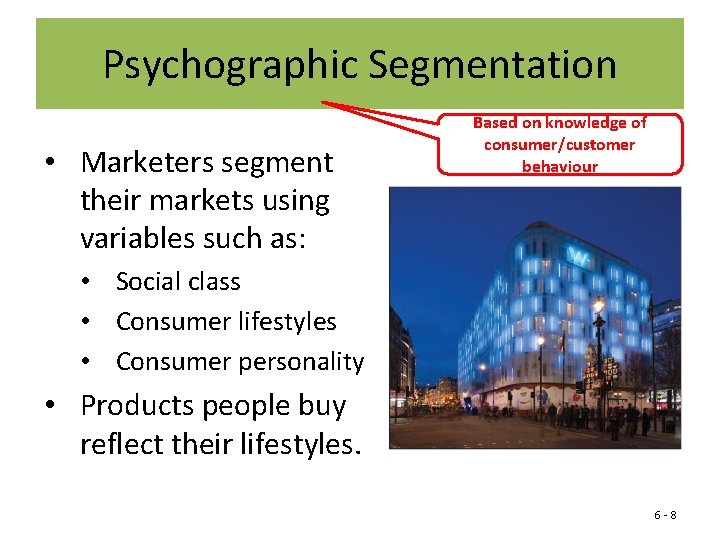
Psychographic Segmentation • Marketers segment their markets using variables such as: Based on knowledge of consumer/customer behaviour • Social class • Consumer lifestyles • Consumer personality • Products people buy reflect their lifestyles. 6 -8
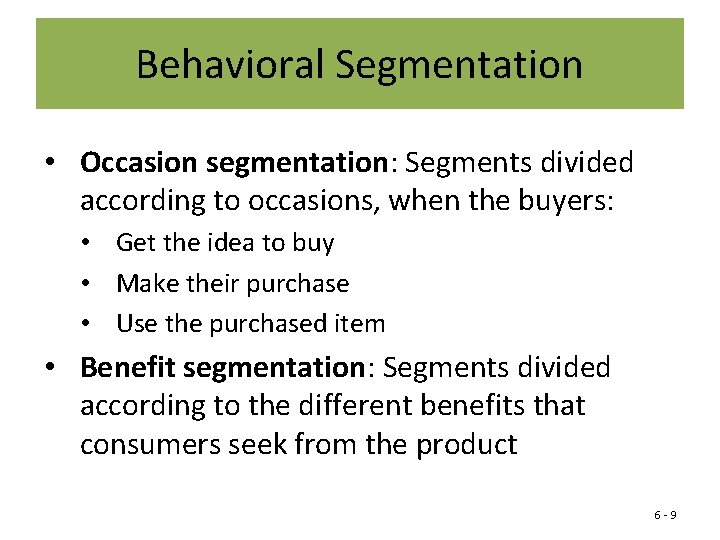
Behavioral Segmentation • Occasion segmentation: Segments divided according to occasions, when the buyers: • Get the idea to buy • Make their purchase • Use the purchased item • Benefit segmentation: Segments divided according to the different benefits that consumers seek from the product 6 -9
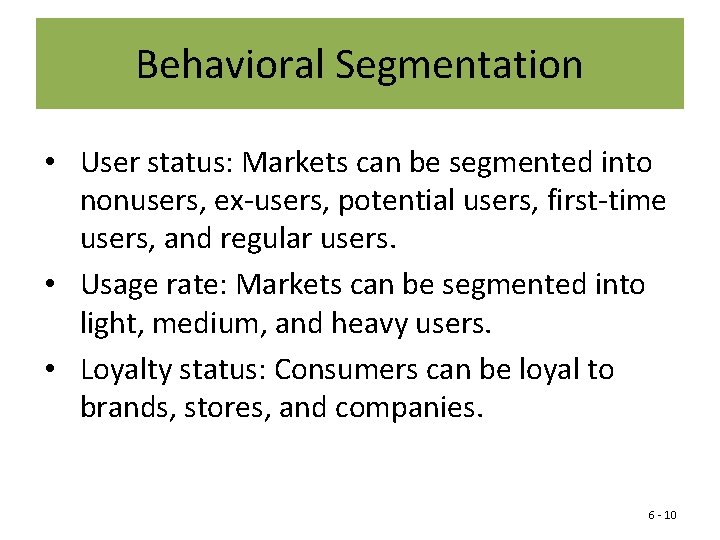
Behavioral Segmentation • User status: Markets can be segmented into nonusers, ex-users, potential users, first-time users, and regular users. • Usage rate: Markets can be segmented into light, medium, and heavy users. • Loyalty status: Consumers can be loyal to brands, stores, and companies. 6 - 10
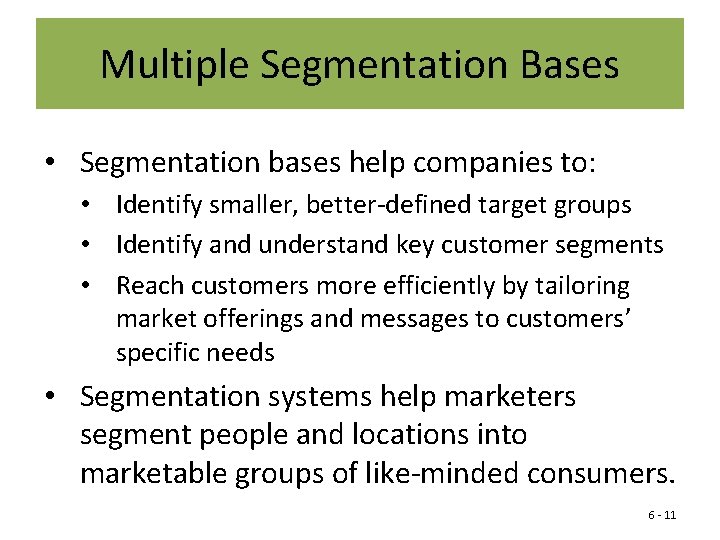
Multiple Segmentation Bases • Segmentation bases help companies to: • Identify smaller, better-defined target groups • Identify and understand key customer segments • Reach customers more efficiently by tailoring market offerings and messages to customers’ specific needs • Segmentation systems help marketers segment people and locations into marketable groups of like-minded consumers. 6 - 11
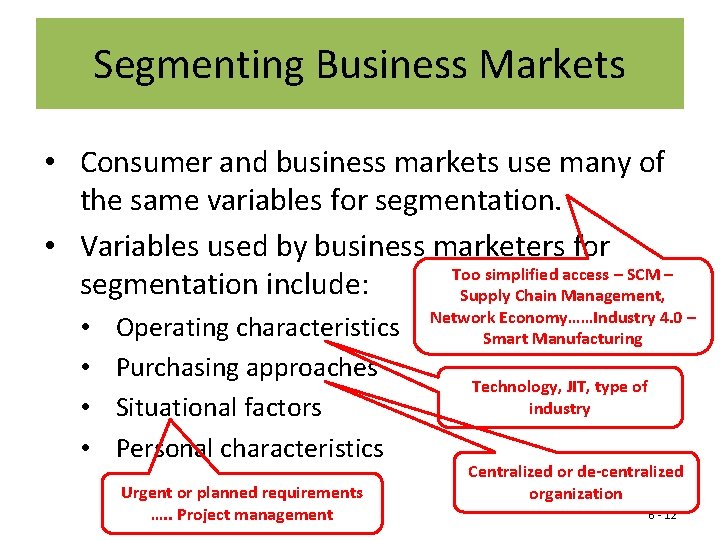
Segmenting Business Markets • Consumer and business markets use many of the same variables for segmentation. • Variables used by business marketers for Too simplified access – SCM – segmentation include: Supply Chain Management, • • Operating characteristics Purchasing approaches Situational factors Personal characteristics Urgent or planned requirements …. . Project management Network Economy……Industry 4. 0 – Smart Manufacturing Technology, JIT, type of industry Centralized or de-centralized organization 6 - 12
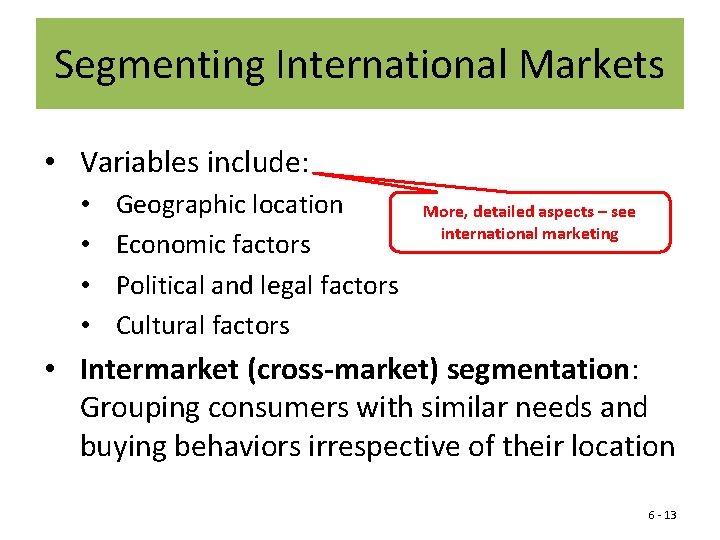
Segmenting International Markets • Variables include: • • Geographic location Economic factors Political and legal factors Cultural factors More, detailed aspects – see international marketing • Intermarket (cross-market) segmentation: Grouping consumers with similar needs and buying behaviors irrespective of their location 6 - 13
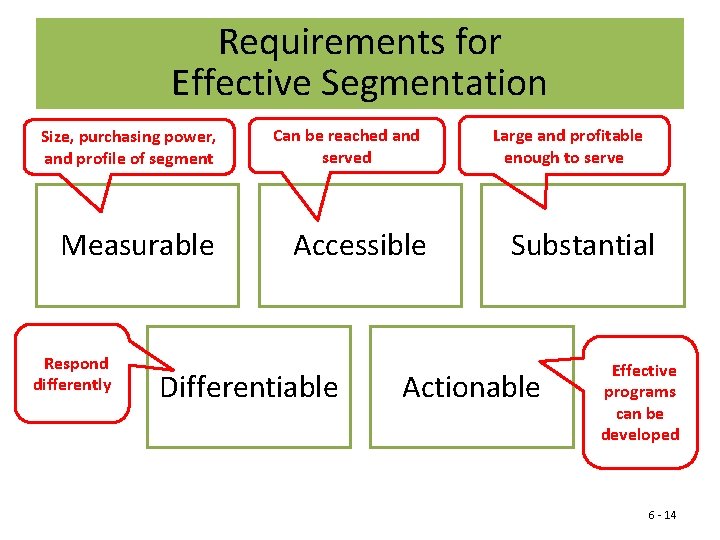
Requirements for Effective Segmentation Size, purchasing power, and profile of segment Measurable Respond differently Can be reached and served Accessible Differentiable Large and profitable enough to serve Substantial Actionable Effective programs can be developed 6 - 14
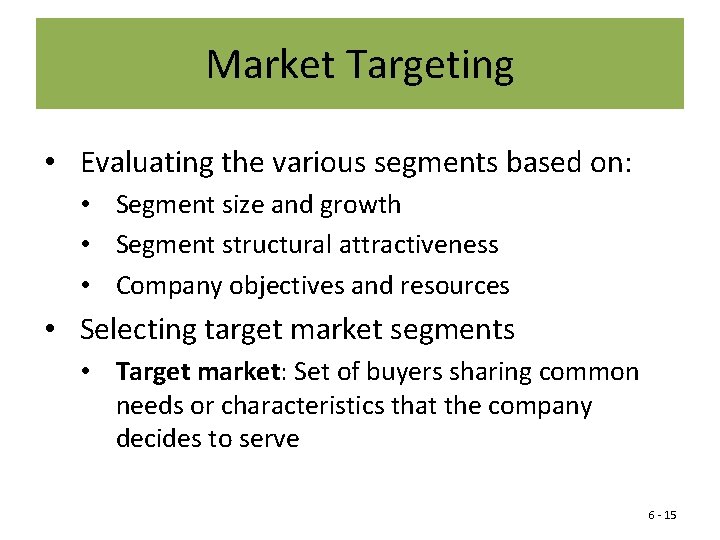
Market Targeting • Evaluating the various segments based on: • Segment size and growth • Segment structural attractiveness • Company objectives and resources • Selecting target market segments • Target market: Set of buyers sharing common needs or characteristics that the company decides to serve 6 - 15
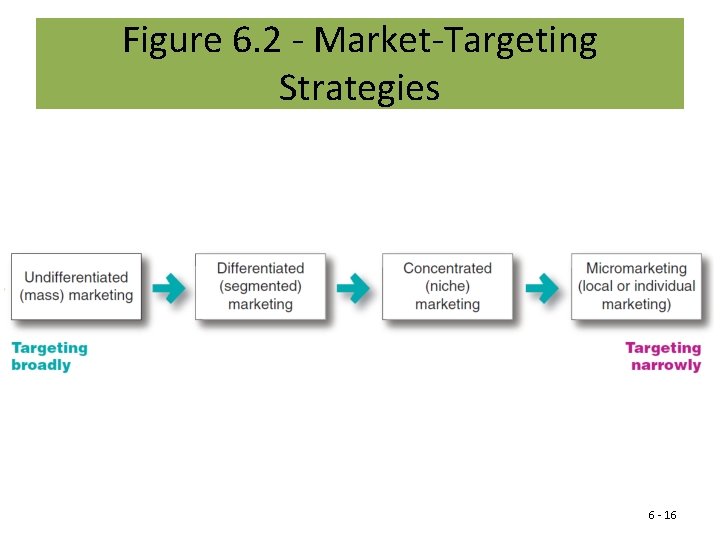
Figure 6. 2 - Market-Targeting Strategies 6 - 16
Choosing a Targeting Strategy • Factors to consider • • • Company resources Product variability Product’s life-cycle stage Market variability Competitors’ marketing strategies 6 - 17
Socially Responsible Target Marketing • Controversy and concern of target marketing • Vulnerable or disadvantaged consumers are targeted with controversial or potentially harmful products. • Should be done to serve the interests of the company and the interests of those targeted Fair information approach - not information asymmetry 6 - 18
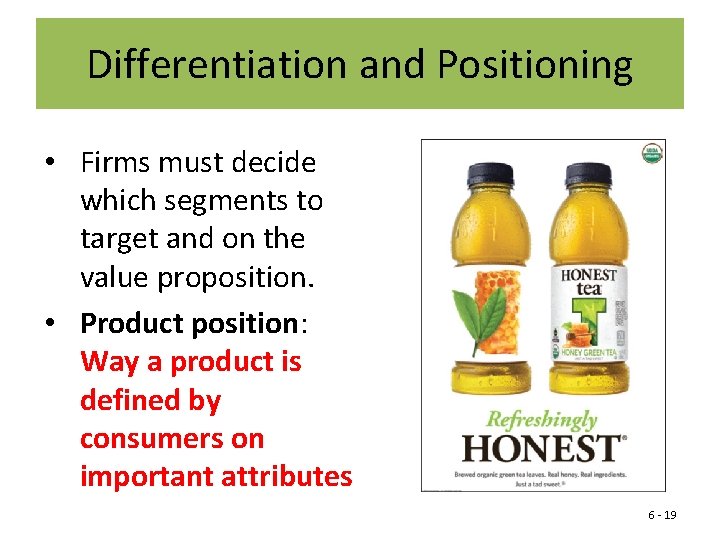
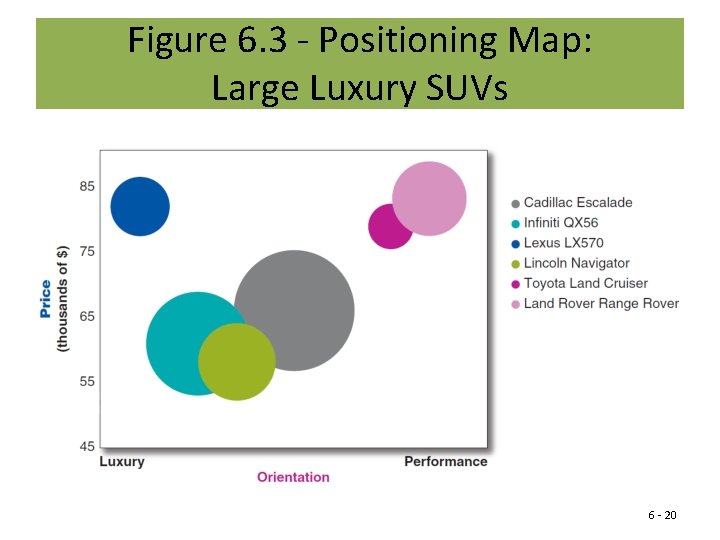
Differentiation and Positioning • Firms must decide which segments to target and on the value proposition. • Product position: Way a product is defined by consumers on important attributes 6 - 19
Figure 6. 3 - Positioning Map: Large Luxury SUVs 6 - 20
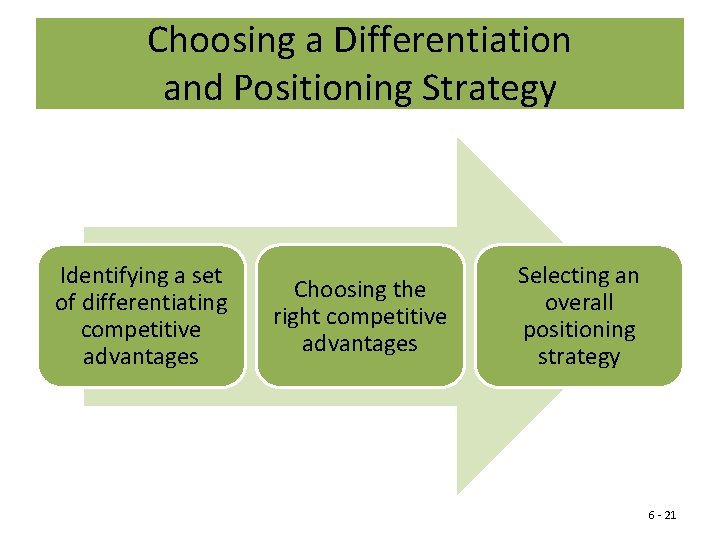
Choosing a Differentiation and Positioning Strategy Identifying a set of differentiating competitive advantages Choosing the right competitive advantages Selecting an overall positioning strategy 6 - 21
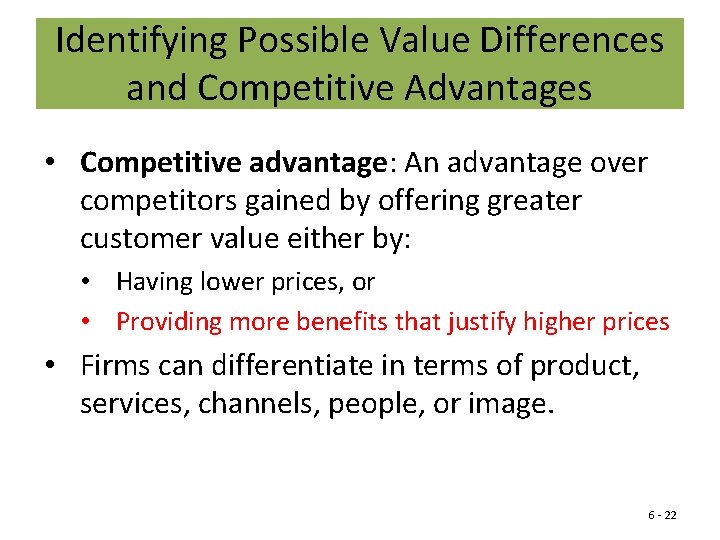
Identifying Possible Value Differences and Competitive Advantages • Competitive advantage: An advantage over competitors gained by offering greater customer value either by: • Having lower prices, or • Providing more benefits that justify higher prices • Firms can differentiate in terms of product, services, channels, people, or image. 6 - 22
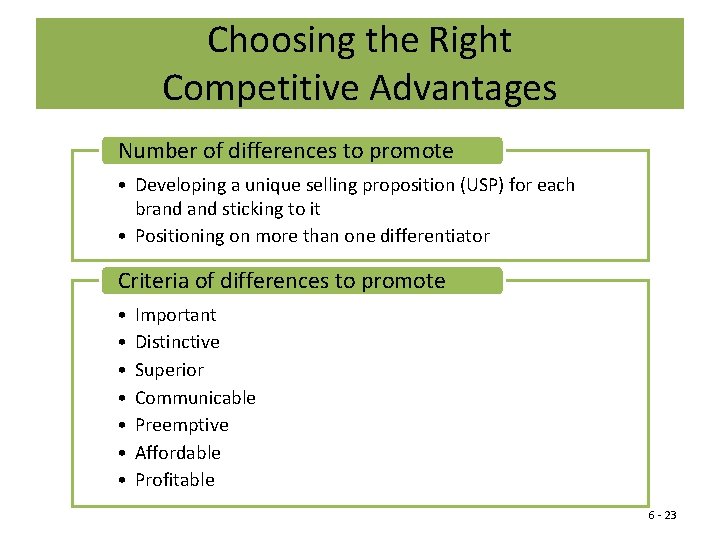
Choosing the Right Competitive Advantages Number of differences to promote • Developing a unique selling proposition (USP) for each brand sticking to it • Positioning on more than one differentiator Criteria of differences to promote • • Important Distinctive Superior Communicable Preemptive Affordable Profitable 6 - 23
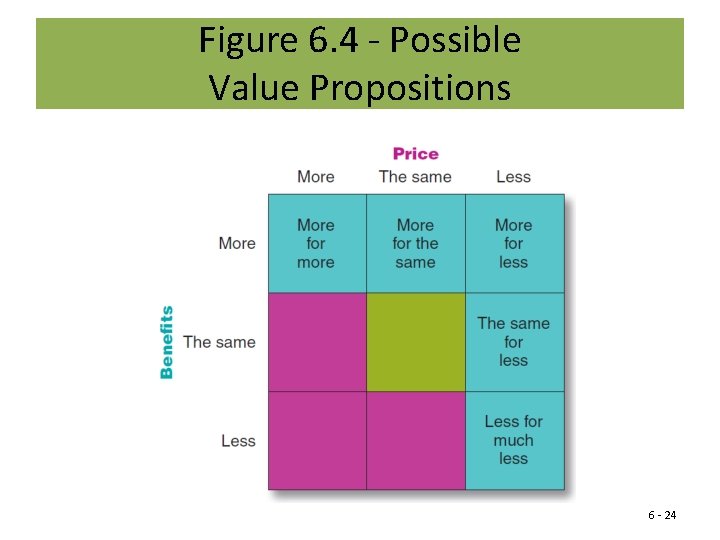
Figure 6. 4 - Possible Value Propositions 6 - 24
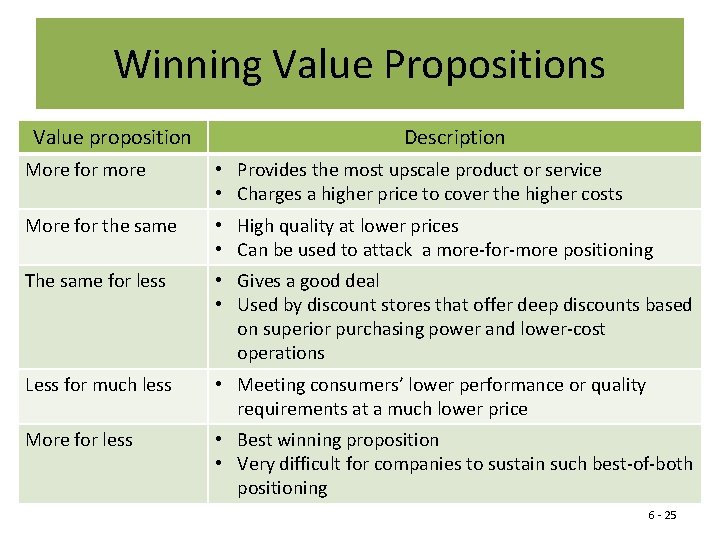
Winning Value Propositions Value proposition Description More for more • Provides the most upscale product or service • Charges a higher price to cover the higher costs More for the same • High quality at lower prices • Can be used to attack a more-for-more positioning The same for less • Gives a good deal • Used by discount stores that offer deep discounts based on superior purchasing power and lower-cost operations Less for much less • Meeting consumers’ lower performance or quality requirements at a much lower price More for less • Best winning proposition • Very difficult for companies to sustain such best-of-both positioning 6 - 25
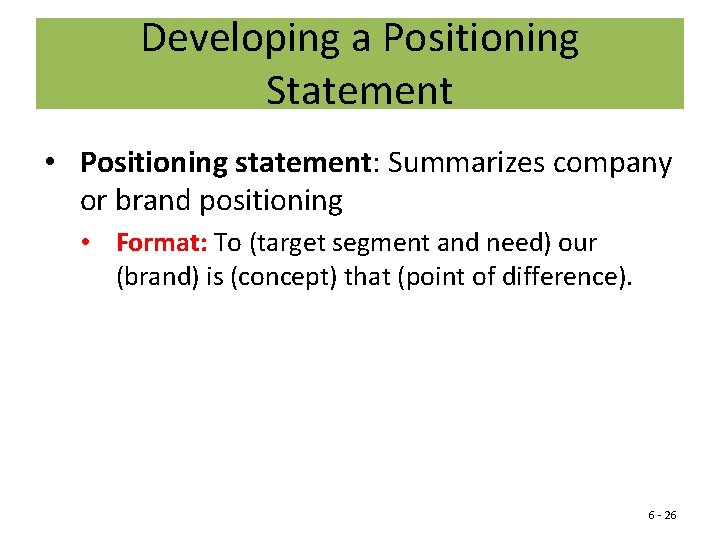
Developing a Positioning Statement • Positioning statement: Summarizes company or brand positioning • Format: To (target segment and need) our (brand) is (concept) that (point of difference). 6 - 26
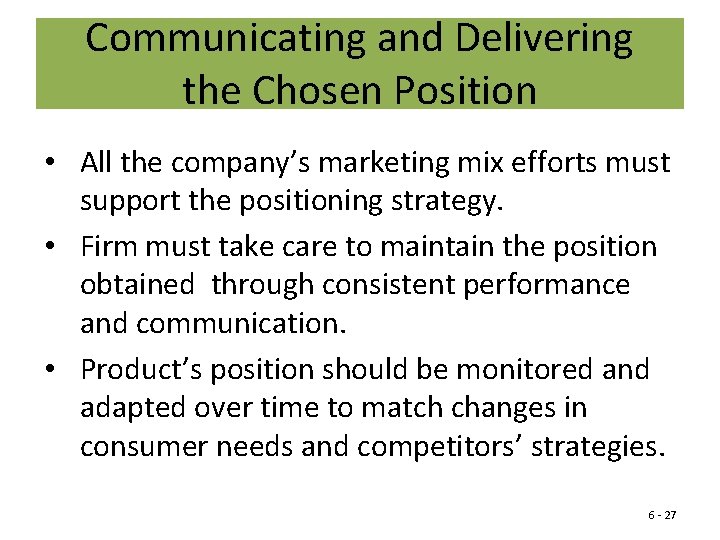
Communicating and Delivering the Chosen Position • All the company’s marketing mix efforts must support the positioning strategy. • Firm must take care to maintain the position obtained through consistent performance and communication. • Product’s position should be monitored and adapted over time to match changes in consumer needs and competitors’ strategies. 6 - 27