
Marketing 1 05 MIM Three types of information
- Slides: 17
Marketing 1. 05 MIM
Three types of information used in marketing decision making • Customer • Marketing mix • Business Environment
Customer Information Age Gender Income Education Family size Home ownership • Address • Occupation • • How money is spent • • Attitudes • Primary needs • • Product purchases • • Purchase frequency • Brand preferences Information needs Media preferences Shopping behavior
Marketing Mix • • • Basic Products Product Features Services Product packaging Guarantees Repairs Credit Choice Discounts Promotion Methods
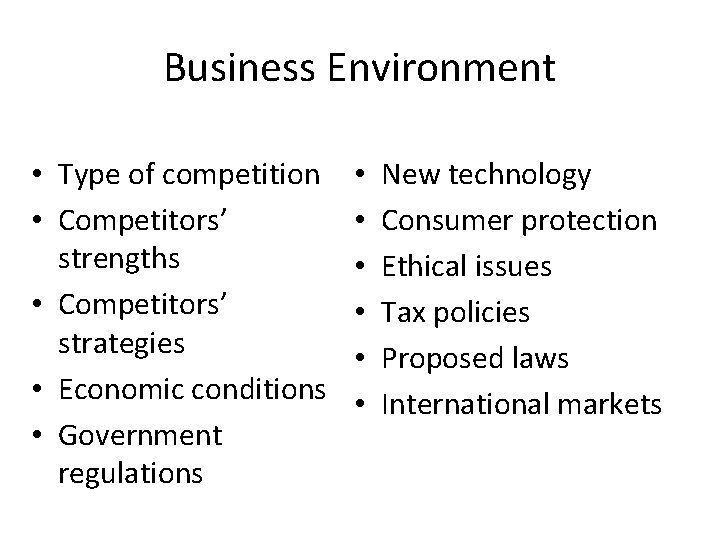
Business Environment • Type of competition • Competitors’ strengths • Competitors’ strategies • Economic conditions • Government regulations • • • New technology Consumer protection Ethical issues Tax policies Proposed laws International markets
Why is Marketing Information Needed? To identify: 1. potential customers 2. potential products 3. marketing opportunities 4. solve marketing problems 5. implement marketing plans 6. monitor marketing performance.
The Impact of Marketing Information on Marketers • Marketing research is used when a business needs to solve problems. • Helps answer questions about what to produce, at what price to sell the products, who will buy the products, and how to promote the products • Helps businesses plan their future operations to increase sales and profits. • Understand markets.
Ways Marketers Use Marketing Information • Analysis----the process of summarizing, combining, or comparing information so that decisions can be made. • Analysis example: – Planning a promotional budget – Analyzing the effectiveness of one retailer in a channel of distribution – Analyzing the costs of marketing activities for national and international activities
Ways Marketers Use Marketing Information • Product Example: Stouffer’s Lean Cuisine— 13 years of market research –Develop product –Test package design –Hold pilot sales in large cities to test market first
Ways Marketers Use Marketing Information • Track: what is happening in current markets – Determine major competitors – What major competitors are offering – Which products consumers prefer – Customer satisfaction with product
Information contained in sales and expense reports that is monitored for marketing decision-making. • Market Share Analysis — the percentage of all sales within a market that is held by one brand / product or company. Normally measured by sales revenue (dollars sold) or sales volume (the number of units sold) • Sales Volume Analysis — A detailed study of an organization's sales, in terms of units or revenue, for a specified period. • Accounting Information analyzed – Spending/Costs to produce and sell products – Profitability/ Sales – Total Costs
Information contained in sales and expense reports that is monitored for marketing decision-making. • Sales – How much did they have to discount the product to achieve the sale? – What expenses went into each sale? • Inventory/How much product is left in inventory • Payroll – How much commission did they have to pay the sales rep?
Information in reports provided by salespeople that is monitored for use in marketing decision -making. • Request & Complaint reports/products customers requested and problems customers reported • Lost sales reports/ cancelled orders or under stocked items • Call reports/what happened in each sales call
Information in reports provided by salespeople that is monitored for use in marketing decision-making. • Activity reports/ all travel, phone calls and in person sales calls for a given period of time • Retail audits to measure market sales, competitor’s sales, market share, prices, special offers, stock levels by week or day • Product information reports– types of products that sell best at various times of year; colors or sizes of products customers prefer
Information about customers that is monitored for marketing decision-making. • Demographic data (age, gender, ethnicity, job, income, marital status) • Buying habits (time of day, repeat products purchased, amount spent on each transaction—full price or on sale, types of products) – Ex: Diapers and beer purchased by men on Thursdays and Saturdays – Ex: Saturday is when most people do major grocery shopping • Credit record: do customers pay their bills on time • Customer requests (what products or varieties are requested that you don’t carry) • Receipts (is a certain neighborhood or ZIP code frequenting your establishment more than others)
Explain information about competitors that is monitored for marketing decisionmaking. • USP’s (unique selling points) of our product vs. competition to find our advantage. Is that advantage sustainable, (long lasting)? • Financial records for public companies that you compete with (i. e. annual reports) • Insight into competitors’ strengths, weaknesses, and future plans (new products, marketing campaigns) • Market share analysis • Sales volume data
Procedures for identifying information to monitor for marketing decision-making. • Identify data needed for decision-making • Create a plan for collecting, storing and analyzing that data • Compile a list of secondary sources of data • Retrieve the data you need • Analyze/use data to make decisions