
MARKET STRUCTURES MOD 58 60 PERFECT COMPETITION TYPES
- Slides: 22
MARKET STRUCTURES MOD 58 -60: PERFECT COMPETITION
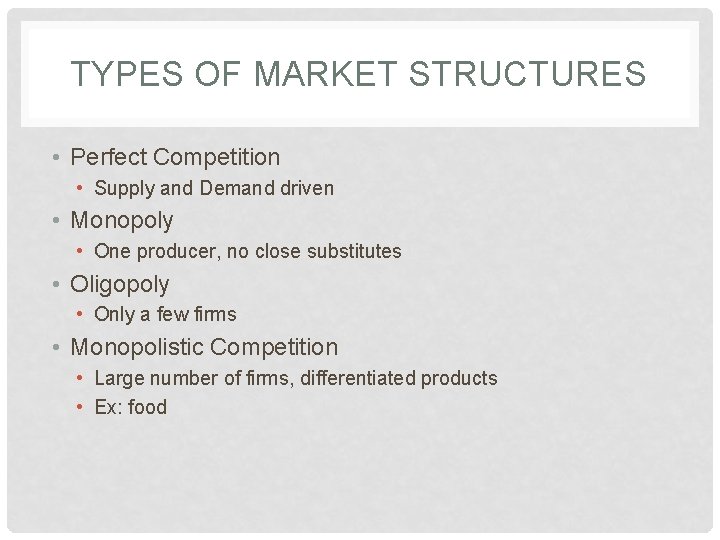
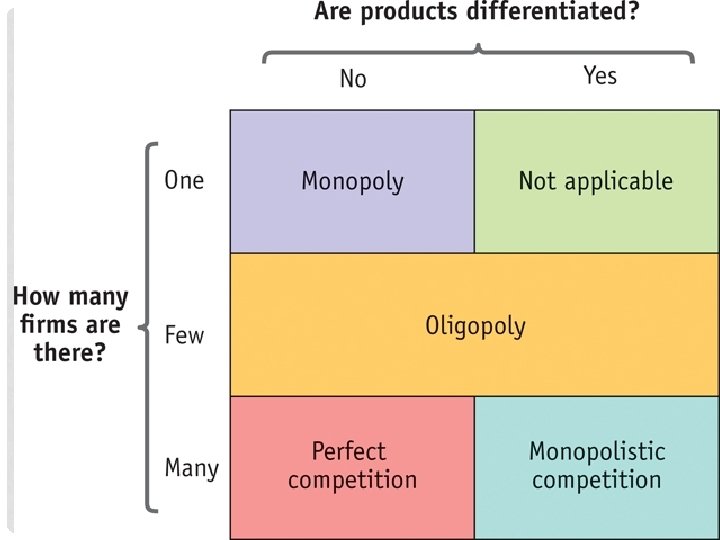
TYPES OF MARKET STRUCTURES • Perfect Competition • Supply and Demand driven • Monopoly • One producer, no close substitutes • Oligopoly • Only a few firms • Monopolistic Competition • Large number of firms, differentiated products • Ex: food
PERFECT COMPETITION What are some examples of perfect competition you can think of?
MARKET STRUCTURES: PERFECT COMPETITION • Perfect Competition • Low barriers of entry • Large number of buyers and sellers • Undifferentiated products • Supply and demand driven • Producers – produce at optimal output level (MC=MB) • Price-takers – due to competition, perfectly comp. firms are price takers
MARKET STRUCTURES: PERFECT COMPETITION • What does price-taker mean? • Market Price = MR • Profit is maximized at this point • Price-taking firms optimal output rule • Price-taking firms cannot influence the market with its actions • Ex: if it sells more goods, will not affect price, etc.
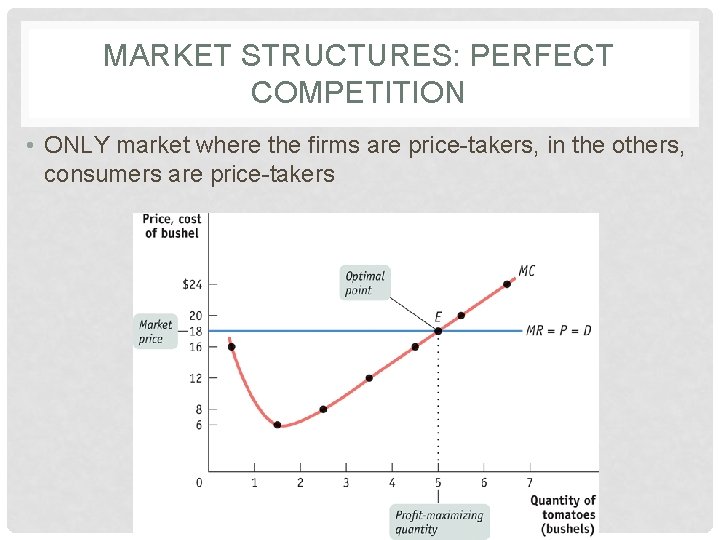
MARKET STRUCTURES: PERFECT COMPETITION • ONLY market where the firms are price-takers, in the others, consumers are price-takers
MARKET STRUCTURES: PERFECT COMPETITION
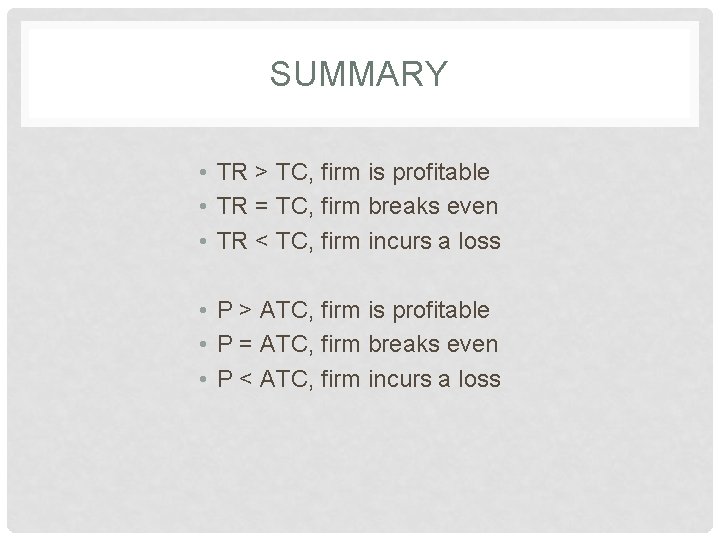
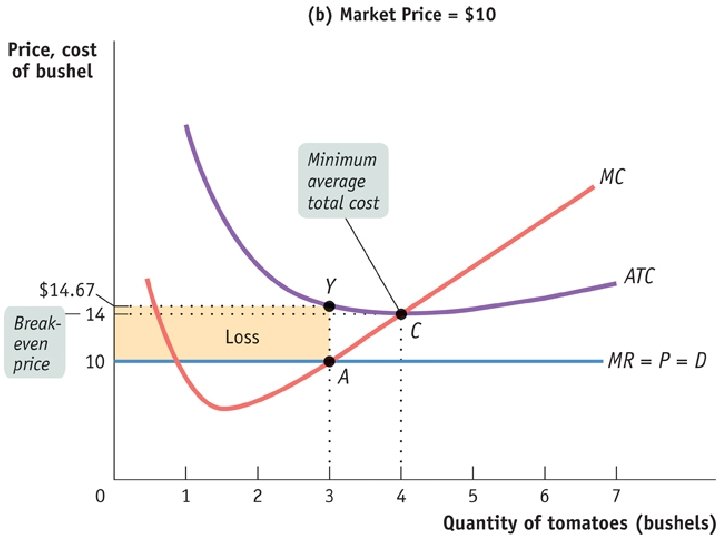
SUMMARY • TR > TC, firm is profitable • TR = TC, firm breaks even • TR < TC, firm incurs a loss • P > ATC, firm is profitable • P = ATC, firm breaks even • P < ATC, firm incurs a loss
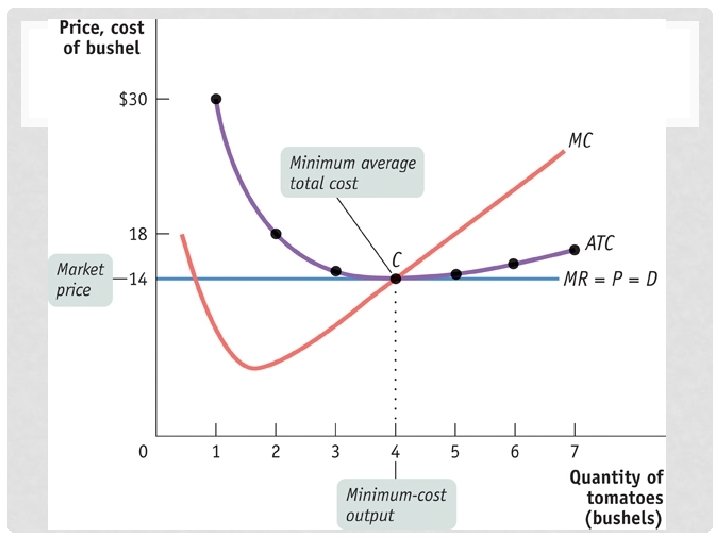
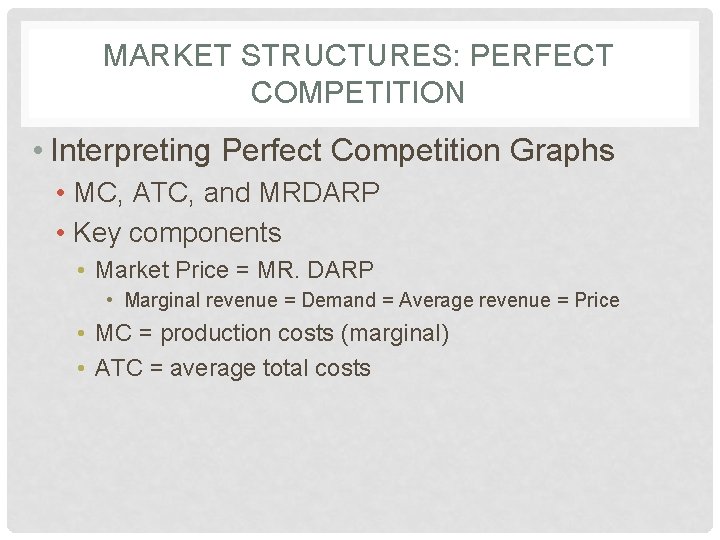
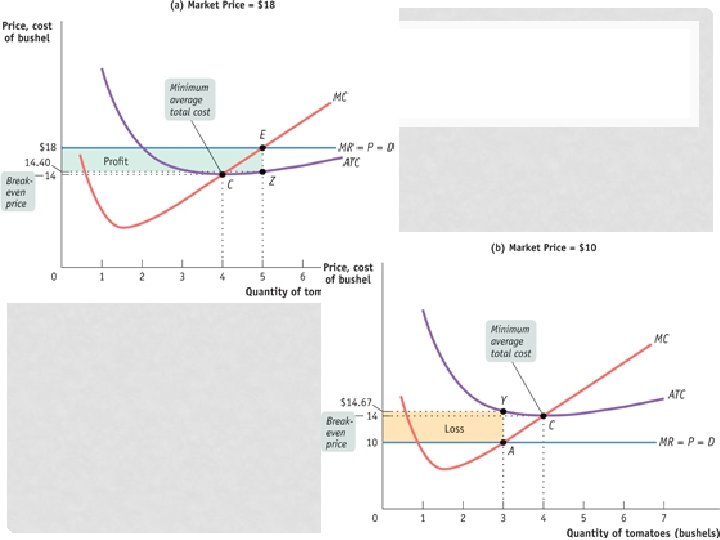
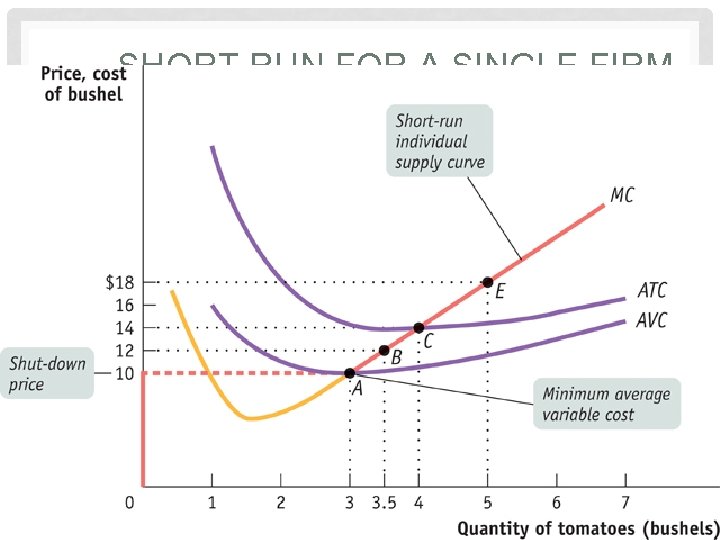
MARKET STRUCTURES: PERFECT COMPETITION • Interpreting Perfect Competition Graphs • MC, ATC, and MRDARP • Key components • Market Price = MR. DARP • Marginal revenue = Demand = Average revenue = Price • MC = production costs (marginal) • ATC = average total costs
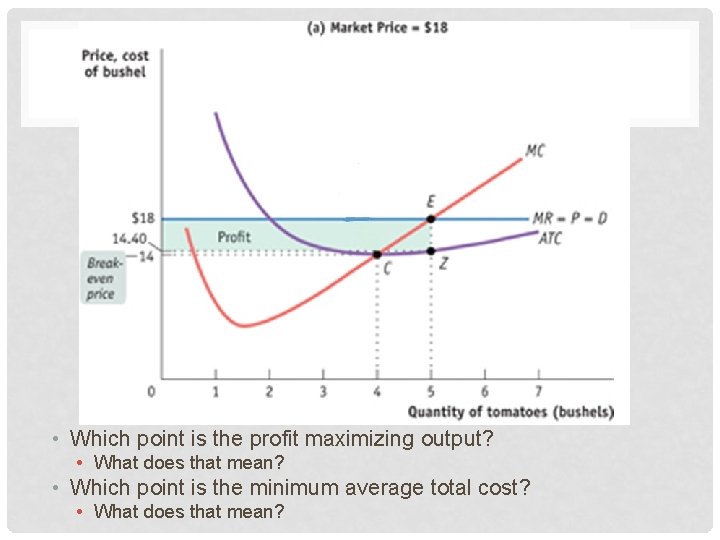
• Which point is the profit maximizing output? • What does that mean? • Which point is the minimum average total cost? • What does that mean?
MARKET STRUCTURES: PERFECT COMPETITION
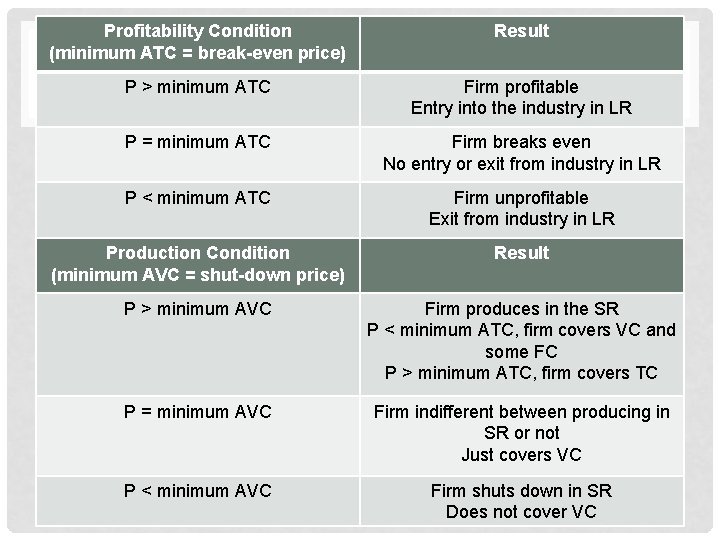
MARKET STRUCTURES: PERFECT COMPETITION • Short-Run production decisions • Just because you are unprofitable in the short run does NOT mean you should shut down • SR includes fixed costs • SR – fixed costs should play NO ROLE in the decision • They operate ALONG THE LINES of sunk costs but they are not sunk costs because they have to be PAID
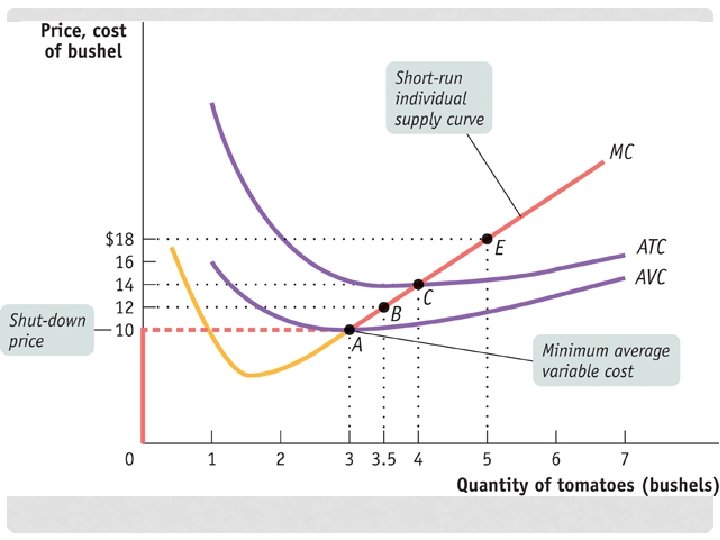
MARKET STRUCTURES: PERFECT COMPETITION • There is a firm shut down price • Shut down price – the firm ceases production (SR) • When MR. DARP is below minimum AVC SHUT DOWN! • Why? • No level of output which creates revenue will cover variable costs • So, profit is maximized by NOT producing at all
MARKET STRUCTURES: PERFECT COMPETITION
Profitability Condition (minimum ATC = break-even price) Result P > minimum ATC Firm profitable Entry into the industry in LR P = minimum ATC Firm breaks even No entry or exit from industry in LR P < minimum ATC Firm unprofitable Exit from industry in LR Production Condition (minimum AVC = shut-down price) Result P > minimum AVC Firm produces in the SR P < minimum ATC, firm covers VC and some FC P > minimum ATC, firm covers TC P = minimum AVC Firm indifferent between producing in SR or not Just covers VC P < minimum AVC Firm shuts down in SR Does not cover VC
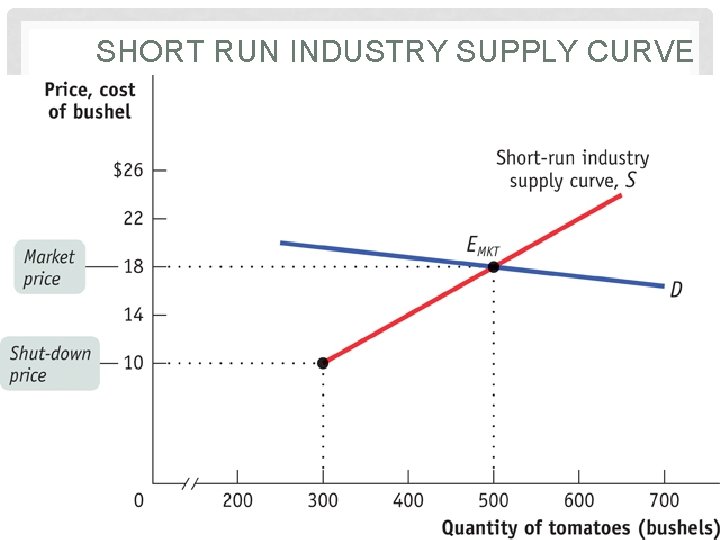
MARKET STRUCTURES: PERFECT COMPETITION • Perfect Competition and the Long Run • Have been talking about the SR focusing on ceteris paribus and a single firm • The Industry Supply Curve • What happens to the industry when we look at price and total output?
SHORT RUN FOR A SINGLE FIRM
SHORT RUN INDUSTRY SUPPLY CURVE
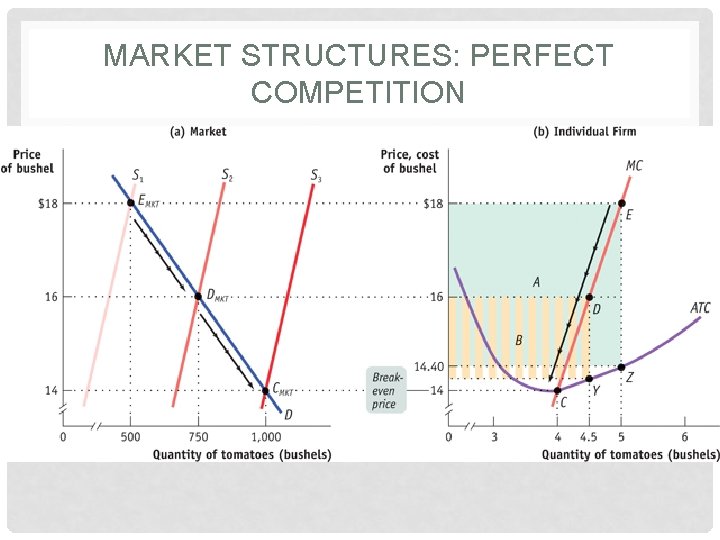
MARKET STRUCTURES: PERFECT COMPETITION • Effect on individual firm when firms enter/exit the industry? • At first, when firms enter • Process will continue until ALL firms break even and are making ZERO ECONOMIC PROFIT (min ATC) • What happens to the supply curve in the LR as firms enter?
MARKET STRUCTURES: PERFECT COMPETITION