
Market Structures 4 Different Types Perfect Competition Many
- Slides: 10
Market Structures 4 Different Types
Perfect Competition – Many sellers, identical goods and services – – Sellers can not set own price, MUST take the market sets – Easy to enter and exit a market – All firms have same access to resources price
Example • Does a banana differ in name, shape packaging depending on where you bought it? • Wheat? • Corn?
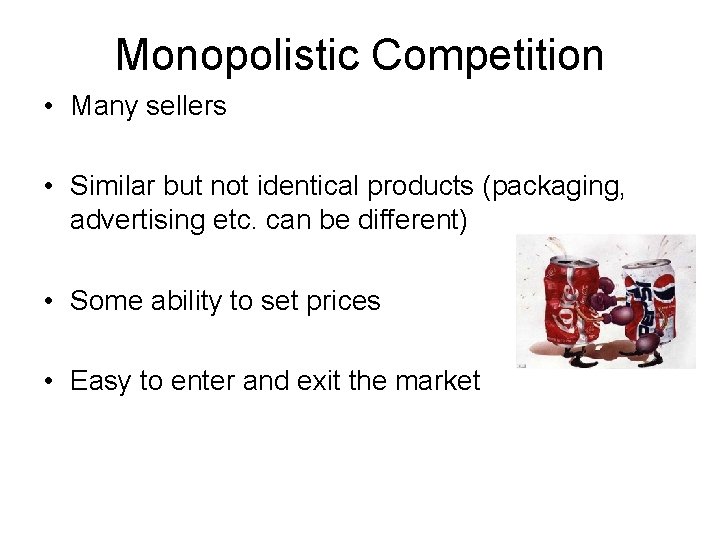
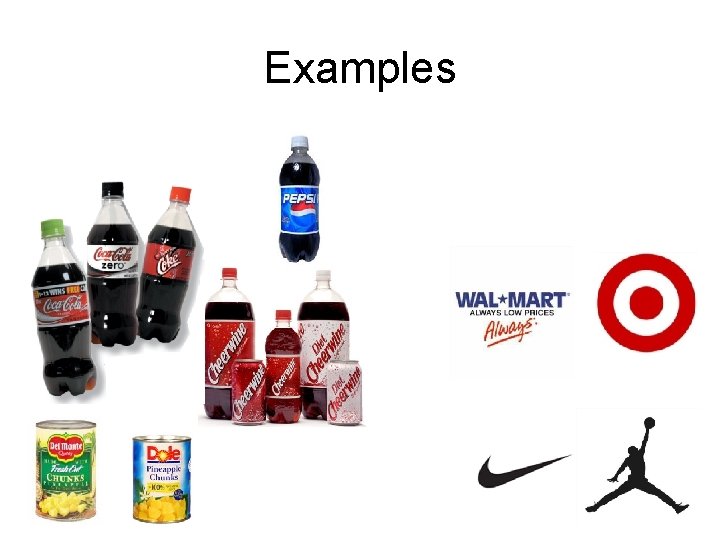
Monopolistic Competition • Many sellers • Similar but not identical products (packaging, advertising etc. can be different) • Some ability to set prices • Easy to enter and exit the market
Examples
Oligopoly • Only a few LARGE sellers • Products can be identical or differentiated • LOTS of control in the market • Firms are very INTERDEPENDENT – The actions of one affect the rest • Barriers to entry: can be expensive, may need licenses, patents, limited resource access • Non Price Competition – Advertising, Packaging
Behaviors of Oligopolies
Monopoly • Market with only 1 seller of a good or service • No competition • No substitute goods • Barriers to entry: high cost of entering the market • Firms are “price makers” – they control the supply and so can influence the price they charge • Less efficient than a competitive market so have lower quantities available and higher prices
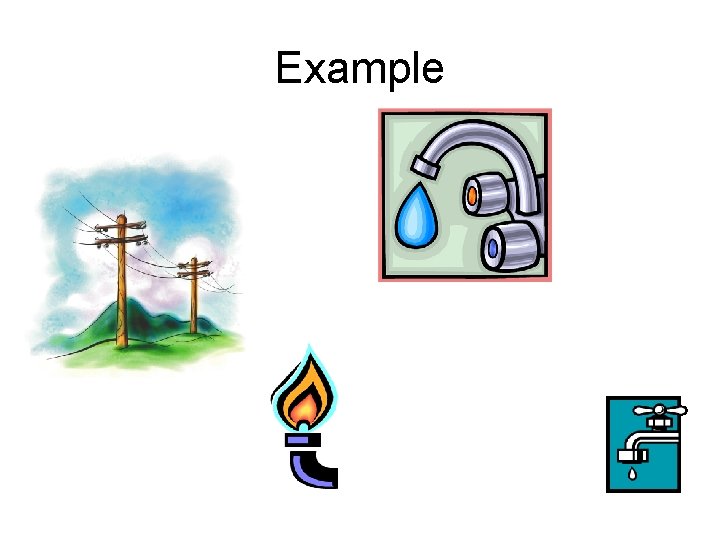
Natural Monopoly • This is a monopoly where it makes more sense – it is more efficient to have only 1 seller of a good or service • The cost of competition makes it too expensive and unprofitable to have more than 1 seller • Examples are utilities
Example