
Market Power Economists have identified four different market
- Slides: 25
Market Power • Economists have identified four different market structures, characterized by different levels of market power. • Market power – the ability of a seller or a buyer to affect market price.
Perfect Competition • Perfect competition – many sellers of identical products. • Perfect competition is the ideal market structure. • The key characteristic of perfect competition is a lack of market power.
Perfect Competition • A perfect competitor has no market power because: • 1. There are many sellers in a perfectly competitive market. • Example 1: In a typical year, about 2, 000, 000 bushels of wheat are produced in the U. S. A five-hundred-acre wheat farm (about the average size) would produce around 20, 000 bushels, or. 001% of the nation’s total crop.
Perfect Competition • A perfect competitor has no market power because: • 2. All firms in a perfectly competitive market sell an identical product. • Example 2: When was the last time you saw a television commercial featuring a farmer? Imagine Farmer Perdue boasting, “Buy my corn. It’s the best corn. It costs a little more, but it’s worth it. ”
Perfect Competition • Another characteristic of perfect competition is freedom of entry and exit. • New firms can easily enter a perfectly competitive market and existing firms can easily leave a perfectly competitive market. • See Example 3 on page 21 -1.
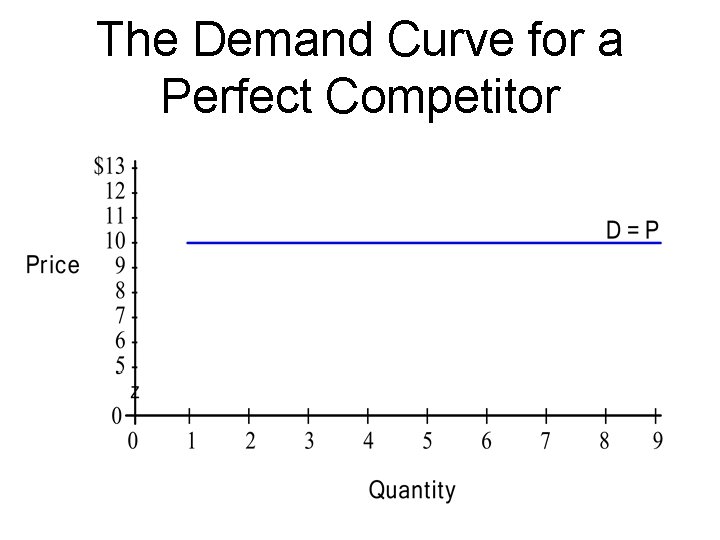
The Demand Curve for a Perfect Competitor • A perfect competitor has no market power. • Thus, a perfect competitor will face a demand curve for its product that is horizontal at the market price. • See the Demand Schedule in Example 4 on page 21 -2.
The Demand Curve for a Perfect Competitor
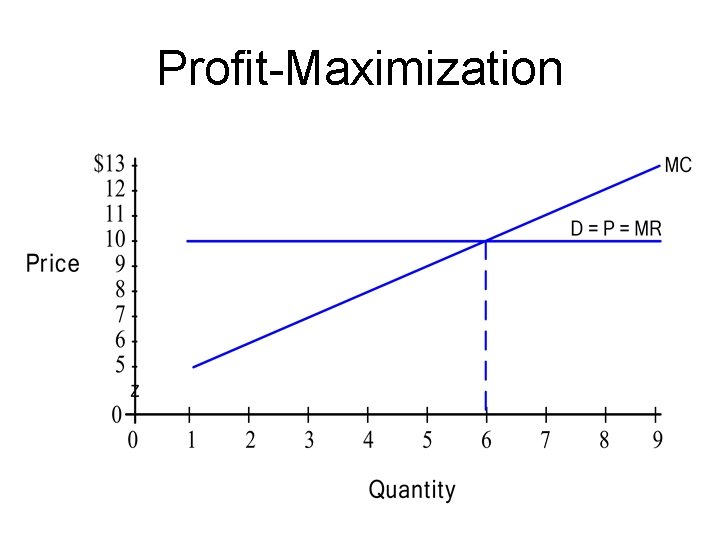
Profit-Maximization • A perfect competitor will adjust its production level to try to achieve profitmaximization. • Profit-maximization rule – produce the quantity of output where marginal revenue equals marginal cost.
Marginal Revenue • Marginal revenue – the change in total revenue from selling one additional unit of output. • For a perfect competitor, marginal revenue equals market price. • See Example 6 A on page 21 -3.
Profit-Maximization • Profits are maximized by producing the quantity of output where MR=MC. • See the table in Example 6 B on page 21 -4.
Profit-Maximization
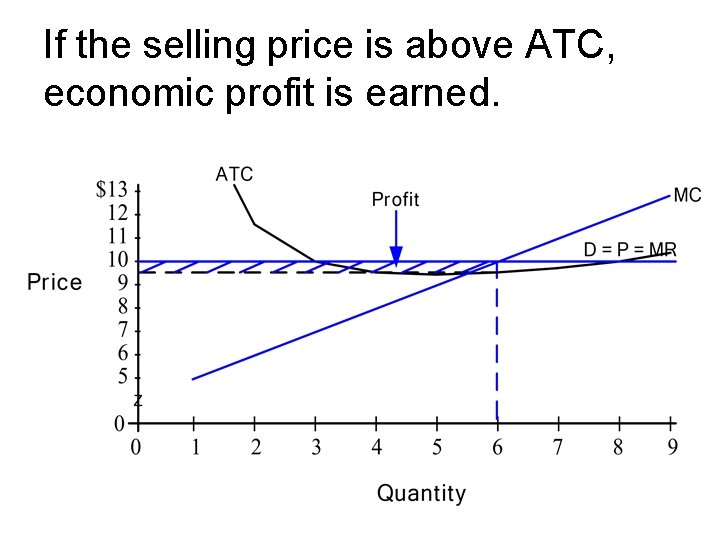
Economic Profit • If price is above ATC, economic profit is earned. • Profits are maximized by producing the quantity of output where MR = MC. • See Example 6 C on page 21 -5.
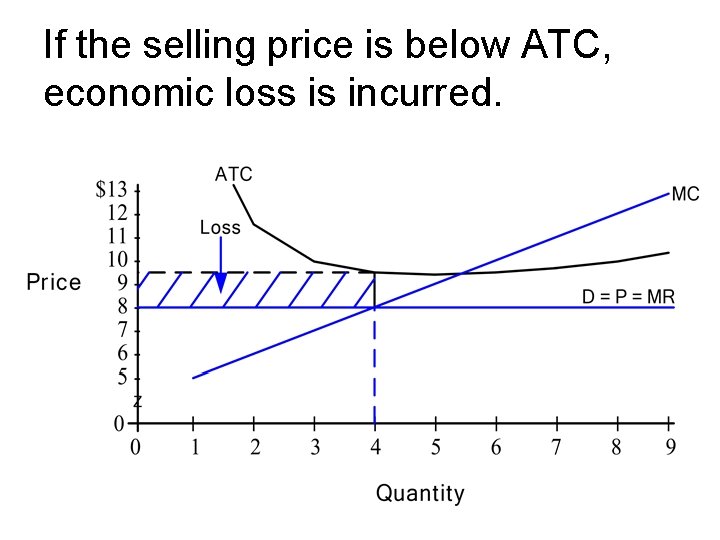
Economic Loss • If price falls below ATC, economic loss is incurred. • As long as price exceeds AVC, the loss is minimized by producing the quantity of output where MR = MC. • See Example 6 D on page 21 -5.
Shutdown Point • If price falls below AVC, the firm can minimize its loss by shutting down. • The shutdown point occurs if price falls below AVC. • See Example 6 E on page 21 -6.
The Supply Curve • A supply curve indicates the quantity supplied at different prices. • The supply curve for a perfect competitor is the portion of the firm’s marginal cost curve that lies above the shutdown point.
Economic Profits in Perfect Competition • If economic profits are available, new firms will be attracted to the market. • As new firms enter the market, market supply increases, and the market price decreases. • As long as the market price is above ATC, economic profits will be earned and new firms will continue to enter the market.
Economic Losses in Perfect Competition • If economic losses are occurring, existing firms will be motivated to leave the market. • As firms exit the market, market supply decreases, and the market price increases. • As long as the market price is below ATC, economic losses will occur and existing firms will continue to exit the market.
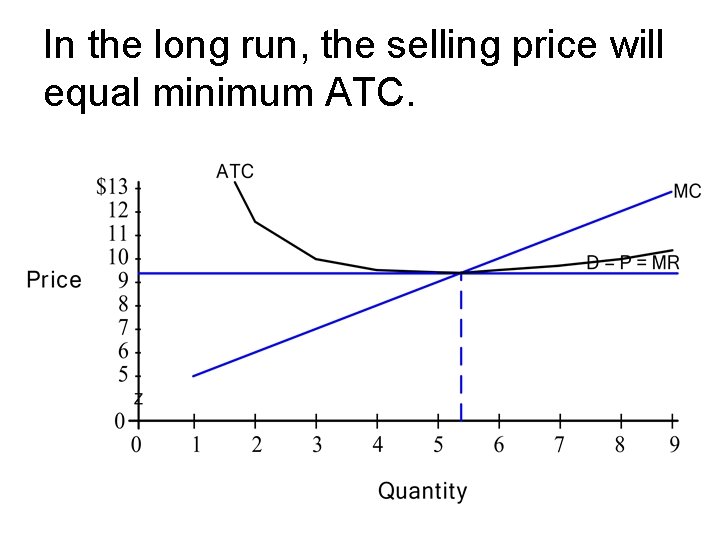
Perfect Competition in the Long Run • In the long run, economic profits (or losses) are eliminated by firms entering (or exiting) the industry. • The price will be equal to minimum ATC and the firms will be earning zero economic profit.
Economic Efficiency Rule • Economic efficiency rule – produce the quantity of output where marginal social benefit (MSB) equals marginal social cost (MSC). • Assuming no externalities, MSB is measured by market price, and MSC is measured by marginal cost.
Perfect Competition is Efficient • Perfect competition is the ideal (most efficient) market structure. • Perfect competition results in the quantity of output where price equals marginal cost and thus (assuming no externalities) where marginal social benefit equals marginal social cost.
Perfect Competition’s Happy Coincidence • A perfect competitor will maximize profits by producing the quantity of output where MR = MC. • By a happy coincidence, the profitmaximizing quantity of output is also the economically efficient quantity of output.
Perfect Competition and Individual Freedom • In a perfectly competitive market, production and distribution decisions can be made by individuals, not by central authority. • Perfect competition contributes to individual freedom.
If the selling price is above ATC, economic profit is earned.
If the selling price is below ATC, economic loss is incurred.
In the long run, the selling price will equal minimum ATC.