
MARKET IMBA Managerial Economics Jack Wu PERFECT COMPETITION
MARKET IMBA Managerial Economics Jack Wu
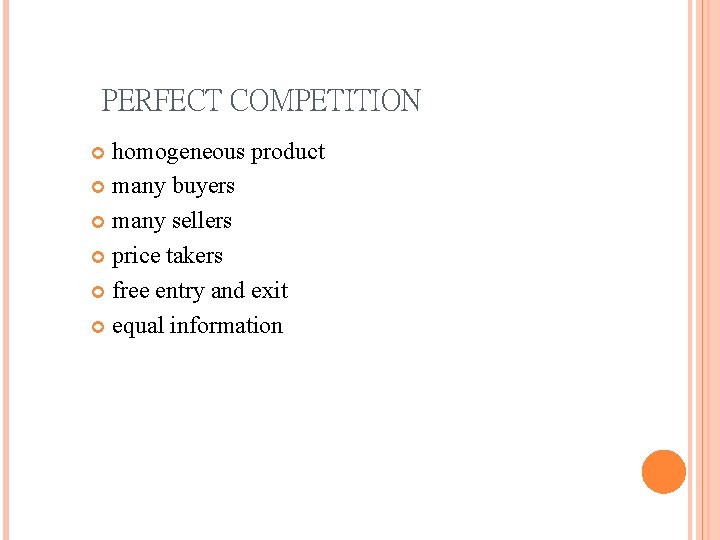
PERFECT COMPETITION homogeneous product many buyers many sellers price takers free entry and exit equal information
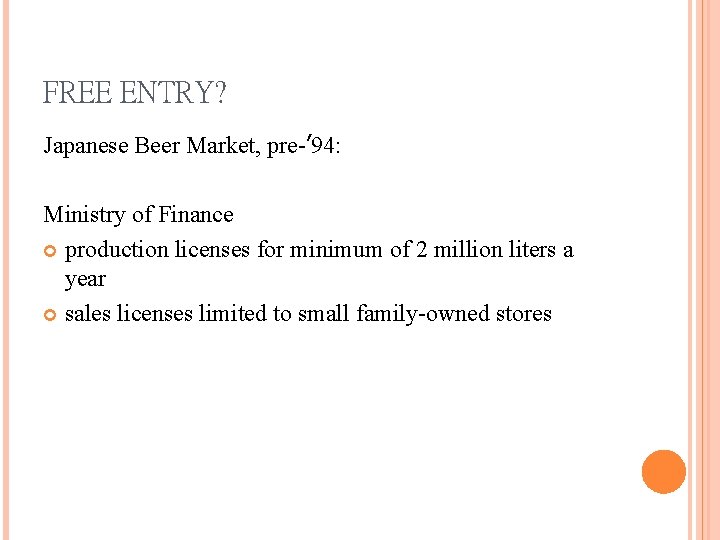
FREE ENTRY? Japanese Beer Market, pre-’ 94: Ministry of Finance production licenses for minimum of 2 million liters a year sales licenses limited to small family-owned stores
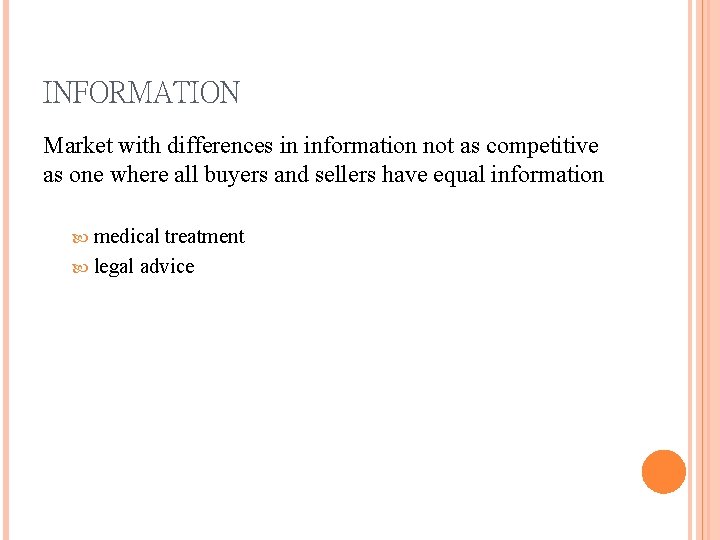
INFORMATION Market with differences in information not as competitive as one where all buyers and sellers have equal information medical treatment legal advice
MARKET EQUILIBRIUM, I Price at which quantity demanded equals quantity supplied when market out of equilibrium, market forces push price towards equilibrium
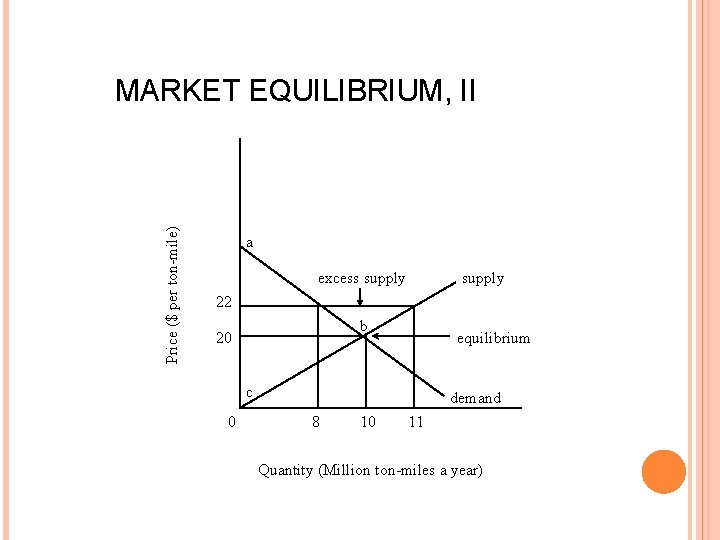
Price ($ per ton-mile) MARKET EQUILIBRIUM, II a excess supply 22 b 20 equilibrium c 0 demand 8 10 11 Quantity (Million ton-miles a year)
MARKET EQUILIBRIUM, III excess supply = excess of quantity supplied over quantity demanded triggers price decrease excess demand = excess of qty demanded over qty supplied triggers price increase
SUPPLY SHIFT, I supply shifts down (right) -> lower price, larger quantity supply shifts up (left) -> higher price, smaller quantity final equilibrium depends on elasticities of demand supply
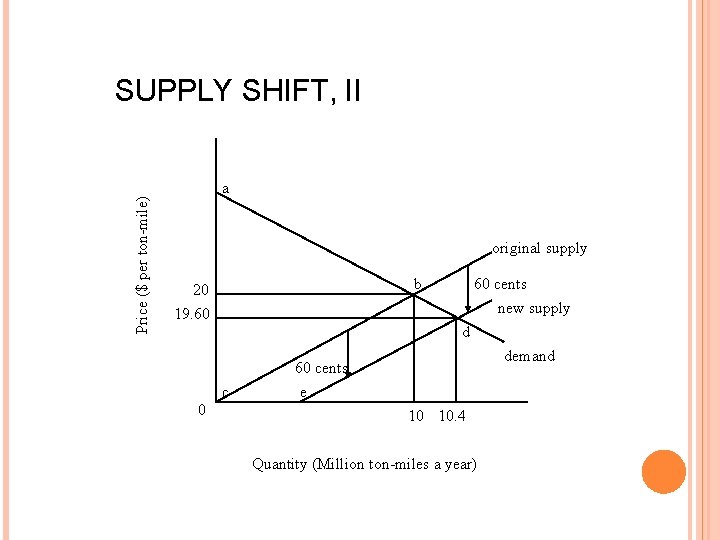
Price ($ per ton-mile) SUPPLY SHIFT, II a original supply b 20 19. 60 60 cents new supply d c 0 demand 60 cents e 10 10. 4 Quantity (Million ton-miles a year)
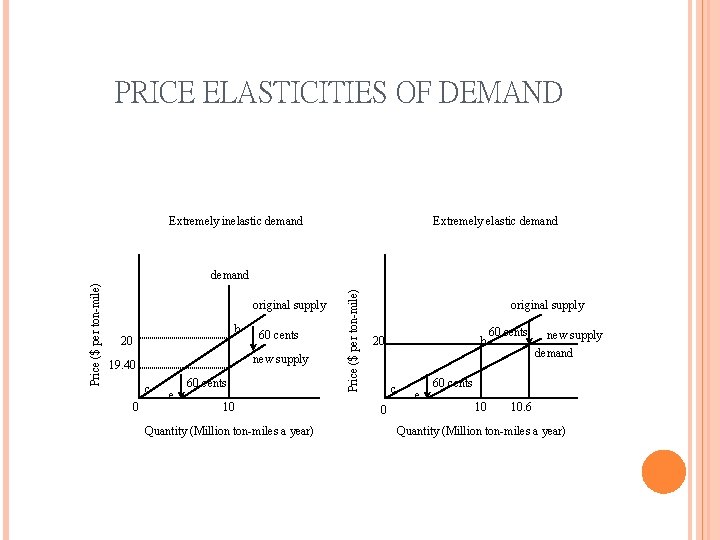
PRICE ELASTICITIES OF DEMAND Extremely inelastic demand Extremely elastic demand original supply b 20 new supply 19. 40 c 0 60 cents e 60 cents 10 Quantity (Million ton-miles a year) Price ($ per ton-mile) demand original supply 20 b c 0 e 60 cents new supply demand 60 cents 10 10. 6 Quantity (Million ton-miles a year)
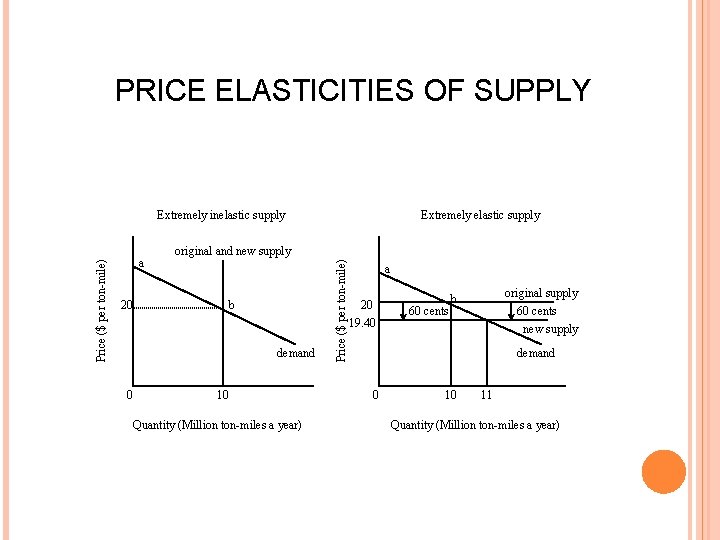
PRICE ELASTICITIES OF SUPPLY a original and new supply 20 b demand 0 Extremely elastic supply 10 Quantity (Million ton-miles a year) Price ($ per ton-mile) Extremely inelastic supply a 20 19. 40 60 cents original supply 60 cents new supply b demand 0 10 11 Quantity (Million ton-miles a year)
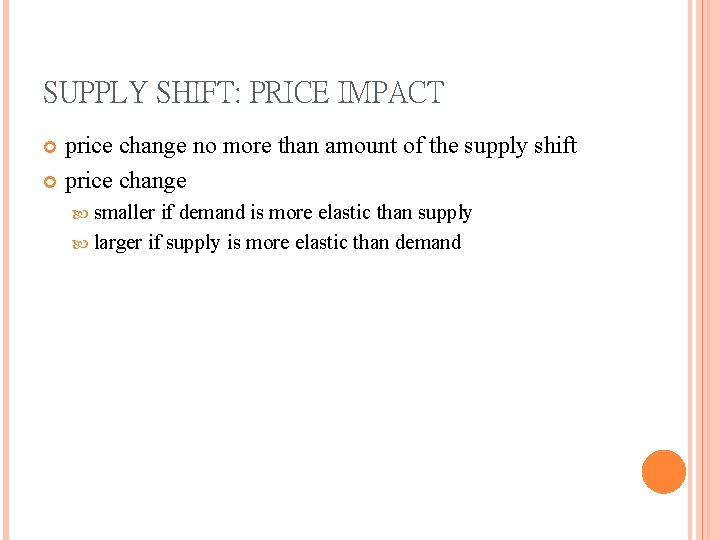
SUPPLY SHIFT: PRICE IMPACT price change no more than amount of the supply shift price change smaller if demand is more elastic than supply larger if supply is more elastic than demand
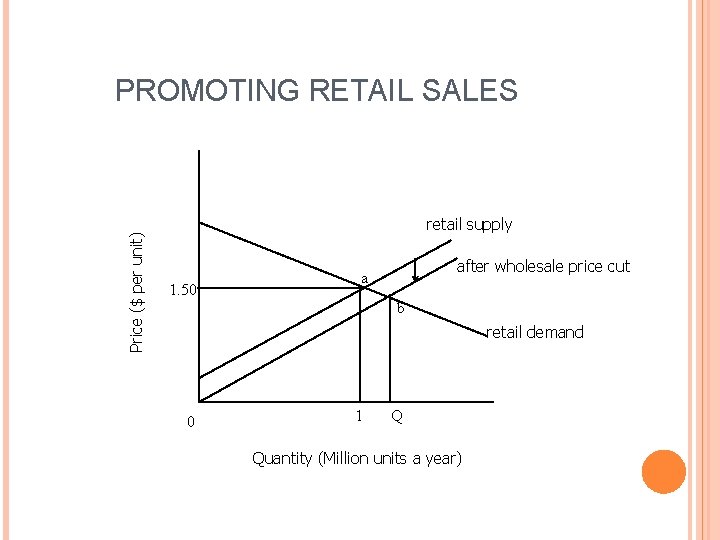
Price ($ per unit) PROMOTING RETAIL SALES retail supply 1. 50 after wholesale price cut a b retail demand 0 1 Q Quantity (Million units a year)
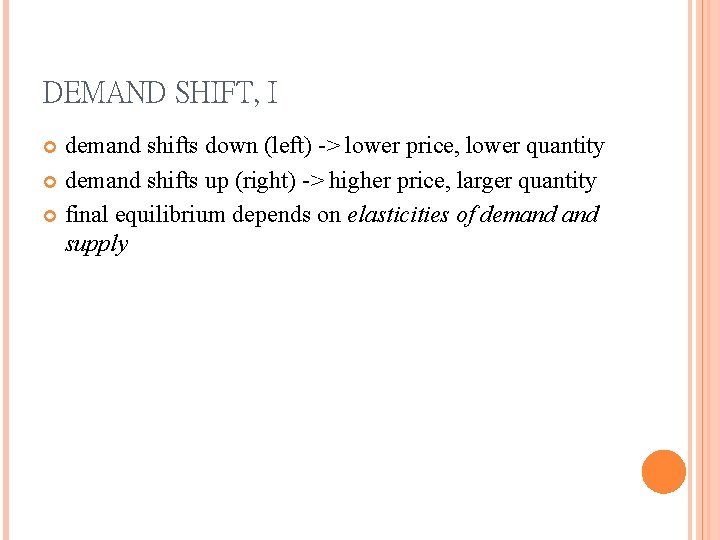
DEMAND SHIFT, I demand shifts down (left) -> lower price, lower quantity demand shifts up (right) -> higher price, larger quantity final equilibrium depends on elasticities of demand supply
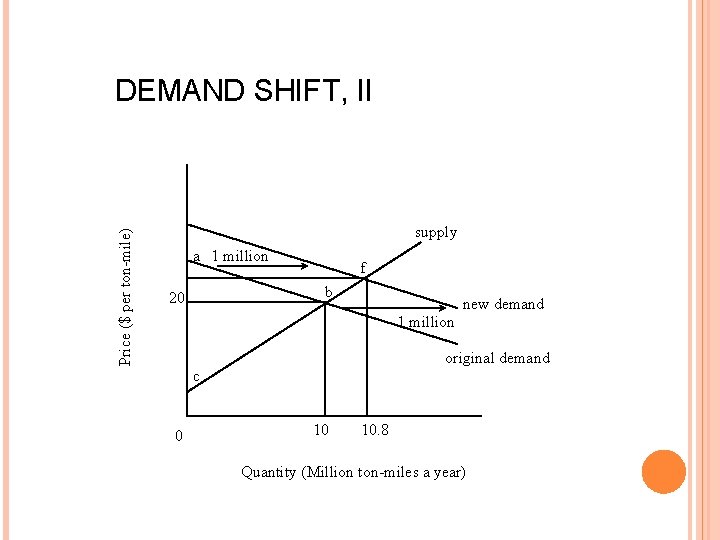
Price ($ per ton-mile) DEMAND SHIFT, II supply a 1 million f b 20 new demand 1 million original demand c 0 10 10. 8 Quantity (Million ton-miles a year)
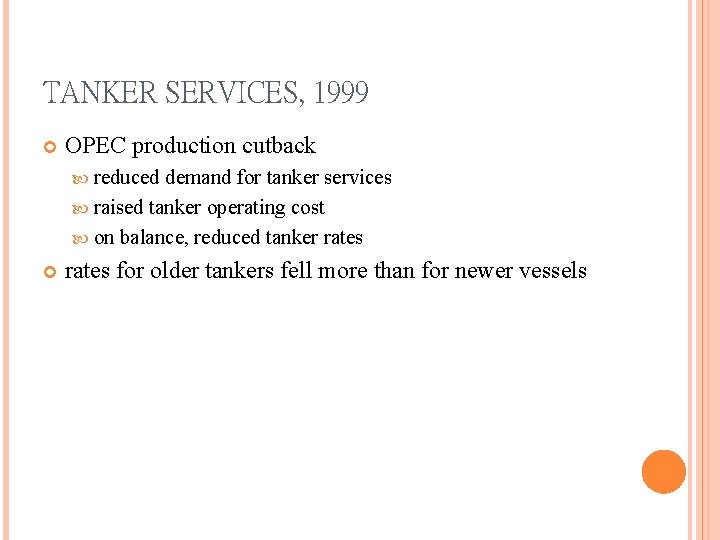
TANKER SERVICES, 1999 OPEC production cutback reduced demand for tanker services raised tanker operating cost on balance, reduced tanker rates for older tankers fell more than for newer vessels
VALENTINE’S DAY Nearing Valentine’s Day, price of roses always rises much more than the price of greeting cards. Why?
CALCULATING EQUILIBRIUM, I How would 3% increase in income affect price and sales of gasoline? demand price elasticity -. 23 income elasticity 0. 39 supply price elasticity 0. 62
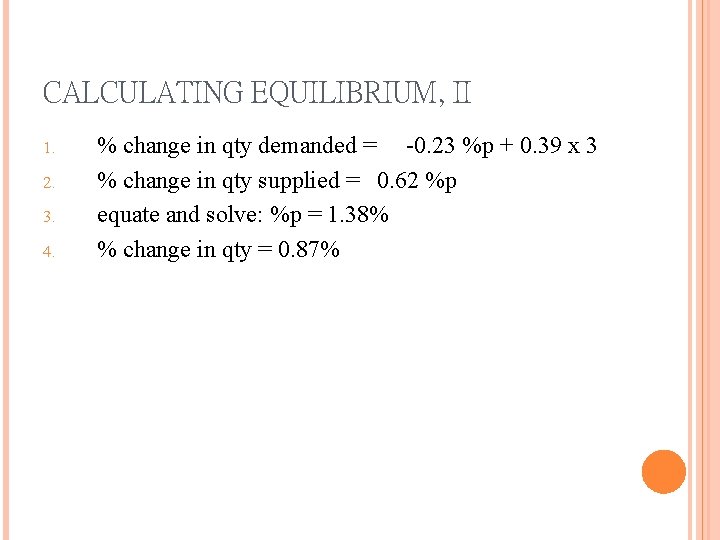
CALCULATING EQUILIBRIUM, II 1. 2. 3. 4. % change in qty demanded = -0. 23 %p + 0. 39 x 3 % change in qty supplied = 0. 62 %p equate and solve: %p = 1. 38% % change in qty = 0. 87%
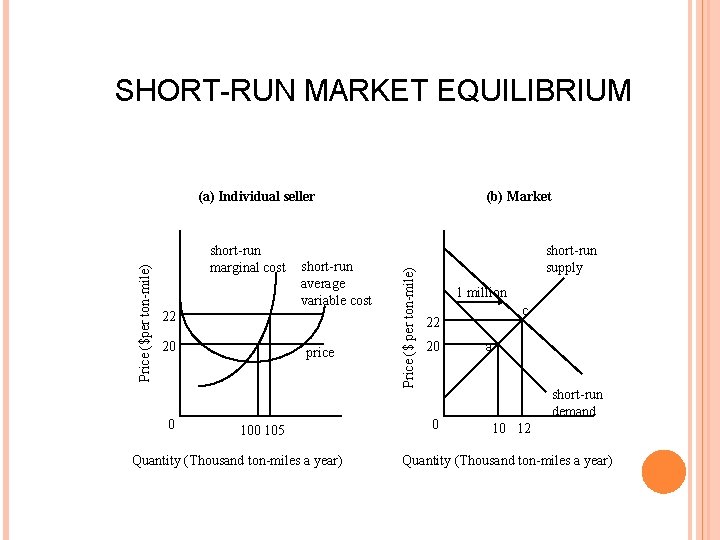
SHORT-RUN MARKET EQUILIBRIUM short-run marginal cost short-run average variable cost 22 20 0 price 100 105 Quantity (Thousand ton-miles a year) (b) Market Price ($ per ton-mile) Price ($per ton-mile) (a) Individual seller short-run supply 1 million c 22 20 0 a short-run demand 10 12 Quantity (Thousand ton-miles a year)
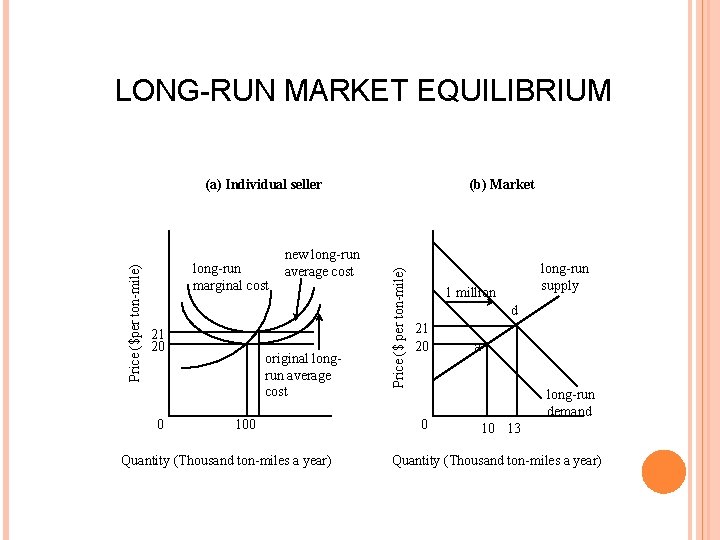
LONG-RUN MARKET EQUILIBRIUM long-run marginal cost 21 20 0 new long-run average cost original longrun average cost 100 Quantity (Thousand ton-miles a year) (b) Market Price ($ per ton-mile) Price ($per ton-mile) (a) Individual seller long-run supply 1 million d 21 20 0 a long-run demand 10 13 Quantity (Thousand ton-miles a year)
SHORT/LONG-RUN IMPACT If demand/supply shifts, market price is more volatile in the short run than long run greater change in market quantity over the long run than short run
PRICING AND FREIGHT COST, I cost and freight ex-works pricing How sales? does pricing policy affect
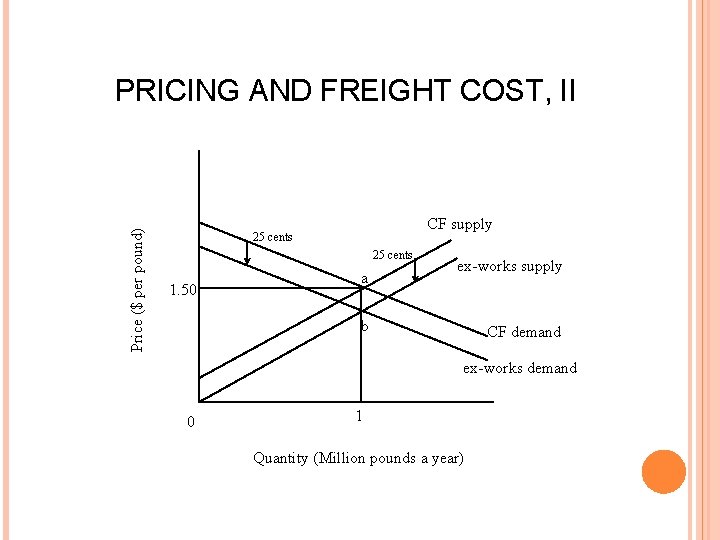
Price ($ per pound) PRICING AND FREIGHT COST, II CF supply 25 cents 1. 50 a ex-works supply b CF demand ex-works demand 0 1 Quantity (Million pounds a year)
RETAILING: WHY COUPONS? alternative -- cutting wholesale prices “With coupons, prevent retailers from getting part of price cut. ”
DISCUSSION QUESTION 1 Manufacturers of paper products are major buyers of waste paper. They use a combination of wood pulp and waste paper to produce paper products. The supply of waste paper comes from households and businesses. An issue in environmental policy is the effectiveness of price incentives in encouraging recycling of waste paper. The price elasticity of the demand for waste paper has been estimated to be -0. 07, while the price elasticity of the supply has been estimated to be 0.
DISCUSSION QUESTION 1: CONTINUED Consider a government policy that reduces the price of wastepaper to manufacturers by 5%. How would this affect the quantity demanded? Consider a government policy that increases the price of wastepaper to sellers by 5%. How would this affect the quantity supplied? Are price incentives an effective way of increasing the recycling of wastepaper?
DISCUSSION QUESTION 2 Industry researchers R. S. Platou predicted that, between 2003 and 2004, oil prices would fall by 5%, production of oil by OPEC and the former Soviet Union would increase, and deliveries of new tankers would exceed scrappage of older vessels.
DISCUSSION QUESTION 2: CONTINUED (a)Uisng suitable diagrams, explain how each of the following would affect the market for tanker services: (i) fall in oil prices; (ii) increase in production by OPEC and the former Soviet Union; (iii) new tanker deliveries; and (iv) scrappage of older vessels. (b)Suppose that the net effect is to increase tanker rates. Illustrate the net effect on a single diagram. Explain the impact on the quantity of tanker services used.
- Slides: 29