
Market History and Forecast for Downtown Chicago 1920s

- Slides: 13
Market History and Forecast for Downtown Chicago
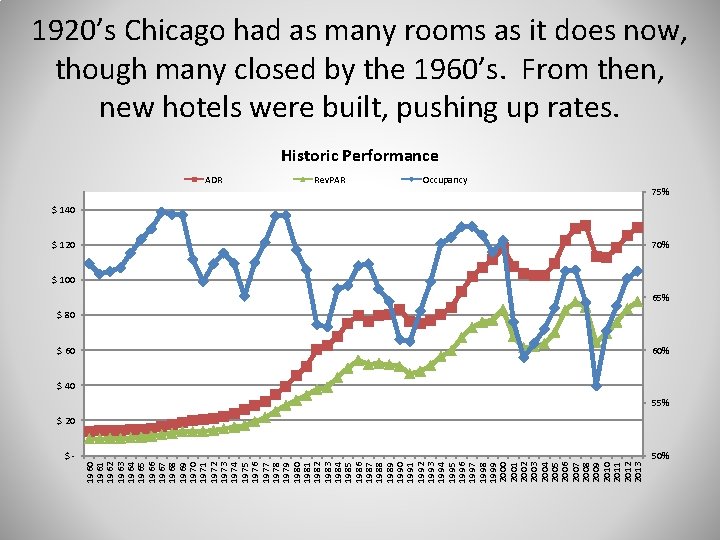
1920’s Chicago had as many rooms as it does now, though many closed by the 1960’s. From then, new hotels were built, pushing up rates. Historic Performance ADR Rev. PAR Occupancy 75% $ 140 $ 120 70% $ 100 65% $ 80 $ 60 60% $ 40 55% $ 20 50% 1960 1961 1962 1963 1964 1965 1966 1967 1968 1969 1970 1971 1972 1973 1974 1975 1976 1977 1978 1979 1980 1981 1982 1983 1984 1985 1986 1987 1988 1989 1990 1991 1992 1993 1994 1995 1996 1997 1998 1999 2000 2001 2002 2003 2004 2005 2006 2007 2008 2009 2010 2011 2012 2013 $-
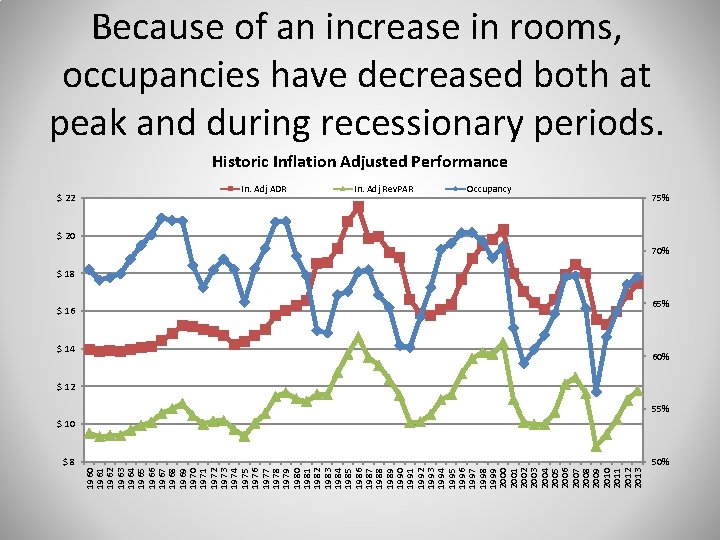
Because of an increase in rooms, occupancies have decreased both at peak and during recessionary periods. Historic Inflation Adjusted Performance $ 22 In. Adj ADR In. Adj Rev. PAR Occupancy 75% $ 20 70% $ 18 65% $ 16 $ 14 60% $ 12 55% $ 10 50% 1960 1961 1962 1963 1964 1965 1966 1967 1968 1969 1970 1971 1972 1973 1974 1975 1976 1977 1978 1979 1980 1981 1982 1983 1984 1985 1986 1987 1988 1989 1990 1991 1992 1993 1994 1995 1996 1997 1998 1999 2000 2001 2002 2003 2004 2005 2006 2007 2008 2009 2010 2011 2012 2013 $8
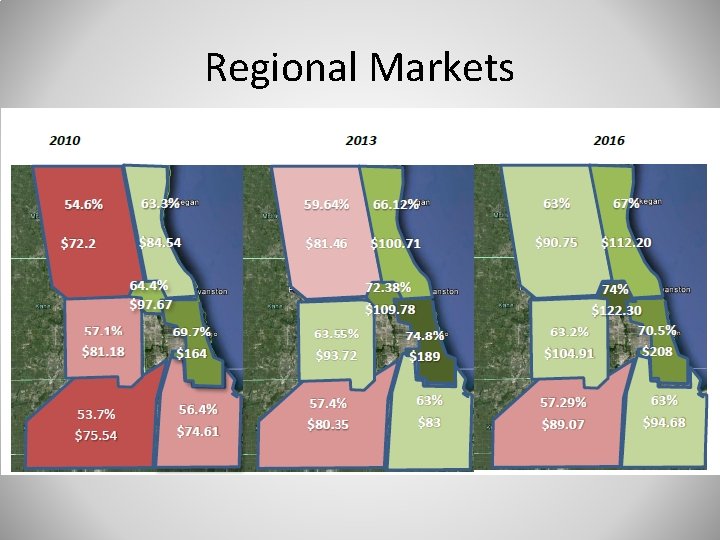
What’s Changed? • Chicago itself is doing as well as it ever has in occupancy. Rate is getting better. • The Metropolitan area is huge. • There are over 109, 000 rooms in the metro area. Chicago CBD has 39, 000. • Historically, Chicago sent over 500, 000 rooms into the suburbs per year, or around 120 days. • Now it’s less than 100, 000, or 10 -20 days.
Changes in the Traveler • People now stay where they want to. – Corporations are more flexible – There are way more rooms to choose from – The consumer is more informed • Thanks primarily to the internet • There are more travelers – Convention has stayed the same, but they’re a smaller percent (used to be 60%, now 45%). People don’t always stay in the HQ hotel anymore. – Leisure is a larger percentage (used to be 10% or less, now it’s 15% and growing)
Regional Markets
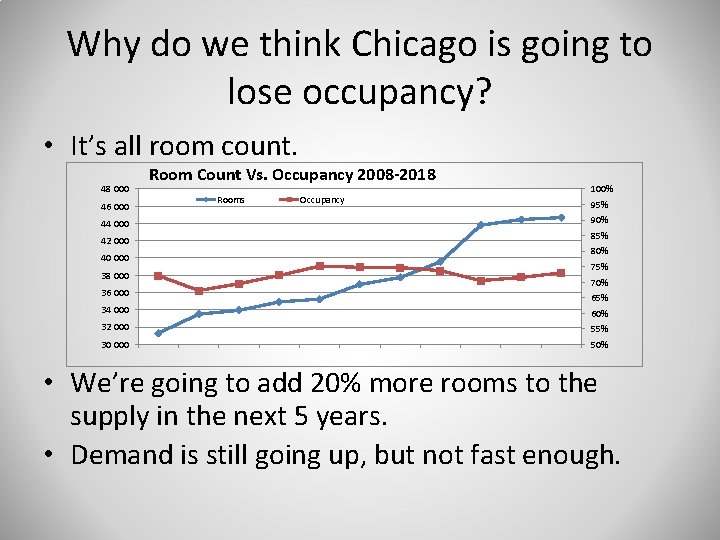
Why do we think Chicago is going to lose occupancy? • It’s all room count. 48 000 46 000 44 000 42 000 40 000 38 000 36 000 34 000 Room Count Vs. Occupancy 2008 -2018 Rooms Occupancy 100% 95% 90% 85% 80% 75% 70% 65% 60% 32 000 55% 30 000 50% • We’re going to add 20% more rooms to the supply in the next 5 years. • Demand is still going up, but not fast enough.
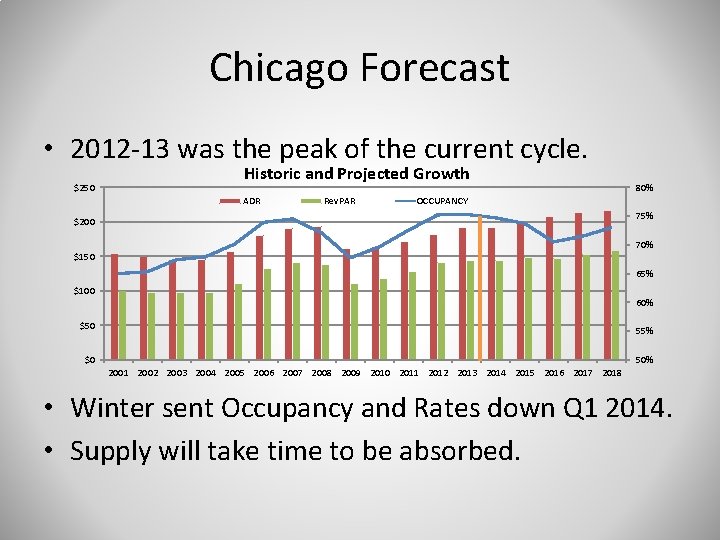
Chicago Forecast • 2012 -13 was the peak of the current cycle. $250 Historic and Projected Growth ADR Rev. PAR 80% OCCUPANCY 75% $200 70% $150 65% $100 60% $50 55% $0 50% 2001 2002 2003 2004 2005 2006 2007 2008 2009 2010 2011 2012 2013 2014 2015 2016 2017 2018 • Winter sent Occupancy and Rates down Q 1 2014. • Supply will take time to be absorbed.
Weekly data • Tuesday is the highest rate day, Saturday is the highest occupancy day. – Tuesday is usually corporate and group, at full rack and is less price conscious. – Weekends are usually packaged rates and discounts. – This change happened about 5 years ago during the recession.
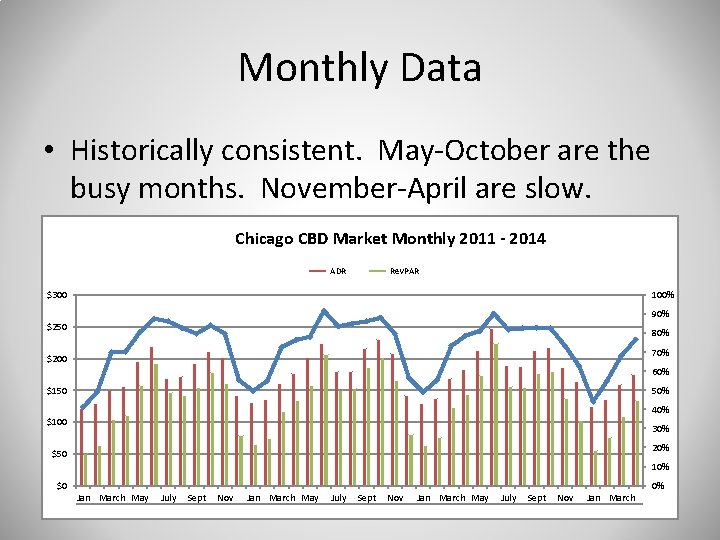
Monthly Data • Historically consistent. May-October are the busy months. November-April are slow. Chicago CBD Market Monthly 2011 - 2014 ADR Rev. PAR $300 100% 90% $250 80% 70% $200 60% $150 50% 40% $100 30% 20% $50 10% $0 0% Jan March May July Sept Nov Jan March
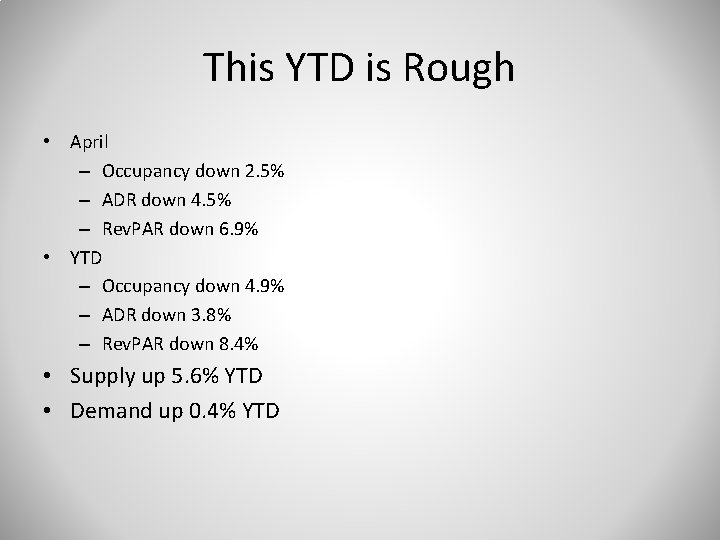
This YTD is Rough • April – Occupancy down 2. 5% – ADR down 4. 5% – Rev. PAR down 6. 9% • YTD – Occupancy down 4. 9% – ADR down 3. 8% – Rev. PAR down 8. 4% • Supply up 5. 6% YTD • Demand up 0. 4% YTD
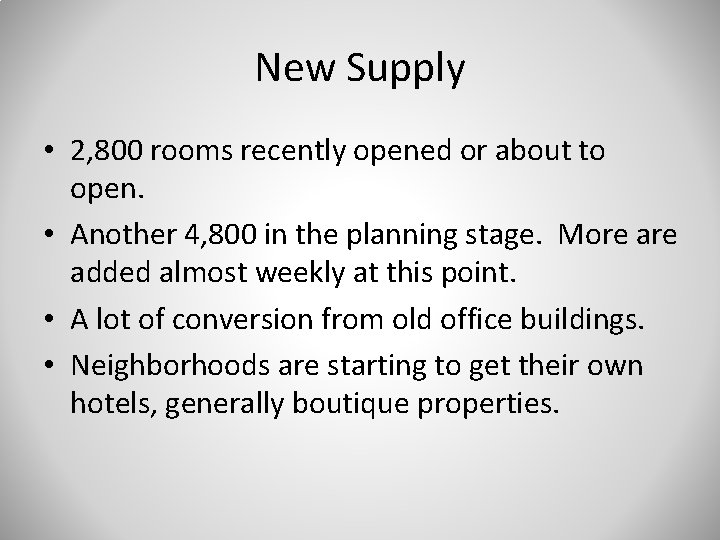
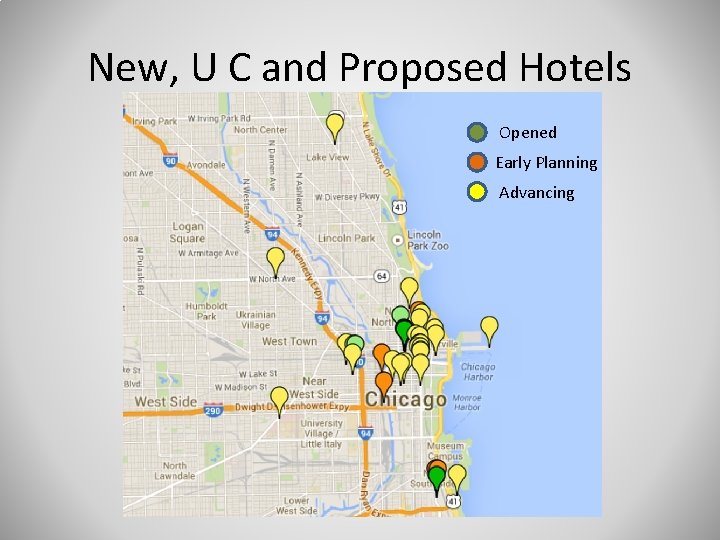
New Supply • 2, 800 rooms recently opened or about to open. • Another 4, 800 in the planning stage. More added almost weekly at this point. • A lot of conversion from old office buildings. • Neighborhoods are starting to get their own hotels, generally boutique properties.
New, U C and Proposed Hotels Opened Early Planning Advancing