
Market Failure Imperfect competition n Restrict output in
- Slides: 34
Market Failure
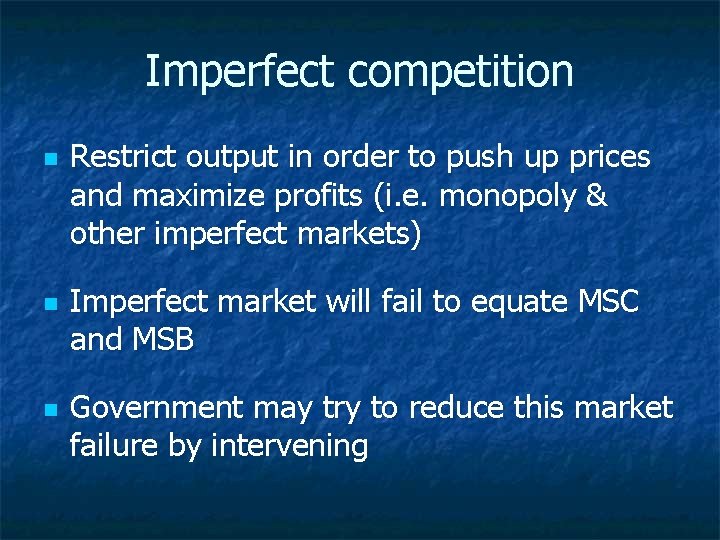
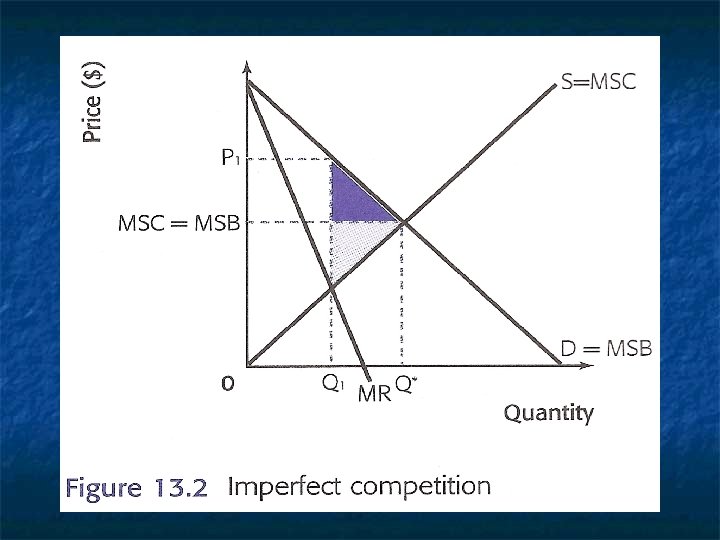
Imperfect competition n Restrict output in order to push up prices and maximize profits (i. e. monopoly & other imperfect markets) Imperfect market will fail to equate MSC and MSB Government may try to reduce this market failure by intervening
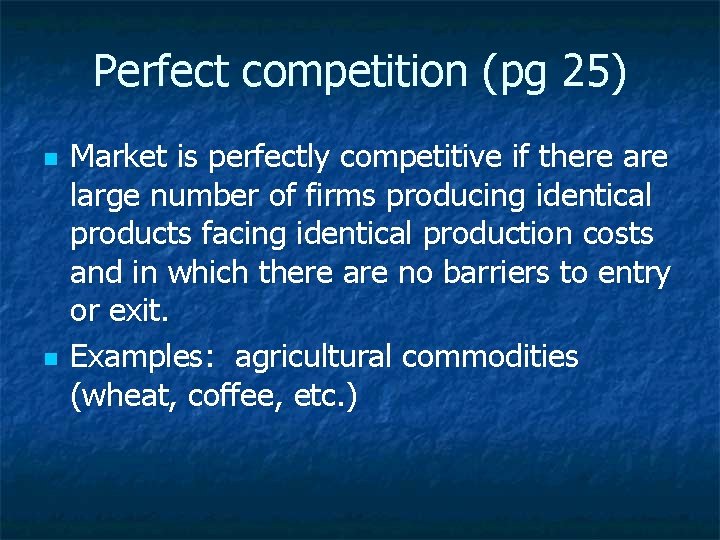
Perfect competition (pg 25) n n Market is perfectly competitive if there are large number of firms producing identical products facing identical production costs and in which there are no barriers to entry or exit. Examples: agricultural commodities (wheat, coffee, etc. )
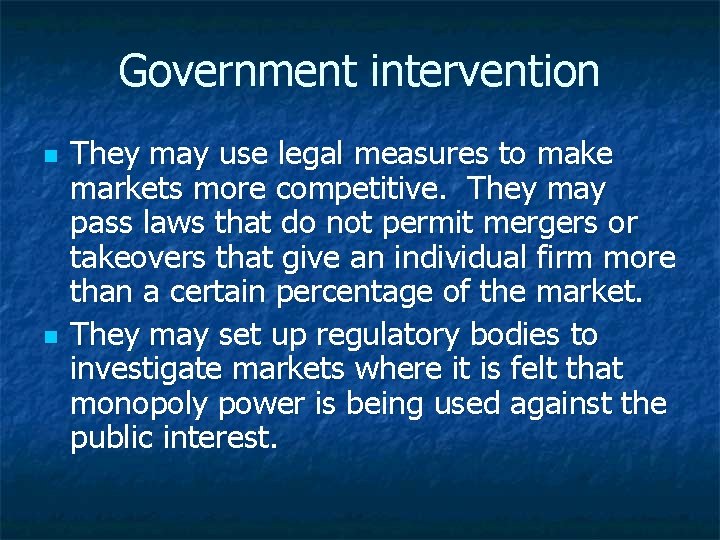
Government intervention n n They may use legal measures to make markets more competitive. They may pass laws that do not permit mergers or takeovers that give an individual firm more than a certain percentage of the market. They may set up regulatory bodies to investigate markets where it is felt that monopoly power is being used against the public interest.
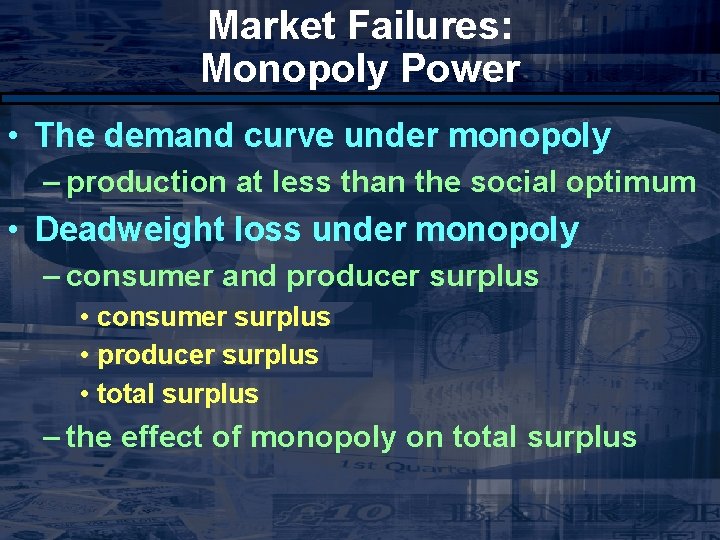
Market Failures: Monopoly Power • The demand curve under monopoly – production at less than the social optimum
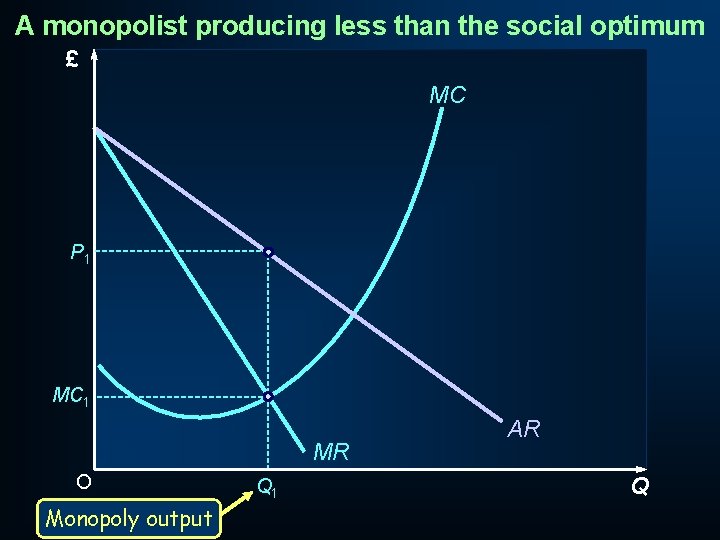
A monopolist producing less than the social optimum £ MC P 1 MC 1 MR O Monopoly output Q 1 AR Q
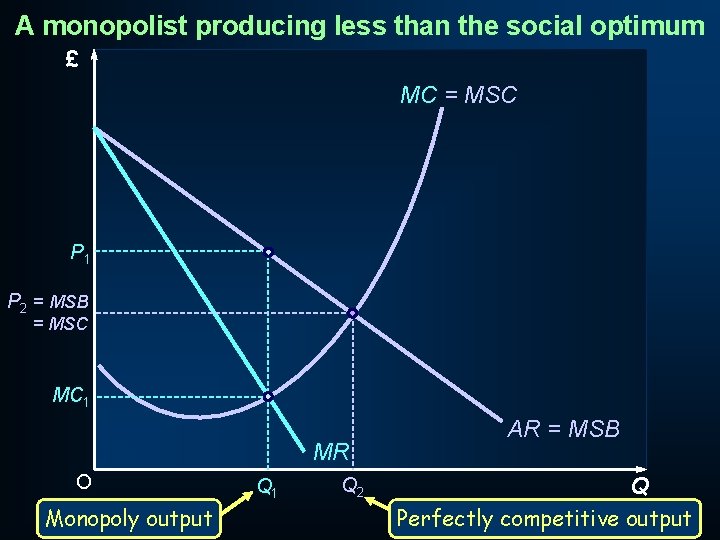
A monopolist producing less than the social optimum £ MC = MSC P 1 P 2 = MSB = MSC MC 1 MR O Monopoly output Q 1 Q 2 AR = MSB Q Perfectly competitive output
Market Failures: Monopoly Power • The demand curve under monopoly – production at less than the social optimum • Deadweight loss under monopoly – consumer and producer surplus • consumer surplus
Market Failures: Monopoly Power • The demand curve under monopoly – production at less than the social optimum • Deadweight loss under monopoly – consumer and producer surplus • consumer surplus • producer surplus
Market Failures: Monopoly Power • The demand curve under monopoly – production at less than the social optimum • Deadweight loss under monopoly – consumer and producer surplus • consumer surplus • producer surplus • total surplus
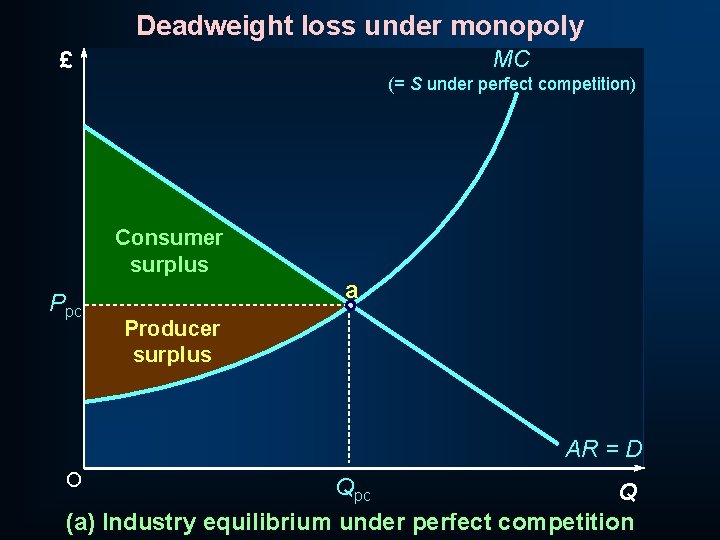
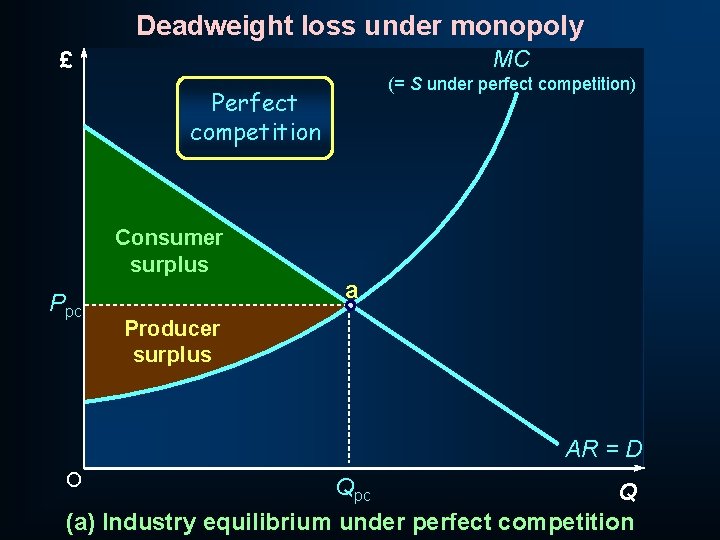
Deadweight loss under monopoly MC £ (= S under perfect competition) Consumer surplus Ppc a Producer surplus AR = D O Qpc Q (a) Industry equilibrium under perfect competition
Market Failures: Monopoly Power • The demand curve under monopoly – production at less than the social optimum • Deadweight loss under monopoly – consumer and producer surplus • consumer surplus • producer surplus • total surplus – the effect of monopoly on total surplus
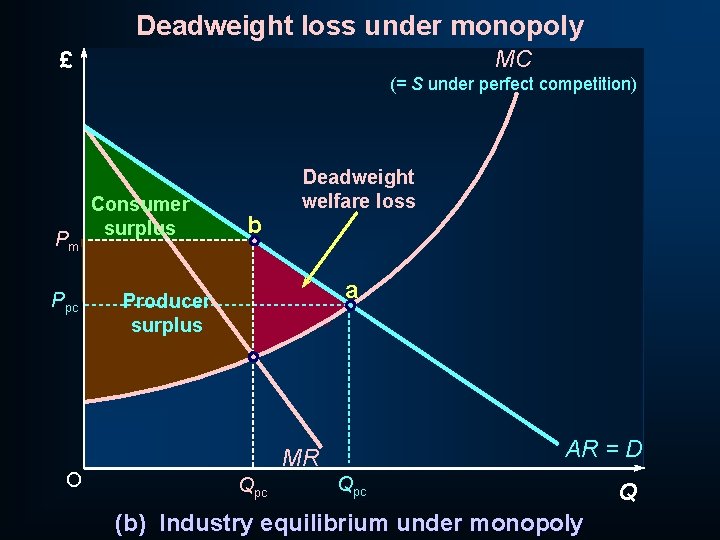
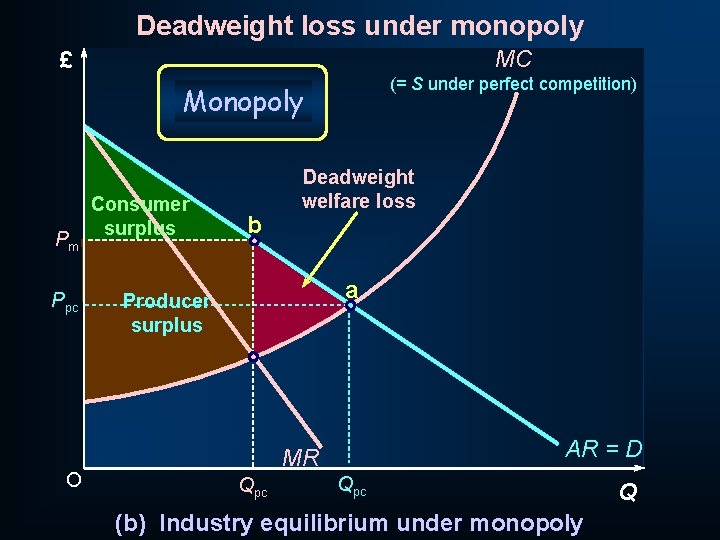
Deadweight loss under monopoly MC £ (= S under perfect competition) Pm Ppc O Consumer surplus b Deadweight welfare loss a Producer surplus AR = D MR Qpc (b) Industry equilibrium under monopoly Q
Deadweight loss under monopoly MC £ (= S under perfect competition) Perfect competition Consumer surplus Ppc a Producer surplus AR = D O Qpc Q (a) Industry equilibrium under perfect competition
Deadweight loss under monopoly MC £ (= S under perfect competition) Monopoly Pm Ppc O Consumer surplus b Deadweight welfare loss a Producer surplus AR = D MR Qpc (b) Industry equilibrium under monopoly Q
Market Failures: Monopoly Power • The demand curve under monopoly – production at less than the social optimum • Deadweight loss under monopoly – consumer and producer surplus • consumer surplus • producer surplus • total surplus – the effect of monopoly on total surplus • Other problems with monopoly • Possible advantages from monopoly
Market Failures: Monopoly Power • The demand curve under monopoly – production at less than the social optimum • Deadweight loss under monopoly – consumer and producer surplus • consumer surplus • producer surplus • total surplus – the effect of monopoly on total surplus • Other problems with monopoly • Possible advantages from monopoly
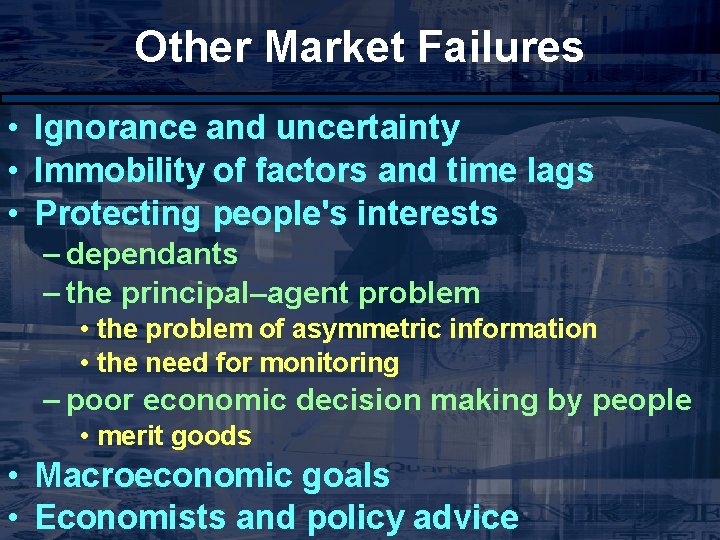
Other Market Failures • Ignorance and uncertainty • Immobility of factors and time lags • Protecting people's interests – dependants – the principal–agent problem • the problem of asymmetric information • the need for monitoring – poor economic decision making by people • merit goods • Macroeconomic goals • Economists and policy advice
Government Intervention: Taxes and Subsidies • The use of taxes and subsidies to correct externalities – the optimum size of a tax
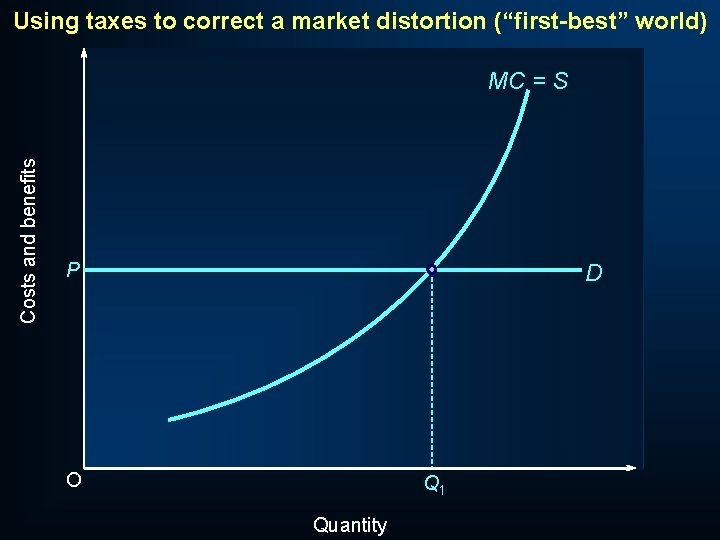
Using taxes to correct a market distortion (“first-best” world) Costs and benefits MC = S P D O Q 1 Quantity
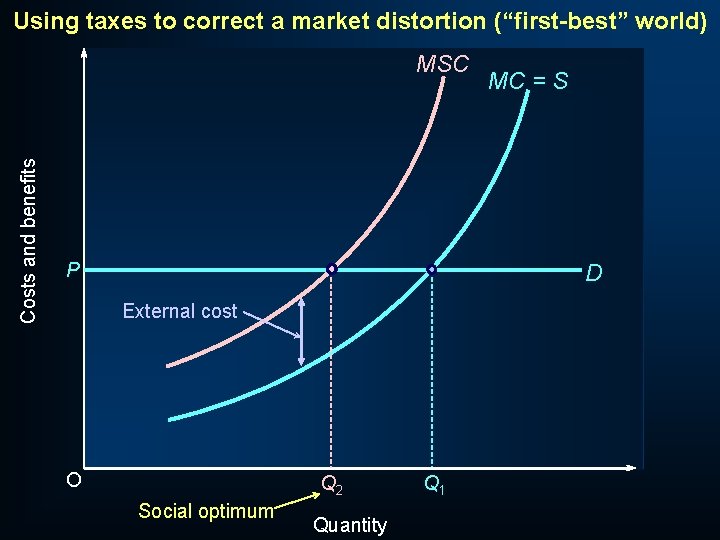
Using taxes to correct a market distortion (“first-best” world) Costs and benefits MSC P MC = S D External cost O Q 2 Social optimum Quantity Q 1
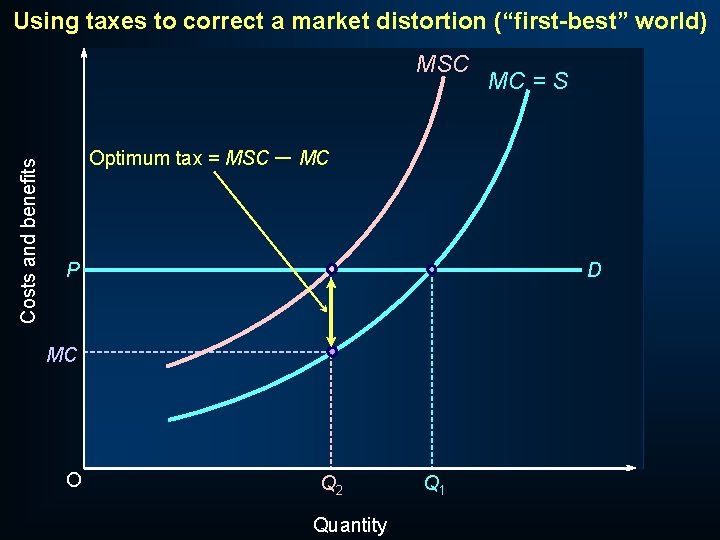
Using taxes to correct a market distortion (“first-best” world) Costs and benefits MSC MC = S Optimum tax = MSC – MC P D MC O Q 2 Quantity Q 1
Government Intervention: Taxes and Subsidies • The use of taxes and subsidies to correct externalities – the optimum size of a tax – the optimum size of a subsidy
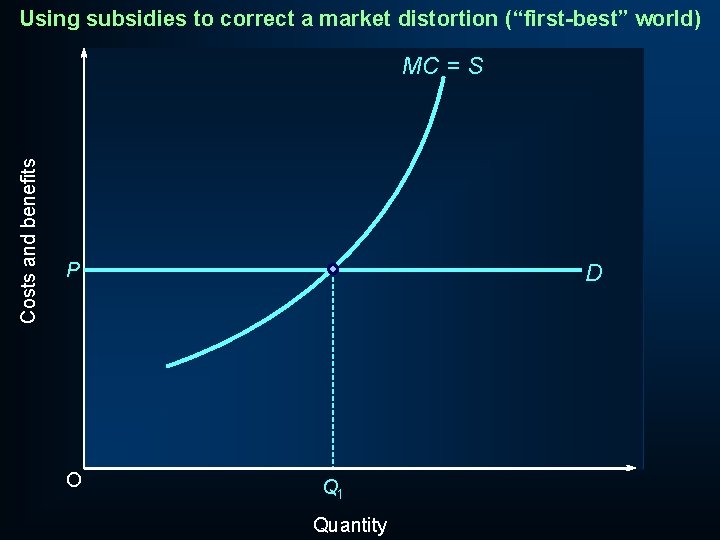
Using subsidies to correct a market distortion (“first-best” world) Costs and benefits MC = S P O D Q 1 Quantity
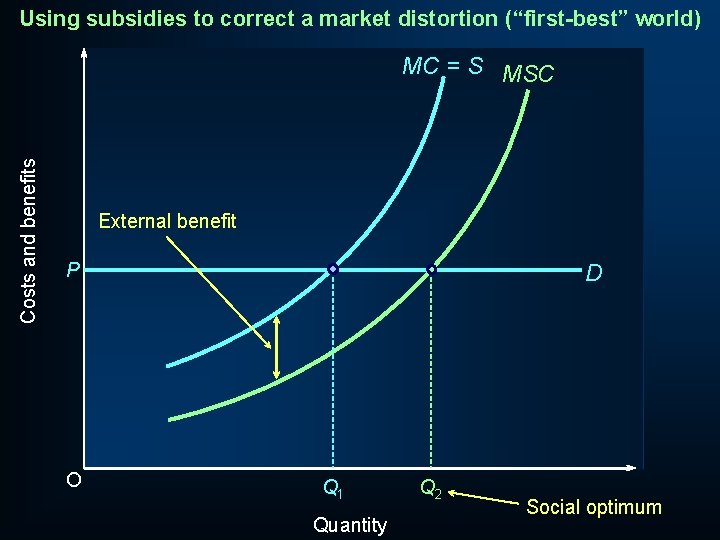
Using subsidies to correct a market distortion (“first-best” world) Costs and benefits MC = S MSC External benefit P O D Q 1 Quantity Q 2 Social optimum
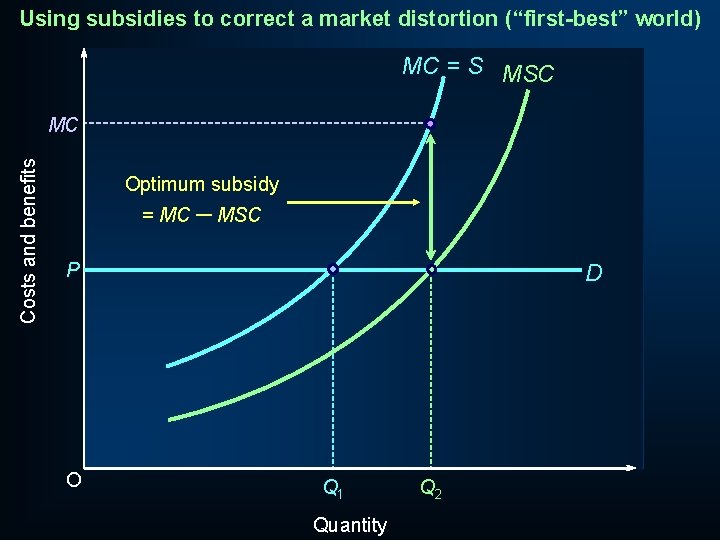
Using subsidies to correct a market distortion (“first-best” world) MC = S MSC Costs and benefits MC Optimum subsidy = MC – MSC P O D Q 1 Quantity Q 2
Government Intervention: Taxes and Subsidies • The use of taxes and subsidies to correct for monopoly – use of lump-sum taxes • Advantages of taxes and subsidies • Disadvantages of taxes and subsidies – infeasible to use different tax and subsidy rates – lack of knowledge
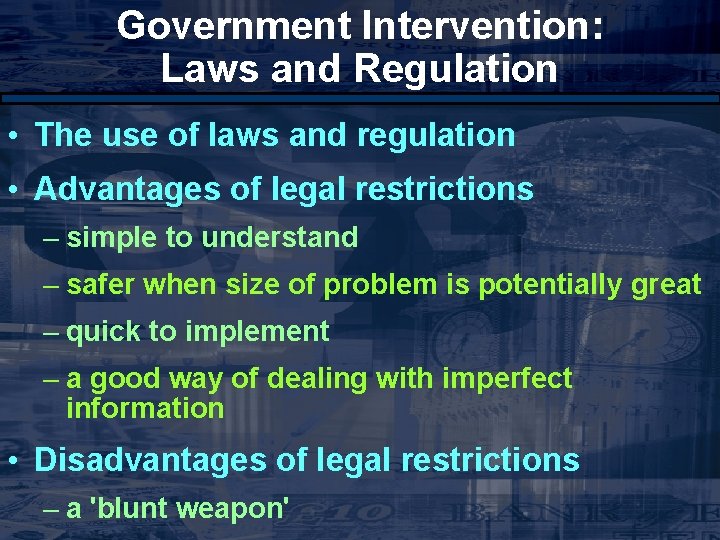
Government Intervention: Laws and Regulation • The use of laws and regulation • Advantages of legal restrictions – simple to understand – safer when size of problem is potentially great – quick to implement – a good way of dealing with imperfect information • Disadvantages of legal restrictions – a 'blunt weapon'
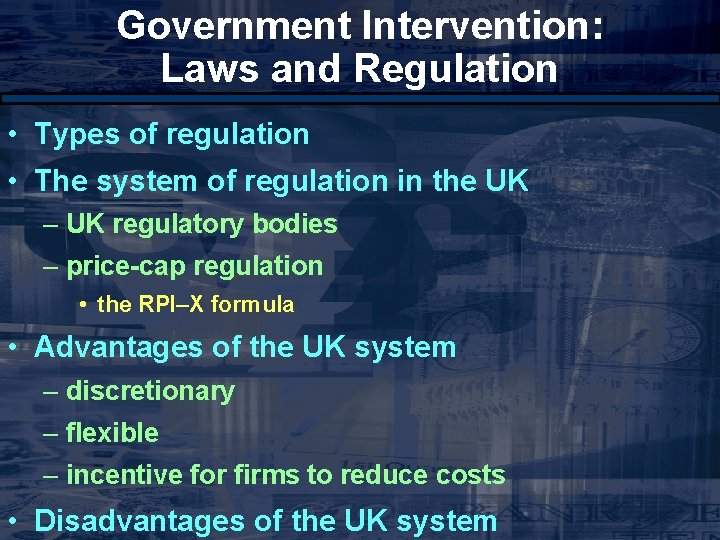
Government Intervention: Laws and Regulation • Types of regulation • The system of regulation in the UK – UK regulatory bodies – price-cap regulation • the RPI–X formula • Advantages of the UK system – discretionary – flexible – incentive for firms to reduce costs • Disadvantages of the UK system
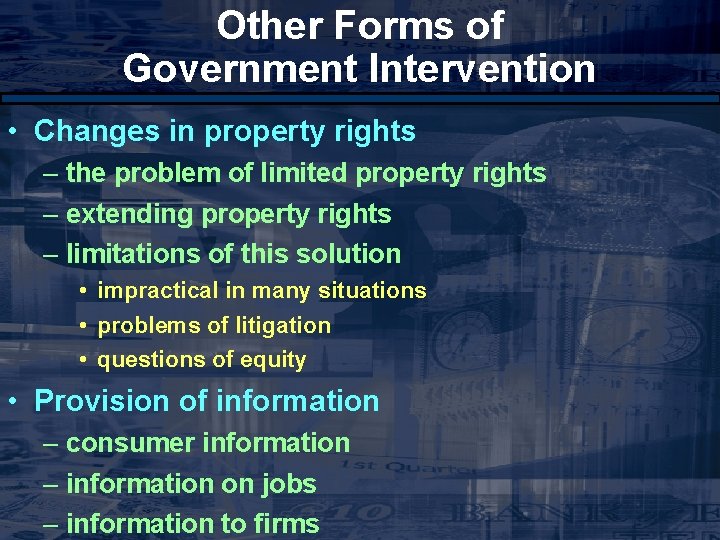
Other Forms of Government Intervention • Changes in property rights – the problem of limited property rights – extending property rights – limitations of this solution • impractical in many situations • problems of litigation • questions of equity • Provision of information – consumer information – information on jobs – information to firms
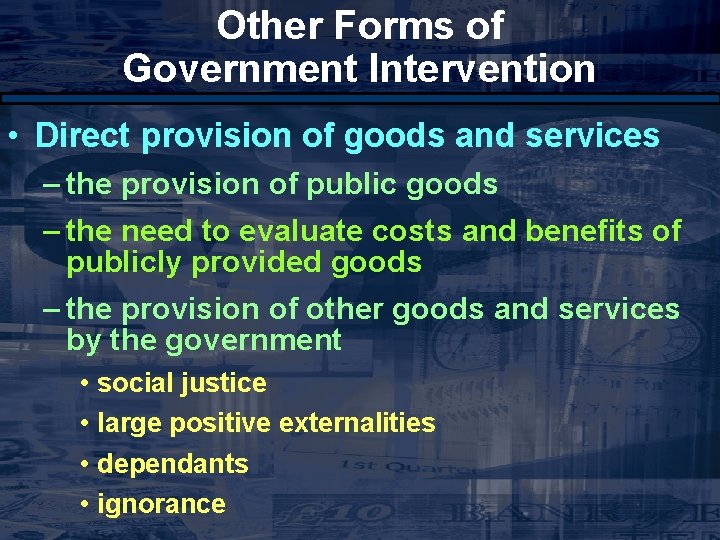
Other Forms of Government Intervention • Direct provision of goods and services – the provision of public goods – the need to evaluate costs and benefits of publicly provided goods – the provision of other goods and services by the government • • social justice large positive externalities dependants ignorance
More or Less Intervention? • Drawbacks of government intervention – shortages and surpluses – poor information – bureaucracy and inefficiency – lack of market incentives – shifts in government policy – voters' ignorance – unrepresentative government – lack of freedom for the individual
More or Less Intervention? • Advantages of the free market – automatic adjustments – dynamic advantages of capitalism – possibly high degree of competition even under monopoly/oligopoly – Judging the arguments • Should there be more or less intervention in the market? – important to consider both costs and benefits of intervention – moral issues – problem of predicting effects of intervention