
Market Clearing Price Chapter 5 Demand Supply Together
- Slides: 16
Market Clearing Price Chapter 5
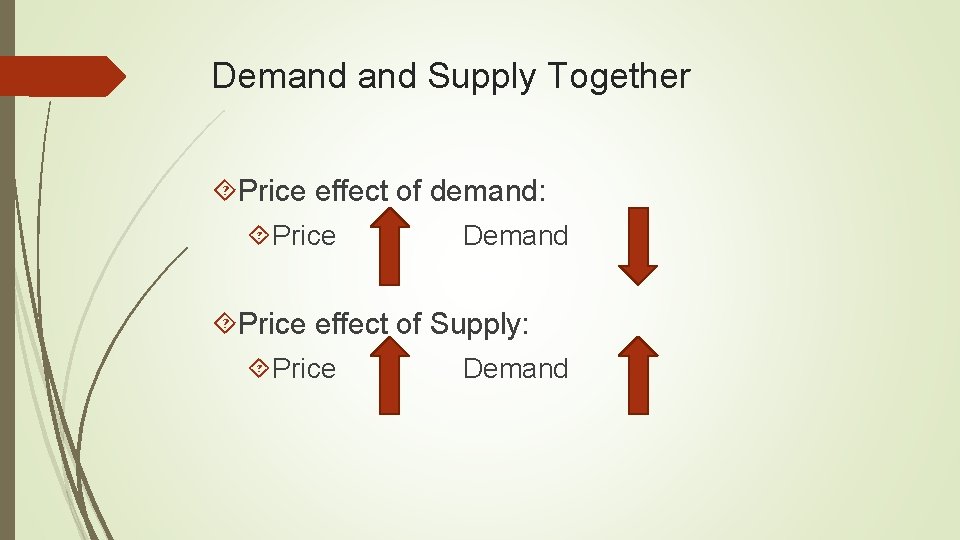
Demand Supply Together Price effect of demand: Price Demand Price effect of Supply: Price Demand
BIG PROBLEM!!!! When price is high, producers want to produce but consumers do NOT want to buy! When price is low, consumers want to buy but producers do NOT want to produce!
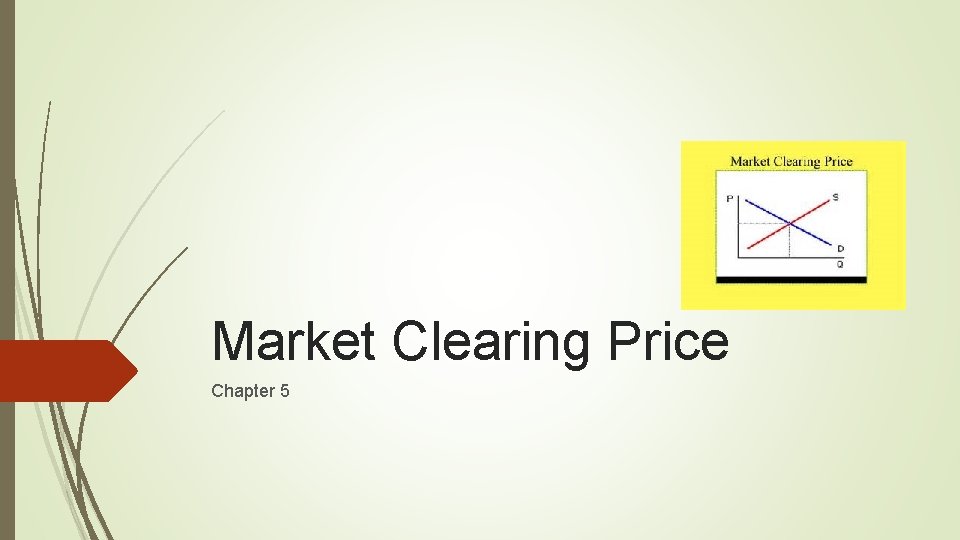
Need to find the Market Clearing Price The price at which the amount supplied is equal to the amount demanded. The only price that balances, or “clears” the market. The level of activity that allows the market to operate
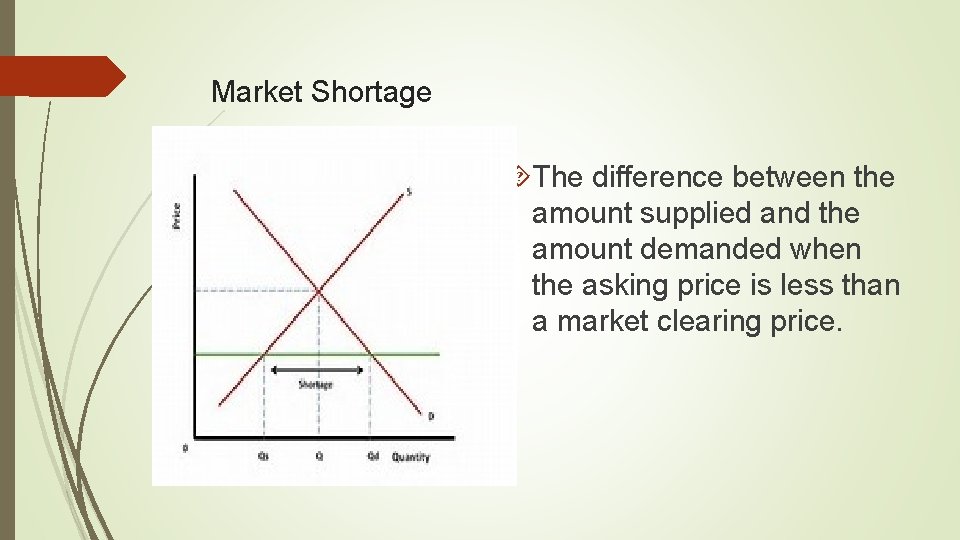
Market Shortage The difference between the amount supplied and the amount demanded when the asking price is less than a market clearing price.
Results of a shortage Consumers will compete more intensely for what’s available Pushes the price of the good higher. Amount demanded will start to fall and amount supplied will start to rise. Shortage is eliminated when the amount supplied and amount demanded are equal
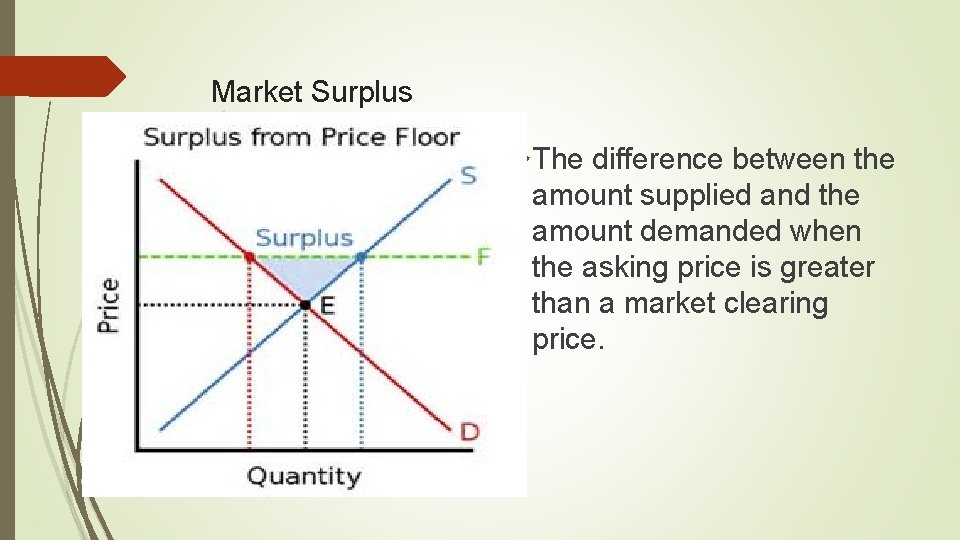
Market Surplus The difference between the amount supplied and the amount demanded when the asking price is greater than a market clearing price.
Results of a surplus Sellers compete with each other for consumers’ money. As prices start to fall, sellers will reduce the amount of a product they want to sell Buyers will want to buy more of a product
A Surplus or Something Scarce? Watch your definitions and usage of words! Surplus, economically speaking, means that consumers do not want to buy all the product that producers want to sell. Wants vs Demands are wants—backed up by the willingness and ability to purchase.
Three basic choices that must be made in any economy 1. Rationing: who gets the goods and services 2. What products to produce 3. How to produce these products
The Functions of Prices in a Market System 1. Prices send signals to buyers and sellers 2. Prices limit, or ration, the number of buyers who are willing and able to buy a product 3. Prices motivate sellers to offer more or less of a product
1. Prices send signals to buyers and sellers High prices: sellers to Go; buyers to Stop Low prices: sellers to Stop; buyers to Go Conscientious buyers and profit seeking sellers will use the prices to maximize their decisions!
2. Prices ration Rationing: distributing or allocating a product by a price system. Products are rationed to the consumers who are willing and able to “pay the price. ”
3. Prices Motivate Provide incentives! By paying $ to producers, consumers provide the necessary motivation to producers to increase production.
Change in Prices and Production Prices rise and fall over time, creating different incentives to producers This will cause us, the consumers, to see different kinds and quantities of items available.
Fortune 500 Top 10 Companies 2014 1. Walmart 2. Exxon. Mobil 3. Chevron 4. Berkshire Hathaway 5. Apple 6. Phillips 66 7. General Motors 8. Ford 9. General Electric 10. Valero Energy