
Mark Twain Bio Born in Missouri in the
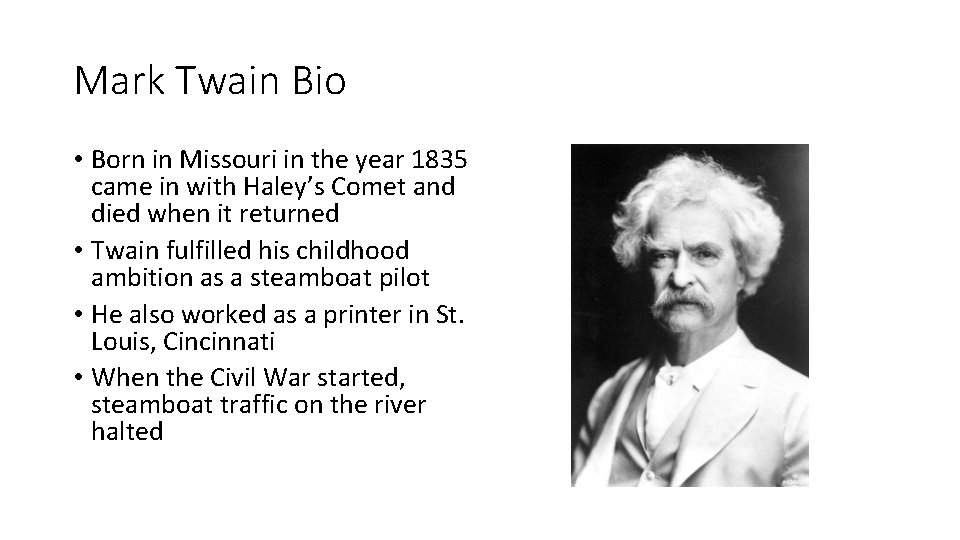
Mark Twain Bio • Born in Missouri in the year 1835 came in with Haley’s Comet and died when it returned • Twain fulfilled his childhood ambition as a steamboat pilot • He also worked as a printer in St. Louis, Cincinnati • When the Civil War started, steamboat traffic on the river halted
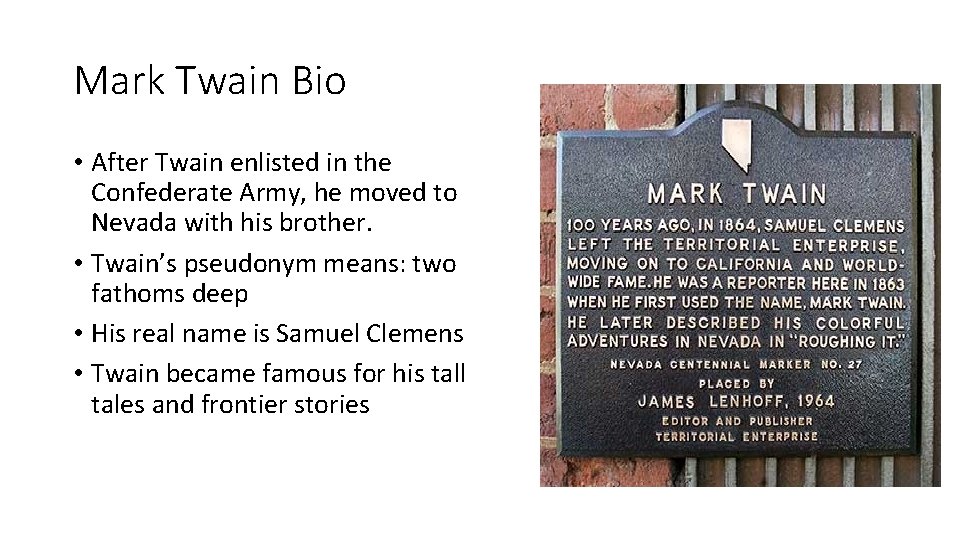
Mark Twain Bio • After Twain enlisted in the Confederate Army, he moved to Nevada with his brother. • Twain’s pseudonym means: two fathoms deep • His real name is Samuel Clemens • Twain became famous for his tall tales and frontier stories
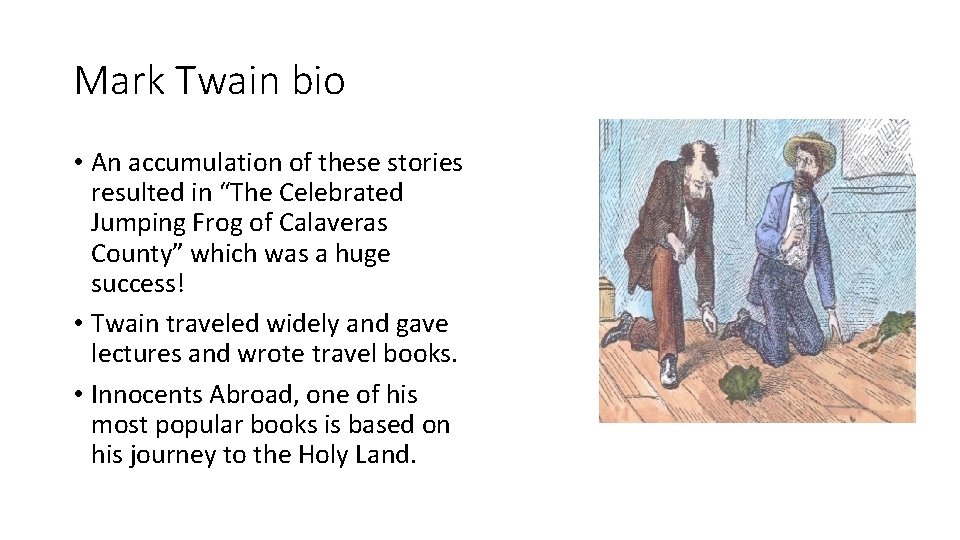
Mark Twain bio • An accumulation of these stories resulted in “The Celebrated Jumping Frog of Calaveras County” which was a huge success! • Twain traveled widely and gave lectures and wrote travel books. • Innocents Abroad, one of his most popular books is based on his journey to the Holy Land.

Mark Twain bio • In 1870, Twain married Olivia Langdon and moved to Hartford, Conneticut. • Books Published • 1872 -Roughing It • 1873 - The Gilded Age • 1876 -Tom Sawyer • 1885 – Huck Finn
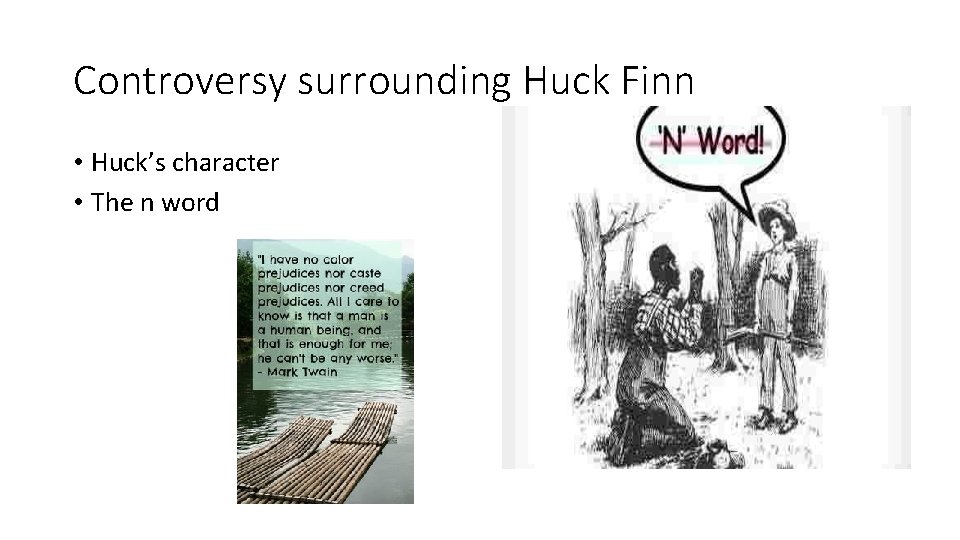
Controversy surrounding Huck Finn • Huck’s character • The n word
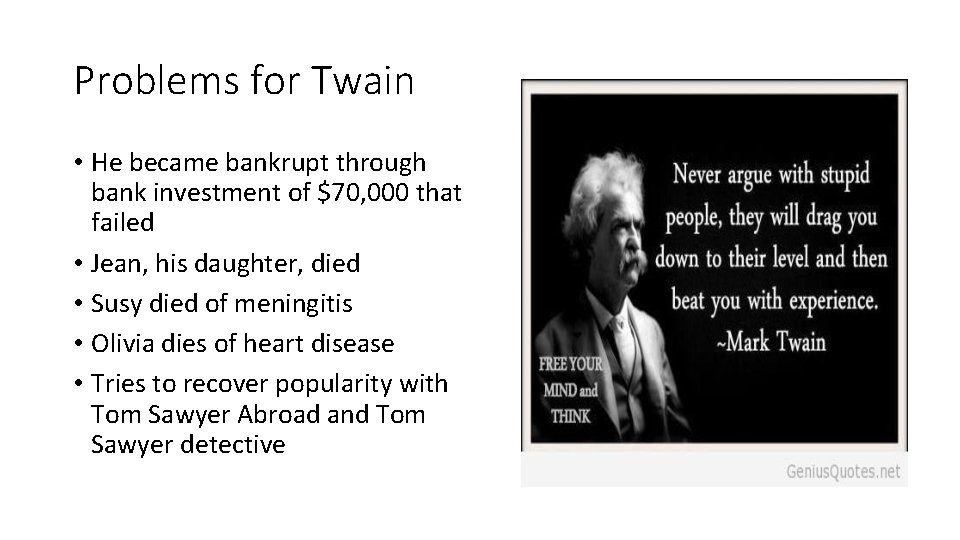
Problems for Twain • He became bankrupt through bank investment of $70, 000 that failed • Jean, his daughter, died • Susy died of meningitis • Olivia dies of heart disease • Tries to recover popularity with Tom Sawyer Abroad and Tom Sawyer detective
Historical Context of Huck Finn • Setting of the novel is between 1835 -1845 • Ideals of self-improvement, industry, and geographical expansion dominated life in the U. S • Education became a new preoccupation in American thought • Mass manufacturing was producing revolutionary machinery from the plow to the steam boat • In spite of optimism, the issue of slavery was tormenting the country • Issues surrounding the Missouri Compromise
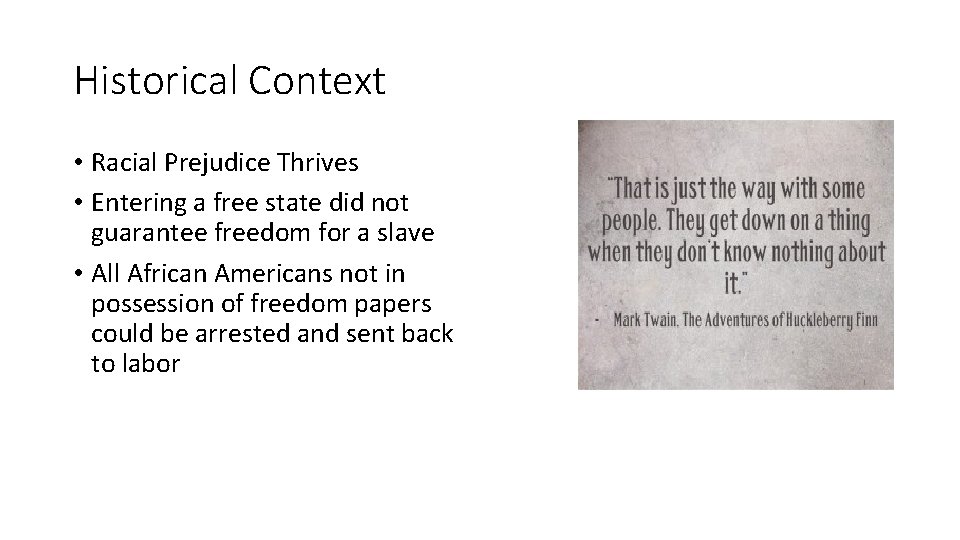
Historical Context • Racial Prejudice Thrives • Entering a free state did not guarantee freedom for a slave • All African Americans not in possession of freedom papers could be arrested and sent back to labor
Slave Narratives • Fredrick Douglass and Harriet Jacobs • Fugitive slave narratives were published before the Civil War • Most powerful slave narrative is My Bondage and My Freedom • Abolitionist views-feared Western expansion • Southern views – defended their way of life. • Civil War 1861 -1865 • Thirteenth Amendment stated freedom for slaves
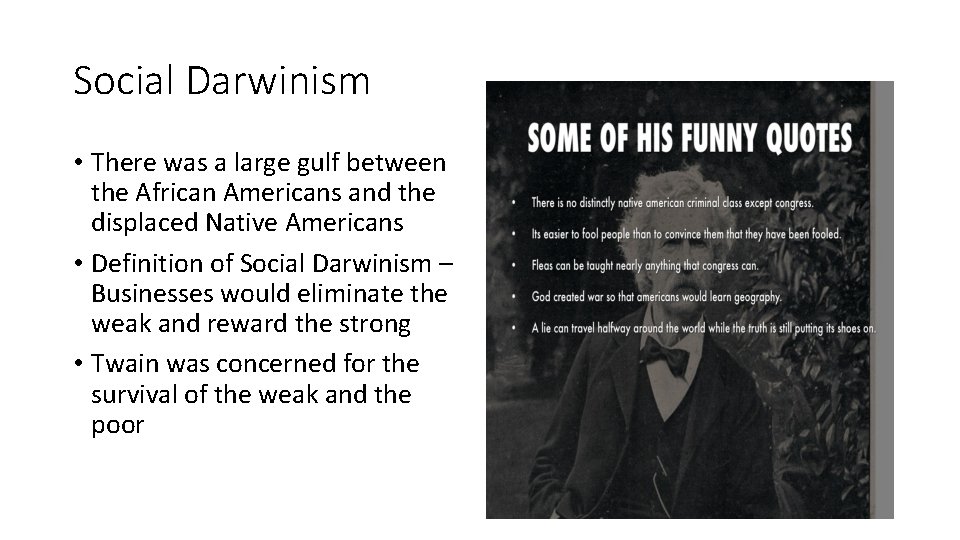
Social Darwinism • There was a large gulf between the African Americans and the displaced Native Americans • Definition of Social Darwinism – Businesses would eliminate the weak and reward the strong • Twain was concerned for the survival of the weak and the poor
The Country Rebuilds • Recovery in the South was a slow process • Recovery in the North more civilian goods were produced • Between the years of 1870 and 1890 the population doubled • Huck Finn published in 1885 • Angry white southerners led the formation of the Ku Klux Klan • Fourteenth Amendment – black citizenship • Fifteenth Amendment – black voting rights
- Slides: 12