
Maritime connectivity Multimodal transport is key Kuala Lumpur

- Slides: 40
Maritime connectivity: Multimodal transport is key Kuala Lumpur, October 2017, Jan. Hoffmann@UNCTAD. org
► Latest trends in maritime connectivity ► What can be done to improve it ► Logistics and multimodal transport
► Latest trends in maritime connectivity ► What can be done to improve it ► Logistics and multimodal transport
Why “connectivity”?
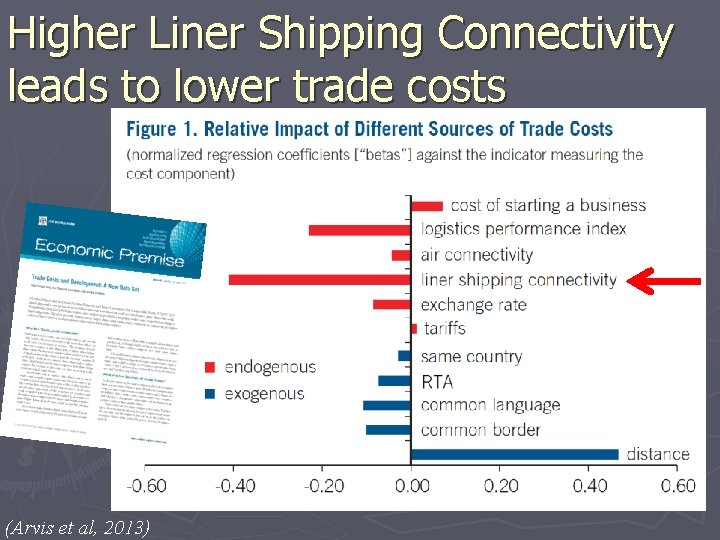
Higher Liner Shipping Connectivity leads to lower trade costs (Arvis et al, 2013)
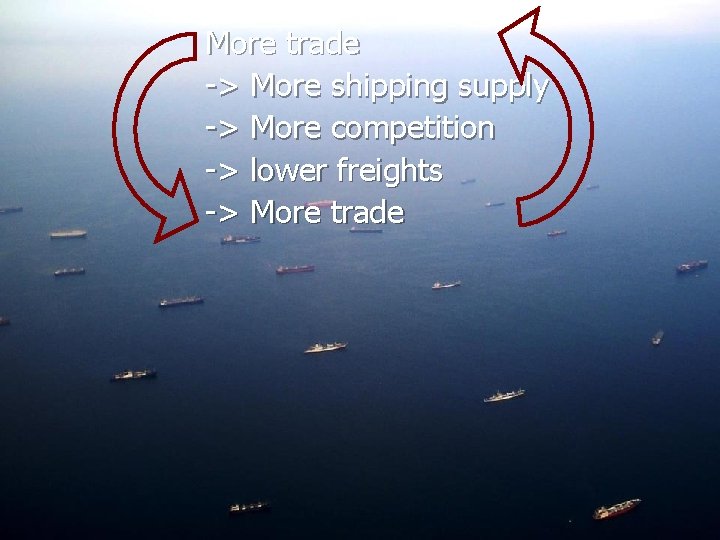
More trade -> More shipping supply -> More competition -> lower freights -> More trade
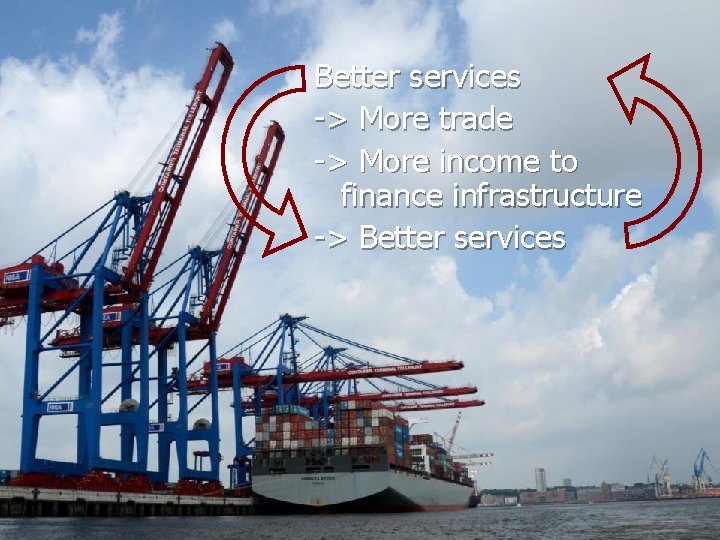
Better services -> More trade -> More income to finance infrastructure -> Better services
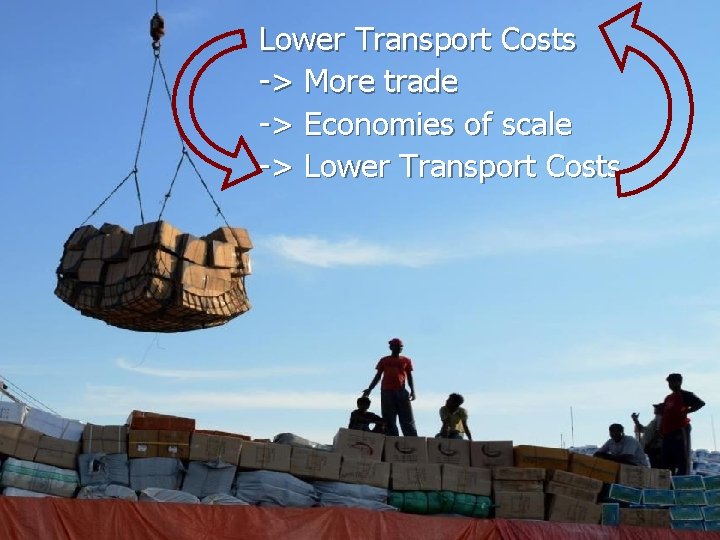
Lower Transport Costs -> More trade -> Economies of scale -> Lower Transport Costs
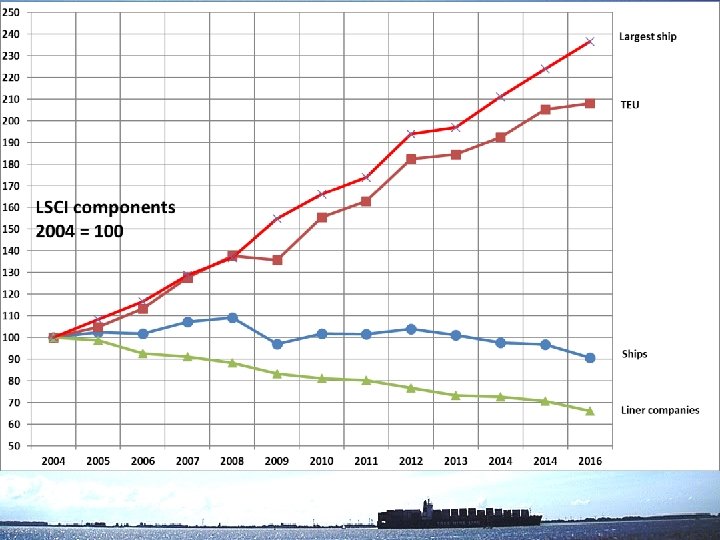
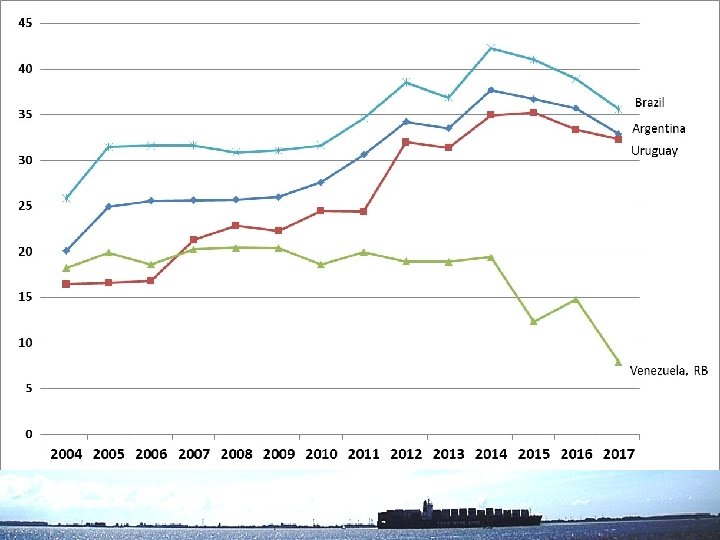
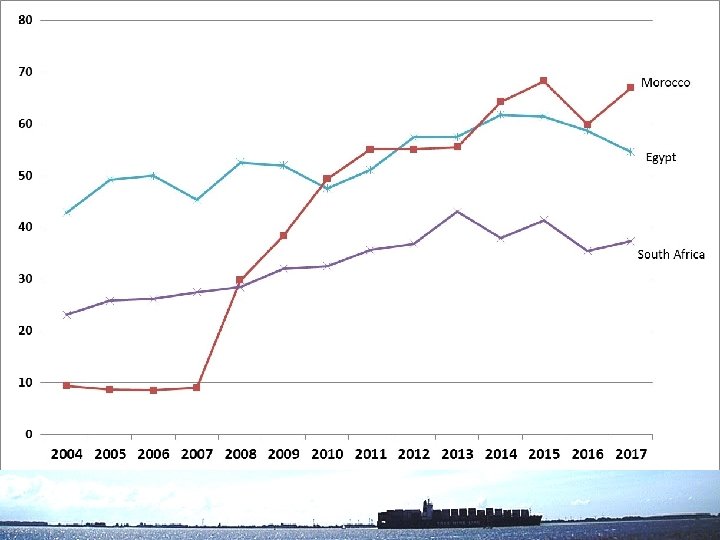
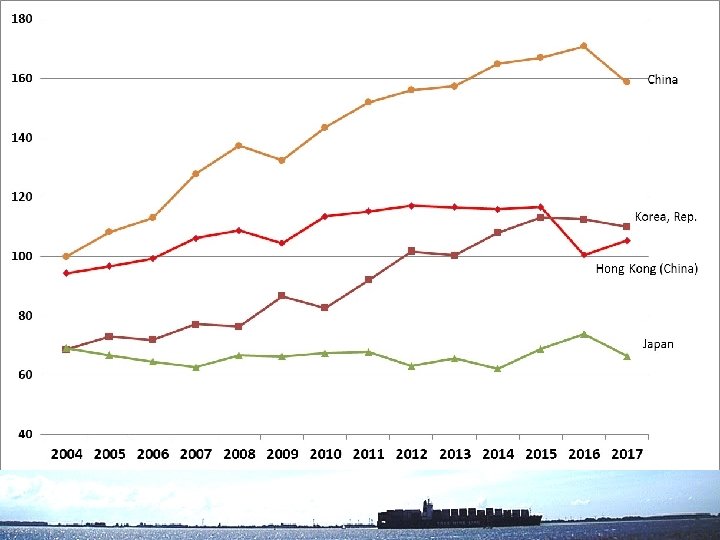
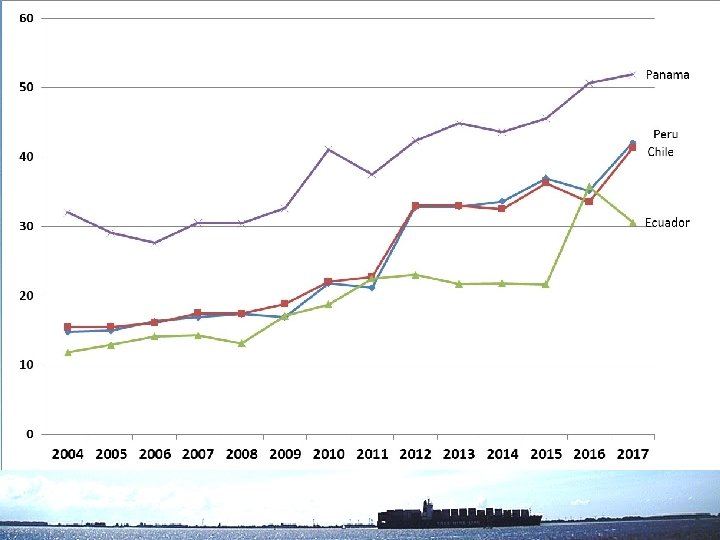
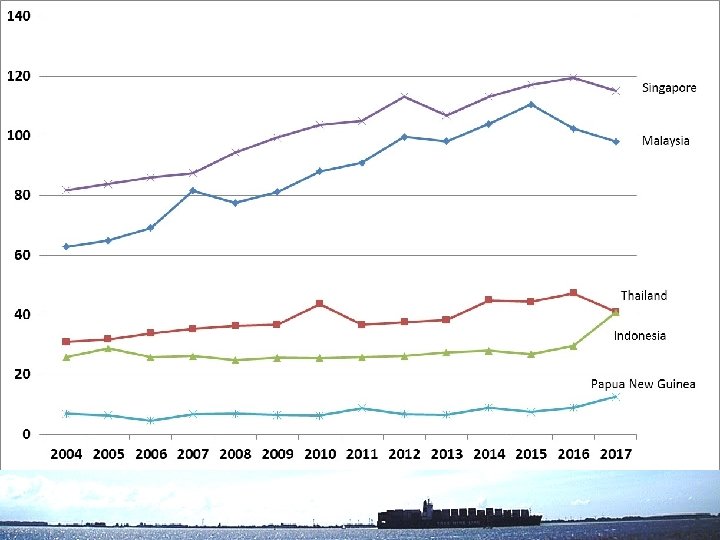
To capture a country’s connectivity… UNCTAD developed the Liner Shipping Connectivity Index – LSCI – using the following 5 components: ► Companies ► Services ► Largest ship ► Number of ships ► TEU Source for components: MDS Transmodal http: //mdst. co. uk
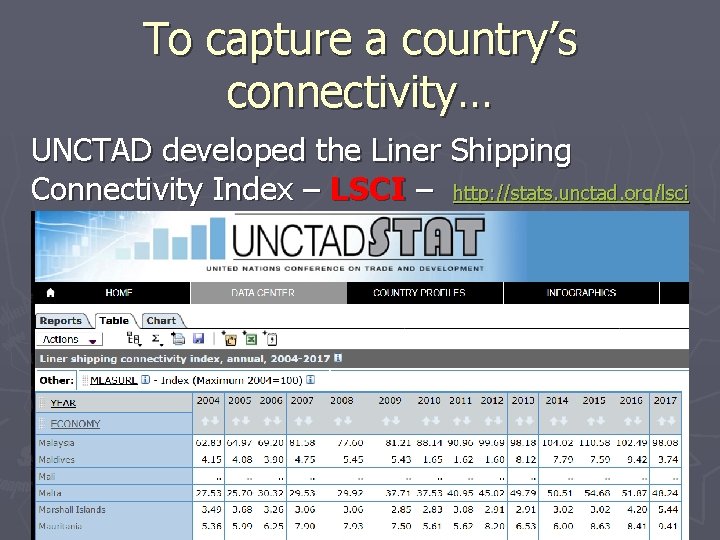
To capture a country’s connectivity… UNCTAD developed the Liner Shipping Connectivity Index – LSCI – http: //stats. unctad. org/lsci
► Latest trends in maritime connectivity ► What can be done to improve it ► Logistics and multimodal transport
10 Recommendations What can policy makers, researchers and the international community do to improve maritime connectivity
#1: Improving forecasts Include transport connectivity in planning and trade models. ► When negotiating trade deals, preparing trade policies or planning transport infrastructure investments, the research and forecasts can be significantly improved if data on maritime transport networks is included
#2: Digital connectivity Opportunities from modern network technologies ► Cargo and vessel tracking and numerous other digital developments can help enhance multimodal connectivity.
#3: Cabotage Linkages between national, regional and intercontinental shipping services ► Limitations to cabotage markets can lead to unnecessary inefficiencies and loss of maritime connectivity.
#4: Regional coordination Ports may compete, but they also often serve the same lines and hinterland. ► For ports along the same route, it makes sense to plan port investments jointly to accommodate the vessels that will serve this route.
#5: Seaports’ modernization Ports compete, but they also often serve the same lines and hinterland. ► For ports along the same route, it makes sense to plan port investments jointly to accommodate the vessels that will serve this route.
#6: Let ports compete Competitive pressures will encourage port operators to maximise their efficiency and pass on those efficiency gains to their clients. ► Inter-port competition should include neighbouring countries’ ports. Trucking markets, rail and road infrastructure, as well as transit regimes are key.
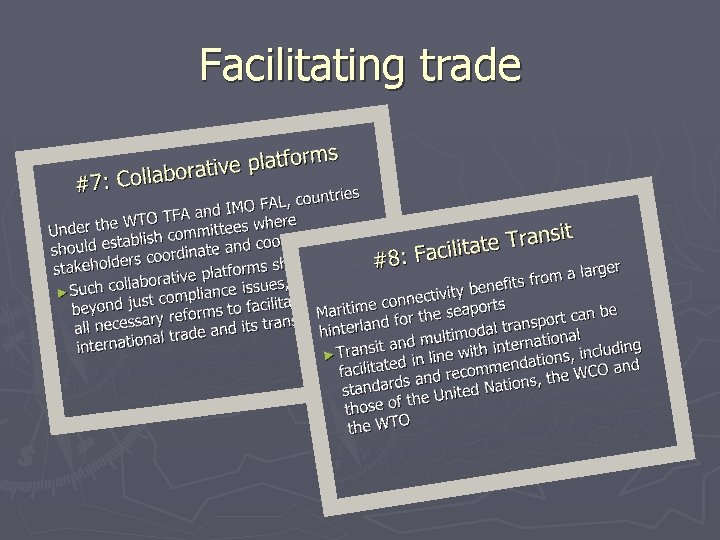
#7: Collaborative platforms Under the WTO TFA and IMO FAL, countries should establish committees where stakeholders coordinate and cooperate ► Such collaborative platforms should go beyond just compliance issues, and aim at all necessary reforms to facilitate international trade and its transport.
#8: Facilitate Transit Maritime connectivity benefits from a larger hinterland for the seaports ► Transit and multimodal transport can be facilitated in line with international standards and recommendations, including those of the United Nations, the WCO and the WTO
#9: However: be strong! Connectivity is not everything ► Pressure from shipping lines to invest in seaports to accommodate ever larger ships, especially for transshipment operations, may not be worth the extra cost. Without additional volumes, increasing just the ship size will in fact reduce the effective capacity of the seaport as it would require larger yards to handle the same total volume.
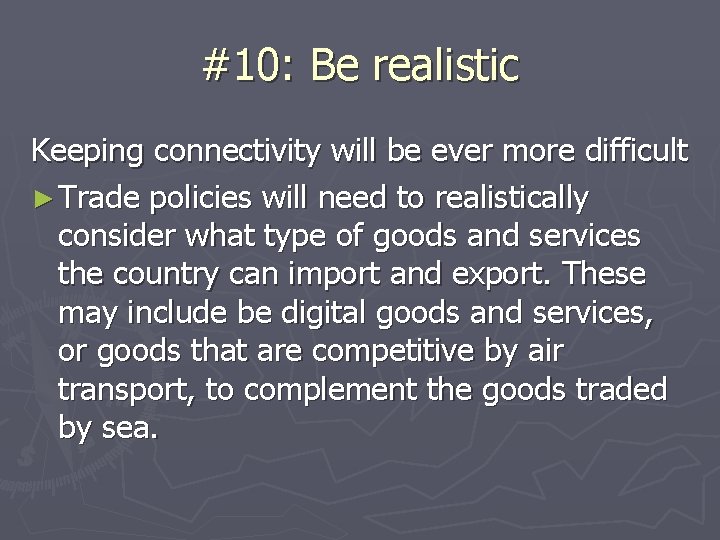
#10: Be realistic Keeping connectivity will be ever more difficult ► Trade policies will need to realistically consider what type of goods and services the country can import and export. These may include be digital goods and services, or goods that are competitive by air transport, to complement the goods traded by sea.
► Latest trends in maritime connectivity ► What can be done to improve it ► Logistics and multimodal transport
Facilitating trade
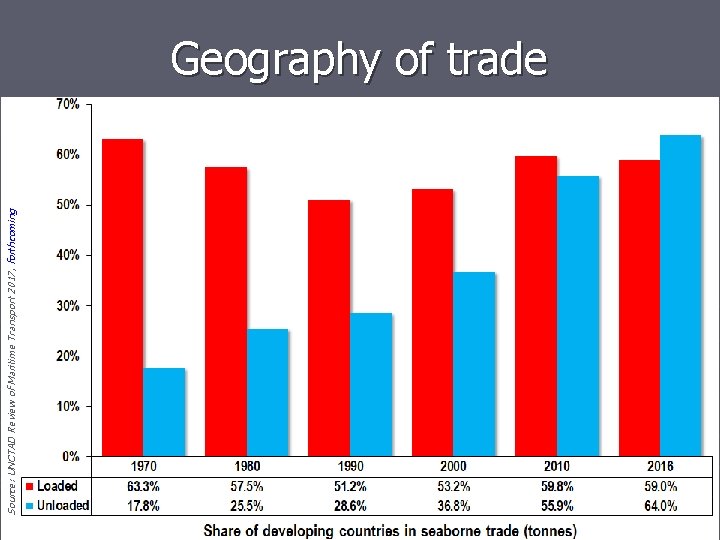
Source: UNCTAD Review of Maritime Transport 2017, forthcoming Geography of trade
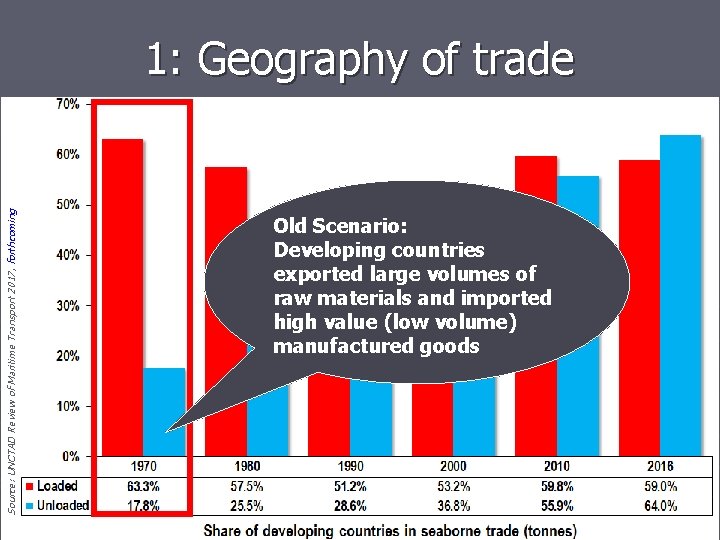
Source: UNCTAD Review of Maritime Transport 2017, forthcoming 1: Geography of trade Old Scenario: Developing countries exported large volumes of raw materials and imported high value (low volume) manufactured goods
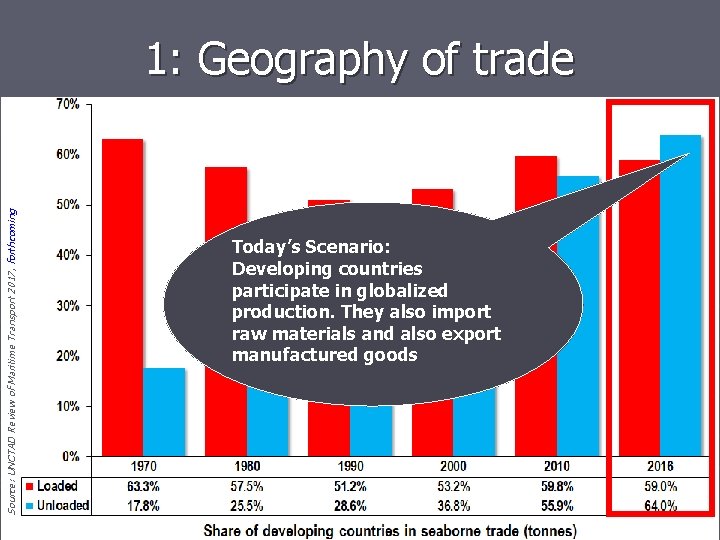
Source: UNCTAD Review of Maritime Transport 2017, forthcoming 1: Geography of trade Today’s Scenario: Developing countries participate in globalized production. They also import raw materials and also export manufactured goods
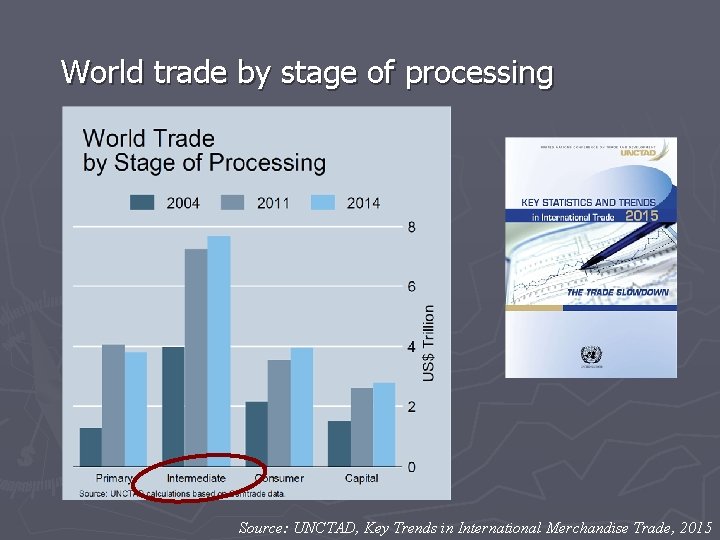
World trade by stage of processing Source: UNCTAD, Key Trends in International Merchandise Trade, 2015
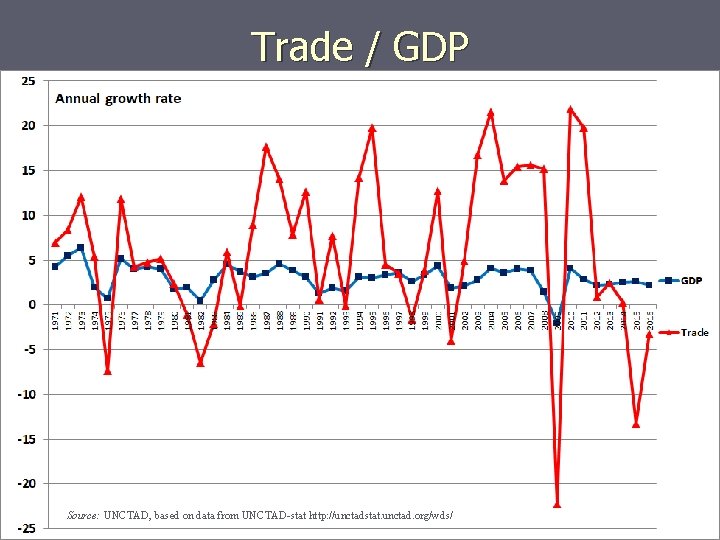
Trade / GDP Source: UNCTAD, based on data from UNCTAD-stat http: //unctadstat. unctad. org/wds/
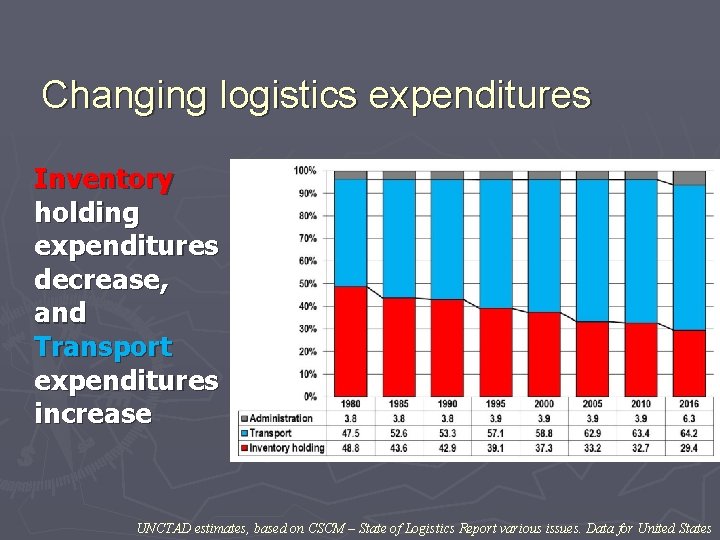
Changing logistics expenditures Inventory holding expenditures decrease, and Transport expenditures increase UNCTAD estimates, based on CSCM – State of Logistics Report various issues. Data for United States
► Latest trends in maritime connectivity ► What can be done to improve it ► Logistics and multimodal transport
Maritime connectivity: Multimodal transport is key Kuala Lumpur, October 2017, Jan. Hoffmann@UNCTAD. org