
Marine Worms Bilateral Symmetry 6 New Things That
Marine Worms

Bilateral Symmetry
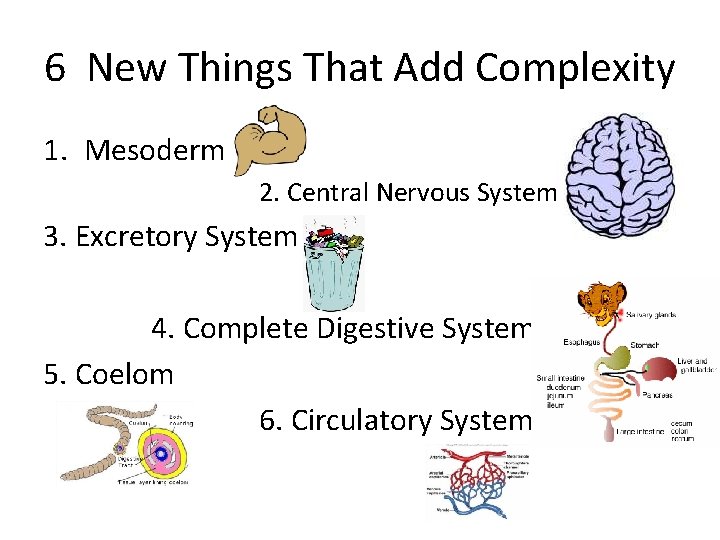
6 New Things That Add Complexity 1. Mesoderm 2. Central Nervous System 3. Excretory System 4. Complete Digestive System 5. Coelom 6. Circulatory System

2 Worm Phyla • There are two phyla that have “worms” • Platyhelminthes Phylum Translation Major Feature Platyhelminthes Broad, flat, worm A flat body
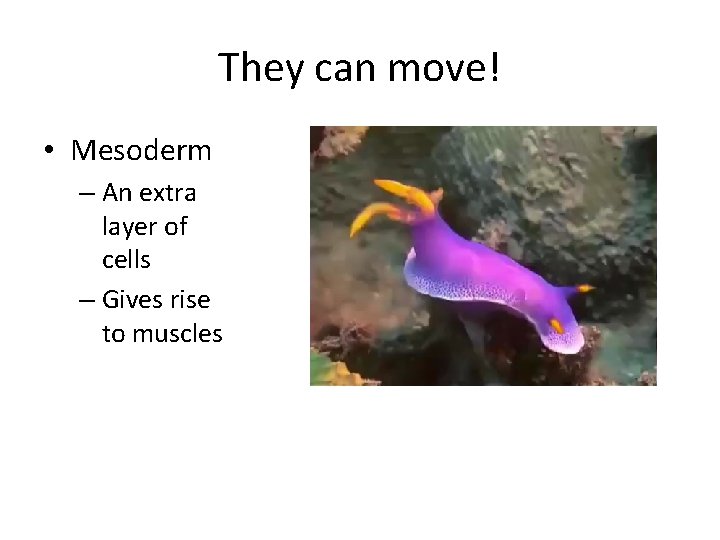
They can move! • Mesoderm – An extra layer of cells – Gives rise to muscles
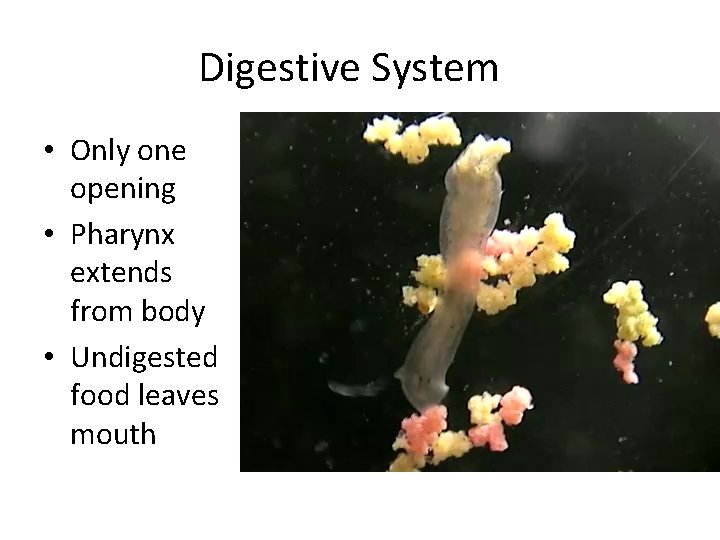
Digestive System • Only one opening • Pharynx extends from body • Undigested food leaves mouth
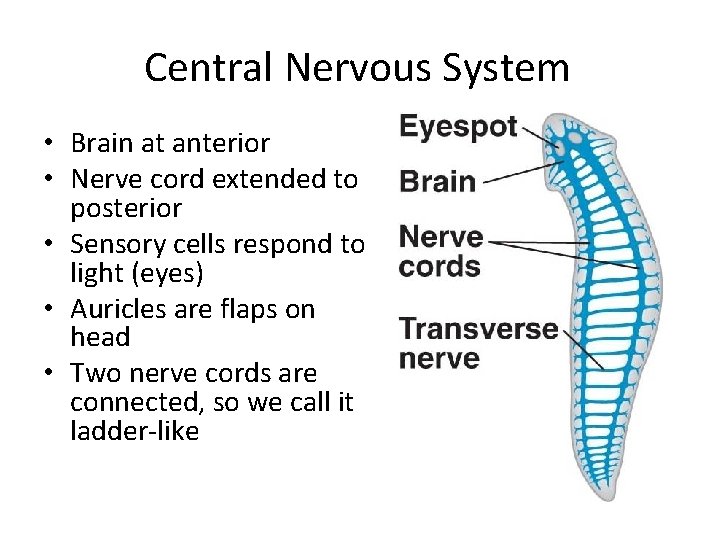
Central Nervous System • Brain at anterior • Nerve cord extended to posterior • Sensory cells respond to light (eyes) • Auricles are flaps on head • Two nerve cords are connected, so we call it ladder-like

Excretory System • Network of tubes that opens through pores in posterior • Beating flagella that create water currents • Removes waste • Flame Bulbs
No circulatory system • Get oxygen from body cells easily • Like Porifera and Cnidaria
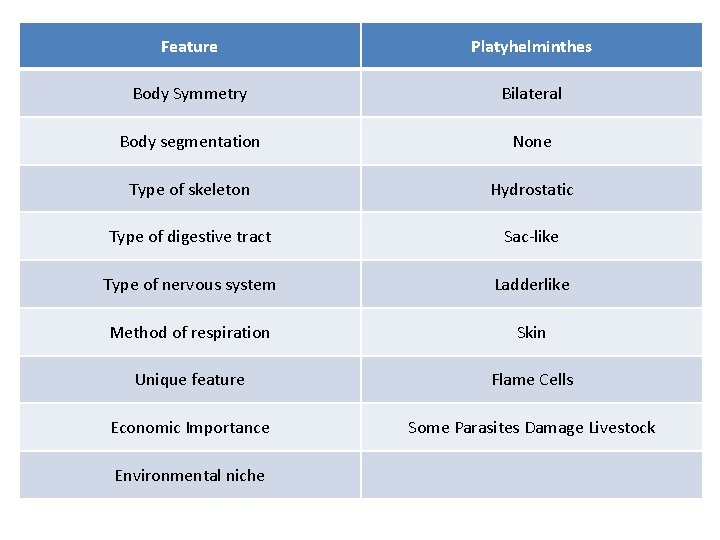
Feature Platyhelminthes Body Symmetry Bilateral Body segmentation None Type of skeleton Hydrostatic Type of digestive tract Sac-like Type of nervous system Ladderlike Method of respiration Skin Unique feature Flame Cells Economic Importance Some Parasites Damage Livestock Environmental niche
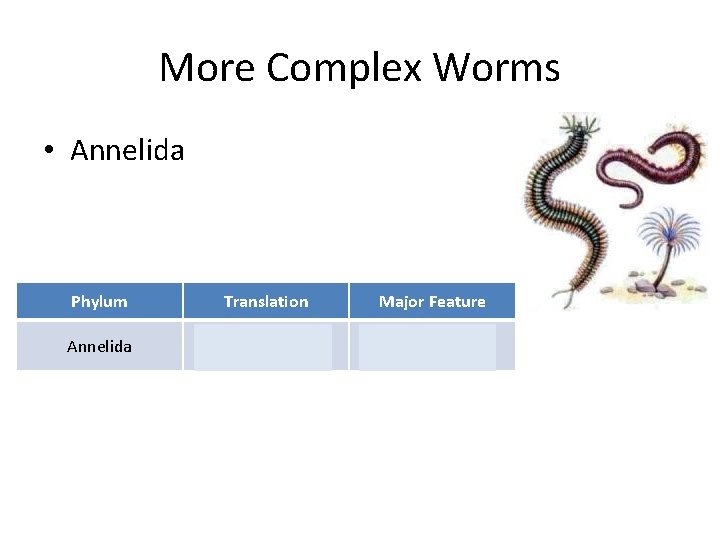
More Complex Worms • Annelida Phylum Translation Major Feature Annelida Has rings Body has ringlike segments

Polychaetes • Most marine worms belong to this class • They often have muscular flaps on their sides called parapodia • The parapodia have bristles called setae • Proboscis
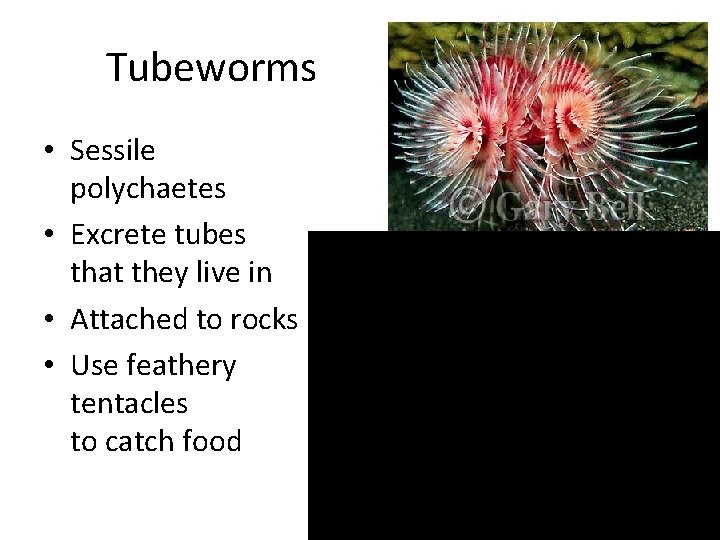
Tubeworms • Sessile polychaetes • Excrete tubes that they live in • Attached to rocks • Use feathery tentacles to catch food
Digestion • Mouth, Tube, Anus • Many new advantages – Can eat while digesting – Specialized parts
Mesoderm • 2 types of muscle – Circular – Longitudinal • While movement occurs, setae hold worm in place
Nervous System • Nerve clusters in anterior (brain) Excretory System • Each segment has a nephridia • Filters fluid
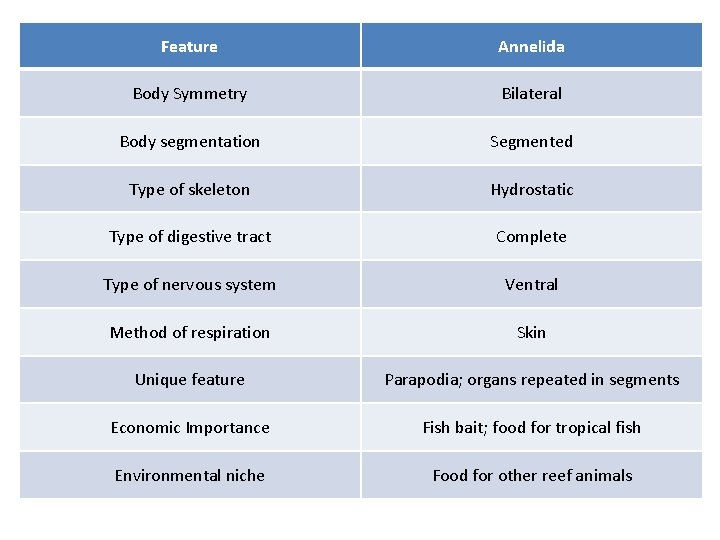
Feature Annelida Circulatory System Body Symmetry Bilateral Body segmentation • Closed Segmented of skeleton Hydrostatic – Has. Type vessels pumping blood – Blood delivers of body Type of digestive tractnutrients to all parts. Complete – Animal is able to become bigger Ventral Type of nervous system Method of respiration Skin Unique feature Parapodia; organs repeated in segments Economic Importance Fish bait; food for tropical fish Environmental niche Food for other reef animals
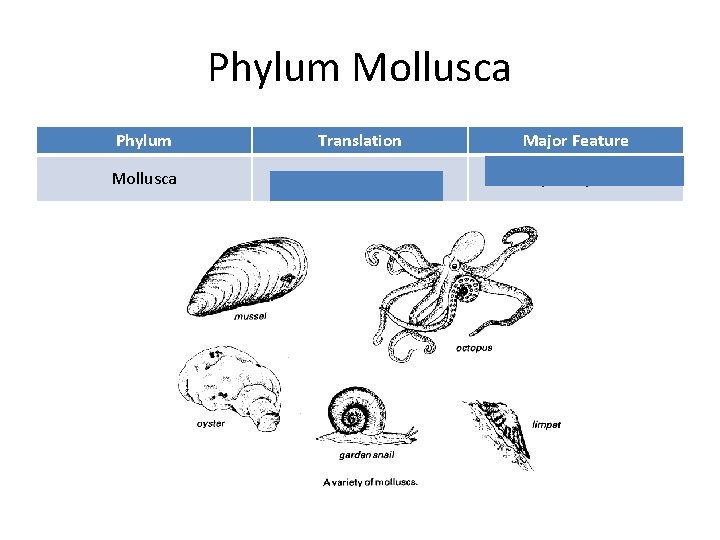
Phylum Mollusca Phylum Translation Major Feature Mollusca A soft shellfish Soft body; many have shells
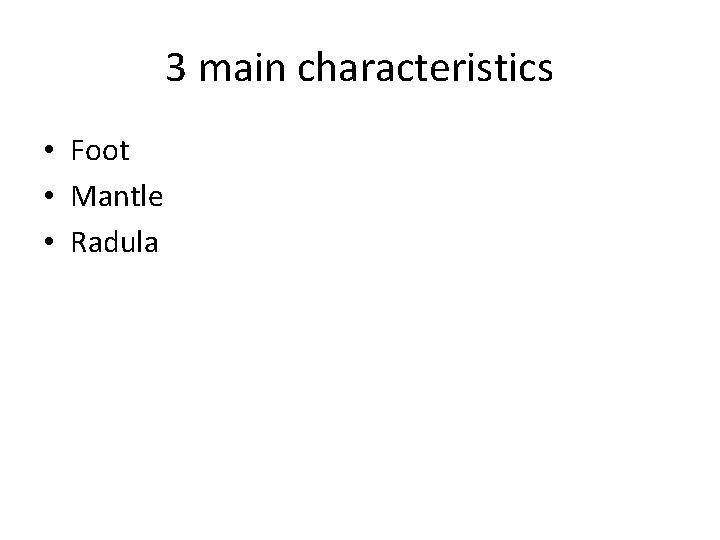
3 main characteristics • Foot • Mantle • Radula
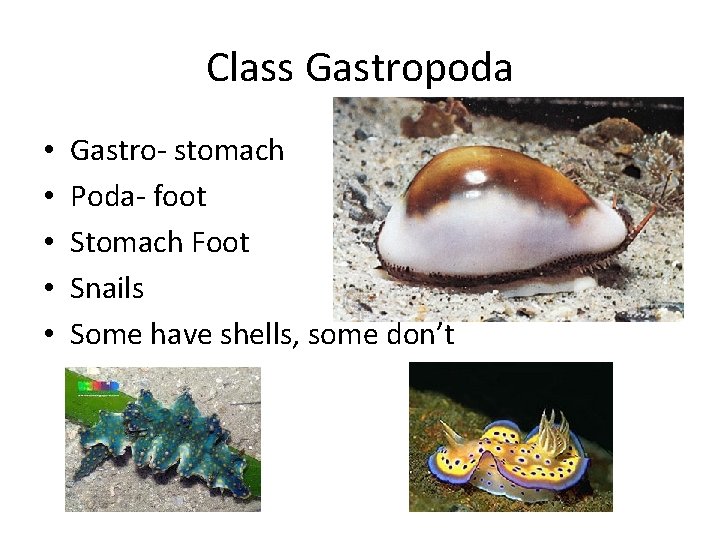
Class Gastropoda • • • Gastro- stomach Poda- foot Stomach Foot Snails Some have shells, some don’t
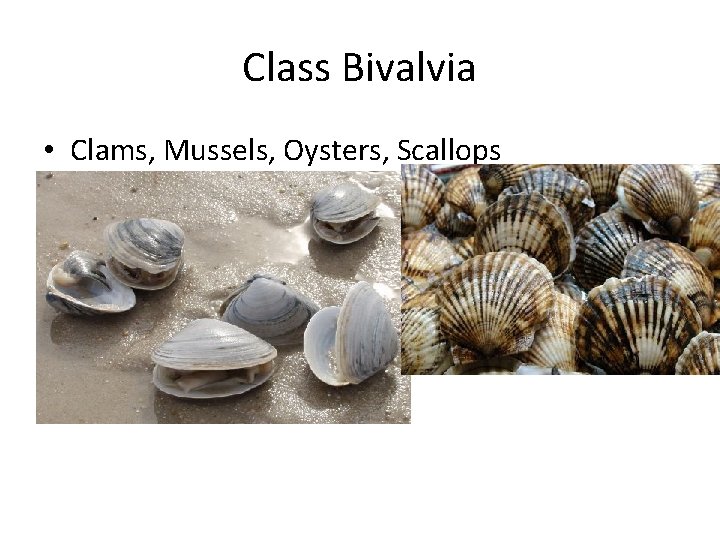
Class Bivalvia • Clams, Mussels, Oysters, Scallops
- Slides: 21