
Marine Vertebrates Lecture 2 Fish Diversity Osteichthyes Part
Marine Vertebrates: Lecture 2 Fish Diversity: Osteichthyes, Part 1

Fish phylogeny Lungs & lung derivatives
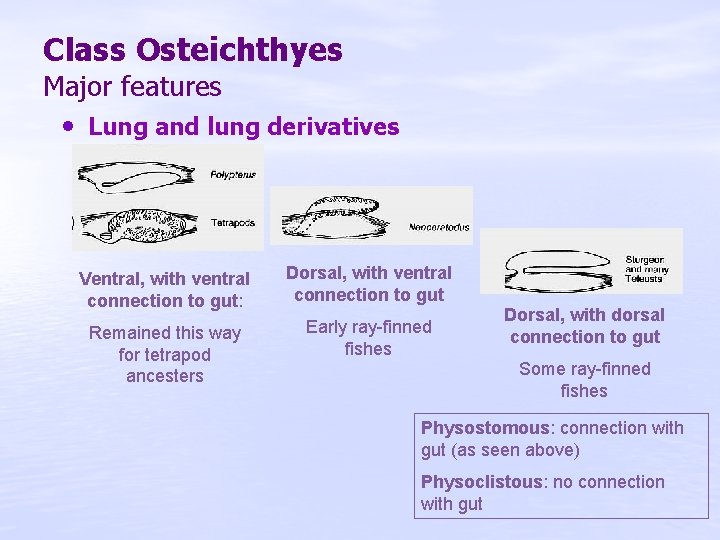
Class Osteichthyes Major features • Lung and lung derivatives Ventral, with ventral connection to gut: Dorsal, with ventral connection to gut Remained this way for tetrapod ancesters Early ray-finned fishes Dorsal, with dorsal connection to gut Some ray-finned fishes Physostomous: connection with gut (as seen above) Physoclistous: no connection with gut
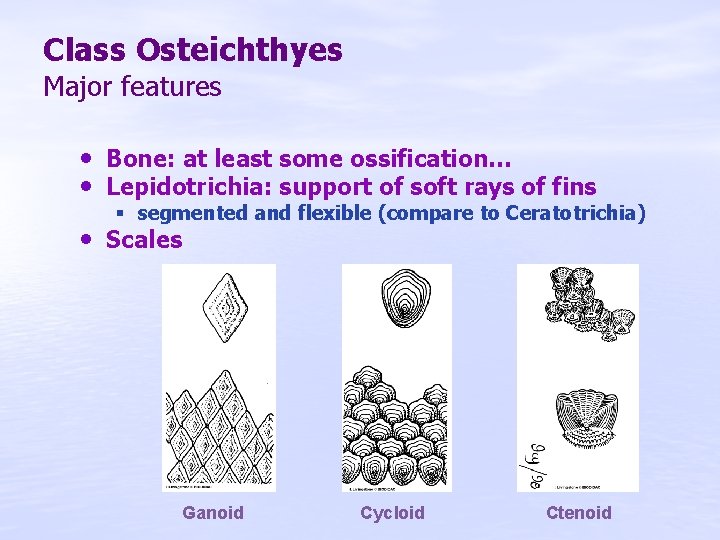
Class Osteichthyes Major features • Bone: at least some ossification… • Lepidotrichia: support of soft rays of fins § segmented and flexible (compare to Ceratotrichia) • Scales Ganoid Cycloid Ctenoid
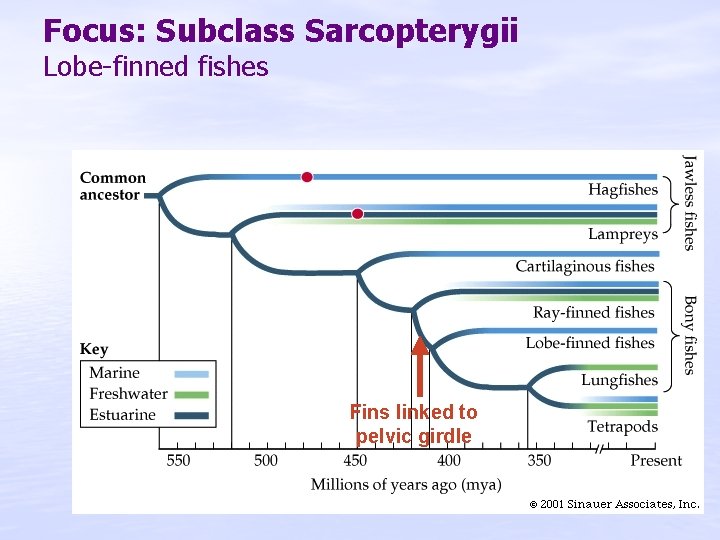
Focus: Subclass Sarcopterygii Lobe-finned fishes Fins linked to pelvic girdle
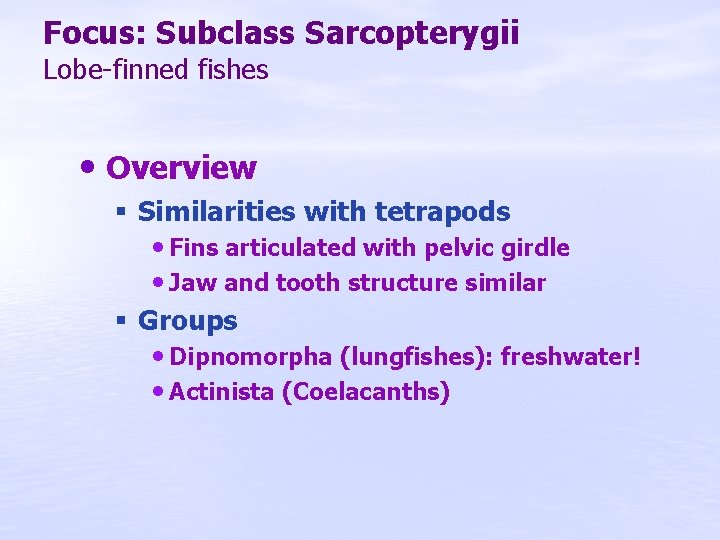
Focus: Subclass Sarcopterygii Lobe-finned fishes • Overview § Similarities with tetrapods • Fins articulated with pelvic girdle • Jaw and tooth structure similar § Groups • Dipnomorpha (lungfishes): freshwater! • Actinista (Coelacanths)
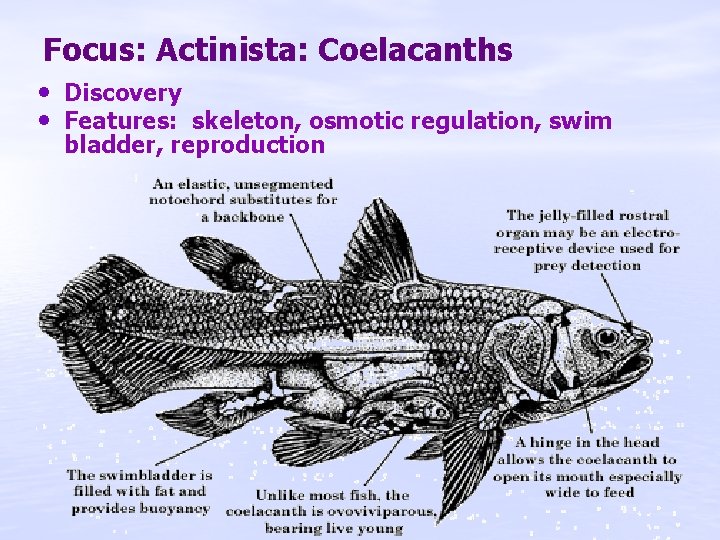
Focus: Actinista: Coelacanths • Discovery • Features: skeleton, osmotic regulation, swim bladder, reproduction
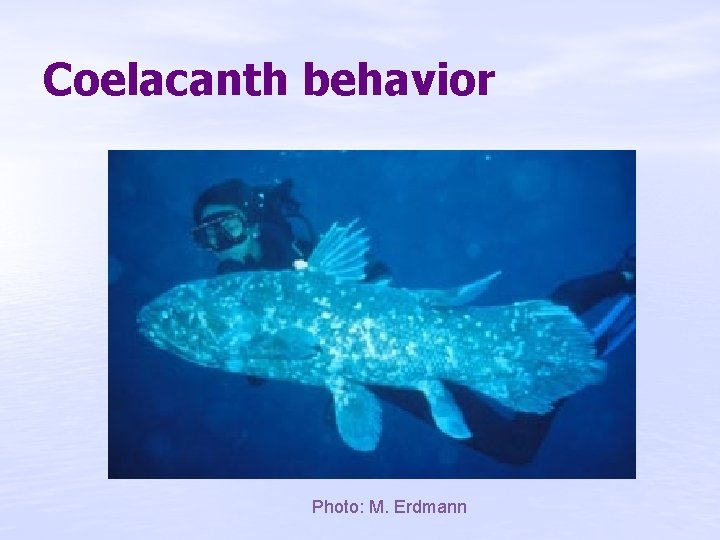
Coelacanth behavior Photo: M. Erdmann
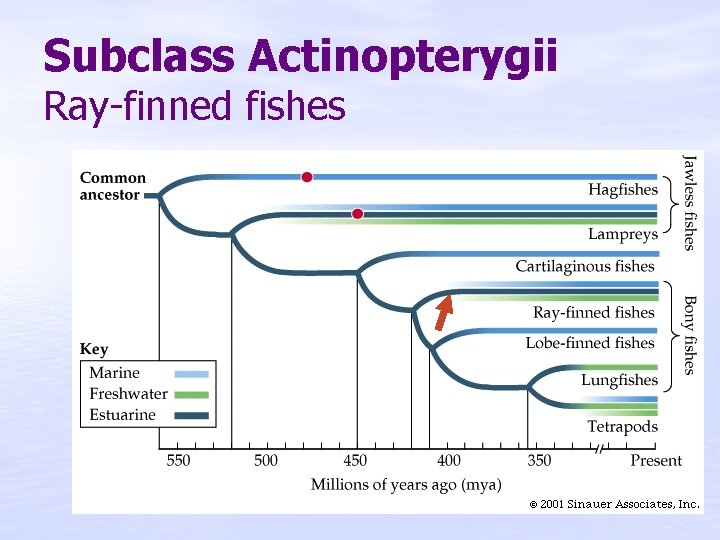
Subclass Actinopterygii Ray-finned fishes
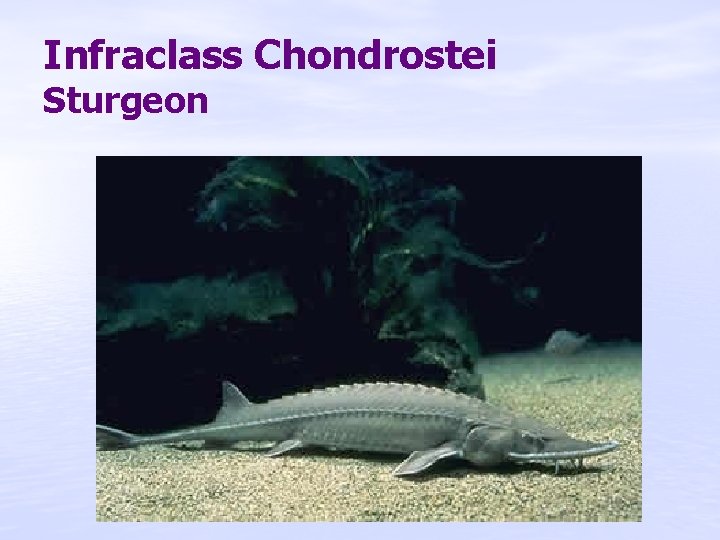
Infraclass Chondrostei Sturgeon
Infraclass Chondrostei Sturgeon • Five rows of bony* scales (ganoid or “rhomboid”) • • § Secondarily cartilagenous skeletons Some with spiracles/spiracle remnants* Spiral valve present* Heterocercal tail* No teeth (so how do they eat? ) Sensory: barbels, electrical sense Long, slow growth; high fecundity Caviar = sturgeon roe
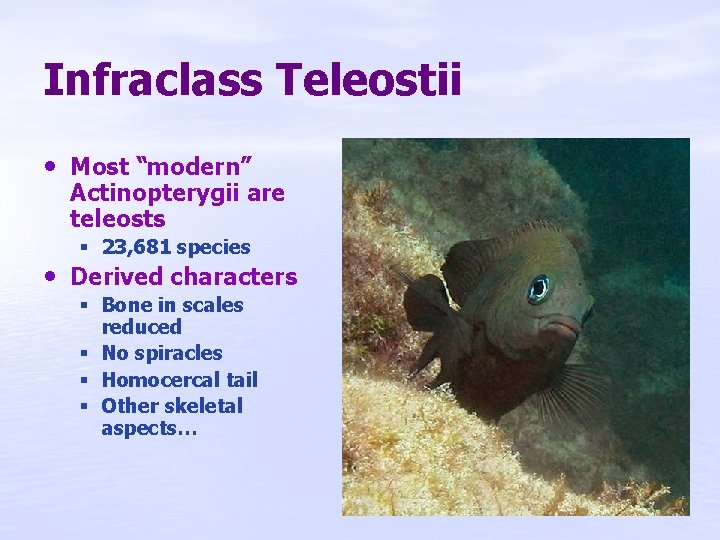
Infraclass Teleostii • Most “modern” Actinopterygii are teleosts § 23, 681 species • Derived characters § Bone in scales reduced § No spiracles § Homocercal tail § Other skeletal aspects…
- Slides: 12