
MARINE SEDIMENTS AND SEDIMENTATION WHAT IS SEDIMENT Sediment
- Slides: 12
MARINE SEDIMENTS AND SEDIMENTATION
WHAT IS SEDIMENT? • Sediment is any loose material which can be transported by a liquid that eventually settles at the bottom of the liquid • Consists of organic and inorganic matter from a number of biological and geological activities: • Erosion of rock • Volcanic eruptions • Activity of living organisms • Marine sediment has a variety of size, shapes, and colors
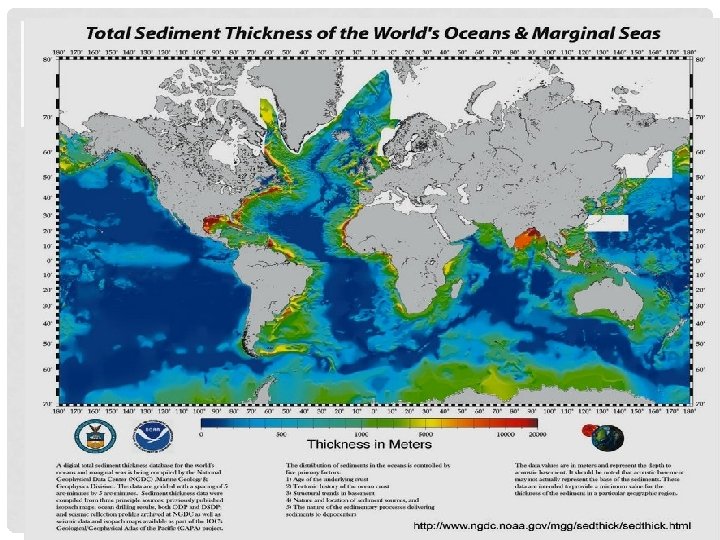
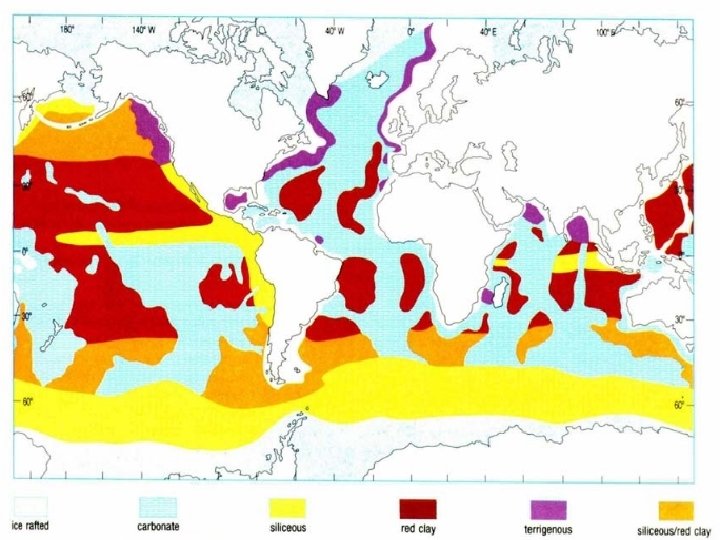
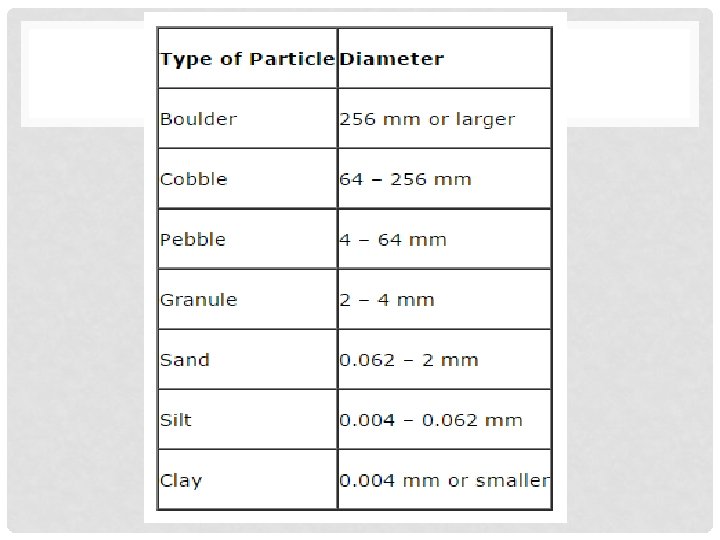
CHARACTERISTICS OF MARINE SEDIMENT • Marine sediment color ranges from red and dark brown to creamy white • Organic sediment (white) • Iron oxide (red, brown) • Clay deposits (blue, green) • Particle size ranges from 0. 004 - 256 mm • Marine sediment characteristics vary geographically • Thickness of sediment layer • Source of sediment
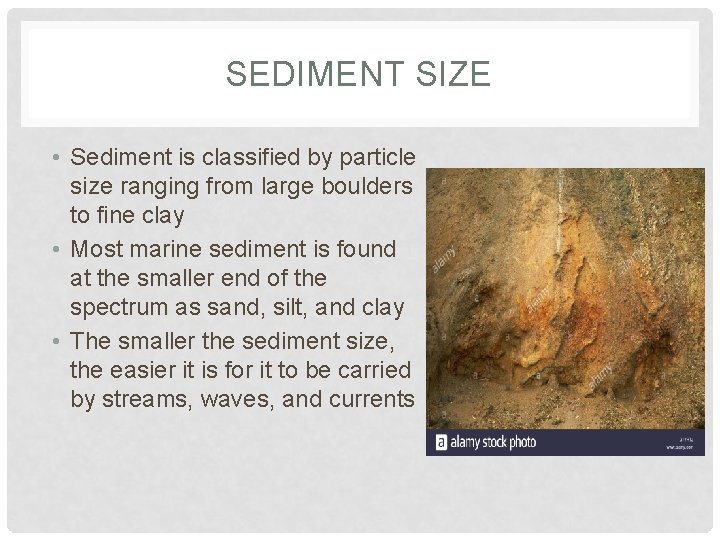
SEDIMENT SIZE • Sediment is classified by particle size ranging from large boulders to fine clay • Most marine sediment is found at the smaller end of the spectrum as sand, silt, and clay • The smaller the sediment size, the easier it is for it to be carried by streams, waves, and currents
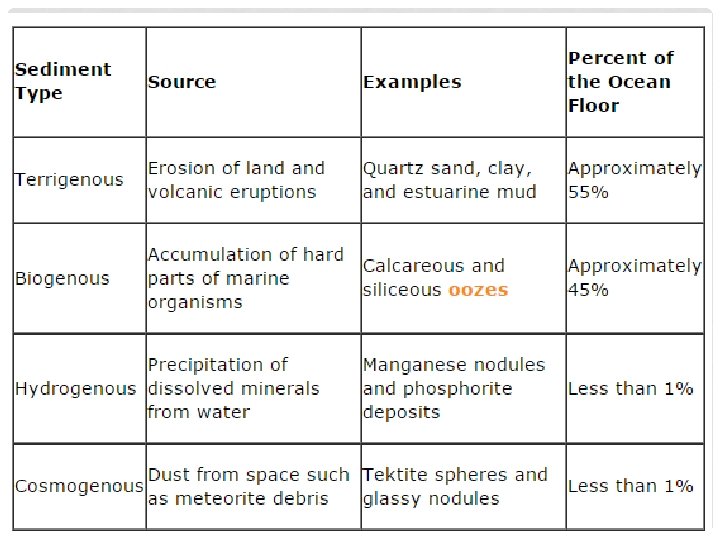
SEDIMENT SOURCE • Marine sediment can be classified by origin • Marine sediment can be classified into four categories: 1. 2. 3. 4. Terrigenous Biogenous Hydrogenous Cosmogenous
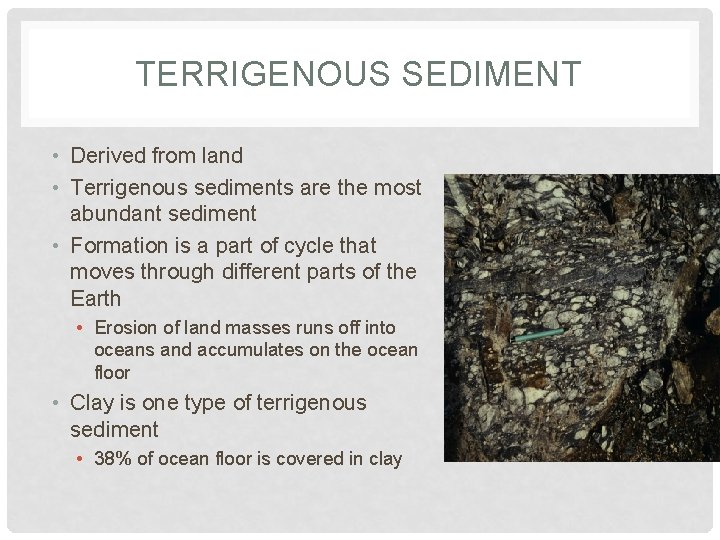
TERRIGENOUS SEDIMENT • Derived from land • Terrigenous sediments are the most abundant sediment • Formation is a part of cycle that moves through different parts of the Earth • Erosion of land masses runs off into oceans and accumulates on the ocean floor • Clay is one type of terrigenous sediment • 38% of ocean floor is covered in clay
BIOGENOUS SEDIMENT • Derived from the remains of marine organisms • Plankton, coral, mollusks (high levels of Ca. CO 3) • After organisms die, the hard structures fall to the bottom of the ocean • Over millions of years, fossil fuels are formed • Ooze is a type of biogenous sediment that contains 30% organic material • Primarily composed of dead microorganisms
Hydrogenous Sediment • Hydrogenous sediment is formed from minerals that have precipitated from dissolved minerals • Originate from submerged rock, hydrothermal vents, and river runoffs • Prominent examples are manganese and phosphorous nodules Cosmogenous Sediment • Cosmogenous sediment originate from the cosmos or outer space • Dust from asteroids and comets can build up on ocean floor • Microtektites – small particles formed from the impact of an asteroid