
Marine Mammals Whales Order Cetacea 90 species Whales

- Slides: 9
Marine Mammals Whales
Order: Cetacea – 90 species • Whales are different from seals and sea lions because they spend their entire lifespan in water. • There are two main groups of whales: 1. Toothed whales 2. Baleen whales
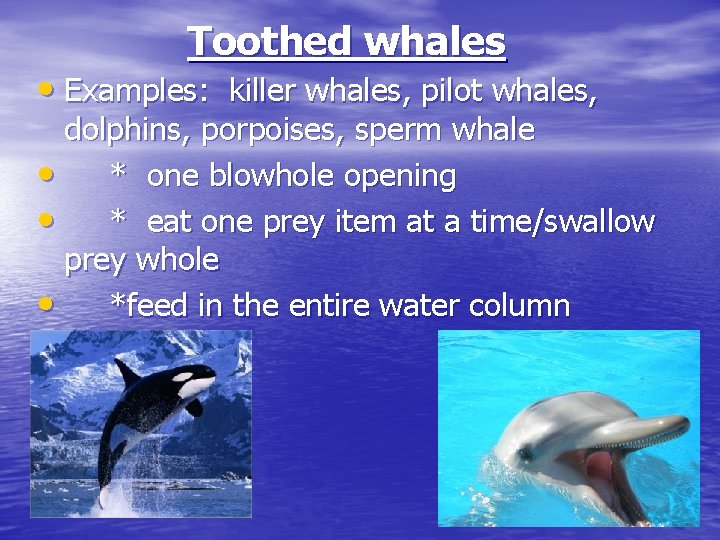
Toothed whales • Examples: killer whales, pilot whales, dolphins, porpoises, sperm whale • * one blowhole opening • * eat one prey item at a time/swallow prey whole • *feed in the entire water column
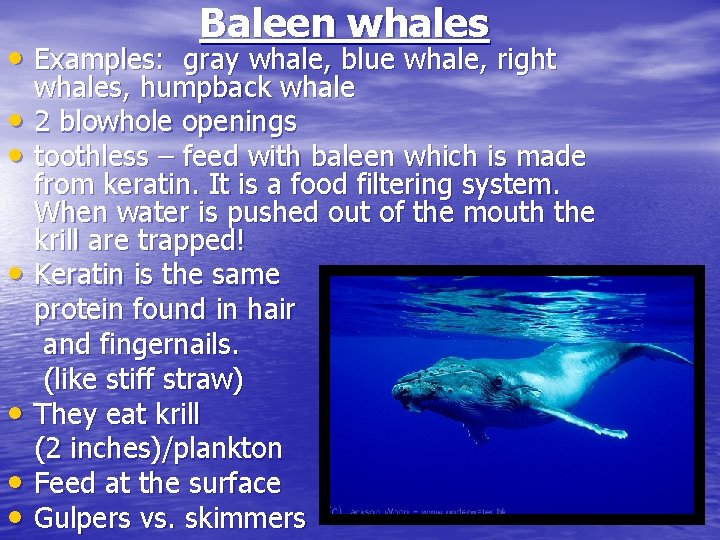
Baleen whales • Examples: gray whale, blue whale, right • • • whales, humpback whale 2 blowhole openings toothless – feed with baleen which is made from keratin. It is a food filtering system. When water is pushed out of the mouth the krill are trapped! Keratin is the same protein found in hair and fingernails. (like stiff straw) They eat krill (2 inches)/plankton Feed at the surface Gulpers vs. skimmers
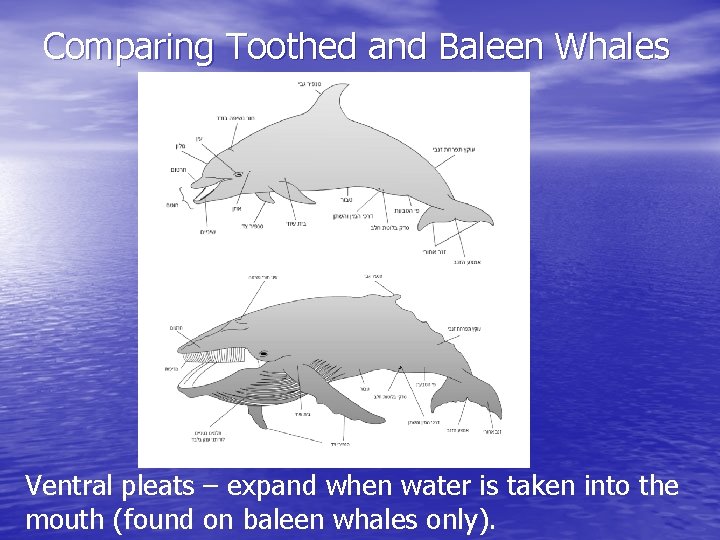
Comparing Toothed and Baleen Whales Ventral pleats – expand when water is taken into the mouth (found on baleen whales only).
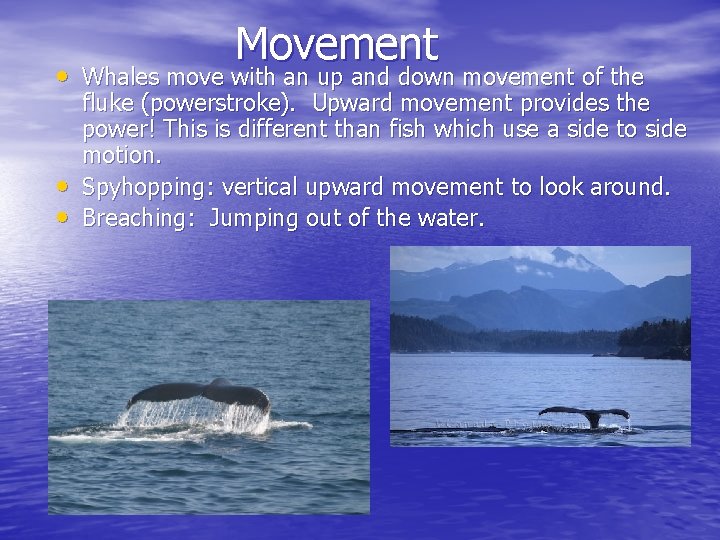
Movement • Whales move with an up and down movement of the • • fluke (powerstroke). Upward movement provides the power! This is different than fish which use a side to side motion. Spyhopping: vertical upward movement to look around. Breaching: Jumping out of the water.
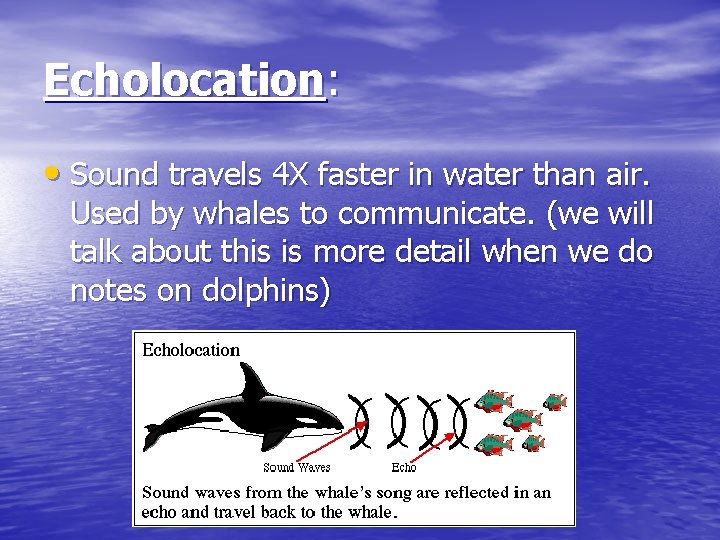
Echolocation: • Sound travels 4 X faster in water than air. Used by whales to communicate. (we will talk about this is more detail when we do notes on dolphins)
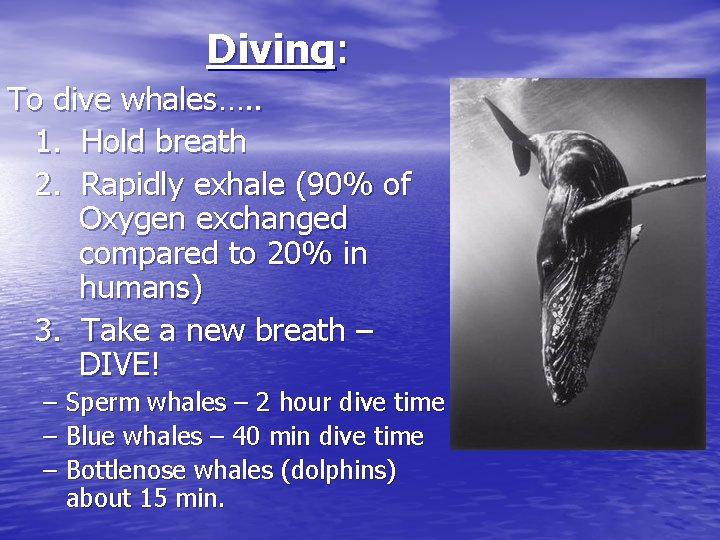
Diving: To dive whales…. . 1. Hold breath 2. Rapidly exhale (90% of Oxygen exchanged compared to 20% in humans) 3. Take a new breath – DIVE! – Sperm whales – 2 hour dive time – Blue whales – 40 min dive time – Bottlenose whales (dolphins) about 15 min.
Diving facts: • 1. Baleen whales don’t dive deep! Why? • A: Because plankton/krill are found at the • • • surface 2. Whales have more R. B. C’s than non-diving mammals. 3. When whales dive their heart rate slows dramatically from 85 down to 12 per minute. 4. Blood flow to nonessential organs is reduced. #3 and #4 together are called bradycardia. 5. Nitrogen dissolves better at high pressure ex. Think of the lungs like a pop bottle - lungs collapse – squeezes air to central part of lung where little Nitrogen is absorbed. Oxygen goes directly to blood.