
MARINE MAMMALS Class Mammalia Mammalian Characteristics Have hair
- Slides: 31
MARINE MAMMALS Class Mammalia
Mammalian Characteristics Have hair Endothermic Mammary glands Placental – keep babies inside until ready to be born
Groups of Mammals Pinnipeds Sirens Cetaceans
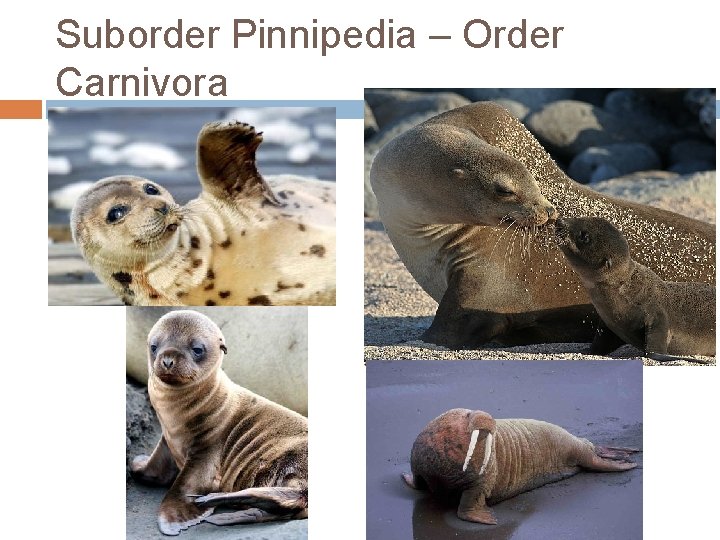
Suborder Pinnipedia – Order Carnivora
Pinnipeds All give birth on land Retain the 4 limbs that are characteristic of terrestrial mammals. Found all over the world but prefer colder waters Fast swimmers Most exhale their air before they dive Can store 10 -30 times more oxygen in their muscles than other mammals
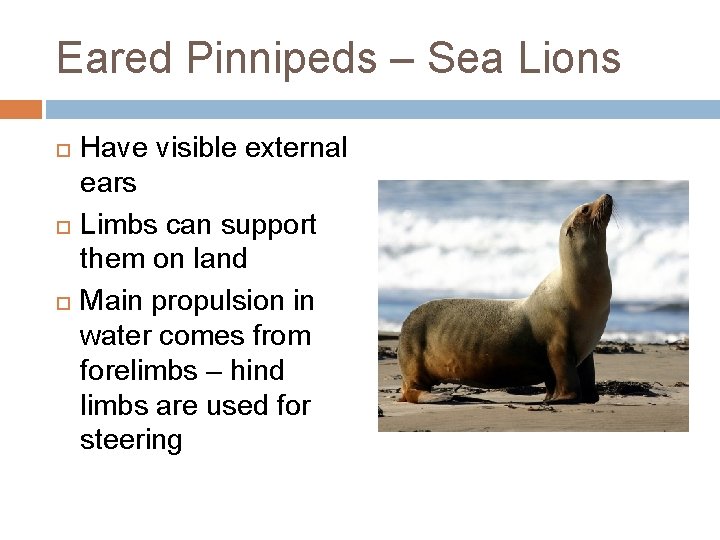
Eared Pinnipeds – Sea Lions Have visible external ears Limbs can support them on land Main propulsion in water comes from forelimbs – hind limbs are used for steering
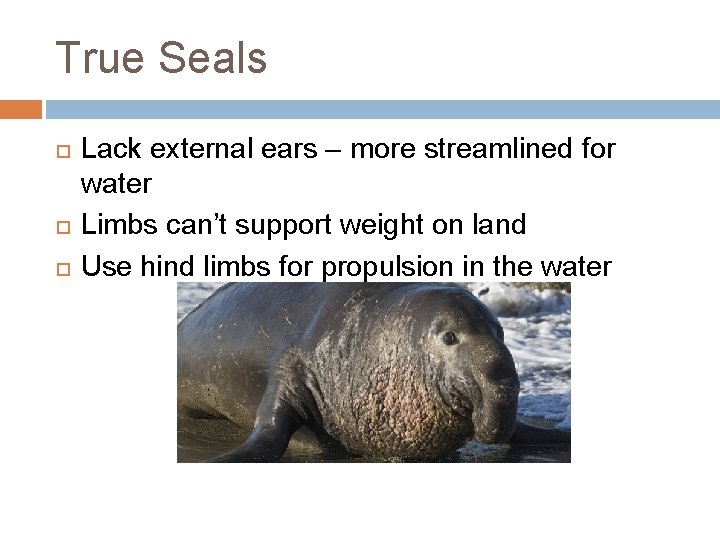
True Seals Lack external ears – more streamlined for water Limbs can’t support weight on land Use hind limbs for propulsion in the water
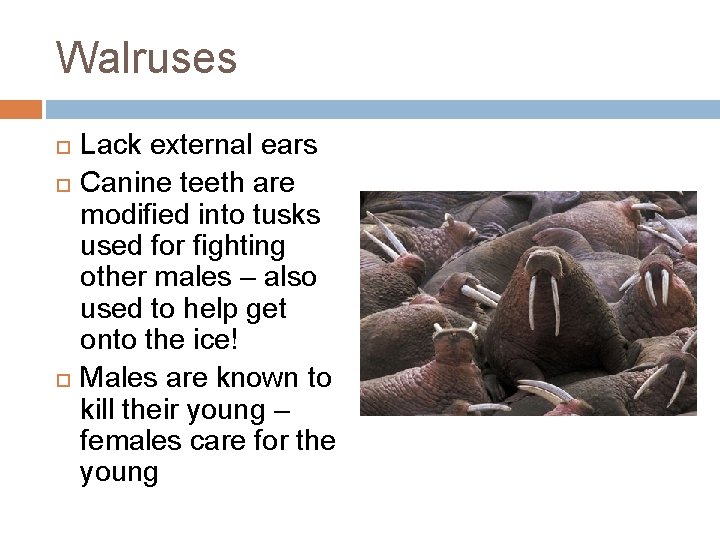
Walruses Lack external ears Canine teeth are modified into tusks used for fighting other males – also used to help get onto the ice! Males are known to kill their young – females care for the young
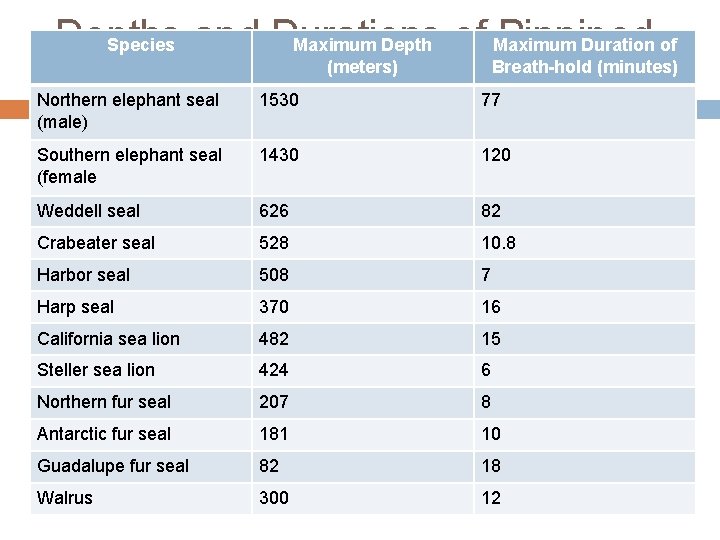
Depths Pinniped Species and Durations Maximum Depth of Maximum Duration of (meters) Breath-hold (minutes) Dives Northern elephant seal 1530 77 (male) Southern elephant seal (female 1430 120 Weddell seal 626 82 Crabeater seal 528 10. 8 Harbor seal 508 7 Harp seal 370 16 California sea lion 482 15 Steller sea lion 424 6 Northern fur seal 207 8 Antarctic fur seal 181 10 Guadalupe fur seal 82 18 Walrus 300 12
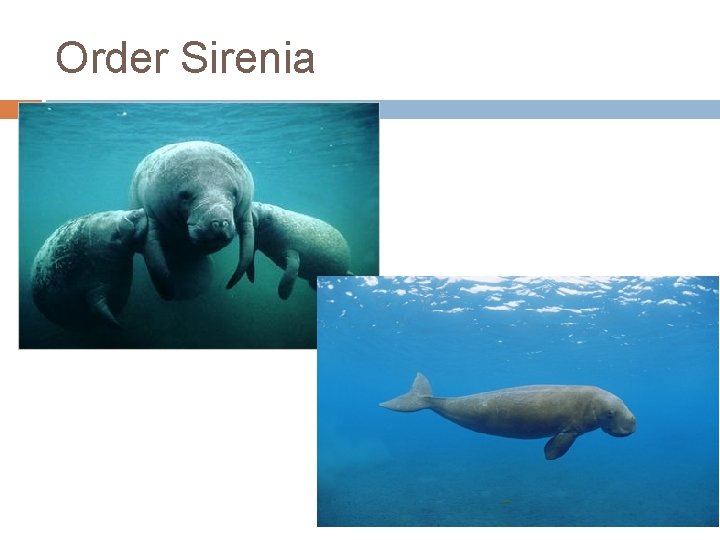
Order Sirenia
Sirenians Completely aquatic Confined to coastal areas and estuaries Streamlined, practically hairless bodies Forelimbs that form flippers, a vestigial pelvis and no hind limbs
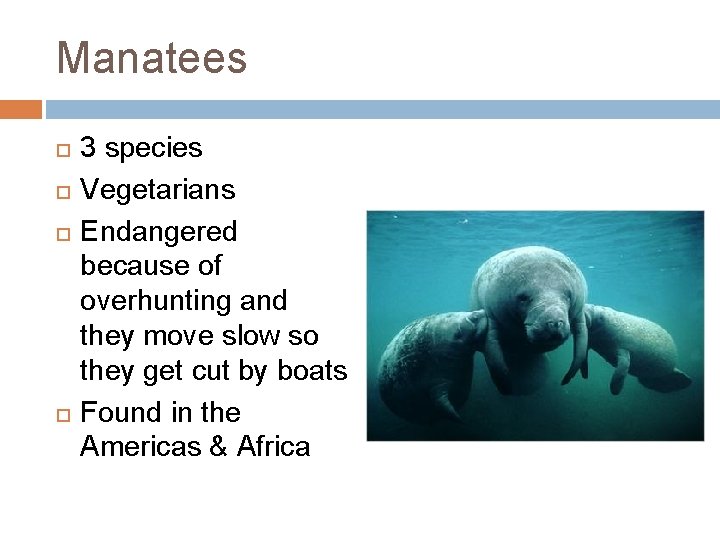
Manatees 3 species Vegetarians Endangered because of overhunting and they move slow so they get cut by boats Found in the Americas & Africa
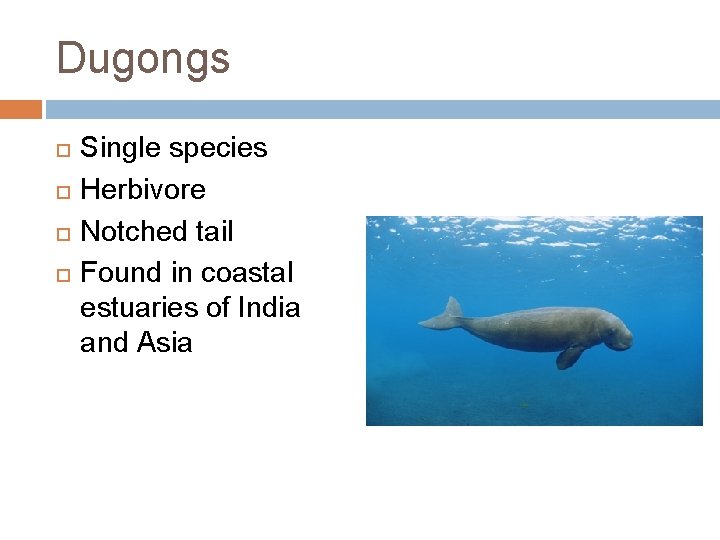
Dugongs Single species Herbivore Notched tail Found in coastal estuaries of India and Asia
Sad Sirenian Story Steller’s Sea Cow Was found in the Arctic waters “tasty meat” Steller found it in 1742 – it was hunted to extinction in 27 years
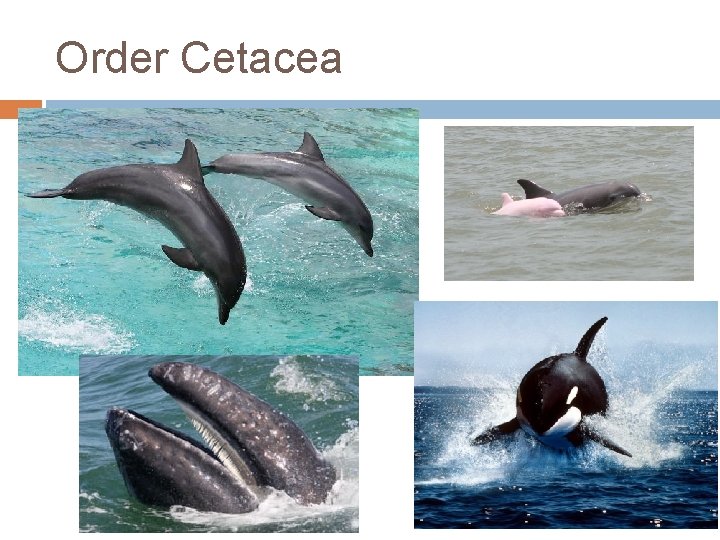
Order Cetacea
Order Cetacea Most extensively adapted to a marine environment Body closely resembles fishes Whale fetuses resemble terrestrial mammals � Rear appendages disappear externally before birth � Nostrils are at end of snout pre-birth and migrate to form blowhole!!!!! � http: //www. youtube. com/watch? v=8 cn 0 kf 8 mh. S 4
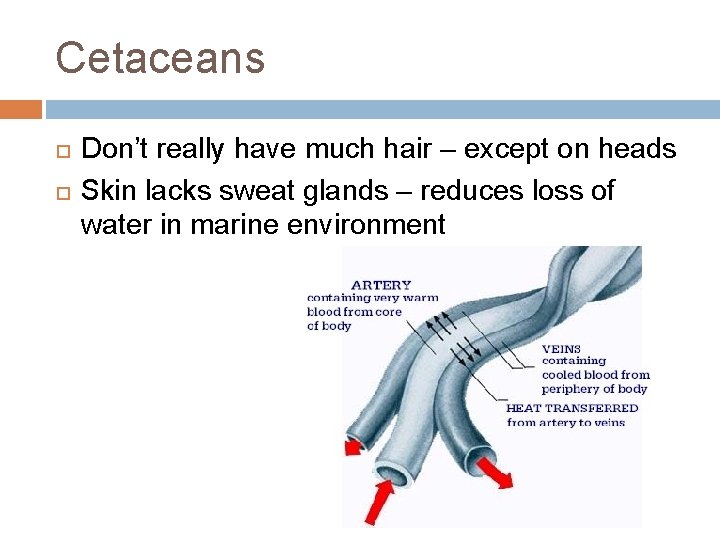
Cetaceans Don’t really have much hair – except on heads Skin lacks sweat glands – reduces loss of water in marine environment
Adaptations for Diving They can exchange nearly all the oxygen in their lungs with their blood (80 -90%) Humans only exchange 15 -25% Metabolism decreases heart beats at 10% of normal Twice as much blood per pound of body weight as humans
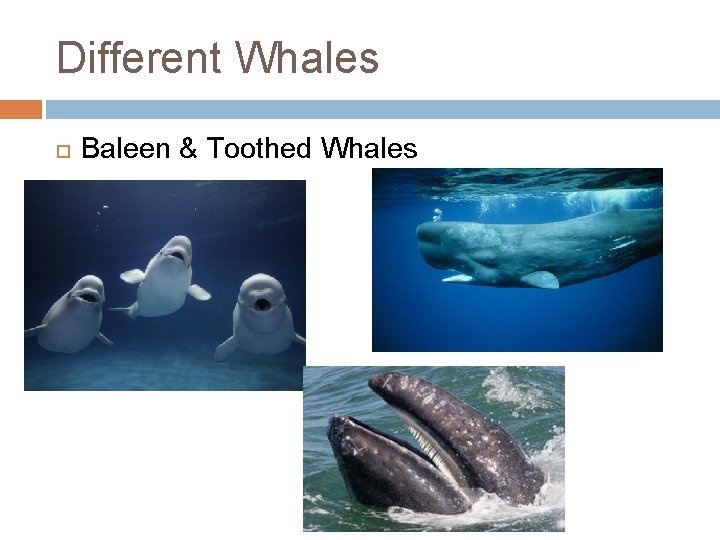
Different Whales Baleen & Toothed Whales
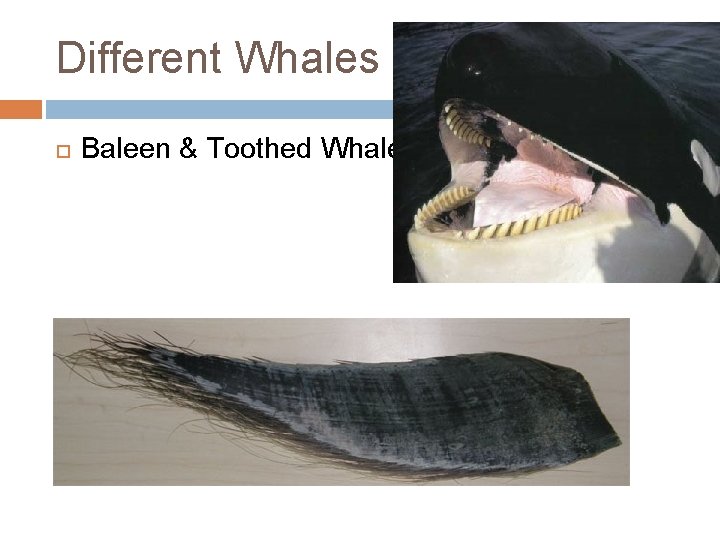
Different Whales Baleen & Toothed Whales
Crazy Whale Facts Gestation periods of different whales � Baleen whales – 10 -13 months � Toothed whales – 7 -17 months Baby blue whales � Double birth weight in weight first week � Gain 200 pounds a day after that!!!!
Whales http: //www. youtube. com/watch? v=j. JGeeryk 0 E o http: //www. pbs. org/wgbh/americanexperience/ features/bonus-video/whale-vocalizations/iu
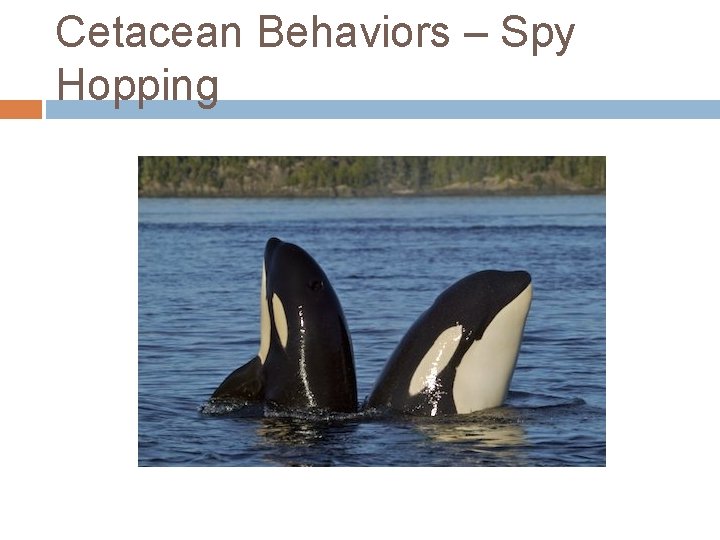
Cetacean Behaviors – Spy Hopping
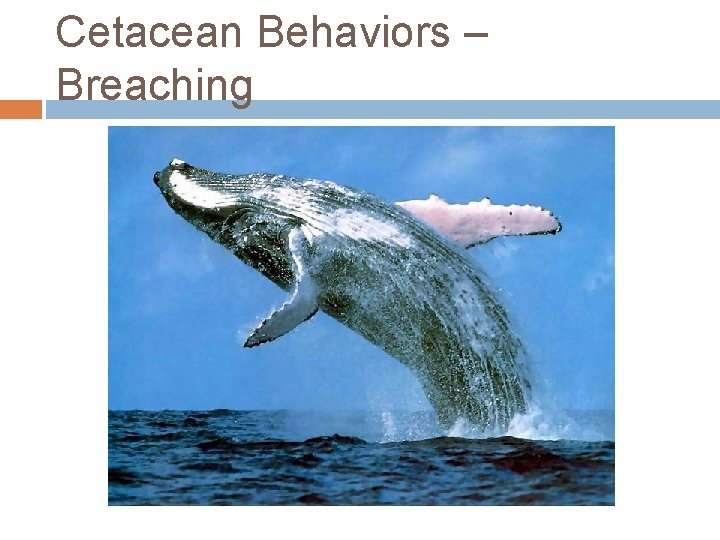
Cetacean Behaviors – Breaching
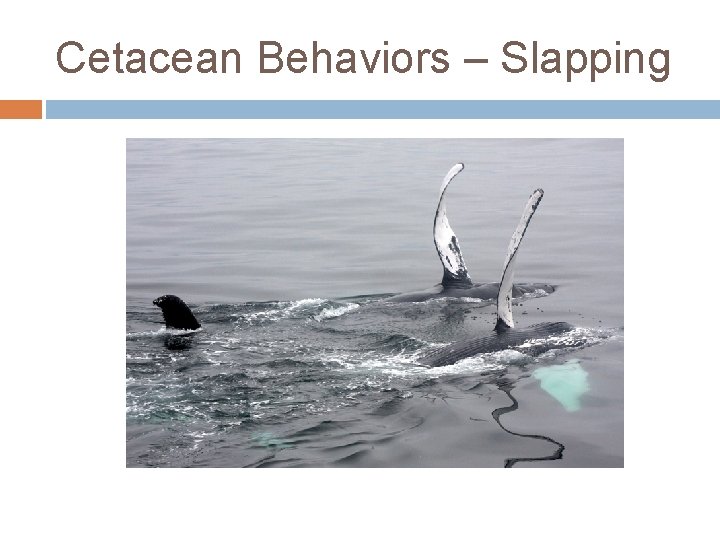
Cetacean Behaviors – Slapping
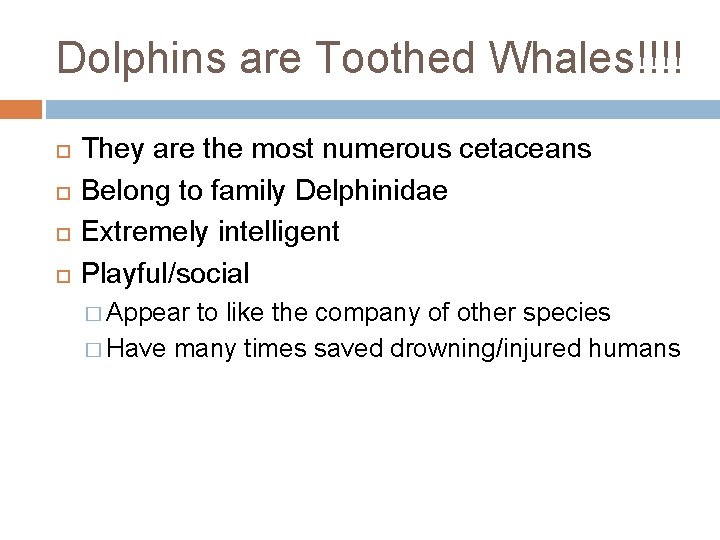
Dolphins are Toothed Whales!!!! They are the most numerous cetaceans Belong to family Delphinidae Extremely intelligent Playful/social � Appear to like the company of other species � Have many times saved drowning/injured humans
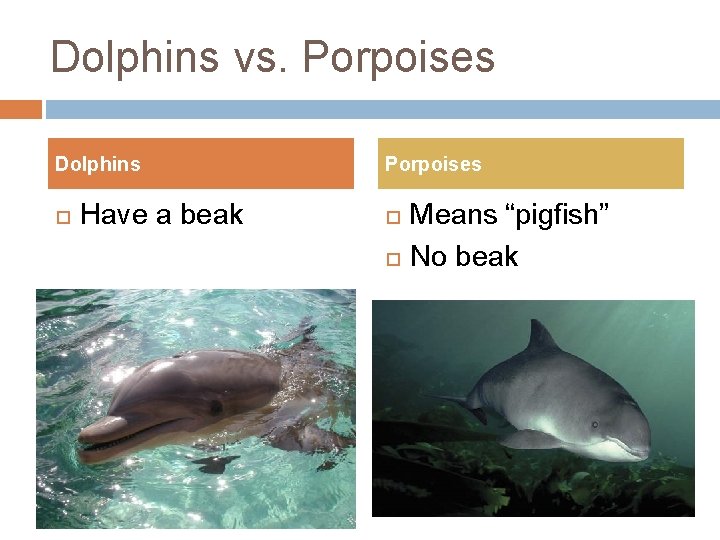
Dolphins vs. Porpoises Dolphins Have a beak Porpoises Means “pigfish” No beak
Different Types of Dolphins http: //www. dolphinkind. com/TYspinner. html The largest dolphin is the killer whale (orca) � Only whale known to eat endothermic prey (other mammals)
Dolphin Behaviors Hunting behaviors Clever � 2 captive dolphins trying to eat a moray eel
Echolocation Toothed whales can’t see more than 100 feet in front of them in clear water They have very advanced ears to compensate � Orientation clicks – low frequency give idea of surroundings � Discrimination clicks – tell animal exactly what they are “looking” at
Dolphins Are Very Intelligent http: //www. youtube. com/watch? v=7 hz. UZE 5 bdf I http: //www. youtube. com/watch? v=Zo. NDW 0 z. S RNo http: //www. youtube. com/watch? v=bwho. Llu 8 D _g